

What do you think?
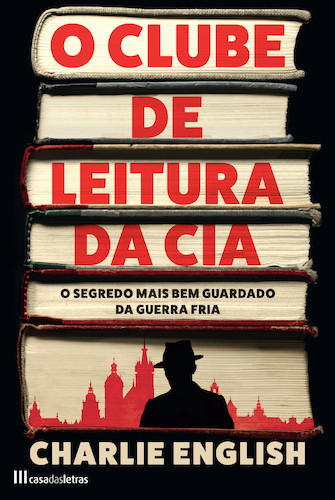
O Clube de Leitura da CIA
No confronto silencioso da Guerra Fria, travado em grande parte nos campos da mente e do intelecto, uma arma insuspeita foi fulcral: o livro. O Clube de Leitura da CIA revela a extraordinária história verídica de um programa secreto da inteligência dos EUA que conseguiu contrabandear dez milhões de volumes através da vastíssima e fortemente vigiada Cortina de Ferro. A missão, de um alcance e audácia sem precedentes, visava minar diretamente a sufocante censura imposta pelo regime soviético e levar visões políticas e culturais alternativas a um povo privado de acesso à informação livre.
Liderado por George Minden a partir dos escritórios da CIA em Manhattan, um homem nascido em Bucareste que compreendia profundamente as realidades e necessidades culturais do Leste, o programa enviava uma diversificada seleção de literatura para a Europa de Leste – de clássicos subversivos como George Orwell a autores populares como Agatha Christie. Estes livros, que funcionavam como faróis de esperança e ar fresco intelectual, eram transportados através de todos os meios imagináveis de contrabando: a bordo de camiões e iates, enviados por balões, escondidos em compartimentos secretos de comboios, ou dissimulados na bagagem de viajantes comuns. A operação não só desafiava as autoridades comunistas, como procurava estabelecer uma ligação genuína com os leitores no Leste, reconhecendo a sua inteligência e a sua sede por diversidade cultural e dignidade humana.
O impacto desta torrente clandestina de literatura foi particularmente forte na Polónia, onde os livros circularam avidamente e inspiraram dissidentes a iniciar operações de impressão subterrâneas, arriscando espancamentos, prisão e exílio. A disseminação da literatura ilícita tornou-se tão massiva que, no final dos anos 1980, a censura na Polónia colapsou, um fator crucial que ajudou a pavimentar o caminho para a eventual queda da própria Cortina de Ferro. Narrada em detalhe cativante pelo jornalista Charlie English, esta é uma saga real de espionagem, sobrevivência e resistência, uma prova arrebatadora do poder inabalável da palavra escrita como força de libertação e de mudança histórica.
Liderado por George Minden a partir dos escritórios da CIA em Manhattan, um homem nascido em Bucareste que compreendia profundamente as realidades e necessidades culturais do Leste, o programa enviava uma diversificada seleção de literatura para a Europa de Leste – de clássicos subversivos como George Orwell a autores populares como Agatha Christie. Estes livros, que funcionavam como faróis de esperança e ar fresco intelectual, eram transportados através de todos os meios imagináveis de contrabando: a bordo de camiões e iates, enviados por balões, escondidos em compartimentos secretos de comboios, ou dissimulados na bagagem de viajantes comuns. A operação não só desafiava as autoridades comunistas, como procurava estabelecer uma ligação genuína com os leitores no Leste, reconhecendo a sua inteligência e a sua sede por diversidade cultural e dignidade humana.
O impacto desta torrente clandestina de literatura foi particularmente forte na Polónia, onde os livros circularam avidamente e inspiraram dissidentes a iniciar operações de impressão subterrâneas, arriscando espancamentos, prisão e exílio. A disseminação da literatura ilícita tornou-se tão massiva que, no final dos anos 1980, a censura na Polónia colapsou, um fator crucial que ajudou a pavimentar o caminho para a eventual queda da própria Cortina de Ferro. Narrada em detalhe cativante pelo jornalista Charlie English, esta é uma saga real de espionagem, sobrevivência e resistência, uma prova arrebatadora do poder inabalável da palavra escrita como força de libertação e de mudança histórica.
424 pages, Paperback
First published March 13, 2025
About the author
Charlie English
7 books101 followersCharlie English is a British non-fiction author and former head of international news at the Guardian. He has written four critically-acclaimed books: The Snow Tourist (2008); The Book Smugglers of Timbuktu (2017, published in the US as The Storied City); and The Gallery of Miracles and Madness (2021). His latest, The CIA Book Club, has just been published. He lives in London with his family and a rather talented sheepdog named Enzo. You can reach Charlie through his website, or via X or Instagram at @charlieenglish1.
Ratings & Reviews
Friends & Following
Create a free account to discover what your friends think of this book!
Community Reviews
Displaying 1 - 30 of 542 reviews

May 8, 2025
I'll make this brief. I have a reason for brevity, which I will explain at the end. The CIA Book Club by Charlie English is a good idea with flawed execution. The book looks at how Poland used illegal literature to rebel during the USSR years.
There are plenty of people in the book who deserve the spotlight. Mirosław Chojecki is an example. However, some characters dip in and out without leaving a major mark on the reader.
The two biggest issues with the book are the expectation set by the title and English's writing style. The expectation of the title is that the CIA would be heavily involved in the book club and that the story would encompass much of Europe. The narrative is almost entirely focused on Poland and, honestly, I felt that you could have given slight lip service to the involvement of the CIA to spend more time with the Polish characters.
The other issue may be a personal preference of mine and the reason for my comment about brevity earlier. I like simple, clear sentence structure. It honestly felt like English was given a mandate to use as few periods as possible. There are numerous sentences which read as multiple thoughts jammed together with tons of commas. I think other readers found the same issues. There are other reviews which elude to "not being able to get into it" or the story feeling like a slog. I agree and I think it is because of the way the story was told. This may be a "me" issue. I have been accused of being persnickety before.
All that said, there is an important story within the book. I don't like how it was told, but I am grateful that someone took the time to pull it together.
(This book was provided as an advance copy by NetGalley and Random House.)
There are plenty of people in the book who deserve the spotlight. Mirosław Chojecki is an example. However, some characters dip in and out without leaving a major mark on the reader.
The two biggest issues with the book are the expectation set by the title and English's writing style. The expectation of the title is that the CIA would be heavily involved in the book club and that the story would encompass much of Europe. The narrative is almost entirely focused on Poland and, honestly, I felt that you could have given slight lip service to the involvement of the CIA to spend more time with the Polish characters.
The other issue may be a personal preference of mine and the reason for my comment about brevity earlier. I like simple, clear sentence structure. It honestly felt like English was given a mandate to use as few periods as possible. There are numerous sentences which read as multiple thoughts jammed together with tons of commas. I think other readers found the same issues. There are other reviews which elude to "not being able to get into it" or the story feeling like a slog. I agree and I think it is because of the way the story was told. This may be a "me" issue. I have been accused of being persnickety before.
All that said, there is an important story within the book. I don't like how it was told, but I am grateful that someone took the time to pull it together.
(This book was provided as an advance copy by NetGalley and Random House.)

February 6, 2026
“Words can be like X-rays if you use them properly—they’ll go through anything. You read and you’re pierced.”—Aldous Huxley, Brave New World
Can books win a Cold War—especially banned books? This author sets out to answer that very question, and through meticulous research reveals just how powerful stories became when they crossed borders where free thought was forbidden and definitely discouraged.
What emerges is a fascinating account of readers who risked everything to encounter ideas beyond Communist ideology. Reading itself became an act of rebellion, a shared conspiracy among brave individuals who wanted not only to learn, but to pass that learning on. Literature offered what the state could not: dissent, imagination, and choice.
Few would guess that the CIA played a role in this literary resistance, smuggling subversive books across the Iron Curtain. Titles like 1984 and Animal Farm became unlikely but potent tools, carried by people who believed deeply in the freedom to read. Central figures such as George Minden (a Romanian-born intelligence operative)—driven by his devotion to great literature—and Bill Casey (CIA), who helped move these books across borders, anchor the narrative with purpose and urgency.
The structure is thoughtful and engaging, with sections titled Hope, War, and Reckoning, alongside maps at the beginning of the book, that ground the story geographically and historically in the 1980s. These elements add depth, though at times the density of detail slightly slows the momentum.
Still, this is a compelling, highly readable tribute to banned books and the readers who dared to seek them out. A treasure for anyone who believes that literature shapes minds, challenges power, and quietly—persistently—keeps freedom alive.
Can books win a Cold War—especially banned books? This author sets out to answer that very question, and through meticulous research reveals just how powerful stories became when they crossed borders where free thought was forbidden and definitely discouraged.
What emerges is a fascinating account of readers who risked everything to encounter ideas beyond Communist ideology. Reading itself became an act of rebellion, a shared conspiracy among brave individuals who wanted not only to learn, but to pass that learning on. Literature offered what the state could not: dissent, imagination, and choice.
Few would guess that the CIA played a role in this literary resistance, smuggling subversive books across the Iron Curtain. Titles like 1984 and Animal Farm became unlikely but potent tools, carried by people who believed deeply in the freedom to read. Central figures such as George Minden (a Romanian-born intelligence operative)—driven by his devotion to great literature—and Bill Casey (CIA), who helped move these books across borders, anchor the narrative with purpose and urgency.
The structure is thoughtful and engaging, with sections titled Hope, War, and Reckoning, alongside maps at the beginning of the book, that ground the story geographically and historically in the 1980s. These elements add depth, though at times the density of detail slightly slows the momentum.
Still, this is a compelling, highly readable tribute to banned books and the readers who dared to seek them out. A treasure for anyone who believes that literature shapes minds, challenges power, and quietly—persistently—keeps freedom alive.

November 13, 2025
Absolutely fascinating tale of the heroic Polish citizens who, with the help of the CIA, took spectacular risks in the 1980s to bring banned books, magazines, and news into communist Poland. All of them risked prison and some risked death, but their work mattered: their efforts were critical to the rise of Solidarity and the fall of the communist government. Imagine: regime change via books. What a concept.

September 10, 2025
“In October 1985, a Polish human rights group estimated that the majority of the 320 political prisoners still held in the country were printers, distributors, editors, or other collaborators with the social publishing movement. Punishments could be extreme. One man at that time was given an eight-year sentence for distributing a flyer.”
The title of this book, and the blurb describing it, are a little misleading. While it is true that the CIA smuggled reading material behind the Iron Curtain during the Cold War, most of this book is about Poland, the Solidarity movement and the risky work of many Polish people to keep the underground publishing business alive. Much of that work was financed by the CIA. Books may have been “beacons of hope”, but the reporting and distribution of accurate news was probably more important. The people responsible for spreading this uncensored news were harassed, threatened and imprisoned. The book was interesting and educational. Parts of it read like a spy novel.
I received a free copy of this book from the publisher.
The title of this book, and the blurb describing it, are a little misleading. While it is true that the CIA smuggled reading material behind the Iron Curtain during the Cold War, most of this book is about Poland, the Solidarity movement and the risky work of many Polish people to keep the underground publishing business alive. Much of that work was financed by the CIA. Books may have been “beacons of hope”, but the reporting and distribution of accurate news was probably more important. The people responsible for spreading this uncensored news were harassed, threatened and imprisoned. The book was interesting and educational. Parts of it read like a spy novel.
I received a free copy of this book from the publisher.
June 1, 2025
First and foremost, a large thank you to NetGalley, Charlie English, and, Random House Publishing Group for providing me with a copy of this publication, which allows me to provide you with an unbiased review.
Always excited to open my mind to new authors and topics, I was curious to read the latest tome by Charlie English. Its premise explores a different front during the Cold War, infiltrating the common person trapped behind the Iron Curtain. English explores how the CIA used access to books, and other publications banned by the Communists, to shed light on a freedom many forgot existed. A publication of great interest and intrigue for those with a curiosity about books and the power of the written word.
While the Cold War could be seen as a physical war and a nuclear clash, there was a more subtle battle taking place on both sides of the Iron Curtain. The West wanted to be able to infiltrate the common person living with forced Communism and sought to break the censorship and disinformation regularly fed to people. The CIA found an effective way to do this, first with airdropped pamphlets and eventually by shipping banned books across borders for people to read. The written word would be, the CIA hoped, a sharper weapon than any bayonet. Bloodless battles would turn the people away from communist propaganda.
Historian Charlie English uses a number of perspectives to explore this battle, choosing three periods during the height of the War of Words, 1979-89. English takes his characters and provides the reader with how they sought to bring information into Romania, Poland, and other countries on the cusp of the East-West divide. It was books we take for granted by Agatha Christie, John Le Carré, and even Aldous Huxley to show that there was more to the world than the dreary sentiments many lived in from dawn to dusk. There was no need for death or bloodshed, but rather a fostering of the garden of intellectual interaction that the CIA used to help open the eyes of many and bring down the Curtain, which played a great part in ending the Cold War.
While I am a lover of history, I enjoy new avenues that help me see something from a new perspective. Charlie English does this well by delivering a clear narrative about a CIA battle to pull down the hurdles to clear thought. As the chapters connect, they tell of a battle that never seemed to end until the work was done. While not violent, there were casualties, but the winner was the oppressed citizen who could see truths from a new perspective. English delivers his accounts well, even if they seemed a tad repetitive at times. I enjoyed all I learned from this book and would encourage others to give it a try to see what they can take from this book. Call it the reader’s own enlightenment from the written word.
Kudos, Mr. English, for a glimpse into a great piece of modern history!
Love/hate the review? An ever-growing collection of others appears at: http://pecheyponderings.wordpress.com/
Always excited to open my mind to new authors and topics, I was curious to read the latest tome by Charlie English. Its premise explores a different front during the Cold War, infiltrating the common person trapped behind the Iron Curtain. English explores how the CIA used access to books, and other publications banned by the Communists, to shed light on a freedom many forgot existed. A publication of great interest and intrigue for those with a curiosity about books and the power of the written word.
While the Cold War could be seen as a physical war and a nuclear clash, there was a more subtle battle taking place on both sides of the Iron Curtain. The West wanted to be able to infiltrate the common person living with forced Communism and sought to break the censorship and disinformation regularly fed to people. The CIA found an effective way to do this, first with airdropped pamphlets and eventually by shipping banned books across borders for people to read. The written word would be, the CIA hoped, a sharper weapon than any bayonet. Bloodless battles would turn the people away from communist propaganda.
Historian Charlie English uses a number of perspectives to explore this battle, choosing three periods during the height of the War of Words, 1979-89. English takes his characters and provides the reader with how they sought to bring information into Romania, Poland, and other countries on the cusp of the East-West divide. It was books we take for granted by Agatha Christie, John Le Carré, and even Aldous Huxley to show that there was more to the world than the dreary sentiments many lived in from dawn to dusk. There was no need for death or bloodshed, but rather a fostering of the garden of intellectual interaction that the CIA used to help open the eyes of many and bring down the Curtain, which played a great part in ending the Cold War.
While I am a lover of history, I enjoy new avenues that help me see something from a new perspective. Charlie English does this well by delivering a clear narrative about a CIA battle to pull down the hurdles to clear thought. As the chapters connect, they tell of a battle that never seemed to end until the work was done. While not violent, there were casualties, but the winner was the oppressed citizen who could see truths from a new perspective. English delivers his accounts well, even if they seemed a tad repetitive at times. I enjoyed all I learned from this book and would encourage others to give it a try to see what they can take from this book. Call it the reader’s own enlightenment from the written word.
Kudos, Mr. English, for a glimpse into a great piece of modern history!
Love/hate the review? An ever-growing collection of others appears at: http://pecheyponderings.wordpress.com/
April 30, 2025
Why call the book this? It's not about the CIA, it's not about the Cold War, it's about the underground struggle in Poland under Communist rule.
April 27, 2025
Ще започна това ревю с един въпрос - защо, аджеба, получих толкова малко лайкове (цифром и словом 2) за четенето на тази книга? Нали е книга за книгите? Скъсахте се да харесвате "Безкраят в стрък тръстика", а на тази грам внимание не обърнахте. Не ми е до липсата на одобрение, стане ли въпрос (поне за книги) отдавна съм се разкачила от чуждото мнение. Въпросът ме гложди. Дали е заради лошата репутация на Централната разузнавателна агенция? Дали всички очакват скучна политическа история с претенции на трилър (глупава комбинация)? Дайте ми отговор, моооооляяяяяяя!
По същество - това все пак не е книга за книгите. Но е книга за тяхната сила. За свободата, с която ни даряват, особено в един несвободен свят. Та, от началото на 50-те години до края на Студената война ЦРУ поддържа немалко литературни организации, сред които International Literature Centre (ILC), които имат за цел да вкарат в социалистическите страни литература, която техните правителства не одобряват - "1984" и "Фермата на животните" от Оруел, "Архипелаг Гулаг" от Солженицин и др. (досещате се), но и техническа литература, и лайфстайл списания. Целта е "да се запълни вакуума от идеи, хуманитарна помощ под формата на книги", "офанзива на свободното, честно мислене и точната информация" по думите ба Джордж Миндън, директор на ILC. Програмата обхваща Източния блок и Съветския съюз, но навярно никъде не е така успешна, както в Полша, ето защо авторът е съсредоточил погледа си на нея и дисидентското ѝ движение.
Голяма част от книгата е посветена на "Солидарност" и преследването на неговите членове, нелегалното книгопечатане, военното положение в Полша (1981-1983 г.) и полската политическа емиграция. Това е важно. Американската помощ (организирана от знаете кого!), била под формата на литература, машини и консумативи за подземния печат или пари, е от огромно значение за поддържането на дисидентското движение. Знаят ли всички тези хора, откъде идват парите за дейността им? Не. Но се досещат. Притеснява ли ги това? Ами, в живота има една истина, че се съюзяваш не с този, с когото искаш да се съюзиш, а с онзи, с когото имаш нужда. На много места по света дейността на ЦРУ е най-малкото неетична, по-често директно престъпна. На други - е, нека кажем, че са по-свободни в сравнение с 1989 г. ...
Минус на книгата - написана е основно на база на интервюта. Огромната част от документите са все още секретни и подозирам, че когато станат достъпни за широката аудитория, тази история ще звучи по много различен начин.
И нещо още по-важно. Поне за мен. Като част от едно следващо поколение, събитията оставаха мъгляви, така че имах нуждата да мина през тях. А вчера с изумление научих, че на много от връстниците ми, интелигентни и начетени хора, "Солидарност" не говори нищо. Казват, че човешката памет е дълга. Вчера ми се стори много къса...
По същество - това все пак не е книга за книгите. Но е книга за тяхната сила. За свободата, с която ни даряват, особено в един несвободен свят. Та, от началото на 50-те години до края на Студената война ЦРУ поддържа немалко литературни организации, сред които International Literature Centre (ILC), които имат за цел да вкарат в социалистическите страни литература, която техните правителства не одобряват - "1984" и "Фермата на животните" от Оруел, "Архипелаг Гулаг" от Солженицин и др. (досещате се), но и техническа литература, и лайфстайл списания. Целта е "да се запълни вакуума от идеи, хуманитарна помощ под формата на книги", "офанзива на свободното, честно мислене и точната информация" по думите ба Джордж Миндън, директор на ILC. Програмата обхваща Източния блок и Съветския съюз, но навярно никъде не е така успешна, както в Полша, ето защо авторът е съсредоточил погледа си на нея и дисидентското ѝ движение.
Голяма част от книгата е посветена на "Солидарност" и преследването на неговите членове, нелегалното книгопечатане, военното положение в Полша (1981-1983 г.) и полската политическа емиграция. Това е важно. Американската помощ (организирана от знаете кого!), била под формата на литература, машини и консумативи за подземния печат или пари, е от огромно значение за поддържането на дисидентското движение. Знаят ли всички тези хора, откъде идват парите за дейността им? Не. Но се досещат. Притеснява ли ги това? Ами, в живота има една истина, че се съюзяваш не с този, с когото искаш да се съюзиш, а с онзи, с когото имаш нужда. На много места по света дейността на ЦРУ е най-малкото неетична, по-често директно престъпна. На други - е, нека кажем, че са по-свободни в сравнение с 1989 г. ...
Минус на книгата - написана е основно на база на интервюта. Огромната част от документите са все още секретни и подозирам, че когато станат достъпни за широката аудитория, тази история ще звучи по много различен начин.
И нещо още по-важно. Поне за мен. Като част от едно следващо поколение, събитията оставаха мъгляви, така че имах нуждата да мина през тях. А вчера с изумление научих, че на много от връстниците ми, интелигентни и начетени хора, "Солидарност" не говори нищо. Казват, че човешката памет е дълга. Вчера ми се стори много къса...

April 17, 2026
Author Charlie English certainly did a lot of research to write this book! Using primary sources and interviews with the individuals who were part of the “book club”, he has shed light on a little known program which was created after World War II during the Cold War.
With assistance from the CIA, members of the Polish underground were able to disseminate books, magazines, and later on videos from the Western nations to the people in Poland. The objective of the program was to use these materials to counteract the censorship imposed on the country and provide the citizens with information and ideas from the free world. The operation expanded over thirty five years to provide the equipment and materials necessary for the underground newspaper publishers to continue publishing.
Today much of the information about the clandestine program and its benefactors remains classified. The CIA, at certain points in time, felt that they should be viewed as an organization that was involved in active espionage and covert activities in war zones rather than covert activities that sponsored intellectual sabotage. However, this operation is considered to be one of the CIA’s most successful programs to promote free speech and freedom of the press while trying to make the world a better place.
The CIA Book Club is an interesting read. At times, though, it was difficult to keep track of all the people involved in the program and that interfered with the appreciation of the story.
With assistance from the CIA, members of the Polish underground were able to disseminate books, magazines, and later on videos from the Western nations to the people in Poland. The objective of the program was to use these materials to counteract the censorship imposed on the country and provide the citizens with information and ideas from the free world. The operation expanded over thirty five years to provide the equipment and materials necessary for the underground newspaper publishers to continue publishing.
Today much of the information about the clandestine program and its benefactors remains classified. The CIA, at certain points in time, felt that they should be viewed as an organization that was involved in active espionage and covert activities in war zones rather than covert activities that sponsored intellectual sabotage. However, this operation is considered to be one of the CIA’s most successful programs to promote free speech and freedom of the press while trying to make the world a better place.
The CIA Book Club is an interesting read. At times, though, it was difficult to keep track of all the people involved in the program and that interfered with the appreciation of the story.

March 1, 2025
It came as a surprise to me to discover the author, Charlie English, was a historian as it says in the blurb. I'd previously read The Snow Tourist, which made me assume he was more of an environment or science writer. Here he tackles the murky depths of the CIA and its involvement in providing books to the Soviet bloc during the Cold War. It is just as fascinating as snow is, in all its many and varied forms.
The blurb does a good job of describing the book itself. I'm not sure how it would come across to someone younger than me, because I discovered I connected with it on a very personal level: much of the early part of the book looks at events in Poland, from after the war to the Solidarity movement of the 80s. During the 60s I knew a lot of Polish girls, daughters of emigres from Poland, including the daughter of the prime minister in exile, as I discovered a few years later. I was at school with them. Something of those times and Polish culture definitely rubbed off. I experienced considerable deja vu as Mr English covered events like the Prague Spring (Russian tanks rolling into Wenceslas Square), and the start of the uprising in the Gdansk shipyards.
As you might expect of a book describing a long-tailed CIA operation, the book is extremely complex. The chapters deal with separate parts of the jigsaw puzzle, which helps, and each set of characters becomes encapsulated to their own episode. This detail allows the reader to keep track of who's who. It's still worth reading in small chunks, though, and I think I treated the Snow Tourist in the same way. The author also ensures that although the role of the CIA as funder and enabler is clearly stated, acknowledgement is given to many organisations, government and otherwise, who were--sometimes unwittingl--involved in what was, essentially, a deep propaganda exercise.
But it was also about freedom of the press, a person's right to express their own views, and for the written word to be treated with respect. The books were copied, but copyright was not abused. Some organisations need reminding about that, these days.
Well worth reading, especially in these days of misinformation and turmoil.
The blurb does a good job of describing the book itself. I'm not sure how it would come across to someone younger than me, because I discovered I connected with it on a very personal level: much of the early part of the book looks at events in Poland, from after the war to the Solidarity movement of the 80s. During the 60s I knew a lot of Polish girls, daughters of emigres from Poland, including the daughter of the prime minister in exile, as I discovered a few years later. I was at school with them. Something of those times and Polish culture definitely rubbed off. I experienced considerable deja vu as Mr English covered events like the Prague Spring (Russian tanks rolling into Wenceslas Square), and the start of the uprising in the Gdansk shipyards.
As you might expect of a book describing a long-tailed CIA operation, the book is extremely complex. The chapters deal with separate parts of the jigsaw puzzle, which helps, and each set of characters becomes encapsulated to their own episode. This detail allows the reader to keep track of who's who. It's still worth reading in small chunks, though, and I think I treated the Snow Tourist in the same way. The author also ensures that although the role of the CIA as funder and enabler is clearly stated, acknowledgement is given to many organisations, government and otherwise, who were--sometimes unwittingl--involved in what was, essentially, a deep propaganda exercise.
But it was also about freedom of the press, a person's right to express their own views, and for the written word to be treated with respect. The books were copied, but copyright was not abused. Some organisations need reminding about that, these days.
Well worth reading, especially in these days of misinformation and turmoil.

July 24, 2025
The concept behind The CIA Book Club is undeniably compelling. During the Cold War, the CIA covertly funneled millions of books across the Iron Curtain in an effort to fight totalitarianism not with weapons, but with words.
In 2025, as we witness increasing book bans, cultural censorship, and efforts to dismantle public institutions, this history feels strikingly relevant.
And yet, while the subject matter is vital, the book itself struggles under the weight of its own ambition.
English’s research is expansive and thorough, perhaps too thorough.
With a cast of characters that includes underground publishers, CIA operatives, Polish dissidents, French editors, and American bureaucrats, the narrative often feels overcrowded. Chapters shift rapidly in time, place, and perspective, making it difficult to stay grounded. Many of the individuals profiled seem worthy of books of their own. All together in one volume, however, the story loses cohesion.
That said, some of the most powerful moments come when English spotlights the underground publishing networks in Poland.
The courage, resilience, and ingenuity of those who risked everything to access and distribute banned books is both sobering and inspiring.
These moments make a strong case for why books and the freedom to read them matter.
I only wish the book had spent more time exploring how readers received and interpreted the literature itself.
In an age of disinformation and eroding trust in public institutions, the role of libraries, free, public, and pluralistic, is more critical than ever.
In 2025, as we witness increasing book bans, cultural censorship, and efforts to dismantle public institutions, this history feels strikingly relevant.
And yet, while the subject matter is vital, the book itself struggles under the weight of its own ambition.
English’s research is expansive and thorough, perhaps too thorough.
With a cast of characters that includes underground publishers, CIA operatives, Polish dissidents, French editors, and American bureaucrats, the narrative often feels overcrowded. Chapters shift rapidly in time, place, and perspective, making it difficult to stay grounded. Many of the individuals profiled seem worthy of books of their own. All together in one volume, however, the story loses cohesion.
That said, some of the most powerful moments come when English spotlights the underground publishing networks in Poland.
The courage, resilience, and ingenuity of those who risked everything to access and distribute banned books is both sobering and inspiring.
These moments make a strong case for why books and the freedom to read them matter.
I only wish the book had spent more time exploring how readers received and interpreted the literature itself.
In an age of disinformation and eroding trust in public institutions, the role of libraries, free, public, and pluralistic, is more critical than ever.

April 10, 2025
The fact the CIA was involved in smuggling books beyond the Iron Curtain to Poland and other Warsaw Pact countries in Eastern Europe was a revelation to me. And that they supported the underground printing operations of activists working to counter the disinformation of the Polish government and get around its strict censorship laws. That’s hardly surprising because the operation has been described as the ‘best kept secret’ of the Cold War. In fact many of the participants never knew the source of the funding that enabled the programme to carry on.
Although I’m of an age to recall the rise of the Solidarity movement in Poland, I hadn’t realised the extent of the regime’s attempts to suppress the dissemination of non-state approved information. Not only were many books banned, every typewriter had to be registered, access to every photocopier was restricted and a permit was needed to buy paper in any quantity. If Poles wanted to create a business card, a rubber stamp or even a sheet of music it had to be approved by a censor. Some of the censorship decisions were positively bizarre. The author cites the example of a book about growing carrots that was destroyed for implying vegetables could grow in individuals’ gardens as well as in those run by collectives.
Disseminating information about what was really going on could end you up in jail, probably after a severe beating up by the secret police. One of the people highlighted in the book is Miroslaw Chojecki, an underground Polish publisher who endured just such treatment, as well as force-feeding when he embarked on a hunger strike in prison. Forced into exile in the West, he continued to be involved in directing increasingly daring smuggling operations.
The other key character is George Minden, the CIA’s mastermind behind the programme who continued to believe, in the face of opposition from his own superiors at times, in the power of the printed word as a means of resistance and liberation. As the author describes it, a sort of literary humanitarian aid, the bookish equivalent of food parcels.
The details of some of the smuggling operations are astounding with printing presses, books and other material cunningly concealed in vehicles to evade border checks or carried by individuals travelling between Poland and other countries. However, some more outlandish ideas such as smuggling miniature books in Tampax boxes were rejected. Even once inside the country, distribution was a highly dangerous affair requiring much ingenuity by those involved. Information was on a strictly ‘need to know’ basis with many in the network never learning the identity of others involved further up or down the chain. Precautions had to be taken against telephone lines being tapped or locations bugged. Members of the underground publishing network were forced to adopt elaborate precautions to avoid detection (referred to as ‘health and safety’ procedures) many of which could have come straight out of a John le Carre novel, or the film French Connection.
When it came to underground printing operations, the author explains even more ingenuity was required. ‘Rex-Rotary and A. B. Dick presses sat behind fake walls, false chimneys and heavy wardrobes, in loft spaces above rural barns and in kitchen cellars beneath trapdoors hidden by a fridge. The output of these machines was carried around in rucksacks, and suitcases, or tied to men’s backs beneath their coats, and dead-dropped in tree holes, under drain covers or beneath church pews.’
The book has an incredible amount of detail and it’s clear the author has been meticulous in his research. As an illustration, I was only at 80% on my Kindle copy when I reached the epilogue, the rest of the book being bibliography, notes, etc. I found the book had so much detail that I had to dip in and out of it over a few weeks. There are a lot of people mentioned, not all of whom play a prominent role in the story. Much of the book is taken up with the evolution of the Solidarity movement, a journey not without its setbacks including a period of brutal suppression by the Soviet-backed Polish government. The book taught me a lot about the history of the period and made me appreciate why Poland, given its history, has good reason to fear Russian aggression even today.
The CIA Book Club demonstrates in a very readable way how the written word can be a weapon in the fight for freedom and how banning books in order to suppress freedom of thought and speech is ultimately always doomed to fail.
Although I’m of an age to recall the rise of the Solidarity movement in Poland, I hadn’t realised the extent of the regime’s attempts to suppress the dissemination of non-state approved information. Not only were many books banned, every typewriter had to be registered, access to every photocopier was restricted and a permit was needed to buy paper in any quantity. If Poles wanted to create a business card, a rubber stamp or even a sheet of music it had to be approved by a censor. Some of the censorship decisions were positively bizarre. The author cites the example of a book about growing carrots that was destroyed for implying vegetables could grow in individuals’ gardens as well as in those run by collectives.
Disseminating information about what was really going on could end you up in jail, probably after a severe beating up by the secret police. One of the people highlighted in the book is Miroslaw Chojecki, an underground Polish publisher who endured just such treatment, as well as force-feeding when he embarked on a hunger strike in prison. Forced into exile in the West, he continued to be involved in directing increasingly daring smuggling operations.
The other key character is George Minden, the CIA’s mastermind behind the programme who continued to believe, in the face of opposition from his own superiors at times, in the power of the printed word as a means of resistance and liberation. As the author describes it, a sort of literary humanitarian aid, the bookish equivalent of food parcels.
The details of some of the smuggling operations are astounding with printing presses, books and other material cunningly concealed in vehicles to evade border checks or carried by individuals travelling between Poland and other countries. However, some more outlandish ideas such as smuggling miniature books in Tampax boxes were rejected. Even once inside the country, distribution was a highly dangerous affair requiring much ingenuity by those involved. Information was on a strictly ‘need to know’ basis with many in the network never learning the identity of others involved further up or down the chain. Precautions had to be taken against telephone lines being tapped or locations bugged. Members of the underground publishing network were forced to adopt elaborate precautions to avoid detection (referred to as ‘health and safety’ procedures) many of which could have come straight out of a John le Carre novel, or the film French Connection.
When it came to underground printing operations, the author explains even more ingenuity was required. ‘Rex-Rotary and A. B. Dick presses sat behind fake walls, false chimneys and heavy wardrobes, in loft spaces above rural barns and in kitchen cellars beneath trapdoors hidden by a fridge. The output of these machines was carried around in rucksacks, and suitcases, or tied to men’s backs beneath their coats, and dead-dropped in tree holes, under drain covers or beneath church pews.’
The book has an incredible amount of detail and it’s clear the author has been meticulous in his research. As an illustration, I was only at 80% on my Kindle copy when I reached the epilogue, the rest of the book being bibliography, notes, etc. I found the book had so much detail that I had to dip in and out of it over a few weeks. There are a lot of people mentioned, not all of whom play a prominent role in the story. Much of the book is taken up with the evolution of the Solidarity movement, a journey not without its setbacks including a period of brutal suppression by the Soviet-backed Polish government. The book taught me a lot about the history of the period and made me appreciate why Poland, given its history, has good reason to fear Russian aggression even today.
The CIA Book Club demonstrates in a very readable way how the written word can be a weapon in the fight for freedom and how banning books in order to suppress freedom of thought and speech is ultimately always doomed to fail.
March 30, 2025
A captivating story of smuggling, secret printing, spycraft, and the secretive circulation of books, as a weapon in the Cold War.
’The Best-Kept Secret of the Cold War’
Celebrating the power of the printed word as a means of liberation, resistance and shaping the political landscape!
’The Best-Kept Secret of the Cold War’
Celebrating the power of the printed word as a means of liberation, resistance and shaping the political landscape!

July 17, 2026
⭐️½ A Dreadfully Dull Take on a Fascinating Premise
The CIA Book Club by Charlie English had a premise that should have been enlightening and fascinating. I picked it up after seeing it connected to the Goodreads Spring Challenge theme of books about books, and I expected a compelling account of forbidden literature, Cold War espionage, and the CIA’s role in using books as a weapon against communism. Instead, the book felt far narrower and far duller than its title suggested. Despite being called The CIA Book Club: The Secret Mission to Win the Cold War with Forbidden Literature, it focuses overwhelmingly on Poland and gives very little sense of the broader Eastern Bloc. There is a lot of information about Polish dissidents, underground publishing, and banned books, but I never felt that the narrative fully came alive.
My larger issue is that the book did not convince me of its own argument. I still do not understand clearly how these books were smuggled into such a tightly controlled communist state with checkpoints, border security, and surveillance, and I felt the book admired the CIA too much without enough critical distance. I also did not buy into the idea that these books were as central to defeating communism as the author seems to suggest. They may have played a role, but the book did not persuade me that they were more than a minor part of a much larger historical movement. With too many people, too little narrative energy, and a structure that felt more like an archive than a story, The CIA Book Club was a dreadfully boring read for me. It may interest readers focused specifically on Polish dissident publishing or communist-era Poland, but it absolutely did not work for me.
The CIA Book Club by Charlie English had a premise that should have been enlightening and fascinating. I picked it up after seeing it connected to the Goodreads Spring Challenge theme of books about books, and I expected a compelling account of forbidden literature, Cold War espionage, and the CIA’s role in using books as a weapon against communism. Instead, the book felt far narrower and far duller than its title suggested. Despite being called The CIA Book Club: The Secret Mission to Win the Cold War with Forbidden Literature, it focuses overwhelmingly on Poland and gives very little sense of the broader Eastern Bloc. There is a lot of information about Polish dissidents, underground publishing, and banned books, but I never felt that the narrative fully came alive.
My larger issue is that the book did not convince me of its own argument. I still do not understand clearly how these books were smuggled into such a tightly controlled communist state with checkpoints, border security, and surveillance, and I felt the book admired the CIA too much without enough critical distance. I also did not buy into the idea that these books were as central to defeating communism as the author seems to suggest. They may have played a role, but the book did not persuade me that they were more than a minor part of a much larger historical movement. With too many people, too little narrative energy, and a structure that felt more like an archive than a story, The CIA Book Club was a dreadfully boring read for me. It may interest readers focused specifically on Polish dissident publishing or communist-era Poland, but it absolutely did not work for me.

March 28, 2025
I found this to be an absorbing, well-written, interesting read. Sometimes - the murder of Popieluszko, for example - I would've liked a bit more. And it would've been interesting to know what happened to the courier and SB spy Janusz. But most of the basics are here. Good job Trump wasn't president in the 1980s. He would've told the Polish underground to go and do one. And then cosied up to Jaruzelski.

February 2, 2025
Banning books give us silence when we need speech. It closes our ears when we need to listen. It makes us blind when we need sight.
Way back in school when I read Animal Farm by George Orwell, my uncle explained it to me as a depiction of life in socialist countries. I did not know what socialism meant and hence as I grew up, I had this bias against China - imagining an Animal Farm kind of effort-reward matrix. I did not know, in the absence of an alternate POV, i was being conditioned.
Charlie English's book is a fascinating story from the cold war era of Poland (and the meddling CIA) in the iron curtain between 1980 and 1990. A totalitarian Government has banned free press and most books. This gives rise to an underground resistance movement, which starts out with distributing books banned by the Government. The entire operation is funded by ILC, the psychological warfare arm of the CIA.
In the times of unionisation and people resistance, the resistance finds a medium of publication as a vehicle for "solidarity" movement. However, the problem was getting machinery and paper which is controlled by the Government. Enter CIA and the agent provocateurs and leaders such as Chojecksi who find a smuggling route into Warsaw from France. After the crackdown on the resistance forces, when all the major leaders are arrested, the women take over the publication and keep it alive for 290 editions.
The book also takes the other mediums such as documentaries, radio and television for which content was created to keep people aware. This played an important role in keeping people against the Russian forces till the USSR crumbled. This was a small budget of $18.1 million over the entire period, which is nothing in contrast to $700 million which US spent in Afghanistan to weaponize the mujahideens.
The writing alternates between the situation on the ground and the poles settled abroad who are fanning the revolution. Sometimes it becomes a bit too much history of the dry type and some chapters have the pace of a thriller. I also did feel, the book, due to it's scope, could not talk of the other factors that kept the underground movement alive.
This is an interesting piece of non-fiction which makes you wonder of what could be in action today on us. Also, if Governments could be using the learnings from this to keep fueling divisiveness to distract from the core issues.
Way back in school when I read Animal Farm by George Orwell, my uncle explained it to me as a depiction of life in socialist countries. I did not know what socialism meant and hence as I grew up, I had this bias against China - imagining an Animal Farm kind of effort-reward matrix. I did not know, in the absence of an alternate POV, i was being conditioned.
Charlie English's book is a fascinating story from the cold war era of Poland (and the meddling CIA) in the iron curtain between 1980 and 1990. A totalitarian Government has banned free press and most books. This gives rise to an underground resistance movement, which starts out with distributing books banned by the Government. The entire operation is funded by ILC, the psychological warfare arm of the CIA.
In the times of unionisation and people resistance, the resistance finds a medium of publication as a vehicle for "solidarity" movement. However, the problem was getting machinery and paper which is controlled by the Government. Enter CIA and the agent provocateurs and leaders such as Chojecksi who find a smuggling route into Warsaw from France. After the crackdown on the resistance forces, when all the major leaders are arrested, the women take over the publication and keep it alive for 290 editions.
The book also takes the other mediums such as documentaries, radio and television for which content was created to keep people aware. This played an important role in keeping people against the Russian forces till the USSR crumbled. This was a small budget of $18.1 million over the entire period, which is nothing in contrast to $700 million which US spent in Afghanistan to weaponize the mujahideens.
The writing alternates between the situation on the ground and the poles settled abroad who are fanning the revolution. Sometimes it becomes a bit too much history of the dry type and some chapters have the pace of a thriller. I also did feel, the book, due to it's scope, could not talk of the other factors that kept the underground movement alive.
This is an interesting piece of non-fiction which makes you wonder of what could be in action today on us. Also, if Governments could be using the learnings from this to keep fueling divisiveness to distract from the core issues.

June 25, 2026
The long arm of the U.S. government strikes again

September 1, 2025
This is a Non-Fiction. I read this book by listening to the audiobook. I really enjoyed parts of this book, but I found parts of this book very boring. I did enjoy learning a lot of this information. I just wish it was not so dry at times.

July 17, 2026
I love a good non-fiction that involves a city I have traveled to. I didn’t expect so much of the book to be based in Gdansk. This brought to my attention so many heros that risked their lives to bring basic freedoms to then Soviet controlled Poland. They changed the world!

April 27, 2026
"For Joanna Szczęsna, part of the job of uncensored literature was to give Poles access to information they were not allowed to have, about suppressed aspects of their history. "We didn't want to accept that somebody is going to tell us how we should see everything," she said. But that was only part of the picture. Literature also nourished the soul, and gave them a sense of a broader human context. "Books gave us the tools to understand this world," she said. "We read poetry and literature. It showed us that there are likeminded people who are above nationality, who we can empathize with, who admire beauty, who admire virtue." Adam Michnik, who spent so much time in jail, found literature a compass by which to live. It gave him a perspective and values, he said. "It allowed you to look at and assess your own country's history from a contemporary point of view. And you could feel after reading a book that your spine would be straightening up. And you knew then that you can tell the state 'No.' And I still know that today." - Charlie English, The CIA Book Club
The Freedom to Read can never be taken for granted.
This book was dense, full of history I had only had a passing awareness of before going in. Well written, well researched, and so frustratingly timely.
The Freedom to Read can never be taken for granted.
This book was dense, full of history I had only had a passing awareness of before going in. Well written, well researched, and so frustratingly timely.

August 11, 2026
I think this is a very important story that captures some very important figures during the Iron Curtain, but this read more like a textbook than a story which I did not like. There were so many characters and names for different things I could not follow the story properly.

January 4, 2026
The subtitle of Charlie English's The CIA Book Club, stated as "The Secret Mission to Win the Cold War with Forbidden Literature," aptly summarizes this captivating book. It is a must-read for anyone interested in contemporary social history. More broadly, the book emphasizes the crucial role of people's access to uncensored information in driving social change. It is also an important contribution to the contemporary history of Poland, from the late 1960s to the late 1980s.
The protagonist of the story is Mirosław Chojecki, dubbed "Solidarity's Minister of Smuggling," who played a crucial role in supplying Polish people with banned books, newspapers, and newsletters. The book provides a detailed account of the "underground society" in Poland during martial law and after it. As the author says, the underground newsletter, Mazovia Weekly, "meant more than the words it contained. It was a living social movement." To quote the author about Chojecki's role:
"... his masterwork was his logistics operation, the labyrinth of hidden routes he had opened up through and around the Iron Curtain. By pumping resources into Poland via this network, he had sustained a great flowering of uncensored texts, which at first kept Solidarity alive and later provided space for uncensored political debate."
The leaders of the Polish anti-communist movement emphasize the crucial role of uncensored information. Adam Michnik says that Mazovia Weekly has been "a source of strength, a source of hope, a source of faith that there would be a free Poland." Seweryn Blumsztajn said, "The publishing movement had played a huge role in developing and also maintaining the Solidarity myth, so that by 1989 we had an elite ready. It was that elite that enabled Poland to execute the fundamental economic transformation, self-government, and above all enable it to join NATO and the European Union."
The author stresses the important role that the CIA, and personally George Minden, the leader of the International Literacy Center, played in helping and funding the underground publications movement in Poland. The well-researched book is richly annotated (over 40 pages of bibliography and notes). I learned a lot about events that were happening in the country I used to live in.
The protagonist of the story is Mirosław Chojecki, dubbed "Solidarity's Minister of Smuggling," who played a crucial role in supplying Polish people with banned books, newspapers, and newsletters. The book provides a detailed account of the "underground society" in Poland during martial law and after it. As the author says, the underground newsletter, Mazovia Weekly, "meant more than the words it contained. It was a living social movement." To quote the author about Chojecki's role:
"... his masterwork was his logistics operation, the labyrinth of hidden routes he had opened up through and around the Iron Curtain. By pumping resources into Poland via this network, he had sustained a great flowering of uncensored texts, which at first kept Solidarity alive and later provided space for uncensored political debate."
The leaders of the Polish anti-communist movement emphasize the crucial role of uncensored information. Adam Michnik says that Mazovia Weekly has been "a source of strength, a source of hope, a source of faith that there would be a free Poland." Seweryn Blumsztajn said, "The publishing movement had played a huge role in developing and also maintaining the Solidarity myth, so that by 1989 we had an elite ready. It was that elite that enabled Poland to execute the fundamental economic transformation, self-government, and above all enable it to join NATO and the European Union."
The author stresses the important role that the CIA, and personally George Minden, the leader of the International Literacy Center, played in helping and funding the underground publications movement in Poland. The well-researched book is richly annotated (over 40 pages of bibliography and notes). I learned a lot about events that were happening in the country I used to live in.
September 3, 2025
Charlie English’s The CIA Book Club is a fascinating look at the ways in which literature intersected with Cold War politics. The premise itself is captivating: the CIA used books as tools of influence, sometimes smuggling them across borders, sometimes promoting particular authors or genres, and often trying to shape the intellectual climate of the mid-twentieth century. It reminds us that culture was not separate from geopolitics, but deeply enmeshed in the ideological struggles of the era.
One of the strengths of this book is its ability to balance storytelling with historical analysis. English brings together a wide cast of characters, from CIA operatives and cultural figures to the writers whose works were covertly distributed. At times this can be a little hard to follow, since there are so many names, organizations, and locations introduced in quick succession. Yet even when the narrative feels crowded, it remains engaging, because the central theme, the weaponization of culture through books, is always compelling.
English also raises questions about the nature of soft power. What does it mean to use art and literature not as ends in themselves, but as instruments of persuasion and control? The book reveals how much faith the CIA placed in the written word to inspire, provoke, or destabilize. In this way, The CIA Book Club adds another layer to our understanding of the Cold War, reminding us that the conflict was fought not only with weapons and diplomacy but with stories and ideas.
Stylistically, the book is accessible while still serious. English writes with the curiosity of a journalist and the eye of a historian. Readers who enjoy works that illuminate overlooked aspects of the Cold War will likely find much to appreciate here. The narrative’s density may not be for everyone, but those willing to keep track of the cast of characters will be rewarded with insights into a shadowy yet creative dimension of intelligence history.
An engaging, thought-provoking read that shows how the Cold War was fought not only in espionage and politics, but in literature itself.
For more check out my video:
https://youtu.be/NvANnFlxSRQ
For more reviews, check out my channel:
www.youtube.com/@SpencerReadsEverything
One of the strengths of this book is its ability to balance storytelling with historical analysis. English brings together a wide cast of characters, from CIA operatives and cultural figures to the writers whose works were covertly distributed. At times this can be a little hard to follow, since there are so many names, organizations, and locations introduced in quick succession. Yet even when the narrative feels crowded, it remains engaging, because the central theme, the weaponization of culture through books, is always compelling.
English also raises questions about the nature of soft power. What does it mean to use art and literature not as ends in themselves, but as instruments of persuasion and control? The book reveals how much faith the CIA placed in the written word to inspire, provoke, or destabilize. In this way, The CIA Book Club adds another layer to our understanding of the Cold War, reminding us that the conflict was fought not only with weapons and diplomacy but with stories and ideas.
Stylistically, the book is accessible while still serious. English writes with the curiosity of a journalist and the eye of a historian. Readers who enjoy works that illuminate overlooked aspects of the Cold War will likely find much to appreciate here. The narrative’s density may not be for everyone, but those willing to keep track of the cast of characters will be rewarded with insights into a shadowy yet creative dimension of intelligence history.
An engaging, thought-provoking read that shows how the Cold War was fought not only in espionage and politics, but in literature itself.
For more check out my video:
https://youtu.be/NvANnFlxSRQ
For more reviews, check out my channel:
www.youtube.com/@SpencerReadsEverything

March 14, 2025
Freedom and rights are never given; they're always fought for.
The power of a written word should never be underestimated.
The Americans never liked commies. It's such a banal statement, I know. But the truth is that if not for the Americans, Europe wouldn't have won the Second World War and would not have defeated communism. Without their support, the entire Europe today would look like today's North Korea or China. Or worse. Not a great choice.
How do you fight the bad guys? Using axes, pistols, cannons, machine guns, lasers and drones. Or words. Words are just as effective, if not more.
This is a truly remarkable story of how the CIA support saved Poles and Poland. How the power of books overcame oppression and let people out of their cage.
I knew some parts of the story, but I did not know everything. Here, everything fell into place, and I couldn't help but shed a tear at the end.
The only thing I have to say is this: Jan Nowak Jezioraǹski - this is his full name, and this is how he should appear across the pages, not Nowak or Jan Nowak. As a Pole myself, I knew about whom the author was writing, but how many non-Poles will know that? This should be corrected, it's very important. Also, there is no name Grzeg in Polish. We have Grzegorz. I understand that for many English-speaking people, this might not matter simply because it's impossible to pronounce this name, yet I feel his is important. Please make sure names are full and correctly spelled out of respect for these people deserve.
The power of a written word should never be underestimated.
The Americans never liked commies. It's such a banal statement, I know. But the truth is that if not for the Americans, Europe wouldn't have won the Second World War and would not have defeated communism. Without their support, the entire Europe today would look like today's North Korea or China. Or worse. Not a great choice.
How do you fight the bad guys? Using axes, pistols, cannons, machine guns, lasers and drones. Or words. Words are just as effective, if not more.
This is a truly remarkable story of how the CIA support saved Poles and Poland. How the power of books overcame oppression and let people out of their cage.
I knew some parts of the story, but I did not know everything. Here, everything fell into place, and I couldn't help but shed a tear at the end.
The only thing I have to say is this: Jan Nowak Jezioraǹski - this is his full name, and this is how he should appear across the pages, not Nowak or Jan Nowak. As a Pole myself, I knew about whom the author was writing, but how many non-Poles will know that? This should be corrected, it's very important. Also, there is no name Grzeg in Polish. We have Grzegorz. I understand that for many English-speaking people, this might not matter simply because it's impossible to pronounce this name, yet I feel his is important. Please make sure names are full and correctly spelled out of respect for these people deserve.

May 15, 2025
The CIA Book Club explores a little-known chapter of the Cold War. Through a combination of several programs and individual conspirators, the CIA smuggled millions of books into the Eastern Bloc to fight censorship, promote free thought, and support political dissidents. Charlie English explores the conflicts, disparate dissident groups, movements, and events on both sides of the Iron Curtain throughout the 1980s.
Well-researched and often gripping, the book highlights how literature and journalism became a quiet but powerful weapon. Some scenes felt like they could have used a little more focus while others I wished had been expanded a little more, but overall it’s a compelling and original read about the power of the written word to inspire change.
*I received an arc of this book in exchange for an honest review.
Well-researched and often gripping, the book highlights how literature and journalism became a quiet but powerful weapon. Some scenes felt like they could have used a little more focus while others I wished had been expanded a little more, but overall it’s a compelling and original read about the power of the written word to inspire change.
*I received an arc of this book in exchange for an honest review.
May 16, 2025
This is an area of the cold war I have not learned about before. In that way, it's interesting. Charlie English clearly has done a LOT of research - from secret operatives' biographies to the line items in various budgets. I was fascinated reading about Chojecki's arrest, the formation of Solidarity, and the political maneuvers following the murder of Father Jerzy Popiełuszko.
However, so many names and organizations are worked into the narrative, that the momentum of the story gets lost. I suspect a lot of people will abandon the book as a result.
I was provided an advance reader's copy through NetGalley
However, so many names and organizations are worked into the narrative, that the momentum of the story gets lost. I suspect a lot of people will abandon the book as a result.
I was provided an advance reader's copy through NetGalley

July 31, 2025
Spectacular book. You can't have lived through those years, read this book, and simply sit still.
My interests and studies lie primarily with the Russian side of this type of effort, so it was particularly refreshing to see it from the eyes of Polish literary freedom fighters.
My only half-hearted complaint, which is more an observation, is that the book flew by far too quickly. I was happy to keep looking at my Kindle-provided "percentage complete" metric, only to come to the end with almost 100 pages to go. Those were set aside for footnotes (read all of them!) and the index.
My interests and studies lie primarily with the Russian side of this type of effort, so it was particularly refreshing to see it from the eyes of Polish literary freedom fighters.
My only half-hearted complaint, which is more an observation, is that the book flew by far too quickly. I was happy to keep looking at my Kindle-provided "percentage complete" metric, only to come to the end with almost 100 pages to go. Those were set aside for footnotes (read all of them!) and the index.

October 5, 2025
A fascinating true account how US Intelligence smuggled books across the Iron Curtain, during the Cold War. It also focuses on the brave souls who dealt with the forbidden books on the receiving end, risking their lives. The author chose to set most of this in Poland, with it’s brutal regime. I would have liked more about the other Soviet Bloc cities. Still an interesting read about this perilous mission to bring some eye-opening culture to these repressed people.

April 8, 2025
I didn’t get on well with The CIA Book Club and struggled to finish it. It was a well written book, but somehow I found the Cold War spy craft very dull and kept losing track of who was who. I’m sure it will find its audience, maybe for people who like spy thrillers.
September 22, 2025
I was really excited about this one but found in surprisingly boring given the subject matter. Felt meandering at times and then bogged down in what seemed like unnecessary details to the point that it became hard to follow.

Read
July 29, 2025DNF. Life is too short to be bored and this was a lot less interesting than it should have been. Possibly suffered from dry narration on audio.
Displaying 1 - 30 of 542 reviews