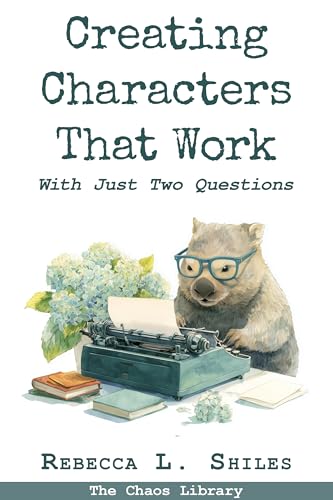
What if your characters could help you write your book?
Flat scenes? Sagging middles? Characters who refuse to cooperate? This isn’t a workbook, and it’s not a textbook. It’s a fast, punchy guide that feels more like a conversation than a lecture. It's funny, clear, and full of real-world advice you can use right now.
You’ll learn how Fix flat scenes and sagging middles with your character’s helpTurn your character into your writing partnerUse just two questions to unlock motivation, conflict, and voiceWrite stronger beginnings and sharper endingsChoose the right kind of conflict for your character’s arcSpot the real problem in a broken scene and how to fix it fastWhether you plot every beat or make it up as you go, this book will help you write richer characters, tighter scenes, and better stories. Today. (Or tomorrow, or next week… whatever, I'm not the boss of you.)
Wombats?? I honestly didn’t expect this book to catch me the way it did.
I’ve worked in advertising for years, so I’ve read an embarrassing number of books about writing and storytelling. And as an author I usually know pretty fast what “type” of book I’m dealing with. I thought this would be one of those predictable ones… but no. Not at all.
The writing is quick, clever and very clear without that annoying “I’m teaching you something” tone. It feels light, but then suddenly you realise you’ve underlined half a page. It caught me off guard in the best way.
The author’s comments and her own experiences made the whole thing feel warmer and strangely familiar. I recognised doubts I’ve had myself, and seeing her frame them in such a positive, constructive way felt… comforting, actually.
There are ideas here I genuinely wish I’d known when I was writing and editing my first book. And some things I technically already knew but reading them again… I don’t know, they hit differently now. Writers are excellent at getting in our own way. This book would have saved me time, energy and a few internal arguments I still remember too well.
The pop culture references? Amazing. Not random, not forced. They actually help. Winnie the Pooh, Hitchcock, Spider Man… somehow it works.
The appendix surprised me more than I expected. It actually closed the whole experience in a way that lingered more than I thought it would.
I finished the last page thinking something I don’t say often: “I need this on paper.” I only buy physical copies of the books I know I’ll revisit, so that says a lot.
It reminded me of the feeling I had when I read The Art of Immersion by Frank Rose. Totally different books, yes, but that same sense of “I’m learning something real here” came back.
It can be hard to be objective when you know the author of the book you're reviewing - especially when you sleep with her every night.
Creating Characters that Work: With Just Two Questions by Rebecca L. Shiles is a book I know pretty well. I should, I wrote it. Is it fair for me to do a review of my own work? Sure, why not? I've yet to meet the Chaos Library police force, but I suspect it's staffed entirely with wild Chihuahuas, and I keep jerky around just in case I need to distract them.
This is a silly book that also manages to introduce and explain some useful concepts about writing. Intertwined with the instructional text are three original fiction stories that illustrate the point of each chapter while still managing to be entertaining.
The jokes are nearly constant, and some people will hate that. But some people hate chocolate and others hate dogs. We can't trust those people, now, can we? If the humor isn't to your taste, then good news, there are thousands of other writing craft books. The rest of us will be over here, laughing over wombats and Laser Eye Larry.
I can't (and won't) force you to read this book. I'll just say that you might enjoy it, and you could even learn something that makes writing easier and a little more fun. If you do, be sure to let me know, and I'll pass your notes on to the author. She loves that kind of thing.