Combining the scientific ambition of Andy Weir, the reality-bending speculation of Blake Crouch, and the geopolitical scope of The Three-Body Problem, Quinto’s Challenge is a sweeping science-fiction epic about humanity’s oldest dream—and the struggle for power it unleashes.
On the 100th anniversary of President John F. Kennedy’s challenge to land a man on the Moon, visionary U.S. President Vince Quinto issues an even more audacious challenge: make human resurrection a scientific reality before the century is out.
As the 21st century draws to a close, advances in genetics, quantum physics, and artificial intelligence are finally converging to make Quinto’s Challenge possible. The last theoretical breakthrough—hailed as the Theory of Everything—comes from Deeley Carr, a brilliant but self-doubting young physicist recruited into a top-secret government project.
Working alongside Xara, a conscious android held under government control, Deeley pushes the project toward its impossible goal—even as both begin to understand what success would place in human hands.
That power promises more than a new form of immortality. The same science could expose the physical record of the past, rendering even humanity’s most closely guarded secrets visible. As political leaders, scientists, and sentient androids confront the consequences, they realize that a discovery capable of overcoming death could also become the ultimate weapon of surveillance and control.
Quinto’s Challenge is the first novel in the Dawn of Immortality series, an idea-driven science-fiction saga exploring what happens when the ancient promise of resurrection becomes a scientific capability—and humanity must decide who controls the power over death.
Editorial Praise for Quinto's Challenge
"McChesney introduces some heady themes in this twisty SF tale, emphasizing various ethical questions regarding the creation and extension of life... A compelling SF saga that focuses on the humanity behind big tech." — Kirkus Reviews
"In Peter McChesney's sweeping science fiction novel Quinto's Challenge, a brilliant young outsider's theories change the trajectories of physics and philosophy." — Foreword Clarion Reviews
"Lovers of science fiction novels with a touch of political intrigue and suspense will find Quinto's Challenge by Peter McChesney an enthralling read." — Readers’ Favorite
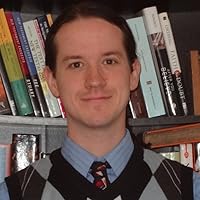
Born and raised on the beaches of eastern Australia, Peter McChesney is a dual US-Australian citizen whose path has taken him from academia to corporate America—and now, to storytelling. His passion for writing began early, especially after his parents bought him an Amiga 500 computer, which he used not only for games but also to craft stories and fuel his imagination.
He holds degrees in Writing and Publishing (Western Sydney University), Law and Constitutional Studies, and a master’s in Political Science (both from Utah State University). Each of these disciplines now finds expression in his fiction—particularly in his enduring fascination with America’s founding era and the novel’s geopolitical themes.
Peter has worked as an adjunct instructor in US history and political science, with most of his career spent in business-to-business software sales. He also led several teams that trained some of the world’s most advanced real-world artificial intelligence.
Quinto’s Challenge is his debut novel and the first in a planned series that will explore the ethical, societal, and existential consequences should science ever advance far enough to make human resurrection possible. The story examines the tension between spiritual ideas and scientific ambition, reflecting Peter’s own formative influences from both faith and reason.
He lives in the United States with his family and dog, and still enjoys gaming when time permits. Find out more about Peter at https://www.petermcchesney.com/.
This book is such a treat, I love it when books talk a lot about science, especially when it is central to the plot. Deeley is hired by CAPR, a top-secret government agency to assist with making Quinto's challenge of resurrecting the dead to come true. Working with two androids, Xina and Xara, Deeley is able to have a breakthrough that will change everything. But despite this, the real challenges lie ahead. President Gates' term is coming to an end, and if Benson succeeds him, all research will be put to an end. And in order to start attempting resurrection, they must upgrade Xara - which is currently illegal.
Deeley is such a lovable character. She is very shy and introverted yet extremely smart. I also love the characterization of the androids, who feel like they could be human, which helps this book in making it truly feel like the future. All of the characters in the book are very well developed and seem like real people that could exist. While I am not a science buff, this novel was truly enjoyable to read and I would definitely recommend reading it.
If you’re into sci fi that feels terrifyingly possible and packed with big ideas, Quinto’s Challenge is an absolute must read.
The setup alone hooked me: on the anniversary of the Moon landing, a bold president challenges America to conquer death itself.
It’s such a brilliant, audacious premise that immediately makes you think, “Could we? Should we?” McChesney takes that question and runs with it across an entire century, weaving together genetics, quantum physics, and AI in a way that feels less like fantasy and more like a thrilling prediction.
McChesney masterfully explores the ethical nightmares and existential questions. Highly recommended if you want a peak into a future that is grand!
Quinto’s Challenge is an ambitious and intellectually gripping science fiction debut that dares to confront humanity’s most enduring obsession: immortality. Blending speculative science with political tension and ethical inquiry, Peter McChesney crafts a future that feels both visionary and unsettlingly plausible. The convergence of quantum physics, AI, and genetics is handled with confidence, while the human cost of such progress remains sharply in focus. At its core, this novel is not just about defeating death, but about who controls life, power, and truth when science surpasses morality. A timely, provocative read that will strongly resonate with fans of high concept, idea driven science fiction.
I really enjoyed this book. McChesney does a great job creating a plausible future society that has unlocked incredible capabilities through the use of advanced technology. While I came for the near-futurism, I stayed for the political intrigue, commentary on sentient computers and snappy dialogue. McChesney does an excellent job pacing the narrative, too, and frames the scientific and political backdrop in an engaging and thought provoking way. I'm a big fan. If you like futurism, technology, AI, political thrillers, or science, I think you'll enjoy this read too. (I did receive an advanced copy of the book via the publisher, but the opinions and words in this review are my own.)
Thank you for a free copy of “Quinto’s Challenge” in exchange for an honest review! I enjoyed this. The story was engaging, although a bit obscure. Not to mention extremely scary, in the sense of what our future as a species could possibly look like. The character development was nice, although our main character cries a bit much, and has an odd sympathy for the androids. I’m sure a century from now that would probably be the norm for how humans would view them. Why not?!? We have civil unrest in every possible aspect now, why not include the androids? I am definitely not one who accepts this whole AI garbage we have now as it is, and to even think of how it would be in a hundred years is absolutely frightening! Peter McChesney’s writing was convincing and engaging. The science was pretty interesting, and I liked the quantum theory aspects in the plot. However, I think some of the massive information dumps could have been spread out a little more to balance out a book of over four hundred pages. To dwell on a theory that there exists somewhere in the quantum world where thoughts and consciousness exist woven within the fabric of this quantum world, and then to discover a way to extract those disembodied existences, is kind of fascinating, mind-blowing, and scary. Not to mention definitely morally questionable. It’s funny, even a hundred years into the future, the precious political leaders would continue to tackle topics that contributes nothing to the growth of the country. Never mind fixing the economical distresses or delicate civil issues (of which they cause on their own from the start), let’s find a cure for death! The way I see it, the very topic of ending death would inevitably have an ulterior motive, leaving the general American population (or the world population for that matter) behind and advancing the agendas of crooked politicians and world leaders. This type of technology would never make it to the general population. This would be the type of process strictly relegated to the elite, the over-inflated leaders of the world, the global rich. In my best possible sarcastic, eye-rolling disgust, I would ask… how could we possibly survive without the political ideologies and agendas of a pompous political leader who died centuries ago!?! I know this is not the point of this book (or is it?), I’m just ranting on how I see where this kind of technology or “advancement” would unfold. I honestly believe that, 100 years from now, AI would not be called “generative AI”. I feel like it would be so deeply imbedded in societal culture that it would be well beyond normal. This book literally calls androids as “conscious beings, self-aware, with feelings and emotions akin to humans”. That doesn’t sound like generative AI to me, that sounds more like an absolute integration of the digital world and human sentience blended into basically a new breed of life. Yeah… stop the world and let me off! I feel that, in the future, as this book is set, AI and android technology will be more deeply faceted in societal lifestyles than merely calling it “generative AI”. All in all, if this is even a small glimpse of what our future will look like, I am very concerned. However, I will definitely be picking up the next book to see what unfolds.
A challenge made by a popular scientist president of America that has fallen behind China in world leadership and that challenge is to defeat death. Sounds promising and at 438 pages as a first time author is a big ask for some. However, having read and enjoyed books on a similar storyline like that of The Postmortal by Drew Magary (2011), it sounded like a promising story. What I got was a story with no tension, no real drama, no one who really acted like a real person or failed in any meaningful way, and overall a very bland 438-page story.
McChesney puts his main character front and center Deeley Carr who's a female scientists without a doctorate, which is a point of slight contention at the start, but her self-published work that might rock the known understanding of reality has a lot of promise. As such, she's picked up by the corporation tasked with developing elements to defeat death but in a universal sort of way rather than a biological sense. Carr is neurodivergent which just means that she was really smart and wondered about the full scope of reality when she was five. She faces no real hardship from her atypical brain other than she relates to the androids in this world and she cries when they face discrimination. She likes to cry a lot. Everything she offers as a theory or an idea is immediately green lit, thought about for a few days or week, and immeidately works out practically perfectly. She faces no attack or hardship. She suffers no loss or moral qualm.
The world she operates in under in the United States is pretty much a semi-socialist nation economically speaking. Religion as vanished without explanation by the author (another thing I hate that sci-fi authors do as if it's a foregone conclusion that future and knowledge means religion just disappears without any reprocussions or need to explain it). The economic factor offers some possibility for interesting situations to arise especially with AI and androids pushing the need for government involvement safety net for more people. But other than a few toasterheads getting their nonexistent feelings hurt, there's nothing that really happens.
The United States government is on board with putting everything behind Carr's project and ideas and they only slightly talk about the military and intelligence aspect that a government would want to seek out being able to look back in time in order to supplant coinsciousness into clones of people. So not really preventing death but cloning. Is there any real discussion on the soul or how clones aren't the original or any of the negative consequences? Nope, not really. Does anyone have any issues with this? One politician shouts out "blasphemy" and is super upset but doesn't really have anything to do in stopping the program. The only tension is that the US government is nervous that the President of China won't amend a treaty that allows for AI androids to develop systems for themselves which is prohibited with the thought that doing so might turn them into evil Skynet.
First of all, there's not even the slight hint that this is a concern in the world and Carr cries about it not being fair and she has to hug all her android friends. Second of all, this suddenly went from fiction to a story that would never happen. There is no way, that faced with the ability to spy on anyone at anytime and obtain all governments' secrets would the United States intelligence agencies, military, and government let a small treaty stop them. And the main person to stop them is a Chinese leader who claims that a terrorist group that tried taking over his government nuked themselves for reasons no one really buys. It's utterly ridicious.
Half way through this book I realized that nothing was going to happen that wasn't the perfect excusion of this Mary Sue's ideas and theories. There is no tension. There is no drama to be had. There's a lot of crying from the main character and info dumps from her watching history programs that drive an already borning story down to a crawl. The fact that this is a first part of a series with a "to be continue" at the end is a prideful dispaly that has to warrant. The author has written a lot of words on a lot of paper and things happen but only everything absolutely perfectly and with very little friction. This is a book to skip even if death is defeated. Final Grade - F
I suspect this is the first novel I've read that was written almost entirely by a language model. Sure, the author will have edited it and carefully selected the best results from countless prompts. Every chapter serves one obvious mechanical purpose: nudging the plot a little further along. The dialogue is limp and exists only to communicate one particular trait or motivation of a character. Beyond that, everything feels utterly bloodless. There's no flow, no life to it.
The plot revolves around a scientist named Deeley, who discovers the missing piece of quantum mechanics. This breakthrough could have countless applications, but in this novel it apparently serves only one: it allows researchers to read information from spacetime embedded in dark matter. About ten logical leaps later, the team working with an American particle accelerator concludes that they can now resurrect the dead, exactly as the charismatic former president Vince Quinto had once predicted and hoped for.
Wait... what?
This is the process: using a person's DNA, they clone the deceased (even when that has never been tried before), then read that person's brainwaves from spacetime and, through a generous helping of quantum-mechanical gobbledygook, re-entangle them with the clone's brain.
In this novel, a person is good or bad, there are no in-betweens. On the side of the good guys we have Deeley and her colleagues, along with current president Gates. On the side of evil there's Senator Benson, who wants to unseat Gates after his first term and runs a populist campaign against androids and resurrection. The villains want to exploit the new technology for surveillance, since this spacetime information allows anyone's past to be observed at any point in history. Throw in a Chinese Party Chairman and a President of Europe—together with the United States the three global superpowers—and you've got the complete geopolitical picture. Yes, it's that simplistic.
Conquering death is treated as the ultimate holy grail, and only the antagonists raise weak objections. I'd say there are some points to consider. Are we bringing everyone back? Or only the wealthy? What about inheritances that have already been distributed? Where will all these resurrected people live? Could you recreate multiple copies of the same individual using the same technique? The novel glides effortlessly past all of these issues with the kind of unquestioning simplicity normally reserved for superhero action series.
And then there are the characters.
Calling them cardboard cut-outs would actually be too generous. They're made of paper: utterly lifeless, completely one-dimensional, profoundly uninteresting, and they undergo zero development. The characters barely have personalities; they're simply there to fulfil their assigned functions. A romantic subplot drops out of a clear blue sky.
The opportunities were there. Take Xara, for example, the likeable AI doing all the calculations. She undergoes several self-designed upgrades that steadily increase her capabilities. That might have turned into a compelling storyline: let the upgrades be too good, let Xara discover the taste of power and begin pursuing her own agenda rather than humanity's. But no. Xara belongs to the good charaters, and that's what she will stay.
The first hundred pages consist almost entirely of endless exposition about the world of 2098 and its technological possibilities, delivered in an embarrassingly clumsy fashion. Usually this means Deeley sitting in her apartment watching one virtual reality documentary after another: about President Quinto, the Chinese leader, the state of cloning technology, international treaties, and so on.
It's just sad.
The fact that this four-hundred-page brick confidently announces itself as BOOK 1—the beginning of a series— reinforces the impression that it most of it rather effortlessly rolled out of a computer and that the author can churn out the sequels as quick as he wants to.
Quinto's Challenge by Peter McChesney has a fascinating premise: what if in the not-too-distant future, we had the power to resurrect people from the dead, replete with their memories and even their “souls”? The novel also tackles the ramifications of what could happen when AI, including humanoid androids, becomes much more powerful and pervasive. These themes, and some skillful writing (especially for a few speeches sprinkled through the story) with generally good character development make this an absorbing and worthwhile read. The science supporting resurrection is mostly believable, although some details, such as how “souls” are pinpointed and restored, are of the “It’s sci-fi, you just need to accept it” variety.
Despite the imaginative story and generally high-quality writing (only a few small errors), there’s several things I didn’t like. There’s an exposition core dump in the first chapter—I’d have preferred that some of that detail be postponed until later. As for details, I think there’s too much detail that’s unimportant to the story. e.g. lots of mentions of health-monitoring clothes, and clothing in general. There’s also a lot of repetitive pontificating by some of the characters. Then there’s the inconsistencies. For example, androids are depicted as not being a threat to humans, but one of the world’s most advanced androids has no problem violating a treaty that the USA signed with the world’s other major powers. But there’s considerable devious and questionable behavior by humans, too, such as blowing off some huge ethical questions around resurrection. Perhaps the biggest inconsistency is with how the protagonist acts contrary to her character at a key point in the story. And the author almost completely ignores the religious aspects of death, resurrection, and the soul. There’s a quick note about religion “receding into the background,” but I think this is a big omission given the subject of the book.
Note: This book is acceptable for Young Adults and up. I received an Advance Reader Copy of the eBook from the author in exchange for writing a review.
In 2062, President Vince Quinto challenges America to conquer death before the turn of the century. Technology has advanced significantly, featuring increased lifespans, medical breakthroughs, transportation upgrades and AI that works with people. However, no one has come close to resurrecting the dead until the young physicist, Deeley Carr publishes her breakthrough, the Theory of Everything, which suggests a path forward. Deeley is recruited to work on Quinto's challenge for the government. With the help of two androids, Xina and Xara, Deeley makes progress quickly. With progress comes danger. The same technology that could conquer death could also be used to spy on and control others.
Quinto's Challenge is a cerebral work of speculative fiction. The style of writing did not engage me, but I was very interested in the plot. The writing relies more on telling than showing, using news broadcasts, speeches and transcripts to deliver information. I was very interested in the science behind the resurrection process and there is definitely a lot of science involved. I was surprised at how quickly everything was solved, often with a successful trial the first time or perhaps a quick tweak followed by success. Deeley's character was endearing and I did enjoy her view on life as well as her relationships with the Androids. The story did a good job of raising questions about science ethics, government agencies' power and control, Artificial Intelligence standards and how science fits into government process. I enjoyed the last several chapters the most, as they focused on resurrecting a human and interacting with her.
This book was received for free in return for an honest review.
A Bold Sci-Fi Exploration of Immortality and Power
QUINTO'S CHALLENGE opens with a bold premise that immediately sparks curiosity. A presidential call to conquer death itself sets the stage for a future shaped by rapid scientific advancement and political ambition. The novel follows Deeley Carr, a gifted but reserved physicist whose work becomes central to making resurrection possible. From the beginning, the story makes it clear that the breakthrough is as dangerous as it is revolutionary.
Much of the novel’s strength lies in its exploration of ideas. Genetics, quantum theory, and artificial intelligence are woven into the plot in a way that feels grounded in possibility. The pacing allows time for worldbuilding, giving readers a clear sense of a society transformed by technology. Political tension and ethical debate run alongside the scientific discoveries, creating a layered narrative that goes beyond simple futurism.
At its core, QUINTO'S CHALLENGE is a story about consequences. The promise of immortality raises questions about power, control, and the limits of human ambition. The characters react in different ways to the potential of this discovery, which keeps the stakes personal as well as global. As the first installment in a series, it sets up a wide canvas and invites readers to consider what humanity might risk in its pursuit of forever.
🚀What if humanity’s next giant leap wasn’t to the stars but straight through death itself?
Quinto’s Challenge pulled me in with its bold premise and kept me thinking long after I turned the last page. Set against the backdrop of a future racing toward the end of the century, this story blends hard science with big ethical questions in a way that feels both thrilling and unsettling. The idea of turning resurrection into a scientific reality is fascinating and honestly a little terrifying.
I really connected with Deeley Carr, the quiet genius at the center of it all. Watching a shy quantum physicist become the key to a discovery that could change humanity forever gave the story a grounded, human heart. As the science clicks into place, the tension ramps up not from explosions and space battles, but from the creeping realization that immortality could become the ultimate tool for control.
This is the kind of sci-fi that made me pause, reread passages, and ask myself what progress should actually look like. Smart, thought-provoking, and timely, it’s a book that challenges you right along with its characters.
✨️Thank you Books Forward PR and Peter McChesney for sharing Quinto's Challenge with me!
Suppose that all past events have been encoded in a hidden quantum layer of the universe. Now suppose that we can extract neural patterns (memories) from this quantum layer and implant them in a clone, reconstituting deceased individuals. What social and political consequences would follow?
The marketing copy invoking Blake Crouch and Andy Weir is perhaps overly ambitious—Quinto’s Challenge has neither Crouch’s pacing nor Weir’s scientific detail, but the comparison with The Three-Body Problem may be apt: Both are idea-driven novels. In Quinto’s Challenge, character and plot play supporting roles in an exploration of the ethical and practical issues entailed by technology permitting artificial resurrection. The exploration seems only to graze the surface of these profound questions, but McChesney may be using this first novel to set the stage for more-thorough investigation of these issues in the rest of his series.
Thanks to Vivimus Press and NetGalley for providing a review copy of this novel.
This is definitely a book for the hard core sci fi readers. I think the premise actually tackles a lot of really important real world topics that we may be facing in the fairly near future. How does AI play into all this? “Just because we can, doesn’t mean we should” type of questions. If you’re into longer super detailed books, this is the book for you. However for me, I think it could have used some tightening up.
I think the book was just too long for me to keep me fully engaged. The world building and science are delivered through long speeches and documents, which is a clever idea but it became so inundated with them that I found myself skimming through them (and I probably missed some things). If they were less frequent and maybe more concise, would have served better I think. It began to get a little repetitive as well.
Excellent concept, very thought provoking, the execution was just not fully for me.
Thank you to Netgalley and the author/publisher for an early copy of this book in exhange for an honest review.
I was pretty excited when I read the description of the book. Very techie-sci-fi, one of my favorite genres. And I thought “I can manage that,” when I read that it was a book in the 200-300 page range.
Alas, when the book arrived at 450+ pages, I was put off for a while, with limited reading time. I remained excited, though, because the premise was still exciting.
And it started well. Oddly, in history, but still interesting, if weirdly stilted. Then it quickly moved into the post sentient AI future and our protagonist’s impending foray into attacking Quinto’s challenge. That also seems interesting at first. But it devolved into more stilted conversation and an extraordinary amount of exposition. While I love science and sciency discourse, often the dialogue in this book felt rudimentary and awkward.
That said, the concept was still very interesting, and the science forward among us who may not be as frustrated with sometimes forced and sometimes just kind of boring dialogue will likely still enjoy the story.
Quinto's Challenge, written by Peter McChesney, was a pretty good read. It was a novel that challenges one's thoughts about immortality and the cost of reaching it. The story will have the readers hooked in that regard.
There were some interesting moments in the novel. For example, the characters, especially Deeley. They really shaped the story and the direction that it was going. The pacing of the novel, however, was the only flaw. The readers will notice that as they continue to read some more, it may start to become a bit lackluster.
Overall, though, Quinto's Challenge was a nice story to dive into. This is recommended to readers who enjoy a good sci-fi novel. It gets a rating of 3 out of 5 stars.
Quinto’s Challenge is a sharp, reflective sci-fi that explores the moral and political consequences of immortality. Although immortality books have been done before, I have not seen the concept being explored in this way. Quinto’s Challenge presents a world steeped in scientific advancements, with self-driving cars and hyper intuitive apps, and Peter McChesney creates an MC that started as an outsider and is easy to get behind.
It takes a little time to get to the crux of the issue, as McChesney spends a good amount of time on worldbuilding and exposition at the start, but the story quickly ramps up.
Set in a futuristic world, Quinto’s challenge presents a unique exploration of the consequences of immortality.
In a world where talking technology exists, author Peter McChesney used this well, injecting them with personality and flair. However, I would have liked to see more extreme personalities from some of the technologies, such as the talking car. This would have added an interesting dynamic to the story in my opinion.
All in all, Quinto’s challenge was an interesting moral exploration of the consequences of immortality, filled with characters that stuck and a deep, advanced sci-fi world.
I really enjoyed this book! The mix of sci-fi, politics, and religion was very interesting, and, at times, it was a bit eerie to feel that a future that McChesney has created might not stray too far from where we're heading. This is a timely book that examines resurrection. Should we strive to make this a reality through science? Is it ethical? Is the advancement of AI ethical? Lots of questions to noodle over here.
For folks who like Dark Matter or Andy Weir (especially for the accessibility of scientific concepts in fiction), then this is a must-read.
To sum it up in a few words: I am too European for this. The fact that it is the 100th anniversary of JFK's challenge to reach the moon is too weak an excuse to propose a challenge to bring the dead back to life. Not to mention that Kennedy's challenge was aimed at the future, while Quinto's was aimed at the past, dictated by his personal grief over the loss of his wife. The characters, humans, androids, and artificial intelligences, are also decidedly implausible. A laborious and annoying read.
I really enjoyed the read. My normal genre is US Revolutionary War and WWII history. I very much liked the author's forecast of our technological advances coming to our future. The idea that all matter is recorded within the space of time was intriguing, thus leading to the exploration of human resurrection. I appreciated the ethical debates between different actors in the book which stimulated my own independent thoughts. I hope there is a book two coming as I think Xara will surprise us.
This was a very interesting read. Set in the not too distant future where space travel is possible, scientific research is on a whole other plane and the idea that you can bring people back from the dead is about to be realised.
The only thing I felt was a little lacking was maybe a bit more of a dramatic lead up to the end.
I found Quinto's Challenge an excellent and unique book to read with originality, fantasy and vision. It was remarkably well written and fascinating to read as it captivated your soul and senses into what could happen in the future to all humanity, past and present. An exceptionally good read.
This was sent to me by the publisher and I thought this book was pretty good. It talks about really important topics, like with AI, and those in power controlling death, and who get to be immortal & who doesn’t. This book seemed more realistic than fiction. Overall I had a good time and this was thought provoking.
Peter McChesney’s Quinto’s Challenge delivers a sweeping, idea-driven science fiction story that blends hard science, political intrigue, and ethical speculation into a compelling futuristic narrative. Set against the backdrop of a bold presidential initiative to conquer death through scientific resurrection, the novel explores what happens when groundbreaking discovery collides with power, ambition, and human vulnerability.
At the center of the story is Deeley Carr, a shy but brilliant quantum physicist whose work becomes key to unlocking the possibility of immortality. McChesney balances complex scientific concepts with accessible storytelling, making the novel especially appealing to readers who enjoy hard-core science fiction rooted in plausible technological and theoretical advances. The pacing remains steady throughout, weaving together high-stakes political maneuvering, scientific breakthroughs, and the mounting tension surrounding a discovery that could reshape humanity.
The book shines in its exploration of ethical dilemmas. The potential to resurrect the dead is presented not just as a miracle but as a dangerous tool that could be misused for surveillance, control, or global dominance. These themes add depth and urgency to the plot, giving the story a thoughtful edge beyond its technological spectacle. Character development is also strong, with figures who feel grounded despite the futuristic setting, allowing readers to connect emotionally with the consequences of the science at play.
Quinto’s Challenge will especially resonate with fans of ambitious, idea-heavy science fiction that isn’t afraid to ask big philosophical questions while still delivering suspense and forward momentum. It’s an engaging start to what promises to be an expansive series.