Much as Good to Great described what separates top companies from the rest, The Next Level shows new, current, and future executives what differentiates success and failure at the executive level. Every day, high performers are tapped to be executives and then left alone to figure out how to function successfully in their new role. When this happens, most new executives rely on strengths that served them well earlier in their careers. As executive coach Scott Eblin explains, this is why 40 percent of them fail. Moving successfully to the executive level requires knowing which behaviors and beliefs to drop, as well as which new ones to pick up. Like having a personal executive coach, this confidence-building book outlines a program for success for new and future executives and offers frank advice from accomplished senior executives on what to do and to avoid.
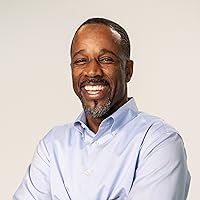
Scott Eblin is the co-founder and president of The Eblin Group, a professional development firm committed to helping executives and managers improve their leadership presence by being fully present. As an executive coach, speaker and author, Scott works with senior and rising leaders in some of the world’s best known and regarded organizations.
Scott is the author of two books. Business Book Review described his first book, The Next Level: What Insiders Know About Executive Success as a “fascinating read” that “is full of potentially career-saving advice.” New York Times best selling author Marshall Goldsmith says Scott’s newest book Overworked and Overwhelmed: The Mindfulness Alternative “will fundamentally change how you live each day.”
As a former Fortune 500 executive himself, Scott knows the demanding expectations and challenges his clients face. He coaches busy, successful leaders in what he calls the “school of real life” to help them identify the strengths they can build on along with the vital few opportunities that will help them be even better. Scott is an innovator in the field of coaching who has worked with hundreds of clients in individual and group engagements that yield measurable and significant improvements in leadership effectiveness.
Scott is an honors graduate of Davidson College, holds a masters degree from Harvard and has earned a Certificate in Leadership Coaching from Georgetown University where he is also on the program faculty. He is also a Registered Yoga Teacher.
I found this book full of nuggets to help improve my overall effectiveness as a newer executive leader.
Some lessons overlap with other books I have read, but none provided the structured framework produced in this book by author, Scott Eblin. The book focuses on three different presences (personal, team, and organization) to have as an executive making up a myriad of new skills to be gained that counters the skills mastered to achieve executive level. Each presence is broken down into a few chapters that include testimonials from other experienced executives along with a solid list of tangible coaching moments.
This type of book is one to keep close and leverage as you focus on different aspects of the role of an executive leader. I would recommend to other current or soon to be executives striving to stay relevant and perform at the next level.
Interesting self help on leadership. Book is jam packed with good leadership ideas, behaviors and routines to advance in your career. I thought at times it was hard to follow a linear order of items you can use to advance your career. As with all self help books, you’ve now read it, now go implement these ideas and change your leadership. Unfortunately, you may change but others may not thus making for a conundrum for how does your company change and improve
The Next Level: What Insiders Know About Executive Success Scott Eblin Davies-Black Publishing
Business careers proceed from one level to the next and these levels are frequently identified by titles, with CEO being the highest. What intrigued me about Scott Eblin's book as I began to read it is that he thinks of a career progression in terms of a series of levels of personal as well as professional development. Obviously, he agrees with Marshall Goldsmith (author of What Got You Here Won't Get You There) that new opportunities are accompanied by new challenges. Therefore, the ascending executive must leverage her or his strengths while at the same time abandoning any mindsets, beliefs, and habits that are inadequate, if not self-defeating. According to Eblin, "Through my research, I have defined nine sets of key behaviors and beliefs that executives need to pick up [e.g. `custom-fit' communications] and let go of [e.g. `one-size-fits-all' communications] to succeed. This process of picking up and letting go, I've learned, is central to succeeding at the executive level." He notes that a strength when used to excess can become a weakness. So, the ascending executive must know when and under what conditions she or he is performing best. "Operating from that base of confidence" enables her or him "to have the clarity of thought needed to make smart strategic choices" about what to pick up - and what to leave behind - when advancing into the "unchartered terrain" of the next career level.
Long ago, Henry Ford suggested that, "Whether you think you can or think you can't, you're right." Hence the importance of what Eblin calls an Executive Success Plan (ESP). Presumably the estimate is true that 40% of executives fail within 18 months of their promotion to the next level. The reasons vary, of course, but one of the most common is a failure to leverage the capabilities that led to the promotion while adding other capabilities that include different mindsets as well as new skills (e.g. delegation of authority, performance evaluations). To paraphrase Goldsmith, "What got you here explains why you are here but you need new ways of thinking and acting for your career trajectory to proceed higher." Hence the importance of formulating what Eblin calls an Executive Success Plan (See pages 195-199 and Appendix A) to maximize the value of obtaining feedback from various sources, including colleagues. Readers are also strongly encouraged to make effective use of the material in Appendix B ("Situation Solutions Guide") in which Eblin identifies some of the most common situations executives find themselves in and matches them with some of the solutions recommended in his book.
Excellent book about how to get to the next level of executive success. It is one of those books I have listened to on Audible and also got a paper copy. There is a lot here to dog ear, highlight and reference over again. It is the handbook on how to change your mindset to be effective as a leader - instead of relying on what got you to success (being the go-to person of getting things done), one needs to focus on the big picture organizationally, utilize teams to get the work done and take care of yourself so you don’t run your engine on empty. Great book I’ll be referencing for years to come.
Overall this was a good read. I probably would like given it a higher rating if I had read it earlier in my career or before some other leadership books I have read. The structure and content were solid, and I recommend it to early career leaders or mid-level management. There were no major take-aways or "ah-ha" moments that I hadn't seen somewhere else before. The problem for me was the author openly targets the book to people becoming executives or perhaps just about to. I think the content of this book should be read and understood well before actually taking the step into executive leadership.
A good leadership book. A quick read. Good chapter summaries to review the main points.
This book was a game changer for me. I bought it back in 2015 but never read it until just now. It is an essential read for anyone moving up in an organization, clearly explaining how one’s roles and expectations change. I found it exciting to really understand that I’m no longer responsible for producing products but I’m accountable for advancing my organization’s mission in a unique way. I love the focus on self-care and the notion that leaders control the weather. Great read, I plan to listen to it again for continuing ideas and inspiration.
I was assigned this book for work. It is not a first time supervisor book, but more of a first time vice president book. A lot of the same concepts apply between first time managers and first time executives. In both cases the newly promoted tends to fall back into the work they are most comfortable with, but if they want to succeed in their new position they have to move beyond doing the work themselves and understand that their role is now to lead a team of people who will do the work.
I’m really happy to have been able to be exposed to this wealth of information and insights. I have learned so much that I will be applying to my life and career. Thank you
A must read for any manager moving up the executive level of leadership. I was able to take away a lot of great lessons about what got me here isn’t necessarily what I’ll need going forward — very practical principles that make sense at this phase in my career.
Excellent work by Scott Eblin. Scott goes into detail the inside story of Executive life and what it takes to succeed and thrive at the Executive level.
Preparing to get promoted at work can be a daunting task. All kinds of thoughts emerge as to how to handle new reports, different bosses and in the case of a new job of a transfer, a whole different complement of staffs and workers.
Scott Eblin, a former HR executive and professional certified coach, has put together a plan for succeeding at the next level and avoiding the pitfalls that lead to most executive failure as one works their way up the ladder. Elbin’s approach centers on two basic concepts – expanding your view and leaving old habits behind.
When it comes to expanding one’s view, Elbin advocates that new bosses should not just look up (at their bosses) or down(at their staffs) but left and right (to co-workers and executive peers) as well as diagonally, by getting to know every person that matters and focusing on the key purposes of the organization as a whole.
Looking beyond oneself is also the key to his other major platform, which involves switching out old behaviors that are based on the individual agenda and converting those efforts into the service of a broader group mission. Eblin has a list of nine habits to adopt, while leaving nine old way behind.
Eblin’s book, in it’s expanded second edition, is not revolutionary or even groundbreaking, but it is a useful volume for executives who suddenly find themselves moving up the ranks to positions of greater exposure. A wise book to run through before making what could become career killing mistakes during your next promotion.
I really like Scott Eblin having had an Executive Coaching seminar (over a period of six months) from him based on the Next Level Leadership concepts. I also enjoy reading his blog on leadership. I enjoyed reading the Next Level Leadership. The concepts and examples are easy to put into practice and are very relevant. There are very few books to assist executives with the transition from a mid-level manager to the executive level. I was slightly disappointed by the second edition. Although there was some updated/newer information the concepts were generally the same and I often felt like I was reading the same book again. I assume that’s common for a new edition of a book of this type, I just expected more new ideas or approaches. It’s definitely worth the read.
There are two important things you should know about this book right away:
This book is written by a good writer who has been an executive in a Fortune 500 company; so, it is not only well written, but it’s readable and practical. This book is a Second Edition – a “revised and expanded” book. In my experience, poor books don’t get “revised and expanded”. The Next Level - Scott EblinThis is a very good book.
A fabulous book! It offers insightful tools and tips for new and existing executives. The Situation Solution Guide at the back of the book is helpful in dealing with everyday situations, even if you are not an executive. Everyone could use a little training on what to "pick up" and "let go." I highly recommend this book!
Things I wish I had known a year ago - sensible, practical ideas for managing your transition up the career ladder. Very American in its language but still a really useful book.