

What do you think?
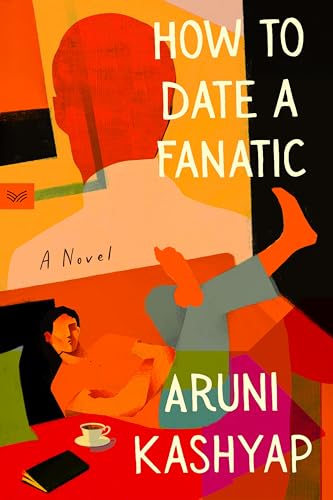
How to Date a Fanatic: A Novel
In this compassionate, poignant novel set in contemporary India, a young professor searches for connection and love during a time of political and cultural upheaval.
As political tensions rise precipitously across India, Rohit returns to Delhi University to teach and gets caught in a web of unrequited love with his friend Dhruv. To alleviate his inevitable heartbreak, Rohit seeks relationships with other men on campus, until he meets and embarks on a delicate new romance with the effervescent Sayan, a literature student he hopes will be the answer to getting over Dhruv.
Rohit’s life soon becomes more complicated as the country's political tensions erupt on campus, sparking a turbulent student-led movement that entangles Rohit when Dhruv joins the fray, a tipping point that changes Rohit’s life forever. Set against the vibrant, volatile tapestry of modern India, Rohit and his friends must learn to navigate the challenges and triumphs of queer life to survive in an unpredictable political landscape.
Propulsive, tense, and charged with humor and tenderness, How to Date a Fanatic is an exploration of identity, connection, and the enduring hope for a better future in a rapidly changing world.
As political tensions rise precipitously across India, Rohit returns to Delhi University to teach and gets caught in a web of unrequited love with his friend Dhruv. To alleviate his inevitable heartbreak, Rohit seeks relationships with other men on campus, until he meets and embarks on a delicate new romance with the effervescent Sayan, a literature student he hopes will be the answer to getting over Dhruv.
Rohit’s life soon becomes more complicated as the country's political tensions erupt on campus, sparking a turbulent student-led movement that entangles Rohit when Dhruv joins the fray, a tipping point that changes Rohit’s life forever. Set against the vibrant, volatile tapestry of modern India, Rohit and his friends must learn to navigate the challenges and triumphs of queer life to survive in an unpredictable political landscape.
Propulsive, tense, and charged with humor and tenderness, How to Date a Fanatic is an exploration of identity, connection, and the enduring hope for a better future in a rapidly changing world.
354 pages, Kindle Edition
Published July 14, 2026
About the author
Aruni Kashyap
15 books73 followersAruni Kashyap is the author of The Way You Want To Be Loved, The House With a Thousand Stories, and the forthcoming How to Date a Fanatic. Along with editing a collection of stories called How to Tell the Story of an Insurgency, he is the translator of four novels from Assamese to English. A 2024 Carl and Lily Pforzheimer Foundation Fellow at Radcliffe Institute for Advanced Study, Harvard University, he is also the recipient of a National Endowment for the Arts Fellowship, the Faculty Research Grants in the Humanities and Arts Program, the Arts Lab Faculty Fellowship, and the Charles Wallace India Trust Scholarship for Creative Writing to the University of Edinburgh, his poetry collection, There is No Good Time for Bad News, was nominated for the 58th Georgia Author of the Year Awards 2022, a finalist for the Marsh Hawk Press Poetry Prize, and the Four Way Books Levis Award in Poetry.
His translations, which have been shortlisted for the 2023 and 2024 Armory Square Prize for South Asian Literature in Translation and VOW Book Awards 2024, include The Bronze Sword of Tengphakhri Tehsildar by Indira Goswami (Zubaan), My Poems Are Not for Your Ad Campaign by Anuradha Sarma Pujari (Penguin), An Illuminated Valley by Dipak Kumar Barkakaty (Penguin), and Ten Love Stories and a Story of Despair (Westland). He has served as a visiting writer at Lander University, Minnesota State University, Converse University, The College of William & Mary, Valdosta State University, Dibrugarh University, Assam Don Bosco University, and delivered the Tagore Lecture in Modern Indian Literature at Cornell University. His short stories, poems, and essays have appeared in Granta, The Boston Review, Electric Literature, Catapult, Bitch Media, The Kenyon Review, The LitHub, The Oxford Anthology of Writings from the Northeast, The New York Times, The Guardian UK, and others. He also writes in Assamese and is the author of a novel, Noikhon Etia Duroit, and three novellas. He is an Associate Professor of English & Creative Writing and the Director of the Creative Writing Program at the University of Georgia, Athens.
His translations, which have been shortlisted for the 2023 and 2024 Armory Square Prize for South Asian Literature in Translation and VOW Book Awards 2024, include The Bronze Sword of Tengphakhri Tehsildar by Indira Goswami (Zubaan), My Poems Are Not for Your Ad Campaign by Anuradha Sarma Pujari (Penguin), An Illuminated Valley by Dipak Kumar Barkakaty (Penguin), and Ten Love Stories and a Story of Despair (Westland). He has served as a visiting writer at Lander University, Minnesota State University, Converse University, The College of William & Mary, Valdosta State University, Dibrugarh University, Assam Don Bosco University, and delivered the Tagore Lecture in Modern Indian Literature at Cornell University. His short stories, poems, and essays have appeared in Granta, The Boston Review, Electric Literature, Catapult, Bitch Media, The Kenyon Review, The LitHub, The Oxford Anthology of Writings from the Northeast, The New York Times, The Guardian UK, and others. He also writes in Assamese and is the author of a novel, Noikhon Etia Duroit, and three novellas. He is an Associate Professor of English & Creative Writing and the Director of the Creative Writing Program at the University of Georgia, Athens.
Ratings & Reviews
Friends & Following
Create a free account to discover what your friends think of this book!
Community Reviews
Displaying 1 - 30 of 37 reviews
April 24, 2026
3.5 ⭐️
I enjoyed this book overall, but it felt very inconsistent to me. At times I was completely engaged while other times I felt like I was reading just to get through the book. I loved the vast representation of queer characters and the description of fundamentalist right-wing politics in India. And while I know this book isn’t meant to focus solely on romance, I found the relationship between Rohit and Dhruv exhausting and somewhat annoying. The last section of the book was my favorite. I appreciate NetGalley for allowing me to read this ARC!
I enjoyed this book overall, but it felt very inconsistent to me. At times I was completely engaged while other times I felt like I was reading just to get through the book. I loved the vast representation of queer characters and the description of fundamentalist right-wing politics in India. And while I know this book isn’t meant to focus solely on romance, I found the relationship between Rohit and Dhruv exhausting and somewhat annoying. The last section of the book was my favorite. I appreciate NetGalley for allowing me to read this ARC!

August 26, 2026
This is a really poignant novel about being queer, Indian and a queer Indian amidst political and social turmoil, but also, this is about love, in its many shapes, forms and ways.
The sociopolitical and socioeconomic inequalities and issues in India were portrayed throughout the novel.
It was written vividly & with immense emotional depth, undeniably a very memorable read.
My heart ached when reading this. May we always have hope for a better outcome in life and a better future.
Thank you to NetGalley, HarperAudio Adult, HarperVia and Aruni Kashyap for allowing me to access the ALC in exchange for an honest review.
The sociopolitical and socioeconomic inequalities and issues in India were portrayed throughout the novel.
It was written vividly & with immense emotional depth, undeniably a very memorable read.
My heart ached when reading this. May we always have hope for a better outcome in life and a better future.
Thank you to NetGalley, HarperAudio Adult, HarperVia and Aruni Kashyap for allowing me to access the ALC in exchange for an honest review.

July 18, 2026
Between this and Mahesh Rao's Half Light, it seems fortuitous that within a space of a few weeks I read two nuanced books about being queer in India, and had such wildly different experiences. Neither of them romances per se, both deals with the darkness of contemporary India, and not because of homophobia. It's refreshing but heartbreaking. In How to Date a Fanatic, the darkness is not a background miasma but a spirited presence in every scene. I think I expected this to be more the kind of story about qieer urban Asia like Love in The Big City by Park Sang Young was for Seoul. And a lot of it was in how it creates a personable cast of characters and a queer found family around the protagonist who is an author. But right away you know that this story isn't just about queerness. Being set between 2014 and 2018, the story sits in that particularly dark time period when the current fascist regime had just come to power and the landmark ruling to decriminalize homosexuality hadn't come through yet. And in that space there is much horror and terror and evil and hopelessness to live and laugh through when you're educated queer young people in India. What adds another level of nuance to this is that the protagonist and his two closest friends are also from the Northeast of India, a region almost always getting left behind or violently trampled upon by the rest of India. The story can feel like it's trying to do too much because a good part of the first half is about Rohit dealing with romantic rejection, navigating new relationships and still being unable to break out of the orbit of the friend who rejected him. The sociopolitical situation they live in, however, is not a separate thing from the journey of interpersonal relationships, because every aspect of everyone's life exists on dread of the writing that is screaming from every wall. The back half of the novel is a tense series of events that left me shaking not because of how awful things got but because how immediately possible it felt. Half my family and a lot of my closest friends live and work in the region around the capital where these violent scenes are set, and they are all too believable because it does and has happened for over a decade now. It breaks my heart for my homeland over and over again and at the same time reminds me of how impossibly resilient the people are to keep choosing to hope and fight and endure. If having a visceral reaction is a metric for a good book, then this is my favorite book of the year because I'm still shaking and trying not to cry. I received the rare gift of both an audiobook and ebook ARC from Netgalley for this, and I was delighted that one of my faves, Vikas Adam narrated this. I found the accented English a bit off-putting at first because at times it felt like a Westerner's attempt at it and it flirted too close to the Apu caricature issue. Which is a shame because there is such a lovely variety of accents in India, especially from the Northeast. But over the course of the story, there is a variety of accents that distinguish all the characters and the power of the writing itself made me get over it.

July 31, 2026
3.5*
Set in contemporary India, this book follows a group of young queer professors as they navigate love amidst rising political and cultural tension. At the heart of the story is Rohit, who is trying to move on from his unrequited love for his friend Dhruv by pursuing a relationship with Sayan.
This book drops you right into the group’s friendship dynamic, which I loved. They’re unfiltered, charismatic, and hilarious. Their banter had me laughing out loud, and you could really feel the deep love they have for one another. The way they tease each other about their love lives but still show up for each other through heartbreak, the way they vent about the growing unrest around them while continuing to dream and hope for a better future—it was such a beautiful friendship to witness.
As the story progressed, I found parts of it a little confusing and repetitive. At times, it was hard to keep up with everything happening around them, but the strength of the friendships really carried the story for me. I admired the way they fought to protect their joy and create a safe space for one another.
Overall, a funny and heartfelt story about a group of queer friends trying to love and be free in a society that makes it difficult to do so.
Set in contemporary India, this book follows a group of young queer professors as they navigate love amidst rising political and cultural tension. At the heart of the story is Rohit, who is trying to move on from his unrequited love for his friend Dhruv by pursuing a relationship with Sayan.
This book drops you right into the group’s friendship dynamic, which I loved. They’re unfiltered, charismatic, and hilarious. Their banter had me laughing out loud, and you could really feel the deep love they have for one another. The way they tease each other about their love lives but still show up for each other through heartbreak, the way they vent about the growing unrest around them while continuing to dream and hope for a better future—it was such a beautiful friendship to witness.
As the story progressed, I found parts of it a little confusing and repetitive. At times, it was hard to keep up with everything happening around them, but the strength of the friendships really carried the story for me. I admired the way they fought to protect their joy and create a safe space for one another.
Overall, a funny and heartfelt story about a group of queer friends trying to love and be free in a society that makes it difficult to do so.

July 27, 2026
A Joyfully Jay review.
4.5 stars
How to Date a Fanatic feels like it has all the socio-political themes of V for Vendetta, but viewed through the lens of India circa 2015-ish and an incredible reflection of what contemporary (2026) America feels like. The reading experience is like a slow journey towards the loss of innocence and, for me personally, the tipping point came just in the nick of time. The prologue foreshadows the darkness that will come, but it is a brief introduction and incongruous with what comes after that and continues for the first half of the story.
How to Date a Fanatic ended up being a great read. I thought it showed the strength of friendship, of love, of idealism, and Rohit experiences, all through his connections to Minti, Sayan, and Dhruv respectively. The book may not be an easy read, but if you like stories that handle romantic and sociopolitical issues more seriously, then I think you’d enjoy this book.
Read Camille’s review in its entirety here.
4.5 stars
How to Date a Fanatic feels like it has all the socio-political themes of V for Vendetta, but viewed through the lens of India circa 2015-ish and an incredible reflection of what contemporary (2026) America feels like. The reading experience is like a slow journey towards the loss of innocence and, for me personally, the tipping point came just in the nick of time. The prologue foreshadows the darkness that will come, but it is a brief introduction and incongruous with what comes after that and continues for the first half of the story.
How to Date a Fanatic ended up being a great read. I thought it showed the strength of friendship, of love, of idealism, and Rohit experiences, all through his connections to Minti, Sayan, and Dhruv respectively. The book may not be an easy read, but if you like stories that handle romantic and sociopolitical issues more seriously, then I think you’d enjoy this book.
Read Camille’s review in its entirety here.

Read
August 6, 2026this was an interesting book and it covered some topics i’d never considered/that were new to me. not really my genre and the ending was very unhappy which is almost never my thing. i never didn’t want to read it so that’s something. i’m not sure if it quite accomplished what it set out to do however. honestly thinking about it, i’m not really sure what i got out of it besides “here’s a very broad overview of a political issue happening in india” and “here’s a look into the mind of a very messy toxic fucked up queer man” and “wow violence is never good” lol. yeah idk, i really did not like the ending and honestly feel very unhappy about it!

August 27, 2026
There are two novels happening simultaneously here. On one side, we have multiple queer love stories burgeoning at the same time — it would be like Sex and The City, only the Sex takes place between gay men and women, and the city is a rural outpost of Delhi, in the state of Haryana. But a more nefarious novel lurks underneath, of the country coming into its own, as a neo-fascist majoritarian power. As is the routine, the urban academics, writers, therapists that make up on the novel attempt to build their free-spirited echo-chamber, until it becomes impossible to tame the beast of the majority, lock it outside the gates. This is when the novel becomes one — when the nation betrays our characters in one swift stroke. Structurally fascinating! With some gorgeous writing.

Review of advance copy received from NetGalley
When the Street Gets a Key
Aruni Kashyap’s “How to Date a Fanatic” and the Emergency Uses of Intimacy
By Demetris Papadimitropoulos | July 10th, 2026
Dating a fanatic sounds like a joke with lipstick on its teeth, the kind of line that appears late in the evening when wine starts offering moral philosophy at a discount. In Aruni Kashyap’s “How to Date a Fanatic,” the phrase begins that way – as dating gossip, as a question asked over food, embarrassment, desire, and bad judgment. Then the joke follows the narrator into a car, waits beside a mob, notices the beef fry in the back seat, and becomes harder to laugh off: how does one keep loving, flirting, teaching, hiding, eating, and hoping when fanaticism has moved from slogan to street to bedroom?
Even before the novel has properly introduced its lovers, it has lowered Rohit and Minti into a rooftop water tank. Rohit, an Assamese professor newly returned to India after years in New York, and Minti, his friend, confidante, and sister-in-all-but-paperwork, are caught in riot violence near the University of Naalanda. Their driver, Satpal, hides them while armed men search below. The water is cold, then rising, then warm with the appalling suggestion that someone has switched on the motor. After this, ordinary things look newly suspect: every joke, date, meal, message, and ride may later have to answer to that darkness.
Much of the novel then rewinds to a wound without weapons. Rohit is in love with Dhruv, a handsome, maddening colleague who loves him intensely, just not in the way Rohit wants. This is the special cruelty Dhruv carries into the book: to cherish Rohit, confide in him, lean on him, perhaps even need him, while refusing the form of love that would let Rohit stop guessing. Rohit’s friends respond with the proper emergency kit – wine, food, mockery, loyalty, and bad advice delivered with the confidence of people who should know better. Sarfaraz, his childhood friend, and Minti, freshly wounded by the end of her own long relationship, turn heartbreak into a group project. In this novel, consolation usually arrives carrying a bottle and a theory.
Enter Karan, the first bad proof. Rohit’s date with him begins as queer social comedy: rooftop café, flirtation, the faintly academic pleasure of judging another person’s choices. Karan admits he is entangled with a closeted supporter of the Hindu right. Later, while driving Rohit home, the two men watch saffron-clad militants attack a Muslim family as police stand by. The beef fry Rohit has brought along shifts, in an instant, from leftover to evidence. To survive, he and Karan perform religious enthusiasm with the terrified awkwardness of men who know the theater is obscene and the ticket is their skin. The scene is funny in the way a laugh can become a cough when the air changes.
That car ride shows Kashyap’s book at its cleverest and most frightening. “How to Date a Fanatic” does not keep danger in speeches, newspapers, or rallies. It lets danger get into dinner, traffic, desire, and the etiquette of staying alive. A lover’s politics becomes a physical risk. A meal can accuse. A university shelters until it traps. A phone network fails precisely when tenderness needs a signal. A friend is family in every way except the way a hospital, police station, or university office may choose to count. Kashyap is sharpest when danger comes through ordinary objects: a roadblock, a rumor, a form, a locked gate, a missing shuttle.
Rohit, who narrates, is a blessedly inconvenient guide through all this. He is wounded, vain, clever, generous, frightened, class-prickly, tender, and able to notice his own failure just after committing it. His voice is not spare. It wanders, gathers, snacks, remembers, diagnoses, and doubles back. A date may detour through Delhi traffic, Assamese childhood, American graduate school, campus gossip, caste, class, food, and sexual embarrassment before returning, somewhat sheepishly, to the point. Readers who prefer their narrators lean may find him overpacked. Readers who like a mind with furniture, cupboards, and a few unsecured drawers will feel at home.
If one wanted company for this novel, one might place it near books where desire occupies rooms the state keeps entering: Alan Hollinghurst’s “The Line of Beauty,” Shyam Selvadurai’s “Funny Boy,” Brandon Taylor’s “Real Life.” Yet the resemblance only goes so far. Kashyap’s novel is warmer, looser, more crowded, less lacquered. It thinks through commotion: someone is cooking, someone is crying, someone is late, someone has posted foolishness online, someone has again loved the wrong man with impressive punctuality. The wit here is a household appliance, not a chandelier.
Perhaps the book’s most underdiscussed strength is its care that has to find a ride. Kashyap understands that queer community is not an inspirational noun but an exhausting verb. People bring wine after rejection. They share beds, rooms, passwords, lies, rides, and emergency plans. They pass as siblings to enter hospitals. They search camps and morgues. They keep calling. Love is not mainly declaration here. It is transport, tea, paperwork, shelter, gossip, and the decision to answer one more phone call when the previous ten have brought nothing useful.
A video appears. A blackmail threat returns. A party office, a court, a gate, a shuttle: the plot keeps finding channels through which harm can travel. Dhruv drifts into student politics, and a doctored clip appears to implicate him and others in anti-national speech. Sarfaraz’s past with Parag exposes sexual blackmail, class leverage, and the vulnerability of queer men who cannot rely on police, family, media, or reputation to vouch for them. Sayan, younger and steadier than Rohit first allows himself to see, becomes less a rebound than a rival model of love: quieter, less mythic, more available. Minti falls in love with Renuka and begins preparing to leave India. Around them, universities advertise liberal safety while depending on fragile labor, local resentment, and the comforting fantasy that privilege can lock the gate from inside.
Part of Kashyap’s sharpness comes from refusing Rohit the easy halo of danger. Rohit recognizes complicity because he is implicated in it. He judges Karan’s affair with a fanatic, yet survives by silence when violence unfolds before him. He wants Dhruv’s love, then resents the person who offers him something less theatrical and more durable. He can name cruelty in the system while still flinching like everyone else. Kashyap is too alert to embarrassment to let goodness stay clean. His people are not symbols first. They are hungry, desirous, jealous, brave at odd intervals, cowardly at others, and hard to sort into comfortingly separate piles.
Against surgical neatness, Kashyap chooses generous clutter. He likes lists, meals, routes, family stories, academic chatter, class discomfort, and the small humiliations of social ascent. One of his best instruments is food: beef fry, tea, curry, kebabs, wine, campus meals, packed groceries. None is table dressing. Food becomes flirtation, risk, comfort, memory, class marker, and cultural test. At times the sentences spread like guests who have not noticed the party has moved rooms. At their best, they give the sense that life keeps setting the table even as the street burns.
Down in the book’s design, the opening tank scene turns the middle chapters into pre-catastrophic evidence. The novel begins in Spring 2016 with riot danger, moves back through 2014 and 2015, then returns to the crisis before closing in Winter 2017. The named movements – Pakad, Sthayi, Antara, Tihai – quietly give shape to a book that might otherwise sprawl beyond discipline. By the time the water tank returns, Minti is no longer merely the woman beside Rohit in peril. She is his witness, comic counterweight, weather system, and proof that chosen kinship can be more binding than law and still less legible when the form demands blood.
In time, the title stops being a dating question and becomes a reckoning with daily loyalties. Dhruv wants a love beyond labels while withholding the mundane duties labels can require. Karan wants desire without ideological consequence. Rohit wants, for a long while, to be healed by being wanted. Sayan wants to be seen without competing with a ghost who still has a key. Minti and Renuka want a future the world has not built the paperwork to honor. These longings do not run beside the political plot. They live in the keys, bodies, documents, and doors where the political plot gets its hands dirty.
More than once, however, Kashyap explains what he has already put in the room. Rohit’s intelligence is one of the pleasures of the book, but it can become a pressure. He is so articulate about nationalism, online cruelty, liberal hypocrisy, class mobility, queer vulnerability, and violence that the novel occasionally tells us how to read moments whose objects have already done the harder work. The beef in the car needs no caption. The rising water needs no moral footnote. A missing woman whom institutions will not properly recognize as belonging to her beloved needs no lecture on recognition. The strongest pages trust the beef, the water, the empty shuttle.
If the ambition has a cost, it is this: almost every crisis passes through Rohit’s circle. Ideological compromise, mob violence, campus repression, queer blackmail, underground activism, riot survival, disappearance – all arrive with familiar names attached. This is defensible. Catastrophe does not remain national in scale; it comes home and sits down. Still, the compression can strain proportion, as though one friend group has been asked to host a country’s damage. The antagonists, too, are less interesting than the collaborators, bystanders, cowards, lovers, and survivors orbiting them.
The stitching is visible, but it belongs to a crowded, ambitious garment. Kashyap is trying to keep romantic comedy, campus novel, queer social portrait, political emergency, and disappearance narrative in one room without letting any mode evict the others. Often he manages it. A flirtation turns sour without snapping the scene in two; food becomes shame; a joke carries fear under its tongue. The jokes do not soften the danger. They clarify what danger threatens. A world without the parties, gossip, vanity, literary taste, and emergency wine would be easier to mourn and less painful to lose.
Rating the book on its own terms, I land at 86/100, which corresponds to 4/5 stars. That feels right: admiring, unswooning, alert to both force and strain. The novel is too alive in its rooms, too attentive to the labor of care, and too serious about the cost of fear to be treated as merely topical. It is also too discursive and occasionally too eager to interpret itself to sit in the very top tier. Its power lies less in perfect polish than in feeling, scene, and its willingness to keep Rohit implicated.
One of the novel’s most piercing presences is Minti. Or, more exactly, it is the structure of feeling around her: the jokes she makes, the rooms she fills, the romance she almost carries into another country, the bureaucratic absence into which she later falls. When she and Rohit escape the water tank and she intervenes to save Rajshree, the book briefly permits courage to look immediate and useful. Later, the shuttle sequence removes her from certainty. Rohit reaches safety. Sayan is there. Renuka is waiting. Minti is not. The cruelty is not operatic. It is administrative, logistical, almost blank.
Perhaps the cruelest reversal is the novel’s treatment of rescue. Satpal hides Rohit and Minti to save them, and nearly drowns them. Army boots, which belong to Minti’s childhood terror in Assam, become the sound she trusts. The shuttle meant to evacuate women becomes the vehicle from which she vanishes. Hope, by the end, is not a feeling events have earned. It is a practice maintained against the ledger. Renuka waits in Canada, arranging the life she and Minti meant to have. Rohit returns to Assam, teaches at Mayong College, loves Sayan imperfectly, answers calls, follows leads, and keeps the missing inside the grammar of the living.
Over time, even Rohit’s return to teaching is revalued. He once fled the provincial limitations of Mayong College, where English literature required translation into Assamese and patient explanation. By the end, that work no longer looks like defeat. It looks like a chastened form of service, a way to remain answerable to a place after the metropolitan centers have shown their own violence. Kashyap does not make this tidy. Rohit has not transcended heartbreak. Dhruv has not been solved. Minti has not been restored. The country has not become safer because one man has become more honest.
Under the romance, comedy, politics, and grief is the question of who keeps looking after the official story shrugs. That is where the last pages find their tenderness: not in consolation, but in a hand returning to the phone, a classroom reopened, a beloved’s name refused to the past tense, a search moving again through heat, rumor, paperwork, and dust.
Love, in this novel, is often ridiculous before it becomes noble, which is one reason it feels alive. It sulks, texts too much, buys the wrong food, misreads a glance, stages an intervention with wine, and decides, against all available evidence, that one more call may matter. Kashyap’s gift is to understand that these small absurdities are not beside the catastrophe. They are what catastrophe most wants to crush.
Of course, one could describe “How to Date a Fanatic” as a queer political novel about contemporary India, and that would be accurate, marketable, and insufficient. It is more precisely a novel about the emergency uses of intimacy: the small, faulty systems of mutual rescue people build inside a world that keeps cutting the wires. Its lasting images are practical and bodily: beef hidden in a car, a packet marked like a private joke, a phone without signal, a woman boarding a shuttle into the fog of the unaccounted-for, two friends in a tank listening to water rise.
Still, the final movement refuses the glamour of despair. It leaves Rohit not with certainty but with tasks: teach, love, answer, search, remember. That is a modest ending only if one has mistaken modesty for smallness. In Kashyap’s world, to keep a name active is to resist one kind of death. The water rises; someone still calls out from the dark; someone else, stubborn and frightened and not yet finished, keeps listening.
Aruni Kashyap’s “How to Date a Fanatic” and the Emergency Uses of Intimacy
By Demetris Papadimitropoulos | July 10th, 2026
Dating a fanatic sounds like a joke with lipstick on its teeth, the kind of line that appears late in the evening when wine starts offering moral philosophy at a discount. In Aruni Kashyap’s “How to Date a Fanatic,” the phrase begins that way – as dating gossip, as a question asked over food, embarrassment, desire, and bad judgment. Then the joke follows the narrator into a car, waits beside a mob, notices the beef fry in the back seat, and becomes harder to laugh off: how does one keep loving, flirting, teaching, hiding, eating, and hoping when fanaticism has moved from slogan to street to bedroom?
Even before the novel has properly introduced its lovers, it has lowered Rohit and Minti into a rooftop water tank. Rohit, an Assamese professor newly returned to India after years in New York, and Minti, his friend, confidante, and sister-in-all-but-paperwork, are caught in riot violence near the University of Naalanda. Their driver, Satpal, hides them while armed men search below. The water is cold, then rising, then warm with the appalling suggestion that someone has switched on the motor. After this, ordinary things look newly suspect: every joke, date, meal, message, and ride may later have to answer to that darkness.
Much of the novel then rewinds to a wound without weapons. Rohit is in love with Dhruv, a handsome, maddening colleague who loves him intensely, just not in the way Rohit wants. This is the special cruelty Dhruv carries into the book: to cherish Rohit, confide in him, lean on him, perhaps even need him, while refusing the form of love that would let Rohit stop guessing. Rohit’s friends respond with the proper emergency kit – wine, food, mockery, loyalty, and bad advice delivered with the confidence of people who should know better. Sarfaraz, his childhood friend, and Minti, freshly wounded by the end of her own long relationship, turn heartbreak into a group project. In this novel, consolation usually arrives carrying a bottle and a theory.
Enter Karan, the first bad proof. Rohit’s date with him begins as queer social comedy: rooftop café, flirtation, the faintly academic pleasure of judging another person’s choices. Karan admits he is entangled with a closeted supporter of the Hindu right. Later, while driving Rohit home, the two men watch saffron-clad militants attack a Muslim family as police stand by. The beef fry Rohit has brought along shifts, in an instant, from leftover to evidence. To survive, he and Karan perform religious enthusiasm with the terrified awkwardness of men who know the theater is obscene and the ticket is their skin. The scene is funny in the way a laugh can become a cough when the air changes.
That car ride shows Kashyap’s book at its cleverest and most frightening. “How to Date a Fanatic” does not keep danger in speeches, newspapers, or rallies. It lets danger get into dinner, traffic, desire, and the etiquette of staying alive. A lover’s politics becomes a physical risk. A meal can accuse. A university shelters until it traps. A phone network fails precisely when tenderness needs a signal. A friend is family in every way except the way a hospital, police station, or university office may choose to count. Kashyap is sharpest when danger comes through ordinary objects: a roadblock, a rumor, a form, a locked gate, a missing shuttle.
Rohit, who narrates, is a blessedly inconvenient guide through all this. He is wounded, vain, clever, generous, frightened, class-prickly, tender, and able to notice his own failure just after committing it. His voice is not spare. It wanders, gathers, snacks, remembers, diagnoses, and doubles back. A date may detour through Delhi traffic, Assamese childhood, American graduate school, campus gossip, caste, class, food, and sexual embarrassment before returning, somewhat sheepishly, to the point. Readers who prefer their narrators lean may find him overpacked. Readers who like a mind with furniture, cupboards, and a few unsecured drawers will feel at home.
If one wanted company for this novel, one might place it near books where desire occupies rooms the state keeps entering: Alan Hollinghurst’s “The Line of Beauty,” Shyam Selvadurai’s “Funny Boy,” Brandon Taylor’s “Real Life.” Yet the resemblance only goes so far. Kashyap’s novel is warmer, looser, more crowded, less lacquered. It thinks through commotion: someone is cooking, someone is crying, someone is late, someone has posted foolishness online, someone has again loved the wrong man with impressive punctuality. The wit here is a household appliance, not a chandelier.
Perhaps the book’s most underdiscussed strength is its care that has to find a ride. Kashyap understands that queer community is not an inspirational noun but an exhausting verb. People bring wine after rejection. They share beds, rooms, passwords, lies, rides, and emergency plans. They pass as siblings to enter hospitals. They search camps and morgues. They keep calling. Love is not mainly declaration here. It is transport, tea, paperwork, shelter, gossip, and the decision to answer one more phone call when the previous ten have brought nothing useful.
A video appears. A blackmail threat returns. A party office, a court, a gate, a shuttle: the plot keeps finding channels through which harm can travel. Dhruv drifts into student politics, and a doctored clip appears to implicate him and others in anti-national speech. Sarfaraz’s past with Parag exposes sexual blackmail, class leverage, and the vulnerability of queer men who cannot rely on police, family, media, or reputation to vouch for them. Sayan, younger and steadier than Rohit first allows himself to see, becomes less a rebound than a rival model of love: quieter, less mythic, more available. Minti falls in love with Renuka and begins preparing to leave India. Around them, universities advertise liberal safety while depending on fragile labor, local resentment, and the comforting fantasy that privilege can lock the gate from inside.
Part of Kashyap’s sharpness comes from refusing Rohit the easy halo of danger. Rohit recognizes complicity because he is implicated in it. He judges Karan’s affair with a fanatic, yet survives by silence when violence unfolds before him. He wants Dhruv’s love, then resents the person who offers him something less theatrical and more durable. He can name cruelty in the system while still flinching like everyone else. Kashyap is too alert to embarrassment to let goodness stay clean. His people are not symbols first. They are hungry, desirous, jealous, brave at odd intervals, cowardly at others, and hard to sort into comfortingly separate piles.
Against surgical neatness, Kashyap chooses generous clutter. He likes lists, meals, routes, family stories, academic chatter, class discomfort, and the small humiliations of social ascent. One of his best instruments is food: beef fry, tea, curry, kebabs, wine, campus meals, packed groceries. None is table dressing. Food becomes flirtation, risk, comfort, memory, class marker, and cultural test. At times the sentences spread like guests who have not noticed the party has moved rooms. At their best, they give the sense that life keeps setting the table even as the street burns.
Down in the book’s design, the opening tank scene turns the middle chapters into pre-catastrophic evidence. The novel begins in Spring 2016 with riot danger, moves back through 2014 and 2015, then returns to the crisis before closing in Winter 2017. The named movements – Pakad, Sthayi, Antara, Tihai – quietly give shape to a book that might otherwise sprawl beyond discipline. By the time the water tank returns, Minti is no longer merely the woman beside Rohit in peril. She is his witness, comic counterweight, weather system, and proof that chosen kinship can be more binding than law and still less legible when the form demands blood.
In time, the title stops being a dating question and becomes a reckoning with daily loyalties. Dhruv wants a love beyond labels while withholding the mundane duties labels can require. Karan wants desire without ideological consequence. Rohit wants, for a long while, to be healed by being wanted. Sayan wants to be seen without competing with a ghost who still has a key. Minti and Renuka want a future the world has not built the paperwork to honor. These longings do not run beside the political plot. They live in the keys, bodies, documents, and doors where the political plot gets its hands dirty.
More than once, however, Kashyap explains what he has already put in the room. Rohit’s intelligence is one of the pleasures of the book, but it can become a pressure. He is so articulate about nationalism, online cruelty, liberal hypocrisy, class mobility, queer vulnerability, and violence that the novel occasionally tells us how to read moments whose objects have already done the harder work. The beef in the car needs no caption. The rising water needs no moral footnote. A missing woman whom institutions will not properly recognize as belonging to her beloved needs no lecture on recognition. The strongest pages trust the beef, the water, the empty shuttle.
If the ambition has a cost, it is this: almost every crisis passes through Rohit’s circle. Ideological compromise, mob violence, campus repression, queer blackmail, underground activism, riot survival, disappearance – all arrive with familiar names attached. This is defensible. Catastrophe does not remain national in scale; it comes home and sits down. Still, the compression can strain proportion, as though one friend group has been asked to host a country’s damage. The antagonists, too, are less interesting than the collaborators, bystanders, cowards, lovers, and survivors orbiting them.
The stitching is visible, but it belongs to a crowded, ambitious garment. Kashyap is trying to keep romantic comedy, campus novel, queer social portrait, political emergency, and disappearance narrative in one room without letting any mode evict the others. Often he manages it. A flirtation turns sour without snapping the scene in two; food becomes shame; a joke carries fear under its tongue. The jokes do not soften the danger. They clarify what danger threatens. A world without the parties, gossip, vanity, literary taste, and emergency wine would be easier to mourn and less painful to lose.
Rating the book on its own terms, I land at 86/100, which corresponds to 4/5 stars. That feels right: admiring, unswooning, alert to both force and strain. The novel is too alive in its rooms, too attentive to the labor of care, and too serious about the cost of fear to be treated as merely topical. It is also too discursive and occasionally too eager to interpret itself to sit in the very top tier. Its power lies less in perfect polish than in feeling, scene, and its willingness to keep Rohit implicated.
One of the novel’s most piercing presences is Minti. Or, more exactly, it is the structure of feeling around her: the jokes she makes, the rooms she fills, the romance she almost carries into another country, the bureaucratic absence into which she later falls. When she and Rohit escape the water tank and she intervenes to save Rajshree, the book briefly permits courage to look immediate and useful. Later, the shuttle sequence removes her from certainty. Rohit reaches safety. Sayan is there. Renuka is waiting. Minti is not. The cruelty is not operatic. It is administrative, logistical, almost blank.
Perhaps the cruelest reversal is the novel’s treatment of rescue. Satpal hides Rohit and Minti to save them, and nearly drowns them. Army boots, which belong to Minti’s childhood terror in Assam, become the sound she trusts. The shuttle meant to evacuate women becomes the vehicle from which she vanishes. Hope, by the end, is not a feeling events have earned. It is a practice maintained against the ledger. Renuka waits in Canada, arranging the life she and Minti meant to have. Rohit returns to Assam, teaches at Mayong College, loves Sayan imperfectly, answers calls, follows leads, and keeps the missing inside the grammar of the living.
Over time, even Rohit’s return to teaching is revalued. He once fled the provincial limitations of Mayong College, where English literature required translation into Assamese and patient explanation. By the end, that work no longer looks like defeat. It looks like a chastened form of service, a way to remain answerable to a place after the metropolitan centers have shown their own violence. Kashyap does not make this tidy. Rohit has not transcended heartbreak. Dhruv has not been solved. Minti has not been restored. The country has not become safer because one man has become more honest.
Under the romance, comedy, politics, and grief is the question of who keeps looking after the official story shrugs. That is where the last pages find their tenderness: not in consolation, but in a hand returning to the phone, a classroom reopened, a beloved’s name refused to the past tense, a search moving again through heat, rumor, paperwork, and dust.
Love, in this novel, is often ridiculous before it becomes noble, which is one reason it feels alive. It sulks, texts too much, buys the wrong food, misreads a glance, stages an intervention with wine, and decides, against all available evidence, that one more call may matter. Kashyap’s gift is to understand that these small absurdities are not beside the catastrophe. They are what catastrophe most wants to crush.
Of course, one could describe “How to Date a Fanatic” as a queer political novel about contemporary India, and that would be accurate, marketable, and insufficient. It is more precisely a novel about the emergency uses of intimacy: the small, faulty systems of mutual rescue people build inside a world that keeps cutting the wires. Its lasting images are practical and bodily: beef hidden in a car, a packet marked like a private joke, a phone without signal, a woman boarding a shuttle into the fog of the unaccounted-for, two friends in a tank listening to water rise.
Still, the final movement refuses the glamour of despair. It leaves Rohit not with certainty but with tasks: teach, love, answer, search, remember. That is a modest ending only if one has mistaken modesty for smallness. In Kashyap’s world, to keep a name active is to resist one kind of death. The water rises; someone still calls out from the dark; someone else, stubborn and frightened and not yet finished, keeps listening.

Review of advance copy received from NetGalley
Rohit is an Assamese Indian academic with a PhD from America. He is bi, well-read, cosmopolitan in his life experience but, strangely, parochial in his life-goals and ambition. He teaches at Delhi University but has no desire to write or publish, and he is desperately in love with his friend Dhruv. He could become an academic in America; he could get a more prestigious, higher-paying job; he could also, just by virtue of his good looks and charisma, have a relationship with any number of men and women, but he prefers instead to give technical lectures on Petrarchan sonnets and obsessively think about Dhruv—the man who tells Rohit that he loves him more than anyone else, but can never love him in the way Rohit wants.
This is a book about messy, not necessarily tragic, queer lives. Rohit surrounds himself with supportive gay and lesbian friends: Minti, a lesbian therapist at the university whose girlfriend cheats on her after a decade of being together, and Sarfaraz, a model and a student with an erratic love life. After his falling out with Dhruv, Rohit dates a slew of younger men. Even though the novel is set around 2015 and Section 377 of the Indian penal code (the prohibition on sodomy) is still in effect, the characters seem to have built their own insular queer world, full of academics and professionals, and they seem largely removed from (and sometimes oblivious to) the rise of extremism around them. At the start of the novel, Rohit goes on a date with a man, Karan, who is in a complicated relationship with a married Hindu extremist (whose brother is a minister in Modi's government). When Karan breaks up with the man, he is blackmailed, then outed, and then ostracized by his family, who are forced to move to another state. Rohit sympathizes with Karan but, as the country descends into more extremism, he is still mostly preoccupied with Dhruv and trying to figure out how to be friends with a man he still pines for. Violence, civic unrest, homophobia, these are all peripheral to his emotional life (or maybe even blasé)—until suddenly they intrude into his life.
A few hundred meters from Rohit's apartment stands a church dedicated to St. Sebastian. It's a church that Rohit passes frequently in the novel. He argues with Dhruv in front of it. He looks at it in moments of crisis. After an outbreak of nationalist riots, he first notices that the church has been desecrated. St. Sebastian is, obviously, a queer-coded reference for many gay readers: the early Christian martyr who, in the Renaissance, became an icon of homoerotic beauty and suffering, his lithe, nude body slung to a tree and riddled with arrows. Rohit is not a tortured gay man but he is in therapy and he struggles to form meaningful intimacy with the men he dates. As the novel unfolds, India regresses into illiberalism and extremism. Modi's party is consolidating power across the country; Rohit's state is breaking apart as the majority Jat population riots for recognition as a "backwards" people (which would grant them access to affirmative policies—government benefits, employment preference). And Rohit's friends are caught up in this political chaos: Sarfaraz is beaten up; Dhruv is charged with sedition; Minti disappears.
While set in an era in which sodomy is outlawed and in a country where homosexuality is still heavily stigmatized, the novel has a surprisingly 'post-gay' sensibility. None of the queer characters in this novel struggle with their identity per se—coming out is undoubtedly a risk and many of the characters must be discreet with their families, and yet they are internally comfortable with their sense of self and with each other. St Sebastian for Rohit is not—as it is for many gay writers of the 20th century—a symbol of queer loneliness and persecution. Rather, what Rohit sees in St. Sebastian is perhaps a more complicated kind of suffering: Rohit and his queer friends are all struggling with the familiar hardships of relationships (intimacy, honesty, fidelity) as their country shifts rightward and as leftwing politics becomes dangerous and school campuses—often a queer refuge—become unsafe. They must navigate queerness in a nation split by religious and ethnic upheaval and conflict.
I can understand why some early reviews question the pacing and structure of the novel. At times, this novel can be painfully tedious and messy—like the queer characters who inhabit it. Rohit is 35 but, like many queer people who delay the formative experiences of teenage relationships and might never have dreamed of the possibility of marriage, he seems stuck in an adolescent stage of immaturity, not sure how to date (let alone date a fanatic) and not sure what a queer future would look like for him. He spends much of his time like a brokenhearted teenager agonizing over whether Dhruv loves him, whether Dhruv is sabotaging him, whether Dhruv is a true friend, whether Dhruv will fall in love with him if he can just make him jealous. Rohit teaches high-brow Indian literature (Amitav Ghosh and Indira Goswami) but his mind seems to be more fixated on relationship drama and he has to keep reminding himself that life is not like a Danielle Steel novel or a Bollywood romcom: Dhruv won't suddenly fall in love with him. A bisexual, Assamese, first-gen graduate, contracted lecturer, Rohit was never going to live according to a tidy narrative template.
Overall, I enjoyed it and would recommend it. Thank you to the publishers for the advance copy.
This is a book about messy, not necessarily tragic, queer lives. Rohit surrounds himself with supportive gay and lesbian friends: Minti, a lesbian therapist at the university whose girlfriend cheats on her after a decade of being together, and Sarfaraz, a model and a student with an erratic love life. After his falling out with Dhruv, Rohit dates a slew of younger men. Even though the novel is set around 2015 and Section 377 of the Indian penal code (the prohibition on sodomy) is still in effect, the characters seem to have built their own insular queer world, full of academics and professionals, and they seem largely removed from (and sometimes oblivious to) the rise of extremism around them. At the start of the novel, Rohit goes on a date with a man, Karan, who is in a complicated relationship with a married Hindu extremist (whose brother is a minister in Modi's government). When Karan breaks up with the man, he is blackmailed, then outed, and then ostracized by his family, who are forced to move to another state. Rohit sympathizes with Karan but, as the country descends into more extremism, he is still mostly preoccupied with Dhruv and trying to figure out how to be friends with a man he still pines for. Violence, civic unrest, homophobia, these are all peripheral to his emotional life (or maybe even blasé)—until suddenly they intrude into his life.
A few hundred meters from Rohit's apartment stands a church dedicated to St. Sebastian. It's a church that Rohit passes frequently in the novel. He argues with Dhruv in front of it. He looks at it in moments of crisis. After an outbreak of nationalist riots, he first notices that the church has been desecrated. St. Sebastian is, obviously, a queer-coded reference for many gay readers: the early Christian martyr who, in the Renaissance, became an icon of homoerotic beauty and suffering, his lithe, nude body slung to a tree and riddled with arrows. Rohit is not a tortured gay man but he is in therapy and he struggles to form meaningful intimacy with the men he dates. As the novel unfolds, India regresses into illiberalism and extremism. Modi's party is consolidating power across the country; Rohit's state is breaking apart as the majority Jat population riots for recognition as a "backwards" people (which would grant them access to affirmative policies—government benefits, employment preference). And Rohit's friends are caught up in this political chaos: Sarfaraz is beaten up; Dhruv is charged with sedition; Minti disappears.
While set in an era in which sodomy is outlawed and in a country where homosexuality is still heavily stigmatized, the novel has a surprisingly 'post-gay' sensibility. None of the queer characters in this novel struggle with their identity per se—coming out is undoubtedly a risk and many of the characters must be discreet with their families, and yet they are internally comfortable with their sense of self and with each other. St Sebastian for Rohit is not—as it is for many gay writers of the 20th century—a symbol of queer loneliness and persecution. Rather, what Rohit sees in St. Sebastian is perhaps a more complicated kind of suffering: Rohit and his queer friends are all struggling with the familiar hardships of relationships (intimacy, honesty, fidelity) as their country shifts rightward and as leftwing politics becomes dangerous and school campuses—often a queer refuge—become unsafe. They must navigate queerness in a nation split by religious and ethnic upheaval and conflict.
I can understand why some early reviews question the pacing and structure of the novel. At times, this novel can be painfully tedious and messy—like the queer characters who inhabit it. Rohit is 35 but, like many queer people who delay the formative experiences of teenage relationships and might never have dreamed of the possibility of marriage, he seems stuck in an adolescent stage of immaturity, not sure how to date (let alone date a fanatic) and not sure what a queer future would look like for him. He spends much of his time like a brokenhearted teenager agonizing over whether Dhruv loves him, whether Dhruv is sabotaging him, whether Dhruv is a true friend, whether Dhruv will fall in love with him if he can just make him jealous. Rohit teaches high-brow Indian literature (Amitav Ghosh and Indira Goswami) but his mind seems to be more fixated on relationship drama and he has to keep reminding himself that life is not like a Danielle Steel novel or a Bollywood romcom: Dhruv won't suddenly fall in love with him. A bisexual, Assamese, first-gen graduate, contracted lecturer, Rohit was never going to live according to a tidy narrative template.
Overall, I enjoyed it and would recommend it. Thank you to the publishers for the advance copy.

September 4, 2026
Rating: 4* of five
The Publisher Says: In this compassionate, poignant novel set in contemporary India, a young professor searches for connection and love during a time of political and cultural upheaval.
As political tensions rise precipitously across India, Rohit returns to Delhi University to teach and gets caught in a web of unrequited love with his friend Dhruv. To alleviate his inevitable heartbreak, Rohit seeks relationships with other men on campus, until he meets and embarks on a delicate new romance with the effervescent Sayan, a literature student he hopes will be the answer to getting over Dhruv.
Rohit’s life soon becomes more complicated as the country's political tensions erupt on campus, sparking a turbulent student-led movement that entangles Rohit when Dhruv joins the fray, a tipping point that changes Rohit’s life forever. Set against the vibrant, volatile tapestry of modern India, Rohit and his friends must learn to navigate the challenges and triumphs of queer life to survive in an unpredictable political landscape.
Propulsive, tense, and charged with humor and tenderness, How to Date a Fanatic is an exploration of identity, connection, and the enduring hope for a better future in a rapidly changing world.
I RECEIVED A DRC FROM THE PUBLISHER VIA NETGALLEY. THANK YOU.
My Review: India's right-wing horrible human beings are enough like our US versions that I was stressed for Rohit from the get-go; I was also reminded that au fond, humans are not different anywhere on this globe. The same insatiable desire to control others in every way, the same pressure to conform or else, the same kinds of violent resistance and repression, for reasons only cosmetically different.
The reason I'm not offering perfect ratings and warbles of delight for this clear-sighted takedown of the repression and conformity machine is simple: Dhruv's a bastard. Rohit needs to get over his addiction to an emotionally unavailable man, and that story is *uncomfortably* close to home. It's all on Rohit, of course, Dhruv's uninterest could've been more kindly expressed but that is not incumbent on any of us to come up with in the moment. Rohit losing himself in the pursuit of distraction is deeply relatable. His choices are very interesting to me because they're further evidence of human nature being consistent across cultures.
Where the mess that is the authoritarian horror India lives under (and the US seems to be rushing to emulate) takes hold of the narrative, the second half becomes more a political argument against authoritarianism while backgrounding Rohit's emotional life. The shift in tome is always going to be tricky to navigate; I didn't feel it was all that well handled. I was taken from one focus, on the intimate life and choices of Rohit, into another, the violent and vicious reactionary response of a right-wing regime to gay men.
Both were very involving, though a reader looking for more of the first story might not like being catapulted into the second much. Readers interested in the second stiry might have preferred it to be more than just lightly foreshadowed from the beginning. It's this dichotomy between the (roughly) halves that stalled me out at four stars. There are that many because I really liked and invested in Rohit and his happiness. Sure, I wanted to shake him by the shoulders and demand he get on with finding someone who deserves his love. But he really deserves that kind of happy ending. (Other kinds too but permaybehaps on the page in my imagined other story...not this unsteamy one.)
A successful read for all my quibbly niggles, a story I'd enjoy seeing more of, should a follow-on tale eventuate. That ain't the most common end to a review I write about a book that frustrated me!
The Publisher Says: In this compassionate, poignant novel set in contemporary India, a young professor searches for connection and love during a time of political and cultural upheaval.
As political tensions rise precipitously across India, Rohit returns to Delhi University to teach and gets caught in a web of unrequited love with his friend Dhruv. To alleviate his inevitable heartbreak, Rohit seeks relationships with other men on campus, until he meets and embarks on a delicate new romance with the effervescent Sayan, a literature student he hopes will be the answer to getting over Dhruv.
Rohit’s life soon becomes more complicated as the country's political tensions erupt on campus, sparking a turbulent student-led movement that entangles Rohit when Dhruv joins the fray, a tipping point that changes Rohit’s life forever. Set against the vibrant, volatile tapestry of modern India, Rohit and his friends must learn to navigate the challenges and triumphs of queer life to survive in an unpredictable political landscape.
Propulsive, tense, and charged with humor and tenderness, How to Date a Fanatic is an exploration of identity, connection, and the enduring hope for a better future in a rapidly changing world.
I RECEIVED A DRC FROM THE PUBLISHER VIA NETGALLEY. THANK YOU.
My Review: India's right-wing horrible human beings are enough like our US versions that I was stressed for Rohit from the get-go; I was also reminded that au fond, humans are not different anywhere on this globe. The same insatiable desire to control others in every way, the same pressure to conform or else, the same kinds of violent resistance and repression, for reasons only cosmetically different.
The reason I'm not offering perfect ratings and warbles of delight for this clear-sighted takedown of the repression and conformity machine is simple: Dhruv's a bastard. Rohit needs to get over his addiction to an emotionally unavailable man, and that story is *uncomfortably* close to home. It's all on Rohit, of course, Dhruv's uninterest could've been more kindly expressed but that is not incumbent on any of us to come up with in the moment. Rohit losing himself in the pursuit of distraction is deeply relatable. His choices are very interesting to me because they're further evidence of human nature being consistent across cultures.
Where the mess that is the authoritarian horror India lives under (and the US seems to be rushing to emulate) takes hold of the narrative, the second half becomes more a political argument against authoritarianism while backgrounding Rohit's emotional life. The shift in tome is always going to be tricky to navigate; I didn't feel it was all that well handled. I was taken from one focus, on the intimate life and choices of Rohit, into another, the violent and vicious reactionary response of a right-wing regime to gay men.
Both were very involving, though a reader looking for more of the first story might not like being catapulted into the second much. Readers interested in the second stiry might have preferred it to be more than just lightly foreshadowed from the beginning. It's this dichotomy between the (roughly) halves that stalled me out at four stars. There are that many because I really liked and invested in Rohit and his happiness. Sure, I wanted to shake him by the shoulders and demand he get on with finding someone who deserves his love. But he really deserves that kind of happy ending. (Other kinds too but permaybehaps on the page in my imagined other story...not this unsteamy one.)
A successful read for all my quibbly niggles, a story I'd enjoy seeing more of, should a follow-on tale eventuate. That ain't the most common end to a review I write about a book that frustrated me!

Review of advance copy received from NetGalley
I requested and received an eARC of
How to Date a Fanatic
by Aruni Kashyap. As political tensions rise across India, Rohit returns to Delhi University to teach and gets caught up in a web of unrequited love for his friend Dhruv. To alleviate himself of the heartbreaking, Rohit seeks out other men in the city, until he meets and embarks on a relationship with Sayan, a literature student. Rohit's life soon becomes more complicated as country's political tensions erupt on campus and spark a student-led movement, with Dhruv swept up in the fray. Rohit and his friends must learn to navigate the challenges and joys of queer life in order to survive the uncertain political landscape.
Reading How to Date a Fanatic was a real treat. There's something very appealing about Rohit as a protagonist, perhaps that he comes across as more cynically queer than some. I found the push-and-pull in his friendship with Dhruv fascinating, and I think it really speaks to the experiences of many queer men. We've all at one point or another been drawn to the unattainable. But their banter and the undeniable spark between them, the thing that makes their friendship so complicated, felt very real to me. And that was initially what attracted me to the story. Kashyap gives his queer characters vibrant, meaningful lives. Many of them carry around the scars of homophobia, but they also have joyously passionate existences. There were several scenes that really tore at my heart, while others left me chuckling.
How to Date a Fanatic is more than just a story about one queer man’s for connection, it is also a novel about political and cultural upheaval. As Modi’s party gains power, Rohit and his friends find their lives changed dramatically. This was both informative, emotional and occasionally difficult to read. While the beginning of the novel is a bit slower and centers around Rohit’s relationship with Dhruv and is inability or unwillingness to commit to anything deeper with the men that enter his life, the second half speeds by as the characters find themselves in jeopardy. It doesn’t change the tone of the novel, because we’re aware from the beginning that things aren’t going to be all sunshine, but I do think it gives the novel greater weight. The ending really stuck with me. Rohit, Minti, Dhruv, and Sarfaraz each carved out a little space in my heart, I won’t be forgetting them anytime soon.
Reading How to Date a Fanatic was a real treat. There's something very appealing about Rohit as a protagonist, perhaps that he comes across as more cynically queer than some. I found the push-and-pull in his friendship with Dhruv fascinating, and I think it really speaks to the experiences of many queer men. We've all at one point or another been drawn to the unattainable. But their banter and the undeniable spark between them, the thing that makes their friendship so complicated, felt very real to me. And that was initially what attracted me to the story. Kashyap gives his queer characters vibrant, meaningful lives. Many of them carry around the scars of homophobia, but they also have joyously passionate existences. There were several scenes that really tore at my heart, while others left me chuckling.
How to Date a Fanatic is more than just a story about one queer man’s for connection, it is also a novel about political and cultural upheaval. As Modi’s party gains power, Rohit and his friends find their lives changed dramatically. This was both informative, emotional and occasionally difficult to read. While the beginning of the novel is a bit slower and centers around Rohit’s relationship with Dhruv and is inability or unwillingness to commit to anything deeper with the men that enter his life, the second half speeds by as the characters find themselves in jeopardy. It doesn’t change the tone of the novel, because we’re aware from the beginning that things aren’t going to be all sunshine, but I do think it gives the novel greater weight. The ending really stuck with me. Rohit, Minti, Dhruv, and Sarfaraz each carved out a little space in my heart, I won’t be forgetting them anytime soon.

July 31, 2026
💔📚 Some books don't just tell a love story they quietly ask what it means to belong, to hope, and to keep choosing love when the world feels uncertain.
How to Date a Fanatic by Aruni Kashyap stayed with me long after I turned the final page. While I expected a romance, what I found was something much deeper: a thoughtful, emotionally rich story about identity, heartbreak, friendship, and the ways political turmoil can shape our most personal relationships.
I found Rohit to be an incredibly human protagonist. His unrequited feelings, his search for connection, and his hope that a new relationship might heal old wounds all felt honest and relatable. I wanted to see him find happiness, even when his journey became messy, complicated, and painfully real.
What impressed me most was how seamlessly the novel balances intimate moments with the larger social and political tensions unfolding around the characters. The campus setting feels alive, and the conversations about love, belonging, activism, and identity add so much depth without ever overshadowing the emotional heart of the story.
This isn't a light romance. It's reflective, compassionate, and sometimes heartbreaking, but it's also full of resilience, humor, and hope. If you enjoy character-driven literary fiction with LGBTQ+ representation, emotional depth, and stories that linger long after the last chapter, I'd absolutely recommend picking this one up.
✨️ Thank you, HarperVia and Aruni Kashyap, for sharing How to Date a Fanatic with me!
📚 What's a book that surprised you by becoming so much more than the story you thought you were getting?
How to Date a Fanatic by Aruni Kashyap stayed with me long after I turned the final page. While I expected a romance, what I found was something much deeper: a thoughtful, emotionally rich story about identity, heartbreak, friendship, and the ways political turmoil can shape our most personal relationships.
I found Rohit to be an incredibly human protagonist. His unrequited feelings, his search for connection, and his hope that a new relationship might heal old wounds all felt honest and relatable. I wanted to see him find happiness, even when his journey became messy, complicated, and painfully real.
What impressed me most was how seamlessly the novel balances intimate moments with the larger social and political tensions unfolding around the characters. The campus setting feels alive, and the conversations about love, belonging, activism, and identity add so much depth without ever overshadowing the emotional heart of the story.
This isn't a light romance. It's reflective, compassionate, and sometimes heartbreaking, but it's also full of resilience, humor, and hope. If you enjoy character-driven literary fiction with LGBTQ+ representation, emotional depth, and stories that linger long after the last chapter, I'd absolutely recommend picking this one up.
✨️ Thank you, HarperVia and Aruni Kashyap, for sharing How to Date a Fanatic with me!
📚 What's a book that surprised you by becoming so much more than the story you thought you were getting?

September 6, 2026
How to Date a Fanatic follows Rohit, a queer academic, after he moves back to Delhi. It is centered mostly around his queer and academic friend group and his love life, which is mostly defined by his unrequited love for his friend Dhruv. The book is starts in 2014, shortly after the fascist religious regime gains power and the upheavals and riots this sparks.
The book is slow at times, just following Rohit messily dating and being unable to shake Dhruv's influence. As frustrating as his obsession with Dhruv (and Dhruv himelf) was, I also appreciated that sort of slow pace, as this book was my first glimpse into what daily life in Delhi may be like, and I found it quite fascinating.
The political upheaval part was scary. The powerlessness that Rohit and his friends face when confronted with an angry and aggressive mob, police just standing by, was absolutely terrifying, not to mention the horrific personal fates of those the mob focusses their violence on. It honestly rattled me more than some horror books.
While the book doesn't necessarily end badly, it also doesn't end totally happily. It overall feels like a bittersweet read, and while I am not entirely sure what to make of it or if I was a fan, it certainly made me think and stayed with me even days after.
I received an ARC and reviewed honestly and voluntarily.
The book is slow at times, just following Rohit messily dating and being unable to shake Dhruv's influence. As frustrating as his obsession with Dhruv (and Dhruv himelf) was, I also appreciated that sort of slow pace, as this book was my first glimpse into what daily life in Delhi may be like, and I found it quite fascinating.
The political upheaval part was scary. The powerlessness that Rohit and his friends face when confronted with an angry and aggressive mob, police just standing by, was absolutely terrifying, not to mention the horrific personal fates of those the mob focusses their violence on. It honestly rattled me more than some horror books.
While the book doesn't necessarily end badly, it also doesn't end totally happily. It overall feels like a bittersweet read, and while I am not entirely sure what to make of it or if I was a fan, it certainly made me think and stayed with me even days after.
I received an ARC and reviewed honestly and voluntarily.

Review of advance copy received from NetGalley
This book had me staring into the void, contemplating the ugly yet beautiful moments of life.
It is a book that takes place from early 2014-2016 in India, and it follows Rohit, a young, bisexual professor who studied in the US and returned to India to teach English Literature, and his experience with queer romance in a time of political upheaval.
It's hard for me to rate a book like this because it's a story so rooted in reality, that it's hard for me to quantify it's worth. If anything, I would say it is a devastating, yet sometimes heartwarming story about friendship, queerness, and survival. It is a story about holding on to those who are dear to you, cherishing the small moments, and persevering and loving in the most darkest moments.
The one thing that made it a less than 5 star read for me was the disjointedness of the narrative. Sometimes the narrator is in the present and all of the sudden there will be a flashback with little to no transition, so it sometimes made the reading confusing. But aside from that, I found the overall narrative structure to be easy to follow.
Thank you to HarperVia for sending me an ARC of this novel. It was truly a gutting read.
It is a book that takes place from early 2014-2016 in India, and it follows Rohit, a young, bisexual professor who studied in the US and returned to India to teach English Literature, and his experience with queer romance in a time of political upheaval.
It's hard for me to rate a book like this because it's a story so rooted in reality, that it's hard for me to quantify it's worth. If anything, I would say it is a devastating, yet sometimes heartwarming story about friendship, queerness, and survival. It is a story about holding on to those who are dear to you, cherishing the small moments, and persevering and loving in the most darkest moments.
The one thing that made it a less than 5 star read for me was the disjointedness of the narrative. Sometimes the narrator is in the present and all of the sudden there will be a flashback with little to no transition, so it sometimes made the reading confusing. But aside from that, I found the overall narrative structure to be easy to follow.
Thank you to HarperVia for sending me an ARC of this novel. It was truly a gutting read.

August 31, 2026
Thank you to NetGalley, the author, and the publisher for an advance audio copy of this book in exchange for my review.
A group of queer, 20- to 40-something-year-old friends of various educational and work backgrounds navigates the changing political landscape in modern India. The main character, Rohit, begins with an impassioned but unrequited crush on one of his closest friends, Druv, who continually sends increasingly confusing signals (in my opinion, anyway). When Rohit appears to be ready to move on, Druv is always there and in the way. The parallel between this seemingly obsessive and codependent relationship and the political turmoil was interesting. I really appreciated the dynamic of the friends and wide queer representation. Like other reviewers, I found myself going back and forth between being very engaged and then feeling my mind drift as plot points felt overly drawn out or repetitive. While there are humorous parts, the feeling of this book is overall heavier on the heart. The audio narration was excellent; I really enjoyed the narrator's voice and felt this added to the overall piece.
A group of queer, 20- to 40-something-year-old friends of various educational and work backgrounds navigates the changing political landscape in modern India. The main character, Rohit, begins with an impassioned but unrequited crush on one of his closest friends, Druv, who continually sends increasingly confusing signals (in my opinion, anyway). When Rohit appears to be ready to move on, Druv is always there and in the way. The parallel between this seemingly obsessive and codependent relationship and the political turmoil was interesting. I really appreciated the dynamic of the friends and wide queer representation. Like other reviewers, I found myself going back and forth between being very engaged and then feeling my mind drift as plot points felt overly drawn out or repetitive. While there are humorous parts, the feeling of this book is overall heavier on the heart. The audio narration was excellent; I really enjoyed the narrator's voice and felt this added to the overall piece.

Review of advance copy received from NetGalley
Unrequited love will always draw me near a book.
We are following Rohit who returns from the states back home to India where he starts teaching. He accidentally fell in love with his best friend Dhruv and Dhruv does not feel the same… or so it seems. Rohit wants to get over him so he starts dating around and ends up dating Sayan-a lit student. Sayan is confident, kind, and knows that he wants Rohit.
Of course things are complicated, but on top of it all there is political unrest amongst the campus where Rohit works and he finds himself in the middle of it all.
I really enjoyed this novel. I found it compelling, heart breaking, maddening, and there were moments where I felt like I was a part of this friend group.
I do think there are some pacing issues, but if you’re looking for a character driven book following our bisexual main character set in a very tense political climate… this will be for you.
Thank you NetGalley and Harper Audio for the ALC!
We are following Rohit who returns from the states back home to India where he starts teaching. He accidentally fell in love with his best friend Dhruv and Dhruv does not feel the same… or so it seems. Rohit wants to get over him so he starts dating around and ends up dating Sayan-a lit student. Sayan is confident, kind, and knows that he wants Rohit.
Of course things are complicated, but on top of it all there is political unrest amongst the campus where Rohit works and he finds himself in the middle of it all.
I really enjoyed this novel. I found it compelling, heart breaking, maddening, and there were moments where I felt like I was a part of this friend group.
I do think there are some pacing issues, but if you’re looking for a character driven book following our bisexual main character set in a very tense political climate… this will be for you.
Thank you NetGalley and Harper Audio for the ALC!
September 12, 2026
This was a genuinely difficult read for me. It's about a group of young queer professors in India amid a rising religious fundamentalist government that is attacking everyone who they does not pass their test. We have many riots, many attacks by orange-clad men, and just general horrors. It gets worse as the story progresses, and we have really funny (I guess) takes on Indian academia as well.
I feel very hopeless after reading this- it is genuinely so dark and scary. I don't know, maybe a few years down the line, I might revisit this book and my review of it, and think that it got better, or might think back to these as the good old days, and I don't want to imagine right now how much worse it can get.
Even though I felt awful reading it, this was a fantastic book and I hope people read it! I saw a copy when I was browsing a bookstore in India and if I hadn't packed my bag to the brim, I would have bought it.
Thanks to Netgalley and the publisher for the ARC.
I feel very hopeless after reading this- it is genuinely so dark and scary. I don't know, maybe a few years down the line, I might revisit this book and my review of it, and think that it got better, or might think back to these as the good old days, and I don't want to imagine right now how much worse it can get.
Even though I felt awful reading it, this was a fantastic book and I hope people read it! I saw a copy when I was browsing a bookstore in India and if I hadn't packed my bag to the brim, I would have bought it.
Thanks to Netgalley and the publisher for the ARC.

Review of advance copy received from NetGalley
The premise of this book piqued my interest, but unfortunately, its execution fell short.
Author Aruni Kashyap intricately weaves the narrative of Rohit and his companions and romantic entanglements in contemporary India. While certain aspects of Rohit’s journey intrigued me, I found it challenging to connect with any of the characters. Additionally, the book suffered from an overwhelming number of storylines that made it difficult to follow.
The storyline had the potential to be compelling, and the writing was strong. However, the delivery could have been improved by having a smoother flow between the plot points. Additionally, it occasionally veered off course, which ultimately hindered my enjoyment of the book.
I would like to thank NetGalley and the publisher, HarperVia, for providing me with an advanced copy of the book. It is scheduled to be published on July 14, 2026.
Author Aruni Kashyap intricately weaves the narrative of Rohit and his companions and romantic entanglements in contemporary India. While certain aspects of Rohit’s journey intrigued me, I found it challenging to connect with any of the characters. Additionally, the book suffered from an overwhelming number of storylines that made it difficult to follow.
The storyline had the potential to be compelling, and the writing was strong. However, the delivery could have been improved by having a smoother flow between the plot points. Additionally, it occasionally veered off course, which ultimately hindered my enjoyment of the book.
I would like to thank NetGalley and the publisher, HarperVia, for providing me with an advanced copy of the book. It is scheduled to be published on July 14, 2026.

Review of advance copy received from NetGalley
I'll write a longer review when I'm done crying.
-
We follow Rohit from 2014-2016, during a tumultuous time in India and a return to conservatism and religious segregation, putting many Muslims in tenuous or dangerous situations. But during any time of upheaval, people continue to live their regular lives. Rohit is part of the queer community, and know the boundaries with his friends and lovers regarding their safety.
The title question applies to multiple people we meet in Rohit's life, and there are different outcomes and consequences for each, including for Rohit. We meet the colorful cast of his life - best friends Minti (queeeeen I love her so much) and Sarfaraz (who you will want to hug through the page), friend but more than a friend boundary crusher Dhruv, lover Sayan, as well as activist and militant groups that are impacting their lives and the lives of people they care about.
Rohit is just trying to find security and be true to himself, be an excellent friend (which he really, really is) and survive a world where his identities keep him on the edge of danger. A beautiful book about friendship and the many ways we can love, it will have you gasping in the end.
-
We follow Rohit from 2014-2016, during a tumultuous time in India and a return to conservatism and religious segregation, putting many Muslims in tenuous or dangerous situations. But during any time of upheaval, people continue to live their regular lives. Rohit is part of the queer community, and know the boundaries with his friends and lovers regarding their safety.
The title question applies to multiple people we meet in Rohit's life, and there are different outcomes and consequences for each, including for Rohit. We meet the colorful cast of his life - best friends Minti (queeeeen I love her so much) and Sarfaraz (who you will want to hug through the page), friend but more than a friend boundary crusher Dhruv, lover Sayan, as well as activist and militant groups that are impacting their lives and the lives of people they care about.
Rohit is just trying to find security and be true to himself, be an excellent friend (which he really, really is) and survive a world where his identities keep him on the edge of danger. A beautiful book about friendship and the many ways we can love, it will have you gasping in the end.

July 14, 2026
Thank you to @harperviabooks for sending me the physical arc as well as the finished copy of this lovely book! ⭐️⭐️⭐️⭐️✨
What starts as a love story with Indian politics as a backdrop slowly transforms into an utterly fascinating tale of the tumultuous political situation in India and what happens to all the characters we’ve followed since page one.
This was a unique book and I loved it. I would maybe put this down as a contemporary-historical fiction, as I feel like I learned a great deal about India in 2014-2016 that I never knew.
I adored all of the characters, except Dhruv who is a bit of an antagonist as the MC Rohit is in love with him but it is unrequited. Dhruv is that kind of toxic that says “I don’t want you” but then behaves in awful ways to drive other potential partners away. I did love the found family friend group and the character development was well done.
What starts as a love story with Indian politics as a backdrop slowly transforms into an utterly fascinating tale of the tumultuous political situation in India and what happens to all the characters we’ve followed since page one.
This was a unique book and I loved it. I would maybe put this down as a contemporary-historical fiction, as I feel like I learned a great deal about India in 2014-2016 that I never knew.
I adored all of the characters, except Dhruv who is a bit of an antagonist as the MC Rohit is in love with him but it is unrequited. Dhruv is that kind of toxic that says “I don’t want you” but then behaves in awful ways to drive other potential partners away. I did love the found family friend group and the character development was well done.

August 21, 2026
This book follows a queer friend group in Delhi, India during times when the right-winged political party has won office. Rohit, our main character, is written in a very human way. He is in love with his best friend, who does not love him the same way, and he spends a large portion of the book trying to get over his feelings. Rohit meets Sayan, a literature student, at a party. They eventually have relations, but are not in a committed, monogamous relationship, as Rohit does not want that.
Amidst the unrequited love and growing trust in the dating world, the political background slowly starts to make its way to the foreground. In tumultuous times, this book is a beautiful, and at times heartbreaking, reminder that life happens in tandem with the chaos.
To put it plainly, the end had me shook. I finished 5 minutes ago, and I’m truly at a loss for words. What a beautiful story.
Amidst the unrequited love and growing trust in the dating world, the political background slowly starts to make its way to the foreground. In tumultuous times, this book is a beautiful, and at times heartbreaking, reminder that life happens in tandem with the chaos.
To put it plainly, the end had me shook. I finished 5 minutes ago, and I’m truly at a loss for words. What a beautiful story.
August 15, 2026
This is my first forray into LGBTQ literature (embarrassing for a 28-year-old lesbian) outside of fanfiction, and my first time reading an Indian author telling a story set in India. It reminds me of why I like Korean literature so much-- I love stories set in other parts of the world from other cultures so I can read and also learn something while I read.
This book actually wrecked me, because like on one hand we all know what happened to Minti...but do we really? Sayan and Rohit's relationship seemed very real to me, two queer people in a society where being fully out and open isn't necessarily always safe. Dhruv frustrated me at first but by the end of his time in the novel became one of my favorite characters, I love when that happens.
For me a 9/10 read so a 5/5.
This book actually wrecked me, because like on one hand we all know what happened to Minti...but do we really? Sayan and Rohit's relationship seemed very real to me, two queer people in a society where being fully out and open isn't necessarily always safe. Dhruv frustrated me at first but by the end of his time in the novel became one of my favorite characters, I love when that happens.
For me a 9/10 read so a 5/5.
Review of advance copy received from Netgalley
3.5 ⛤ This book was not the rom-com I blindly expected it to be, which left me happily surprised. Kashyap nailed the feelings and thoughts behind unrequited feelings for a friend; both how difficult it is to constantly overcome and how much you grow as a person after it. I loved Rohit and his cast of friends but sometimes I felt the plot dragged at times. I have zero context for the political climate of North India in the mid 2010s, so I had to do some reading up on Wikipedia to get the full sense and got a little lost here and there. The historical fiction angle was well-done though and I felt very immersed by the last couple chapters.

July 17, 2026
How to Date a Fanatic is a beautifully written novel that blends heartfelt romance with a thoughtful exploration of identity, friendship, and life during a time of political change. Rohit's journey feels deeply authentic, and I found myself emotionally invested in his search for love, belonging, and hope. Aruni Kashyap captures both the tenderness of personal relationships and the intensity of a changing social landscape with remarkable sensitivity. It's a moving, thought provoking story that lingers long after the final page and is sure to resonate with readers who appreciate character driven literary fiction.

Did Not Finish
May 14, 2026DNF @ 55%
Good Lord am I bored! I've tried so hard to push through. But the interesting parts to dull incredibly boring parts is too much. I don't know what this book was attempting to do. But we spend a lot of time just reading the most random conversations between these characters that don't move the story forward. Think of the random chat you have with your partner on a Tuesday after work about how your day went when nothing of note happened, and that's a large part of this book.
I found myself skimming just to get through, so I'm stopping now.
Good Lord am I bored! I've tried so hard to push through. But the interesting parts to dull incredibly boring parts is too much. I don't know what this book was attempting to do. But we spend a lot of time just reading the most random conversations between these characters that don't move the story forward. Think of the random chat you have with your partner on a Tuesday after work about how your day went when nothing of note happened, and that's a large part of this book.
I found myself skimming just to get through, so I'm stopping now.

September 23, 2026
This was an amazing read!! You’ll probably need to keep Wikipedia open while you read unless you’re an expert on recent Indian history. The layers of this book are truly remarkable: queer politics, Indian politics, fanaticism, India’s educational system, castes, sectarianism. I mean so much is happening. But the novel is extremely readable and the main character is really three dimensional. In our own time of political turmoil, it’s interesting to read a novel about a country that is even more tumultuous.
August 19, 2026
Vivid, well-written novel about a group of friends and academics teaching and studying near Delhi in the early years after the Hindu nationalists took over the country in 2014. It is a grim picture of the modern state of India and a dire warning of what is already in progress and could soon be the fate of declining democracies elsewhere.
It is a confusing time politically and so is the romantic life of the main character who meanders and self-sabotages.
It is a confusing time politically and so is the romantic life of the main character who meanders and self-sabotages.

July 18, 2026
I seriously could not put down this book once I started it. Rohit is trying to deal with the ending of his romantic relationship with Dhruv and starts dating Sayan. Add a very caotic political and social time in India and you have a very compelling story.
Loved Rohit's friends and their families.
Do not skip this one!
Thank you to HarperVia and the author for providing a free copy of this book through NetGalley.
Loved Rohit's friends and their families.
Do not skip this one!
Thank you to HarperVia and the author for providing a free copy of this book through NetGalley.

Read
July 7, 2026Dnf
Setting: india
Rep: gay Indian protagonist; Indian author
I've tried three times with this book and I just cannot get into it, the writing is doing nothing for me so despite the premise sounding right up my street, it's time to call it quits.
Setting: india
Rep: gay Indian protagonist; Indian author
I've tried three times with this book and I just cannot get into it, the writing is doing nothing for me so despite the premise sounding right up my street, it's time to call it quits.
Did Not Finish
July 30, 2026DNFed at 30%. I really wanted to love this one, but just making it this far has taken me over a week. It isn't holding my attention and I keep getting sidetracked by other books and forgetting I'm reading this one.
Displaying 1 - 30 of 37 reviews