

What do you think?

The Wheel of Time #reference
The World of Robert Jordan's the Wheel of Time
Since its debut in 1990, The Wheel of Time(R) by Robert Jordan has captivated millions of readers around the globe with its scope, originality, and compelling characters.
The Wheel of Time turns and Ages come and go, leaving memories that become legend. Legend fades to myth, and even myth is long forgotten when the Age that gave it birth returns again. In the Third Age, an Age of Prophecy, the World and Time themselves hang in the balance. What was, what will be, and what is, may yet fall under the Shadow.
In this series companion book, over fourscore full color paintings include stunning new maps of the world, portraits of the central characters, landscapes, objects of Power, and national flags. The reader will learn about the exotic beasts used by the Seanchan and read of the rise and fall of Artur Hawking, peruse the deeper story of the War of the Shadow. Here is the tale of the founding of the White Tower, and the creation of the Ajahs.
The inner workings of the closed country, Shara, are revealed, as is the existence of a hitherto unknown continent called The Land of the Madmen. This stunning volume also includes double-page spreads of the seven book jackets by Darrell Sweet so that the art can be enjoyed without type, and all the known maps of the world, including maps of the Seanchan Empire, the nations of the Covenant of the Ten Nations, and the nations as they were when Artur Paendrag Tanreall began his rise to legend.
Every Robert Jordan fan needs this book.
The Wheel of Time(R)
New Spring: The Novel
#1 The Eye of the World
#2 The Great Hunt
#3 The Dragon Reborn
#4 The Shadow Rising
#5 The Fires of Heaven
#6 Lord of Chaos
#7 A Crown of Swords
#8 The Path of Daggers
#9 Winter's Heart
#10 Crossroads of Twilight
#11 Knife of Dreams
By Robert Jordan and Brandon Sanderson
#12 The Gathering Storm
#13 Towers of Midnight
#14 A Memory of Light
By Robert Jordan and Teresa Patterson
The World of Robert Jordan's The Wheel of Time
By Robert Jordan, Harriet McDougal, Alan Romanczuk, and Maria Simons
The Wheel of Time Companion
By Robert Jordan and Amy Romanczuk
Patterns of the Wheel: Coloring Art Based on Robert Jordan's The Wheel of Time
The Wheel of Time turns and Ages come and go, leaving memories that become legend. Legend fades to myth, and even myth is long forgotten when the Age that gave it birth returns again. In the Third Age, an Age of Prophecy, the World and Time themselves hang in the balance. What was, what will be, and what is, may yet fall under the Shadow.
In this series companion book, over fourscore full color paintings include stunning new maps of the world, portraits of the central characters, landscapes, objects of Power, and national flags. The reader will learn about the exotic beasts used by the Seanchan and read of the rise and fall of Artur Hawking, peruse the deeper story of the War of the Shadow. Here is the tale of the founding of the White Tower, and the creation of the Ajahs.
The inner workings of the closed country, Shara, are revealed, as is the existence of a hitherto unknown continent called The Land of the Madmen. This stunning volume also includes double-page spreads of the seven book jackets by Darrell Sweet so that the art can be enjoyed without type, and all the known maps of the world, including maps of the Seanchan Empire, the nations of the Covenant of the Ten Nations, and the nations as they were when Artur Paendrag Tanreall began his rise to legend.
Every Robert Jordan fan needs this book.
The Wheel of Time(R)
New Spring: The Novel
#1 The Eye of the World
#2 The Great Hunt
#3 The Dragon Reborn
#4 The Shadow Rising
#5 The Fires of Heaven
#6 Lord of Chaos
#7 A Crown of Swords
#8 The Path of Daggers
#9 Winter's Heart
#10 Crossroads of Twilight
#11 Knife of Dreams
By Robert Jordan and Brandon Sanderson
#12 The Gathering Storm
#13 Towers of Midnight
#14 A Memory of Light
By Robert Jordan and Teresa Patterson
The World of Robert Jordan's The Wheel of Time
By Robert Jordan, Harriet McDougal, Alan Romanczuk, and Maria Simons
The Wheel of Time Companion
By Robert Jordan and Amy Romanczuk
Patterns of the Wheel: Coloring Art Based on Robert Jordan's The Wheel of Time
304 pages, Paperback
First published November 6, 1997
About the author
Robert Jordan
680 books17.8k followersLibrarian Note: There is more than one author in the Goodreads database with this name.
Robert Jordan was the pen name of James Oliver Rigney, Jr., under which he was best known as the author of the bestselling The Wheel of Time fantasy series. He also wrote under the names Reagan O'Neal and Jackson O'Reilly.
Jordan was born in Charleston, South Carolina. He served two tours in Vietnam (from 1968 to 1970) with the United States Army as a helicopter gunner. He was awarded the Distinguished Flying Cross with bronze oak leaf cluster, the Bronze Star with "V" and bronze oak leaf cluster, and two Vietnamese Gallantry Crosses with palm. After returning from Vietnam he attended The Citadel where he received an undergraduate degree in physics. After graduating he was employed by the United States Navy as a nuclear engineer. He began writing in 1977. He was a history buff and enjoyed hunting, fishing, sailing, poker, chess, pool, and pipe collecting.
He described himself as a "High Church" Episcopalian and received communion more than once a week. He lived with his wife Harriet McDougal, who works as a book editor (currently with Tor Books; she was also Jordan's editor) in a house built in 1797.
Responding to queries on the similarity of some of the concepts in his Wheel of Time books with Freemasonry concepts, Jordan admitted that he was a Freemason. However, "like his father and grandfather," he preferred not to advertise, possibly because of the negative propaganda against Freemasonry. In his own words, "no man in this country should feel in danger because of his beliefs."
On March 23, 2006, Jordan disclosed in a statement that he had been diagnosed with cardiac amyloidosis, and that with treatment, his median life expectancy was four years, though he said he intended to beat the statistics. He later posted on his Dragonmount blog to encourage his fans not to worry about him and that he intended to have a long and fully creative life.
He began chemotherapy treatment at Mayo Clinic in Rochester, Minnesota, in early April 2006. Jordan was enrolled in a study using the drug Revlimid just approved for multiple myeloma but not yet tested on primary amyloidosis.
Jordan died at approximately 2:45 p.m. EDT on September 16, 2007, and a funeral service was held for him on Wednesday, September 19, 2007. Jordan was cremated and his ashes buried in the churchyard of St. James Church in Goose Creek, outside Charleston.
Robert Jordan was the pen name of James Oliver Rigney, Jr., under which he was best known as the author of the bestselling The Wheel of Time fantasy series. He also wrote under the names Reagan O'Neal and Jackson O'Reilly.
Jordan was born in Charleston, South Carolina. He served two tours in Vietnam (from 1968 to 1970) with the United States Army as a helicopter gunner. He was awarded the Distinguished Flying Cross with bronze oak leaf cluster, the Bronze Star with "V" and bronze oak leaf cluster, and two Vietnamese Gallantry Crosses with palm. After returning from Vietnam he attended The Citadel where he received an undergraduate degree in physics. After graduating he was employed by the United States Navy as a nuclear engineer. He began writing in 1977. He was a history buff and enjoyed hunting, fishing, sailing, poker, chess, pool, and pipe collecting.
He described himself as a "High Church" Episcopalian and received communion more than once a week. He lived with his wife Harriet McDougal, who works as a book editor (currently with Tor Books; she was also Jordan's editor) in a house built in 1797.
Responding to queries on the similarity of some of the concepts in his Wheel of Time books with Freemasonry concepts, Jordan admitted that he was a Freemason. However, "like his father and grandfather," he preferred not to advertise, possibly because of the negative propaganda against Freemasonry. In his own words, "no man in this country should feel in danger because of his beliefs."
On March 23, 2006, Jordan disclosed in a statement that he had been diagnosed with cardiac amyloidosis, and that with treatment, his median life expectancy was four years, though he said he intended to beat the statistics. He later posted on his Dragonmount blog to encourage his fans not to worry about him and that he intended to have a long and fully creative life.
He began chemotherapy treatment at Mayo Clinic in Rochester, Minnesota, in early April 2006. Jordan was enrolled in a study using the drug Revlimid just approved for multiple myeloma but not yet tested on primary amyloidosis.
Jordan died at approximately 2:45 p.m. EDT on September 16, 2007, and a funeral service was held for him on Wednesday, September 19, 2007. Jordan was cremated and his ashes buried in the churchyard of St. James Church in Goose Creek, outside Charleston.
Ratings & Reviews
Friends & Following
Create a free account to discover what your friends think of this book!
Community Reviews
Displaying 1 - 30 of 243 reviews

December 3, 2020
This is a companion book for readers of the Wheel of Time, as it reveals some previously unknown details from WoT history. I enjoyed it a lot, as it enabled me to find out more about the Age of Legends, and the Breaking, and Arthur Hawkwing.
Unfortunately, it covers only half of the books, so the information from the last books cannot be found here, thus making it incomplete.
Downside: I was surprised by how ugly the illustrations are.
P.S.1. Make sure not to read this before you read at least to book 5, preferably 7, as it contains spoilers from previous books.
P.S.2. You can practically read everyting in this book here: http://jordan.co.zw/WoT/Guidev3/Guide...
Unfortunately, it covers only half of the books, so the information from the last books cannot be found here, thus making it incomplete.
Downside: I was surprised by how ugly the illustrations are.
P.S.1. Make sure not to read this before you read at least to book 5, preferably 7, as it contains spoilers from previous books.
P.S.2. You can practically read everyting in this book here: http://jordan.co.zw/WoT/Guidev3/Guide...

October 28, 2012
You have to be a special sort of reader to read and enjoy this book thoroughly. First of all, one needs to take a minute to grasp that all of this history and geography existed INSIDE THE AUTHOR'S HEAD. A lot of this was clearly never intended to be in the novels, it was background information that the author needed to shape the places, characters, and the decisions the characters made.
You are not going to find a story in this book. Basically, if you put yourself into the world of the Wheel, this would be a history and geography text book. This book is for fans of the Wheel of Time series that are also history buffs or simply people who want to know more about the world.
I have read reviews from people saying that this book does not cover information found in later books. That is correct. It says right in the book that it only covers up to book seven in the series. Looking at the publication date, you can clearly see why that is.
You are not going to find a story in this book. Basically, if you put yourself into the world of the Wheel, this would be a history and geography text book. This book is for fans of the Wheel of Time series that are also history buffs or simply people who want to know more about the world.
I have read reviews from people saying that this book does not cover information found in later books. That is correct. It says right in the book that it only covers up to book seven in the series. Looking at the publication date, you can clearly see why that is.

January 18, 2022
I definitely won't regret reading this compendium of the Wheel of Time series.
I mean, it doesn't exactly tell me much that is all that new, but that's because I've read the series so many times and the information within this is only good up to book 7. (Of course what's IN this is still good for the rest, the worldbuilding is what makes the series so special, IMHO).
But this is what I really love about reading the compendium: the concise and easy breakdown of places, times, big characters, and some big events.
My favorite is the breaking of the world, the time of legends. I absolutely loved hearing the step-by-step of the war and the Forsaken that had gone over to the Dark One, what their specialties were, and how the society crumbled after being a utopia. *sigh*
My second favorite is the whole legend of Artur Hawkwing and the empire he founded. Everything else, like the mechanics of the weaves, was great fun.
It's not necessary to read this, of course, but it sure presented some of the best pieces in a straightforward light. I doled this out for myself like a treat when I was jonesing for some more WoT.
Spoiler alert: it helped.
I mean, it doesn't exactly tell me much that is all that new, but that's because I've read the series so many times and the information within this is only good up to book 7. (Of course what's IN this is still good for the rest, the worldbuilding is what makes the series so special, IMHO).
But this is what I really love about reading the compendium: the concise and easy breakdown of places, times, big characters, and some big events.
My favorite is the breaking of the world, the time of legends. I absolutely loved hearing the step-by-step of the war and the Forsaken that had gone over to the Dark One, what their specialties were, and how the society crumbled after being a utopia. *sigh*
My second favorite is the whole legend of Artur Hawkwing and the empire he founded. Everything else, like the mechanics of the weaves, was great fun.
It's not necessary to read this, of course, but it sure presented some of the best pieces in a straightforward light. I doled this out for myself like a treat when I was jonesing for some more WoT.
Spoiler alert: it helped.

January 28, 2021
Rating: 5 stars
So I got the paperback version (the edition this is listed under) for myself sometime early December last year. I started reading, and it was great. Little did I know there was something way better. My mum got me the large hardcover almost reference-like copy for Christmas (thank you second hand store for having books out of print) and it was just incredible! Yes, the illustrations are downright laughable; I would even send pictures to my brother and he, who knows nothing about Wheel of Time other than the words "Dragon Reborn", the name Rand, and that Elayne sucks (I have taught him well) would find them hilarious. But Robert Jordan and Teresa Patterson (who turned Jordan's notes into prose) were hyperaware of this, even so far as to titling the section displaying the cover artwork as "Some Narrative Paintings of Questionable Authenticity" which everyone knows is 100000% true. This was amazing but I still took over a month to read it, mostly due to reading the required books for my library's reading challenge, and we all know how that went (five one-star books in a row is how it went). So even though my enjoyment of a book is usually reflective of how quick I read it, it isn't in this instance.
Ok, kind of a rambly tangent here at the end. Still related, but just a bunch of blah blah blah from my mouth that matters to no one but me. It's to do with the Arad Doman flag (see? I told you it was majorly trivial). The description of the flag is literally listed as "A silver hand grasping a silver sword by the blade, point down" and the background/banner as "The Sword and Hand on a field of four green and three blue horizontal stripes". Simple enough, right? So why does the illustration provided look like this:
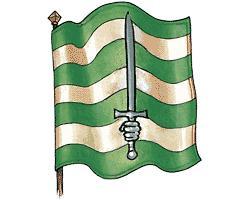
Why? Who proof read this?? They got the direction of the sword wrong, and the hand placement, AND they forgot the blue stripes!! All they had to do was draw a flag from a given description. How hard could that be? And then why did they put a wrong flag in the book?! Especially when there's a perfect accurate depiction of the flag (which was probably drawn after this book was published, that I will acknowledge) that looks like this: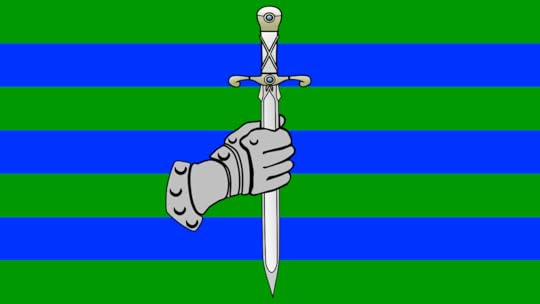 Aaaaaaaaah. They get every other flag correct, even Altara's, which has ultra specific instructions. So do they just hate Arad Doman?
So I got the paperback version (the edition this is listed under) for myself sometime early December last year. I started reading, and it was great. Little did I know there was something way better. My mum got me the large hardcover almost reference-like copy for Christmas (thank you second hand store for having books out of print) and it was just incredible! Yes, the illustrations are downright laughable; I would even send pictures to my brother and he, who knows nothing about Wheel of Time other than the words "Dragon Reborn", the name Rand, and that Elayne sucks (I have taught him well) would find them hilarious. But Robert Jordan and Teresa Patterson (who turned Jordan's notes into prose) were hyperaware of this, even so far as to titling the section displaying the cover artwork as "Some Narrative Paintings of Questionable Authenticity" which everyone knows is 100000% true. This was amazing but I still took over a month to read it, mostly due to reading the required books for my library's reading challenge, and we all know how that went (five one-star books in a row is how it went). So even though my enjoyment of a book is usually reflective of how quick I read it, it isn't in this instance.
Ok, kind of a rambly tangent here at the end. Still related, but just a bunch of blah blah blah from my mouth that matters to no one but me. It's to do with the Arad Doman flag (see? I told you it was majorly trivial). The description of the flag is literally listed as "A silver hand grasping a silver sword by the blade, point down" and the background/banner as "The Sword and Hand on a field of four green and three blue horizontal stripes". Simple enough, right? So why does the illustration provided look like this:
Why? Who proof read this?? They got the direction of the sword wrong, and the hand placement, AND they forgot the blue stripes!! All they had to do was draw a flag from a given description. How hard could that be? And then why did they put a wrong flag in the book?! Especially when there's a perfect accurate depiction of the flag (which was probably drawn after this book was published, that I will acknowledge) that looks like this:
Aaaaaaaaah. They get every other flag correct, even Altara's, which has ultra specific instructions. So do they just hate Arad Doman?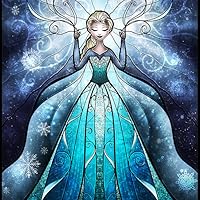
May 5, 2008
The information and history written in the book are great, but there's a reason it's called the Big White Book of Bad Art. >_<

June 19, 2015
This book is definitely only for WoT fans, for it has no story line; it is a comprehensive chronicle (best possible, sic!) of the universe in which WoT series events are taking place (prior and during them).
There are a lot of facts related to the lost Age of Legends, the Breaking, the Trolloc Wars, the Artur Hawkwing's reign and the War of the Hundred Years. But as the author says:
"This compilation of the world’s geography, sociology, and history uses information dating from the earliest available records of the Age of Legends through the current era.
Reliable sources are limited. Almost all documents from before the War of the Hundred Years survive only as copies, or copies of copies, etc., and thus may well include mistakes made by the scribes. Few complete books or manuscripts of any kind survive from the War of the Hundred Years. The earlier period, from the end of the Trolloc Wars to the end of the War of the Hundred Years, left even less. All information from the time of the Breaking of the World to the end of the Trolloc Wars was pulled from manuscript fragments of varying sizes, sometimes not even consisting of consecutive pages. No books or manuscripts have yet been found dating from before the Breaking. All the information from the Age of Legends is based on documents from the first few centuries after the Breaking, when the writers might have had access to sources that had survived.
Wherever possible, the information has been at least partially verified by writings contemporary with their contents, but the older a document or manuscript, the harder it is to date pages precisely.
Some difficulties arise not from age or verifiability, but from problems of translation, for the older documents were written primarily or completely in the Old Tongue. Within the Old Tongue, as all scholars know, words have variable meanings, and some meanings have shifted to varying degrees over time.
The authors hope that the reader will forgive the occasional inaccuracy that may arise within these pages and relish instead the immense diversity and energy within the legacy of the Pattern and the World of the Wheel."
The way chosen to present these historical facts is simply outstanding, for, as seen above, it couldn't have been more better written to make it appear more real than it does.
Rating it 5 stars is kinda subjective of me, because the illustrations are the ugliest I have ever seen in such a book. But I chose to not take them in consideration - Jordan's universe and writing genius deserve all the 5 stars :)
PS: this book historical facts are limited to volume 7 of WoT, but in November should appear The Wheel of Time Companion: The People, Places and History of the Bestselling Series, which will cover all volumes in the series. Can hardly wait for it!
There are a lot of facts related to the lost Age of Legends, the Breaking, the Trolloc Wars, the Artur Hawkwing's reign and the War of the Hundred Years. But as the author says:
"This compilation of the world’s geography, sociology, and history uses information dating from the earliest available records of the Age of Legends through the current era.
Reliable sources are limited. Almost all documents from before the War of the Hundred Years survive only as copies, or copies of copies, etc., and thus may well include mistakes made by the scribes. Few complete books or manuscripts of any kind survive from the War of the Hundred Years. The earlier period, from the end of the Trolloc Wars to the end of the War of the Hundred Years, left even less. All information from the time of the Breaking of the World to the end of the Trolloc Wars was pulled from manuscript fragments of varying sizes, sometimes not even consisting of consecutive pages. No books or manuscripts have yet been found dating from before the Breaking. All the information from the Age of Legends is based on documents from the first few centuries after the Breaking, when the writers might have had access to sources that had survived.
Wherever possible, the information has been at least partially verified by writings contemporary with their contents, but the older a document or manuscript, the harder it is to date pages precisely.
Some difficulties arise not from age or verifiability, but from problems of translation, for the older documents were written primarily or completely in the Old Tongue. Within the Old Tongue, as all scholars know, words have variable meanings, and some meanings have shifted to varying degrees over time.
The authors hope that the reader will forgive the occasional inaccuracy that may arise within these pages and relish instead the immense diversity and energy within the legacy of the Pattern and the World of the Wheel."
The way chosen to present these historical facts is simply outstanding, for, as seen above, it couldn't have been more better written to make it appear more real than it does.
Rating it 5 stars is kinda subjective of me, because the illustrations are the ugliest I have ever seen in such a book. But I chose to not take them in consideration - Jordan's universe and writing genius deserve all the 5 stars :)
PS: this book historical facts are limited to volume 7 of WoT, but in November should appear The Wheel of Time Companion: The People, Places and History of the Bestselling Series, which will cover all volumes in the series. Can hardly wait for it!
February 25, 2020
I listened to this book on audiobook and really enjoyed it. My favorite aspect of the Wheel of Time is it’s world and history, and this book is essentially just a history of that world leading up to series. Robert Jordan’s imagination truly was unparalleled in modern Fantasy. His creation is rivaled only by Tolkien, IMO.
That said, I totally understand that others may not enjoy this book. It takes a unique person - namely a Wheel of Time fanboy/girl that enjoys learning about the history of a completely fictional world.
Do with that what you will.
That said, I totally understand that others may not enjoy this book. It takes a unique person - namely a Wheel of Time fanboy/girl that enjoys learning about the history of a completely fictional world.
Do with that what you will.
December 29, 2020
Rating: 8.5/10
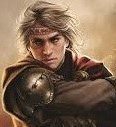
The World of Robert Jordan’s: The Wheel of Time is a fantastic companion book to The Wheel of Time series which is filled with additional world-building, histories, lore and includes several illustrations of maps. I loved that this book was a sort of in-universe history book as it’s written from the perspective of multiple scholars from this world and they informed the reader that all the information in this book was compiled from the earliest available records starting from the Age of Legends all the way through to the current New Era. It adds an interesting dynamic because the scholars know a lot of secrets that we the reader don’t know, but at the same time, the scholar also doesn’t know certain information (such as information on the White Tower and Aes Sedai), which we the reader know because we learned them from Egwene or Siuan’s POV chapters in the main series. This will be a spoiler review (since this book was written around halfway through the main series) and it will be more of a free-flowing review rather than having a set format that I usually have for my reviews.

Image: The Wheel of Time Map.
This book is structured very well, starting with an introduction to the main aspects of The Wheel of Time series which is the Wheel itself, the Pattern of Ages and the One Power. The 2nd section delves into the Age of Legends (my personal favorite chapter of the book), the War of Power, and a breakdown of all the Forsaken and Shadowspawn. The 3rd section covers the Breaking of the World and events after the Breaking such as the founding of the White Tower, the rise and fall of the Ten Nations, the reign of Artur Hawkwing, etc. The first 3 sections talk about the backstory and the major events preceding The Wheel of Time series but the 4th sections goes in-depth into the world itself, but specifically the exotic/lesser-known lands such as the land of the Seanchan, Shara, the Sea Folk Islands, the Aiel Waste and it also talks about their culture, political hierarchy, and some neat tidbits/facts that were previously unknown. The 5th and final section talks about the local nations on the main land such as Andor, Tar Valon (and the White Tower), Cairhien, Illian, Tear, the Borderland nations, and so on.
There are so many awesome pieces of information you learn when reading this book, such as learning all of the Forsaken’s real names, what their occupations were during the Age of Legends and the reasoning as to why they turned to the Shadow. It also gives exclusive information on the Forsaken that the main series doesn’t cover such as what each of the Forsaken were doing right after reawakening from their deep sleep caused by the Seals on the Dark One’s prison. What also makes this book a must-read is learning the little details that are so mind-boggling, like learning that the Crystal Throne itself was actually a Ter’angreal that causes anyone who approaches it to feel an immense sense of awe and wonder, or the fact that not only did Artur Hawkwing send his son west to conquer Seanchan (which was already known), but he also sent his daughter east to conquer Shara (but ultimately failed).
It was great to learn more about Artur Hawkwing and the Second Dragon, Guaire Amalasan. I also liked that this book gave more details on Shara. I was fascinated by all the secrecy of Shara and the locals of Shara purposely lying to outsiders and merchants. There’s a great conspiracy that the Ayyad channelers actually rule Shara, and not their traditional monarch (Sh’boan/Sh’botay). There was also some great facts on the Aiel such as a cool story on why the Aiel started wearing veils before they killed, and the cut of the Cadin’sor uniform that the Aiel wear is actually slightly different for each clan and sept, but the differences are so subtle that no one other than an Aiel can truly notice.

Image: An Aiel.
There was also so much new information on the Seanchan. This book explains why the Seanchan have their odd stance on leashing Aes Sedai: because the Aes Sedai in the continent of Seanchan were much different from regular Aes Sedai. The Seanchan Aes Sedai freely used the One Power as a military weapon and were vicious and manipulating. I found it fascinating to learn that the Seanchan beasts are not actually from Seanchan but were the offspring of beasts brought back from parallel worlds via the Portal Stones. They were presumably brought in for aid against Shadowspawn during the years after the Breaking. It was great to learn more in-depth on each of these Seanchan beasts/exotics, which includes a brief physical description and also talks about their abilities, strengths, weaknesses, other unique attributes, and how the Seanchan use them in their military strategies. This book is also the only source that shows an actual map of the continent of Seanchan, its nations and major cities.
There’s also some cool origin stories on certain aspects of the main series, such as the origin of the Waygates and what the Ways originally looked like without the taint and corruption of Machin Shin aka the Black Wind, the origins of why Tarabon and Arad Doman fight over Almoth Plain, the origins and material used to make the Warder’s color-shifting cloaks (which was commonly used in the Age of Legends) and the origin of the Sea Folk since the Breaking.

Image: Semirhage.
[Final Thoughts]:
This was a fantastic read and I highly recommend it to anyone who likes world-building/histories and also for the hardcore fans of The Wheel of Time series. I found so much additional context and exclusive details that couldn’t be found anywhere else, so it will definitely enhance my re-read of this series when I get to it at some point in the future. It really does change the way I look at several aspects of the main series, especially the Seanchan and the Forsaken. It also answers a few of the mysteries that were set up in the main series, so there’s that as an added bonus as well. Overall, it was a very quick and fun read.
*My Rating System*
5 Stars (9-10): Amazing
4 Stars (7-9): Really Good to Great
3 Stars (5-7): Average to Good
2 Stars (3-5): Bad to Mediocre
1 Star (1-3): Terrible
The World of Robert Jordan’s: The Wheel of Time is a fantastic companion book to The Wheel of Time series which is filled with additional world-building, histories, lore and includes several illustrations of maps. I loved that this book was a sort of in-universe history book as it’s written from the perspective of multiple scholars from this world and they informed the reader that all the information in this book was compiled from the earliest available records starting from the Age of Legends all the way through to the current New Era. It adds an interesting dynamic because the scholars know a lot of secrets that we the reader don’t know, but at the same time, the scholar also doesn’t know certain information (such as information on the White Tower and Aes Sedai), which we the reader know because we learned them from Egwene or Siuan’s POV chapters in the main series. This will be a spoiler review (since this book was written around halfway through the main series) and it will be more of a free-flowing review rather than having a set format that I usually have for my reviews.
Image: The Wheel of Time Map.
This book is structured very well, starting with an introduction to the main aspects of The Wheel of Time series which is the Wheel itself, the Pattern of Ages and the One Power. The 2nd section delves into the Age of Legends (my personal favorite chapter of the book), the War of Power, and a breakdown of all the Forsaken and Shadowspawn. The 3rd section covers the Breaking of the World and events after the Breaking such as the founding of the White Tower, the rise and fall of the Ten Nations, the reign of Artur Hawkwing, etc. The first 3 sections talk about the backstory and the major events preceding The Wheel of Time series but the 4th sections goes in-depth into the world itself, but specifically the exotic/lesser-known lands such as the land of the Seanchan, Shara, the Sea Folk Islands, the Aiel Waste and it also talks about their culture, political hierarchy, and some neat tidbits/facts that were previously unknown. The 5th and final section talks about the local nations on the main land such as Andor, Tar Valon (and the White Tower), Cairhien, Illian, Tear, the Borderland nations, and so on.
There are so many awesome pieces of information you learn when reading this book, such as learning all of the Forsaken’s real names, what their occupations were during the Age of Legends and the reasoning as to why they turned to the Shadow. It also gives exclusive information on the Forsaken that the main series doesn’t cover such as what each of the Forsaken were doing right after reawakening from their deep sleep caused by the Seals on the Dark One’s prison. What also makes this book a must-read is learning the little details that are so mind-boggling, like learning that the Crystal Throne itself was actually a Ter’angreal that causes anyone who approaches it to feel an immense sense of awe and wonder, or the fact that not only did Artur Hawkwing send his son west to conquer Seanchan (which was already known), but he also sent his daughter east to conquer Shara (but ultimately failed).
It was great to learn more about Artur Hawkwing and the Second Dragon, Guaire Amalasan. I also liked that this book gave more details on Shara. I was fascinated by all the secrecy of Shara and the locals of Shara purposely lying to outsiders and merchants. There’s a great conspiracy that the Ayyad channelers actually rule Shara, and not their traditional monarch (Sh’boan/Sh’botay). There was also some great facts on the Aiel such as a cool story on why the Aiel started wearing veils before they killed, and the cut of the Cadin’sor uniform that the Aiel wear is actually slightly different for each clan and sept, but the differences are so subtle that no one other than an Aiel can truly notice.
Image: An Aiel.
There was also so much new information on the Seanchan. This book explains why the Seanchan have their odd stance on leashing Aes Sedai: because the Aes Sedai in the continent of Seanchan were much different from regular Aes Sedai. The Seanchan Aes Sedai freely used the One Power as a military weapon and were vicious and manipulating. I found it fascinating to learn that the Seanchan beasts are not actually from Seanchan but were the offspring of beasts brought back from parallel worlds via the Portal Stones. They were presumably brought in for aid against Shadowspawn during the years after the Breaking. It was great to learn more in-depth on each of these Seanchan beasts/exotics, which includes a brief physical description and also talks about their abilities, strengths, weaknesses, other unique attributes, and how the Seanchan use them in their military strategies. This book is also the only source that shows an actual map of the continent of Seanchan, its nations and major cities.
There’s also some cool origin stories on certain aspects of the main series, such as the origin of the Waygates and what the Ways originally looked like without the taint and corruption of Machin Shin aka the Black Wind, the origins of why Tarabon and Arad Doman fight over Almoth Plain, the origins and material used to make the Warder’s color-shifting cloaks (which was commonly used in the Age of Legends) and the origin of the Sea Folk since the Breaking.
Image: Semirhage.
[Final Thoughts]:
This was a fantastic read and I highly recommend it to anyone who likes world-building/histories and also for the hardcore fans of The Wheel of Time series. I found so much additional context and exclusive details that couldn’t be found anywhere else, so it will definitely enhance my re-read of this series when I get to it at some point in the future. It really does change the way I look at several aspects of the main series, especially the Seanchan and the Forsaken. It also answers a few of the mysteries that were set up in the main series, so there’s that as an added bonus as well. Overall, it was a very quick and fun read.
*My Rating System*
5 Stars (9-10): Amazing
4 Stars (7-9): Really Good to Great
3 Stars (5-7): Average to Good
2 Stars (3-5): Bad to Mediocre
1 Star (1-3): Terrible
January 20, 2022
This is probably best described as a companion book for those who want a refresher course about the series before watching the TV adaptation. I have found it in times to be quite a very detailed collection of facts from all of the books, a bit too much to be considered a fun read.
October 16, 2023
4.5 stars
Rereading this companion book feels like diving straight back into the deep end of the Wheel of Time universe, and honestly, it’s such a treat every time. This isn’t just a reference book—it’s a full‑on love letter to the world Robert Jordan built, packed with lore, history, maps, artwork, and all the little details that make the series feel so massive and alive.
The artwork alone is worth the read. Seeing the characters, the landscapes, the flags, the artifacts—it all brings the world into sharper focus, especially on a reread when you already know how everything connects. And the extra lore? Fantastic. The deeper dives into the Age of Legends, Artur Hawkwing, the White Tower, the Shadow, the Seanchan… it all adds so much texture to the main series.
What I really enjoy is how this book fills in the gaps without ever feeling like homework. It’s the kind of thing you can flip through casually or read cover to cover, and either way you walk away with a richer understanding of the world. Even after multiple rereads of the main series, I still find little nuggets in here that make me go, “Oh right, that’s why that mattered.”
If you’re a Wheel of Time fan, this book is basically essential. And if you’re rereading like I am, it’s the perfect companion to remind you just how much depth Jordan poured into every corner of his world.
A solid four point five‑star reread for me.
Rereading this companion book feels like diving straight back into the deep end of the Wheel of Time universe, and honestly, it’s such a treat every time. This isn’t just a reference book—it’s a full‑on love letter to the world Robert Jordan built, packed with lore, history, maps, artwork, and all the little details that make the series feel so massive and alive.
The artwork alone is worth the read. Seeing the characters, the landscapes, the flags, the artifacts—it all brings the world into sharper focus, especially on a reread when you already know how everything connects. And the extra lore? Fantastic. The deeper dives into the Age of Legends, Artur Hawkwing, the White Tower, the Shadow, the Seanchan… it all adds so much texture to the main series.
What I really enjoy is how this book fills in the gaps without ever feeling like homework. It’s the kind of thing you can flip through casually or read cover to cover, and either way you walk away with a richer understanding of the world. Even after multiple rereads of the main series, I still find little nuggets in here that make me go, “Oh right, that’s why that mattered.”
If you’re a Wheel of Time fan, this book is basically essential. And if you’re rereading like I am, it’s the perfect companion to remind you just how much depth Jordan poured into every corner of his world.
A solid four point five‑star reread for me.
This entire review has been hidden because of spoilers.

October 26, 2012
This is a fascinating book - now I will admit that the version i have although the same ISBN number i suspect may have been an earlier edition as it was printed in 1997 and as such is very early on in the series - I figure out only the first handful of titles were published in fact where as now we are in to double digits and in fact have a new author after the passing of Robert Jordan.
The book is far better though than many of its kin- its not a mere lexicon or glossary repeating snippets from key passages in the books - this is a true guide with custom artwork and explanations of people places and artefacts. The artwork is in colour not those cheap and cheerful pen and ink ones you seen in so many others.
The book is fascinating and I feel actually encourages you to want to read the series - this no just a guide or a companion but more an ambassador to the series. Well worth finding and reading.
The book is far better though than many of its kin- its not a mere lexicon or glossary repeating snippets from key passages in the books - this is a true guide with custom artwork and explanations of people places and artefacts. The artwork is in colour not those cheap and cheerful pen and ink ones you seen in so many others.
The book is fascinating and I feel actually encourages you to want to read the series - this no just a guide or a companion but more an ambassador to the series. Well worth finding and reading.
April 29, 2022
Primero que nada esto no es una novela, pero está bueno en el sentido que te explica muchas cosas que no está en el libro, por ejemplo a qué se dedicaban los Renegados, antes de pasar a hacer parte de los hombres del oscuro, como era el mundo, un resumen de lo que fue Lews Terin. Te habla de los reinos que están en la rueda del tiempo, detalles de la economía, de como estaba constituido, etc. Y varias cositas más. Cómo digo no es necesario pero si querés saber más de este mundo les recomiendo.
Y podes leer una vez finalizado el libro 7, "La corona de espadas", en ese momento podes leerlo cuando quieras.Antes no les recomiendo porque tiene spoiler.
Y podes leer una vez finalizado el libro 7, "La corona de espadas", en ese momento podes leerlo cuando quieras.Antes no les recomiendo porque tiene spoiler.
October 12, 2023
El libro 10/10, la reedición de minotauro un 0/10 está llena de erratas 😩 pero a montones, tipo una por página si hiciéramos la media, porque había veces que una página repetía una palabra mal cinco veces. En fin.


October 5, 2020
As everyone else agrees, the art in this is pretty awful. But you read it to get a full timeline of the WoT history from the Age of Legends to the present, and to gain a greater understanding of the lands and cultures. The most fascinating of course were the Seanchean and Sharans, but there were a few brand new surprises that even a complete fanatic like myself hadn’t known about. The reason this doesn’t get 5 stars is because there were no prophecies actually listed under the chapter, “Prophecies of the Dragon,” and I was dying to learn more of them.

December 21, 2024
Honestly, I loved this. Since I listen to TWOT on audible, which means I don’t have the glossary and the map at hand at all times, it can sometimes become hard to follow all the names, characters or locations. This (free on audible) audiobook helps to understand and explains so many things, I didn’t catch when listening to the books. It was also very convenient that I just finished the 7th book.
Also, I loved the whole history of the world, the age of legends and artur hawkwing (In fact, I found the telling of Artur Hawkwings fights almost more compelling than some of the battles in the main books). Additionally, I loved to learn more about Shara, Seanchan and the Seafolk, but also about some of the smaller nations.
As a plus, the narrator is great!
Highly recommend reading this, when going through TWOT for the first time.
Also, I loved the whole history of the world, the age of legends and artur hawkwing (In fact, I found the telling of Artur Hawkwings fights almost more compelling than some of the battles in the main books). Additionally, I loved to learn more about Shara, Seanchan and the Seafolk, but also about some of the smaller nations.
As a plus, the narrator is great!
Highly recommend reading this, when going through TWOT for the first time.
September 6, 2026
Must read for people who are reading the series, especially, and maybe only after the 7th book.

July 12, 2009
Fondly (or at least accurately) known as the Big Book of Bad Art in Wheel of Time fanatic circles. The text is fine - a bit dry, mostly superceded (this was published barely halfway through the series, before quite a few mysteries were settled) but generally interesting, at least to completist nerds like me. The internet is a better resource for nerdery, though, which would make the only major virtue of the book the art.
And the art, she is bad. Sloppy, poorly-proportioned, irrelevant, generally contextless, and charmless. The maps are lovely - and there are quite a few reproduced here - but they are reprints of maps from the hardcovers. The full-page spreads of the covers are nice enough, I suppose - the advantage to the book being published only halfway through the series is that none of the really appalling Darrel K Sweet covers were out yet. But the original art is just terrible.
Which makes me sad, because if Tor put out a post-series version of this, with some of the spectacular ebook covers they've recently commissioned and just a few pieces original to the book (and, of course, with updated text) I would snap it up in a heartbeat. I am a sucker for art books, and I am still grumpy that this one, only a sucker would buy.
And the art, she is bad. Sloppy, poorly-proportioned, irrelevant, generally contextless, and charmless. The maps are lovely - and there are quite a few reproduced here - but they are reprints of maps from the hardcovers. The full-page spreads of the covers are nice enough, I suppose - the advantage to the book being published only halfway through the series is that none of the really appalling Darrel K Sweet covers were out yet. But the original art is just terrible.
Which makes me sad, because if Tor put out a post-series version of this, with some of the spectacular ebook covers they've recently commissioned and just a few pieces original to the book (and, of course, with updated text) I would snap it up in a heartbeat. I am a sucker for art books, and I am still grumpy that this one, only a sucker would buy.

June 3, 2010
Boy, if you thought the artwork on the book covers was bad, this book will make you think again. Absolutely awful. The book is written from the point of view of a frustrated historian writing a synopsis of the known history through book... 7? Either way, this work, rather than encompassing the entire series, leaves off details from later books, and leaves question marks lingering over peoples, kingdoms, and events that become very well known throughout this world in the course of later books, instantly dating EVERYTHING in this book.
However, that's minuscule in comparison to the absolutely atrocious artwork throughout. If you were ever even a little repulsed by the evil creatures in the books, the laughable representations here will relieve you immensely. The main good-guys look worse than the monsters, with Thom Merrilyn being particularly evil-zombie-esque in appearance.
Read the books, maybe take this one out of the library to check out some Aiel back story if you need to, but skip it completely otherwise.
However, that's minuscule in comparison to the absolutely atrocious artwork throughout. If you were ever even a little repulsed by the evil creatures in the books, the laughable representations here will relieve you immensely. The main good-guys look worse than the monsters, with Thom Merrilyn being particularly evil-zombie-esque in appearance.
Read the books, maybe take this one out of the library to check out some Aiel back story if you need to, but skip it completely otherwise.

Read
April 26, 2015Like many of you, I never really 'read' this book so much as looked the hell out of it at the bookstore and maybe the library. The images of people leave a lot to be desired, but the world maps and other art is pretty good. You get some cool information about the world and the places and their peoples.
This is a great book for when you're dragging your feet on the main series. Let's face it - many of us drag our feet when it comes to starting a new book...because Jordan dragged things on so long.
This book is good to stoke your interest again, or keep you interested if you think you can't go on. I'd also like to add that they should do an updated, or new version of this, especially now that George R.R. Martin has a cool world book out of his own.
This is a great book for when you're dragging your feet on the main series. Let's face it - many of us drag our feet when it comes to starting a new book...because Jordan dragged things on so long.
This book is good to stoke your interest again, or keep you interested if you think you can't go on. I'd also like to add that they should do an updated, or new version of this, especially now that George R.R. Martin has a cool world book out of his own.

January 24, 2010
This book is kind of silly. The illustrations are not very good and the information is claimed by Jordan to be only semi-accurate and intentionally so. This was kind of frustrating and so I didn't take it very seriously. There are some interesting bits of information about Shara, the Seanchan, and so on. However when you can't verify that the information is legitimate it seems like a fool's errand to read the thing.
January 3, 2023
Interesting detailed guide (you are supposed to read it after book 7 or something to avoid spoilers).
The art is so n so in some illustrations, but the maps are definitely fine which is a thing, as in books (paperback at least) they are black and white and not that detailed. Also, it includes maps before great wars and flags!
Oh yes. Flags.
The art is so n so in some illustrations, but the maps are definitely fine which is a thing, as in books (paperback at least) they are black and white and not that detailed. Also, it includes maps before great wars and flags!
Oh yes. Flags.

November 2, 2022
This work was a great way to relive the background of the Wheel of Time (WoT) series through its history, characters, and places. It nicely fills in the details of many things referred to in the books in depth. While it does not need to be read to enjoy the books in the series, it is an excellent companion to WoT.

March 29, 2025
Essential knowledge for the world of WOT

July 25, 2025
Libro para leer con la calma a partir de llevar al menos la mitad de La Rueda leída. Bastante explicativo con todo el lore y está escrito como si fuera un documento escrito a mitad de los hechos de la saga, por lo que no hace spoiler a partir de cierto punto, cosa que está muy bien.
Por lo general muy recomendado por si se está algo perdido con todos los nombres, sitios, lore antiguo y demás.
Por lo general muy recomendado por si se está algo perdido con todos los nombres, sitios, lore antiguo y demás.

February 9, 2026
I love a good lore drop and this helped because it included all of Robert Jordan’s notes which includes context missing from the main storyline about the cultures of the world!

May 14, 2021
3.5 out of 5 stars
This one's serves as a good recap to get ready for the the upcoming WoT TV series.
This one's serves as a good recap to get ready for the the upcoming WoT TV series.

February 12, 2020
Includes some knowledge that literally no one needs to know. As a WoT fanatic, I do recommend every reader who is as big a fan of WoT as me to read it.

February 25, 2018
3.5 stars. Recommended for fans of WoT.

September 23, 2013
Edit 2nd read: How the heck was this my first ever contact with Wheel of Time? What the heck did I retain from this fountain of information (and spoilers for part of the series)?
Now, after multiple journeys through Randland, it helps cement most of what I know and the fist half of the book is amazing for all the information about the Age of Legends and subsequent events. It also helps to remind me that Wheel of Time portrays probably the most complex, most detailed, broadest, most in-depth and realistic/credible fantasy world I have ever come across (yes, it trumps even the Malazan world and Tolkien's too). The history, geography, culture, magic systems and pretty much everything pertaining to worldbuilding is unmatched by anything I've ever read. And it makes it easier to forgive all the foibles and bad (nonexistent) editorial work of the series.
First (2013 ) read: I am very glad that I picked up this book and gave myself a tour of Jordan's world before picking up 'New Spring' and delving into the epic. In spite of quite a few spoilers, I don't think I would have made heads or tails of the history, the geography or the system of magic, had I begun to read the series without the guide to this fantasy world.
Now, after multiple journeys through Randland, it helps cement most of what I know and the fist half of the book is amazing for all the information about the Age of Legends and subsequent events. It also helps to remind me that Wheel of Time portrays probably the most complex, most detailed, broadest, most in-depth and realistic/credible fantasy world I have ever come across (yes, it trumps even the Malazan world and Tolkien's too). The history, geography, culture, magic systems and pretty much everything pertaining to worldbuilding is unmatched by anything I've ever read. And it makes it easier to forgive all the foibles and bad (nonexistent) editorial work of the series.
First (2013 ) read: I am very glad that I picked up this book and gave myself a tour of Jordan's world before picking up 'New Spring' and delving into the epic. In spite of quite a few spoilers, I don't think I would have made heads or tails of the history, the geography or the system of magic, had I begun to read the series without the guide to this fantasy world.
Displaying 1 - 30 of 243 reviews