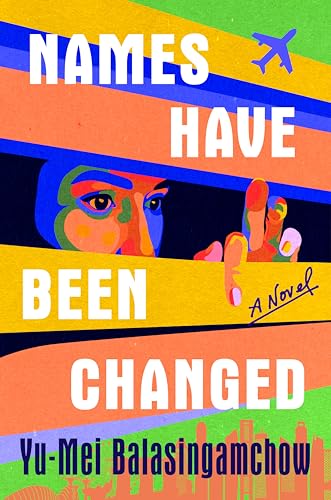
After ten years on the run around the world, Ophir—not her real name—comes clean in a confessional podcast about her life as a fugitive, charming countless fans even as she risks her freedom.
Ophir’s tale begins in Singapore, where a petty crime spins out of control, estranging her from home and family. Resorting to false identities and forged passports (being mixed-race helps), she crisscrosses the globe from a Paris-themed hostess bar in Tokyo, to a bustling Chinese restaurant in London, to a snowbound mountain town in Colorado and beyond.
Broadcasting from an undisclosed location, Ophir is funny, prickly, tough, and vulnerable, entrancing her listeners with an irresistible, no-holds-barred recounting of not only her crimes (plural) but also her deepest secrets and regrets. Even as she moves seamlessly across class lines and continents, she grapples with the shock of relentless dislocation, a painful reexamination of identity, and a deep yearning for home. She tries to find comfort in new lovers and ill-gotten luxury goods, but she can’t help attracting trouble, and she soon faces an unexpected, high-stakes choice that could change her fate forever.
Names Have Been Changed is a stylish, fast-paced debut novel that reveals the complicated paths we take to build a life and a home. Filled with danger and twists, it’s ultimately a story about immigration and belonging—one unlike any you’ve seen before.
Yu-Mei Balasingamchow is the author of the novel, Names Have Been Changed, which will be published on June 23, 2026 by Tiny Reparations Books. Her short fiction has received a Pushcart Prize Special Mention, won the Mississippi Review Fiction Prize, and been shortlisted for the Commonwealth Short Story Prize.
Yu-Mei is also the co-author of Singapore: A Biography, editor of How We Live Now: Stories of Daily Living, and co-editor of In Transit: An Anthology from Singapore on Airports and Air Travel. She has an MFA in Creative Writing from Boston University. Her writing has been supported by Ucross Foundation, Massachusetts Cultural Council, Elizabeth George Foundation, Sewanee Writers Conference, Ragdale Foundation and Vermont Studio Center, and in Singapore by the National Arts Council and Nanyang Technological University.
Originally from Singapore, Yu-Mei now lives in Boston. She is editor at Gaudy Boy, an independent press that brings literary works by authors of Asian heritage to an American audience, and teaches at GrubStreet.
It seems like more books are being written incorporating podcasts, and I think that’s a fun trend. This entire book is a podcast where every chapter is an episode. I read this on my Kindle, but because of the format I have a feeling that it would be better enjoyed as an audiobook.
Ophir (not her real name) ends up as an accomplice in a money laundering scheme. Rather than be arrested in Singapore, she decides to flee. I don’t travel nearly as much as I used to, and I loved how this book took me from Singapore, to Bangkok, to Tokyo, to London, and to Colorado. There are a multitude of interesting characters in each place, so there are a lot of names to remember throughout the book.
Some crazy things happen in the middle of the book, but I suppose that if I were a fugitive with a fake passport in countries that I wasn’t familiar with, I’d also do whatever I had do to survive.
I devoured this entertaining debut novel in a day and a half and hope that it gets more buzz!
Pub date: June 23, 2026
Thanks to NetGalley and Dutton for providing me with this eARC to review!
4.25✨This podcast-based mystery thriller was both engaging and engrossing. From page one to the final chapter, our protagonist was completely unlikable, but I couldn't get enough of her! She broke all the rules (even when she wasn't trying to), yet for some reason, I was still rooting for her through every chapter of her confessional podcast as she broadcast through the COVID lockdown.
I went in completely blind with zero expectations, and this debut novel really blew me away. I thoroughly enjoyed the writing style and how each chapter was set as a podcast episode. I knew I'd find mystery within this book but was pleasantly surprised by a story about love and family and honor.
Highly recommend! Thanks to NetGalley, the publisher, and author for the advanced reader copy.
In Indonesian, there is a term called merantau, which refers to the state of leaving one’s place of origin to seek opportunity elsewhere - often with the expectation of return, but without the guarantee of belonging. Names Have Been Changed by Yu-Mei Balasingamchow explores this idea of merantau alongside themes of migration, diaspora, and identity, all woven into a globe-trotting narrative. Crucially, the novel interrogates what happens when merantau becomes permanent; when leaving transforms from a temporary condition into a defining state of displacement.
This book shares several similarities with Spielberg's Catch Me If You Can, beginning with its premise. The novel’s protagonist, Ophir (one of her many aliases), becomes involved in a money-laundering scheme and faces prison time in her native Singapore. Before she can be apprehended and sentenced, she flees the country, setting off a chain of events centered on her life as a fugitive. While Catch Me If You Can is more action-driven - with the constant tension of Leonardo DiCaprio being pursued by Tom Hanks’s character - Names Have Been Changed turns inward. The novel focuses on Ophir’s emotional landscape: her regrets, fractured sense of identity, and longing for home and connection become the primary sources of conflict.
Ophir is a complex and compelling character. Through Balasingamchow’s stylistic choice of framing the narrative as retrospective podcast recordings, readers are invited to both observe and analyze her inner psyche as she drifts across the world - from working as a bargirl in Japan to backpacking in Peru, from laboring in a Chinese restaurant in London to serving as a caregiver in Denver. As Ophir develops, she gradually learns to trust others and build her own network of support. From the Golden Pearl restaurant owner, to a politically exiled doctor in London, to a cybersecurity expert in Denver, and finally to her brother - her lifelong confidant - these characters illustrate a central idea: home is not a place, but a people. Many of these individuals are themselves outsiders (ethnic minorities or queer) and their presence reinforces the novel’s message that even in a precarious and distrustful world, genuine kindness persists.
I especially appreciated the emotional depth Balasingamchow brings to her characters. Ophir is vibrant and easy to root for, and the supporting cast is equally well-developed. Each character carries distinct struggles: a high-society Singaporean rebelling against expectations by becoming a bargirl; a childhood friend navigating the tensions of marriage and sexuality; a daughter grappling with how best to care for her ailing mother. These narratives function as case studies in identity, expectation, and human connection. The maturity of these portrayals is particularly impressive given that this is Balasingamchow’s debut novel.
The prose, however, takes some time getting used to (trust me, power through that first chapter!) Each chapter reads like a full podcast transcript, often featuring extended passages of stream-of-consciousness narration that may not appeal to all readers. While I found this stylistic choice original and thematically appropriate, it can initially make the plot hard to follow. That said, the approach ultimately succeeds in capturing the way people naturally recount their lives: fragmented, reflective, and nonlinear.
Although Names Have Been Changed spans numerous countries and settings, it ultimately centers on the emotional consequences of merantau. Traditionally, merantau implies leaving with the possibility of return, but Ophir’s journey disrupts this - her exile is forced, and return is no longer viable. In this way, her experience begins to resemble hiraeth, a longing for a home that is no longer accessible or no longer exists as it once did.
The novel suggests these ideas exist on a continuum: what begins as movement (merantau) becomes longing (hiraeth). Ophir does not just miss Singapore, but a version of it (and of herself) that has been irreversibly changed. As a result, home becomes less a place and more something shaped by memory, identity, and the people she carries with her.
Thank you Dutton for providing this advanced review copy for review consideration via NetGalley. All opinions are my own.
I love love LOVED this!!!! Thank you SO MUCH Penguin Randomhouse for an advanced copy of this book through Netgalley.
This book so perfectly sums up that feeling of longing for home through language. As our protagonist Ophir flees from place to place, changing accents and stories as she goes, the reader is invited to think about the micro dialects of our own spaces of belonging, and to imagine how horrifying and dispossessing it would feel to never get access to that place again. NAMES HAVE BEEN CHANGED is language within language. Ophirs Singaporean identity. Her family and ancestry. Her queer identity. I’ve always known it to be true, but this book did a great job of showing how the languages of our identities are portals into different worlds, ones that as a con artist, Ophir can enter and leave at will.
I couldn’t put this book down because it’s so ripe with PLACE. In a writing class, I once asked how to write travel narrative without it sounding like “then I went here/then I went here” and after reading this novel I see that the answer is lush description and astute observations about what makes a place a place. I felt like I was there with Ophir on her journeys. As I kept going I even started asking myself: “what will happen to us next?”
I’m certain there will be a lot of discussions about Ophir and her choices once this book comes out. Her motivation, to me at least, is clear, but I can see how people could get frustrated with her until the very end (which nope is not what you’re guessing!). Although trauma isn’t explicitly mentioned, Ophir is extremely guided by experiences and narratives she developed in childhood. This is another book I’d recommend for complex trauma folks btw!
An engaging travel narrative. A queer protagonist. Thoughtful reflections on immigration, belonging, language, and relationship.
You know it’s a good novel when I want MORE.
I want MORE episodes of Ophir. I’m so invested in what happens next.
Thank you NetGalley and Tiny Reparations Books for the ARC.
A woman who calls herself Ophir starts a tell all podcast. She’s a fugitive from Singapore. Her crime is pretty petty compared to many others, but by running away, it means she has nowhere to truly call home, and no place she can truly feel safe.
More and more books are incorporating the podcast format and im here for it. It’s very straightforward, with Ophir detailing her crime, her life on the run, the people she meets along the way, and all the situations she encounters while on the run. I definitely have learned a lot about Singapore just from reading this book. Oh, and about life on the run.
While straightforward, the chapters are pretty long. A lot of time is spent rehashing and retelling the past, and while it works, it does tend to get caught up on some events and it gets very detailed. Character wise, I didn’t find Ophir likable or dislikable. I cannot relate, but she was interesting. Her choices are questionable from the get go, and while there is some self reflection, it does leave me wondering, has she changed? In some ways I say yes, but is it enough?
The ending said it best: she never apologized. Never really said sorry. Although some might see her crimes as petty, there are always victims and it feels like she has never acknowledged that.
I did enjoy the different locations this book takes readers to, and all the nuances you find in different cultures. Seeing her adapt and change was also fun, but that’s only something I realize after finishing the book.
This was such a well written debut novel. This is an author I’ll be looking forward to reading whatever they write in the future. They had such a witty and easy way of saying things that kept me interested. Told in a podcast style format, this book is probably better as an audiobook, but it was still good reading traditionally.
Ophir got caught up in some petty crimes and instead of serving time, she went on the run. What would’ve been a somewhat small sentence has blown out of proportion. She’s traveling the world and trying to stay one step ahead of interpol with various aliases. Ophir has such a distinct character voice and I loved reading her story. She had so much depth and I couldn’t help but root for her even though some of her decisions were questionable. I loved how witty and twisty this book was. I hope this book gets the recognition it deserves.
Thank you so much NetGalley and Dutton for allowing me to read this book early. The opinion in this review is my own.
The story follows Ophir, which is not even her real name, as she records a confessional podcast about the years she spent on the run around the world. What begins as a small mistake in Singapore spirals into a life of false identities, forged passports, and constant movement across countries and cultures. From Tokyo to London to a snowy town in Colorado, her story unfolds with humor, honesty, and a surprising amount of heart.
What I loved most was how layered this story felt. Beneath the thrill of the chase and the twists of her criminal life is a deeper exploration of identity, belonging, and the complicated pull of home. Ophir is sharp, flawed, funny, and deeply human. Even when she is making terrible decisions, I could not stop rooting for her.
This debut feels fresh and original. It reads quickly but leaves you thinking about what it really means to reinvent yourself and whether you can ever truly escape where you come from.
Presented as episodes of a confessional-style podcast during early COVID lockdowns, this novel tells the story of a woman’s decade or so on the run after an ATM scam goes awry in Singapore.
The main character, who we know as “Ophir”, is a prickly, bold, and resilient woman who finds while she can run across the world, she can’t hide from her home country and its people. Her narrative is funny, suspenseful, and honest in a way that makes the novel’s story feel very natural. The book is infused with nostalgia, a bone-deep longing for people and places you can’t return to. I was kept engaged by Ophir’s recounting of events and also deeply touched by her love for her family and childhood home.
This debut novel was a really entertaining thriller that kept me on my toes until the very last twist. Thank you to NetGalley for the ARC.
This book hooked me from the first page and kept me engrossed until the end. The format of each chapter being the transcript of a confessional podcast detailing the crimes and misdeeds of the protagonist works very well. I enjoyed learning about the Singaporean culture, especially the parts about the language. Her stories are fascinating; this is a wonderful character study of a deeply flawed yet compellingly affable young woman in hiding from Interpol and trying to unburden herself from the guilt she feels from hurting the people she abandoned after absconding with a small fortune. I highly recommend this novel to anyone who enjoys weird women literature!
Thanks to NetGalley, the publisher, and the author for providing a review copy in exchange for my honest opinion.
This is a book that follows "Ophir" as she confesses to her life of crime and everything she has done in the decade since. The book is set up as a podcast, each chapter is an episode. Even though the chapters can be long, it is a very easy read. The writing style keeps the reader engaged. Overall I found the story very interesting. It starts with Ophir talking about her life before she decided to break the law , what happened when the crime was discovered, and what she went through to avoid jail. If this had been an actual podcast I definitely would've been listening to every episode.
Thank you to the author and NetGalley for the ARC in exchange for my honest review.
And something about the writing style made it read rather quickly.
I did find some aspects of the story hard to follow or understand, and I'm not really sure how to explain it. I think it had to do with the characters and how they interacted. I wanted more explanation on that, I think that would've helped.
I didn't get super invested in the characters, but I found the overall story to be really interesting. So I would still definitely recommend it.
Thanks to NetGalley for the e-ARC of this book in exchange for my honest review!
Thank you to NetGalley for this free reader in exchange for an honest review. The description of this book intrigued me, as it was billed, "if you enjoyed Counterfeit, you will love this book". An excellent hook. This book starts off with a bang, great starter sentence. I learned a lot about a world I knew nothing about. The main character is flawed and shows little to no remorse and also lacks maturity. There is no character growth to speak of. I'm glad I read it and without giving away any spoilers, you definitely learn that there are so many crimes in the world that you never hear of.
Get ready for your next page turner. Told in the form of a podcast, Ophir tells the story of her 10 years on the run. This confessional has you following her journey (and heartbreaks) that span continents as she works menial jobs to survive and works desperately, not to make any connections to stay under the radar. This is sharp and funny, but it also speaks to homesickness as well as rootlessness. Yu-Mei Balasingamchow is a writer to watch.
I received an arc from the publisher but all opinions are my own.
I was really excited to read this because the description seemed really interesting. Unfortunately, I DNF'd halfway through the second chapter around page 45. For me personally, I only like long chapters when they are really interesting ang engaging. In this book, it felt like the MC was giving numerous unnecessary information dumps. I often felt bored and unmotivated to continue the book. The only part I truly liked was Ophir explaining leaving Singapore and going into hiding.
An interesting premise (each chapter is the text of a fictitious podcast) that reads as if the author dictated the book. A captivating start gets bogged down by a plot that has nowhere to go, and the (too many) thoughts of a main character who is so adept at hiding that it felt as if she never revealed herself to me. I finished the book to see the resolution, but this one is a hard pass for me. Thanks to NetGalley for a copy of the e-book in return for my honest review!
This entire review has been hidden because of spoilers.
this book was medium for me, I liked the first part better and then it got more bogged down/less interesting. the parts about being on the run and about her culture were the best parts of the book and her exploring how to have a life/be herself while being in hiding
Great book for people who enjoy crime podcasts. There were some interesting tidbits and situations that kept me going. Personally I couldn’t get over the fact that the main character was in her 30s yet showed no maturity and kept behaving like a teenager. There was no character development.
I thought this book was interesting, but l never fell in love with it. It’s a good book - not a great book. It’s not one that I would keep to read again. Still, I am glad I read it.