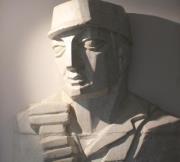
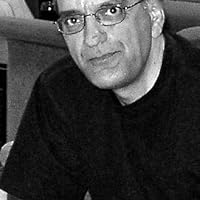
V této knize autor zevrubně popisuje život v Tibetu, některé místní nauky a autorovy zážitky z dětství až do doby, kdy v 18 letech, po nejvyšším zasvěcení, opustil Tibet. Zajímavě je v této knize popsána operace, která posílila Rampovy jasnovidné schopnosti. "Mediální rozruch, který Rampu obklopil po vydání Třetího oka, vyústil v roce 1957 ve výslech vedený Scotland Yardem, který po Rampovi požadoval tibetský pas a povolení k pobytu. Rampa pochopitelně žádný tibetský pas neměl, natož povolení k pobytu. Nedlouho po tomto vyšetřování přesídlil do Irska a později se usadil v Kanadě. Pátrání po Rampově pravé totožnosti však pokračovalo z iniciativy Marca Pallise. Vyšlo tak najevo, že Rampova minulost je mnohem méně vzrušující, než jak ji popisuje ve svých knihách. Lobsang Rampa, občanským jménem Cyril Henry Hoskin (1910 - 1981), namísto ve Lhase prožil své dětství v anglickém Plymptonu. Jeho otec Joseph vedl obchod s instalatérskými potřebami, kde Cyril občas vypomáhal. Vystřídal několik zaměstnání, za války obchodoval s lékařskými potřebami a poté jistou dobu pracoval jako úředník ve firmě poskytující korespondenční kurzy. Po válce si začal říkat dr. Kuan-Suo, v padesátých letech snad pracoval jako fotograf. Mohlo by se zdát, že diskuse o autentičnosti Rampova díla bude uzavřena. Autor v Tibetu nikdy nebyl, neuměl tibetsky a mnohé, co o Tibetu a tibetském buddhismu napsal, neodpovídá skutečnosti."
oh my goodness. i can't believe this book is on good reads. my brother and i read it when we were both a little too young and took every single word at face value. just rediscovered it during a trip home. weird, wild, magical and mystical adventures - astral projections, flying, third eyes, YES. at the time we were totally sucked in and on board, ready to go on mystical journeys in tibet ourselves. i'm afraid some of the luster might be gone with the cynicism that settles once one is no longer 12 years old (hence the cautionary 4 stars instead of 5), but nonetheless, can't WAIT to dust this little treasure off and re-read as a grown-up.
I was first introduced to Lobsang Rampa by a Freind in Nairobi, Kenya. He treated his book like a secret Bible and would not let it out of his sight. So i could only read it a few pages at a time. So, finally went to Mc Millian's Library and read the book. (Loved it to Bits & was hooked by its charm of Astral Travelling.)
Finally, Oneday I took the courage and mentioned it to my Dad, Who wasted no time in buying the complete collection. The writer claimed to be a reincarnation of a Tibetian lama, Lobsang Rampa. The Third Eye introduced the strict discipline of the lama in his route to obtaining the ability to see with psychic power.Story, said to be true , covers subjects such as the Astral Travelling, human Aura, Meditation, Control of the Mind in overcoming pain, the Potala and what's underneath it, life in Tibet, search for reincarnated Lama when the chief died.......... I read all of my Dad's collection.
Once you started reading it, you wouldn't want to leave it.
Description: T. Lobsang Rampa was preordained to be a Tibetan priest, a sign from the stars that could not be ignored. When he left his wealthy home to enter the monastery, his heart was filled with trepidation, with only a slight knowledge of the rigorous spiritual training and physical ordeal that awaited him . . . . This is his story, a hauntingly beautiful and deeply inspiring journey of awakening within Chakpori Lamasery, the temple of Tibetan medicine. It is a moving tale of passage through the mystic arts of astral projection, crystal gazing, aura deciphering, meditation, and more, a spiritual guide of enlightenment and discovery through the opening of the all-powerful, the all-knowing . . .
Opening: EARLY DAYS AT HOME: "OÉ. Oé. Four years old and can't stay on a horse! You'll never make a man! What would your noble father say?" With this, Old Tzu gave the pony - and luckless rider - a hearty thwack across the hindquarters, and spat in the dust.
Chakpori Lamasery
From wiki: Lobsang Rampa is the pen name of an author who wrote books with paranormal and occult themes. His best known work is The Third Eye, published in Britain in 1956.
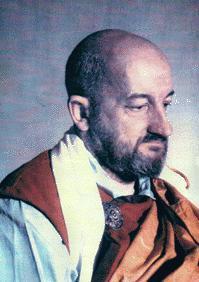
Following the publication of the book, newspapers reported that Rampa was Cyril Henry Hoskin (8 April 1910 – 25 January 1981), a plumber from Plympton in Devon who claimed that his body hosted the spirit of a Tibetan lama going by the name of Tuesday Lobsang Rampa, who is purported to have authored the books.
قبل این کتاب هیچ شناختی در مورد تبت و پایتختش لهاسا نداشتم!این کتاب به اسمش میخوره در مورد چشم سوم و مدیتیشن مراقبه غیره باشه ولی خیر !در مورد یک کودکه که در زمان های دور در تبت تبدیل به یکی از بزرگترین لامای زمان خودش میشه ،گرچه در مورد نویسنده ش شبهه زیاد هست اما سعی کردم اهمیتی ندم و داستان را باور کنم یعنی طوری نبود که فکر کنی داستان دروغینه حتی سبک نوشتاری و نگارش هم نشان از صداقتش میداد،به امید اطلاعات گرفتن در مورد چشم سوم کتاب را خریدم اما خیلی بیشتر از اینا گیرم اومد،شناخت وسیعی نسبت به زندگی لاماها تبت آموزه هاشون و سبک زندگیشون پیدا کردم
At the very best, this is a gateway book to reliable writing about Buddhism and Tibet Whilst I understand that the book was a genre classic back in the day and a childhood/ teenage favourite to many, there are socio-political repercussions of Rampa's writing which make it blatantly disrespectful at the very least and potentially dangerously misinforming.
Getting the Facts Straight Read this in the course of my research for an anthropology dissertation on the cultural history of the pineal gland and third eye. Though the third eye is a prominent feature in Hindu iconography and occasionally features in the Tibetan Buddhist representations of enlightened beings such as Vajrayogini and Vajrabhairava, what most people assume to be a third eye in Buddha images is a dot symbolizing the urna, a curl of white hair which appears on the foreheads of great beings and distinguishes them as such. Rampa's take on the third eye smacks of Blavatsky, and in the light of the entire chapter she dedicated to it in her Secret Doctrine , it is not much of a mystery from where he gets his interrelations between an open third eye, aura perception and clairvoyance.
Why be bothered? We all incorporate fiction in our narratives to make them more colorful and exciting, and usually there is no harm involved. Rampa makes his stories more colorful on account of the culture of a people who live under an occupational regime, many of whom are forced to flee to foreign lands with no permit to return to their place of origin. It is important that we afford our attention to the narratives of the people who live through this suffering and not to frauds who seek personal gain out of fictitious accounts. Tibet has for long been an exotic placeholder for Western projections of spirituality, and this book conveniently affirms them: "We had no desire for the "progress" of the outside world. We wanted only to be able to meditate and to overcome the limitations of the flesh." In the course of this writing, Trampa also sneaks in ableist bias ( describing a ritual of dipping newborn babies in freezing water to see if they can survive "for better that a few babies die than that they should be incurable invalids in a country where there is scant medical attention") and the casual sexist remark: "Women are all right for dusting, talking, and, of course, for a few other things." Which somehow should be representative of the Buddhist outlook, as he claims that he is no mere monk but an adept at the highest and most secret levels of initiation. Which brings us to the most profound problem of this book, namely, that
This is not Buddhism Tibetan Buddhist gravitates around compassion. Ideally, all of one's actions should be based on helping sentient beings break through the suffering which drags us in a cycle of rebirths eon after eon. But Rampa will have none of that. When he's not flying around on a kite, encountering yetis or reading the auras of foreign delegates for the Dalai Lama, he is generally in a self-referential state of contemplating his hunger, past biography or potential future. Being seen as a child of extreme promise and even recognized as an incarnated master, Rampa (who refuses to use his monastic name, a highly unlikely move in any Buddhist context) contends that his training was one based on "Lamaist belief" and not "orthodox Buddhism." Interestingly enough, Blavatsky, too, used to claim access to the ancient wisdom of the Book of Dzian written in Senzar, a proto-Sanskrit language so secret that even some of the highest ranking Tibetan lamas were ignorant of it.
All of this is blatant cultural misappropriation at an extent elevated enough to claim that outsiders to the tradition have better grasp of it than its natives. Even worse, Rampa hijacks a position of highest authority, that of an incarnated master, who is superior even to the Dalai Lama in terms of psychic ability. Within the context of Buddhism, where ignorance is seen as one of the main obstructions to breaking out of samsara, believing any of the pseudo-Buddhist statements made in The Third Eye would be a hindrance to one's progress towards realization.
What we get en lieu of Dharma is New Age. Consider the following quotes:
"To us the body was a mere shell activated by the greater self, the Overself, that takes over when one is asleep, or leaves this life. We believe that Man is placed in the infirm physical body so that he can learn lessons and progress. During sleep man returns to a different plane of existence. He lays down to rest, and the spirit disengages itself from the physical body and floats off when sleep comes. The spirit is kept in contact with the physical body by a "silver cord" which is there until the moment of death."
"The aura which surrounds the body, and which anyone can be taught to see under suitable conditions, is merely a reflection of the Life Force burning within."
In Buddhism, there is no concept of a soul, and the self is not something to be strengthened into a super-ego Overself, but an assemblage of restricting tendencies, which must be seen for its constructed nature. Take as an example this quote from the commentary of the classical text The Thirty-Seven Practices of Bodhisattvas : "The false view of the transitory collection as a real "I" and "mine" is compared to a net in which we're ensnared. We can move around a little inside it but cannot escape. This constricting net of conceptions is our prison."
Whereas I cannot make judgments on the lived experience of Cyril Henry Hoskin, who later changed his name legally to Tuesday Lobsang Rampa and claimed that "Everything I have written in my books is true", I can assure you that his is not a truth shared by Tibetans and tibetologists.
Supongo que nunca sabremos a ciencia cierta si el libro es enteramente real o no, por todas las investigaciones alrededor del autor y lo poco que conocemos de la cultura en Tíbet. Pero al poner en duda su autenticidad me siento como el típico ciudadano occidental que tiene que ver que cada cosa sea comprobada científicamente para creerla, el típico occidental que es tan mencionado en el libro. Independientemente del nivel de veracidad de este libro, la historia me mantuvo pensando todo el tiempo. Cada que terminaba un capítulo o cada cierta frase, tenía que dejar de leer para ponerme a pensar acerca de la percepción que tengo de Dios, la religión y la muerte. Es un libro para pensar y para aprender. A mi me gusto bastante, y aprendí varias cosas valiosas mientras lo leía.
Aunque no puedo negar que la forma en que veía a las mujeres me pareció muy molesto, a grandes rasgos disfrute la obra, aunque dudo mucho que lea algo más de este autor. Sea mentira o sea real, este libro es una fuente de inspiración para generar más empatía con otras culturas y corrientes de pensamiento.
Don't judge a book by its cover! When I first saw this cover I thought - WEIRD! But after the first 2 chapters I was hooked. It is an amazing true story of a Tibetan Lama (monk). This books takes you to a world that is so foreign to our way of thinking. I highly recommend it!
The book was first published in 1956 and I remember it being a favourite during the 60s occultist wave. It always carried a kind of question mark because of the accusations that it was a hoax, which the publishers discussed in their foreword at that time. The writer was apparently an Englishman (Cyril Henry Hoskins) who had never been to Tibet and knew nothing about the place or its beliefs. He claimed to have been 'taken over' mind and soul by the Tibetan Lama, Tuesday Lobsang Rampa, who was the real author. Hoax or not, it is a marvellous book, and seems perfectly authentic to the untutored. It takes a while to get going, and the early (childhood) chapters have their share of childish cliches, but if you can go along with these, there are treasures in store. Admirers of Scorsese's film 'Kundun' may like it or, as in my case, love it.
I loved this book more than I know. I read it and reread it at times when I'm feeling low or depressed. It's more or less a coming of age novel about a young boy of high class thrown out of his house by his stern father to become a monk. He is initiated into the higher order and taught the most secretive occult powers of tibet.
I wish I could find the book right now. I don't think my review is any good. Read the book. There's a lot of spirituality and aura perception as well as astral traveling.
Well, this writer is a fraud, he said that this book is his biography, in this book he said that he is a Tibetian monk, knew Dalai Lama very well, etc..... But actually he is not.....
There have been an "international court" that state this man as a fraud.
But still as a fictional.... this book is very good.
Note: For his stroy i give him 5 star, but because of his lie i give him 3 star.
The critics can say what they want, but this book is one that has been around since the 1950's, opened the Western world to the then-totally alien culture of Tibet, and opened my eyes to a beautiful peace-loving people that has stayed with me my entire life since reading this book.
It is one of the most unique books I have ever read. If you want something unique & fascinating to read that will transport you to a different realm of thinking than you may ever have experienced ever before, this book is a good bet for achieving that goal. It tells a very metaphysical story, so if that isn't your cuppa tea, maybe not. But if you have an open mind & love getting lost in a good book, this one will take you somewhere you've never been, & it is a world of wonder. When I first saw this book, I noticed it because the bookshop owner had a huge stack of them on the floor. It was obviously very popular, so I grabbed it & started reading it without learning anything about the author, & that is what I recommend to other readers. Just read it & enjoy it, and don't research it first. It is really a fascinating, unique book that will leave you feeling a lot like I imagine Dorothy of the Wizard of Oz would have felt, stepping out of her house into the mystical, magical land of Oz. The writing is captivating and well done, effectively drawing the reader into this dream-like world, after first reading about a humble Tibetan family in a very non-assuming life, until the Tibetan lamas (monks) show up at their door.
Then, the world starts to change. We get a peek into the training of a religious monk, with all the discipline they learn. It is amazing, and even if this book is largely a work of fiction, I'm reminded of a documentary I saw in which some scientists were amazed when they visited Tibet & some monks took them to a freezing mountainside during a snowstorm, and watched them as they lay huddled under their many blankets trying not to freeze to death as the monks lay down on the snow in their skivvies, and slept peacefully without freezing to death or being affected by the cold...all because of their spiritual belief system & the power of the mind they had learned to harness through their religion. Amazing culture, amazing tidbits of info about a mysterious culture where not very much is known to Western civilization; and you will probably never forget reading it, like me and so many others.
Trepanation (drilling into the skull) is real, as are a few of the other practices outlined by "T. Lobsang Rampa" (not his real name), but the vast majority of the work is fiction. Rampa was part of a publishing bandwagon that sought to capitalize on the growing interest in medition, buddhism, reincarnation, and the new age movement in general. For years, nobody knew this was a hoax - it's a fun read, but if you're looking for more accurate information about mediation, seek elsewhere.
I read this book as a teenager and i thought it was great. Only later did I learn that it's not written by a Tibetan monk but rather (if I remember correctly) and ex-plumber from the UK. Still, it's a pretty good read.
Üçüncü Göz, 1950'li yıllarda yazılmış ve kısa sürede çok satar olmuş bir kitap. Ama aynı zamanda bu denli ilgi çekmiş olmasının sonucu olarak şaibeyle karşılanmış, tartışılmış, hatta yazar sahtekarlıkla da suçlanmış. Kitabın konusu, soylu bir ailenin çocuğu olarak Tibet'te dünyaya gelen Lobsang'ın 7 yaşında bir Tibet manastırına verildikten sonra bir lama olmak üzere yetiştirilme öyküsü. Tibet inançları doğrultusunda reenkarnasyon, üçüncü göz, duru görü gibi "doğaüstü" olarak adlandırdığımız birçok olguya referanslarda bulunan anlatı zaman zaman fantastikliğin sınırlarını zorluyor. Ancak Yeni Çağ kitaplarında, yogada, Zen'de rastladığımız ilkelerin hiçbiriyle çelişmiyor bu anlatılanlar.
Kitap hakkında en ilginç nokta ise aslında yazarın hayatında hiç Tibet'e gitmemiş ve Sanskritçe bilmiyor olduğunun keşfedilmesi (Özel bir dedektif yazarın gerçek kimliğini tespit ediyor). Tahmin edileceği gibi asıl kıyamet bundan sonra kopuyor çünkü ortada bir sahtekarlık var gibi görünüyor. Öte taraftan da yazarın anlattıkları son derece detaylı ve gerçekçi. Danışmanlığına başvurulan Tibetoloji uzmanları anlatının Tibet hakkında aydınlatıcı bir metin olduğu konusunda hemfikir oluyorlar. Peki o zaman batılı (İngiliz) bir adam, üstelik yazar olmayan bir adam, nasıl oluyor da Tibet, Himalayalar ve Budist inançları hakkında böyle bir kitap yazıyor? Bunun cevabı web sitelerinde var. Merak edenler bence önce kitabı okuyup sonra yazarın kitabı yazış sürecini araştırabilir.
Sonuç olarak iki günde elimden bırakamadan bitirdiğim, çok keyifle okunan bir kitap. Bunun yanı sıra doğaya, insan ve hayvan yaşamına, hayatın anlamına, ölüme, inanca ilişkin yaklaşımınızı değiştirebilecek (ya da belki de mevcut inancınızı pekiştirecek) bir kitap.
Gran diferencia el leer este libro a los 16 años, cuando la imaginación me llevó a lugares que en ese entonces yo no tenía ninguna referencia visual de los lamas, los templos, el Tibet, y aún asi me veía en esa misteriosa ciudad de Lhasa que la imaginé totalmente diferente; cuanto me apasionó este y toda la saga, y como ávidos lectores que eramos en la familia esperabamos con ansia el siguiente libro que puntualmente llegaba a nosotros por manos de mi madre. Ahora ya con mucha más edad y con referencias de imágenes, videos o peliculas sobre el Tibet la historia se apoyó más en la realidad para ubicarme en la ciudad y en los templos a los que hace referencia. Aún así me emocionó reencontrarme con Tuesday Lobsang Rampa y acompañarlo en sus primeros 16 años de vida y sus primeros de estudios de Médico Lama. Cumplí con otro reto del 2020, leer otro libro editado en 1956. Seguiré gustosa con los siguientes libros.
One thing that can be said for sure about this book is that it offers a fascinating look into the Tibetan philosophy and religion through the eyes of the author. Tuesday Lobsang Rampa elaborates upon his own life as a Lama, and reveals information about the human existence and powers which is both hard to accept and refute. The purpose and manner of human life, through the author's perspective is hard to chew on yet has a quality of believability about itself. The portions in the book which talk about the neglected and hence, forgotten powers of humans as universal beings, sadly leave a number of questions unanswered. If you have ever found yourself lost under the burden of some of the biggest philosophical questions concerning life, this book will surely lend a valuable perspective.
I enjoyed this book soo so much which is why I feel kinda bad that it took me so long to start it hahaha. The idea that the storyline could even potentially be real gives me chills. Most of the part I felt like I was in his place going through all of the adventures and difficulties he had to face. I'm soo lucky I have the second book at home hahaha so i can just start it whenever I feel ready to. All in all I strongly reccomend this book to anyone who believes even a bit in spirituality and for the rest of you, you can see it as fiction and still enjoy it c:
Hace 4o años, me resultó fascinante y me marcó mucho positivamente. Desde entonces, he tenido debilidad por El Tíbet y su cultura. Si hoy tuviera que elegir un líder espiritual, sin duda, sería el Dalai Lama.
Cuando, no hace mucho, me enteré que este libro es considerado un fraude, me quedé de una pieza. La verdad es que en lugar de sentirme burlada, solo puedo aplaudir a su autor ¿Cómo lo hizo?
Debería sacar tiempo para volver a leerlo, a ver que tal lo aprecio en esta ocasión.
This starts out with an odd introduction, the author Cyril Henry Hoskin states he is experiencing the memories and life of the reincarnate T. Lobsang Rampa. I found this a fun and amusing book of occult; I enjoyed the descriptions of childhood and life in Chakpori Lamasery in Tibet in the early 1900s. I started getting a bit confused about some of the explanations of Buddhist doctrines he provides. There's quite a mash-up of religious and spiritual beliefs going on. Overall, much of the occult and paranormal events are glossed over (- of course). I don't understand why anything about the yeti were included unless it's fodder for later books?
Fun to read, but take all of it as fiction with a large gram (rather than a grain) of salt. Keep in mind that the Dalai Lama found Lobsang Rampa's books fictitious, adding that they had created good publicity for Tibet.
My friend Nick Bentley shared this book with me at Marlborough College in 1968. We lay on our beds and tried astral travelling which Tuesday Lobsang Rampa promised was as easy as dreaming - once you knew how. Needless to say, we failed. A few years earlier, unbeknownst to us, TLR had been revealed as a fraud - he was in fact a plumber from Plymouth called Cyril Hoskin. When exposed by a private detective, he claimed that he had fallen out of a tree while bird watching, and a passing Tibetan lama (TLR astral travelling) had exchanged bodies with him. So he was truly TLR. This book may be the work of a fabulist but it is still a very good read - the imagined life of TLR as he became a Tibetan lama. It was published by Secker and Warburg in 1956 and sold 500,000 copies worldwide in its first year. I read this book to remember myself in 1968 but I genuinely enjoyed reading it again.
Read it at 16 and started me out on Tibetan Buddhism...still have my trepidations...i remember quite well those astral journeys...some form of kite that would take you across spaces....then i learned the other side of the story...the English writer...however; he warns us as we read on, that we can choose to believe it ...i chose to believe it in a belated fashion...then all that Tibet frenzy came...the political game with China that placed it in the center of it all... and all the monks unaccustomed as they were to scream and shout, begun to do so... thank you Gerardo for your amazing connection!!!!!
At the time I read this ,in my idealistic late teens/early twenties, I would have given 5 stars, but my disappointment when I learned that the author was not the subject of the book as claimed was immense so I can only give 4 stars. It was such a good story I read the whole series. I think it was around the time the Beatles went to India so this story was very topical with all the interest in transcendental meditation and Buddhism etc. I think this book may have been quite influential on my philosophy of life.
A work of harmful fiction that should only be printed with a disclaimer. I was fascinated and sadly taken in by this fabrication when I was a teenager. Now I am much more familiar with its background—lies written by a mentally disturbed man who misappropriated Tibetan culture and twisted Buddhist beliefs to a horrifying extent. I feel very sorry for the author.
Tibet'te doğup büyürken Tibet'in en büyük tıp manastırında eğitim görerek bugün bizim efsane diye anlattığımız psişik iletişime tanık olan yazarımızın biyografik romanı. Bugün tibetlilerin neden tıp manastırının taşlarını toz halinde suya katıp içtiklerini anlamamıza yardımcı oluyor.
Leído hace muchísimos años, me resultó muy atrapante y fue una ventana a otras espiritualidades, que en ese entonces, por ser adolescente, todavía desconocía. Lamentablemente muchos años después descubrí que todo lo narrado fue invención del autor, un gringo que nunca estuvo en el lugar.
I was really enjoying reading this book and understanding more about Tibet and a lamas lifestyle in Tibet, sharing titbits with my children in amazement, until I discovered (separately-not in the book) that the author had never been to Tibet. I felt hoodwinked.
Read this book a long time ago in 6th grade when my brother brought it from the Max Mueller Institute. Was extremely puzzled and captivated by the story.
I read this book many years ago and found it really interesting. Think I still have it somewhere. A though provoking book that I found hard to put down.



 Introduced to this hoax here.
 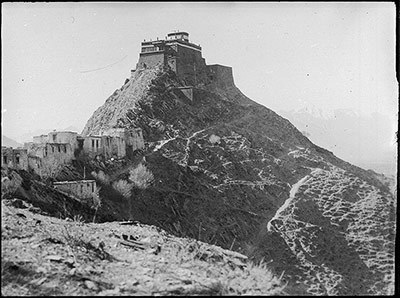 Chakpori Lamasery