

What do you think?
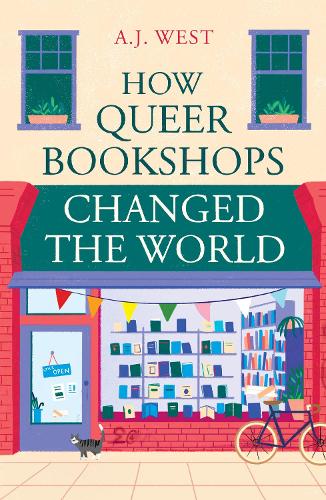
How Queer Bookshops Changed the World
For over a century, LGBTQ+ bookshops have been the unsung heroes of queer liberation
Home not only to books but chaotic community noticeboards, vicious rescue cats and countless meet cutes, queer bookshops have always been more than just bookshops, offering friendship, solidarity and sanctuary.
Travelling the world – Shakespeare and Company in Paris, Gay’s the Word in London, the Oscar Wilde Bookshop in New York – A. J. West explores the remarkable history of these bookstores. Tracing their evolution from under-the-counter operations to beloved out-and-proud institutions, West reveals how the queer bookshop stood at the vanguard of LGBTQ+ rights, offering support and vital information through the AIDS crisis and bringing the fight to Section 28 and book bans.
A powerful testament not only to bookshops but to the courage of queer booksellers, from Sylvia Beach hiding books from the Nazis in laundry baskets to Craig Rodwell facing off against the police at the Stonewall riots, A. J. West celebrates the shops and booksellers that brought queer literature and lives into the mainstream.
Home not only to books but chaotic community noticeboards, vicious rescue cats and countless meet cutes, queer bookshops have always been more than just bookshops, offering friendship, solidarity and sanctuary.
Travelling the world – Shakespeare and Company in Paris, Gay’s the Word in London, the Oscar Wilde Bookshop in New York – A. J. West explores the remarkable history of these bookstores. Tracing their evolution from under-the-counter operations to beloved out-and-proud institutions, West reveals how the queer bookshop stood at the vanguard of LGBTQ+ rights, offering support and vital information through the AIDS crisis and bringing the fight to Section 28 and book bans.
A powerful testament not only to bookshops but to the courage of queer booksellers, from Sylvia Beach hiding books from the Nazis in laundry baskets to Craig Rodwell facing off against the police at the Stonewall riots, A. J. West celebrates the shops and booksellers that brought queer literature and lives into the mainstream.
336 pages, Hardcover
First published May 7, 2026
About the author
A.J. West
4 books238 followersA.J. West was a particularly shy boy at school, hiding away from other children with only his books for friends. Thus, he discovered the magic of ink on paper and fell in love with gothic tales of fear and fun, danger and mystery. A keen people-watcher and incorrigible eavesdropper, he grew up to study English Literature at university, before embarking on an award-winning career as a television and radio journalist. Later, he worked in the LGBTQ+ charity sector before leaving to pursue his writing career. He is married to Nicholas Robinson who gained fame as William Beech in BAFTA award winning Goodnight Mr Tom.
Ratings & Reviews
Friends & Following
Create a free account to discover what your friends think of this book!
Community Reviews
Displaying 1 - 30 of 140 reviews

May 28, 2026
Rounding up to five stars
This ended up being great! After a slightly rough start for me (partly on me for miscalculating just how upsetting much of queer history is, partly because I had to adjust to the writing style), I ended up being rapt and wanted to talk about this book with everyone I know. I learned so much and I appreciated getting an education on queer history through the focus on queer booksellers. But goodness so much of it is enraging and sad - so much oppression and abuse experienced not just by queer folks but also women in general and people of colour in general.
But, overall, I was still able to experience this as a story of passion, community and resilience and I grew to very much enjoy the author's approach to storytelling and his cheeky asides. (Note: I listened to the audiobook and the author did a great job narrating.)
Two other tidbits: This book made me swell with outsized pride every time Toronto was mentioned and made me hate customs so much.
I received an audio Advance Reader Copy from NetGalley and Dreamscape Media in exchange for an honest review.
This ended up being great! After a slightly rough start for me (partly on me for miscalculating just how upsetting much of queer history is, partly because I had to adjust to the writing style), I ended up being rapt and wanted to talk about this book with everyone I know. I learned so much and I appreciated getting an education on queer history through the focus on queer booksellers. But goodness so much of it is enraging and sad - so much oppression and abuse experienced not just by queer folks but also women in general and people of colour in general.
But, overall, I was still able to experience this as a story of passion, community and resilience and I grew to very much enjoy the author's approach to storytelling and his cheeky asides. (Note: I listened to the audiobook and the author did a great job narrating.)
Two other tidbits: This book made me swell with outsized pride every time Toronto was mentioned and made me hate customs so much.
I received an audio Advance Reader Copy from NetGalley and Dreamscape Media in exchange for an honest review.

June 11, 2026
What an excellent book.
I am reading this just after reading Char Adams' book on black-owned bookshops (also excellent, also recommend), and it was great to go back to bookshops and to read about the incredible work they did/do. I know I shouldn't compare... but while Char Adams' was only focused on the US, A.J. West does a little world tour of queer bookshops, and I found it so interesting - he covers a number of bookshops in the US, but also the UK, France, the Netherlands, Canada... I was surprised to see so much collaboration there was between these bookshops, and while I knew about the censorship and repression that took place, I was shocked by the relentless bans from Customs and the determination of booksellers to keep providing their community with books. Really interesting chapters about AIDS and the vital role of the bookshops, often the only place providing patients with leaflets about their illness and mental health support. Lastly, A.J. West covers the recent bans of stories told by drag queens and the bigotry that bookshops still have to face.
Bonus point for the final chapter which covers briefly LGBT bookshops in other places, including Taiwan (which led to the first Gay Pride) and South America.
Free ARC sent by Netgalley.
I am reading this just after reading Char Adams' book on black-owned bookshops (also excellent, also recommend), and it was great to go back to bookshops and to read about the incredible work they did/do. I know I shouldn't compare... but while Char Adams' was only focused on the US, A.J. West does a little world tour of queer bookshops, and I found it so interesting - he covers a number of bookshops in the US, but also the UK, France, the Netherlands, Canada... I was surprised to see so much collaboration there was between these bookshops, and while I knew about the censorship and repression that took place, I was shocked by the relentless bans from Customs and the determination of booksellers to keep providing their community with books. Really interesting chapters about AIDS and the vital role of the bookshops, often the only place providing patients with leaflets about their illness and mental health support. Lastly, A.J. West covers the recent bans of stories told by drag queens and the bigotry that bookshops still have to face.
Bonus point for the final chapter which covers briefly LGBT bookshops in other places, including Taiwan (which led to the first Gay Pride) and South America.
Free ARC sent by Netgalley.

Review of advance copy received from NetGalley
I want to thank the publisher and NetGalley for an eARC of this book.
If you're interested in the history of queer bookshops, I wholeheartedly recommend this: the author clearly researched and crafted this with immense care.
The writing was accessible and never overwhelming, as it perfectly balanced facts with testimonies. At the same time, A.J. West was able to insert jokes and use humor without making it feel out of place (and making me giggle while reading).
Overall, a phenomenal read.
If you're interested in the history of queer bookshops, I wholeheartedly recommend this: the author clearly researched and crafted this with immense care.
The writing was accessible and never overwhelming, as it perfectly balanced facts with testimonies. At the same time, A.J. West was able to insert jokes and use humor without making it feel out of place (and making me giggle while reading).
Overall, a phenomenal read.

April 25, 2026
This book was brilliant!
It was so interesting to read about the origin of queer bookshops across the world. To the author’s own admission, featuring all of them was impossible so there’s much more history out there, but this overview of the shops across the Western hemisphere that were/are challenging the status quo, sticking up for LGBTQ+ rights when no one else would, and creating a safe space that both nurtured and educated, was a very interesting read.
Of course, the history is tough to read, filled with violence and abuse, but the history of these bookshops is also full of hope and aspirations for a better future for the LGBTQ+ community.
Punctuated with humour when appropriate, this was a delightful, easy-read non-fiction on the life-changing impact of queer bookshops. I had no idea about any of it, so very pleased to come away from this work enlightened by their powerful work, especially the shops right on my doorstep!
TW: homophobia, lesbophobia, violence, death, abuse
Thank you to NetGalley for a free e-arc in exchange for an honest review
It was so interesting to read about the origin of queer bookshops across the world. To the author’s own admission, featuring all of them was impossible so there’s much more history out there, but this overview of the shops across the Western hemisphere that were/are challenging the status quo, sticking up for LGBTQ+ rights when no one else would, and creating a safe space that both nurtured and educated, was a very interesting read.
Of course, the history is tough to read, filled with violence and abuse, but the history of these bookshops is also full of hope and aspirations for a better future for the LGBTQ+ community.
Punctuated with humour when appropriate, this was a delightful, easy-read non-fiction on the life-changing impact of queer bookshops. I had no idea about any of it, so very pleased to come away from this work enlightened by their powerful work, especially the shops right on my doorstep!
TW: homophobia, lesbophobia, violence, death, abuse
Thank you to NetGalley for a free e-arc in exchange for an honest review
June 9, 2026
How Queer Bookshops Changed the World was a fascinating look at a part of queer history that we don't really think about. I have a feeling that this is the first book on this specific topic, and I think that its research alone will be helpful to future historians building off of West's work.
This book traces the history of LGBTQ+ bookstores, from the earliest under-the-table book trades in Victorian London to the stores that provided resources during HIV/AIDS to the indies that somehow managed to survive despite Amazon. I didn't know any of the stores mentioned, but I appreciated the history, and I learned a lot. Since we have a queer bookstore in DC, I hadn't realized how hard its predecessors had to fight for their existence only a few decades ago. We truly have come far in the last 50 years.
I will note that I was a little confused at how this book was structured. I listened to the audiobook, so it felt like it jumped around. Looking at the chapter titles in a Kindle sample, I guess that each chapter must focus on a different bookstore. Because so many bookstores were started in the 1970s, it was a little hard for me to keep track of what was going on because the timelines all overlapped. This might be easier in a print format.
Thanks to Netgalley and Dreamscape Media for the ARC.
This book traces the history of LGBTQ+ bookstores, from the earliest under-the-table book trades in Victorian London to the stores that provided resources during HIV/AIDS to the indies that somehow managed to survive despite Amazon. I didn't know any of the stores mentioned, but I appreciated the history, and I learned a lot. Since we have a queer bookstore in DC, I hadn't realized how hard its predecessors had to fight for their existence only a few decades ago. We truly have come far in the last 50 years.
I will note that I was a little confused at how this book was structured. I listened to the audiobook, so it felt like it jumped around. Looking at the chapter titles in a Kindle sample, I guess that each chapter must focus on a different bookstore. Because so many bookstores were started in the 1970s, it was a little hard for me to keep track of what was going on because the timelines all overlapped. This might be easier in a print format.
Thanks to Netgalley and Dreamscape Media for the ARC.
Did Not Finish
June 22, 2026I was so excited when I saw this audiobook was available via the library. I have picked up a few history of bookshops books this year and was excited to read this angle. However, the writing style and tongue in cheek comments by the author just aren't for me. In the first chapter the author described and I gagged. Nope. Not for me.

June 3, 2026
I enjoyed this non-fiction book in its entirety, it's entertaining and highly informative. The writing is engaging and funny at times. The book covers the history of queer bookshops, from the first ones to those existing today. The bookshop's role as a safe space for the queer community since the beginning of the queer activist movements is important and relevant. These shops and their clients were a part of said movement, helping queer people be ourselves and discover ourselves, being a space to meet others like us, and being a source of invaluable information during the AIDS epidemic crisis.
There are two things they all have in common: bigoted people ruining things (and being extremely violent as per usual) and the resilience of the queer community. I enjoyed getting to know some bookish fun facts about famous authors, the personal lives of renowned booksellers, and getting information about publishing history too. This history is necessary for the hostile context we currently live in with the advancement of right-wing governments and the normalization of discrimination.
We learn about the major role Customs and the government had in the boycott of these small businesses. We see the harsh reality that bookshops had to face in the 90s with globalization and the monopolization of franchise bookshops, and how it took a toll, even causing them to close after decades of being a safe space for the community.
One thing that I would have preferred is to read more about bookshops from South America, Asia, and Africa, it was really a small number of bookshops mentioned, as mostly we get the history of bookshops from the USA and the UK. That disappointed me a little, but I hope to see a second installment of this.
The reality is that independent bookstores are dwindling, we need to buy books from them and not franchises. Truly, we should thank all the queer bookshops, the booksellers, and the queer communities that brought them to life.
Thank you Oneworld Publications and Netgalley for this ARC.
There are two things they all have in common: bigoted people ruining things (and being extremely violent as per usual) and the resilience of the queer community. I enjoyed getting to know some bookish fun facts about famous authors, the personal lives of renowned booksellers, and getting information about publishing history too. This history is necessary for the hostile context we currently live in with the advancement of right-wing governments and the normalization of discrimination.
We learn about the major role Customs and the government had in the boycott of these small businesses. We see the harsh reality that bookshops had to face in the 90s with globalization and the monopolization of franchise bookshops, and how it took a toll, even causing them to close after decades of being a safe space for the community.
One thing that I would have preferred is to read more about bookshops from South America, Asia, and Africa, it was really a small number of bookshops mentioned, as mostly we get the history of bookshops from the USA and the UK. That disappointed me a little, but I hope to see a second installment of this.
The reality is that independent bookstores are dwindling, we need to buy books from them and not franchises. Truly, we should thank all the queer bookshops, the booksellers, and the queer communities that brought them to life.
Thank you Oneworld Publications and Netgalley for this ARC.

July 2, 2026
When I was in college, there used to be a queer bookshop in Hillcrest, San Diego, called Obelisk. In the mid-2000s, pre-internet and before everyone ordered everything on Amazon, it was a thriving store. My friends and I loved going here to check out what was new and what we wouldn't be able to find at our college bookstore. It was here that I started to learn about more diverse stories.
A couple years later, out of college, I visited the store one day. It was no longer a bookstore; it was called Obelisk Mercantile, and sold a bunch of neighborhood merchandise and other knick knacks. I asked them why they weren't a bookstore anymore, and they grumbled that online shopping took all of their business. People would go in, look at the books, and then order them online. Then, a few months later, the business burned to the ground. Today, an escape room stands in its place, of all things.
Queer bookshops in history made a difference for a lot of people, people who would walk by, go around the block, and finally have the courage to go into the store and learn something. Whether that was in the pre-civil rights era where it was literally dangerous to be seen in the store, to post-Stonewall where being gay wasn't the automatic social stigma that it once was (not as much at least). Queer bookshops were there in the 80s to offer information and solace during the AIDS epidemic, and some of them still continue to survive in a world with Amazon and social media.
West's chronicle of queer bookshops was quite enlightening. While much has been talked about with regards to bookstores in general, the queer bookshop holds a special place in history. They stuck around through many of these global social events, offering open doors to anyone who needed them. His writing is a bit more academic than I expected, but it's clearly well researched and delivers on all accounts. There are a lot of interviews from various booksellers, giving readers a deeper glimpse into how the industry has changed over time.
A great read that I'd recommend to anyone interested in the subject.
A couple years later, out of college, I visited the store one day. It was no longer a bookstore; it was called Obelisk Mercantile, and sold a bunch of neighborhood merchandise and other knick knacks. I asked them why they weren't a bookstore anymore, and they grumbled that online shopping took all of their business. People would go in, look at the books, and then order them online. Then, a few months later, the business burned to the ground. Today, an escape room stands in its place, of all things.
Queer bookshops in history made a difference for a lot of people, people who would walk by, go around the block, and finally have the courage to go into the store and learn something. Whether that was in the pre-civil rights era where it was literally dangerous to be seen in the store, to post-Stonewall where being gay wasn't the automatic social stigma that it once was (not as much at least). Queer bookshops were there in the 80s to offer information and solace during the AIDS epidemic, and some of them still continue to survive in a world with Amazon and social media.
West's chronicle of queer bookshops was quite enlightening. While much has been talked about with regards to bookstores in general, the queer bookshop holds a special place in history. They stuck around through many of these global social events, offering open doors to anyone who needed them. His writing is a bit more academic than I expected, but it's clearly well researched and delivers on all accounts. There are a lot of interviews from various booksellers, giving readers a deeper glimpse into how the industry has changed over time.
A great read that I'd recommend to anyone interested in the subject.
September 24, 2026
Very Eurocentric and colonial interpretation of "the world - Europe, US and 2 Australian cities (Melbourne & Sydney).
However, as I often am with historical non-fiction, I am slightly uncomfortable with the bi-erasure & its normalisation - e.g. when discussing a book owner with a family "it has been claimed that Roth might have been bisexual...but the jury is still out", then in the following sentence proceeds to refer to him as a straight ally bookseller. But having a family or opposite-sex/gender binaried person doesn't mean one is straight, so why the assumption / default to straight?
And the constant referral to homosexual visitors (e.g. as a generalised population/crowd, not specific individuals) to bookshops - that is a huge assumption that all these individuals were indeed monosexual and not bi or pansexual. I know my gay and lesbian friends will be rolling their eyes at me, but this type of assumption and normalisation is prevalent and harmful.
There are of course always many questions when working with historical texts where groups may not use the same labels (if at all) - it would've been great to see a reflexive author position statement regarding their choices as to how they approached these complexities in the book, because no decision is neutral and how we write about queer history (re)shapes it - and queer future.
However, as I often am with historical non-fiction, I am slightly uncomfortable with the bi-erasure & its normalisation - e.g. when discussing a book owner with a family "it has been claimed that Roth might have been bisexual...but the jury is still out", then in the following sentence proceeds to refer to him as a straight ally bookseller. But having a family or opposite-sex/gender binaried person doesn't mean one is straight, so why the assumption / default to straight?
And the constant referral to homosexual visitors (e.g. as a generalised population/crowd, not specific individuals) to bookshops - that is a huge assumption that all these individuals were indeed monosexual and not bi or pansexual. I know my gay and lesbian friends will be rolling their eyes at me, but this type of assumption and normalisation is prevalent and harmful.
There are of course always many questions when working with historical texts where groups may not use the same labels (if at all) - it would've been great to see a reflexive author position statement regarding their choices as to how they approached these complexities in the book, because no decision is neutral and how we write about queer history (re)shapes it - and queer future.

August 11, 2026
Since their conception (author defines what is a queer bookshop at the start of the book), queer bookshops have provided the world, and I say “world” due to trickle-down effect that it had, otherwise I too might still lack said queer books in my shelves, with: space and time to organize, organizers themselves, a safe place to be, a place to discover yourself, and such fine people like Steve the Hungarian assistant who, when asked if there’s anything cheap in the store, replied simply – “me”. Out of this sprouted and grew various movements, fights, marches, and, yes, the first organized Pride that wasn’t a riot. These people fought for all vulnerable, queer or straight, and provided what resources they could, from a corner to sleep in, a cup of coffee, a cheap book to read, to education, banned books, and vital resources during AIDS epidemic, leaflets, research. And this book too serves the same exact purpose, brimming with information, stories, and names I honestly didn’t expect to see.
my farther thoughts, not necessarily relevant as a review: Nosferatu Reads ; Vakaris
my farther thoughts, not necessarily relevant as a review: Nosferatu Reads ; Vakaris

June 26, 2026
This was a fascinating look at such an important, and previously unexamined, part of Queer history. I was worried that a history of bookshops would be rather, well, dusty, but West was able to make each different shop and their owners come alive and show their importance in the movement.
I must say there were a couple of factual or editorial errors that kept me from giving this a fifth star:
-When examining Lambda Rising, West wrote that, once the store started adding locations, it "spanned the country." He then explained that the four locations were in Washington, DC; Alexandria, Virginia; Baltimore, Maryland; and Rehoboth Beach, Delaware. I'm sorry, but three contiguous states and DC do not "span the country."
-At one point, West said that Rehoboth was in Massachusetts, which it is not. Or at least not the one with a Lambda Rising store.
Overall, I would absolutely recommend this book to those who are interested in Queer history and in the current role of Queer bookshops in our community!
I must say there were a couple of factual or editorial errors that kept me from giving this a fifth star:
-When examining Lambda Rising, West wrote that, once the store started adding locations, it "spanned the country." He then explained that the four locations were in Washington, DC; Alexandria, Virginia; Baltimore, Maryland; and Rehoboth Beach, Delaware. I'm sorry, but three contiguous states and DC do not "span the country."
-At one point, West said that Rehoboth was in Massachusetts, which it is not. Or at least not the one with a Lambda Rising store.
Overall, I would absolutely recommend this book to those who are interested in Queer history and in the current role of Queer bookshops in our community!

September 15, 2026
This was an amazing chronicle of queer history through the lens of literature. It was definitely depressing at times, as the author did not sugar-coat the circumstances of queer people throughout history. There was as much queer suffering as there was queer joy, but that is a testament to queer resilience, community, and survival. And it was well researched and well written, going deep into the bookshops, booksellers, authors, and printers. I also really appreciated the organization. It was roughly chronological with sections based on the evolution of queer rights, and then chapters highlighting individual stores. Lastly, I enjoyed the footnotes, both for how they filled me in on background history and for the humor the author included in many of them. It was an occasional glimpse of the author’s voice. However, my main critique is that the world is way bigger than just Western Europe and North America, and this book barely touched on places outside of that, and only at the very end. But overall I enjoyed this book and would recommend it.

May 31, 2026
Genuinely laugh out loud funny, absurdly emotional, and jam packed with charming and infuriating details. (Get ready to hate multiple people / governments more than you already did.) It’s well-written, full of gossipy anecdotes, kind without being too sentimental, and celebratory without glossing over the horrific reality of some of the events described.
I know I am going to end up buying this book several times for gifts, it’s that kind of book. Currently in stock at Gay’s the Word and Queen’s Park Book shop with signed copies available if you want to support local bookshops in advance of reading about why that is important!
I know I am going to end up buying this book several times for gifts, it’s that kind of book. Currently in stock at Gay’s the Word and Queen’s Park Book shop with signed copies available if you want to support local bookshops in advance of reading about why that is important!
June 11, 2026
Well what I delightful read this was. But there's also drama, humour and tons of heart.
Covering predominantly Western Bookshops, it's a powerful, moving history of these special places. From a time when lesbian and gay books were hidden away to a thankfully more progressive society where these shops began opening freely.
There's love, there's hate and everything inbetween.
For me, it's a dip in and out of type of read, so i read this on and off, but it would also work perfectly to read cover to cover without.
A big 5 🌟 🌟 🌟 🌟 🌟 's from me.
Covering predominantly Western Bookshops, it's a powerful, moving history of these special places. From a time when lesbian and gay books were hidden away to a thankfully more progressive society where these shops began opening freely.
There's love, there's hate and everything inbetween.
For me, it's a dip in and out of type of read, so i read this on and off, but it would also work perfectly to read cover to cover without.
A big 5 🌟 🌟 🌟 🌟 🌟 's from me.

June 13, 2026
Loved this book! West shows the power of Queer Bookshops and how they created a sense of belonging, acceptance and safety amongst the LGBTQ+ community in challenging times. He also shows the endurance of Queer bookshops, with some being still open to this day after opening in the 70s. Definitely makes you want to visit them!
June 11, 2026
This was a great little snapshot into the lives of book sellers and particularly the pioneers for queer bookshops and their role in bringing queer literature to the world and endlessly carve out space for queer people

June 1, 2026
Very interesting. It’s inspired me to look deeper into areas it was only able to cover briefly

July 24, 2026
I need everyone to get this book IMMEDIATELY! it is so incredibly well written, engaging, empowering, heartbreaking, grounded and just wow. I was blown away. every bookstore is connected and holds such an important piece of the puzzle that is queer history. a true true true 6 star read!

August 21, 2026
So interesting and informative, so happy I read it!
September 13, 2026
wow this made me way more emotional than i expected. it’s nice to remember community and hope exist. also latest dream job unlocked
September 30, 2026
We need more queer bookshops in the world asap.
October 7, 2026
The most incredible book! My favourite of the year!

May 29, 2026
Witty, informative and brilliant. Such an enjoyable read.

August 7, 2026
so much to be thankful for and proud of <3 i love gay books and i love the people who have fought so hard to get them out into the world. my life is so much better and brighter thanks to the work of the booksellers we meet in this history. i’m so glad this book exists !!

June 25, 2026
Wow! I had no idea what a pivotal role queer bookstores had in the world. This was a fascinating deep dive into bookstores and how they influenced the world. I really enjoyed how the bookstores were scattered around the geography of the world too. And the names!!! They were very creative; Gay's the Word was my fave. This novel has some wild stories and some intriguing historical accounts of how queer bookstores continue to be a political driving space and a safe place. Thoroughly and highly recommend this novel.

August 23, 2026
How queer bookstores changed the world
- I love books about books
- The world’s first law criminalizing pornography - the obscene publications act, 1857, England
- La Maison des Amis des Livres - Paris, 1915- German Occupation - Adrienne Monnier
- I remember less about this bookstore but she goes hand in hand with Silvia Beach
- The opening of Shakespeare and Company - Paris, 1919 - Silvia Beach
- She brought Joyce’s Ulysses to Europe. Joyce later sold the world rights to a larger distributer and cut her out of profits and history
- Encouraged the publication and sold Hemingway’s first book - three stories and ten poems
- City lights book store - San Francisco, 1953-present - Lawerence Ferlinghetti
- Inspired by Shakespeare and company
- Supported beat poets and queer culture
- Lawerence like many early queer booksellers was straight, sexually and laced
- Alan Ginsberg and Howl - 1956
- The first amendment protection, expression, and obscenity - worth noting but did not go in depth in this section
- Roth’s trial, significantly impacted the publication of sexual explicit materials and set new legal precedents, some of which would impact Ferlinghetti and Ginsberg’s Howl. The poem had literary merit and redeeming social importance
- Wolfington Report 1957, England, recommended that homosexuality should be legal
- Hal Kal, the owner of the first openly gay bookstore
- The Oscar Wilde Memorial bookstore, NYC, 1967-2009 - the first truly openly gay bookstore
- Craig Rodwell - owner and one of the most important figures in queer history
- Fought for inclusion of all queer groups. Rejected a Stone Wall statue because it did not include women and people of color
- Fred
- The DSM and homosexuality
- Stone wall riots - Craig wrote and published the first news articles, the morning after the first night. They continued to write articles covering the riots
- Sylvia Rivera, influential lesbian
Glad Day Bookshop, Toronto, 1970-present
- Gerald Muldinhower
- The only example of a queer bookseller expanding beyond its borders, opening a bookshop in Boston
- Ellen Nobel - Massachusetts was first state to elect an open queer state representative, 1974
Lambda Rising - Washington DC, ‘74-‘10
- Deacon Maccubbin
Amazon bookstore, Minneapolis, ‘70-‘12
- One of the first wholly lesbian bookstore
The other first one was in Oakland - A Women’s Place
- It was created as a resource space for queer women
- Second wave feminism
- The anti lesbian wing of the the women’s rights movement and feminism
- The resistance to overt sexuality within the lesbian and feminist community
- Radical lesbians, socialist lesbians, different lesbian subgroups
- Queer bookstores always had community boards and information sharing, that’s what they were all about
- Powerful lesbians
- Coming out meant women could lose their children and livelihood
- The changing definition of obscenity
England
- It was dangerous being gay, people were killed
- In England people could get lighter murder sentences by saying the person was a homosexual coming on to them
- Homosexuals were accused of being dangerous to children
- The police following the public bathrooms
- 1985 the case against Gays The Word for importing obscene materials
- If it was legal to make in England it should also be legal to sell
This book is awesome; books, bravery, queerness, activism, unity
It is infuriating for the bigotry, hatred, homophobia, violence, prejudice, infighting, and harm
- The AIDS epidemic - queer bookstores were on the front lines disseminating information. They were often the first, best, and only places to get information about HIV/AIDS
Eisenherz, ‘78 - present, West Berlin
- Queer bookstores in Germany during the Cold War
- Berlin is a gay city
Fighting back in England!! This was a powerful and important section but I have limited notes on it
Little sisters in Canada
- Major court cases
- Customs and banning inventory
- Bookstores were fire bombed on multiple occasions
- The lesbian book store in Minneapolis Amazon book store that sued Amazon. They lost the case but fought the battle
- The shrinking of queer and indie book stores in the ‘00s and early ‘10s. Book stores have been on the rise since the mid ‘10’s
- A brief coverage of the few queer book stores in Africa, Asia, India, and South America
- Queer book stores saved lives, they were a place a refuge, community, activism, information, and love. They have and will continue to change the world. I absolutely loved this book.
- There were a bunch of stores, people, and details that I did not write. I read for enjoyment, the notes are for my memory.
- I love books about books
- The world’s first law criminalizing pornography - the obscene publications act, 1857, England
- La Maison des Amis des Livres - Paris, 1915- German Occupation - Adrienne Monnier
- I remember less about this bookstore but she goes hand in hand with Silvia Beach
- The opening of Shakespeare and Company - Paris, 1919 - Silvia Beach
- She brought Joyce’s Ulysses to Europe. Joyce later sold the world rights to a larger distributer and cut her out of profits and history
- Encouraged the publication and sold Hemingway’s first book - three stories and ten poems
- City lights book store - San Francisco, 1953-present - Lawerence Ferlinghetti
- Inspired by Shakespeare and company
- Supported beat poets and queer culture
- Lawerence like many early queer booksellers was straight, sexually and laced
- Alan Ginsberg and Howl - 1956
- The first amendment protection, expression, and obscenity - worth noting but did not go in depth in this section
- Roth’s trial, significantly impacted the publication of sexual explicit materials and set new legal precedents, some of which would impact Ferlinghetti and Ginsberg’s Howl. The poem had literary merit and redeeming social importance
- Wolfington Report 1957, England, recommended that homosexuality should be legal
- Hal Kal, the owner of the first openly gay bookstore
- The Oscar Wilde Memorial bookstore, NYC, 1967-2009 - the first truly openly gay bookstore
- Craig Rodwell - owner and one of the most important figures in queer history
- Fought for inclusion of all queer groups. Rejected a Stone Wall statue because it did not include women and people of color
- Fred
- The DSM and homosexuality
- Stone wall riots - Craig wrote and published the first news articles, the morning after the first night. They continued to write articles covering the riots
- Sylvia Rivera, influential lesbian
Glad Day Bookshop, Toronto, 1970-present
- Gerald Muldinhower
- The only example of a queer bookseller expanding beyond its borders, opening a bookshop in Boston
- Ellen Nobel - Massachusetts was first state to elect an open queer state representative, 1974
Lambda Rising - Washington DC, ‘74-‘10
- Deacon Maccubbin
Amazon bookstore, Minneapolis, ‘70-‘12
- One of the first wholly lesbian bookstore
The other first one was in Oakland - A Women’s Place
- It was created as a resource space for queer women
- Second wave feminism
- The anti lesbian wing of the the women’s rights movement and feminism
- The resistance to overt sexuality within the lesbian and feminist community
- Radical lesbians, socialist lesbians, different lesbian subgroups
- Queer bookstores always had community boards and information sharing, that’s what they were all about
- Powerful lesbians
- Coming out meant women could lose their children and livelihood
- The changing definition of obscenity
England
- It was dangerous being gay, people were killed
- In England people could get lighter murder sentences by saying the person was a homosexual coming on to them
- Homosexuals were accused of being dangerous to children
- The police following the public bathrooms
- 1985 the case against Gays The Word for importing obscene materials
- If it was legal to make in England it should also be legal to sell
This book is awesome; books, bravery, queerness, activism, unity
It is infuriating for the bigotry, hatred, homophobia, violence, prejudice, infighting, and harm
- The AIDS epidemic - queer bookstores were on the front lines disseminating information. They were often the first, best, and only places to get information about HIV/AIDS
Eisenherz, ‘78 - present, West Berlin
- Queer bookstores in Germany during the Cold War
- Berlin is a gay city
Fighting back in England!! This was a powerful and important section but I have limited notes on it
Little sisters in Canada
- Major court cases
- Customs and banning inventory
- Bookstores were fire bombed on multiple occasions
- The lesbian book store in Minneapolis Amazon book store that sued Amazon. They lost the case but fought the battle
- The shrinking of queer and indie book stores in the ‘00s and early ‘10s. Book stores have been on the rise since the mid ‘10’s
- A brief coverage of the few queer book stores in Africa, Asia, India, and South America
- Queer book stores saved lives, they were a place a refuge, community, activism, information, and love. They have and will continue to change the world. I absolutely loved this book.
- There were a bunch of stores, people, and details that I did not write. I read for enjoyment, the notes are for my memory.

July 2, 2026
The Independent Press Top 40 Bestsellers: Non-Fiction For the week ending June 30, 2026
Real Rating: 4.75* of five
The Publisher Says: For over a century, LGBTQ+ bookshops have been the unsung heroes of queer liberation
Home not only to books but chaotic community noticeboards, vicious rescue cats and countless meet cutes, queer bookshops have always been more than just bookshops, offering friendship, solidarity and sanctuary.
Traveling the world—Shakespeare and Company in Paris, Gay’s the Word in London, the Oscar Wilde Bookshop in New York—A. J. West explores the remarkable history of these bookstores. Tracing their evolution from under-the-counter operations to beloved out-and-proud institutions, West reveals how the queer bookshop stood at the vanguard of LGBTQ+ rights, offering support and vital information through the AIDS crisis and bringing the fight to Section 28 and book bans.
A powerful testament not only to bookshops but to the courage of queer booksellers, from Sylvia Beach hiding books from the Nazis in laundry baskets to Craig Rodwell facing off against the police at the Stonewall riots, A. J. West celebrates the shops and booksellers that brought queer literature and lives into the mainstream.
I RECEIVED A DRC FROM THE PUBLISHER VIA EDELWEISS+. THANK YOU.
My Review: I'd give it a perfect rating if I hadn't felt so put-upon with the opening chapters speed-lining queer history.
It was my emotional reaction. I'm not wrong; I literally cannot be wrong about my feelings.
It's necessary to put not-queer, or new to their history queer, readers in the picture of what these trailblazing heroically brave people did and what they risked for us all to have access to queer stories. It is breathtaking, and eye-opening, and quite honestly shaming for those of us not willing or able to stand up against Authority for the good of all.
It is more clear to me than ever before that the urgent project of the authoritarians trying to ban queer books, the tech scum trying to make all knowledge available only on their say-so and the seeker's ability to pay any vig "They" choose to demand, and the ruling class's desire to keep you as stupid as possible intertwine like snakes on Medusa's head. The underknown prophet of this future we now live in, Sinclair Lewis, wrote: "When fascism comes to America, it will be wrapped in a flag and carrying the cross."
Look around you...that was prophecy, not fiction.
Author AJ writes about the past in this book. It could, one day soon, feel like an elegy for les jadis if you and I are not very careful and very intentional in our actions in November 2026. It's fragile, this thing called Liberty, and it's always been very, very unpopular with with the ruling class. We-the-people have already seen how much control "They" want after women's bodily autonomy was stripped away from them in the US. Revoltingly it was enabled by a quisling woman. All of these struggles, legal battles, and societal shifts are under long-term and well-funded attack. How I wish more people had listened when Hilary Clinton spoke that truth.
Author AJ details the harms this determined regressive minority causes with seeming impunity in his chapters on the role of AIDS amelioration and drag-queen story hour bannings. Restraining the flow of often life-saving information to those in desperate need of it, and excluding people "They" don't like such as gender-nonconforming people, are terrible actions on their face. The true evil doesn't announce itself. It unfolds as Author AJ shows us consequences.
The best kind of non-fiction writing tells you a story that evokes emotional responses from the reader. I've seldom been more emotional in my response to a true story that does not involve a murder. Author AJ deserves all the kudos there are for bringing a storyteller's constructive attention to this crisis in our body politic.
Real Rating: 4.75* of five
The Publisher Says: For over a century, LGBTQ+ bookshops have been the unsung heroes of queer liberation
Home not only to books but chaotic community noticeboards, vicious rescue cats and countless meet cutes, queer bookshops have always been more than just bookshops, offering friendship, solidarity and sanctuary.
Traveling the world—Shakespeare and Company in Paris, Gay’s the Word in London, the Oscar Wilde Bookshop in New York—A. J. West explores the remarkable history of these bookstores. Tracing their evolution from under-the-counter operations to beloved out-and-proud institutions, West reveals how the queer bookshop stood at the vanguard of LGBTQ+ rights, offering support and vital information through the AIDS crisis and bringing the fight to Section 28 and book bans.
A powerful testament not only to bookshops but to the courage of queer booksellers, from Sylvia Beach hiding books from the Nazis in laundry baskets to Craig Rodwell facing off against the police at the Stonewall riots, A. J. West celebrates the shops and booksellers that brought queer literature and lives into the mainstream.
I RECEIVED A DRC FROM THE PUBLISHER VIA EDELWEISS+. THANK YOU.
My Review: I'd give it a perfect rating if I hadn't felt so put-upon with the opening chapters speed-lining queer history.
It was my emotional reaction. I'm not wrong; I literally cannot be wrong about my feelings.
It's necessary to put not-queer, or new to their history queer, readers in the picture of what these trailblazing heroically brave people did and what they risked for us all to have access to queer stories. It is breathtaking, and eye-opening, and quite honestly shaming for those of us not willing or able to stand up against Authority for the good of all.
It is more clear to me than ever before that the urgent project of the authoritarians trying to ban queer books, the tech scum trying to make all knowledge available only on their say-so and the seeker's ability to pay any vig "They" choose to demand, and the ruling class's desire to keep you as stupid as possible intertwine like snakes on Medusa's head. The underknown prophet of this future we now live in, Sinclair Lewis, wrote: "When fascism comes to America, it will be wrapped in a flag and carrying the cross."
Look around you...that was prophecy, not fiction.
Author AJ writes about the past in this book. It could, one day soon, feel like an elegy for les jadis if you and I are not very careful and very intentional in our actions in November 2026. It's fragile, this thing called Liberty, and it's always been very, very unpopular with with the ruling class. We-the-people have already seen how much control "They" want after women's bodily autonomy was stripped away from them in the US. Revoltingly it was enabled by a quisling woman. All of these struggles, legal battles, and societal shifts are under long-term and well-funded attack. How I wish more people had listened when Hilary Clinton spoke that truth.
Author AJ details the harms this determined regressive minority causes with seeming impunity in his chapters on the role of AIDS amelioration and drag-queen story hour bannings. Restraining the flow of often life-saving information to those in desperate need of it, and excluding people "They" don't like such as gender-nonconforming people, are terrible actions on their face. The true evil doesn't announce itself. It unfolds as Author AJ shows us consequences.
The best kind of non-fiction writing tells you a story that evokes emotional responses from the reader. I've seldom been more emotional in my response to a true story that does not involve a murder. Author AJ deserves all the kudos there are for bringing a storyteller's constructive attention to this crisis in our body politic.
Review of advance copy received from Netgalley
Thanks to NetGalley and Oneworld for the advanced copy of this title in return for an honest review.
I did have this on pre-order but sadly it was sacrificed in my "I have no money so have to cancel some pre-orders" cull. So I was thrilled when I was sent an e-arc of it. I love A.J and I love his books so much and I was intrigued to see how he fared with non-fiction.
As a white, heterosexual, cisgendered woman, I cannot pretend to understand what it meant to be a homosexual, particularly a homosexual man, back in the day, and even, to a certain degree, in today's time, and why queer bookshops can be a place of sanctuary. And so these views come from my somewhat limited perspective.
There are footnotes in this book which I generally don't like on a kindle version because the formatting goes a bit haywire. But I sought them out and I found them really interesting, and some quite moving and entertaining, and I highly recommend you read them in your finished copy.
I am a self-confessed nerd when it comes to books, writing, literature, bookshops, literary history etc. and so I was fascinated by what A.J has discovered in this book - and I've got a whole new list of bookshops to visit (like I needed an excuse).
I didn't expect to feel so angry at a book about bookshops, but in terms of the historical context around how gay, lesbian, and trans people were treated, it's just horrendous. I'm not going to put this era's views on the beliefs of people in the 1700s for example because that doesn't work. And whilst it's still not acceptable, you can accept that those views were the views of that time. But to read similar views being thrown around in the last 100 years or so, or even in my lifetime, I just can't comprehend it. Who cares if you're a man who loves a man, or a woman who loves a woman? If you're a man who doesn't think a man should sleep with another men, then don't sleep with another man. Done. Sorted. It's as simple as that. I think what A.J has done here is about more than just bookshops, it's such an important conversation to be had.
Historical non-fiction can be quite dry and overwhelming with facts. But A.J has found a good balance here. He's given us all the information we want, but he's kept the storytelling ability, wit, and his talent in talking directly to the reader that he has with his novels, which means it's informative and a joy to read.
What I really liked is that, not only has he given us the history of queer books and bookshops, he's given us the history of the world around them, and as someone who really regrets (but won't admit to because then my Mum will say "I told you so") giving up history before GCSE level, I found it fascinating.
Reading this reminded me of a moment a while back when I was buying some books, when a stranger asked me why I was buying "gay books" if I wasn't gay? And I thought to myself...I buy books about serial killers but I'm not a serial killer - yet. What an absurd thing to think, that you can only read books written by authors and featuring characters who believe in or feel the same way as you. I have read thousands of books in my life and yes, a proportion of them will be by gay authors or feature gay characters, but I don't necessarily make it a conscious choice, I just read books. But I completely understand how important it is to have that choice, especially for younger readers who might be a bit confused by their sexuality or worried about being accepted. And to have dedicated spaces for those people to feel safe and catered for is something I have never given much thought to, I'll be honest, because it's never directly affected me. But A.J's book explains just why they are such a vital lifeline for any reader, no matter your sexuality, to find somewhere you feel you belong.
And because I don't already own 2,000+ books, I have now had to make a list of all the books he's mentioned in this book.
I read the first half one evening and the second the next morning. It was so fantastic to read, and even though there are some difficult moments in it, he's managed to infuse it with such a sense of warmth and hope.
I did have this on pre-order but sadly it was sacrificed in my "I have no money so have to cancel some pre-orders" cull. So I was thrilled when I was sent an e-arc of it. I love A.J and I love his books so much and I was intrigued to see how he fared with non-fiction.
As a white, heterosexual, cisgendered woman, I cannot pretend to understand what it meant to be a homosexual, particularly a homosexual man, back in the day, and even, to a certain degree, in today's time, and why queer bookshops can be a place of sanctuary. And so these views come from my somewhat limited perspective.
There are footnotes in this book which I generally don't like on a kindle version because the formatting goes a bit haywire. But I sought them out and I found them really interesting, and some quite moving and entertaining, and I highly recommend you read them in your finished copy.
I am a self-confessed nerd when it comes to books, writing, literature, bookshops, literary history etc. and so I was fascinated by what A.J has discovered in this book - and I've got a whole new list of bookshops to visit (like I needed an excuse).
I didn't expect to feel so angry at a book about bookshops, but in terms of the historical context around how gay, lesbian, and trans people were treated, it's just horrendous. I'm not going to put this era's views on the beliefs of people in the 1700s for example because that doesn't work. And whilst it's still not acceptable, you can accept that those views were the views of that time. But to read similar views being thrown around in the last 100 years or so, or even in my lifetime, I just can't comprehend it. Who cares if you're a man who loves a man, or a woman who loves a woman? If you're a man who doesn't think a man should sleep with another men, then don't sleep with another man. Done. Sorted. It's as simple as that. I think what A.J has done here is about more than just bookshops, it's such an important conversation to be had.
Historical non-fiction can be quite dry and overwhelming with facts. But A.J has found a good balance here. He's given us all the information we want, but he's kept the storytelling ability, wit, and his talent in talking directly to the reader that he has with his novels, which means it's informative and a joy to read.
What I really liked is that, not only has he given us the history of queer books and bookshops, he's given us the history of the world around them, and as someone who really regrets (but won't admit to because then my Mum will say "I told you so") giving up history before GCSE level, I found it fascinating.
Reading this reminded me of a moment a while back when I was buying some books, when a stranger asked me why I was buying "gay books" if I wasn't gay? And I thought to myself...I buy books about serial killers but I'm not a serial killer - yet. What an absurd thing to think, that you can only read books written by authors and featuring characters who believe in or feel the same way as you. I have read thousands of books in my life and yes, a proportion of them will be by gay authors or feature gay characters, but I don't necessarily make it a conscious choice, I just read books. But I completely understand how important it is to have that choice, especially for younger readers who might be a bit confused by their sexuality or worried about being accepted. And to have dedicated spaces for those people to feel safe and catered for is something I have never given much thought to, I'll be honest, because it's never directly affected me. But A.J's book explains just why they are such a vital lifeline for any reader, no matter your sexuality, to find somewhere you feel you belong.
And because I don't already own 2,000+ books, I have now had to make a list of all the books he's mentioned in this book.
I read the first half one evening and the second the next morning. It was so fantastic to read, and even though there are some difficult moments in it, he's managed to infuse it with such a sense of warmth and hope.
Review of advance copy received from NetGalley
Thank You to NetGalley for the advanced reading copy!
You may have visited a 'specialty' bookstore or two. Have you ever considered the purpose and role of them beyond a marketing choice? In the past couple decades great effort has been put into recording lives, movements, and contributions of non-heteronormative people. Book lovers know about the struggles and maybe even a resurgence in independent shops. The multipurpose and integral functions of libraries are getting more recognition. Meeting at this intersection of queer history, bibliophile boulevard, and adjacent to industry avenue at civics crossing this book offers a wholesome perspective of how shops owned and the Queer community they embody all of these things.
It is impossible to write about a space without highlighting the people that create and inhabit it. While this is a love letter to buildings and occasionally the systems they start as, it's just as much about motivations and intentions of their curators. By following those lives, the reader is also given a peek at the social and political climate. As someone who was familiar with the broad strokes of many noted periods, I still learned quite a lot. Inflatable dolls and the U.N. anyone?
Written with enough tongue-in-cheek to make sometimes heavy topics more digestible, and at times certainly just to be playful, this isn't a bland chronology of injustice. Nor does it give the impression of universal triumph and success. West does due diligence in showing the setbacks, internal conflicts, and barriers faced. It showcases the grit, conviction, and persistence to create pockets of light that lead to hope. In the best cases- change.
I was greatly impressed by the lengths the author goes to promote previously overlooked intersectionality. Some of these groups may still feel excluded from the 'big' umbrella. African American and Asian community members for example. The various stances people take on the inclusion or exclusion of male creators, even customers, was even more complex than I anticipated. And, as has gotten a little more traction recently, nonbinary individuals.
There is major focus on the U.K. And U.S. with a dash of Canada and Australia. Just when I was about to lament some neglected regions, West touches on the status in South Africa, Asia ,Central and South America, and the cultural barriers they face in establishing 'brick and mortar' stationary stores. He also mentions the flourishing of a particular shop in Mexico City. He is also enthusiastic about these areas being a story waiting to be written that could appear in future explorations.
I'm assuming that the author intends to include the greater part of the African continent and what is more commonly called “Middle East” here as well. Some feel it is more appropriate to reference the area as S/WANA (South/West Asia Northern Africa). His adoption of that term would match the pattern of attention to detail and consideration throughout the rest of the book. But I suspect there might be some who are accustomed to the vernacular to presume exclusion.
The most resonating element of these biographies is the compassion it captures. The concept of found family is as old as queer community itself. But it is the level of thoughtfulness displayed in some of the conversations and debates floor me. There are spaces that first adopted a depth of consideration to help others feel like they belonged. They are havens for all sorts. From the expansive interpretation of feminism, gender non-conformity and presentation, those in the early days of exploring their identities, to the parents and 'straights' who wander into these spaces on their way to being allies. They are champions for one another, transforming with the needs of markets and those that come through their doors.
You may have visited a 'specialty' bookstore or two. Have you ever considered the purpose and role of them beyond a marketing choice? In the past couple decades great effort has been put into recording lives, movements, and contributions of non-heteronormative people. Book lovers know about the struggles and maybe even a resurgence in independent shops. The multipurpose and integral functions of libraries are getting more recognition. Meeting at this intersection of queer history, bibliophile boulevard, and adjacent to industry avenue at civics crossing this book offers a wholesome perspective of how shops owned and the Queer community they embody all of these things.
It is impossible to write about a space without highlighting the people that create and inhabit it. While this is a love letter to buildings and occasionally the systems they start as, it's just as much about motivations and intentions of their curators. By following those lives, the reader is also given a peek at the social and political climate. As someone who was familiar with the broad strokes of many noted periods, I still learned quite a lot. Inflatable dolls and the U.N. anyone?
Written with enough tongue-in-cheek to make sometimes heavy topics more digestible, and at times certainly just to be playful, this isn't a bland chronology of injustice. Nor does it give the impression of universal triumph and success. West does due diligence in showing the setbacks, internal conflicts, and barriers faced. It showcases the grit, conviction, and persistence to create pockets of light that lead to hope. In the best cases- change.
I was greatly impressed by the lengths the author goes to promote previously overlooked intersectionality. Some of these groups may still feel excluded from the 'big' umbrella. African American and Asian community members for example. The various stances people take on the inclusion or exclusion of male creators, even customers, was even more complex than I anticipated. And, as has gotten a little more traction recently, nonbinary individuals.
There is major focus on the U.K. And U.S. with a dash of Canada and Australia. Just when I was about to lament some neglected regions, West touches on the status in South Africa, Asia ,Central and South America, and the cultural barriers they face in establishing 'brick and mortar' stationary stores. He also mentions the flourishing of a particular shop in Mexico City. He is also enthusiastic about these areas being a story waiting to be written that could appear in future explorations.
I'm assuming that the author intends to include the greater part of the African continent and what is more commonly called “Middle East” here as well. Some feel it is more appropriate to reference the area as S/WANA (South/West Asia Northern Africa). His adoption of that term would match the pattern of attention to detail and consideration throughout the rest of the book. But I suspect there might be some who are accustomed to the vernacular to presume exclusion.
The most resonating element of these biographies is the compassion it captures. The concept of found family is as old as queer community itself. But it is the level of thoughtfulness displayed in some of the conversations and debates floor me. There are spaces that first adopted a depth of consideration to help others feel like they belonged. They are havens for all sorts. From the expansive interpretation of feminism, gender non-conformity and presentation, those in the early days of exploring their identities, to the parents and 'straights' who wander into these spaces on their way to being allies. They are champions for one another, transforming with the needs of markets and those that come through their doors.
April 25, 2026
“The threat of extreme politics threatens to make it ever more difficult for new generations to find facts in the fog, sense amidst the screaming, peace amidst war and we should be thankful that there are still places to go where stories and essays are curated by human beings, not radicalising algorithms and subjective influencers.”
This book takes you all throughout history and around the world where queer bookstores were popping up over time and locations. It’s also a history of queer culture which I’m so glad to have read.
We start off in regency England and how lots of wealthy aristocrats were hiding themselves from the world. Certain stores opened carrying various books, although not many at the time. I need to read more about the history of Oscar Wilde because he sounds fascinating. Everything I hear about him is some sort of comical story. I do feel for the wrath he faced towards the end. No one deserved that.
Moving on, we then learned more about the history of the famous Shakespeare and Co in Paris and what an interesting tale of James Joyce's Ulysses and that aforementioned whale scene. Going to need to add that one to my TBR. I’m upset he kind of screwed them over in the end though.
I'm not sure I agree with "Ernest Hemingway's reputation is today somewhat tarnished by the modern world's vigilance regarding misogyny, racism and vainglory." Um rightly so as it should be. Stop putting these bad people on pedestals. Can we like the art if we don't like the artist? That’s a hard one to answer.
However, I do love the lore of Allen Lane and I didn't know he was standing with Agatha Christie at the time he thought of Penguin books and a simple paperback. He brought books to public places like chemists and local bus stations rather than bookshops and also paperbacks instead of expensive hardbacks.
There’s so much lore dropped throughout this story, I’ll need to revisit it from time to time. This would make a perfect coffee table book!
From Paris, we jump to San Francisco and the beatnik poets time period of Alan Ginsberg and Jack Kerouac (famous for On the Road). Their first bookshop was City Lights San Francisco. It's nice hearing what San Fran once was before Silicon Valley took over. It's such a beautiful city with a rich history.
I won’t name them all but the first shops open in the major cities you would think like London, Paris, San Francisco, New York, Boston, Berlin etc. Eventually they make it to the small towns which shows the real progress of the need for queer culture everywhere.
Our journey continues with the AIDS and HIV crisis hitting the community in the late 80’s and 90’s and gives a shoutout to lesbians being the biggest supporters of the sick gay men and supporting them to the end.
Eventually, we hit the late 90’s and 2000’s and where the big chain stores and Amazon took out most of these businesses sadly but their legacy lives on in the people that the helped along the way.
Oh Gwyn 💔 my heart breaks for his story. I wonder what he died of.
Thank you to NetGalley for letting me read an ARC of this beautiful, amazing book.
This book takes you all throughout history and around the world where queer bookstores were popping up over time and locations. It’s also a history of queer culture which I’m so glad to have read.
We start off in regency England and how lots of wealthy aristocrats were hiding themselves from the world. Certain stores opened carrying various books, although not many at the time. I need to read more about the history of Oscar Wilde because he sounds fascinating. Everything I hear about him is some sort of comical story. I do feel for the wrath he faced towards the end. No one deserved that.
Moving on, we then learned more about the history of the famous Shakespeare and Co in Paris and what an interesting tale of James Joyce's Ulysses and that aforementioned whale scene. Going to need to add that one to my TBR. I’m upset he kind of screwed them over in the end though.
I'm not sure I agree with "Ernest Hemingway's reputation is today somewhat tarnished by the modern world's vigilance regarding misogyny, racism and vainglory." Um rightly so as it should be. Stop putting these bad people on pedestals. Can we like the art if we don't like the artist? That’s a hard one to answer.
However, I do love the lore of Allen Lane and I didn't know he was standing with Agatha Christie at the time he thought of Penguin books and a simple paperback. He brought books to public places like chemists and local bus stations rather than bookshops and also paperbacks instead of expensive hardbacks.
There’s so much lore dropped throughout this story, I’ll need to revisit it from time to time. This would make a perfect coffee table book!
From Paris, we jump to San Francisco and the beatnik poets time period of Alan Ginsberg and Jack Kerouac (famous for On the Road). Their first bookshop was City Lights San Francisco. It's nice hearing what San Fran once was before Silicon Valley took over. It's such a beautiful city with a rich history.
I won’t name them all but the first shops open in the major cities you would think like London, Paris, San Francisco, New York, Boston, Berlin etc. Eventually they make it to the small towns which shows the real progress of the need for queer culture everywhere.
Our journey continues with the AIDS and HIV crisis hitting the community in the late 80’s and 90’s and gives a shoutout to lesbians being the biggest supporters of the sick gay men and supporting them to the end.
Eventually, we hit the late 90’s and 2000’s and where the big chain stores and Amazon took out most of these businesses sadly but their legacy lives on in the people that the helped along the way.
Oh Gwyn 💔 my heart breaks for his story. I wonder what he died of.
Thank you to NetGalley for letting me read an ARC of this beautiful, amazing book.
Displaying 1 - 30 of 140 reviews