On the eve of Mao’s revolution, brilliant linguist Peter Goullart made himself totally at home in Likiang, capital of the all-but-forgotten Nakhi Kingdom of south west China. He unpicks the complex society, which believed simultaneously in Buddhism, Taoism, Confucianism, Animism and Shamanism. Goullart lets us in on the love affairs and rivalries of his neighbours, his meetings with ancient dowagers and handsome warriors, as well as allowing us to catch the sound of the swift mountain streams, the coarse ribaldry of the markets and the happy laughter of the wine shops.
Peter Goullart (1901-1978) was a Russian-born traveler, explorer and author, who is best known for a number of books describing the life and customs of various peoples living in remote parts of East and Southeast Asia.
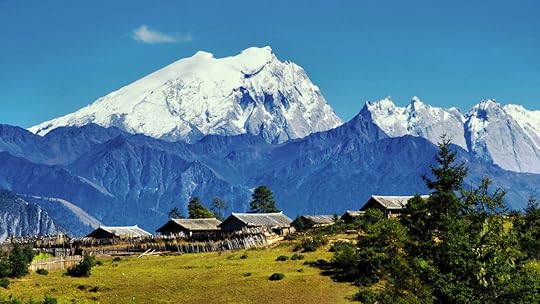
Nestling in the foothills of the Himalayas in Yunnan Province lies the capital city of the almost forgotten Nakhi Kingdom, Likiang. This city was the home of the Nakhi, one of 56 ethnic groups now officially recognized by the People's Republic of China. These people were thought to have originated in northwestern China and migrated south to this region. Along with the Tibetans they traded with India and Lhasa over the Tea and Horse Caravan routes. This part of China was almost unknown until the American botanist Joseph Rock and the Russian traveller and writer Peter Goullart bought the region to the attention of the world.
Goullart was Russian by birth and grew up in Moscow and Paris. He fled from Russia after the revolution and as the Far East was a fascinating place ended up in China where he learnt the language as a tour guide. After Japan invaded in 1939 he managed to secure an appointment as a Chinese Industrial Cooperatives representative and got posted to the city of Likiang (often spelt Lijiang). He was to spend the next eight years there immersed in the customs and daily lives of the people.
This book tells of his period spent there, his calm judgements and thoughtful dealing with the locals meant that he was easily accepted into the complex society and was to make many friends there. Being close to India and Tibet, it was a crossroads of cultures and trade routes so the locals had managed to absorb a smorgasbord of beliefs from Confucianism and Buddhism to Shamanism along with Animism and Taoism. Even life was fairly tough then, it didn't stop the people enjoying themselves and Goullart recounts many a time spent in the bars and socialising with the locals drinking the yintsieu wine. The setting up of co-operatives meant that he had to travel in the region, this meant that he had several precarious journeys alongside the rivers and canyons as he moved across the mountains.
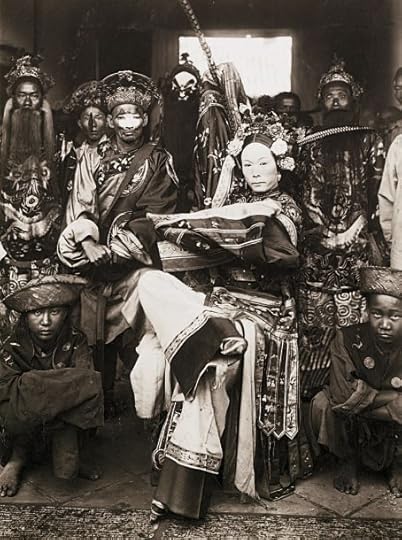
It is an utterly fascinating account of a virtually unknown part of China long absorbed into the Communist bloc. In 1949 he had to rush to leave the place as the party began to appear in the local area with the local bullies finding positions of power in the new regime. He is an eloquent writer, uncovering the details that make the stories that he tells so compelling to read. He has a genuine warmth towards the people that he was initially responsible for, helping with medicines and is generous with his time and money to those that he came into contact with. There are amazing pictures of the people he knew in the town, and overall a superb book.
Peter Goullart was a Russian born in the early 20th Century. His father died when Goullart was two years-old and he thereafter, in his words, "became the centre of my mother's devotion." A poetess, painter and psychic, she exposed Goullart to literature, music, science and philosophy. He had a gift for languages and developed an early interest in all things Asian. He found his way there, after his mother died, and through the American Express worked creating co-operatives. He finally got himself posted to Yunnan in southwestern China, and specifically the city of Likiang. There was not a lot of competition for the position. But Goullart loved the opportunity in a place so exotic.
And Goullart faithfully describes what he witnessed, including suicides, leprosy and even poltergeists. The latter get their own chapter. That will happen when your mother was a psychic.
This is his memoir of his nine years in Yunnan, from 1939 to 1948. It's told with an eye for detail and with great affection. Let me share a bit.
Goullart tells about the members of a certain tribe, the Liukhi:
The structure of their society was entirely matriarchal. The property passed from mother to daughter. Each woman had several husbands and the children always cried, "We have mama but no papa." . . . a husband was allowed to stay on as long as he pleased the woman, and if he didn't he could be thrown out without much ceremony. . . . The Liukhi women were concentrated on enticing more lovers in addition to their husbands. Whenever a Tibetan caravan or other strangers were passing . . . these ladies went into a huddle and secretly decided where each man should stay. The lady then commanded her husbands to disappear and not to reappear until called. She and her daughters prepared a feast and danced for the guest. Afterwards the older lady bade him to make a choice between ripe experience and foolish youth.
The locals would visit Goullart's home for his medicine, his food, his company. And his music. They liked his opera records and, he says, specifically La Traviata. And he made friends.
This was a land of wine and opium, and an admixture of religions and beliefs. And there was a very nice view out the window:
Historically, as long as the Nakhi kings accepted the nominal suzerainty of the Chinese Emperor and sent some measure of tribute, they were left alone. Oh, there was banditry, and an occasional rough bunch of Tibetans to cause some havoc. But things never got bad, not going way back to Kublai Khan, until the Communists came in 1949. When Yunnan was liberated. That's when the author got on the last plane out. And the forgotten kingdom would never be the same.
This book pairs well with Eat the Buddha by Barbara Demick which I read last year, and which could be a sequel chronologically to this one.
Too, I read this in part because I had just spent a few weeks in Vietnam, in a contemporary period, and thought I'd see what the neighbors were doing. And, as will happen, this pod of books made me think. Because, while we know now how wrong America's entry into Vietnam was, it wasn't like the Communists weren't capable of the destruction of a unique place, and people.
What an excellent little expat memoir about Lijiang in the 1930s to 40s. It's a shame this book isn't widely available and only locally published in China (warning there are some typos), but the author's take on this lesser-known part of China is incredible in its unique knowledge.
Lijiang is one of the most diverse parts of China with lots of different minority groups who lead lifestyles that can be different from the more commonly explored Han majority. Goullart mostly talks about the Naxi -- spelled Nahki in the book -- and Tibetans but also touches upon many varied mountainous peoples such as the Miao and many others. There is much to learn about the culture and religion and history of this region.
Sometimes his point of view is very frank compared to modern standards, with his opinions that can generalize entire races and nationalities. Yet one never senses it is with a mean spirit, and indeed he is always appreciative of his chance to learn more and expand his experiences with other people.
Interestingly, because it is a book published within the PRC, the book ends on a sad note of communist uprisings in 1949 that turned out to be very horrifying for the locals. It is a shame that so many different cultural aspects have been lost to history, but at least this wonderful memoir exists to preserve some of the memory...
What a book! What an experience Peter Goullart had living in this paradise for 9 years. I have to admit I'd never heard of Yunnan before, so I had to pop onto google and have a look where it was.
Peter was a Chinese official and also a westerner, he had passed Likiang briefly in the past and thought it was a nice place, so he tried to get himself posted there, none of his other colleagues wanted to go as it was too dangerous, officials aren't always welcome, westerners definitely weren't and the whole area was rife with bandits. These bandits were well known as murders too, particularly brutal at times. To get rid of the westerner they happily sent him to Likiang not expecting him to survive. But survive he did, with patience and respect he gradually got accepted into the society and soon became a respected member who got invited to many functions. Some of the things he had to do to be accepted were very funny, medicine he handed out didn't hurt so the locals didn't think it was working and so wouldn't take it, so he mixed in something to cause a bit of pain and ta-da! massive queues for treatment.
The area he was living looked stunning and luckily for us he took plenty of pictures, which have been included in the book, not the clearest images but they were taken in the 40's. It must have been a fascinating time in his life and he seemed to be a person who lived on his wits and trusted his instinct to survive. There were so many times it all could have gone wrong, things like taking some wine to somebody's house could easily have turned into an insult that might have ended badly for him. The work he did there helping to improve peoples life, getting co-operative companies up and running and all for nothing in return was impressive.
Peter has written a few other books and I plan to try and locate copies of them as they cover other interesting periods of his life.
The Yunnan Publishing Group Corporation used an interesting scanning method to produce this edition (e.g. printing 'clay' instead of 'day' more often than not). Then, the binding fell apart when I was only halfway through. Fortunately none of this prevented me from enjoying the story. Forgotten Kingdom is an absolutely fascinating read while travelling in and around Lijiang.
While the contents page (... - Marriages, - Some Likiang Festivals, - Music, Art And Leisure Among The Nakhi ...) might lead one to fear dry descriptions or long lists of obscure details, the author actually has a fine talent for story-telling. His love for Lijiang and the Naxi is honest, convincing and very compelling. A bonus is the final chapter, in which the Russian author, born at the turn of the 20th century and having lived through the terror of the Russian revolution, describes the advent of Communism in China right before his heart-breaking departure.
Remote corner of southwestern China in the 1930s and 40s through the eyes of a modest, likeable man who went there to get away from cities, war and modern barbarism. What he found is like a paradise, but there's plenty of mischief and deceit and danger. Larger than life bandits and the usual array of Chinese goblins, but some lovely sane wisdoms as well. Oh for a draught of Likiang honey wine! It's a tourist destination these days, one hears. The heart sinks.
Весьма интересное произведение человека с потрясающей судьбой. Автор — москвич, бежавший от революции 1917 года через Дальний Восток и осевший на девять лет в Лицзяне — дальнем уголке Китая в горах на границе с Тибетом и Бирмой, казавшемся даже для самих китайцев краем цивилизации. Работал там чиновником. После революции в Китае, перебазировался в Сингапур и продолжал путешествовать по Азии до самой своей смерти в 1978 году. В этой книге он рассказывает о своей жизни в Лицзяне. Описывает местную жизнь, весьма разнообразную ввиду большого количества национальностей, собранных в одном месте. Рассказывает о своих путешествиях, взаимоотношениях людей, местных обычаях и называет этот период своей жизни раем для него самого. В конце с горечью пишет о своём вынужденном расставании с этим раем и многочисленными друзьями, которых он здесь приобрёл. При этом интересно, что он ни словом не обмолвился о своих любовных отношениях в течение столь долгого проживания в Лицзяне.
Fleeing the Russian revolution, the author ended up in China and finally in Lijiang Yunnan province in the late 30s and 40s, where he worked for the government in the Co-operative Movement He was there for nine years before fleeing again, this time from the Chinese communists.
In the forgotten kingdom of the Nakhi people he seems to have found his true home: the people were friendly and cheerful, the area was beautiful, wildlife plentiful, he made many friends and had enough work to feel fruitfully occupied.
This is not a travel book, he was not passing through but lived the life of a local person. It is more a memoir of a time and a world that no longer exist. Goullart describes the area as a paradise on Earth, despite the bandits and diseases. Whether the people he knew there felt the same will now never be known. I recommend it to anyone interested in a different, beautiful world.
Wish I had known this excellent book before my recent visit to Lijiang. Reading it makes me so want to visit again (and I will). Good book like this ensures the "kingdom" won't be "forgotten" though.
I ACTUALLY HAVE THE "ORIGINAL" TRANSCRIPT OF WHEN PETER GOULLART WAS IN CHINA I BELIEVE(I'M NOT VERY GOOD WITH REMEMBERING STUFF" LIAKING, YUNNAN, MOUNTAINS..... WHILE HE WAS STUDYING THE PEOLE, THEIR CULTURES, GOVERNMENT, AS HE EVEN SPEAKS OF HOW ANYONE WHO'S INTENT WAS WAR COULD COME THROUGH THE BACK OF JAPAN OR SOMETHING (A PLACE WERE THERE WERE FLOWERS,WATERFALLS,LUSH GREEN FIELDS,NOT TOO HOT OR TOO COLD, COULD LAND THEIR AND SET UP A SMALL ARMY AND TAKE OVER THESE PEOPLE AND THEIR LAND BECAUSE THEY HAD NO MILITARY OR PROTECTION FROM THIS HAPPENING. HE ALSO SUGGESTS U.S.A. TO COME IN AND SET UP A SMALL ARMY AS TO GAURANTEE THERE OFFER TO CO-OP WITH THESE PEOPLE AND HELP BETTER THEMSELVES AND FORIEGN TRADES. THE PEOPLE WERE WILLING TO WORK WITH THE US BUT WERE IN DANGER OF LOSING THIS CO-OP. THIS WAS DURING WWI WWII. ANYWAYS I READ THE ONLINE BOOK OR SHORT FORM, I HAVEN'T ACTUALLY SEEN THE BOOK ITSELF IN HAND. BUT IT IS TRUE TO IT'S TRANSCRIPTS, THE TRANSCRIPTS ARE BETTER THOUGH. MORE PERSONAL AND YOU REALLY GET TO KNOW PETER AND FEEL CONNECTED. I COULD ACTUALLY INVISION BEING THERE WITH HIM AT TIMES . FEEL THE HUMIDITY.SEE THE FULL MOON,OR THE MONKEYS, AND THE OX AS THEY CAME TO TRADE IN THE ONLY PLACE AT THE TO TRADE. I WILL GET THE BOOK. DOES ANYBODY HAVE ANY IDEA HOW I WOULD GO ABOUT SELLING SOMETHING LIKE THIS? PLEASE SEND ME A EMAIL AT tdlanespirit@hotmail.com i could really use some suggestions
A deceptively thin book with expansive range, from sunrise on a mountaintop to a warm corner of the local wine shop, from savoring ancient music to making butter. These experiences are gathered not as sights to be seen or experiences to be collected but as seamless parts of a full life. Practical, spiritual, reflective, humorous, a congenial, reflective voice that preserves a forgotten kingdom.
I really enjoyed this book. Of course, by today's standards the author's views on different cultures are quite backwards and sometimes offensive. But it was so interesting to read about a very unusual and unique time in China's history, so I am really glad I picked it up. The "butterfly effect" of Japan's invasion of Manchuria leading to an economic boom in Lijiang as it became one of the only ports of entry of foreign goods into China was very surprising and fascinating. Even today, these far-flung corners of Southwest China are beautiful, unique and diverse. What an experience for a White Russian expat such as the author!
A blend of cultural study, social history, entertaining anecdote, and personal quest, Forgotten Kingdom is an unusual escapist and vivid read, perfect for the armchair traveller.
Picked this book up at the Kunming airport. Written in the 1950's, it gives a snapshot of life in the town of Likiang, in the region of Yunnan China. Very enjoyable read during my 7 hrs at the airport.
I lived in south-west China for four years and travelled to the places mentioned in the book. I wish this book would be known to more people. It's sincerely written and the tone was surprisingly calming.
Этнографические по сути, но такие личные и добрые записки про народы в глубине Китая, недалеко от Тибета. Истории про их быт, дружбу, приключения и путешествия по деревням и храмам, в которых столько подробностей и невероятных мелочей, что кажется этого не может быть, не в Китае, не на планете Земля. Финал печальный у всех этих народностей, как мы знаем, и в книге тоже нет хэппи-энда.
A great first hand account of a lesser known chinese culture and hugely interesting and enjoyable little accounts from someone living in this community.
Самобытно, свежо, интересно. Тот самый момент, когда 90% населения мира не понимают, что Китай - это лоскутное одеяло в плане народностей, местностей и жизненных укладов.
This entire review has been hidden because of spoilers.
Очень интересная книга, автор изложил как будто в сторонке стоял и наблюдал за всем происходящим. Интересно увидеть ту забытую жизнь иностранца в другой стране, культуре, обществе.
Воспоминания российкого эммигранта, развивавшего кооперативное движение в Китае в начале 40х годов прошлого века. Интересные подробности о жизни различных народов на юге Китая.
It was whilst backpacking round Yunnan that I made the surprising discovery of ‘Forgotten Kingdom’: a pre Cultural Revolution account of one expat’s time in Western China. It’s rare in provincial China to find anything printed in English that’s not a classic; and in fact, in the two-storey shop where I sought out some additional holiday reading material, this was the only English-language book that was available.
Because it was this or nothing, I wasn’t expecting much, and I certainly wasn’t expecting the excellent book it turned out to be. The author Goullart is a fascinating character: he was born in Russia, but left for China during the Bolshevik Revolution to work as an industrial cooperatives representative.
The book begins with him detailing this background, and Goullart goes on to prove himself a competent and compelling narrator. His descriptions and anecdotes of his time spent living in the Southwest city of Lijiang are vivid and colourful, and I particularly found myself engrossed by his different portrayals of the different minority groups he met along the way (the Naxi, Tibetans, Miao, Lissu and Lolo tribes).
The book follows the author’s experiences of working in the region, but also introduces fascinating aspects of the unique culture and customs of the land. It was a real page-turner that ends on a sad note, when the author once again found himself having to leave a country due to political upheavals – but an absolutely breathtaking piece of literature that I am already strongly recommending.
I’m reading this book as I travel through northwest Yunnan, the home of the Tibetans and Naxi. Peter Goullart’s recounting of his 9 years living in Lijiang is such a beautiful tribute to the diverse cultures, ethnicities and natural environment of Yunnan. It also takes us back to a very different time before modern technology and ways encroached on this part of China. At times, he steps over the line of patronising and even racist perspectives but for the most part he shows his respect and love for all the people he befriends and gets to know.
My favorite part of the book is when he goes into little stories of interactions he has - like attending village weddings, or traveling up Snow Mountain to visit one of his Cooperatives, or attends to an intimidating Black LoLo who comes to him for medicine, or when he just hangs out at one of the market bars of one of the Madames. Other times he goes into very detailed descriptions of traditions or clothing that can feel overwhelming to follow. But it does make a fantastic record of everything he experienced and learned while there.
The sad part is he talks about how he found his paradise in LiJiang untouched by the outside world. I’m not sure what he would think of today’s Lijiang where Chinese come from all over to take pictures in ethnic dress and it is hard to tell what is real or fake.
I thoroughly enjoyed reading this and have huge respect for how he embedded himself in the community and had shared with the modern reader what Yunnan once was.
Absolutely AMAZING book! Peter Goullart is a Russian expatriate, who run from Bolshevik Moscow and settled in Shanghai with his mother. The book describes his life in Lijiang - a town in the Southwestern part of China bordering with Tibet where in the 40ies he helped to organize industrial cooperatives.
The book is full of dangerous adventures including the encounters with all kinds of outlaws as well as local aristocrats (who sometimes were the same people) - barons, princes and kings. As a matter of fact a local prince worked for Goullart as an accountant.
The ethnographic material in the book is really amazing. Goullart had insatiable curiosity towards whatever tribes he encountered in his travels as well as a deep respect to unknown cultures and ways of life. His relationship with the people of Lijiang , and especially its women who played a very unusual role in that town, was something that eventually made him fall in love with it. The more tragic was the time when he had - the second time in his life - leave the place he loved and start his life anew somewhere else.
I do recommend this book to anyone interested in Chinese history and ethnography, as well as to everyone who likes to read about travels and adventures.
I keep seeing this book around, and then on the local waiguoren website, one of the guys posted a really interesting review that has caused me to move this from my mental 'might read' list to my 'must read' list.
[oooo, found it thanks to a generous commenter... in addition to the hard copy I bought a few months ago and forgot about on my shelf - well, at least the rediscovery is always fun]
Thanks to Peter Goullart, who wrote his experience and observations in such details full of love and wisdom. So that we know how was the lifestyle, traditions and people back in that time in Yunnan that are no longer existing. When travelling to the same places mentioned in the book, I can still indulge myself in the mountains, streams, climates that don’t change so much and a bit of the remaining cultural and tradition.
This book was in my hotel room during my visit to Lijiang and the proprietor encouraged me to take it home. It's a lovely, old-school account of a provincial official's time in the old city. Great character studies. Would have given it four stars but for some schmaltzy moments. Still, a must-read if visiting Yunnan Province.
Only major complaint is the outdated spelling of place names, and references to ethnic groups + places that have since been renamed. Probably this gets resolved in the recent re-publishing.
Overall a fantastically interesting glimpse into Yunnan in the 1930s.