

What do you think?

Make Your Story Matter: An Interactive Guide to Unlocking Your Brain's Storytelling Power and Writing a Book Readers Love
You’ve got a story inside you—but writing it feels impossible.
What if writing didn’t have to be a struggle? What if all you had to do was harness your brain's natural storytelling instincts to craft the book you’ve always dreamed of?
If you’re having trouble bringing your story to life, the problem isn’t you. It’s that you’ve been buried under a mountain of rigid rules, theory, and advice that contradicts itself.
In Make Your Story Matter, writing coach and popular YouTuber Abbie Emmons shares a refreshing new method that fuses brain science with storytelling to help you write a book with heart, power, and impact.
With over half a million writers in her online community, Abbie has helped storytellers all over the world craft novels that resonate using the Who, What, Why Method—a simple but powerful 3-step framework rooted in psychology.
With this method, you’ll learn
Break free from rigid writing rules and harness your brain’s natural storytelling instincts Transform raw ideas into emotionally compelling stories Craft complex, magnetic characters that readers connect with and care about Outline gut-gripping plots that hook readers from the opening sentence to the final page Find your unique voice and make it unforgettable Beat creative burnout and reconnect with the joy of writing
Featuring templates, guided exercises, and a printable workbook, this book gives you a repeatable method and a reliable way to stay focused and energized, even when the writing gets tough. By the final page, you’ll have a clear roadmap to writing a story that matters—to you, to your readers, and to the world.
What if writing didn’t have to be a struggle? What if all you had to do was harness your brain's natural storytelling instincts to craft the book you’ve always dreamed of?
If you’re having trouble bringing your story to life, the problem isn’t you. It’s that you’ve been buried under a mountain of rigid rules, theory, and advice that contradicts itself.
In Make Your Story Matter, writing coach and popular YouTuber Abbie Emmons shares a refreshing new method that fuses brain science with storytelling to help you write a book with heart, power, and impact.
With over half a million writers in her online community, Abbie has helped storytellers all over the world craft novels that resonate using the Who, What, Why Method—a simple but powerful 3-step framework rooted in psychology.
With this method, you’ll learn
Break free from rigid writing rules and harness your brain’s natural storytelling instincts Transform raw ideas into emotionally compelling stories Craft complex, magnetic characters that readers connect with and care about Outline gut-gripping plots that hook readers from the opening sentence to the final page Find your unique voice and make it unforgettable Beat creative burnout and reconnect with the joy of writing
Featuring templates, guided exercises, and a printable workbook, this book gives you a repeatable method and a reliable way to stay focused and energized, even when the writing gets tough. By the final page, you’ll have a clear roadmap to writing a story that matters—to you, to your readers, and to the world.
- GenresWritingNonfiction
360 pages, Paperback
First published August 11, 2026
About the author
Abbie Emmons
5 books3,740 followersAbbie Emmons has been writing stories ever since she could hold a pencil. What started as an intrinsic love for storytelling became her lifelong passion. For over six years, Emmons has been sharing her wisdom on her YouTube channel, where she teaches writers how to make their stories matter by harnessing the power and psychology of storytelling to transform their ideas into masterpieces.
A self-taught expert with years of rigorous study in the writing craft, Emmons has discovered an essential truth: “Story is the best teacher of story.” Drawing on her passion for psychology and neuroscience, she has made it her mission to decode the “story instincts” we all naturally possess. Her groundbreaking approach unlocks the hidden structure and emotional depth that make stories impactful.
What started as a personal quest to improve her writing skills has overflowed into a vibrant online community of half a million passionate writers who have connected with Emmons’ creed to “make your story matter.” Emmons went on to launch Abbie’s Story University, an online learning platform that has attracted thousands of students worldwide. Through monthly live lectures and in-depth courses, Abbie’s Story University offers comprehensive instruction on creative writing, editing, publishing, and more, nurturing a thriving community of writers dedicated to honing their craft.
A self-taught expert with years of rigorous study in the writing craft, Emmons has discovered an essential truth: “Story is the best teacher of story.” Drawing on her passion for psychology and neuroscience, she has made it her mission to decode the “story instincts” we all naturally possess. Her groundbreaking approach unlocks the hidden structure and emotional depth that make stories impactful.
What started as a personal quest to improve her writing skills has overflowed into a vibrant online community of half a million passionate writers who have connected with Emmons’ creed to “make your story matter.” Emmons went on to launch Abbie’s Story University, an online learning platform that has attracted thousands of students worldwide. Through monthly live lectures and in-depth courses, Abbie’s Story University offers comprehensive instruction on creative writing, editing, publishing, and more, nurturing a thriving community of writers dedicated to honing their craft.
Ratings & Reviews
Friends & Following
Create a free account to discover what your friends think of this book!
Community Reviews
Displaying 1 - 23 of 23 reviews
Read
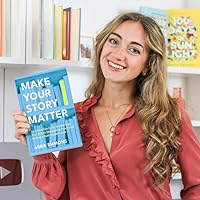
March 19, 2026I'm over-the-moon excited!! 🤯 My new book, Make Your Story Matter, is releasing August 11, 2026!
This book has been years in the making and I'm so thrilled to say that it's finally available for preorder.
I promise this is NOT another boring writing manual.
This is a no-nonsense interactive guide to unlocking your brain's natural storytelling power and writing the book of your dreams.
Tell me if this sounds like you… 👇
→ You have a story idea… but starting feels terrifying.
→ Writing advice made you overwhelmed, not confident.
→ You lost the spark you used to feel.
→ You keep rewriting instead of finishing.
→ Your book has been “on pause” for… way too long.
Here’s what I want you to know:
Your brain already knows how to tell stories. Like… literally. Science proves it. 🧠📚
You don’t need more rules. You need a method that works with your brain instead of against it.
That’s exactly what I teach in my brand-new book: MAKE YOUR STORY MATTER (coming 08/11!!!)
Preorders are live now!
When you preorder Make Your Story Matter, you’re not just getting the book. You’re unlocking an exclusive bundle of tools, trainings, and valuable resources designed to help you actually use what you learn.
Get your copy here.
These bonuses are only available for a limited time—and only for readers who preorder.
I can't wait to share this book with you!
💛 Abbie
This book has been years in the making and I'm so thrilled to say that it's finally available for preorder.
I promise this is NOT another boring writing manual.
This is a no-nonsense interactive guide to unlocking your brain's natural storytelling power and writing the book of your dreams.
Tell me if this sounds like you… 👇
→ You have a story idea… but starting feels terrifying.
→ Writing advice made you overwhelmed, not confident.
→ You lost the spark you used to feel.
→ You keep rewriting instead of finishing.
→ Your book has been “on pause” for… way too long.
Here’s what I want you to know:
Your brain already knows how to tell stories. Like… literally. Science proves it. 🧠📚
You don’t need more rules. You need a method that works with your brain instead of against it.
That’s exactly what I teach in my brand-new book: MAKE YOUR STORY MATTER (coming 08/11!!!)
Preorders are live now!
When you preorder Make Your Story Matter, you’re not just getting the book. You’re unlocking an exclusive bundle of tools, trainings, and valuable resources designed to help you actually use what you learn.
Get your copy here.
These bonuses are only available for a limited time—and only for readers who preorder.
I can't wait to share this book with you!
💛 Abbie
Want to Read
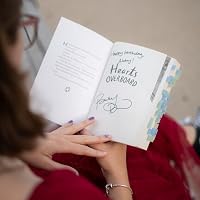
August 12, 2026This just came in the mail today! I'm excited to get started on it

August 26, 2026
This book was received as an advanced reading copy (ARC) before it was officially published on August 11, 2026. So, first of all, I want to thank NetGalley, BenBella Books, and Abbie Emmons for this ARC, but also to apologize for this late review of the book.
"Make your story matter. An Interactive Guide to Unlocking Your Brain's Storytelling Power and Writing a Book Readers Love" is a nonfiction book about writing stories, creative writing, but it can also be considered a personal development book, as it emphasizes the science behind writing and makes several references to elements of psychology.
The structure of the book is well thought out and easy to follow, so that you can immediately put your new discoveries into practice, especially since it also comes with a companion workbook. The chapters are quite compressed, but they retain their essence, the author trying to be to the point with the information she shares.
Also, examples are provided at every step. These are quite diverse, even if some of them refer to movies or TV series… And it is true, I felt that some of the practical examples provided were not very inspired and did not reflect the theory presented.
I think I should also mention here that the author chose to present the “theory” followed by the “practice” inspired by her recent fiction book – The Otherworld. Maybe it was not the most inspired choice, since, from what I read from the examples, the fiction book is not very brilliant, and the only character who is agreeable and I felt empathy for him was Jack. I think it would have been better to have chosen her debut book (100 days of sunlight) instead, because, from what I noticed in the reviews, the characters in this book are much more empathetic, and the story was related to creative writing, which would have made it much more suitable. However, I appreciated each example and I understood the main idea.
Regarding the language, I can say that it is very accessible, friendly and easy to follow, even though it is a nonfiction book. No pompous, complex, scientific words are used. On the contrary, the words used are simple, even slightly colloquial. Regarding the writing style, the book is written as a kind of dialogue, even more like a monologue, in which a method for creative writing is simply exposed to us – a story about writing. In addition, not being a native English speaker, I mention that it can be easily understood even by those who are not at the advanced/expert level.
I should also mention that, from the first pages, I felt like I was reading a transcript of Abbie Emmons’ videos on her YouTube channel (many will be somewhat disappointed to discover that the information in this book is very similar to that in the videos). This is not necessary a bad thing, especially since it makes you feel like a friend is always there to support you, motivate you, advise you, and share their own experience with you. So, the book remains a valuable source of information, which can be much more accessible than a video, especially if you have a copy. So, from this point of view, I see the book as a friend you can always turn to and who understands you, being the friend available 24/7.
Despite the fact that I did not finish reading the book before its official publication, I would like to point out that it is a very easy book to read and that you can finish quickly, especially if you only want to focus on the information, and not on combining the information with the action of putting it into practice. In my case, during the reading, I also tried to apply the method promoted in the book.
There is no doubt, this book is suitable as a gift for those who like to write various stories, those who want to write, for writers and aspiring writers. Also, those who seek to understand how a fiction book can be born, those who want to know the science behind writing, even avid readers would find this book very interesting. For those who have not written for a long time and have almost forgotten their passion, they will find in this book a motivator, which can make them pick up the pen again. Even though many would tend to think that this book would only be suitable for plotters, I believe that it would be useful for all types of writers.
In conclusion, this book is suitable for anyone who wants to write a story, because it offers useful, simple and structured advice, it helps you understand the science behind the story, it helps you discover or rediscover the enthusiasm for telling a story, it motivates you, and it gives you a structure to apply to each story... However, the book should not be seen as the perfect recipe for building a successful story, but should be viewed with a critical and analytical eye, to discover what works best for you, because it is only a guide, a creative writing manual, intended to provide directions and draw attention to certain aspects that we must always keep in mind when building a story.
Taking into account the above and considering my own preferences, I give this book a score of 9 out of 10.
*****
The detailed analysis, along with a short story about how I tried to put the information in the book into practice, can be found in the full review on the WordPrint blog: https://amprentacuvintelor.wordpress....
"Make your story matter. An Interactive Guide to Unlocking Your Brain's Storytelling Power and Writing a Book Readers Love" is a nonfiction book about writing stories, creative writing, but it can also be considered a personal development book, as it emphasizes the science behind writing and makes several references to elements of psychology.
The structure of the book is well thought out and easy to follow, so that you can immediately put your new discoveries into practice, especially since it also comes with a companion workbook. The chapters are quite compressed, but they retain their essence, the author trying to be to the point with the information she shares.
Also, examples are provided at every step. These are quite diverse, even if some of them refer to movies or TV series… And it is true, I felt that some of the practical examples provided were not very inspired and did not reflect the theory presented.
I think I should also mention here that the author chose to present the “theory” followed by the “practice” inspired by her recent fiction book – The Otherworld. Maybe it was not the most inspired choice, since, from what I read from the examples, the fiction book is not very brilliant, and the only character who is agreeable and I felt empathy for him was Jack. I think it would have been better to have chosen her debut book (100 days of sunlight) instead, because, from what I noticed in the reviews, the characters in this book are much more empathetic, and the story was related to creative writing, which would have made it much more suitable. However, I appreciated each example and I understood the main idea.
Regarding the language, I can say that it is very accessible, friendly and easy to follow, even though it is a nonfiction book. No pompous, complex, scientific words are used. On the contrary, the words used are simple, even slightly colloquial. Regarding the writing style, the book is written as a kind of dialogue, even more like a monologue, in which a method for creative writing is simply exposed to us – a story about writing. In addition, not being a native English speaker, I mention that it can be easily understood even by those who are not at the advanced/expert level.
I should also mention that, from the first pages, I felt like I was reading a transcript of Abbie Emmons’ videos on her YouTube channel (many will be somewhat disappointed to discover that the information in this book is very similar to that in the videos). This is not necessary a bad thing, especially since it makes you feel like a friend is always there to support you, motivate you, advise you, and share their own experience with you. So, the book remains a valuable source of information, which can be much more accessible than a video, especially if you have a copy. So, from this point of view, I see the book as a friend you can always turn to and who understands you, being the friend available 24/7.
Despite the fact that I did not finish reading the book before its official publication, I would like to point out that it is a very easy book to read and that you can finish quickly, especially if you only want to focus on the information, and not on combining the information with the action of putting it into practice. In my case, during the reading, I also tried to apply the method promoted in the book.
There is no doubt, this book is suitable as a gift for those who like to write various stories, those who want to write, for writers and aspiring writers. Also, those who seek to understand how a fiction book can be born, those who want to know the science behind writing, even avid readers would find this book very interesting. For those who have not written for a long time and have almost forgotten their passion, they will find in this book a motivator, which can make them pick up the pen again. Even though many would tend to think that this book would only be suitable for plotters, I believe that it would be useful for all types of writers.
In conclusion, this book is suitable for anyone who wants to write a story, because it offers useful, simple and structured advice, it helps you understand the science behind the story, it helps you discover or rediscover the enthusiasm for telling a story, it motivates you, and it gives you a structure to apply to each story... However, the book should not be seen as the perfect recipe for building a successful story, but should be viewed with a critical and analytical eye, to discover what works best for you, because it is only a guide, a creative writing manual, intended to provide directions and draw attention to certain aspects that we must always keep in mind when building a story.
Taking into account the above and considering my own preferences, I give this book a score of 9 out of 10.
*****
The detailed analysis, along with a short story about how I tried to put the information in the book into practice, can be found in the full review on the WordPrint blog: https://amprentacuvintelor.wordpress....

September 24, 2026
I requested "Make Your Story Matter" because I’ve wanted to be a writer since I was a teenager, and Seth Godin’s endorsement caught my attention. I’m always interested in books that might help me move from wanting to write to actually writing.
Abbie Emmons offers an enthusiastic, accessible approach to storytelling, and there are useful ideas and exercises here, particularly for newer fiction writers. However, I became increasingly skeptical of the book’s “brain science” framing. The citation of Joe Dispenza, whose scientific claims have been widely questioned, was a particular red flag for me and made me less confident in how neuroscience was being presented.
I also sometimes felt as though the book was introducing me to the author’s larger online ecosystem, including her “university.” I’ve grown weary of books by online creators that can feel like extensions of a personal brand rather than completely stand-alone resources.
There are worthwhile ideas here, and I can see this being motivating for many aspiring writers. For me, though, the most useful takeaway may be the simplest one: stop reading so much about writing and actually write.
Many thanks to NetGalley, the publisher, and the author for allowing me to read and review.
Abbie Emmons offers an enthusiastic, accessible approach to storytelling, and there are useful ideas and exercises here, particularly for newer fiction writers. However, I became increasingly skeptical of the book’s “brain science” framing. The citation of Joe Dispenza, whose scientific claims have been widely questioned, was a particular red flag for me and made me less confident in how neuroscience was being presented.
I also sometimes felt as though the book was introducing me to the author’s larger online ecosystem, including her “university.” I’ve grown weary of books by online creators that can feel like extensions of a personal brand rather than completely stand-alone resources.
There are worthwhile ideas here, and I can see this being motivating for many aspiring writers. For me, though, the most useful takeaway may be the simplest one: stop reading so much about writing and actually write.
Many thanks to NetGalley, the publisher, and the author for allowing me to read and review.
September 4, 2026
With the help of this book, I outlined a whole novel in just a WEEK! It's basically the complication of everything Abbie talks about on her YouTube channel, just more in depth and with plenty of examples.
It was really helpful to me, thanks Abbie!
It was really helpful to me, thanks Abbie!
Review of advance copy received from Edelweiss+
I'm a big fan of Abbie Emmons' youtube channel - she has the acting skill to make her videos entertaining, engaging and easy to absorb the conveyed knowledge. I've heard her ideas are based on the concept from Lisa Cron's Story Genius: How to Use Brain Science to Go Beyond Outlining and Write a Riveting Novel, but as far as my memory serves me, the original was very rambly and only a handful of chapters got to the point, so in that comparison, this book is very well organized, structured and written in an approachable manner. Definitely an upgrade. If you want a clear and concise "recipe" for a story that works, this book will serve you well.
What marred my experience and made it a 4-star instead of a 5-star read in the end is the questionable decision of explaining the story structure based on the author's own novel, The Otherworld. There are other examples, the main ones being Pride and Prejudice, A Christmas Carol and The Lion, the Witch and the Wardrobe, but for the biggest portion of the book we're following The Otherworld beat by beat.
Not only this reeks of blatant self-promotion - as a comparison, Jenna Moreci's How to Write Romantasy: Blending Fantasy and Romance into One Heart-Stopping Adventure mentions her own romantasy books here and there, but doesn't constantly shove them in the reader's face - but also the more I learned about The Otherworld, the less I liked the idea of that book. Not because I usually don't read contemporary fiction, but because the book read as overly preachy, cringe, with flat characters and questionable morals. Feel free to read some heated reviews of it to get first-hand impressions, as I only read the summaries of the plot points the author includes in this book. My biggest ick points included a love triangle involving two brothers and the whole plot thoroughline / moral of the story.
See, the author teaches you a good story involves a character transformation where they start in a position of "misbelief" and end being enlightened by an "aha moment" where they learn the "truth". In the example story, we're presented a character who is trapped on a remote island, because her controlling father doesn't let her go anywhere, and her "misbelief" is that if only she proves competent enough, her father will let her travel. So, does she learn to stop trying to impress her father and become an independent person? NOPE! She learns Wtf is this message? "Don't try to be your own person, you'll regret it"?
One thing I've realized across the years is that you can prove any thesis by manipulating plot events to your benefit. In a manner of the carrot and the stick, you can manipulate the consequences and side characters' reactions, or the reader's sympathy or antipathy towards the characters, to "sell" any message you want. All the so-called "problematic tropes" like "bury your gays" or "white savior and magical native" stem from people extracting this kind of repeated manipulative propaganda from stories. I remember someone called these kind of stories where children are taught to always obey their parents or forgive them transgressions "parentaganda" and it's very apt here. A girl being isolated from any human contact besides her father isn't treated as a problem - her wish to explore is.
It's also odd that in the chapter about endings, the author mostly uses examples from movies and one from her sister's book (more self-promo?). Since the stories are explained anyway, there's less reason to assume it's for the reader's benefit to be familiar with those stories, and more raises a suspicion the author is not well-read and only uses movies or books that were adapted into movies as examples.
The more I thought about it, the more I realized it's very easy to achieve plot and character arc clarity when your characters are 1-dimensional, so the author is cheating here by setting a very easy task in front of her. Despite the elaborate character cards at the start, as the story unfolds we mostly see Orca being naive and childlike, Adam being emotionally constipated and only thinking about "doing the right thing", and Jack being a carefree foil to Adam. It's also clear the author's favoritism is on Adam's side. One of the worst things an author can do with a "love triangle" trope is play favoritisms and manipulate the plot and character feelings in a way someone is an obvious third wheel.
So the advice felt less and less like "how to write any story" and more like "how to write a story that's as simplistic as an Aesop's fable". However, I'd say with the literacy crisis and all that, I'm seeing whole subgenres of adult fiction (yes, not YA or children's lit) being dominated by books with a complexity of an Aesop's fable. They're getting raving reviews and hitting bestseller lists, so maybe in the end this is THE recipe for writing a story after all. It's a slider between clarity and nuance, and it seems the modern reader en masse prefers clarity over nuance, and messages that are easy to agree with rather than thought-provoking ones.
The book includes useful advice, both small (like ending your chapters on cliffhangers and always leaving a question pending) and big (always keep in mind your character arc as a roadmap), and the layout and structure feel well-organized and better than in the original Story Genius book this one is inspired by.
I just can't help thinking it would be much more persuasive to me if it used as an illustration more acclaimed literary works. Except Pride & Prejudice, we have a novella and a children's book, both of which are less complex due to format, and the author's own work which left me unconvinced. It's easier to demonstrate principles on a simpler example, but if you want to state a rule is universal, you should be able to prove it on harder examples as well, or especially on those.
I think the book has a lot of value to beginner aspiring authors, because actually starting with something simpler in those situations is preferred, in the same manner as your first foray into any sports, art or hobby should start small, and once you master the basics you move onto more complex projects; it's also more heartening to write a novella that works than getting bogged down in some epic saga and never finishing or getting lost in endless editing, but I wouldn't use it as a "universal recipe for a novel".
Overall, helpful, but I wished it's been more.
Also, there are references in the book to a companion workbook, but when I signed up on the website, I only got a newsletter acceptance message, no link to workbook. Hopefully this will be fully functional by the launch date.
Thank you Edelweiss and BenBella Books for the ARC!
What marred my experience and made it a 4-star instead of a 5-star read in the end is the questionable decision of explaining the story structure based on the author's own novel, The Otherworld. There are other examples, the main ones being Pride and Prejudice, A Christmas Carol and The Lion, the Witch and the Wardrobe, but for the biggest portion of the book we're following The Otherworld beat by beat.
Not only this reeks of blatant self-promotion - as a comparison, Jenna Moreci's How to Write Romantasy: Blending Fantasy and Romance into One Heart-Stopping Adventure mentions her own romantasy books here and there, but doesn't constantly shove them in the reader's face - but also the more I learned about The Otherworld, the less I liked the idea of that book. Not because I usually don't read contemporary fiction, but because the book read as overly preachy, cringe, with flat characters and questionable morals. Feel free to read some heated reviews of it to get first-hand impressions, as I only read the summaries of the plot points the author includes in this book. My biggest ick points included a love triangle involving two brothers and the whole plot thoroughline / moral of the story.
See, the author teaches you a good story involves a character transformation where they start in a position of "misbelief" and end being enlightened by an "aha moment" where they learn the "truth". In the example story, we're presented a character who is trapped on a remote island, because her controlling father doesn't let her go anywhere, and her "misbelief" is that if only she proves competent enough, her father will let her travel. So, does she learn to stop trying to impress her father and become an independent person? NOPE! She learns Wtf is this message? "Don't try to be your own person, you'll regret it"?
One thing I've realized across the years is that you can prove any thesis by manipulating plot events to your benefit. In a manner of the carrot and the stick, you can manipulate the consequences and side characters' reactions, or the reader's sympathy or antipathy towards the characters, to "sell" any message you want. All the so-called "problematic tropes" like "bury your gays" or "white savior and magical native" stem from people extracting this kind of repeated manipulative propaganda from stories. I remember someone called these kind of stories where children are taught to always obey their parents or forgive them transgressions "parentaganda" and it's very apt here. A girl being isolated from any human contact besides her father isn't treated as a problem - her wish to explore is.
It's also odd that in the chapter about endings, the author mostly uses examples from movies and one from her sister's book (more self-promo?). Since the stories are explained anyway, there's less reason to assume it's for the reader's benefit to be familiar with those stories, and more raises a suspicion the author is not well-read and only uses movies or books that were adapted into movies as examples.
The more I thought about it, the more I realized it's very easy to achieve plot and character arc clarity when your characters are 1-dimensional, so the author is cheating here by setting a very easy task in front of her. Despite the elaborate character cards at the start, as the story unfolds we mostly see Orca being naive and childlike, Adam being emotionally constipated and only thinking about "doing the right thing", and Jack being a carefree foil to Adam. It's also clear the author's favoritism is on Adam's side. One of the worst things an author can do with a "love triangle" trope is play favoritisms and manipulate the plot and character feelings in a way someone is an obvious third wheel.
So the advice felt less and less like "how to write any story" and more like "how to write a story that's as simplistic as an Aesop's fable". However, I'd say with the literacy crisis and all that, I'm seeing whole subgenres of adult fiction (yes, not YA or children's lit) being dominated by books with a complexity of an Aesop's fable. They're getting raving reviews and hitting bestseller lists, so maybe in the end this is THE recipe for writing a story after all. It's a slider between clarity and nuance, and it seems the modern reader en masse prefers clarity over nuance, and messages that are easy to agree with rather than thought-provoking ones.
The book includes useful advice, both small (like ending your chapters on cliffhangers and always leaving a question pending) and big (always keep in mind your character arc as a roadmap), and the layout and structure feel well-organized and better than in the original Story Genius book this one is inspired by.
I just can't help thinking it would be much more persuasive to me if it used as an illustration more acclaimed literary works. Except Pride & Prejudice, we have a novella and a children's book, both of which are less complex due to format, and the author's own work which left me unconvinced. It's easier to demonstrate principles on a simpler example, but if you want to state a rule is universal, you should be able to prove it on harder examples as well, or especially on those.
I think the book has a lot of value to beginner aspiring authors, because actually starting with something simpler in those situations is preferred, in the same manner as your first foray into any sports, art or hobby should start small, and once you master the basics you move onto more complex projects; it's also more heartening to write a novella that works than getting bogged down in some epic saga and never finishing or getting lost in endless editing, but I wouldn't use it as a "universal recipe for a novel".
Overall, helpful, but I wished it's been more.
Also, there are references in the book to a companion workbook, but when I signed up on the website, I only got a newsletter acceptance message, no link to workbook. Hopefully this will be fully functional by the launch date.
Thank you Edelweiss and BenBella Books for the ARC!
August 6, 2026
If you’ve ever dreamed of writing a novel but had absolutely no idea where to start—or you’ve found yourself overwhelmed trying to juggle characters, plot, world-building, and all the moving pieces—Abbie Emmons has you covered.
Make Your Story Matter is hands-down one of the most comprehensive and approachable writing guides I’ve ever read. Abbie takes you by the hand and walks you through the entire storytelling process, step by step, making something that feels incredibly intimidating suddenly feel doable. I was honestly blown away by how much value is packed into these pages.
This book is loaded with brainstorming prompts, clear explanations, case studies from well-known books, practical exercises, and so many lightbulb moments. I especially loved that Abbie uses her own novel, The Otherworld, as a running example, showing exactly how every storytelling principle comes together in a real book.
And it gets even better—there’s a QR code to download a companion workbook so you can start building your own story as you read. I love that it’s not a one-and-done resource either. It’s something you can come back to every single time a new story idea starts whispering in your ear.
One of my favorite parts was how deeply Abbie dives into character creation. The questions she asks go far beyond the basics, helping you uncover your characters’ hearts, motivations, fears, and desires until they feel like real people. By the end, you’ll know them inside and out—and your readers will, too.
I’ve never considered myself someone who could actually write fiction, but this book genuinely changed that. Abbie’s teaching style is so encouraging, organized, and easy to understand that, for the first time, I walked away thinking, I can absolutely do this.
If writing a novel has been sitting on your “maybe someday” list, let this be the sign to pick up Make Your Story Matter. It’s an incredible resource, an inspiring creative companion, and one I’ll be reaching for again and again.
It’s genuinely a Masterclass, and I highly, highly recommend!
Special thanks to the author, BenBella Books, and NetGalley for the gifted copy.
Make Your Story Matter is hands-down one of the most comprehensive and approachable writing guides I’ve ever read. Abbie takes you by the hand and walks you through the entire storytelling process, step by step, making something that feels incredibly intimidating suddenly feel doable. I was honestly blown away by how much value is packed into these pages.
This book is loaded with brainstorming prompts, clear explanations, case studies from well-known books, practical exercises, and so many lightbulb moments. I especially loved that Abbie uses her own novel, The Otherworld, as a running example, showing exactly how every storytelling principle comes together in a real book.
And it gets even better—there’s a QR code to download a companion workbook so you can start building your own story as you read. I love that it’s not a one-and-done resource either. It’s something you can come back to every single time a new story idea starts whispering in your ear.
One of my favorite parts was how deeply Abbie dives into character creation. The questions she asks go far beyond the basics, helping you uncover your characters’ hearts, motivations, fears, and desires until they feel like real people. By the end, you’ll know them inside and out—and your readers will, too.
I’ve never considered myself someone who could actually write fiction, but this book genuinely changed that. Abbie’s teaching style is so encouraging, organized, and easy to understand that, for the first time, I walked away thinking, I can absolutely do this.
If writing a novel has been sitting on your “maybe someday” list, let this be the sign to pick up Make Your Story Matter. It’s an incredible resource, an inspiring creative companion, and one I’ll be reaching for again and again.
It’s genuinely a Masterclass, and I highly, highly recommend!
Special thanks to the author, BenBella Books, and NetGalley for the gifted copy.

Review of advance copy received from NetGalley
Thank you to netgalley for granting me an alc (advanced listener's copy) of this book to listen to and review.
I have been following Abbie Emmons on YouTube for several years now, so when I heard about the nonfiction book she was writing, compiling the advice and teaching she has been talking about on YouTube for years, I was very interested, and thought it could be a great source of writing advice, having it all in one place.
Now, having read it, I maintain my original opinion. I listened to an alc of it, but would love to get a physical copy of it once it's published so I can go back to it as I write and brainstorm story ideas. Having been following her on YouTube for a long time, not much of the information was new to me, but it was all interesting and well compiled, with good examples and suggestions, without making anything too hard and fast and allowing some flexibility to her advice, as well as giving reasons for the structures and strategies she uses and teaches.
Overall, I found this book easy to listen to and educational, reminding me of different writing advice I can use going forward, and I would recommend it to other writers, both for beginners as an easy read with a compilation of good, logical advice to give direction, and to more experienced writers as a reminder and resource and perhaps for new ideas and things to try when writing.
I have been following Abbie Emmons on YouTube for several years now, so when I heard about the nonfiction book she was writing, compiling the advice and teaching she has been talking about on YouTube for years, I was very interested, and thought it could be a great source of writing advice, having it all in one place.
Now, having read it, I maintain my original opinion. I listened to an alc of it, but would love to get a physical copy of it once it's published so I can go back to it as I write and brainstorm story ideas. Having been following her on YouTube for a long time, not much of the information was new to me, but it was all interesting and well compiled, with good examples and suggestions, without making anything too hard and fast and allowing some flexibility to her advice, as well as giving reasons for the structures and strategies she uses and teaches.
Overall, I found this book easy to listen to and educational, reminding me of different writing advice I can use going forward, and I would recommend it to other writers, both for beginners as an easy read with a compilation of good, logical advice to give direction, and to more experienced writers as a reminder and resource and perhaps for new ideas and things to try when writing.

August 24, 2026
I listened to the audiobook of Abbie Emmons “Make Your Story Matter”, read by the author herself, thanks to an advance copy via Netgalley.
If you’re an aspiring author, you’re getting clear, step-by-step guidance and techniques how to develop your story and why each of them matters. This was both easy to listen to and to understand, making you motivated to apply these to your own writing.
To show the different techniques in action, Abbie gives examples from well-known novels like Christmas Carol and Pride and Prejudice. It’s a nice way to look under the hood of a novel and see how and why Dickens and Austen wrote them this way. It also show how much you have already experienced these techniques as a reader, without necessarily being aware of them as an author. By contrast, the examples from her own novel, “Otherworld”, fell short because there was such a difference in the strength of the stories. It did not make me want to read “Otherworld”, but it showed that even applying all of the techniques in this book has its limitations.
There is a companion workbook, which I did not have access to, so I felt I missed out on the practical exercise to apply the advice to my writing. So I’m tempted now to get a hardcopy of the book.
If you’re an aspiring author, you’re getting clear, step-by-step guidance and techniques how to develop your story and why each of them matters. This was both easy to listen to and to understand, making you motivated to apply these to your own writing.
To show the different techniques in action, Abbie gives examples from well-known novels like Christmas Carol and Pride and Prejudice. It’s a nice way to look under the hood of a novel and see how and why Dickens and Austen wrote them this way. It also show how much you have already experienced these techniques as a reader, without necessarily being aware of them as an author. By contrast, the examples from her own novel, “Otherworld”, fell short because there was such a difference in the strength of the stories. It did not make me want to read “Otherworld”, but it showed that even applying all of the techniques in this book has its limitations.
There is a companion workbook, which I did not have access to, so I felt I missed out on the practical exercise to apply the advice to my writing. So I’m tempted now to get a hardcopy of the book.

August 19, 2026
Thank you to the publisher for giving me the audiobook version of this book as a free Advanced Listening Copy with the expectation that I leave an honest review.
I'm an aspiring author and I've been listening to this book as I go on walks. I knew Abbie from her Youtube channel already, so there were some things in it that I'd already heard from her. However, I think where this book shines is with the interactive workbook and the examples she gives. I also particularly enjoyed the Enneagram character descriptions and the big lie that the characters believe sections because that's something I always struggle with.
While the audiobook narration by Abbie is great, I might recommend getting this in a physical or e-book copy rather than an audiobook, as it is quite difficult to go back and find the sections you're looking for in an audiobook if you want to return to a section to work on it in your own writing work.
I don't think this was groundbreaking advice, but it was useful, and I think if you're someone who already likes Abbie's Youtube channel or just wants advice on various aspects of storytelling, this is a good book to reach for.
I'm an aspiring author and I've been listening to this book as I go on walks. I knew Abbie from her Youtube channel already, so there were some things in it that I'd already heard from her. However, I think where this book shines is with the interactive workbook and the examples she gives. I also particularly enjoyed the Enneagram character descriptions and the big lie that the characters believe sections because that's something I always struggle with.
While the audiobook narration by Abbie is great, I might recommend getting this in a physical or e-book copy rather than an audiobook, as it is quite difficult to go back and find the sections you're looking for in an audiobook if you want to return to a section to work on it in your own writing work.
I don't think this was groundbreaking advice, but it was useful, and I think if you're someone who already likes Abbie's Youtube channel or just wants advice on various aspects of storytelling, this is a good book to reach for.

Review of advance copy received from NetGalley
YES!
I absolutely loved this audiobook. More importantly, I finished it feeling genuinely excited about writing again, something I haven’t felt this strongly in years.
There are writing books that leave you with a notebook full of tips. Then there are writing books that make you want to abandon everything else you’re doing, open your laptop, and finally write the story that’s been rattling around in your head for years.
Make Your Story Matter by Abbie Emmons very firmly falls into the second category.
This isn’t simply a motivational audiobook telling you to believe in yourself and go write your masterpiece.
There’s plenty of practical guidance covering characters, plotting, story structure, voice, emotional impact, and creativity.
Ironically, one of the strongest endorsements I can give the audiobook is that it made me want to buy the physical book.
Listening is fantastic for understanding the concepts and absorbing Emmons’ approach, but there is so much here that I know I’ll want to reference again.
I absolutely loved this audiobook. More importantly, I finished it feeling genuinely excited about writing again, something I haven’t felt this strongly in years.
There are writing books that leave you with a notebook full of tips. Then there are writing books that make you want to abandon everything else you’re doing, open your laptop, and finally write the story that’s been rattling around in your head for years.
Make Your Story Matter by Abbie Emmons very firmly falls into the second category.
This isn’t simply a motivational audiobook telling you to believe in yourself and go write your masterpiece.
There’s plenty of practical guidance covering characters, plotting, story structure, voice, emotional impact, and creativity.
Ironically, one of the strongest endorsements I can give the audiobook is that it made me want to buy the physical book.
Listening is fantastic for understanding the concepts and absorbing Emmons’ approach, but there is so much here that I know I’ll want to reference again.

September 5, 2026
Over the last few years, I've watched a lot of the author's YouTube videos and found them to be helpful and informative, and they helped me complete the first draft of my first novel. I also think that this book and the accompanying workbook are also quite helpful, and I especially like that the author doesn't just describe particular issues, approaches or techniques, but she also provides lots of examples of both her writing and writing by other authors. Personally, I found this pragmatic and example-oriented approach to writing to be very helpful, and the workbook (which is free when you scan a QR code included in the book) only expands on that approach by providing lots of questions to get you thinking about things like plot, characterization and dialog, to name a few. So, if like me, you are feeling a bit lost or struggling with the whole writing process, I'd highly recommend this book as offering a lot of practical tips and pointers that can either get you started or keep you moving if you've stalled out.

August 22, 2026
**Thanks to NetGalley and Brilliance Audio for an audiobook ARC of this title in exchange for an honest review.
There was a point in my life where I thought I wanted to write a novel. I’m no longer convinced I’ve got a novel in me, but if I do, I’m pretty sure this book could help me bring it to life. With a companion workbook along with positive and negative examples of the many tips and tricks she suggests, the author gives you everything you need to tap into your story. As a retired English teacher, I thought this guide could be incredibly helpful for analyzing literature as well. I just thoroughly enjoyed this one and plan to go back through it again at some point to see if there’s a story in me yet. If you are an aspiring writer or someone who loves discussing/analyzing literature, I think you’ll enjoy this one
There was a point in my life where I thought I wanted to write a novel. I’m no longer convinced I’ve got a novel in me, but if I do, I’m pretty sure this book could help me bring it to life. With a companion workbook along with positive and negative examples of the many tips and tricks she suggests, the author gives you everything you need to tap into your story. As a retired English teacher, I thought this guide could be incredibly helpful for analyzing literature as well. I just thoroughly enjoyed this one and plan to go back through it again at some point to see if there’s a story in me yet. If you are an aspiring writer or someone who loves discussing/analyzing literature, I think you’ll enjoy this one
Review of advance copy received from Netgalley
Thank you NetGalley for providing the advanced audiobook
4 stars 🌟
I'm a huge fan of Abbie's videos and YouTube channel so I was excited when I got approved for the arc but as someone who watched and enjoyed most of her videos this book didn't have anything new for me.
It was so similar to the point that even the examples are the same ones she uses for her videos. I would have loved to at least see new examples it would have definitely made it feel different.
Another note is she uses her own novel The other world as a main example but it kind of made me not wanna read it because of how much she repeated every scene like I memorized the story by now.
Overall great advice and it's definitely very inspiring.
4 stars 🌟
I'm a huge fan of Abbie's videos and YouTube channel so I was excited when I got approved for the arc but as someone who watched and enjoyed most of her videos this book didn't have anything new for me.
It was so similar to the point that even the examples are the same ones she uses for her videos. I would have loved to at least see new examples it would have definitely made it feel different.
Another note is she uses her own novel The other world as a main example but it kind of made me not wanna read it because of how much she repeated every scene like I memorized the story by now.
Overall great advice and it's definitely very inspiring.

Review of advance copy received from NetGalley
Thank you NetGalley for this ARC.
Emmons has a YouTube channel. Many of her reels are informative and engaging. The author compares Emmons' insights to those in Lisa Cron's "Story Genius," noting a marked improvement in organization and clarity. This book has a good story on character transformation. Anything can be proven or taken as true through intuitive manipulation of the writing and elements of plot. This book makes you think. Provides helpful notice. Expands your vision and thought. You will indeed have your own questions and thoughts on how to write a story, There is also a companion workbook. View a few of her videos before highlighting this book.
Emmons has a YouTube channel. Many of her reels are informative and engaging. The author compares Emmons' insights to those in Lisa Cron's "Story Genius," noting a marked improvement in organization and clarity. This book has a good story on character transformation. Anything can be proven or taken as true through intuitive manipulation of the writing and elements of plot. This book makes you think. Provides helpful notice. Expands your vision and thought. You will indeed have your own questions and thoughts on how to write a story, There is also a companion workbook. View a few of her videos before highlighting this book.
Review of advance copy received from NetGalley
This book started off strong to me and was very engaging, but as it went along, some things seemed to repeat, especially with regard to terminology—a few things seemed too similar to be distinguishable. It would be a really good book for creative writing classes to cover together, though, and I feel like it was approachable enough that many aspiring authors would find a lot of good tips in there. Thank you NetGalley for this ARC!
Review of advance copy received from NetGalley
I was given an advanced copy of this book to read and review before the publication date. These are my honest thoughts and review:
I typically enjoy books on the craft of writing, but this one just didn't connect with me. This one starts off very scientific, talking about brain chemistry and the like, and that isn't what I am looking for in a writing book. Also, I listened to the audio version, and the narration wasn't great; pauses where there shouldn't be and such.
I typically enjoy books on the craft of writing, but this one just didn't connect with me. This one starts off very scientific, talking about brain chemistry and the like, and that isn't what I am looking for in a writing book. Also, I listened to the audio version, and the narration wasn't great; pauses where there shouldn't be and such.

Review of advance copy received from NetGalley
Make Your Story Matter is a good companion to a first draft writing journey.
We get specific information on each part of writing a first draft, including the psychology behind why readers like certain things. And she gives examples or “case studies” of well-known stories like Pride and Prejudice for each section she is guiding us on.
It was really interesting seeing her use her own book, The Otherworld, as an example of things she is discussing since I read that one. Curious to see how people who previously have not read the author’s work will see it. So also, this book has spoilers for The Otherworld in case you do want to read one of the author’s own fiction novels before taking her writing advice.
What I loved
- great information on story structure and crafting internal conflict
- This would be a brilliant guide to have physically to flip through while writing a first draft
- The audiobook gives a link to a workbook for each step of plotting (I assume the book has it included within the pages)
What wasn’t so great for me
- I’ve watched Abbie Emmons’ videos for a while now and most of what we get here is a compiled version of what she teaches in her videos with no real new information so if you’re an avid subscriber of hers you’ll already have heard pretty much everything she talks about in the book
Audiobook-specific thoughts
- felt like I was watching one of her videos so it was super engaging but I did have to listen at an increased speed as the author narrates a LOT slower than she speaks normally.
- this feels like it lends better to a physical copy so you can flip through to the sections you need while writing.
- Again, love that the workbook download is included in the audiobook for those without a physical copy of the book
We get specific information on each part of writing a first draft, including the psychology behind why readers like certain things. And she gives examples or “case studies” of well-known stories like Pride and Prejudice for each section she is guiding us on.
It was really interesting seeing her use her own book, The Otherworld, as an example of things she is discussing since I read that one. Curious to see how people who previously have not read the author’s work will see it. So also, this book has spoilers for The Otherworld in case you do want to read one of the author’s own fiction novels before taking her writing advice.
What I loved
- great information on story structure and crafting internal conflict
- This would be a brilliant guide to have physically to flip through while writing a first draft
- The audiobook gives a link to a workbook for each step of plotting (I assume the book has it included within the pages)
What wasn’t so great for me
- I’ve watched Abbie Emmons’ videos for a while now and most of what we get here is a compiled version of what she teaches in her videos with no real new information so if you’re an avid subscriber of hers you’ll already have heard pretty much everything she talks about in the book
Audiobook-specific thoughts
- felt like I was watching one of her videos so it was super engaging but I did have to listen at an increased speed as the author narrates a LOT slower than she speaks normally.
- this feels like it lends better to a physical copy so you can flip through to the sections you need while writing.
- Again, love that the workbook download is included in the audiobook for those without a physical copy of the book
Review of advance copy received from NetGalley
Welcome back to school with Abbie Emmons as a capable teacher who simplifies the story writing for all levels of writers. This book makes sense for not just writing a story but can be applied with sermon writing as well. She gives clarity to a somewhat scary process as you can glean from various techniques discussed.
🎧 Audiobook Narration: the voice is soothing and reminiscent of a school teacher, that’s a very good for learning story writing.
🎧 Audiobook Narration: the voice is soothing and reminiscent of a school teacher, that’s a very good for learning story writing.
September 1, 2026
abbie ily girl….but no one wants to read your Otherworld book😭😭😭i’m not sure why you decided to use your least successful book to breakdown your writing process?? instead of using 100 days of sunlight??
as an aspiring author, there were some great things in here! esp breaking down the enneagrams and psychology of characters. and the last few chapters.
but every time you brought in the Otherworld story and talked about Orca i wanted to throw the book.
as an aspiring author, there were some great things in here! esp breaking down the enneagrams and psychology of characters. and the last few chapters.
but every time you brought in the Otherworld story and talked about Orca i wanted to throw the book.
August 21, 2026
I love it, I already have a lot of notes from yours videos, and this book helps me find certain ones faster and more efficiently.
Review of advance copy received from NetGalley
Make Your Story Matter by Abbie Emmons is an encouraging and practical guide for writers who want to create meaningful stories. I loved how Abbie breaks down storytelling into simple, understandable steps while reminding writers that their stories have purpose. The book gave me a better understanding of characters, conflict, and creating stories that truly connect with readers. It’s inspiring, helpful, and perfect for writers who want to grow in their craft.
Review of advance copy received from NetGalley
This was an interesting and thought provoking look at storytelling and what makes readers connect with a book. There were several ideas that made me think differently about how stories are written and why certain ones stay with us.
At times, though, the book felt a little repetitive and I found myself getting bored or losing focus. Overall, it was an informative listen with some helpful insights, but it did not fully hold my attention throughout.
Thank you to NetGalley and the publisher for the advanced listening copy. All thoughts are my own.
At times, though, the book felt a little repetitive and I found myself getting bored or losing focus. Overall, it was an informative listen with some helpful insights, but it did not fully hold my attention throughout.
Thank you to NetGalley and the publisher for the advanced listening copy. All thoughts are my own.
Displaying 1 - 23 of 23 reviews