

What do you think?

Invoker Trilogy #2
A Dance of Burning Blades
War rages on in the second heart-pounding novel in M. H. Ayinde’s relentless epic fantasy series The Invoker Trilogy, a sweeping epic of revenge and rebellion set in a richly drawn world of warring clans and ancestor magic.
Tension simmers across Nine Lands. In the capital, the people of Lordsgrave seethe with resentment after the horrors of the greyblood attack. Clan Adatali is in open rebellion against the king, and as war in the Feverlands rages on, a humble tree feller—who looks a lot like missing invoker Jinao Mizito—has not forgotten the promise he made to avenge his brother.
Meanwhile, in the shadows, the king’s daughter Lyela continues to move her pieces across the board. Can the people of the Nine Lands reclaim their stolen history and unlock the secrets that have been kept from them for centuries?
Tension simmers across Nine Lands. In the capital, the people of Lordsgrave seethe with resentment after the horrors of the greyblood attack. Clan Adatali is in open rebellion against the king, and as war in the Feverlands rages on, a humble tree feller—who looks a lot like missing invoker Jinao Mizito—has not forgotten the promise he made to avenge his brother.
Meanwhile, in the shadows, the king’s daughter Lyela continues to move her pieces across the board. Can the people of the Nine Lands reclaim their stolen history and unlock the secrets that have been kept from them for centuries?
688 pages, Paperback
First published August 11, 2026
About the author
M.H. Ayinde
10 books281 followersModupe H. Ayinde is the Sunday Times bestselling author of epic fantasy novel A SONG OF LEGENDS LOST (Orbit UK/Saga Press) and is an Ignyte, Locus, and British Fantasy Award finalist. Her short fiction has appeared in FIYAH Literary Magazine, Beneath Ceaseless Skies, and elsewhere, and she was the 2021 winner of the Future Worlds Prize. She is a runner, a lapsed martial artist, and a screen time enthusiast. She lives in London with three generations of her family and their Studio Ghibli obsession.
Find her on Bluesky / Instagram / TikTok as @mhayinde
Find her on Bluesky / Instagram / TikTok as @mhayinde
Ratings & Reviews
Friends & Following
Create a free account to discover what your friends think of this book!
Community Reviews
Displaying 1 - 30 of 125 reviews
Read
January 27, 2026Please go here for content warnings.
https://www.mhayinde.com/trigger-warn...
What to expect in Book 2 of The Invoker Trilogy:
* Battles. A lot of battles.
* Old faces, new faces, and faces that... change.
* A smattering of body horror. A smattering of psychological horror.
* Plants that are not quite plants and might be sentient.
* Even MOAR plucky underdogs.
* THE POWER OF AUNTIES.
* #BadDads
* Warrior monks.
* Cat AND dog.
This is a longer, darker, and slightly more violent book. Thank you to those of you who are continuing this journey with me, and to those who take the time to rate / leave a review. It really is the privilege of a lifetime to be able to share this world.
Modupe
x
https://www.mhayinde.com/trigger-warn...
What to expect in Book 2 of The Invoker Trilogy:
* Battles. A lot of battles.
* Old faces, new faces, and faces that... change.
* A smattering of body horror. A smattering of psychological horror.
* Plants that are not quite plants and might be sentient.
* Even MOAR plucky underdogs.
* THE POWER OF AUNTIES.
* #BadDads
* Warrior monks.
* Cat AND dog.
This is a longer, darker, and slightly more violent book. Thank you to those of you who are continuing this journey with me, and to those who take the time to rate / leave a review. It really is the privilege of a lifetime to be able to share this world.
Modupe
x
May 23, 2026
5⭐️Un second tome qui confirme à nouveau le talent de cette autrice. Cette trilogie ce n’est pas juste une fantaisie épique mais une représentation violente et à peine imagée de la réalité de notre société.
L’autrice dénonce l’impérialisme, le colonialisme ainsi que l’endoctrinement religieux avec une plume brillante. Elle met en lumière le drama de l’effacement des cultures au profit de celle de l’élite. Ici on ne parle pas juste des cultures noires, mais aussi asiatiques, Aztec, et encore bien d’autres.
La construction du récit est fascinante, on ne s’ennuie tout simplement jamais. Tous les points de vue apportent une nouvelle perspective à un but commun qui est de montrer que la réponse à l’oppression est toujours collective même si elle se crée par des destins individuels.
J’ai encore une fois adoré et j’ai hâte de découvrir le troisième tome.
L’autrice dénonce l’impérialisme, le colonialisme ainsi que l’endoctrinement religieux avec une plume brillante. Elle met en lumière le drama de l’effacement des cultures au profit de celle de l’élite. Ici on ne parle pas juste des cultures noires, mais aussi asiatiques, Aztec, et encore bien d’autres.
La construction du récit est fascinante, on ne s’ennuie tout simplement jamais. Tous les points de vue apportent une nouvelle perspective à un but commun qui est de montrer que la réponse à l’oppression est toujours collective même si elle se crée par des destins individuels.
J’ai encore une fois adoré et j’ai hâte de découvrir le troisième tome.

August 28, 2026
‧₊˚♡⊹ Thank you @sagapressbooks + @simon.audio for the ARC + audiobook #sagasayscrew
Read if you love:
• Morally ambiguous characters
• Ancient cultures + advanced tech
• Multi dimensional worlds and many POVs
There will be elements of a futuristic society blended with ritualistic ancient ceremonies steeped in legend and lore.
.
This world is both rich and different from the typical euro-centric fantasy. Inspired by both Yoruba and Filipino cultures, invokers summon the immortal spirits of their ancestors to the mortal plane, to fight and wield their power.
.
Woven into the narrative are ceremonies, rituals, dance, the power of family, warring clan cultures, and power dynamics. Histories have been erased, languages forgotten. The truth is always out of reach.
.
In this one we do learn more about how the tech works and unlock some of the mysteries of book 1, which led to even more questions! Which side is the good guys?! The level of grayness and character motives is tantalizing and frustrating.. and also reflective of real life.
.
This series almost feels like one continuous book so it took me a minute to settle in and remember all the many POVs, and the world previously built, but once I did, I was speeding along to the end.
.
For best results, read A Song of Legends Lost first! This series must be read in order. I wish more of my epic fantasy readers would give this one a read!
.
▶︎ •၊၊||၊|။||။|• 🎧 Narrated by Jerry OB, audio was very well done although as with other epic fantasy I usually prefer starting with text until I’ve settled into the world and many POVs!
https://www.instagram.com/p/Dci7sqPkVRI/
Read if you love:
• Morally ambiguous characters
• Ancient cultures + advanced tech
• Multi dimensional worlds and many POVs
There will be elements of a futuristic society blended with ritualistic ancient ceremonies steeped in legend and lore.
.
This world is both rich and different from the typical euro-centric fantasy. Inspired by both Yoruba and Filipino cultures, invokers summon the immortal spirits of their ancestors to the mortal plane, to fight and wield their power.
.
Woven into the narrative are ceremonies, rituals, dance, the power of family, warring clan cultures, and power dynamics. Histories have been erased, languages forgotten. The truth is always out of reach.
.
In this one we do learn more about how the tech works and unlock some of the mysteries of book 1, which led to even more questions! Which side is the good guys?! The level of grayness and character motives is tantalizing and frustrating.. and also reflective of real life.
.
This series almost feels like one continuous book so it took me a minute to settle in and remember all the many POVs, and the world previously built, but once I did, I was speeding along to the end.
.
For best results, read A Song of Legends Lost first! This series must be read in order. I wish more of my epic fantasy readers would give this one a read!
.
▶︎ •၊၊||၊|။||။|• 🎧 Narrated by Jerry OB, audio was very well done although as with other epic fantasy I usually prefer starting with text until I’ve settled into the world and many POVs!
https://www.instagram.com/p/Dci7sqPkVRI/

April 14, 2026
Review originally on JamReads
A Dance of Burning Blades is the second book in the epic science fantasy series The Invoker, written by M. H. Ayinde and published by Orbit Books. An absolutely brilliant sequel at the level of the previous instalment, A Song of Legends Lost, which continues building over the foundations that were previously laid, with a creative worldbuilding that is expanded, especially regarding the Greybloods and the ancient tech, serving as the perfect tapestry for an epic story about the importance of communities, the fight against the established system and the own identity.
Tension continues high across the Nine Lands. The truth regarding Invoker abilities and how it has been kept has sparked rebellion across the continent; Clan Adatali make their stand against the power system established by the king and his clan. Meanwhile, Lordsgrave still seethes with resentment after the horrors unleashed by the greyblood attack; a story that continues ramping up the stakes while it slowly unfurls many of the secrets about the Nine Lands' history and how the ancient tech works.
In particular, while all the character arcs are brilliant, there are two that shine with their own light. First of all, we still have Temi Baker, struggling to protect her family and her community by extension, trying to keep them safe, healthy, being dragged into the politics of other groups and her own bond with the ancestor; and Jinao Mizito's journey will be one that, despite he's being pushed to the limit of his mind, will also reveal a lot about how the Greybloods live and how they also form communities like us.
The rest of the arcs in A Dance Of Burning Blades paint an epic story, answering some of the questions that were already asked in the prequel, especially regarding the past of the Nine Lands, but also set the table for the third book.
While the worldbuilding was already memorable in the previous book, Ayinde goes a step further in this one: partly due to the already laid foundations, but also going deeper into the heart of the Nine Lands.
Despite this book being a chonker, it never felt too long; the pacing is pretty much on the spot, and the jump between POVs helps keep your interest high at all times.
A Dance of Burning Blades is simply excellent; a sequel that builds over what A Song of Legends Lost already created, reinforcing that epic science fantasy vibes on a story that doesn't forget about the individual characters. Can't wait to see what M. H. Ayinde has cooked with the third book!
A Dance of Burning Blades is the second book in the epic science fantasy series The Invoker, written by M. H. Ayinde and published by Orbit Books. An absolutely brilliant sequel at the level of the previous instalment, A Song of Legends Lost, which continues building over the foundations that were previously laid, with a creative worldbuilding that is expanded, especially regarding the Greybloods and the ancient tech, serving as the perfect tapestry for an epic story about the importance of communities, the fight against the established system and the own identity.
Tension continues high across the Nine Lands. The truth regarding Invoker abilities and how it has been kept has sparked rebellion across the continent; Clan Adatali make their stand against the power system established by the king and his clan. Meanwhile, Lordsgrave still seethes with resentment after the horrors unleashed by the greyblood attack; a story that continues ramping up the stakes while it slowly unfurls many of the secrets about the Nine Lands' history and how the ancient tech works.
In particular, while all the character arcs are brilliant, there are two that shine with their own light. First of all, we still have Temi Baker, struggling to protect her family and her community by extension, trying to keep them safe, healthy, being dragged into the politics of other groups and her own bond with the ancestor; and Jinao Mizito's journey will be one that, despite he's being pushed to the limit of his mind, will also reveal a lot about how the Greybloods live and how they also form communities like us.
The rest of the arcs in A Dance Of Burning Blades paint an epic story, answering some of the questions that were already asked in the prequel, especially regarding the past of the Nine Lands, but also set the table for the third book.
While the worldbuilding was already memorable in the previous book, Ayinde goes a step further in this one: partly due to the already laid foundations, but also going deeper into the heart of the Nine Lands.
Despite this book being a chonker, it never felt too long; the pacing is pretty much on the spot, and the jump between POVs helps keep your interest high at all times.
A Dance of Burning Blades is simply excellent; a sequel that builds over what A Song of Legends Lost already created, reinforcing that epic science fantasy vibes on a story that doesn't forget about the individual characters. Can't wait to see what M. H. Ayinde has cooked with the third book!

August 23, 2026
4.5 Finally a second book of a series that doesn’t disappoint me!
Ayinde has created a world that pulses with energy, populated by characters that feel like real people and I am OBSESSED.
A Song of Legends Lost set the stage and A Dance of Burning Blades expanded and, in a moment that made me scream “I was right” subverted prior knowledge in the best possible way. Although I did think that a certain epilogue chapter in ASoLL meant we would be getting a full fledged POV in ADoBB and was sad when that ended up not being the case. While several compelling characters are introduced or become more prominent in the story my favorites continue to be Jinao and Temi. A revelation in Temi’s arc was unexpected and yet it made so much sense and I felt dumbfounded I hadn’t seen it coming.
I will say that if the shifting POV’s in ASoLL frustrated you, you’ll be downright pissed with this book because it shifts with every chapter. I normally can read multiple books at once but I had to lock in and only focus on this one so I wouldn’t lose the narrative thread.
I am genuinely in awe of the breadth of the world found in these pages. Thank you to Saga Press for the e-ARC in exchange for an honest review.
Ayinde has created a world that pulses with energy, populated by characters that feel like real people and I am OBSESSED.
A Song of Legends Lost set the stage and A Dance of Burning Blades expanded and, in a moment that made me scream “I was right” subverted prior knowledge in the best possible way. Although I did think that a certain epilogue chapter in ASoLL meant we would be getting a full fledged POV in ADoBB and was sad when that ended up not being the case. While several compelling characters are introduced or become more prominent in the story my favorites continue to be Jinao and Temi. A revelation in Temi’s arc was unexpected and yet it made so much sense and I felt dumbfounded I hadn’t seen it coming.
I will say that if the shifting POV’s in ASoLL frustrated you, you’ll be downright pissed with this book because it shifts with every chapter. I normally can read multiple books at once but I had to lock in and only focus on this one so I wouldn’t lose the narrative thread.
I am genuinely in awe of the breadth of the world found in these pages. Thank you to Saga Press for the e-ARC in exchange for an honest review.

April 16, 2026
[This review can also be found on my BLOG]
**I received a copy of the book from Orbit Books UK in exchange for an honest review**
CW: violence, blood, injury, gore, body horror, torture/mutilation, murder, death, child death, war, kidnapping confinement, emotional abuse, toxic relationships, suicidal ideation, PTSD, grief, classism, colonialism, alcohol, vomit
--
An absolutely brilliant sequel, A Dance of Burning Blades truly exceeded my expectations after the phenomenal debut that was A Song of Legends Lost.
The ever present threat of the Greybloods has kept tensions high across the Nine Lands however, the recent unrest in Lordsgrave as well as the slow unfurling of the truth with regards to Invoker abilities has sparked further rebellion across the continent, including inter-Clan conflicts as Clan Adatali make their stand against the lies and manipulative power system of Clan Ahiki.
The tensions just keep ramping up, the stakes get even more brutal, there are more sacrifices and betrayals. Ayinde exceptionally builds on the themes of identity, community and making a stand against colonial indoctrination and I was wholly invested in all of the POVs so was flying through this chunky tome.
Alongside the more political ‘power vs the people’ side of things I loved how the much more personal stakes were still so fundamental to the overarching story. We further explore how both the family dynamics that the lead characters are each a part of as well as the relationships they have with the different entities that they are bonded to shape them and steer their individual journeys.
Each perspective allows us to glean more information with regards to the ancestral magic, the techwork and all the lore that is at the heart of the series and as their arcs continue to meticulously come together, we get a wider picture of the history and knowledge of the world and how it has all been weaponised and continues to be for control.
The layers to the worldbuilding already amazed me in the first book but the way Ayinde has expanded and interwoven it with all the scheming that is going on just blew me away.
Epic fantasy fans you are truly missing out if you haven’t checked out this series yet, get on it!!
Final Rating – 4.5/5 Stars
**I received a copy of the book from Orbit Books UK in exchange for an honest review**
CW: violence, blood, injury, gore, body horror, torture/mutilation, murder, death, child death, war, kidnapping confinement, emotional abuse, toxic relationships, suicidal ideation, PTSD, grief, classism, colonialism, alcohol, vomit
--
An absolutely brilliant sequel, A Dance of Burning Blades truly exceeded my expectations after the phenomenal debut that was A Song of Legends Lost.
The ever present threat of the Greybloods has kept tensions high across the Nine Lands however, the recent unrest in Lordsgrave as well as the slow unfurling of the truth with regards to Invoker abilities has sparked further rebellion across the continent, including inter-Clan conflicts as Clan Adatali make their stand against the lies and manipulative power system of Clan Ahiki.
The tensions just keep ramping up, the stakes get even more brutal, there are more sacrifices and betrayals. Ayinde exceptionally builds on the themes of identity, community and making a stand against colonial indoctrination and I was wholly invested in all of the POVs so was flying through this chunky tome.
Alongside the more political ‘power vs the people’ side of things I loved how the much more personal stakes were still so fundamental to the overarching story. We further explore how both the family dynamics that the lead characters are each a part of as well as the relationships they have with the different entities that they are bonded to shape them and steer their individual journeys.
Each perspective allows us to glean more information with regards to the ancestral magic, the techwork and all the lore that is at the heart of the series and as their arcs continue to meticulously come together, we get a wider picture of the history and knowledge of the world and how it has all been weaponised and continues to be for control.
The layers to the worldbuilding already amazed me in the first book but the way Ayinde has expanded and interwoven it with all the scheming that is going on just blew me away.
Epic fantasy fans you are truly missing out if you haven’t checked out this series yet, get on it!!
Final Rating – 4.5/5 Stars

August 16, 2026
In this second entry in the Invoker trilogy, we are thrust back into the Nine Lands, where the various Clans continue to be threatened by the Greybloods, even as said Clans grapple for power amongst each other. (Side note: If you don’t have time to reread the first book, “A Song of Legends Lost”, the author has generously provided a summary of it, which you can find at the beginning of this book, or at her website here: https://www.mhayinde.com/asoll-summary).
I enjoyed being in this world again, but it was a little more difficult for me to keep track of the different storylines this time, although it got easier as I remembered who’s who. Ayinde’s worldbuilding continues to impress, and I was excited to learn more about the lore, politics, and WHY everyone is fighting.
The overarching theme here is colonialism, and the author does a wonderful job of illustrating the immense harm that comes from people taking over lands that are not their own. Ayinde makes this hard subject not only more readable by putting it in a fantasy, but she also *educates* the reader. If you come away from this thinking, “That was a great fantasy book!”, and then you forget all about it, you’re missing the point. You should be ruminating on the real world applications long after you turn the final page. In fact, the Invoker trilogy reminds me of “Blood Over Bright Haven” by M.L. Wang, in the way the latter caused me to take a hard look at racism, sexism and injustice in both today’s society and the societies of the past. I love when fantasy books make you think.
“A Dance of Burning Blades” is almost 100 pages longer than the first book, at 688 pages compared to 592, so it’s a long one. However, if you’ve read any of Brandon Sanderson’s “The Stormlight Archives” series, the page count won’t faze you at all (Book 5 of Sanderson’s series, “Wind And Truth”, is a whopping 1344 pages!!).
The Invoker trilogy is worth your time. Do yourself a favor and check it out!
4.5 stars, rounded up.
(P.S. The author has left a comment on the Goodreads page for “A Dance of Burning Blades”, and she gives a link to where she’s listed all of the trigger warnings at: https://www.mhayinde.com/trigger-warn... so if you’d like to know what you’re getting into before diving in, I encourage you to go read it.)
Thank you to NetGalley and S&S/Saga Press for an eARC in exchange for my honest opinion.
I enjoyed being in this world again, but it was a little more difficult for me to keep track of the different storylines this time, although it got easier as I remembered who’s who. Ayinde’s worldbuilding continues to impress, and I was excited to learn more about the lore, politics, and WHY everyone is fighting.
The overarching theme here is colonialism, and the author does a wonderful job of illustrating the immense harm that comes from people taking over lands that are not their own. Ayinde makes this hard subject not only more readable by putting it in a fantasy, but she also *educates* the reader. If you come away from this thinking, “That was a great fantasy book!”, and then you forget all about it, you’re missing the point. You should be ruminating on the real world applications long after you turn the final page. In fact, the Invoker trilogy reminds me of “Blood Over Bright Haven” by M.L. Wang, in the way the latter caused me to take a hard look at racism, sexism and injustice in both today’s society and the societies of the past. I love when fantasy books make you think.
“A Dance of Burning Blades” is almost 100 pages longer than the first book, at 688 pages compared to 592, so it’s a long one. However, if you’ve read any of Brandon Sanderson’s “The Stormlight Archives” series, the page count won’t faze you at all (Book 5 of Sanderson’s series, “Wind And Truth”, is a whopping 1344 pages!!).
The Invoker trilogy is worth your time. Do yourself a favor and check it out!
4.5 stars, rounded up.
(P.S. The author has left a comment on the Goodreads page for “A Dance of Burning Blades”, and she gives a link to where she’s listed all of the trigger warnings at: https://www.mhayinde.com/trigger-warn... so if you’d like to know what you’re getting into before diving in, I encourage you to go read it.)
Thank you to NetGalley and S&S/Saga Press for an eARC in exchange for my honest opinion.

September 20, 2026
Okay… the Nine Lands are basically on fire, everyone is plotting something, rebellion is spreading, and somehow we’re expected to believe anyone is going to have a peaceful night’s sleep.
A Dance of Burning Blades by M. H. Ayinde is the second book in The Invoker Trilogy, and this one dives straight back into the war, revenge and political chaos.
After the horrors of the greyblood attack, the people of Lordsgrave are absolutely DONE. Resentment is boiling over, Clan Adatali is openly rebelling against the king, and the Feverlands are still caught up in war.
So… everything is fine. Obviously.
Then we have our humble tree feller who just happens to look suspiciously like the missing invoker Jinao Mizito.
Coincidence?
Hmmmm.
Especially when he’s still carrying the promise he made to avenge his brother.
And then there’s Lyela, the king’s daughter, quietly moving her pieces around the board from the shadows.
Because apparently we needed another person playing political chess while everyone else is trying not to get killed.
What I really enjoyed about this book was the way the story keeps expanding. We’re not just dealing with one character’s revenge anymore but there’s a much bigger question surrounding the history of the Nine Lands, what has been deliberately hidden from its people, and what could happen if those secrets finally come to light.
The ancestor magic continues to be one of my favourite parts of this world. There’s something really fascinating about magic being so closely connected to history, identity and the people who came before, especially when that history has been stolen or deliberately buried.
And the characters?
Nobody is making things easy!
There are shifting loyalties, rebellion, revenge, secrets and plenty of moments where I was sitting there wondering who was actually three steps ahead of everyone else.
I also loved the feeling of tension running underneath everything. Even when things seem relatively quiet, you KNOW something is brewing.
And then the story reminds you that this is a fantasy war and peace was never really on the menu.
There were a few moments where I wanted the pacing to move a little faster, but overall I really enjoyed this continuation and the way it builds on the first book while opening up even bigger questions for the final installment.
A Dance of Burning Blades by M. H. Ayinde is the second book in The Invoker Trilogy, and this one dives straight back into the war, revenge and political chaos.
After the horrors of the greyblood attack, the people of Lordsgrave are absolutely DONE. Resentment is boiling over, Clan Adatali is openly rebelling against the king, and the Feverlands are still caught up in war.
So… everything is fine. Obviously.
Then we have our humble tree feller who just happens to look suspiciously like the missing invoker Jinao Mizito.
Coincidence?
Hmmmm.
Especially when he’s still carrying the promise he made to avenge his brother.
And then there’s Lyela, the king’s daughter, quietly moving her pieces around the board from the shadows.
Because apparently we needed another person playing political chess while everyone else is trying not to get killed.
What I really enjoyed about this book was the way the story keeps expanding. We’re not just dealing with one character’s revenge anymore but there’s a much bigger question surrounding the history of the Nine Lands, what has been deliberately hidden from its people, and what could happen if those secrets finally come to light.
The ancestor magic continues to be one of my favourite parts of this world. There’s something really fascinating about magic being so closely connected to history, identity and the people who came before, especially when that history has been stolen or deliberately buried.
And the characters?
Nobody is making things easy!
There are shifting loyalties, rebellion, revenge, secrets and plenty of moments where I was sitting there wondering who was actually three steps ahead of everyone else.
I also loved the feeling of tension running underneath everything. Even when things seem relatively quiet, you KNOW something is brewing.
And then the story reminds you that this is a fantasy war and peace was never really on the menu.
There were a few moments where I wanted the pacing to move a little faster, but overall I really enjoyed this continuation and the way it builds on the first book while opening up even bigger questions for the final installment.

September 22, 2026
A Dance of Burning Blades is a great follow up to A Song of Legends Lost, which I read last year and absolutely loved. Just like in book 1, I love this world, the magic system, and some of our characters. And again as in book 1, I do have some issues with the structure of the story and the ever changing POVs. It’s not necessarily all the POVs that I don’t like, but I dislike how we don’t get every POV in every part of the book. Elin each part, we see 3-4 POVs which means we always are leaving out some POVs. This works fine when all my favorite characters (aka Temi and Jinao) are present, but when we leave them behind then I check out a bit because I want to get back to their chapters.
Aside from that, the continued world building and magic system we see are just done so well and this series will go down as my top 2, if not number 1, favorite magic systems I’ve ever read about. This book is layered and complex, the characters get more interesting, the world expands, and we have some twists and turns that were so much fun. I can’t wait to see where this will go in the final book.
Thank you to Saga Press for the finished copy in exchange for my honest review.
Aside from that, the continued world building and magic system we see are just done so well and this series will go down as my top 2, if not number 1, favorite magic systems I’ve ever read about. This book is layered and complex, the characters get more interesting, the world expands, and we have some twists and turns that were so much fun. I can’t wait to see where this will go in the final book.
Thank you to Saga Press for the finished copy in exchange for my honest review.
September 26, 2026
I fear no other SFF, I read this year, will compare… 🫠
Review of advance copy received from Netgalley
This story took me a while to get back into but once that finally happend I remembered why I liked the first book so much. The characters are complicated and I still adore everything about the ancesters. I really like that we learn a lot more about that in this book. Every secret makes me more curious and those epilogues!
Thank you Netgalley and Little Brown Book Group Uk for the advance copy. All my opinions are my own.
Thank you Netgalley and Little Brown Book Group Uk for the advance copy. All my opinions are my own.

June 23, 2026
A recap of the 1st book at the beginning ? Feeling blessed ✨
4,5 ⭐
And here I thought that 2nd books better than 1st one were a myth.
4,5 ⭐
And here I thought that 2nd books better than 1st one were a myth.
Review of advance copy received from Netgalley
4.75/5 ⭐️
I genuinely feel like this series was made for me 😭 It has the scope, world-building, and mystery of James Islington’s The Will of the Many and Brandon Sanderson’s The Stormlight Archive, but in a way that feels totally unique and incredibly well thought out. This second book starts to answer some of the questions I had after the first, like where the greybloods come from, what techwork has to do with the ancestral bond, and what role Clan Ahiki played in the destruction of the Scathed. But in true epic fantasy fashion, I’m left with even more questions than I started with. Still, I absolutely loved this installment and cannot wait for book three. If you enjoyed book one, you're in for a real treat cause the stakes are even higher now.
Thank you to NetGalley and Saga Press for providing this ARC in exchange for my honest review.
I genuinely feel like this series was made for me 😭 It has the scope, world-building, and mystery of James Islington’s The Will of the Many and Brandon Sanderson’s The Stormlight Archive, but in a way that feels totally unique and incredibly well thought out. This second book starts to answer some of the questions I had after the first, like where the greybloods come from, what techwork has to do with the ancestral bond, and what role Clan Ahiki played in the destruction of the Scathed. But in true epic fantasy fashion, I’m left with even more questions than I started with. Still, I absolutely loved this installment and cannot wait for book three. If you enjoyed book one, you're in for a real treat cause the stakes are even higher now.
Thank you to NetGalley and Saga Press for providing this ARC in exchange for my honest review.

April 29, 2026
First book was my fave read last year. This is now not only my fave read this year, but my fave book ever! I didn’t want it to end and kept trying to read more slowly, which was a feat in itself. Marvellous.

September 25, 2026
This definitely felt like a bigger, more ambitious sequel to A Song of Legends Lost. The rebellion is growing, the politics are messier, the stakes are higher, and we get to dig much deeper into the Nine Lands, the Greybloods, ancestor magic, and the history behind everything.
One of my favorite things about this series is how complicated the conflict is. There isn’t always an obvious good side, and even characters fighting against the same system have completely different motivations. I really enjoyed the themes surrounding rebellion, class, cultural erasure, community, and reclaiming a history that was taken from you.
That said, there is A LOT happening. 😅 We’re constantly switching POVs, factions, and storylines, and sometimes I’d finally settle into one character’s story only to immediately jump somewhere else. With such a huge cast, I occasionally felt more invested in certain characters than others, and some parts felt like characters were discovering information I already knew from another POV.
Also, I completely raw-dogged this sequel without rereading the first book, and I wish I hadn’t. 😂 There are so many characters, factions, terms, and moving pieces that I spent part of the book trying to remember who everyone was and what had already happened. If you haven’t started this series yet, I highly recommend reading these two back-to-back while everything is still fresh.
Thankfully, despite being a chunky book, it moves surprisingly well. There are battles, political maneuvering, ancient mysteries, betrayals, and enough answers from the first book to make the larger picture finally start coming together.
Overall, this is the kind of sequel that makes the world feel much bigger while clearly setting the stage for something even larger. It can be overwhelming at times, but if you enjoy sprawling epic fantasy with morally complicated characters, multiple POVs, rebellion, and LOTS of moving pieces, there’s plenty here to sink your teeth into.
One of my favorite things about this series is how complicated the conflict is. There isn’t always an obvious good side, and even characters fighting against the same system have completely different motivations. I really enjoyed the themes surrounding rebellion, class, cultural erasure, community, and reclaiming a history that was taken from you.
That said, there is A LOT happening. 😅 We’re constantly switching POVs, factions, and storylines, and sometimes I’d finally settle into one character’s story only to immediately jump somewhere else. With such a huge cast, I occasionally felt more invested in certain characters than others, and some parts felt like characters were discovering information I already knew from another POV.
Also, I completely raw-dogged this sequel without rereading the first book, and I wish I hadn’t. 😂 There are so many characters, factions, terms, and moving pieces that I spent part of the book trying to remember who everyone was and what had already happened. If you haven’t started this series yet, I highly recommend reading these two back-to-back while everything is still fresh.
Thankfully, despite being a chunky book, it moves surprisingly well. There are battles, political maneuvering, ancient mysteries, betrayals, and enough answers from the first book to make the larger picture finally start coming together.
Overall, this is the kind of sequel that makes the world feel much bigger while clearly setting the stage for something even larger. It can be overwhelming at times, but if you enjoy sprawling epic fantasy with morally complicated characters, multiple POVs, rebellion, and LOTS of moving pieces, there’s plenty here to sink your teeth into.

July 11, 2026
A Song of Legends Lost is the best fantasy book I’ve ever read, and the sequel did not disappoint!
Firstly, I loved that we got a section in the beginning of the book that reminded us of what happened in the previous book! I wish more sequels did the same.
Now, this book did take me a little time to get into. I feel like part one of the book did a lot of building. But, from part two throughout the whole book, it was INTENSE! There were so many exciting things going on, however, it was done in a way where you never got overwhelmed with the different storylines. But, this book had me STRESSED! The battles had me on the edge of my seat. I was so scared reading them because I was not prepared for how intense they would get! But, I loved every minute of it. The villains really stepped it up in this book as well. The villains had ME scared from the safety of being beyond the page. And when I tell you these characters went THROUGH it! I teared up several times, so have tissues ready.
A glimpse into the notes I took while reading:
“WHY ARE YOU DOING THIS TO ME??????😭😭😭”
“Oh my god man😭😭😭”
“oh my god bruh stop hurting me like this”
“I ask again, why are you doing this to me???”
Let’s also talk about how this book connected to me on a deeper level as well. First of all, this story illustrates colonialism perfectly. I’ll leave it at that to avoid spoilers. But, this book connects heavily with everything I believe spiritually: our connection to our ancestors, the power of dance & song, and the power of speaking names. So, even though this book is very entertaining, it’s also deep in other ways.
I would recommend this series to anyone who enjoys epic fantasy books, especially ones with diverse worlds; intense battles; and characters you can actually feel. I cannot wait for the final book in the trilogy to come out!
Thank you to Saga Press & NetGalley for this review copy. All opinions are my own.
Firstly, I loved that we got a section in the beginning of the book that reminded us of what happened in the previous book! I wish more sequels did the same.
Now, this book did take me a little time to get into. I feel like part one of the book did a lot of building. But, from part two throughout the whole book, it was INTENSE! There were so many exciting things going on, however, it was done in a way where you never got overwhelmed with the different storylines. But, this book had me STRESSED! The battles had me on the edge of my seat. I was so scared reading them because I was not prepared for how intense they would get! But, I loved every minute of it. The villains really stepped it up in this book as well. The villains had ME scared from the safety of being beyond the page. And when I tell you these characters went THROUGH it! I teared up several times, so have tissues ready.
A glimpse into the notes I took while reading:
“WHY ARE YOU DOING THIS TO ME??????😭😭😭”
“Oh my god man😭😭😭”
“oh my god bruh stop hurting me like this”
“I ask again, why are you doing this to me???”
Let’s also talk about how this book connected to me on a deeper level as well. First of all, this story illustrates colonialism perfectly. I’ll leave it at that to avoid spoilers. But, this book connects heavily with everything I believe spiritually: our connection to our ancestors, the power of dance & song, and the power of speaking names. So, even though this book is very entertaining, it’s also deep in other ways.
I would recommend this series to anyone who enjoys epic fantasy books, especially ones with diverse worlds; intense battles; and characters you can actually feel. I cannot wait for the final book in the trilogy to come out!
Thank you to Saga Press & NetGalley for this review copy. All opinions are my own.
August 12, 2026
AHHHHHH I LOVED THIS ONE
It gripped me from the start and I truly couldnt put it down over the last few days. It was such a good read and again, theres so much happening but it all seems to flow so well.
I cannot wait for the next book in the series!!!! Thank you Illumicrate for making another SE, PLEASE continue to do so with the last book in the trilogy. I'm so excited to finish it!!!!
It gripped me from the start and I truly couldnt put it down over the last few days. It was such a good read and again, theres so much happening but it all seems to flow so well.
I cannot wait for the next book in the series!!!! Thank you Illumicrate for making another SE, PLEASE continue to do so with the last book in the trilogy. I'm so excited to finish it!!!!

August 23, 2026
I think I actually liked this book better then the fist one. I dont know why I was thinking we would get more answers in this book. I feel like so much happened but yet so much didnt. This series is definitely an Epic Fantasy. If you read book one and were on the fence about this one I would at least give this one a shot before deciding.
June 16, 2026
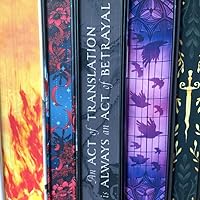
I’m in absolute awe of this masterpiece. Truly the most original, complex, global SFF I’ve ever read. Proper RTC when I find the words to do it justice!
June 15, 2026
I really enjoyed A Dance of Burning Blades. There are so many moving parts in this follow up to A Song of Legends Lost with great pacing. Everything feels so much more high stakes and felt invested and curious with each of the storylines. I’m really looking forward to the final installment to thing unique and engaging series!

September 11, 2026
. . . Oh my goodness I think I’m gonna need a day to get my thoughts in order after this WILD ride. Review to come! ⚙️
(FINAL REVIEW:)
This was a STELLAR sequel to an already fantastic start to a new sci-fi fantasy series. I had so much fun again with these characters and the new ones that got POVs this time around. I will have to say that there were two new POVs that just stole my heart when reading, and I really hope I don't spoil this and the first book too much for those who haven't read it yet. So just in case, please proceed with caution from this point on in case there might be something that will spoil the first book for you! ‼️
Oh god, where do I start without giving anything away?? I'll just state that the book picks up a few months after the concluding events of the first book. We still have the two main POVs of Temi and Jinao from the first book along with a new bunch of POVs that weren't in the first book or briefly touched. Temi is still trying to figure out her new relationship with a mysterious figure, and Jinao is wallowing in the army. I still love these two characters after the events of both books, and the events in the second book have solidified this love for sure. Both of them are thrown through the wringer, but I do think that Jinao's journey edges out just a bit because man did that man get a tough hand in this. 😮💨
The new POVs that I highly enjoyed in this book were that of Morayo and Boleo. Both of them are on the same side of a rebellion and I really enjoyed the deeper dives into their personalities. Morayo was probably my favorite of the two simply because of the mask that he has to put on just to keep up a certain persona he's worked hard to make people believe. I loved just how stressed out Boleo was the entire book simply because this poor man was just given blow after blow and yet somehow, somehow, managed to get on the top of it all. His mentorship of Kipteni was also just comical not going to lie. 🥲
The other POV that was just so enjoyable to get snippets from here and there is that of Layela. Man I'm so excited to see where her schemes go and how much more chaos she can create for the world. 🤩
. . . . I literally can't think of anything else to say about this book without giving away MAJOR spoilers, so I think I will just end this review here when I'm still on top of it all. I'm STOKED for the third book and honestly can't wait to get the third book! I'm still heavily debating if I want to get the matching Illumicrate edition to match the one that I have right now, but I also don't want to pay stupid amounts of money just to get it shipped from the company's UK site. 😬
If you made it this far into the review and are still clueless to the plot: THANK GOD because you NEED to get on this series now! I cannot recommend it enough if you want a diverse cast of morally grey and complicated characters, and a political fantasy that just keeps you second guessing EVERYTHING. 😳
Overall: this is an honest to god solid 5/5 ⭐️
(FINAL REVIEW:)
This was a STELLAR sequel to an already fantastic start to a new sci-fi fantasy series. I had so much fun again with these characters and the new ones that got POVs this time around. I will have to say that there were two new POVs that just stole my heart when reading, and I really hope I don't spoil this and the first book too much for those who haven't read it yet. So just in case, please proceed with caution from this point on in case there might be something that will spoil the first book for you! ‼️
Oh god, where do I start without giving anything away?? I'll just state that the book picks up a few months after the concluding events of the first book. We still have the two main POVs of Temi and Jinao from the first book along with a new bunch of POVs that weren't in the first book or briefly touched. Temi is still trying to figure out her new relationship with a mysterious figure, and Jinao is wallowing in the army. I still love these two characters after the events of both books, and the events in the second book have solidified this love for sure. Both of them are thrown through the wringer, but I do think that Jinao's journey edges out just a bit because man did that man get a tough hand in this. 😮💨
The new POVs that I highly enjoyed in this book were that of Morayo and Boleo. Both of them are on the same side of a rebellion and I really enjoyed the deeper dives into their personalities. Morayo was probably my favorite of the two simply because of the mask that he has to put on just to keep up a certain persona he's worked hard to make people believe. I loved just how stressed out Boleo was the entire book simply because this poor man was just given blow after blow and yet somehow, somehow, managed to get on the top of it all. His mentorship of Kipteni was also just comical not going to lie. 🥲
The other POV that was just so enjoyable to get snippets from here and there is that of Layela. Man I'm so excited to see where her schemes go and how much more chaos she can create for the world. 🤩
. . . . I literally can't think of anything else to say about this book without giving away MAJOR spoilers, so I think I will just end this review here when I'm still on top of it all. I'm STOKED for the third book and honestly can't wait to get the third book! I'm still heavily debating if I want to get the matching Illumicrate edition to match the one that I have right now, but I also don't want to pay stupid amounts of money just to get it shipped from the company's UK site. 😬
If you made it this far into the review and are still clueless to the plot: THANK GOD because you NEED to get on this series now! I cannot recommend it enough if you want a diverse cast of morally grey and complicated characters, and a political fantasy that just keeps you second guessing EVERYTHING. 😳
Overall: this is an honest to god solid 5/5 ⭐️

September 23, 2026
Absolutely captivated by A Dance of Burning Blades by M.H. Ayinde. Having devoured the first installment, A Song of Legends Lost, I dove into this follow-up, and it undeniably surpassed my already high expectations. Ayinde’s masterful worldbuilding continues to shine, intricately weaving layers of lore, ancestral magic, and political intrigue into a tapestry that feels both expansive and deeply personal.
The stakes are higher than ever — the persistent threat of the Greybloods, the unrest in Lordsgrave, and the simmering rebellion across the Nine Lands keep the tension relentless. I was particularly impressed with how the narrative seamlessly balances large-scale conflicts with intimate character moments. The personal struggles of each POV character—whether it’s the family dynamics, bonds with ancestral entities, or the internal battles with identity—are compelling and vital to the overarching plot. This nuanced focus on individual agency against a backdrop of societal upheaval adds a richness that elevates the series to epic fantasy greatness.
Ayinde’s exploration of themes such as community resistance, colonial indoctrination, and the fight for truth resonates powerfully. The political machinations—especially Clan Adatali’s defiance of the manipulative power systems—are depicted with such sophistication that I found myself constantly guessing who’s truly trustworthy. The layering of schemes, secrets, and betrayals kept me thoroughly engaged, with each perspective revealing new facets of the world’s complex history and the weaponization of its magic and technology.
What I loved most was how the novel maintained a perfect balance between the grand, sweeping rebellion and the intimate, emotional journeys of its characters. The relationship dynamics, especially in the context of kinship and loyalty, felt authentic and heartfelt. Ayinde’s worldbuilding continues to impress, revealing new depths and connections that make the Nine Lands feel alive and vibrant.
This book is a must-read for epic fantasy fans craving a richly detailed universe filled with political intrigue, ancestral magic, and layered character stories. It’s a series that demands attention, and I cannot wait to see how all the threads come together in the final installment. Highly recommended — A Dance of Burning Blades is a powerhouse that cements Ayinde’s place among the best in the genre.
The stakes are higher than ever — the persistent threat of the Greybloods, the unrest in Lordsgrave, and the simmering rebellion across the Nine Lands keep the tension relentless. I was particularly impressed with how the narrative seamlessly balances large-scale conflicts with intimate character moments. The personal struggles of each POV character—whether it’s the family dynamics, bonds with ancestral entities, or the internal battles with identity—are compelling and vital to the overarching plot. This nuanced focus on individual agency against a backdrop of societal upheaval adds a richness that elevates the series to epic fantasy greatness.
Ayinde’s exploration of themes such as community resistance, colonial indoctrination, and the fight for truth resonates powerfully. The political machinations—especially Clan Adatali’s defiance of the manipulative power systems—are depicted with such sophistication that I found myself constantly guessing who’s truly trustworthy. The layering of schemes, secrets, and betrayals kept me thoroughly engaged, with each perspective revealing new facets of the world’s complex history and the weaponization of its magic and technology.
What I loved most was how the novel maintained a perfect balance between the grand, sweeping rebellion and the intimate, emotional journeys of its characters. The relationship dynamics, especially in the context of kinship and loyalty, felt authentic and heartfelt. Ayinde’s worldbuilding continues to impress, revealing new depths and connections that make the Nine Lands feel alive and vibrant.
This book is a must-read for epic fantasy fans craving a richly detailed universe filled with political intrigue, ancestral magic, and layered character stories. It’s a series that demands attention, and I cannot wait to see how all the threads come together in the final installment. Highly recommended — A Dance of Burning Blades is a powerhouse that cements Ayinde’s place among the best in the genre.

Review of advance copy received from NetGalley
With the new war in the Feverlands, the people of the Nine Lands are increasingly getting angrier living under the king's rule. Things are steadily getting more out of control as more people discover their stolen history, and they can't help but think they'll finally be able to rule themselves again.
----------
4.5 stars rounded up to 5 stars
TW: Graphic Torture, Classism and Familial Abuse
------
OMG, I was so surprised I was approved for this arc?? My Netgalley ratio is absolutely awful, but I was so curious after A Song of Legends Lost that I still put in a request. And it was approved!! So, thank you guys so much!
Okay, back to the actual review
-----
I ended up enjoying this book a lot more than the previous one. I was hooked throughout and finished it in less than a week! I just really enjoyed how the overarching plot unraveled and the characters.
Unlike the previous book, most of the POVs were working towards their own specific goals with only a small layer of overlap between Morayo and Boleo (they were both actively trying to solve the same threat). I did like how they all were dealing with the same mystery of trying to learn their history and how a lot of the solutions to their current problems tied back to them losing their history/violent colonialism and the lack of knowledge.
This time around, I really enjoyed all the POVs. I liked Boleo and him desperately trying to figure out a way to win against impossible odds and trying to figure out how/why things worked the way they did. Morayo also wanted to figure out the best way to help, but he also had his own plotline about figuring out his place in the family and desperately trying to prove his worth. Jinao is trying to hunt down the Bairneater and ends up increasingly worse situations. It was fascinating being in Runt's head as she desperately worked to fit herself into her father's life and her slow realization of what was happening. Temi, just like in the previous book, is my favorite. I loved seeing her work to protect her family in any way she could. I really do like where her character is going. I can't figure out if Vunaji wants to help or if he's after his own ends. I like how morally grey he is tho and his dynamic with Temi. I don't know if it's because I read book 1 as an audiobook, and the voice the narrator did for him was really hot.
I really like how Ayinde used Lyela's POV as interludes between different parts, and I liked how they added to the worldbuilding.
I really love the parallelism between Temi and Runt. They had so similar of backgrounds/histories but went different ways. I was so excited that they finally met, and I really liked how Runt compared her family to Temi's. I really would've loved more time spent with them, however. It was essentially summed up in a paragraph, and I would've loved seeing another perspective looking in on the Bakers. I get why that wasn't the case because a lot was happening, and there's a bunch of POVs.
The worldbuilding was so interesting, and I loved seeing more and more of it. After the reveal in the previous book, I was able to work out most of it, but I liked how it wasn't straight sci-fi and incorporated a lot of fantasy elements.
I liked how fast-paced it was, and there really wasn't any moment that dragged? Tho I was startled to realize 2 years have passed by the end of it. It makes sense but still a little unexpected.
Overall, it's a really exciting sequel, and I can't wait for the next one! I'm going to preorder a copy of the physical and hunt down a copy of A Song of Legends Lost.
----------
4.5 stars rounded up to 5 stars
TW: Graphic Torture, Classism and Familial Abuse
------
OMG, I was so surprised I was approved for this arc?? My Netgalley ratio is absolutely awful, but I was so curious after A Song of Legends Lost that I still put in a request. And it was approved!! So, thank you guys so much!
Okay, back to the actual review
-----
I ended up enjoying this book a lot more than the previous one. I was hooked throughout and finished it in less than a week! I just really enjoyed how the overarching plot unraveled and the characters.
Unlike the previous book, most of the POVs were working towards their own specific goals with only a small layer of overlap between Morayo and Boleo (they were both actively trying to solve the same threat). I did like how they all were dealing with the same mystery of trying to learn their history and how a lot of the solutions to their current problems tied back to them losing their history/violent colonialism and the lack of knowledge.
This time around, I really enjoyed all the POVs. I liked Boleo and him desperately trying to figure out a way to win against impossible odds and trying to figure out how/why things worked the way they did. Morayo also wanted to figure out the best way to help, but he also had his own plotline about figuring out his place in the family and desperately trying to prove his worth. Jinao is trying to hunt down the Bairneater and ends up increasingly worse situations. It was fascinating being in Runt's head as she desperately worked to fit herself into her father's life and her slow realization of what was happening. Temi, just like in the previous book, is my favorite. I loved seeing her work to protect her family in any way she could. I really do like where her character is going. I can't figure out if Vunaji wants to help or if he's after his own ends. I like how morally grey he is tho and his dynamic with Temi. I don't know if it's because I read book 1 as an audiobook, and the voice the narrator did for him was really hot.
I really like how Ayinde used Lyela's POV as interludes between different parts, and I liked how they added to the worldbuilding.
I really love the parallelism between Temi and Runt. They had so similar of backgrounds/histories but went different ways. I was so excited that they finally met, and I really liked how Runt compared her family to Temi's. I really would've loved more time spent with them, however. It was essentially summed up in a paragraph, and I would've loved seeing another perspective looking in on the Bakers. I get why that wasn't the case because a lot was happening, and there's a bunch of POVs.
The worldbuilding was so interesting, and I loved seeing more and more of it. After the reveal in the previous book, I was able to work out most of it, but I liked how it wasn't straight sci-fi and incorporated a lot of fantasy elements.
I liked how fast-paced it was, and there really wasn't any moment that dragged? Tho I was startled to realize 2 years have passed by the end of it. It makes sense but still a little unexpected.
Overall, it's a really exciting sequel, and I can't wait for the next one! I'm going to preorder a copy of the physical and hunt down a copy of A Song of Legends Lost.

September 23, 2026
⭐️⭐️⭐️⭐️⭐️ (5/5 stars)
A Dance of Burning Blades continues the story of A Song of Legends Lost, taking its already complex world of magic, ancient powers, strange creatures and emerging technology and slowly revealing that there is so much more going on underneath it all.
I absolutely loved the direction this book took us. What initially seemed like a magical fantasy world has slowly, layer by layer, become something much more sci-fi. And I LOVE how gradually it happens. We started with monsters. Then those monsters were given intelligence. Then they became more human. And now even more sci-fi layers are being added to the story. I obviously can't say much without spoilers, but every new revelation seems to change how I understand something that came before it.
With every layer, the world becomes more complicated, but also so much more interesting. Instead of simply adding new mysteries, the book keeps changing the context of the mysteries we already have. Things I accepted as part of the fantasy world in the first book suddenly have me questioning what they actually are and how this world really works.
I also found this book much easier to get into than the first. I already knew the characters, understood the different POVs and had a much better grasp of the world, so I could enjoy seeing everything expand. The similarities between some of the characters that occasionally confused me in the first book weren't really an issue anymore.
The fantasy/sci-fi combination was one of the things I loved most about the first book, and A Dance of Burning Blades takes it so much further. I love stories that slowly reveal that the world isn't quite what you thought it was, and this series is doing exactly that.
I went into the first book convinced I would probably DNF it. Now, two five-star books later, I'm completely invested. Every new answer seems to make the story bigger, stranger and more interesting. Can't wait to pick up the third book!
A Dance of Burning Blades continues the story of A Song of Legends Lost, taking its already complex world of magic, ancient powers, strange creatures and emerging technology and slowly revealing that there is so much more going on underneath it all.
I absolutely loved the direction this book took us. What initially seemed like a magical fantasy world has slowly, layer by layer, become something much more sci-fi. And I LOVE how gradually it happens. We started with monsters. Then those monsters were given intelligence. Then they became more human. And now even more sci-fi layers are being added to the story. I obviously can't say much without spoilers, but every new revelation seems to change how I understand something that came before it.
With every layer, the world becomes more complicated, but also so much more interesting. Instead of simply adding new mysteries, the book keeps changing the context of the mysteries we already have. Things I accepted as part of the fantasy world in the first book suddenly have me questioning what they actually are and how this world really works.
I also found this book much easier to get into than the first. I already knew the characters, understood the different POVs and had a much better grasp of the world, so I could enjoy seeing everything expand. The similarities between some of the characters that occasionally confused me in the first book weren't really an issue anymore.
The fantasy/sci-fi combination was one of the things I loved most about the first book, and A Dance of Burning Blades takes it so much further. I love stories that slowly reveal that the world isn't quite what you thought it was, and this series is doing exactly that.
I went into the first book convinced I would probably DNF it. Now, two five-star books later, I'm completely invested. Every new answer seems to make the story bigger, stranger and more interesting. Can't wait to pick up the third book!

April 15, 2026
Firstly, thank you so much to Little Brown Book Group and M. H. Ayinde for the ARC!
I had to sit and digest everything that happened in the sequel to A Song of Legends Lost as Ayinde did not pull on any punches with this incredible sequel. The second instalment of the Invoker Trilogy increases the stakes as we see the incredible world of the Nine Lands expand and further chaos threaten the cast of beloved characters. The summary below will contain spoilers for book one! Stop reading now if you have not read A Song of Legends Lost!
We follow Temi as she roils in the aftermath of the attack in Lordsgrave and explores her bond with the chained man further. Runt as she tries to settle into her new family life after finding her father and releasing the Cloister. Jinao who hunts the Bairneater for revenge for his mother and brother. Father Boleo as he fights alongside Warlord Daloya as they oppose the King, and Morayo as he finds his feet within Clan Adatali.
This sequel does not suffer from the sequel curse and I would go as far as to say that I loved this one more than ASOLL! A gorgeous story, with each chapter leaving you wanting more. I could not put this book down. Ayinde writes with such beautiful prose and suspense with worldbuilding like no other. Temi is still my favourite character and I cannot wait to see where her story goes in the third installment of this series. Runt, oh Ayinde, you really did not hold back there. I also found myself having a soft spot for Jinao as we follow him into the world of the Greybloods. What an incredible sequel. I cannot wait for Book 3!
Once again, the epilogues to this book have me in a chokehold and will be stirring in my mind until the next book arrives. If you are looking for a truly epic fantasy series then please pick up the Invoker Trilogy by M. H. Ayinde!
I had to sit and digest everything that happened in the sequel to A Song of Legends Lost as Ayinde did not pull on any punches with this incredible sequel. The second instalment of the Invoker Trilogy increases the stakes as we see the incredible world of the Nine Lands expand and further chaos threaten the cast of beloved characters. The summary below will contain spoilers for book one! Stop reading now if you have not read A Song of Legends Lost!
We follow Temi as she roils in the aftermath of the attack in Lordsgrave and explores her bond with the chained man further. Runt as she tries to settle into her new family life after finding her father and releasing the Cloister. Jinao who hunts the Bairneater for revenge for his mother and brother. Father Boleo as he fights alongside Warlord Daloya as they oppose the King, and Morayo as he finds his feet within Clan Adatali.
This sequel does not suffer from the sequel curse and I would go as far as to say that I loved this one more than ASOLL! A gorgeous story, with each chapter leaving you wanting more. I could not put this book down. Ayinde writes with such beautiful prose and suspense with worldbuilding like no other. Temi is still my favourite character and I cannot wait to see where her story goes in the third installment of this series. Runt, oh Ayinde, you really did not hold back there. I also found myself having a soft spot for Jinao as we follow him into the world of the Greybloods. What an incredible sequel. I cannot wait for Book 3!
Once again, the epilogues to this book have me in a chokehold and will be stirring in my mind until the next book arrives. If you are looking for a truly epic fantasy series then please pick up the Invoker Trilogy by M. H. Ayinde!
August 19, 2026
SO much better than the first book!! It’s a Shrek 2 vs Shrek 1 level glow up
There was still so goddamn much going on in this book tho. Like this one guy has to into the woods to chop down a bunch of trees but then he becomes part robot, and then this other bitch has little blue people living inside of her, and then this other dude has a group of nuns that he feeds off their blood to make a spirit prison. Like my god!!
But somehow the author makes it all work and I gobbled this book up yummy!!!
——————————————————
⭐️⭐️⭐️⭐️ 4 spirit prison nun stars
There was still so goddamn much going on in this book tho. Like this one guy has to into the woods to chop down a bunch of trees but then he becomes part robot, and then this other bitch has little blue people living inside of her, and then this other dude has a group of nuns that he feeds off their blood to make a spirit prison. Like my god!!
But somehow the author makes it all work and I gobbled this book up yummy!!!
——————————————————
⭐️⭐️⭐️⭐️ 4 spirit prison nun stars

September 28, 2026
In my experience, it's rare that a second book in a trilogy is a step up from the first, but that is absolutely the case here. Like its predecessor, A Dance of Burning Blades is overflowing with characters (including multiple POV characters), settings, mysteries, storylines, politics, concepts, artifacts, and so on. But where A Song of Legends Lost suffered from pacing issues that made it feel overstuffed and over-ambitious, this volume is expertly paced. The reader is pulled powerfully and inexorably through its pages, compelled by its characters and its plotlines.
Moreover, by the start of book two, readers are already familiar with this world, so Ayinde doesn't have to work so hard on "world-building" here, though there is some exposition here and there to deepen our understanding of what's what. (Anybody up for a guided tour of the underplane?)
I think Ayinde's skills portraying character have also improved. One of my criticisms of the first book was that I didn't think each character necessarily felt entirely distinct as an individual personality. I got the sense that, if you took another street urchin from Runt's background and put her in Runt's place, she would act exactly like Runt. That was probably exacerbated by the sheer number of characters. A Song of Legends Lost featured six main POV characters and nine total including three epilogues. A Dance of Burning Blades features five main POV characters plus four more from the prologue and three epilogues. In this book, the characters gain more depth and individuality.
This is science fantasy with cyborgs, techno-mages, spirits, ancestor worship, and a porous border between this life and the afterlife. It's fun. You should check it out.
Moreover, by the start of book two, readers are already familiar with this world, so Ayinde doesn't have to work so hard on "world-building" here, though there is some exposition here and there to deepen our understanding of what's what. (Anybody up for a guided tour of the underplane?)
I think Ayinde's skills portraying character have also improved. One of my criticisms of the first book was that I didn't think each character necessarily felt entirely distinct as an individual personality. I got the sense that, if you took another street urchin from Runt's background and put her in Runt's place, she would act exactly like Runt. That was probably exacerbated by the sheer number of characters. A Song of Legends Lost featured six main POV characters and nine total including three epilogues. A Dance of Burning Blades features five main POV characters plus four more from the prologue and three epilogues. In this book, the characters gain more depth and individuality.
This is science fantasy with cyborgs, techno-mages, spirits, ancestor worship, and a porous border between this life and the afterlife. It's fun. You should check it out.

June 29, 2026
Book 2 of The Invoker Trilogy absolutely exceeded all expectations. Ayinde is going to be a force in the fantasy genre for a long time if she is putting out novels of this magnitude at the beginning of her career.
The world she has crafted is epic, original, and highly ambitious. The second installment builds upon its predecessor and continues to turn up the heat with every chapter. I love these characters, and those I didn’t love in book one, are becoming favorites in book two. The character development is 👌🏻. If you love high fantasy please go check out this series. It deserves ALL the hype. Cannot wait for the conclusion!
Follow me on Instagram @bradsunreliablereviews
The world she has crafted is epic, original, and highly ambitious. The second installment builds upon its predecessor and continues to turn up the heat with every chapter. I love these characters, and those I didn’t love in book one, are becoming favorites in book two. The character development is 👌🏻. If you love high fantasy please go check out this series. It deserves ALL the hype. Cannot wait for the conclusion!
Follow me on Instagram @bradsunreliablereviews

Did Not Finish
July 6, 2026Maybe I will return to it once the last book is out and I’ll reread both books. I just can’t connect to the characters or comprehend the plot. I don’t why, I just started skimming through it and that’s when I know I should stop reading it.
I’m sure it’s a good book, and the plot is really intriguing and the worldbuilding as well, but it’s not for me atm.
I’m sure it’s a good book, and the plot is really intriguing and the worldbuilding as well, but it’s not for me atm.
April 6, 2026
4.5 rounded up. What a breakneck sequel - Exciting, inventive, blending sci-fi and epic fantasy with layers of worldbuilding and mysteries slowly revealed along with magic systems I’ve never encountered before. So riveting I didn’t mind being constantly confused (I think this is intentional).
Displaying 1 - 30 of 125 reviews