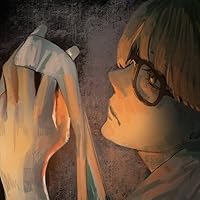
A philosophical fantasy of Thucydidean politics, eldritch intellects, and psychological horror woven into fractured timelines.
The peace between Firard and Sestel teeters on the edge of collapse.
In the fortress of Egon Hold, strategist Dante Praeto becomes the unwilling host of the War a simulated battle fundamental to rising in the ranks of Firard’s Legions. As the contestants march towards the ravine shared with their enemy nation, a landslide swallows the soldiers within.
Across that ravine, Lady Calya Seve guards the Sestelii frontier, aware the War Games will provoke a diplomatic upheaval. She deals in treaties and political alliances, but little does she know the next threat isn’t coming through the border.
Unbeknownst to them, both are pieces in a larger a game played by eldritch beings for whom entire nations are little more than tools, and humans mere pawns. For in the end, the alchemists of The Orders will unleash chaos in their eternal pursuit of arcane knowledge.
The omens of war will be heard by all.
Psychologically intense, and written for readers who read to solve.
Livia J. Elliot writes literary speculative fiction that fuses political theory, psychological depth, and philosophical horror. Her work is written for readers who read to solve.
She’s currently releasing two series: Records of The Orders (a literary speculative fantasy,) and Tales of the Bookshelves (psychological fairy tales for adults). Livia is also the host of the award-nominated podcast Books Undone, offering thematic analyses of literary speculative fiction. Finally, she’s the lead writer of Unearthed Stories, a mobile app publishing interactive speculative fiction.
This book is unlike anything I've ever read or expected to ever read and here's why I think that and why I think very specific people may want to give it a chance too.
Usually lovecraftian horror relies and focuses on the fear of the unknown or just the reaction to the inconceivable yet in this fantasy we’re privy to the eldritch entities' own thoughts and by default diluting that essence (inconceivability). That was immediately sort of offsetting to my expectations of it in that respect yet by the end I’ve realised they aren’t entirely conceivable even with familiarity. So why is that?
I was able to gradually learn to appreciate this contradictory employment of the eldritch the more I read, firstly just by the odd psychologies in which they (eldritch entities) operated then later by aspectations I viewed as quirks and by the end of the book I was able to appreciate all of these simultaneously especially in light of how the primal fear of the inconceivable still managed to be presented well enough despite all of the aforementioned aspects that should work against it.
Now that is I think the genius of this work, Livia Elliott managed to employ this in an unorthodox method of plunging into and facing the inconceivable/unknowable elements as thoroughly as possible thereby exploring even new frontiers to the norm.
This method works so well thanks to how thoroughly identity was put at the forefront as that’s something everything has from the paranormal lovecrafts to normal humans. What makes identity: one’s past, wants, needs, regrets, fears and more all served to explore a theme they termed as the meridian of existence: basically the common threshold of both extremes of any concept say order vs chaos, light and dark, war vs peace etc.
I don’t know if I’ve quite put it in the right words but I don’t mean a middle point but rather both of these existing simultaneously at the extremes of these spectrums in a common ground which here is mostly sapient beings for a lack of a better word. This here is the thesis of ascendance to being an alchemist; the equivalent of the eldritch intelligences in this world.
Well then how did the author manage to explore these w/o it falling on itself or trickling into some pseudo intellectual nonsense? I believe it lies in what in hindsight is clear to me now was a set-up book like any other first book in a fantasy series, just here it involves really complex characters and abstruse concepts.
The two primary characters… well first of all, this is a military fantasy setting and the story picks up at a stage or at least was set in a stage that complements this threshold “meridian of existence” by being during a time wherein the world powers are on high alert thanks to recent wars between one another and even more at a place: it’s set at literal border between the two greatest world powers there. This is then applied to the story by following two main characters from the opposite nations: Dante and Calya, carrying the hopes of their people hence a lot of prestige to them but again the “meridian of existence” is further given another layer of exploration by making them individuals with a truck-load of CPTSD and/or PTSD (it will be clear which is which once you read it).
So this set up enables every line of dialogue and every bit of monologue to have these extremes (meridian...) simultaneously presented and analysed for every page till the end. And wow that involves a huge learning curve. It doesn’t just stop there either, this theme is reinforced on two (if not 3 more levels) with the eldritch entities which I won’t say how so here, not to spoil and then with other human characters too (the possible 3rd layer is interludes I’m not even too sure of).
The end result is a very internalised reading experience; I mean mostly in characters' heads, which at first is novel, becomes frustrating, then by the final third ends up blooming into an experience of complete transfixation on that threshold itself for the reader which honestly is a level of oppressive/claustrophobic ambience only such a setup could manage and in a way an unorthodox lovecraftian experience.
There's some stumbles I had in terms of grammar and naming choices but other than that, what I described above is the novel in a nutshell. I believe this is by design going to be niche as you can see it’s very esoteric but if all I’ve described above interests you then check it out.
As for myself, I’m sold and look forward to reading more work set in the world... hopefully with these characters for now. I was privileged to get the eARC from the author Livia J. Elliot and I express my thanks to them for letting me. The book officially comes out February 2026.
I think I'm not in a good frame of mind for this and as a result it has been unappealing to read. I thought I'll be able to push on. But I unfortunately can't. So it's a dnf at 50%. However I will talk about it because it's one of the most ambitious books of our time.
This is a genre blending literary work that offers political intrigue, cosmic horror and philosophy. The writing style is dense, philosophical and constantly requires you to piece thoughts and events together as you read on else you'll miss a lot of nuance to the story.
Our two main human povs are politically sound strategists who are always reading each other and their moves. Kind of similar to what takes place between L and Light if you've watched death note. So there's games within games within games. And at the helm of it all are eldritch beings known as alchemists that the world has no idea exists manipulating everything in a bid to pursue a transcendental like state they (the alchemists) have caught a glimpse of in terms of its possibilities. Livia also built in a couple of “in world jargons” to explore abstract ideas in the story like soul evolution, memory and consciousness.. how they interfere in the now with our personal lives & struggle, and how it drags on as a chain to affect nations.
On a technical basis, I can't fault this work event though I'm not a fan of its approach to be entirely intellectual and lacking emotions even from our human characters. I tended to even enjoy the alchemists pov more, and in their pursuit for transcendence I can sense an alchemical war being triggered either in this book past where I stopped or in further books in the series to come. If you're a fan of characters playing 9d chess on each other together with a constant overhaul of philosophy that branches into various topics from mental health, trauma, memory, consciousness, evolution, societal decay, societal change, etc and with eldritch beings being sinister, then this will be your jam.
I would've loved it better if I was able to connect emotionally to the events going on. Unfortunately my current mental state rendered everything too boring for me to care. The book is very good and I think anyone seeing this should give it a try.
I appreciate the author for giving me an eARC of the book
Politics, philosophy, psychology and fantasy elements masterfully blended in (the beginning of) an epic tale.
Nations on the constant edge of wars, political internal and external scheming, frictions between military and political leaders, alliances as malleable as clay. All of this orchestrated and observed by alchemists. They are non-human beings, who have transcended mortality and strive only for a single purpose in their existence: knowledge. This is the setting of the excellent The Omens of War, the first instalment in the series of the Records of the Orders. This book has little to do with conventional phantasy literature, despite some elements in the world settings. It is an engaging novel, which offers a remarkable depth in all its aspects: universe, plot and , most of all, its characters. Nothing feels trivial or shallow, the author does not resort to tired tropes. Food for thought is offered on almost every page.
The main plot revolves around Dante Praeto and Lady Calya Seve, two political and military leading figures for their respective nations (Firard and Sestel), which are constantly on the verge of war. More nations in the wide world brought to life by Elliot are mentioned. They all play a role in an extremely delicate geopolitical balance, nevertheless the plot of this book involves almost exclusively Firard and Sestel. Alchemists are a major presence in Omen and, in general, in the Records the Orders series which contains two novellas as prequel (more about them later). Essentially, they steer human history, as it offers the material for experiments aimed at constantly deepening their knowledge. The novel opens with an incident, orchestrated by the alchemists, which might be the spark igniting a war between the two nations. The whole book is mainly about how Dante and Calya react to this incident, trying to position their own countries in a favourable political standing, while attempting to destabilise the neighbouring nation’s internal balance. This chess game between Dante and Calya unravels chapter by chapter, in a fascinating display of deep political, strategical, military and psychological aspects concerning not only the two leaders. A cast of secondary characters, impressive both in their variety and development, is involved in the complex political and military scheming created by Elliot. No event, no statement, no hypothesis can be trusted or expected, because of either plot twists of human nature or the intervention of the alchemists. Useful explanation about the inspiration for the psychological and philosophical content of this novel can be found in the Author’s notes, which Elliot inserts at the end of the book, as she usually does.
The characters are the main strength of the novel. I am not referring only to the two protagonists, but also to the supporting cast, both humans and alchemists. Each one of them is well developed and plays a clear role in the story. Elliot created them without resorting to clichés; as a result, they stand out for their originality. Without entering in spoilers-territory, I expect that many readers of Omen will look forward to the second book in the series, not only to find out what happens to Dante and Calya, but also to other characters. The structure of the novel adds to the readers’ engagement. The chapters are short and very often we follow the same events from different POVs: human and alchemists. While the human characters’ thoughts are highly relatable, the alchemists view the humans’ struggles and endeavour through an entirely different lens. As an example, Elliot recalls a theme already introduce in The Genesis of Change (a prequel novella in the Records the Orders series), namely fear and desire being the two generators of all human emotions. This idea and the analysis of human fear is presented by one of the alchemists in the following terms:
“Fear. The best and worst part of human nature. It protected life with ravenous intent, but it also stole freedom by overpowering reason and presenting a thousand sources of danger-real or imaginary. Humanity was always terrified of others simply because they were taller, broader, older or younger, fooler or more intelligent. Terrified of their history, lest its secrets proved them wrong. Terrified of feeling or believing something that contradicted wha the majority demanded they felt or believed. Terrified of thinking, lest defending their ideas attracted the wrath of the masses. Terrified of living because of its challenges, but also terrified of death because it brought oblivion. Terrified of the sky, of the storms, of the plants and the animals, of the land they coveted and upon which they lived. But most importantly, terrified of themselves, because all humans knew what they were capable of.”
Alchemists lack empathy and ethics. They are moved exclusively by logic and by the desire for new knowledge. At least, this is what the author tells us. However, with a masterclass in “show-don’t-tell”, Elliot hits a narrative home run. She displays how in the world of alchemists, there is place also for something else than pure logic. The relationships between alchemists reveal friendship, friction, distrust, anger, surprise…one might be tempted to label them as typical traits of the human experience, if we were not talking about alchemists!
The technical writing skills of the author are exceptional. She has demonstrated in her books (both in the Records the Orders series and in her other books) a wide linguistic and stylistic variety, even embracing brave experimentations, as in The Echoes of Yore (prequel novella in the Records the Orders series). The prose of Omen is accessible and, I suspect, for a deliberate choice of the author. The book is already complex on several levels (ideas introduced, not-trivial characters, interwoven political schemings), so that the language does not need to add any further sophistication. In comparison with the two novellas of the same series, the language is indeed easier and more functional to the story (i.e. it does not take the spotlight for its beauty and elegance itself), but by no means trivial or anonymous. Elliot chooses always very precise and elegant words, while the rhythm of her sentences matches the emotional state of the situation described. So fast-paced in battle scenes and relaxed during descriptive sequences. This stylistic choice contributes to communicate emotions to the reader, beyond the content of the novel.
The Omens of War is the first main entry of the Records of the Orders series, which contains also two novellas as prequels: The Genesis of Change (read my review here) and The Echoes of Yore (read my review here). While reading the two prequels is not necessary to understand and enjoy Omen, I would recommend to read Genesis first, for an introduction to the universe of this series, in particular to the alchemists. Having said that, I do not recommend this series to readers looking for another standard shallow fantasy story, easy to follow because built around familiar tropes. Elliot’s books requires attention and active efforts from their readers, both on the specific text under scrutiny at the moment and in connection with other parts of the book already read. References and hints are spread throughout the novel by the author. In the own words of Elliot herself, Omen is “written for readers who read to solve”.
The Omens of War by Livia J. Elliot pushes its readers to engage with the philosophical aspects of war, alchemy, and the human psyche. Following several characters with feet in both the physical and the metaphysical world, Elliot explores the psychology of war and its impact on individuals as well as on things unseen—i.e., machinations far beyond the human realm of understanding.
Dante and Calya are both heads of their respective nations’ armies, both eager to prove themselves in a political system with little room for mistakes. While they are both some of the youngest success stories for Firard and Sestel, respectively, they each find themselves in the shadows of their parents’ legacies. Their stories are deeply rooted in the struggles of CPTSD and PTSD. Over the course of the book, the characters must push through their issues, often to the detriment of themselves and those around them. Elliot handles these big thematic moments with urgency and a clear understanding of what these illnesses can do to a person.
Alongside Dante and Calya, the reader learns about the alchemical world of the Meridian of Existence. The voices to know here are Amok and Berserk, two alchemists who sit on opposite ends of the philosophical spectrum. These beings, along with several others, shape the human world through soul-linking with those chosen by The Rector (the oldest alchemist of all). They use the psychology of their human counterparts against them to shape the physical world to their liking. It’s an interesting concept, and the execution made for intriguing thought experiments while reading.
Overall, those who are interested in philosophy, war politics, and the merging of physical and metaphysical will find themselves immersed in Livia J. Elliot’s The Omens of War. While there are often many trails to follow, once the story gets going, it becomes easy to sink into the narrative and feel the intensity Elliot writes into her characters. Some moments could have used a bit more explanation, but the overall impression of the book is clear. If this first installment in The Records of the Orders series indicates the rest, one can only expect the series to grow in success.
Sadly, I received this during a difficult time and I haven’t been able to give it the full mental processing power it requires and deserves. The author has crafted something complex and detailed, that makes bold choices in veering away from normal story telling to explore philosophy, politics and an entirely different realm of being. Rather than emotional connection with the main characters, we get to see their traumas and motivations, and watch their scheming and plotting. There are times I was’t able to fully follow what was on the page, and I’m sad, as I wanted to fully appreciate what was happening. I’m sure I will revisit this in the future, with more spoons and in a literary mindset, and be able to add another star! My thanks for the opportunity to read this arc
This book does not hold your hand. It slowly cuts you bone-deep and then breaks your arm at the elbow. If you're into that sort of thing, you'll love it.
Off the top, I commend the author for her bold and uncompromising vision for the offering, but despite being pretty much the target audience, parts of the book were a struggle for me. Having read the prequel novella The Genesis of Change, having studied international relations/game theory/power dynamics/diplomacy, and having read literal stacks of philosophy, I was likely better prepared to face the contents head-on than most, and yet I found myself overwhelmed with ideas and exposition.
The Omens of War delivers on its core promises (stoicism, psychology, political conspiracy...), but at times, the over-the-top mind games get plainly tiresome. Don't get me wrong, this is not me ripping on the author. I enjoy a well-done, thought-out intrigue with engaging subplots, but the reality is, there is only so much of it that can fit on the page and still remain satisfying to read. Much like with Livia's previous book, I got the notion that I'm actually working on connecting the dots and ideas, rather than enjoying a wonderful story about military tactics and otherworldly events.
Where I would add much praise is the setting and the cast itself. It put me in mind of a fantasy version of the Punic Wars or various Roman campaigns in Gaul or in the East. I've really enjoyed the depictions of the main characters as skilled tacticians with inhuman insight/observational abilities. Particularly, what stood out to me was the somber take on female roles in a Roman-like societies, and the various ways they can not only contribute, but completely take over the reins believably and in a natural way. The idea of the female Pompey or Caesar is not exactly new, but really refreshing after reading a lot of male-centric stories.
Should you like a challenging and intellectually stimulating read. I recommend you dig in. If you're looking to pleasure read for a few hours on a rainy afternoon, you'll be likely better served elsewhere. And I say that as someone who really enjoys Livia's works and would advocate for more people to try, and look forward to further stories from the Records of the Orders world.
Overall, I'd rate the book about 3.75/5. Aspiration meets verity.