

What do you think?

Diary of a Young Doctor: Notes From the Genocide in Gaza
Five days before 7 October 2023 a young Palestinian doctor returns to Gaza, having completed his medical studies abroad. His family gathers to celebrate his achievements and welcome him home. On 11 October seventy-five members of his extended family are killed in an airstrike, and thus begins his incredible story of survival and service to his people. For more than eight months Dr Ezzideen Shehab volunteers at the Indonesian Hospital in northern Gaza, witnessing first-hand catastrophic injuries and deaths, and working under the most difficult circumstances imaginable, including shortages of life-saving medicines and equipment. Constantly targeted by the IDF, the Indonesian hospital is ultimately destroyed. In December 2024 Dr Shehab co-founds the Al-Rahma Medical Centre, to provide free medical care in northern Gaza where no functioning hospitals remain. The Al-Rahma clinic is damaged multiple times and in July 2025 is forced to close. Dr Shehab and his family are displaced for the fifth time with no hope of ever returning to their demolished home in the north of Gaza. Throughout it all, Dr Shehab posts regular updates on the situation for his patients and for his people. His clarity and humanity shine bright as he describes those he treats, and his incomprehension at the unfolding genocide and the silence of the world in the face of the ongoing atrocities. Diary of a Young Doctor is an unforgettable testimony of one of the most shameful periods in recent history.
Paperback
Published November 8, 2025
Ratings & Reviews
Friends & Following
Create a free account to discover what your friends think of this book!
Community Reviews
Displaying 1 - 25 of 25 reviews
November 7, 2025
Diary of a Young Doctor: Notes From the Genocide in Gaza by Ezzideen Shehab
The first publication from Readers and Writers Against the Genocide, this diary is a searing firsthand account by a practicing doctor of life under genocide. Written in a painfully-poetic voice of witness, the book documents day-by-day, month-by-month, the unfolding horrors inflicted on Palestinians by the settler-colonial, apartheid, genocidal state of Israel—an account that mainstream media has too often rendered invisible in the name of “impartiality” but can and should we ever be impartial to genocide?
Dr. Shehab brings us intimate, unforgettable stories: a man in Jabalia, the sole survivor of his family, who refuses to abandon the ruins of his home and the remains of his loved ones, only to later lose even his makeshift tent to fire; Dr. Mahmoud Assaf, a scholar forced to burn his treasured books to feed his children; a woman carrying her children across rubble, offering roots from her farm as a gesture of hope after seeking medicine for her pain.
This is more than a chronicle of genocide—it is a record of endurance, moral courage, and the unbroken humanity of a people under siege, enforced displacement, ethnic cleaning and genocide. Dr. Shehab’s diary demands the world bear witness, holding silence and neutrality accountable, and reminds readers that even under genocide, acts of care and hope persist.
The first publication from Readers and Writers Against the Genocide, this diary is a searing firsthand account by a practicing doctor of life under genocide. Written in a painfully-poetic voice of witness, the book documents day-by-day, month-by-month, the unfolding horrors inflicted on Palestinians by the settler-colonial, apartheid, genocidal state of Israel—an account that mainstream media has too often rendered invisible in the name of “impartiality” but can and should we ever be impartial to genocide?
Dr. Shehab brings us intimate, unforgettable stories: a man in Jabalia, the sole survivor of his family, who refuses to abandon the ruins of his home and the remains of his loved ones, only to later lose even his makeshift tent to fire; Dr. Mahmoud Assaf, a scholar forced to burn his treasured books to feed his children; a woman carrying her children across rubble, offering roots from her farm as a gesture of hope after seeking medicine for her pain.
This is more than a chronicle of genocide—it is a record of endurance, moral courage, and the unbroken humanity of a people under siege, enforced displacement, ethnic cleaning and genocide. Dr. Shehab’s diary demands the world bear witness, holding silence and neutrality accountable, and reminds readers that even under genocide, acts of care and hope persist.

May 29, 2026
A devastating read.

Read
May 3, 2026shame on this world where Palestinians must document the ongoing genocide waged upon them. borrowed from the Palestine Street Library
April 6, 2026
Everyone should read this book

January 14, 2026
Returning to Gaza after his studies and qualification, Ezzideen was just visiting family before deciding what next. Then the current genocide started, from October 7, 2023, and he got to work. Volunteering at a hospital, and then setting up a clinic, he has kept a diary of notes through it all.
Harrowing reading, witnessing. The injuries, the hopelessness of needing to treat wounds, infections, and starvation with next to no supplies.
Medical training is no match for the unbearable conditions of the hospital and clinic, nor for the range of traumas with so little life-preserving tools at hand.
He outlines the difficulties of cases he is seeing regularly, that does get coverage or consideration. The plight of women managing menstruation, and all its usual rollercoasters, but in the context of life threatening, grief debilitating stress. The example of a girl with autism losing her predictable world that keeps her safe, in bombardment, displacement and loss.
A record of a Palestinian doctor living and working through this genocide.
"And in the corners of these broken rooms, I see them: the ghosts of nurses, the whispers of surgeons, the ticking of clocks that no longer tick. We were told hospitals are holy. But here holiness is a joke told to corpses. Here hospitals are not spared, they are taught a lesson. And somewhere, far away, a man stamps a paper. Another man adjusts his spectacles. A third one says, 'We need more information.' But we have all information we need. We are watching the soul of mankind walk off stage, bowing to no one. And the curtain falls."
Harrowing reading, witnessing. The injuries, the hopelessness of needing to treat wounds, infections, and starvation with next to no supplies.
Medical training is no match for the unbearable conditions of the hospital and clinic, nor for the range of traumas with so little life-preserving tools at hand.
He outlines the difficulties of cases he is seeing regularly, that does get coverage or consideration. The plight of women managing menstruation, and all its usual rollercoasters, but in the context of life threatening, grief debilitating stress. The example of a girl with autism losing her predictable world that keeps her safe, in bombardment, displacement and loss.
A record of a Palestinian doctor living and working through this genocide.
"And in the corners of these broken rooms, I see them: the ghosts of nurses, the whispers of surgeons, the ticking of clocks that no longer tick. We were told hospitals are holy. But here holiness is a joke told to corpses. Here hospitals are not spared, they are taught a lesson. And somewhere, far away, a man stamps a paper. Another man adjusts his spectacles. A third one says, 'We need more information.' But we have all information we need. We are watching the soul of mankind walk off stage, bowing to no one. And the curtain falls."

Read
March 30, 2026“How can some, once burned to the bone, branded with history’s shame, now hold the match? How does the survivor become the executioner? I search for answers, and all I find are graves.”
How could they forget, or far worse, pretend to not remember? It is unconscionable.
Ezzideen Shehab returned home, a qualified doctor, full of optimism and zeal to apply his hard-won skills. Five days later Hamas perpetrated the October 7th 2023 atrocity triggering the current situation in Gaza. On October 11th, 42 of Ezzideen’s extended family were killed by an IDF airstrike.
In this incredibly humane, moving and ultimately devastating account, Ezzideen eloquently shares his contemporaneous observations, thoughts and emotions while volunteering in hospitals and in a clinic he set up to try to bring succour to survivors of the daily annihilation of buildings and the systematic extermination of the people who called those buildings “home”. By the Diary’s final entry, denied access to even the most basic medical supplies, Ezzideen shares his unwarranted but wholly understandable sense of guilt at not being able to treat the simplest of medical conditions.
The Western media talks of bombs and missiles, but this Diary lays bare the cold, calculated enaction of genocide through the consequences of isolation and forced famine: hunger, malnutrition, constant displacement to inhumane shelters, an erosion of the will to survive let alone live. Most chilling is the impact on the children, “lives uprooted, futures erased”, where once playful imagination has been replaced by a death wish to rejoin deceased loved ones.
Crucially, the author is clear that although he abhors the oppression being inflicted on his people, he is no supporter of Hamas, who he also scathingly condemns.
Each successive Diary update amplifies a sense of hopelessness, frustration at the inability to make a difference, the loss of dignity, and above all despair at being abandoned by the rest of the world.
Ezzideen’s final plea is simply to ask that we don’t forget, that we remember the people who have lost their lives and those still eking out a hellish existence.
We must not look away.
Please read this Diary.
How could they forget, or far worse, pretend to not remember? It is unconscionable.
Ezzideen Shehab returned home, a qualified doctor, full of optimism and zeal to apply his hard-won skills. Five days later Hamas perpetrated the October 7th 2023 atrocity triggering the current situation in Gaza. On October 11th, 42 of Ezzideen’s extended family were killed by an IDF airstrike.
In this incredibly humane, moving and ultimately devastating account, Ezzideen eloquently shares his contemporaneous observations, thoughts and emotions while volunteering in hospitals and in a clinic he set up to try to bring succour to survivors of the daily annihilation of buildings and the systematic extermination of the people who called those buildings “home”. By the Diary’s final entry, denied access to even the most basic medical supplies, Ezzideen shares his unwarranted but wholly understandable sense of guilt at not being able to treat the simplest of medical conditions.
The Western media talks of bombs and missiles, but this Diary lays bare the cold, calculated enaction of genocide through the consequences of isolation and forced famine: hunger, malnutrition, constant displacement to inhumane shelters, an erosion of the will to survive let alone live. Most chilling is the impact on the children, “lives uprooted, futures erased”, where once playful imagination has been replaced by a death wish to rejoin deceased loved ones.
Crucially, the author is clear that although he abhors the oppression being inflicted on his people, he is no supporter of Hamas, who he also scathingly condemns.
Each successive Diary update amplifies a sense of hopelessness, frustration at the inability to make a difference, the loss of dignity, and above all despair at being abandoned by the rest of the world.
Ezzideen’s final plea is simply to ask that we don’t forget, that we remember the people who have lost their lives and those still eking out a hellish existence.
We must not look away.
Please read this Diary.
Did Not Finish
April 18, 2026This was confronting and I just wasn’t in the right space to do justice to it at the time I picked it up. I do want to go back to it because I feel it is very important
June 12, 2026
A brutal but necessary insight into the ongoing genocide in Palestine and its huge, wide spreading impacts on health and the healthcare system. Completely gut wrenching but an essential read for everyone, especially anyone who works in health. I learned so much, highlighting almost every page
Read
June 25, 2026A truly devastating and heart breaking account of the genocide. 'Suffering demands to be witnessed.'

March 28, 2026
Diary of a Young Doctor by Ezzideen Shebab is one of the most powerful and deeply affecting books I’ve ever read. It is truly difficult to find the right words with which to convey the magnitude of this book which describes the genocide in Gaza and the devastating and total destruction of everything. Essentially, there aren’t any, but this incredible man writes with such breathtaking power - his words almost poetic in their terrifying honesty about what he witnessed and experienced in Gaza. It’s a raw, unflinching, and heartbreakingly honest book that offers a firsthand account of life in Gaza during the war through the eyes of a young doctor trying to do the best job he can in unimaginable circumstances.
What makes this book so impactful is not just the harrowing detail of daily life — the wounded, the death, the fear, the relentless pressure — but that there is humanity that runs through every page. There’s resilience, compassion, and moments of quiet courage that stay with you long after you’ve finished reading.
It also forces you to confront what it might feel like to lose everything in an instant — to be stripped of everything you own, displaced, with no home to return to, your family all gone forever, no belongings to gather, and no certainty of your next meal. What it might feel like to be unable to properly feed or clothe yourself or any of your loved ones you may have left, and to face each day with only the hope of survival. It’s impossible to imagine, and yet for so many, this is a daily merciless and horrifying reality.
Perhaps most striking is the overwhelming sense of abandonment woven throughout the narrative — the feeling that the world is watching, yet choosing not to act. It’s a difficult truth to sit with, but an essential one.
This is not an easy read, but it is an incredibly important one. A book that bears witness, that demands to be felt, and one that I won’t forget anytime soon.
I will be forever grateful to the very lovely @numberslady for inviting me on this blog tour as I don’t think I would have found this book otherwise. Thank you Lisa, and thank you Ezzideen for your honesty and your courage and your incredible words.
“where hope is rarer than clean water” p38
“Hope has been crushed under the rubble” p42
What makes this book so impactful is not just the harrowing detail of daily life — the wounded, the death, the fear, the relentless pressure — but that there is humanity that runs through every page. There’s resilience, compassion, and moments of quiet courage that stay with you long after you’ve finished reading.
It also forces you to confront what it might feel like to lose everything in an instant — to be stripped of everything you own, displaced, with no home to return to, your family all gone forever, no belongings to gather, and no certainty of your next meal. What it might feel like to be unable to properly feed or clothe yourself or any of your loved ones you may have left, and to face each day with only the hope of survival. It’s impossible to imagine, and yet for so many, this is a daily merciless and horrifying reality.
Perhaps most striking is the overwhelming sense of abandonment woven throughout the narrative — the feeling that the world is watching, yet choosing not to act. It’s a difficult truth to sit with, but an essential one.
This is not an easy read, but it is an incredibly important one. A book that bears witness, that demands to be felt, and one that I won’t forget anytime soon.
I will be forever grateful to the very lovely @numberslady for inviting me on this blog tour as I don’t think I would have found this book otherwise. Thank you Lisa, and thank you Ezzideen for your honesty and your courage and your incredible words.
“where hope is rarer than clean water” p38
“Hope has been crushed under the rubble” p42
February 3, 2026
Only 180 pages but I put this book down often to absorb, reflect on the stories and insights in this first hand account of a Doctor in Gaza. I have no words to do justice to the humanity in this book. Just read it!!
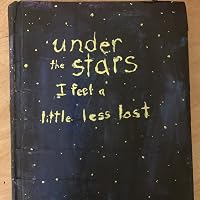
"Walking. Such a gentle word for such a violent act. She had walked over corpses and rubble, over forgotten treaties and abandoned neighborhoods. She had walked across the graves of promises".
"Walking. Such a gentle word for such a violent act. She had walked over corpses and rubble, over forgotten treaties and abandoned neighborhoods. She had walked across the graves of promises".
August 17, 2026
As a memoir and testimony, Diary of a Young Doctor is poignant, courageous, and so powerful. Ezzideen Shehab speaks in beautiful prose about the suffering he witnessed and endured in Gaza. And he does so, entirely, without ever condoning any of the actions of Hamas. He takes a brave stance in testifying both against the Israeli military and government, and, briefly, against Hamas.
As a document of history and facts, Ezzideen’s testimony is a little more mixed. In many instances, he gives some well-written, detailed, harrowing accounts of individual people he meets and sees in Gaza. Though, at other points, his testimony is more based in emotional metaphor than tangible details. Shehab sometimes uses hyperbole in his descriptions of Gaza — describing a classroom as being the size of a coffin, or referencing “two million children” in Gaza — which can make it a little difficult to ascertain which of his details are literal, and which are metaphorical.
Overall, Ezzideen’s memoir is still a powerful, incredibly personal account of the suffering of Gaza.
As a document of history and facts, Ezzideen’s testimony is a little more mixed. In many instances, he gives some well-written, detailed, harrowing accounts of individual people he meets and sees in Gaza. Though, at other points, his testimony is more based in emotional metaphor than tangible details. Shehab sometimes uses hyperbole in his descriptions of Gaza — describing a classroom as being the size of a coffin, or referencing “two million children” in Gaza — which can make it a little difficult to ascertain which of his details are literal, and which are metaphorical.
Overall, Ezzideen’s memoir is still a powerful, incredibly personal account of the suffering of Gaza.
July 30, 2026
The courage he has is amazing; he writes of the agony of the genocide as both a doctor and someone in the midst of it while also highlighting the manner in which it is stripped of emotion at the military/govt level so those in power can ease their conscience - emphasizes that the world will not end with a bang, but with paperwork; more broadly speaks to the power and importance of memory and history - how and what we preserve, the stories we tell can keep things and people alive or commit them to a death sentence

January 14, 2026
This is a must read. A look at what life is like for a doctor operating during a genocide. Read from those who are on the ground, who live this day to day. Not from mainstream media pushing an agenda, dehumanising a group of people who are being displaced and ethnically cleansed.
From the river to the sea.
From the river to the sea.

April 13, 2026
Dr Ezzideen’s harrowing but tender stories of the barely living will haunt me long after the images of death and destruction fade.
Beneath the political rubble there are human beings, enduring the unendurable, and Ezzideen bears witness with mounting grief and fury, his words unveiling the true horrors of this genocide even as his own heart and soul splinter across the page.
Beneath the political rubble there are human beings, enduring the unendurable, and Ezzideen bears witness with mounting grief and fury, his words unveiling the true horrors of this genocide even as his own heart and soul splinter across the page.

March 11, 2026
Diary of a Young Doctor - Notes from the genoside in Gaza by Ezzideen Shehab
Beautiful poetic and heartbreaking writing from Ezzideen who bears witness to what has occurred and continues to occur in Palestine.
Everyone should read this book!
Beautiful poetic and heartbreaking writing from Ezzideen who bears witness to what has occurred and continues to occur in Palestine.
Everyone should read this book!


January 12, 2026
As heartbreaking and deeply saddening as anticipated.
May 7, 2026
Heart wrenching! Gave me insight into what’s really going on, unlike the tv version.
May 10, 2026
Duro, muy duro.
Las palabras de Ezideen Shehab nos demuestran que la humanida ya no existe.
Que todos somos cómplices del Genocidio. Que hemos hemos ignorado todo lo que ha pasado en Gaza.
Las palabras de Ezideen Shehab nos demuestran que la humanida ya no existe.
Que todos somos cómplices del Genocidio. Que hemos hemos ignorado todo lo que ha pasado en Gaza.

May 18, 2026
This book gives you an insight on the atrocities of war

July 2, 2026
الطب تحت أنقاض غزة
كتاب 70 لعام 2026
تتمة مراجعة الكتاب على مدونتي: ((( همى الغيث )))
https://www.hma-algaith.com/diary-of-...
كتاب 70 لعام 2026
تتمة مراجعة الكتاب على مدونتي: ((( همى الغيث )))
https://www.hma-algaith.com/diary-of-...
July 15, 2026
Ótrúlega fallegur texti um algjöran hrylling 🇵🇸
August 3, 2026
reading this after reading “eyes of gaza” has shook me to my core!

April 28, 2026
boxes of tissues,notebook, and pen are your crucial survival pack for this one. maybe even a glass of water…
Displaying 1 - 25 of 25 reviews