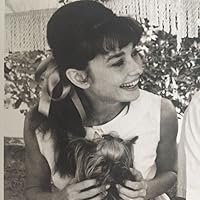
Laura Foreman (June 11, 1943 – June 4, 2020) was an American journalist and author, and the first female political writer at The Philadelphia Inquirer. She was the first reporter who lost their job due to an affair, also effectively ending her journalism career. Noting the harsh punishment in the case, critics saw a double standard, with different consequences for men and women. Her former colleague Lee Winfrey cited her attractiveness and success as a cause of resentment from male colleagues.
After the investigation, Foreman changed paths, and began work as a writer and editor at Time-Life Books. At the height of the position, she managed 20 people and freelanced for Discovery Publishing, authoring many books on subjects of True Crime, history, archaeology, biography, and more.
This book is very much like another book I read and own. It's basically a collection of mass shooter cases. Some cases aren't as detailed while others are very detailed. The cover of the book though mentions which cases are the most detailed. One of those names is James Huberty. I've done extensive research on the case and my fascination with the Mcdonald's massacre is the main reason why I bought the book.
There is a lot of new information I did not know about Huberty. Facts about the case have more clarity after reading this. One new fact I discovered is that Huberty might of turned his Uzi to automatic. While I was reading the chapter I listened to some of the police recording of the massacre and in some of it you can hear the shooting in the background. You hear some shotgun fire, but the majority is the uzi fire and it sounds like it's automatic. He owned gun magazines that gave instructions on how to turn such weapons into an automatic and he even had a kit made specifically to do it. So that was new information. The author of the chapter and or book mentioned the accusation and hypothesis that the massacre was a hate crime. That Huberty targeted hispanics since the majority of the victims were hispanic. I of course having researched the case extensively have rejected this and for the same reason as the police chief who said "he didn't like anybody."
James Fox one of my favorite true crime experts and criminologist who I agree with 98% of the time has said "People like to look at workplace killers and mass murderers and say 'oh they just suddenly snap and go berserk and kill any body and anything that moves. Indiscriminately.' That's myth!"
I can only think of two cases where this was actually true. James Huberty and Michael Ryan. Huberty shot literally anyone and anything. Even children and toddlers. Ryan shot and killed anyone even his mother and dogs. The two things that mattered most to him. After the massacre while taking refuge at his old school to calm down from the shooting he asked about his mother and dog. Asking if they were dead or alive. Clearly concerned about their well being. He killed his mother in the "heat of the moment" without thinking and there is evidence Huberty cared about children. Although in this book it implies he disliked children.
So I was very pleased that the authors and book didn't fall for the "this was a racist attack" hypothesis. Huberty shot anybody and his life story and words prove this hypothesis wrong. He said "I am going to go hunt humans." he also told his wife "Society had their chance." A neighbor also said "he seemed be against the world a lot of the time and against people." and had many disputes with his neighbors who were white. Of course a majority of the victims were hispanic and mexican. It was a border town with a high percentage of hispanics. Several victims were also white. Joshua Coleman who played dead with his dying friends was hit with the shotgun and he was white.
Huberty and Ryan are also mass shooters who changed their weapon frequently. In the early stages of New town before all the evidence had been gathered it had been widely reported that Adam Lanza had "changed his weapons frequently" to try and push this "he was a video gamer. He was acting as if it was a video game." when in reality Adam Lanza didn't change his weapon like a video game. He shot his mother with a hunting rifle. He then shot 26 at the school using his AR15, and then he shot him self with basically a hand cannon, a weapon used to shoot "big game". He did that to 100% insure death. Huberty mainly used the Uzi, but he was constantly switching weapons and shooting victims again and again through out the massacre with different guns. Others who tried to push the video game link also talked about tactical reload. The connection being that first person shooter fans post tactics online and one of those tactics is the tactical reload. I have never ever seen "jungle style" depicted in a video game. A tactic that Adam Lanza used as well. Others had done the same the two I know of are Joseph Wesbecker and Robert Hawkins. Where did they learn that reload tactic? They were vietnam fans and we know that Adam Lanza was a history buff and read a lot about war and especially Vietnam. He actually wanted to major in history when he went to a local college. Of course he failed due to his mental issues. He was war and weapon [specially gun] obsessed. "Jungle style" was a tactic used in WW2 and Vietnam. So we can conclusively prove that all 3; Wesbecker, Hawkins, and Lanza got "jungle style" from their research of Vietnam. So I doubt a video game forum was the first time Adam Lanza ever heard of the tactical reload or where he even got that from. A tactic widely used in wars and law enforcement. This "video game" exaggeration about Adam Lanza is just a total myth. He played Dance dance revolution obsessively, his video collection contained video games of all ratings, when he was younger he played World of war craft which is defined as a "violent video game" despite the fact that it's rated T for teen. Which basically means PG13 which is a loose definition of "violent" I guess technically it's violent, but there are far more violent games. He did not change his weapons frequently "like a video game." The weapons he used and brought were very well thought out. To the best of my knowledge Huberty and Ryan weren't into video games and first person shooter games didn't even exist. At least ones where you could reload at will. Older games you only could reload when you finished all the ammo. So that whole "violent video games" myth is just conjecture.
Back to the book. I was confused about some of the stuff he said during the massacre such as "I've killed a thousand. I'm gonna kill a thousand more." From this book I've also learned that yelled "Vietnam a**holes." as he shot people. Huberty was into survivalism and war. Like many many other mass shooters. He also tried to join the Vietnam war but was rejected.
This leads me to believe that James Huberty was not hallucinating or delusional during the massacre. I think he was in a state of fantasy.
I think the same was true with Patrick Purdy and Michael Ryan. Bother were military fantasists. Julian Knight in Australia was an actual cadet but was kicked out after stabbing a fellow soldier in the neck with a knife at a bar. He was planning suicide during the massacre but the bullet he was saving fell off. He admitted he fantasized about dying in combat, about fighting in multiple wars and also admitted he was fantasizing during the massacre. As he was gunning innocent people in the streets, taking aim at cars driving by he was imagining him self as a soldier in combat picking enemies off. We also see this with many serial killers. Sometimes it's cultural, such as Soviet serial killers who took their victims into the woods to mutilate and kill. Many of them fantasized they were partisan soldiers executing an enemy.
I don't believe Huberty was hallucinating. I also don't believe that he literally believed he was a war criminal. His wife and the book imply that he was under the delusion that he was a war criminal which is why he turned him self in to the police and told them "I'm a war criminal arrest me." I especially don't believe this was a delusion because he later called a mental health hotline. They said they would call him back, he waited for hours then took off clearly upset. The next day he was very peaceful and at ease with his wife. Sat down and watched a movie with her. A clear indication that he was at ease with what he was about to do and wanted to have a couple last pleasant moments with his wife. The next day, the day of the massacre he said "society had their chance."
Was Huberty delusional and suffering hallucinations and delusions? Yes, but I don't believe he actually believed he was in Vietnam or a war criminal. After a while during the massacre he said he was a bad person who didn't deserve to live and it would be all over soon. Which would reinforce my statement that it was fantasy not delusion or hallucination. Huberty wanted to die. He wanted the police to kill him. He had also attempted suicide before.
I also think it's possible that Huberty was not schizophrenic, but suffered from a personality disorder called Schizotypal which is very similar to schizophrenia. In fact some experts have said it might be a milder form of schizophrenia.
This book is officially the biggest book I own. Something I did not expect. It has many pictures. The book is similar to the form of a true crime magazine. I own a few true crime magazines and this book is very similar in format.
I wish there were more details in cases in between the main features. A few of them are only a page long with a photo, others are two pages with one or two photos.
It starts off with Richard Speck. A case I've never really been that into, but this book told the case very well. Probably my favorite moment is when Speck is staying at a flophouse [cheap low rent hotel usually for drug addicts and prostitutes.] after the murders and apparently yelled for help saying "come and see me! I done something bad!" A neighbor in another cock roach infest apartment [I would imagine] told him to shut up "I don't trust no hillbilly." So Speck just slit his wrists.
Also talked about Robert Smith who shot and killed 5 women and a baby at a beauty salon. Some new facts I didn't know about. Of course Robert Smith has been cited by the "no notoriety" movement as a copy cat crime since Smith was inspired by Speck but in particular Whitman. Both who are profiled in this book. They never mention that Smith was 18 years old at the time of the murders and confessed that he had been wanting to kill since he was 13. The massacre happened 3 months after Whitman's massacre. The "no notoriety" movement also fails to mention or even see the significant of the fact that Smith idolized, admired, and was inspired by Julius Caesar and Napoleon. This tactic is known as confirmation bias but the layman will know it as CHERRY PICKING. Exaggerate and focus on the hits and totally ignore the misses. Focus on Whitman, totally ignore Caeser and Napoleon. Now to me question - Are we gonna forget and censor their names from history now? Are we just gonna "focus on the victims" of Napoleon and Caesar? I highly doubt it. Which might explain why they are never ever brought up while talking about Smith's "copycat" link. Hypocrites, one and all. They realize it's an absurd argument which is why my question of "like Hitler right? The most infamous, notorious, well known, famous mass murderer in history?" has never ever actually been answered or challenged. People usually just agree with me or totally ignore my entire point/argument; That Hitler is FAMOUS, INFAMOUS, NOTORIOUS. If that doesn't qualify for the "no notoriety" movement, then I don't know what does. How many books and movies have been made about Adolf Hitler? How many things has his photo been plastered on?
If your gonna say it about Whitman, then you must say it about Stalin, Hitler, Caesar, Napoleon, and a host of other historic people. Also never forget that cult leader Jim Jones idolized and admired and was inspired by Adolf Hitler. Was obsessed with the nazis. He also read several text books about cults and brainwashing. I guess we need to censor/ban and forget Hitler, the nazis, the holocaust and what the nazis did and ban and or censor all books about cults and how they operate, and books on brainwashing.
As I pointed out, Wesbecker, Hawkins, and Lanza both used "jungle style" for their massacre, a tactic used in vietnam and all 3 were fans of the war in Vietnam. So should we just forget and or censor Vietnam? Should all those tactics be censored? They used "jungle style" to make it faster and easier to reload so they could kill people within a short amount of time. So i guess we need to ban/censor Vietnam as well.
I must also point out that Eric and Dylan the Columbine shooters committed their massacre on April 20th ie 4/20. That wasn't an accident. They picked April 20th because it was Hitler's birthday and they both admired Hitler. They were not nazis, but Hitler represented power and dominance and genocide and like always when it comes to "legitimate" historical figures and how killers have been inspired by them people just sweep that aside. This is known as confirmation bias. "oh this killer was inspired by the Columbine massacre" yep, and Patrick Mackay a serial killer was inspired by Hitler, the columbine killers were inspired by Hitler, Jim Jones was inspired by Hitler, and Robert Smith was inspired by Julius Caeser, Napoleon, Speck, and Whitman. So what?! Would they have done it regardless? Absolutely. Robert Smith had been wanting to kill since he was 13. Literally years before Speck and Whitman. We see the same thing with many serial killers and mass shooters. Where their desire for murder predates their acknowledgement of other killers. In Finland they had a massacre in 2007, then in 2008 they had another massacre. Clearly this second killer was inspired by the one in 2007, but according to his suicide notes he was planning it since 2006 right after he was rejected from the army which is called a "trigger" Same thing in Australia and Scotland. Within 3 months both countries had their own massacre. After the one in Australia, people assumed it was inspired by the one in Scotland. Turned out that he had been planning the massacre 4 months before. The one in Scotman happened in March of 1996 and the one in Australia happened in April of 1996. He confessed he had been planning it since December and evidence confirms this. Now did the second killer admire or relate to the one before him? Maybe...I have no idea. Let's say he did...he was gonna do it ANYWAY! I have not seen a shred of evidence that these people wouldn't of done it if it wasn't for past massacres being widely reported. Not seen any evidence of that what so ever. Not even a microscopic speck. Sorry but "he was interested in this case and admired them" is not evidence. That is a gap in logic.
An FBI profiler made a great statement about serial killer Patrick Mackay and his obsession with the nazis and Adolf Hitler and Patrick was in fact a nazi who didn't just admire Hitler and was inspired by him, but actually took his nazi idealogy seriously.
"Mackay became interested in nazis and nazi atrocities because this interested him. He was interested in committing atrocities. This is what Mackay's psychology was. He wanted to hurt people and so reading about or seeing others like the nazis, what they did to other people was immediately fascinating to him." Oh and by the way, Patrick had been cruelly killing animals before he ever got into the nazis and there is a link between animal cruelity and serial murder. Patrick also said he wanted his name to be remembered and feared "like Hitler." What is the difference between Patrick Mackay admiring and being inspired by Hitler vs Adam Lanza seeing other mass shooters as kindred spirits? There is no difference, but apparently Hitler is special. Some how Hitler is different.
Harold Schechter a beloved true crime author who understands all things true crime including the need and want to collect artifacts has pointed out the obvious ie the elephant in the room, talking specifically about artifact collecting. “is not the subject matter itself… What inspires such widespread disgust is the mere notion that convicted lust killers are allowed to be treated like minor celebrities.”
Exactly and my response is again what about Adolf Hitler? Isn't he a "minor celebrity" His face is on book covers, his face is on magazines. He is the subject of movies, books, songs, etc. How is Hitler NOT a "minor celebrity?" so to me the "what about Hitler" is a slit throat argument that is irrefutable. Unless you want to agree and say "yeah, your right" but of course no one is gonna say that and if they did they would lose support fast. What makes Hitler so special?! So my response it "can't he helped. Sorry reality doesn't conform to your wishes. That's the way it is. Don't cry over spilled milk." and certainly don't push this absurdity onto other people and say that's how all of society should be.
My bottom line point is this. The "no notoriety" at it's most basic is fighting an unwinnable battle. How can you possibly make Hitler not into a "minor celebrity"??? I don't see how that is even remotely possible. Whether it is actual nazis or simply those who admire him for his brainwashing, the power he represented, etc. That you can not avoid. EVER. Unless you completely erased everything from history. Total blackout, whitewash and even then that is questionable. Some one out there for what ever reason is gonna think of it differently no matter how you present it. Same with art. A seriously disturbed mormon father stabbed his baby to death with a butter knife and then slit and stabbed his throat multiple times. He said he watched Mary Poppins and it inspired him with it's "hidden mormon message" You gonna stop/ban that too?! That is my bottom line point. The "no notoriety" is a pipe dream.
This "no notoriety" and especially from it's founders also seriously negate the motives and reasons for mass shootings to begin with. The most common motive for mass murder is "revenge." I've even heard these two seriously argue that if "no notoriety" was enforced, then these mass shootings would not happen. That is total nonsense. They also said that if their son would still be alive if no notoriety was enforced, that is also total nonsense and we know this because of other countries! Even countries that have many guns like Finland and Germany. Wide spread publicity after a mass shooting in Germany. Took 8 years for another mass shooting to happen and Germany also has the internet and true crime books about mass shootings. Hey! ...........Why did it take 8 years?! *angrily crosses arms*
I rather focus on American exceptionalism, American capitalism out of control, mental illness, suicide, bullying, lack of basic resources that other countries have. No one should be forced to be in financial ruin because of a health issue. No one should be in massive life time debt because they tried to get a better education. The American dream is dead and Reagan drove the final nail into it and our politicians continue it.
I'll quote an expert, two actually.
"Aggression is rewarded in this country. Aggression is associated with success. The competition and aggression which characterizes a capitalist, free enterprise society lends it's self to a higher degree of violence, because when we are aggressive and our goals are blocked. Then violence is one alternative. it's one alternative to failure in the eyes of some people."
James Fox about mass murder said "For a lot of people the American dream is a nightmare. Sure they have so many expectations. So many people are out there are getting rich, being successful and it makes them think 'what are they doing wrong?' Actually they think they are being treated unfairly and if that is your perception. You have to punish the people you blame, because they are blocking your ability to achieve that American dream."
You also see this even in a case like Elliot Rodgers and others who are depressed about not having a lover. People pride them selves on getting laid, having a relationship, getting married, having children and yet they are failing.
Over all a good book, but could of been better. Would of liked more detail with certain cases.
This collection was very interesting and talks in great detail about the most famous serial killers of modern time. Fascinating accounts from victims that survived the attacks and what police found when they struck.
I found it interesting that these killers were so successful even when someone came to police and identified them as the attacker, they would be able to continue killing innocent people without being caught.
Richard Speck was extremely interesting case to look at when he murdered 8 nursing students on the South side of Chicago. He showed no remorse and bragged about how much fun it had been to kill each woman. These accounts are chilling.
Anyone with as much interest in the macabre as I have as probably read about these cases and many more in the past. Sometimes on a late night I've read about serial killers to the point that I feel a bit nervous about taking out the trash, or I cover a window that's usually not -- they're far more frightening than fiction. But this book is about spree killers, not serial killers. What this book offers that kept me interested was the more intimate portrait of what happened -- it really puts you there with details that I'd never known before.
Throughout the book, between the main chapters it also has some short articles about lesser-known spree killers which I'd never heard of before, or forgotten existed. In this day and age, they've become so common-place, this book published in 1993 seems almost quaint somehow.
The pictures in the book are sometimes gory, but not overly so. There were a lot of pictures connected with these crimes which I'd never seen before.
This book is available to borrow for free on archive.org.
Pretty interesting--the only ones of these that I'd heard of were Whitman and Speck, so it was interesting to read about some of these other guys, too. A little skimmable sometimes, because it did have some really small print, but the pictures were interesting and I did like the little section in the middle with a bunch of one-page featurettes, almost, of the guys that they didn't have as much on. An interesting one for sure.
the first part was amazing, like the first 60-80 pages, but after that the stories got less interesting and it seems like the writer wrote the last part in a less interesting format? or maybe the stories just weren’t as interesting? with exception of the mata story, that was quite unique.
I once had a foster family who had these on their shelves & I read the set cover-to-cover when I was 12 or so which horrified me with the descriptions and photos but also fascinated me with the psychology...
Filled with information and brimming with crime scene photos. I learned a lot about not only the crimes themselves, but the unfortunate victims felled in addition to the potential causes that led up to the murders horrifying debuts. Definitely a book that will keep you up at night reading (and checking to make sure the doors are locked before, during, and after!)
This came in a collection of books that I ordered thru a television offer. The book is great and filled with a lot of information that I didn't already know.