

What do you think?
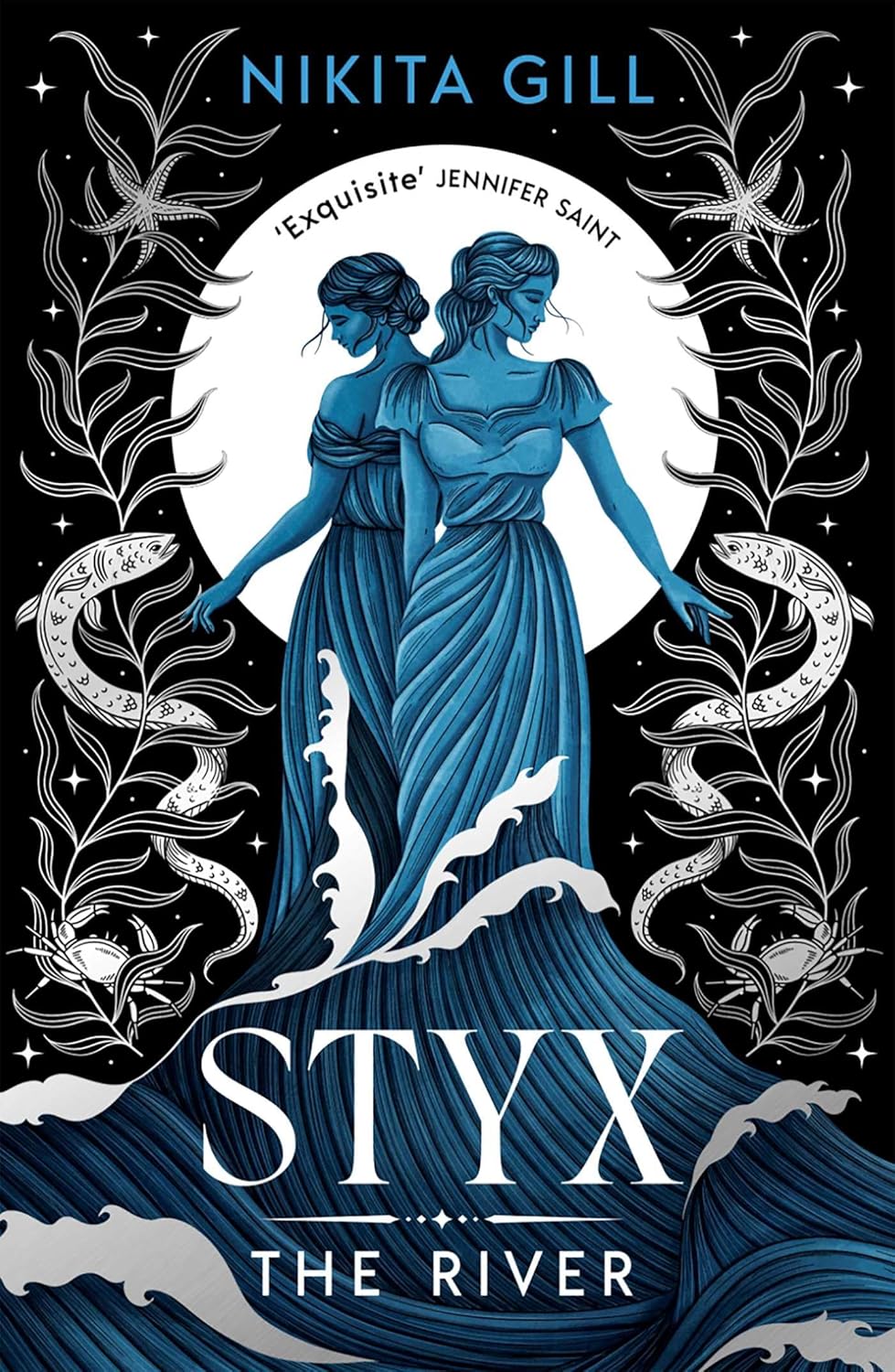
Goddesses of the Underworld #2
Styx - The River
Beginning a generation before
Hekate
,
Styx
sings the story of the goddess of the underworld river that bears her name…
The firstborn child of Titans, Styx is revered as the first of her kind – until she is eclipsed and forgotten amid her scores of siblings, the Oceanids and the Potamoi.
Coming of age in a world simmering with paranoia and unspoken fear of Kronos, the volatile and unchecked god-king, Styx learns to conceal the rage ignited by her growing disillusionment with her parents and her vain and unkind siblings. Instead, she finds solace and sisterhood in her cousin, Asteria. Together, they train in the arts of creation and magic. And as they seek to learn their divine purpose and their place within the Titanomachy, they discover both the joy sparked by true love and the fierce resilience birthed from motherhood.
In this lyrical and heartrending tale of sisterhood, identity, love, and war, Styx must carve her own path to womanhood – and ultimately, godhood.
The firstborn child of Titans, Styx is revered as the first of her kind – until she is eclipsed and forgotten amid her scores of siblings, the Oceanids and the Potamoi.
Coming of age in a world simmering with paranoia and unspoken fear of Kronos, the volatile and unchecked god-king, Styx learns to conceal the rage ignited by her growing disillusionment with her parents and her vain and unkind siblings. Instead, she finds solace and sisterhood in her cousin, Asteria. Together, they train in the arts of creation and magic. And as they seek to learn their divine purpose and their place within the Titanomachy, they discover both the joy sparked by true love and the fierce resilience birthed from motherhood.
In this lyrical and heartrending tale of sisterhood, identity, love, and war, Styx must carve her own path to womanhood – and ultimately, godhood.
416 pages, Kindle Edition
First published September 17, 2026
About the author
Nikita Gill
33 books6,264 followersNikita Gill is a Kashmiri Sikh writer born in Belfast, Northern Ireland and brought up in Gurugram, Haryana in India. In her mid twenties, she immigrated to the South of England and worked as a carer for many years. She enjoys creating paintings, poems, stories, photos, illustrations and other soft, positive things. Her work has appeared in Literary Orphans, Agave Magazine, Gravel Literary Journal, Monkeybicycle, Foliate Oak, MusePiePress, Dying Dahlia Review, The Rising Phoenix Review, Eunoia Review, Corvus Review, After The Pause and elsewhere.
Ratings & Reviews
Friends & Following
Create a free account to discover what your friends think of this book!
Community Reviews
Displaying 1 - 30 of 154 reviews

September 17, 2026
I am my own potent story of rage and tragedy.
A few months ago I reviewed Hekate by Nikita Gill, which became my favorite Greek mythology book of the past few years. Styx was prominently featured in Hekate's book, so I was thrilled when I found out the second book in Nikita Gill's Goddesses of the Underworld would be about her. The book is finally here.
If you know even a little about Greek mythology, you've likely heard of the river Styx. This is the river that the souls of the newly dead must cross to enter the afterlife. You're probably aware of the famous myth of Achilles' mother, Thetis, dipping him into the Styx as a baby to make him immortal and invincible except for his heel, which remained his only vulnerable spot.
Styx, whose name translates to 'hateful', was the daughter of the Titans Oceanus and Tethys. She was the goddess of the river Styx and sacred oaths. Any god or mortal who swears an oath on the river Styx can't break it without suffering severe consequences.
☆ Main characters ☆
Styx: read the paragraphs above
Asteria: Titan goddess of nocturnal oracles and falling stars, mother of Hekate
Oceanus: Titan god of the great river that surrounded the world, father of Styx
Tethys: Titanide, consort of Oceanus, mother of Styx
Kronos: King of the Titans, father of Zeus, Hades, Poseidon, Hestia, Hera, and Demeter
Perses: Titan god of destruction
Pallas: Titan god of warcraft
Metis: Titan goddess of wisdom, sister of Styx, mother of Athena
Leto: Titan goddess of motherhood and childbirth, mother of Apollo and Artemis, sister of Asteria
Zeus: son of Kronos, future king of the Olympians
Gaia: Primordial goddess of the earth, emerged from Chaos, mother of Titans
Nyx: Primordial goddess of the night, born from Chaos
This book takes place long before the birth of Hekate and the events of the first installment. It is set in a time when Titans ruled the cosmos and is told from the POVs of both Styx and Asteria.
Styx was the first child of her parents, Titans Oceanus and Tethys. She was cherished and happy for a little while. But then her parents started having more children. Many, many more children. Styx's parents, aunts, and uncles soon noticed how different she was in both appearance and personality compared to her siblings. Her mother barely paid her any attention anymore. Styx had green hair, small fangs, and was odd. Her powerful grandmother Gaia's prophecy did not bode well for her future. Nobody expected much from her.
Cruel King Kronos decrees that only Oceanus' male children will inherit godhood over rivers with full divine powers, while the daughters will serve and nurture their brother's domains. Styx is furious and heartbroken, even more so when her father doesn't protest Kronos' order. She feels more alone than ever and further isolates herself from her siblings, who always saw her as an outcast. One day, Styx has a chance encounter with her cousin Asteria. It does not go over well due to Styx's antisocial behavior and Asteria's prejudice against Styx's unusual appearance. But despite their initial dislike for each other, they become best friends and confidants. Styx also starts to warm up to Asteria's younger sister, Leto. When Styx's mother gives birth to her last child, Metis, who has strange gifts, she becomes the only sibling Styx cares for. Styx, Asteria, Leto, and Metis spend their days together learning to use their divine abilities until one day when their world is forever changed by war and betrayal.
As some of you know, each myth has a few different versions. Nikita Gill pulled a lot of things from Hesiod's Theogony. That's fine by me because I like Hesiod much better than Ovid. Good ol' Ovid destroyed Athena's reputation by changing the Medusa myth and making her the villain of the story, and I will never stop complaining about it.
Styx and Asteria's friendship was the most impactful part of the book. Asteria was featured in the first installment as the mother of Hekate, and as much as I like Styx, it was Asteria's POV I enjoyed the most in this book. I also loved Styx's slow-burn relationship with Pallas, the god of warcraft, with whom she is forced into an arranged marriage. Asteria's relationship with Pallas' brother Perses, the god of destruction, was beautifully written. But it's also devastating if you read the first book and/or are aware of the myth.
How does Styx go from an Oceanid and a weirdo outcast to a powerful Underworld goddess? Can Asteria escape her destiny? Who will survive the Titanomachy, and which side will they choose?
In my anger, I turned away from her and said, 'I did what I had to do for those I love.' Asteria's voice, soft and shaking, was almost a whisper when she said, 'Once, a long time ago, you loved me too.'
P.S. The third book in the series will be about Nyx, the powerful primordial goddess and personification of Night, whom even Zeus feared. 🖤 "On one side sat burly, yellow-haired Hyperion, his eyes bright like the sun he was known for, a constant smile on his face. On the other sat the most terrifying and mysterious of all the Primordial gods, Nyx - her dark hair loose and filled with glowing stars, her onyx skin glowing dangerously in the subtle light of the hall as her black eyes glittered with story and spite."
A few months ago I reviewed Hekate by Nikita Gill, which became my favorite Greek mythology book of the past few years. Styx was prominently featured in Hekate's book, so I was thrilled when I found out the second book in Nikita Gill's Goddesses of the Underworld would be about her. The book is finally here.
If you know even a little about Greek mythology, you've likely heard of the river Styx. This is the river that the souls of the newly dead must cross to enter the afterlife. You're probably aware of the famous myth of Achilles' mother, Thetis, dipping him into the Styx as a baby to make him immortal and invincible except for his heel, which remained his only vulnerable spot.
Styx, whose name translates to 'hateful', was the daughter of the Titans Oceanus and Tethys. She was the goddess of the river Styx and sacred oaths. Any god or mortal who swears an oath on the river Styx can't break it without suffering severe consequences.
☆ Main characters ☆
Styx: read the paragraphs above
Asteria: Titan goddess of nocturnal oracles and falling stars, mother of Hekate
Oceanus: Titan god of the great river that surrounded the world, father of Styx
Tethys: Titanide, consort of Oceanus, mother of Styx
Kronos: King of the Titans, father of Zeus, Hades, Poseidon, Hestia, Hera, and Demeter
Perses: Titan god of destruction
Pallas: Titan god of warcraft
Metis: Titan goddess of wisdom, sister of Styx, mother of Athena
Leto: Titan goddess of motherhood and childbirth, mother of Apollo and Artemis, sister of Asteria
Zeus: son of Kronos, future king of the Olympians
Gaia: Primordial goddess of the earth, emerged from Chaos, mother of Titans
Nyx: Primordial goddess of the night, born from Chaos
This book takes place long before the birth of Hekate and the events of the first installment. It is set in a time when Titans ruled the cosmos and is told from the POVs of both Styx and Asteria.
Styx was the first child of her parents, Titans Oceanus and Tethys. She was cherished and happy for a little while. But then her parents started having more children. Many, many more children. Styx's parents, aunts, and uncles soon noticed how different she was in both appearance and personality compared to her siblings. Her mother barely paid her any attention anymore. Styx had green hair, small fangs, and was odd. Her powerful grandmother Gaia's prophecy did not bode well for her future. Nobody expected much from her.
Cruel King Kronos decrees that only Oceanus' male children will inherit godhood over rivers with full divine powers, while the daughters will serve and nurture their brother's domains. Styx is furious and heartbroken, even more so when her father doesn't protest Kronos' order. She feels more alone than ever and further isolates herself from her siblings, who always saw her as an outcast. One day, Styx has a chance encounter with her cousin Asteria. It does not go over well due to Styx's antisocial behavior and Asteria's prejudice against Styx's unusual appearance. But despite their initial dislike for each other, they become best friends and confidants. Styx also starts to warm up to Asteria's younger sister, Leto. When Styx's mother gives birth to her last child, Metis, who has strange gifts, she becomes the only sibling Styx cares for. Styx, Asteria, Leto, and Metis spend their days together learning to use their divine abilities until one day when their world is forever changed by war and betrayal.
As some of you know, each myth has a few different versions. Nikita Gill pulled a lot of things from Hesiod's Theogony. That's fine by me because I like Hesiod much better than Ovid. Good ol' Ovid destroyed Athena's reputation by changing the Medusa myth and making her the villain of the story, and I will never stop complaining about it.
Styx and Asteria's friendship was the most impactful part of the book. Asteria was featured in the first installment as the mother of Hekate, and as much as I like Styx, it was Asteria's POV I enjoyed the most in this book. I also loved Styx's slow-burn relationship with Pallas, the god of warcraft, with whom she is forced into an arranged marriage. Asteria's relationship with Pallas' brother Perses, the god of destruction, was beautifully written. But it's also devastating if you read the first book and/or are aware of the myth.
How does Styx go from an Oceanid and a weirdo outcast to a powerful Underworld goddess? Can Asteria escape her destiny? Who will survive the Titanomachy, and which side will they choose?
In my anger, I turned away from her and said, 'I did what I had to do for those I love.' Asteria's voice, soft and shaking, was almost a whisper when she said, 'Once, a long time ago, you loved me too.'
P.S. The third book in the series will be about Nyx, the powerful primordial goddess and personification of Night, whom even Zeus feared. 🖤 "On one side sat burly, yellow-haired Hyperion, his eyes bright like the sun he was known for, a constant smile on his face. On the other sat the most terrifying and mysterious of all the Primordial gods, Nyx - her dark hair loose and filled with glowing stars, her onyx skin glowing dangerously in the subtle light of the hall as her black eyes glittered with story and spite."

Want to Read
December 5, 2025Brother this better be a good book. I was captured by the first book.

Want to Read
June 5, 2026With how amazing Hekate was, I can't wait for this one.

August 28, 2026
So incredible. You have to be such a strong writer to pull off this format. I loved Hekate so I was thrilled to dive into this one and I’m soooo glad to report that it didn’t disappoint! It’s hard to stand out within the resurgence of Greek mythology retellings but Nikita Gill does it so effortlessly. Absolutely obsessedddd please read these!

August 30, 2026
(I had to write a review for the first arc I got from a giveaway). This was a lyrically written book with a story not often told. A lot of these types of books are full of artificial “girl bossing” but this actually features multiple strong women seeking agency while remaining presumably true to the original myths

July 31, 2026
This digital ARC was graciously granted to me by NetGalley and Little Brown Books for Young Readers; all opinions are my own.
I would give this book ten stars if I could! It is written in narrative verse, which pays such powerful tribute to the Greek myths and storytelling of the ancient world. Yet, it is an easy, all-consuming read where I found myself immersed in the story from the beginning. Told from
both Asteria and Styx’s POV, we get the complete background to the Titan world and how it falls to Zeus. If you’re like me, and get confused by the Titan world, this book helped me understand it so much more. I will definitely be buying a copy for my classroom! I think my students will love this even more than Circe!
I would give this book ten stars if I could! It is written in narrative verse, which pays such powerful tribute to the Greek myths and storytelling of the ancient world. Yet, it is an easy, all-consuming read where I found myself immersed in the story from the beginning. Told from
both Asteria and Styx’s POV, we get the complete background to the Titan world and how it falls to Zeus. If you’re like me, and get confused by the Titan world, this book helped me understand it so much more. I will definitely be buying a copy for my classroom! I think my students will love this even more than Circe!


September 7, 2026
4⭐️- Basically family drama… but make it Gods and Titans. ⚡️🏛️🍿
This was such an interesting and emotional retelling of Greek mythology, focusing less on the usual gods and more on family, power, loyalty, friendship and betrayal. 👀✨
The relationship between Styx and Asteria was definitely the highlight for me, and I loved seeing all the divine family drama unfold. 🌊💔
Nikita Gill’s writing is beautifully lyrical and atmospheric, although at times the story felt a little simplistic and I wanted more depth from some of the characters. Also despite the list of characters, I did find this story overcrowded at times and lost track of who is who 🤷♂️
Still, an easy and enjoyable read with plenty of immortal family dysfunction™️. 😂⚡️
This was such an interesting and emotional retelling of Greek mythology, focusing less on the usual gods and more on family, power, loyalty, friendship and betrayal. 👀✨
The relationship between Styx and Asteria was definitely the highlight for me, and I loved seeing all the divine family drama unfold. 🌊💔
Nikita Gill’s writing is beautifully lyrical and atmospheric, although at times the story felt a little simplistic and I wanted more depth from some of the characters. Also despite the list of characters, I did find this story overcrowded at times and lost track of who is who 🤷♂️
Still, an easy and enjoyable read with plenty of immortal family dysfunction™️. 😂⚡️

September 3, 2026
Nikita Gill has done it again with another divine Greek mythology retelling through lyrical language and stunning prose. Styx takes place as a prequel to Hekate - The Witch, and we gain further insight into the bond between Styx and Hekate's mother, Asteria.
Much like Hekate, Gill takes us on a journey through Styx's life. Her birth as the first grandchild of Gaia during the reign of the Titans, and a miserable childhood as the oldest of over 3,000 siblings to Oceanus and Tethys. Her cousin and best friend, Asteria, became the only person she could rely on, and they spent their days practising magic in hidden caverns away from the others.
As Zeus and the Olympians threaten the end of the Titanomachy, the Gods resort to their cutthroat and ruthless nature. Gill explores the impact of war on Styx and Asteria's childhood bond and the lengths these goddesses will go to in order to protect their loved ones and their shared secret.
A hidden gem is the relationship between Styx and Pallas. Gill portrays a true partnership of infinite love without flooding the story with lust and romance. Their dedication to one another was beautiful.
I couldn't recommend this more to readers who love Greek mythology, retellings or feminist fiction. I can't wait to read Gill's next book from the Goddesses of the Underworld series! (I hope it's Metis) 🤞
Much like Hekate, Gill takes us on a journey through Styx's life. Her birth as the first grandchild of Gaia during the reign of the Titans, and a miserable childhood as the oldest of over 3,000 siblings to Oceanus and Tethys. Her cousin and best friend, Asteria, became the only person she could rely on, and they spent their days practising magic in hidden caverns away from the others.
As Zeus and the Olympians threaten the end of the Titanomachy, the Gods resort to their cutthroat and ruthless nature. Gill explores the impact of war on Styx and Asteria's childhood bond and the lengths these goddesses will go to in order to protect their loved ones and their shared secret.
“Family split in two is still a family. We had just lost sight of it all.”
A hidden gem is the relationship between Styx and Pallas. Gill portrays a true partnership of infinite love without flooding the story with lust and romance. Their dedication to one another was beautiful.
“Pallas tilted my chin up so that our eyes met. I will always love you. Nymph, Goddess, Monster, my love for you will remain.”
I couldn't recommend this more to readers who love Greek mythology, retellings or feminist fiction. I can't wait to read Gill's next book from the Goddesses of the Underworld series! (I hope it's Metis) 🤞

August 30, 2026
⭐️⭐️⭐️⭐️⭐️/5
STYX is a brilliant, powerful retelling of the Greek myth of the goddess Styx.
I devoured this one. From the first page, Nikita Gill swept me away with her lush, gripping, and emotionally charged writing. Written in verse, STYX features achingly beautiful, tender, and melodic poetry that flows as smoothly as a river.
STYX masterfully followed Styx’s journey from childhood to womanhood to godhood. Throughout the story, Gill thoughtfully explored family dynamics, sisterhood, and siblinghood, especially Styx’s experience with being the eldest sibling. At its heart, STYX was a story of friendship, told from Styx’s point of view and that of her best friend, Asteria. Styx and Asteria found comfort and belonging in each other and realized that they “are different from all of the gods they know,” leading to captivating and touching scenes in which they trained their powers of creation and magic. The rest of the cast was just as vibrant and fascinating, and I loved the exploration of Styx’s relationship with Pallas and Asteria’s relationship with Perses.
STYX highlighted themes of identity, individuality, finding and fighting for your place and power, and the weight of names. It also explored control, autonomy, punishment, freedom, the patriarchy, and the expectations and roles forced upon women. Gill stunningly retold the story of Styx, preserving many elements of the myth while putting her own spin on others. A gripping journey of defiance, rage, prophecy, war, and love complete with addictive pacing and immersive imagery, STYX was utterly spellbinding. I cannot recommend this story enough!
Thank you to the publisher for the free ARC!
STYX is a brilliant, powerful retelling of the Greek myth of the goddess Styx.
I devoured this one. From the first page, Nikita Gill swept me away with her lush, gripping, and emotionally charged writing. Written in verse, STYX features achingly beautiful, tender, and melodic poetry that flows as smoothly as a river.
STYX masterfully followed Styx’s journey from childhood to womanhood to godhood. Throughout the story, Gill thoughtfully explored family dynamics, sisterhood, and siblinghood, especially Styx’s experience with being the eldest sibling. At its heart, STYX was a story of friendship, told from Styx’s point of view and that of her best friend, Asteria. Styx and Asteria found comfort and belonging in each other and realized that they “are different from all of the gods they know,” leading to captivating and touching scenes in which they trained their powers of creation and magic. The rest of the cast was just as vibrant and fascinating, and I loved the exploration of Styx’s relationship with Pallas and Asteria’s relationship with Perses.
STYX highlighted themes of identity, individuality, finding and fighting for your place and power, and the weight of names. It also explored control, autonomy, punishment, freedom, the patriarchy, and the expectations and roles forced upon women. Gill stunningly retold the story of Styx, preserving many elements of the myth while putting her own spin on others. A gripping journey of defiance, rage, prophecy, war, and love complete with addictive pacing and immersive imagery, STYX was utterly spellbinding. I cannot recommend this story enough!
Thank you to the publisher for the free ARC!

August 30, 2026
Another lovely Greek retelling by Nikita Gill. While I didn’t enjoy this quite as much as Hekate, I liked it and think it would be a great read for anyone interested in Greek mythology, particularly the women who tend to get pushed to the edges of these stories.
Like Hekate, this uses a verse style of storytelling. I wouldn’t necessarily call the writing poetic, but it is cinematic and refreshing, and I think the style suits the subject matter. The plot development felt abrupt at times as Gill pieces Styx’s story together with the larger mythology, but it also felt intentional, almost like moving between scenes in a film.
The relationship between Asteria and Styx was my favorite part. Their earlier scenes together were beautiful, particularly their childhood and the discovery of their magic. I wouldn’t have minded more of it. Styx herself is fascinating. This isn’t really the kind of novel meant to allow for a ton of character development, but it definitely piqued my interest in her and made me want to learn more about her mythology outside of this book.
Overall, a lovely, easy read and a great introduction to another woman from Greek mythology who deserves a little more attention.
Thank you to Little, Brown Books and NetGalley for providing an advanced copy in exchange for an honest review.
Like Hekate, this uses a verse style of storytelling. I wouldn’t necessarily call the writing poetic, but it is cinematic and refreshing, and I think the style suits the subject matter. The plot development felt abrupt at times as Gill pieces Styx’s story together with the larger mythology, but it also felt intentional, almost like moving between scenes in a film.
The relationship between Asteria and Styx was my favorite part. Their earlier scenes together were beautiful, particularly their childhood and the discovery of their magic. I wouldn’t have minded more of it. Styx herself is fascinating. This isn’t really the kind of novel meant to allow for a ton of character development, but it definitely piqued my interest in her and made me want to learn more about her mythology outside of this book.
Overall, a lovely, easy read and a great introduction to another woman from Greek mythology who deserves a little more attention.
Thank you to Little, Brown Books and NetGalley for providing an advanced copy in exchange for an honest review.

August 19, 2026
Thank you, NetGalley, for granting me a free digital copy of this book in exchange for an honest review.
3.5 stars
A prequel (of sorts) to Hekate, the newest installment of Nikita Gill’s Goddesses of the Underworld series takes place almost entirely before there even is an Underworld to rule over. The eldest of 3,000 Oceanids, Styx is ostracized for her frightening appearance and longs for greatness of her own. A lonely child, Styx finally finds acceptance in the shape of her cousin, Asteria. The narration alternates between the two women, following them from girlhood to motherhood, watching as their divine world is torn apart by the arrival of the Olympian gods. It was a clever idea on Gill’s part to show the war from the perspective of the titans, and it makes for the most compelling part of the book. But most of the story concerns the goddesses’ day-to-day lives before then, and while Gill’s poetry is always strong, the storytelling can lean towards the mundane. Styx and Asteria are too similar, their personalities too muted to make them distinguishable. While much of Styx’s life as a creature of the Underworld is covered in Hekate, that is ultimately what makes her character compelling, and I wish we got to see more of it.
3.5 stars
A prequel (of sorts) to Hekate, the newest installment of Nikita Gill’s Goddesses of the Underworld series takes place almost entirely before there even is an Underworld to rule over. The eldest of 3,000 Oceanids, Styx is ostracized for her frightening appearance and longs for greatness of her own. A lonely child, Styx finally finds acceptance in the shape of her cousin, Asteria. The narration alternates between the two women, following them from girlhood to motherhood, watching as their divine world is torn apart by the arrival of the Olympian gods. It was a clever idea on Gill’s part to show the war from the perspective of the titans, and it makes for the most compelling part of the book. But most of the story concerns the goddesses’ day-to-day lives before then, and while Gill’s poetry is always strong, the storytelling can lean towards the mundane. Styx and Asteria are too similar, their personalities too muted to make them distinguishable. While much of Styx’s life as a creature of the Underworld is covered in Hekate, that is ultimately what makes her character compelling, and I wish we got to see more of it.

July 30, 2026
Styx by Nikita Gill is a breathtaking novel-in-verse that transforms one of Greek mythology’s most overlooked goddesses into a powerful, unforgettable heroine. Gill’s writing is as poetic as ever, weaving together themes of sisterhood, identity, rage, love, motherhood, and resilience into a story that feels both ancient and deeply relevant.
I loved how Styx’s journey was about more than mythology, it was about finding your voice in a world determined to diminish it. The relationship between Styx and Asteria adds so much heart to the story, and every page is infused with emotion and quiet strength. Gill has a remarkable ability to make gods and goddesses feel profoundly human while never losing the grandeur of myth.
The novel-in-verse format flows beautifully, making this a quick yet deeply immersive read. Every poem feels intentional, carrying emotional weight without ever becoming overwhelming. Fans of Hekate will appreciate the connections between the books, but Styx also stands confidently on its own as a stunning retelling.
If you love feminist mythology, lyrical prose, and stories that celebrate the strength found in vulnerability, Styx is an absolute must-read. Nikita Gill continues to prove why she is one of the most compelling voices in mythological retellings today, and I cannot wait to see where this series goes next.
I loved how Styx’s journey was about more than mythology, it was about finding your voice in a world determined to diminish it. The relationship between Styx and Asteria adds so much heart to the story, and every page is infused with emotion and quiet strength. Gill has a remarkable ability to make gods and goddesses feel profoundly human while never losing the grandeur of myth.
The novel-in-verse format flows beautifully, making this a quick yet deeply immersive read. Every poem feels intentional, carrying emotional weight without ever becoming overwhelming. Fans of Hekate will appreciate the connections between the books, but Styx also stands confidently on its own as a stunning retelling.
If you love feminist mythology, lyrical prose, and stories that celebrate the strength found in vulnerability, Styx is an absolute must-read. Nikita Gill continues to prove why she is one of the most compelling voices in mythological retellings today, and I cannot wait to see where this series goes next.

September 7, 2026
Advanced reader's copy review
I had such high expectations going into this book, and it did not disappoint. Just like in Hekate I was blown away by the beautiful verse and depth of emotion in such short poems; though also just like in Hekate I didn’t love the prose sections. But onto what makes this book unique. For starters, I was thrilled that we got both Styx and Asteria’s perspectives. Styx is filled with so much pain and rage, denied her goddesshood and mistreated by her family. Then she finds Asteria. I love their relationship so much and the magic they made together. They became sisters, with an unbreakable bond of love and trust. It was both heartwarming and heartbreaking, since I knew how it would end. I also loved their relationships with Pallas and Perses. They were very different relationships, with so much complexity and external pressure between Pallas and Styx, and a sweet love born from friendship between Asteria and Perses. The ending was dark and devastating with the war, but I loved the epilogue. So overall I highly recommend this book.
Thank you Little, Brown Books for Young Readers and Netgalley for a free advanced copy of this book in exchange for an honest review
I had such high expectations going into this book, and it did not disappoint. Just like in Hekate I was blown away by the beautiful verse and depth of emotion in such short poems; though also just like in Hekate I didn’t love the prose sections. But onto what makes this book unique. For starters, I was thrilled that we got both Styx and Asteria’s perspectives. Styx is filled with so much pain and rage, denied her goddesshood and mistreated by her family. Then she finds Asteria. I love their relationship so much and the magic they made together. They became sisters, with an unbreakable bond of love and trust. It was both heartwarming and heartbreaking, since I knew how it would end. I also loved their relationships with Pallas and Perses. They were very different relationships, with so much complexity and external pressure between Pallas and Styx, and a sweet love born from friendship between Asteria and Perses. The ending was dark and devastating with the war, but I loved the epilogue. So overall I highly recommend this book.
Thank you Little, Brown Books for Young Readers and Netgalley for a free advanced copy of this book in exchange for an honest review

September 4, 2026
I liked the first book more.
This novel portrays Styx as she grows into herself over millenia. But while I think the novel was trying to show that she was maturing, in my eyes, it really just seemed like she was losing more and more of herself. All of these things that she did not care about or actively did not want ended up happening to her and she was just... good with them. And not in a "grimly accepting her fate" sort of way, but more like "okay, that happened." It felt out of line with her character to push her transition from this wild, independent creature to a loving wife and mother who loses all of her relationships to stay home with the babies. Call me crazy, but it's giving Ancient Greek Trad Wife. (That felt so cringe to type, but I stand by it.) I loved Styx at the start, but just became less and less interested as the novel progressed. This wasn't helped by the odd pacing, which felt very uneven. When things should've been heating up, we went on a meandering journey. When the big fight came, that was supposed to last eons, it felt like just a handful of pages until a quick resolution. Zooming back even further, I think it's odd to have a trilogy of books where the 2nd novel is a prequel to the first. I don't really know where the author can go from here. Are we just telling a whole series in reverse? I'm curious to see what happens there but if I'm being honest, I'm also not sure that I want to read the conclusion. We'll have to see. In the meantime, I put this at 2.5 stars, rounded up to 3. Not bad but not a standout.
**Thank you to NetGalley for the free eARC in exchange for an honest review!**
This novel portrays Styx as she grows into herself over millenia. But while I think the novel was trying to show that she was maturing, in my eyes, it really just seemed like she was losing more and more of herself. All of these things that she did not care about or actively did not want ended up happening to her and she was just... good with them. And not in a "grimly accepting her fate" sort of way, but more like "okay, that happened." It felt out of line with her character to push her transition from this wild, independent creature to a loving wife and mother who loses all of her relationships to stay home with the babies. Call me crazy, but it's giving Ancient Greek Trad Wife. (That felt so cringe to type, but I stand by it.) I loved Styx at the start, but just became less and less interested as the novel progressed. This wasn't helped by the odd pacing, which felt very uneven. When things should've been heating up, we went on a meandering journey. When the big fight came, that was supposed to last eons, it felt like just a handful of pages until a quick resolution. Zooming back even further, I think it's odd to have a trilogy of books where the 2nd novel is a prequel to the first. I don't really know where the author can go from here. Are we just telling a whole series in reverse? I'm curious to see what happens there but if I'm being honest, I'm also not sure that I want to read the conclusion. We'll have to see. In the meantime, I put this at 2.5 stars, rounded up to 3. Not bad but not a standout.
**Thank you to NetGalley for the free eARC in exchange for an honest review!**

September 13, 2026
Very much worth the wait! Giving this 4.25 ⭐️ I just adore the way that Nikita Gill writes about girlhood and womanhood, and again, the verse is just a lovely change and beautifully written. If I’m totally honest, I don’t think it gripped me as much as Hekate did (this is a hard one to beat) but I still really enjoyed this and will absolutely continue picking up anything Gill writes 🤍

September 16, 2026
I LOVED this and now I'm itching to re-read Hekate. Thank the gods there is more to come in a third installment!

September 3, 2026
Another powerful retelling from Nikita Gill, this time about Styx.
The way Gill writes is so clear and fierce, bringing all the beauty and horror of the plights of women to the fore. Girlhood, sisterhood, motherhood, womanhood and all the love, complexity and howling rage that accompanies us through life rings out like a bell.
After reading Hekate, it is really difficult to hear about Asteria and Perses, knowing what is to come, but somehow all the push and pull of divided loyalties comes together and makes sense in this tale.
I listened to the audiobook. It was really well done.
The way Gill writes is so clear and fierce, bringing all the beauty and horror of the plights of women to the fore. Girlhood, sisterhood, motherhood, womanhood and all the love, complexity and howling rage that accompanies us through life rings out like a bell.
After reading Hekate, it is really difficult to hear about Asteria and Perses, knowing what is to come, but somehow all the push and pull of divided loyalties comes together and makes sense in this tale.
I listened to the audiobook. It was really well done.

September 16, 2026
I loved Hekate (Goddesses of the Underworld #1) by Nikita Gill, so I went into the second book in the series with high hopes, and I was not disappointed!
Styx is another powerful feminist reworking of the life of a Titan goddess, written in breathtaking verse that calls to mind the Orphic Hymns (but is easier to read!).
Nikita Gill has given us a deeply emotional coming-of-age story about Styx, the eldest child of Oceanus and Tethys. Beloved as the first of her kind, but quickly overshadowed by her many selfish and cruel siblings, Styx struggles with a growing sense of anger and disillusionment with her parents.
At the same time, the political tensions among the gods under the all-powerful God-King, Kronos, mirror the toxic environment of paranoia and competition within her own family.
Styx finds solace amid the dangers of the Titanomachy in a sisterhood forged with her cousin Asteria, mother of Hekate. Together, they find their agency and their magic and build a bond stronger than the tyrannical patriarchy they must survive.
I was particularly taken by the beautiful way Gill represented aromantic, queerplatonic love through the dedicated partnership between Styx and Pallas.
The author’s experience growing up in a world fraught with political violence gives her a perspective that allows her to write this poetic hymn of resilience and survival with wisdom and empathy.
Honestly, the five stars I have given Styx, and Hekate before it, do not fully express my love for these remarkable books. Although I received digital ARCs of both, I purchased the stunning hardback edition of Hekate for my altar and plan to do the same with the equally beautiful hardback edition of Styx.
Many thanks to NetGalley, Little, Brown Books, and Nikita Gill for this ARC to review. All opinions are my own.
Styx is another powerful feminist reworking of the life of a Titan goddess, written in breathtaking verse that calls to mind the Orphic Hymns (but is easier to read!).
Nikita Gill has given us a deeply emotional coming-of-age story about Styx, the eldest child of Oceanus and Tethys. Beloved as the first of her kind, but quickly overshadowed by her many selfish and cruel siblings, Styx struggles with a growing sense of anger and disillusionment with her parents.
At the same time, the political tensions among the gods under the all-powerful God-King, Kronos, mirror the toxic environment of paranoia and competition within her own family.
Styx finds solace amid the dangers of the Titanomachy in a sisterhood forged with her cousin Asteria, mother of Hekate. Together, they find their agency and their magic and build a bond stronger than the tyrannical patriarchy they must survive.
I was particularly taken by the beautiful way Gill represented aromantic, queerplatonic love through the dedicated partnership between Styx and Pallas.
The author’s experience growing up in a world fraught with political violence gives her a perspective that allows her to write this poetic hymn of resilience and survival with wisdom and empathy.
Honestly, the five stars I have given Styx, and Hekate before it, do not fully express my love for these remarkable books. Although I received digital ARCs of both, I purchased the stunning hardback edition of Hekate for my altar and plan to do the same with the equally beautiful hardback edition of Styx.
Many thanks to NetGalley, Little, Brown Books, and Nikita Gill for this ARC to review. All opinions are my own.

September 19, 2026
I am shocked at the success this book had in winning me over!
I was initially thrown off by the format. I had expected not to enjoy this so much, or even if I did, that this would limit the book’s prose and potential.
Well, yes, actually, it did limit the book’s prose, but it works so well! The story, the characters, the style in general is absolutely superb, enthralling (once you get used to it) and a breeze of a book.
The characters are forced into horrible choices by horrible circumstances, and are granted horrible fates. But overall, this book is a message of hope and of love, of relationships, of girlhood transitioning to womanhood and the brutality of life and war. It invokes some deep conversations in itself about both fantastical and more realistic circumstances, and I thoroughly enjoyed it!
‘I anoint her, The River,
whose waters every God
must swear an oath to.’
I was initially thrown off by the format. I had expected not to enjoy this so much, or even if I did, that this would limit the book’s prose and potential.
Well, yes, actually, it did limit the book’s prose, but it works so well! The story, the characters, the style in general is absolutely superb, enthralling (once you get used to it) and a breeze of a book.
The characters are forced into horrible choices by horrible circumstances, and are granted horrible fates. But overall, this book is a message of hope and of love, of relationships, of girlhood transitioning to womanhood and the brutality of life and war. It invokes some deep conversations in itself about both fantastical and more realistic circumstances, and I thoroughly enjoyed it!
‘I anoint her, The River,
whose waters every God
must swear an oath to.’

September 8, 2026
Me gustó tanto Hekate que cuando vi que Nikita Gill iba a publicar otro libro fui corriendo a NetGalley ver si estaba el eARC y siiiiiiii y estoy dms agradecida que me lo aprobaran porque también lo amé.
En esta historia seguimos a Styx y Asteria (la madre de Hekate) y narra todo lo que pasó antes del primer libro. La historia de ambas es wow. Me parece un retelling súper interesante porque la autora se enfoca en una parte de la mitología griega que no es tan popular.
Me encanta el estilo de Nikita Gill de escribir en verso. Siento que fluye muchísimo y es de esos libros que fácilmente podes terminar en una tarde. I need more.
En esta historia seguimos a Styx y Asteria (la madre de Hekate) y narra todo lo que pasó antes del primer libro. La historia de ambas es wow. Me parece un retelling súper interesante porque la autora se enfoca en una parte de la mitología griega que no es tan popular.
Me encanta el estilo de Nikita Gill de escribir en verso. Siento que fluye muchísimo y es de esos libros que fácilmente podes terminar en una tarde. I need more.

September 17, 2026
Styx was such a beautiful and emotional mythology retelling. I really connected with Styx’s journey of feeling overlooked, searching for her identity, and slowly discovering her own strength.
I especially loved the bond between Styx and Asteria. Their friendship brought so much heart to the story, and Nikita Gill’s lyrical verse made the whole book feel almost dreamlike.
The mood of this book shifts between magical, mysterious, heartbreaking, fierce, hopeful, and empowering, and I honestly loved that emotional range. The themes of sisterhood, womanhood, love, motherhood, and finding your own power really stayed with me.
I especially loved the bond between Styx and Asteria. Their friendship brought so much heart to the story, and Nikita Gill’s lyrical verse made the whole book feel almost dreamlike.
The mood of this book shifts between magical, mysterious, heartbreaking, fierce, hopeful, and empowering, and I honestly loved that emotional range. The themes of sisterhood, womanhood, love, motherhood, and finding your own power really stayed with me.

September 15, 2026
i liked this but it didn’t have the oomph that i needed to make me love it. though i really loved the verse writing so im definitely going to try reading hekate as well! but as always a greek myth retelling is always gonna entertain me.

September 9, 2026
Beautiful, thoughtful and such a nice change of pace from my usual reads.

September 9, 2026
Love me a Nymph with an attitude.


September 16, 2026
Probably a case of right book, wrong time because oof the last 100 pages are so depressing

August 28, 2026
Nikita Gill has done it again! Another brilliant book about a character often forgot about in Greek mythology.
This book being written in narrative verse plays such a powerful tribute to Greek myths and story telling of the ancient world.
Styx is a fantastic protagonist, she is fierce, compassionate and determined to defy expectations placed on her. Her friendship with Asteria is the heart of the novel making this a deeply personal story.
I also really enjoyed seeing Greeky mythology from the Titans POV. Watching the rise of Zeus, the fall of Kronos and the events leading to Hekate offered a refreshing change.
This book being written in narrative verse plays such a powerful tribute to Greek myths and story telling of the ancient world.
Styx is a fantastic protagonist, she is fierce, compassionate and determined to defy expectations placed on her. Her friendship with Asteria is the heart of the novel making this a deeply personal story.
I also really enjoyed seeing Greeky mythology from the Titans POV. Watching the rise of Zeus, the fall of Kronos and the events leading to Hekate offered a refreshing change.

Read
August 19, 2026E-arc provided by NetGalley
I really enjoyed this one, I like the way these are structures in the poems and the illustrations that are throughout with the split parts. Styxs story is told beautifully and I am excited for Nyx to come out!
I really enjoyed this one, I like the way these are structures in the poems and the illustrations that are throughout with the split parts. Styxs story is told beautifully and I am excited for Nyx to come out!
Displaying 1 - 30 of 154 reviews