

What do you think?

Lifeguard: A Love Story
An unforgettable memoir from New York City’s first female lifeguard chief, this coming-of-age story plunges into the rough-and-tumble, sun-soaked world of Rockaway Beach in the 1970s and 1980s.
The first time I ever saw a lifeguard get horned was in the summer of 1974.
So begins the singular story of Janet Fash, the first female lifeguard chief at Rockaway Beach. Janet never expected to be a lifeguard, but when she got recruited by a friend to join the New York City lifeguarding corps, she never looked back. Rockaway Beach, her first post, had it sun, sand, and the imperative to be the best. After all, people’s lives are on the line.
A Love Story is a singular memoir about Janet’s life on the beach. Rockaway is considered the most dangerous post in the city, with unpredictable rip currents and packed beaches. But it’s also the envy of lifeguards everywhere—a beach where all the action happens, where you’re as likely to save three lives before lunch as you are to stop the hot dog vendor from getting robbed. Janet started as a lifeguard there in 1976, making it through the customary hazing and binge drinking at Connolly’s, the local watering hole. She met and made friends with the surfers, who could always be counted on to help with a rescue. She met her husband on the beach and made sure her children, once they came along, were ocean-swimmers-in-training. Her fellow lifeguards showed up to her wedding and family funerals, and became her lifelong friends. Soon, forty years had passed and she’d spent almost every summer with a whistle around her neck. Lifeguard is an evocative picture of how a place as special as Rockaway Beach has changed over four decades. Yet at its most essential, it’s a coming-of-age tale, detailing what it was like to be a woman rising through the ranks in a male-dominated field, details of the legendary “Caveman Conventions” on the beach in the 80s, an inside look at the persistent union corruption that has plagued the corps, and a poignant through-line of grief, as the stakes of the job are life and death.
A Love Story is about how a job can become something like a vocation, if you love it enough.
The first time I ever saw a lifeguard get horned was in the summer of 1974.
So begins the singular story of Janet Fash, the first female lifeguard chief at Rockaway Beach. Janet never expected to be a lifeguard, but when she got recruited by a friend to join the New York City lifeguarding corps, she never looked back. Rockaway Beach, her first post, had it sun, sand, and the imperative to be the best. After all, people’s lives are on the line.
A Love Story is a singular memoir about Janet’s life on the beach. Rockaway is considered the most dangerous post in the city, with unpredictable rip currents and packed beaches. But it’s also the envy of lifeguards everywhere—a beach where all the action happens, where you’re as likely to save three lives before lunch as you are to stop the hot dog vendor from getting robbed. Janet started as a lifeguard there in 1976, making it through the customary hazing and binge drinking at Connolly’s, the local watering hole. She met and made friends with the surfers, who could always be counted on to help with a rescue. She met her husband on the beach and made sure her children, once they came along, were ocean-swimmers-in-training. Her fellow lifeguards showed up to her wedding and family funerals, and became her lifelong friends. Soon, forty years had passed and she’d spent almost every summer with a whistle around her neck. Lifeguard is an evocative picture of how a place as special as Rockaway Beach has changed over four decades. Yet at its most essential, it’s a coming-of-age tale, detailing what it was like to be a woman rising through the ranks in a male-dominated field, details of the legendary “Caveman Conventions” on the beach in the 80s, an inside look at the persistent union corruption that has plagued the corps, and a poignant through-line of grief, as the stakes of the job are life and death.
A Love Story is about how a job can become something like a vocation, if you love it enough.
240 pages, Kindle Edition
Published June 23, 2026
Ratings & Reviews
Friends & Following
Create a free account to discover what your friends think of this book!
Community Reviews
Displaying 1 - 30 of 115 reviews

July 15, 2026
yall know i’m normally not one to rate nonfiction, but this was a bit different than i thought it would be! i just wanted more about actual lifeguarding, which you do get! and is fun and fascinating hearing the stories of crazy lifeguard parties in the 70s & 80s, but for a 200-ish page book it fell flat.. kind of felt all over the place? still glad i listened to it since it was on my tbr ◡̈

June 27, 2026
Well intentioned but tedious.
Sadly this book is not really about lifeguarding, or at least not primarily so. This is largely about the author’s battle against union and municipal corruption, and while I admire her willingness to fight for what she believes in, it doesn’t make for good reading.
The bits of this that are truly about lifeguarding are intriguing, and Fash even gets you interested in her more personal, memoirish content that relates to growing up in Rockaway Beach and how that dovetailed with her decision to make a career out of being a beach lifeguard. Unfortunately, none of that ends up being the primary focus of the book.
There is a lot of full name dropping of people you’ve never heard of, most of whom seem to be Fash’s professional enemies. I understand her desire to set the record straight and it certainly seems like she was in the right, but this reads like an airing of grievances and perhaps as a sort of revenge against those who made her job difficult. I imagine penning this was quite cathartic for the author, but it’s a tough hang for the reader unless you’re deeply interested in municipal corruption.
*I received an ARC of this book in exchange for an honest review.*
Sadly this book is not really about lifeguarding, or at least not primarily so. This is largely about the author’s battle against union and municipal corruption, and while I admire her willingness to fight for what she believes in, it doesn’t make for good reading.
The bits of this that are truly about lifeguarding are intriguing, and Fash even gets you interested in her more personal, memoirish content that relates to growing up in Rockaway Beach and how that dovetailed with her decision to make a career out of being a beach lifeguard. Unfortunately, none of that ends up being the primary focus of the book.
There is a lot of full name dropping of people you’ve never heard of, most of whom seem to be Fash’s professional enemies. I understand her desire to set the record straight and it certainly seems like she was in the right, but this reads like an airing of grievances and perhaps as a sort of revenge against those who made her job difficult. I imagine penning this was quite cathartic for the author, but it’s a tough hang for the reader unless you’re deeply interested in municipal corruption.
*I received an ARC of this book in exchange for an honest review.*

July 5, 2026
This is a story for ocean lovers, for the swimmers, and anyone who can appreciate a story of fighting back against corruption. I was fascinated by this tale of 40 years of lifeguarding and the inner workings and politics of New York City beaches.
Source: purchased Kindle e-book
Source: purchased Kindle e-book

July 24, 2026
A very flat 3
Where was the love story at
Where was the love story at
August 15, 2026
What's funny is all the times I've been to the beach, never seen a lifeguard. So I have very little knowledge of the lifeguard training and logistics. In that respect it was interesting. However, the book felt very episodic and each mini episode was super detailed. Just like oh we saved a guy then partied. Or there was a drowning and then we partied.
Not my favorite cup of tea.
Not my favorite cup of tea.

June 28, 2026
Lifeguard: A Love Story was such an unexpected read. I had no idea there was so much behind the scenes of the lifeguarding world—from politics and union drama to corruption and the pressures that come with the job.
What I appreciated most was how the book shines a light on everything lifeguards do that most of us never stop to think about. They’re responsible for so much more than watching the water, and this story gave me a whole new appreciation for the people who keep our beaches safe.
It was eye-opening, entertaining, and gave me a perspective I never expected. If you’re looking for something different with real-life insight and plenty of drama, this one is worth picking up.
All Booked Score: ⭐⭐⭐⭐ (4/5)
#LifeguardALoveStory #BookReview #BeachReads #NonfictionBooks #AllBookedBookClub
What I appreciated most was how the book shines a light on everything lifeguards do that most of us never stop to think about. They’re responsible for so much more than watching the water, and this story gave me a whole new appreciation for the people who keep our beaches safe.
It was eye-opening, entertaining, and gave me a perspective I never expected. If you’re looking for something different with real-life insight and plenty of drama, this one is worth picking up.
All Booked Score: ⭐⭐⭐⭐ (4/5)
#LifeguardALoveStory #BookReview #BeachReads #NonfictionBooks #AllBookedBookClub
June 28, 2026
First few chapters of her lifeguarding experience was like reading my own memoir of my time as a lifeguard in Hilton head lol. I loved this book - Janet Fash is an incredible woman and advocate
June 25, 2026
First time author, Janet Fash pens a well-written ‘tell-all’ in chronological order. The content is real. Her courage and perseverance are unwavering throughout. She is humbly honest as she shines light on years of bureaucratic corruption within the New York City Department of Parks and Recreation’s lifeguard system.

September 3, 2026
Fantastic! This book is evidence why women belong in leadership

August 5, 2026
I liked this one! It probably helped that Rockaway Beach is only about 20 minutes from my house. I always find it interesting to read about a place I know well and see it through someone else’s eyes, especially across decades of change.
I appreciated Janet’s experience as a woman working her way up in what was very clearly a boys’ club. She didn’t just fight for her own place within it, but tried to make things better for the women coming up behind her. Seeing how much she had to push against made her eventual rise to lifeguard chief even more impressive.
There was also a lot more union drama than I expected. The behind the scenes look at the lifeguard corps, its traditions and the politics surrounding it gave me a completely different perspective on a job and beach culture I’ve been around my entire life.
For me, the local connection was definitely what made this memoir most interesting.
I appreciated Janet’s experience as a woman working her way up in what was very clearly a boys’ club. She didn’t just fight for her own place within it, but tried to make things better for the women coming up behind her. Seeing how much she had to push against made her eventual rise to lifeguard chief even more impressive.
There was also a lot more union drama than I expected. The behind the scenes look at the lifeguard corps, its traditions and the politics surrounding it gave me a completely different perspective on a job and beach culture I’ve been around my entire life.
For me, the local connection was definitely what made this memoir most interesting.

July 11, 2026
4.5 rounded to 4. Fast-moving, enjoyable and insightful audiobook experience narrated by the author - lifeguard - chief sharing her 40+ years growing up and working in/on NY’s Rockaway beach community. Being the same age as Janet and also growing up as a competitive swimmer, lifeguard, aquatic teacher, and swimming pool manager, in a time when female guards and managers were uncommon, I felt a kindred bond with her experiences. Many young women and men of the 70’s, 80’s, 90’s timeframe may also relate to the struggles against corrupt authorities (& lack of accountability) while striving for justice and doing what’s right.
October 7, 2026
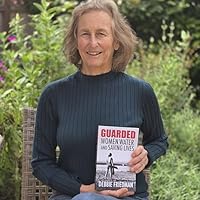
I loved Janet Fash’s Lifeguard: A Love Story. Janet began lifeguarding at Rockaway Beach in 1979, just a year after I started my own lifeguarding career on the California coast. We worked on opposite sides of the country, in very different lifeguarding cultures, and our work took different paths. I spent twelve years as a California State Park lifeguard; Janet made lifeguarding a career, eventually becoming New York City’s first female lifeguard chief.
What struck me were both the differences in our experiences and the common bonds—the responsibility of watching the water, the intensity of rescues, the camaraderie, and what it meant to be women finding our way in a profession overwhelmingly shaped by men.
I came away with tremendous admiration for Janet and the decades she devoted to the profession. Her story is distinctly Rockaway, yet so much of it felt familiar to me.
This is an honest account of a life spent guarding the water and saving lives. I’m very glad Janet shared her important story.
—Debbie Friedman, author of GUARDED: Women, Water, and Saving Lives
What struck me were both the differences in our experiences and the common bonds—the responsibility of watching the water, the intensity of rescues, the camaraderie, and what it meant to be women finding our way in a profession overwhelmingly shaped by men.
I came away with tremendous admiration for Janet and the decades she devoted to the profession. Her story is distinctly Rockaway, yet so much of it felt familiar to me.
This is an honest account of a life spent guarding the water and saving lives. I’m very glad Janet shared her important story.
—Debbie Friedman, author of GUARDED: Women, Water, and Saving Lives

August 8, 2026
🎧/📖 I learned so much about the lifeguarding world reading this memoir by Janet Fash, the first female chief lifeguard of New York City. The majority of the book delves into Fash and her colleagues tirelessly fighting back against the corruption within the city’s male-dominated lifeguard system — fascinating but def not what I expected when I picked this one up; I was hoping for quite a bit more about lifeguarding (especially on a city beach) itself. Mostly, I enjoyed reading about how Fash has dedicated her life to leaving her profession better than she found it by properly training young lifeguards and providing people with access to water safety education.
“Something almost enchanting happens when New Yorkers get to Rockaway. People living different lives in different boroughs — families from the Bronx, Wall Street guys, gangs, schoolchildren, top chefs from Manhattan — all set up their beach tents next to one another and enjoy the day together.”
“Something almost enchanting happens when New Yorkers get to Rockaway. People living different lives in different boroughs — families from the Bronx, Wall Street guys, gangs, schoolchildren, top chefs from Manhattan — all set up their beach tents next to one another and enjoy the day together.”

July 19, 2026
Full disclosure, going into this book I didn’t know a single thing about life guarding. What attracted me to this story, was that I loved reading memoirs about lifestyles different from my own, and in this book I learned so much.
I never realized how political life guarding could be, and how terrible the conditions were for women decades ago. This was really eye opening to learn about the things female lifeguards went through, and also the corruption within the union.
This is a really fascinating read and would recommend it to other memoir readers!
Thank you so much to Simon Books for this gifted copy in exchange for an honest review!
I never realized how political life guarding could be, and how terrible the conditions were for women decades ago. This was really eye opening to learn about the things female lifeguards went through, and also the corruption within the union.
This is a really fascinating read and would recommend it to other memoir readers!
Thank you so much to Simon Books for this gifted copy in exchange for an honest review!

September 22, 2026
I honestly did not realize that this was a memoir until 3 chapters in. I just thought it was very conversational, lol. Lifeguard is a memoir by Janet Fash chronicling her life as a lifeguard in New York's Rockaway Beach. Starting as a peon and eventually working her way up to becoming the first female lifeguard chief of Rockaway Beach. Beginning in the 80s and up through the present day, this memoir explores the sexism, the wild parties, the hazing, the lifesaving, and the corrupt culture behind the lifeguard union. It's a love letter to Rockaway Beach even during worst moments. This memoir has a very conversational tone and is a quick read at under 250 pages. Each chapter focuses on a year or two so the book really does span decades. An interesting and in depth look at the complexities of lifeguarding.
September 29, 2026
A really great book. So honest and matter of fact about outrageous situations. Really captures the culture and the place. Very well written
This entire review has been hidden because of spoilers.
July 24, 2026
Janet Fash writes to a specific audience. Her memoir revolves around personal experiences, New York City’s beaches and corruption. For those of us who spent summers on the beach the list of co-workers rings a bell, but little else.
July 26, 2026
(Audiobook) (4.5 stars) I got a lot more out of this one than I originally figured I might. For one, you don’t necessarily think of Long Island/New York as having much of a beach scene, yet there are more than a few beaches in that part of the world, and they tend to be very popular. Also, you don’t think of the lifeguard position as being one that people can make into a full-time career, but yet, in New York, that was certainly the case. Hence, you have Fash, who describes over 40 years of lifeguarding in New York City. It is a personal memoir, starting when she first started to lifeguard as a teenager in high school. Yet, all through college and into the start of her professional life, lifeguarding is the main constant. She effectively was a full-time lifeguard, doing that all through her adult life, even as she gets married and raises two kids. Yet, it is not all positive. The experience of the female lifeguards in the 1970s-1980s were a bit rough to survive, and while she managed to dodge the worst of it, that doesn’t mean it wasn’t hard. Then there is the big villain of the saga: The lifeguard union. In particular, the head of the lifeguard union, Peter Stein, grows into a major force in Fash’s life, for better and worse. In particular, Fash holds that Stein’s grip on power was such that he would endanger swimmers in order to maintain his power, reducing lifeguards at key locations if said guards did anything he felt was a threat to his power. The second half of the book becomes more an attack on Stein and how Fash and her colleagues tried to fight his corrupting influence. It can read like a book of grievances, but given what lifeguards have to do and some of the unfortunate results, it is not without merit.
Overall, a very intriguing work and one that was both interesting and educating. You can gain a bit more respect for lifeguards after reading this work, but it can also show that sometimes, people can get in the way of safety for the worst of reasons. The rating is the same regardless of format.
Overall, a very intriguing work and one that was both interesting and educating. You can gain a bit more respect for lifeguards after reading this work, but it can also show that sometimes, people can get in the way of safety for the worst of reasons. The rating is the same regardless of format.

Review of advance copy
Thanks to LibraryThing, the author, and the publisher for this ARC.
What a perfect time to be reading this book about a woman professional lifeguard. It's the first for me obviously and not even sure if I've ever heard of one professionally -- only the teenage lifeguards I remember from growing up swimming in my local pools, which is why I wanted to read it.
She comes from a family of 7 kids and she's the 3rd oldest. Her sister followed her into lifeguarding and they were stationed at the same place for a while and her brother Alex was one too. Of course at Rockaway Beach but it's pretty long so you could be assigned anywhere.
She was 15 when the book began in 1974. She was 19 when she first signed up to become a lifeguard. Lifeguards take their jobs seriously but there was a lot of drinking, etc. but after hours of course. When she graduated college, she was undecided if she wanted to go back to lifeguarding. However, the head of the lifeguard's union promoted her to lieutenant; her and another female. I really think, and she did too, that they wanted to meet their quota of female lieutenants.
I learned that there are two types of lifeguards. Those who do it as a college job, from the age of 16 until they graduate high school and those who are lifers. If you were a lifer, you had to find another job for the off-season. Teaching is the real choice of job because of their schedules except when it overlaps in May when school was still in session and lifeguarding season started. The second was the surfers. They lifeguarded all Summer and when season was over, they collected unemployment and went off to someplace warm. She became a teacher and a regular substitute.
It takes you through the decades, and in the 1980s, when tragedies happened in her family when her brother John was killed when he lost control of his jeep and overturned. He wasn't wearing a seatbelt. Then their mom died of cancer. However, Janet met Bob, who she met through a lifeguard friend. He was a former lifeguard and now a firefighter, did get married.
In 1998, she was promoted to the first female chief position. A lot of politics were involved and backstabbing. In 1991, she gave birth to a son and took childcare leave (maternity leave). In 1993, when she was pregnant with her daughter, she went back to her lifeguarding job. There weren't that many lifeguards with kids of their own. Her kids grew up on the beach and the lifeguards there knew them and watched out for them and the kids liked them too and they got to know them.
it ends in 2025 when she and Bob move to Puerto Rico, after she retires of course.
I really did learn a lot about lifeguarding, lifeguards, the ocean, and many more things.
What a perfect time to be reading this book about a woman professional lifeguard. It's the first for me obviously and not even sure if I've ever heard of one professionally -- only the teenage lifeguards I remember from growing up swimming in my local pools, which is why I wanted to read it.
She comes from a family of 7 kids and she's the 3rd oldest. Her sister followed her into lifeguarding and they were stationed at the same place for a while and her brother Alex was one too. Of course at Rockaway Beach but it's pretty long so you could be assigned anywhere.
She was 15 when the book began in 1974. She was 19 when she first signed up to become a lifeguard. Lifeguards take their jobs seriously but there was a lot of drinking, etc. but after hours of course. When she graduated college, she was undecided if she wanted to go back to lifeguarding. However, the head of the lifeguard's union promoted her to lieutenant; her and another female. I really think, and she did too, that they wanted to meet their quota of female lieutenants.
I learned that there are two types of lifeguards. Those who do it as a college job, from the age of 16 until they graduate high school and those who are lifers. If you were a lifer, you had to find another job for the off-season. Teaching is the real choice of job because of their schedules except when it overlaps in May when school was still in session and lifeguarding season started. The second was the surfers. They lifeguarded all Summer and when season was over, they collected unemployment and went off to someplace warm. She became a teacher and a regular substitute.
It takes you through the decades, and in the 1980s, when tragedies happened in her family when her brother John was killed when he lost control of his jeep and overturned. He wasn't wearing a seatbelt. Then their mom died of cancer. However, Janet met Bob, who she met through a lifeguard friend. He was a former lifeguard and now a firefighter, did get married.
In 1998, she was promoted to the first female chief position. A lot of politics were involved and backstabbing. In 1991, she gave birth to a son and took childcare leave (maternity leave). In 1993, when she was pregnant with her daughter, she went back to her lifeguarding job. There weren't that many lifeguards with kids of their own. Her kids grew up on the beach and the lifeguards there knew them and watched out for them and the kids liked them too and they got to know them.
it ends in 2025 when she and Bob move to Puerto Rico, after she retires of course.
I really did learn a lot about lifeguarding, lifeguards, the ocean, and many more things.

August 31, 2026
4-
I remember observing lifeguards at some beaches where I swam, but I never saw a rescue or gave the people on the tall chairs much thought. This memoir, written by a female New Yorker who served on the city's public beaches for 40 years, opened my eyes.
In this book, Janet Fash describes her demanding training, her daily work, as well as dramatic rescue attempts that often succeeded but sometimes tragically failed. She took her job seriously and put in an astonishing amount of work during her shifts. But she and her team played hard after hours, drinking quite heavily and otherwise indulging at the local bars.
Janet married and raised two children with her husband while lifeguarding and supervising during the summer season and teaching high school students the rest of the year. She rose in the ranks of her chosen profession amidst the politics and corruption of a big city department. A good part of this book is dedicated to the far too common struggles that accompanied that aspect of her career.
However, the bottom line is that Janet Fash still passionately loves the ocean. She endeavors to swim in its waters every day possible. For 40 years, during her time as a lifeguard, she strove mightily to keep all of the swimmers on her assigned beaches safe.
It’s easy to take lifeguards for granted, to lack appreciation for their training and the athleticism required for them to courageously swim into rip currents and powerful surf in order to bring struggling swimmers back to the shore, restored to their loved ones. We really shouldn’t dismiss lifeguards at the beach as I too often have done out of ignorance; I understand now how much respect and appreciation they deserve.
I remember observing lifeguards at some beaches where I swam, but I never saw a rescue or gave the people on the tall chairs much thought. This memoir, written by a female New Yorker who served on the city's public beaches for 40 years, opened my eyes.
In this book, Janet Fash describes her demanding training, her daily work, as well as dramatic rescue attempts that often succeeded but sometimes tragically failed. She took her job seriously and put in an astonishing amount of work during her shifts. But she and her team played hard after hours, drinking quite heavily and otherwise indulging at the local bars.
Janet married and raised two children with her husband while lifeguarding and supervising during the summer season and teaching high school students the rest of the year. She rose in the ranks of her chosen profession amidst the politics and corruption of a big city department. A good part of this book is dedicated to the far too common struggles that accompanied that aspect of her career.
However, the bottom line is that Janet Fash still passionately loves the ocean. She endeavors to swim in its waters every day possible. For 40 years, during her time as a lifeguard, she strove mightily to keep all of the swimmers on her assigned beaches safe.
It’s easy to take lifeguards for granted, to lack appreciation for their training and the athleticism required for them to courageously swim into rip currents and powerful surf in order to bring struggling swimmers back to the shore, restored to their loved ones. We really shouldn’t dismiss lifeguards at the beach as I too often have done out of ignorance; I understand now how much respect and appreciation they deserve.

August 20, 2026
This book was very disappointing. From the title, cover picture, and brief library description, I had thought this would be about saving lives, love for the ocean, and things of that nature. There was some of that. But about 80% of the books is about the corruption in New York City Lifeguard program and one man in particular. The union boss for the lifeguards, a man named Stein, ran the whole program like a fiefdom, rewarding his friends and cronies with jobs and promotions and taking vengeance on anyone who crossed him. The author, a thorn in his side but somewhat safe from his wrath since she was the city's first female chief lifeguard, essentially wrote an exposé. I really wasn't interested in that and I think there was some misrepresentation as to content by the publisher. In addition, the writing wasn't very good. It wasn't terrible, but the author was fast and loose with grammar at times ("Me and Bob went ...") and she confesses to needing a ghostwriter (or cowriter), Clio Chang, for her "writing abilities." This is disturbing since the author was a teacher during the off season. I hope she didn't teach English. But worst of all was her casual attitude toward drinking and drug use. She writes about how much fun it was as a teenage lifeguard to get drunk every night and come in to work hungover. She even seemed to look the other way toward cocaine use by other lifeguards like it was just boys being boys. In my view anyone who gets drunk regularly is not qualified to hold any job that involves the responsibility for the lives of others. This behavior seemed to persist even into her adult years. I finally had to start skipping liberally in the last third of the book.

July 20, 2026
Picked this book up after reading the NY Times review. Like other reviewers I thought the book would be mostly an interesting/illuminating/entertaining look at what it was like to be a female lifeguard at the Rockaways in the 1970s and 1980s. While there is a good bit of that in the first half of the book (along with some side stories about what Park Slope was like back then - hint, very different!!!) the second half pivots into a story that is more about how the author had to deal with misogyny, corruption, terrible bosses and a bureaucracy that seemed designed to keep it all going. While at times this part of the book could feel more like someone just getting a lot of bad stuff off their chest I do not fault the author for wanting to do so - she dealt with A TON. And if even part of her story is to be believed it would appear that she, and others, tried to make people in the Parks Dept and the Lifeguard Union aware of all the issues with the way Lifeguards were managed for 20+ years and no one, not even the Commissioner, did anything about it. So good for her getting all this off her chest. I found her vivid recollections of (sadly) several drowning victims to be the most impactful. You could tell her crusade for change stemmed from having to watch people die year after year - and so many felt preventable. I hope those in power in NYC Gov't (especially) the Parks Dept read this book and look to make some changes in how the Lifeguard program is run.

September 6, 2026
Stories introducing me to new people, allowing me behind-the-curtain views of individual's profession, and answering questions I never asked about life's occupations are my favorite. "Lifeguard" ticks all those boxes for me.
I had no idea how one becomes a lifeguard. While never in New York, I lived along the coast for much of my life. I saw lifeguards every time I went to the beach but never questioned who they were or how they got there. At swimming pools too, there was almost always a lifeguard present, but I never thought about their motivation, training, or qualifications. Now, at least for NYC, I know a lot more than I ever thought I would. I am grateful to the author for deciding to write about her life.
The opening chapters were the best parts of the book. Full of youth, enthusiasm, excitement, and personal experiences, they resonated with me and kept me eagerly turning pages. I did not like as much the later chapters which had so much depressing details about corruption and political malfeasance. I know that grift and graft have become normalized in modern society, but such knowledge doesn't make it any more pleasant to read about.
The author did the best she could with what was available to her throughout her life. She's a true champion in my eyes, and I was happy to read in her conclusion that she is still happily obsessed with the love of her life.
I had no idea how one becomes a lifeguard. While never in New York, I lived along the coast for much of my life. I saw lifeguards every time I went to the beach but never questioned who they were or how they got there. At swimming pools too, there was almost always a lifeguard present, but I never thought about their motivation, training, or qualifications. Now, at least for NYC, I know a lot more than I ever thought I would. I am grateful to the author for deciding to write about her life.
The opening chapters were the best parts of the book. Full of youth, enthusiasm, excitement, and personal experiences, they resonated with me and kept me eagerly turning pages. I did not like as much the later chapters which had so much depressing details about corruption and political malfeasance. I know that grift and graft have become normalized in modern society, but such knowledge doesn't make it any more pleasant to read about.
The author did the best she could with what was available to her throughout her life. She's a true champion in my eyes, and I was happy to read in her conclusion that she is still happily obsessed with the love of her life.

Review of advance copy received from Publisher
This breezy but insightful summer beach memoir about the heyday of the 1980s Rockaway Beach in New York City is an appealing story told by its first female lifeguard chief, Janet Fash. Fash grew up in Brooklyn, lured by the waves into the male dominated lifeguard community, where she proved herself to be one of the best lifeguards on the East Coast. Narrated in her dry Brooklyn accent, Fash details the city corruption and coverups of the 80s and 90s by men in power with thoughtful insight and wry indignation. Her tough exterior is proven in her account as she details how she stood her ground against her would-be assailants in dive bars and on the beaches alike. She raised herself up from the hazing and bullying surfing culture to run her own lifeguard teams by treating her lifeguards with equality and fairness. While her voice occasionally deadpans when she details difficult subjects like the death of her younger brother, this is a heartfelt and compelling summer memoir that keeps the listener engaged. Recommended for listeners who enjoy athletic memoirs by female authors such as The Longest Race or Good for a Girl: A Woman Running in a Man’s World.

July 20, 2026
“As a lifeguard, it was clear who we served – the public. When we were on duty, we were doing something both mundane and extraordinary. We were the difference between life and death.” 🏊♀️
Good lord this book was difficult to read. There is no place for your male ego in water safety SIR. Ughhh. Stein is a pos.
I feel so educated now, though! I had no idea that lifeguarding was a career. How amazing is that?! Here here for the strong tenacious women (like the author) that fought hard against the system before society decided that it was a worthwhile cause to back.
I feel viscerally angry at decisions made by some of these pompous men mentioned by the author. When you really break it down, you’re putting you life in the hands of mostly teenagers when you go to the beach. So why would the powers that be not want those teenagers skilled to the best of the their abilities?! Huh? Why? Why would you cherry pick your friends and allow people to die due to lack of staff or skill? No breaks even with the concentration needed to keep the public alive despite themselves is wild. I just can’t comprehend.
Thank you @SimonBooks #SimonBooksBuddy for the free book.
Good lord this book was difficult to read. There is no place for your male ego in water safety SIR. Ughhh. Stein is a pos.
I feel so educated now, though! I had no idea that lifeguarding was a career. How amazing is that?! Here here for the strong tenacious women (like the author) that fought hard against the system before society decided that it was a worthwhile cause to back.
I feel viscerally angry at decisions made by some of these pompous men mentioned by the author. When you really break it down, you’re putting you life in the hands of mostly teenagers when you go to the beach. So why would the powers that be not want those teenagers skilled to the best of the their abilities?! Huh? Why? Why would you cherry pick your friends and allow people to die due to lack of staff or skill? No breaks even with the concentration needed to keep the public alive despite themselves is wild. I just can’t comprehend.
Thank you @SimonBooks #SimonBooksBuddy for the free book.

July 9, 2026
My summer of reading memoirs by people with interesting jobs continues. This one - which spans Janet Fash's decades working as a lifeguard in Rockaway - was more substantial than the initial few chapters led me to believe. As she rose in the ranks and faced more and more corruption, I found her storytelling and her own personal journey really interesting.
Dinging it for two reasons: the first is that I think she let herself off the hook a little too easy w/r/t all the sexual misconduct and assault that was going on. I don't blame Janet for the actions the various male lifeguards took, but I do believe turning a blind eye is not excusable. I wish she had been a bit more honest with herself and the reader here.
Also - towards the end of the book (which I did on audio) she references a 911 call her sister made. She says 911 the normal way first, but then says "the nine eleven operator..." Which leads me to believe at least some of the audiobook recording was accomplished with AI and that really bums me out.
Dinging it for two reasons: the first is that I think she let herself off the hook a little too easy w/r/t all the sexual misconduct and assault that was going on. I don't blame Janet for the actions the various male lifeguards took, but I do believe turning a blind eye is not excusable. I wish she had been a bit more honest with herself and the reader here.
Also - towards the end of the book (which I did on audio) she references a 911 call her sister made. She says 911 the normal way first, but then says "the nine eleven operator..." Which leads me to believe at least some of the audiobook recording was accomplished with AI and that really bums me out.

August 24, 2026
Journalist Clio Chang along with the first female lifeguard Chief in NY Janet Fash presents Fash's memoir in Lifeguard: A Love Story. My rating is rather biased since I love swimming and the ocean. The writing is ok. I remember watching a few episodes of Baywatch in the 90's and cringing. This is pure 70's and 80's nostalgia for those of us growing up then. Things were not regulated and children could run around without fear. The beaches were the same. Lifeguards will always have a certain stereotype attached to the profession. This combined with a wildness about the time; of course, there is lots of drinking, sex and drugs. However, Fash elevated the job to something more because she cared about her crew, was not afraid to speak up and made the beaches safer. She is a natural for being a lifeguard. Her influences are remarkable during a time when she was constantly hampered by male and female bosses and what else...politics. Lots of politics in the parks division in NY. I thoroughly enjoyed this memoir and will never look at a lifeguard in the same way. Bravo!

Review of advance copy received from NetGalley
Afraid I did not see this memoir as a love story, although I understand author Janet Fash loved her career as a lifeguard at Rockaway Beach in Queens, New York. No, I saw it more as a boozy and depressing story. Drinking was apparently a big part of lifeguarding life, as was hazing and sexual abuse. Add to that, the entire NYC lifeguarding system was totally corrupt due to totally corrupt city officials and union leaders.
The book goes into great never-ending detail about all that corruption, including how it led to beachgoers drowning due to lifeguarding negligence. It's understandable Ms. Fash wanted a permanent written record of all that was wrong, since those like her were almost always totally ignored for decades whenever they tried to get needed changes made. Yet it made for bleak and tedious reading after a while.
(Note: I received a free e-ARC of this book from NetGalley and the publisher.)
The book goes into great never-ending detail about all that corruption, including how it led to beachgoers drowning due to lifeguarding negligence. It's understandable Ms. Fash wanted a permanent written record of all that was wrong, since those like her were almost always totally ignored for decades whenever they tried to get needed changes made. Yet it made for bleak and tedious reading after a while.
(Note: I received a free e-ARC of this book from NetGalley and the publisher.)
August 22, 2026
This book is about being a lifeguard but it’s mostly about one person’s fight to have lifeguards be the best they can. In essence it’s the fight of Janet Flash personal journey of becoming a lifeguard, recognizing the problems inherent in the system, trying to right them and still loving the ocean. It’s also a story of corruption, fraud, sexual harassment and more which is why she fought hard to try to bring changes to the system. As New York City’s first female chief lifeguard she should have had more ability to be a change agent. However, the system was badly corrupted and controlled by those [men and politicians] who were firmly in place. The author recognized that lives were at stake and also that lives were lost while she was a lifeguard. The story line is interesting. The writing for the first half is a tad sophomoric but as she grows more mature so does the writing. So perhaps the coming of age makes a difference in how the story evolves to be told.

Review of advance copy received from Publisher
I received this ARC from the publisher for an honest review. I know the Love story part of the book is about her love of the job and the love of the ocean, but this is not a wimpy romantic love story. Janet is tough, especially when speaking truth to power and taking on the corruption that put beach goers and her fellow lifeguards at risk. Rockaway Beach in New York does remind me of some of the Southern California Beaches I grew up around, but it is definitely more edgy and intense. That she was able to continue her job for 40 years, become the first female Lieutenant Lifeguard, get married and have 2 kids is a testament to her strength. I have an appreciation for lifeguards because I got pulled out of a rip current by one and my late husband was a surfer and as a teenager a junior lifeguard. Good summer read.
Displaying 1 - 30 of 115 reviews