

What do you think?

The U.S. Constitution: A Comprehensive and Annotated Guide for the Modern Reader
From a #1 New York Times bestselling author, podcast host, and legal expert comes an accessible and modern guide on how to read and understand the U.S. Constitution.
Think of this as the U.S. Constitution explained by America’s favorite law professor, Melissa Murray. On her podcast, Strict Scrutiny, Murray and her cohosts, Kate Shaw and Leah Litman, provide in-depth, accessible, and irreverent analysis of the Supreme Court and its cases, culture, and personalities.
On that podcast, on MSNOW—where she is a frequent contributor—in opinion pieces, and when providing commentary as she did in a recent New York Times piece on Justice Brown Jackson, Murray spends an awful lot of time demystifying laws for everyone else. In this book, she tackles one of the founding American the Constitution. Each amendment will be annotated with some historical context provided, as well as examples of how it is relevant to our present day.
More necessary than ever, as we look to the Supreme Court and their interpretation of the Constitution as the last institution upholding our democracy, this book is an indispensable read for every thinking American.
Think of this as the U.S. Constitution explained by America’s favorite law professor, Melissa Murray. On her podcast, Strict Scrutiny, Murray and her cohosts, Kate Shaw and Leah Litman, provide in-depth, accessible, and irreverent analysis of the Supreme Court and its cases, culture, and personalities.
On that podcast, on MSNOW—where she is a frequent contributor—in opinion pieces, and when providing commentary as she did in a recent New York Times piece on Justice Brown Jackson, Murray spends an awful lot of time demystifying laws for everyone else. In this book, she tackles one of the founding American the Constitution. Each amendment will be annotated with some historical context provided, as well as examples of how it is relevant to our present day.
More necessary than ever, as we look to the Supreme Court and their interpretation of the Constitution as the last institution upholding our democracy, this book is an indispensable read for every thinking American.
352 pages, Kindle Edition
Published May 5, 2026
Ratings & Reviews
Friends & Following
Create a free account to discover what your friends think of this book!
Community Reviews
Displaying 1 - 30 of 56 reviews

May 23, 2026
As a lay person, this book made me feel like I have the tools to truly understand the US Constitution, which admittedly is quite difficult for me to comprehend.
I enjoyed the background cases and history told in a modern way. Melissa is just so intelligent and practical and I love that I feel like I already know her from Strict Scrutiny, now in her more formal written element.
A lot of it was above my reading level but that shouldn’t take away from my rating because of what a valuable resource this is. Anyone learning history should use this over the textbooks in school. I love having this on my shelf.
I enjoyed the background cases and history told in a modern way. Melissa is just so intelligent and practical and I love that I feel like I already know her from Strict Scrutiny, now in her more formal written element.
A lot of it was above my reading level but that shouldn’t take away from my rating because of what a valuable resource this is. Anyone learning history should use this over the textbooks in school. I love having this on my shelf.

May 12, 2026
Spoiler we the people need to take back control of our government. Knowing the constitution will help
Read
April 3, 2026The U.S. Constitution: A Comprehensive and Annotated Guide for the Modern Reader by Melissa Murray is an accessible and thoughtfully constructed guide that brings clarity to one of the most important documents in modern governance.
Murray has a distinct ability to translate complex legal language into clear, engaging insights. By pairing historical context with present day relevance, she makes each amendment feel alive and meaningful rather than distant or abstract. This approach allows readers to not only understand the Constitution, but also see how it continues to shape everyday life.
What stands out is the balance between authority and accessibility. The tone remains informative without being overwhelming, making the book suitable for both newcomers and those already familiar with constitutional law. Her perspective invites readers to think critically while staying grounded in clear explanation.
A timely and valuable resource that encourages deeper understanding, civic awareness, and meaningful engagement with the principles that shape democracy.
Murray has a distinct ability to translate complex legal language into clear, engaging insights. By pairing historical context with present day relevance, she makes each amendment feel alive and meaningful rather than distant or abstract. This approach allows readers to not only understand the Constitution, but also see how it continues to shape everyday life.
What stands out is the balance between authority and accessibility. The tone remains informative without being overwhelming, making the book suitable for both newcomers and those already familiar with constitutional law. Her perspective invites readers to think critically while staying grounded in clear explanation.
A timely and valuable resource that encourages deeper understanding, civic awareness, and meaningful engagement with the principles that shape democracy.

May 9, 2026
law school prep lol

May 26, 2026
I HIGHLY recommend this book! It made the Constitution easier to understand for me, compared to what I learned in Civics classes. My thanks to Professor Murray, for this very “readable” book.

May 30, 2026
A fantastic primer for knowing the Constitution. I would have liked even more legal detail and theory. I guess I'll just have to keep listening to Strict Scruntiny.

September 13, 2026
I really enjoyed this book and would definitely recommend it to anyone who isn’t in legal fields / isn’t already super familiar with the constitution. I knew some things about the constitution going into this, but definitely didn’t have a complete understanding of everything laid out in the document and all the amendments. This book does an incredible job of explaining 1) a simplified version of each section, 2) what was going on at the time of the creation of the article / amendment that shaped it and 3) what major cases have defined the article / amendment moving forward. It’s honestly so impressive to know that the Constitution is the oldest document of its kind in continuous use, and to consider everything that went into its creation.
Now I feel like I have so much more ammunition when understanding why certain things are unconstitutional, and the basis of some big Supreme Court cases as of recent. I also found it so interesting to see how much the court’s interpretation of certain articles and amendments is always changing over time.
Favorite quote: “Henry bemoaned the document’s assumption that the nation’s leaders would always be honest and selfless public servants mindful of people’s rights: ‘Show me the age and country where the rights and liberties of the people were placed on the sole chance of their rulers being good men without a consequent loss of liberty’ “
Now I feel like I have so much more ammunition when understanding why certain things are unconstitutional, and the basis of some big Supreme Court cases as of recent. I also found it so interesting to see how much the court’s interpretation of certain articles and amendments is always changing over time.
Favorite quote: “Henry bemoaned the document’s assumption that the nation’s leaders would always be honest and selfless public servants mindful of people’s rights: ‘Show me the age and country where the rights and liberties of the people were placed on the sole chance of their rulers being good men without a consequent loss of liberty’ “
June 12, 2026
This book is literally just the constitution with historical context and commentary to apply to historic and current events. Spending time with it made three things obvious to me: 1) the document is dated and intended for a very different time, 2) the founders adjusted it when they realized it didn’t work as intended, and 3) slavery infused in the document and cannot be dissected from the country’s laws. The constitution needs to be dismissed and replaced in totality.

June 20, 2026
Written at about a ninth grade civics class textbook level. If you read it straight through like a normal book it's extremely repetitive. It sometimes references congressional acts, court cases, or historical British customs without context, assuming the reader is familiar with them.
But the most disappointing is the "neutral" voice, often stating things like, some people argue X, while others argue Y. There's no follow up analysis of these arguments, no evaluation or criticism. If I buy your book, I'm interested in *your* take on things and want to hear your ideas. It's especially infuriating to read a "both sides" presentation of the Constitution as our "democracy" is collapsing.
But the most disappointing is the "neutral" voice, often stating things like, some people argue X, while others argue Y. There's no follow up analysis of these arguments, no evaluation or criticism. If I buy your book, I'm interested in *your* take on things and want to hear your ideas. It's especially infuriating to read a "both sides" presentation of the Constitution as our "democracy" is collapsing.
September 5, 2026
In retrospect, I think I probably was not the target audience for this, as the majority of the book was a review of history/law I had already learned at one point or another. I do think the book was well-written for its intended purpose, though, as a comprehensive introduction to constitutional law for interested readers without a legal background.

August 22, 2026
A very accessible annotated edition of the US Constitution. Melissa Murray does a wonderful job explaining the context, history, and Supreme Court interpretation of every article, section, and amendment of the Constitution. This is definitely a great resource for any type of civics class.

July 8, 2026
I have not read the entire constitution until this book. I loved how the book also gave background to each section explaining why each part was included or added. Every citizen should read and understand what principles our country was founded on and not what is being perverted at this time.

May 31, 2026
There were several interesting anecdotes here about the Constitution's inner workings. I felt many times like I wanted to hear a little more. Never sure if that's a point for or against.
I'd recommend this to anyone who wanted a deeper understanding of the Constitution and how the court has affected it over the years.
Great read!
I'd recommend this to anyone who wanted a deeper understanding of the Constitution and how the court has affected it over the years.
Great read!

July 16, 2026
hopefully this comes up at trivia

May 27, 2026
A wonderful read! Murray brilliantly distills the U.S. Constitution into digestible excerpts that are easily to follow and understand. A great summer read both for those in the legal field and those who want to learn more about the U.S. Constitution. I couldn’t recommend it enough :-)

May 11, 2026
The U.S. Constitution: A Comprehensive and Annotated Guide for the Modern Reader makes the Constitution feel readable and relevant instead of buried in legal jargon.
Melissa Murray breaks down each amendment in straightforward language while explaining the history and reasoning behind them. What stood out most was how fragile many of these rights really are, especially while watching the current administration try to claw some of them back in real time.
This should be required reading for every American voter.
Melissa Murray breaks down each amendment in straightforward language while explaining the history and reasoning behind them. What stood out most was how fragile many of these rights really are, especially while watching the current administration try to claw some of them back in real time.
This should be required reading for every American voter.

May 16, 2026
Strict Scrutiny Forever!

August 9, 2026
The U.S. Constitution: A Comprehensive & Annotated Guide for the Modern Reader is more a resource volume than a book of commentary on the making of the American document & its enduring value to the people it was created to serve, particularly at a time when its inherent values are under siege.
 We are told that while the framers of the constitution were united in their antipathy toward Britain, they were of different mindsets about almost everything else, with each state viewing itself as a semi-sovereign entity, many with their own currency & banking system but with each in fear of a powerful federal government.
At the time the framers gathered in Philadelphia, the concept of a United States was little more than a fiction. Small states feared being dominated by larger states but because of the failure of the Articles of Confederation, most present also realized the need for a stronger central government.
There were 74 delegates, only 55 of whom attended the constitutional convention with any regularity. With Thomas Jefferson in Paris (while still a substantial influence on the proceedings) and John Adams in Great Britain, James Madison served as a guiding force. Oddly enough, Patrick Henry was against the very notion of a constitution.
It was Jefferson who urged Madison to add a Bill of Rights, including freedom of religion, press, habeas corpus + the need for trial by jury. Melissa Murray charts the development of the constitution's framework and each of the amendments, commenting on what led to the additions to the initial document.
Although, the 27 page American Constitution is the briefest declaration of purpose of any major nation- 7 articles, 27 amendments and 4,543 words, or 7,591 when the amendments are included; in hindsight, much that might have been included was left out, while some components that were included later proved ineffectual.
As an example, it seemed reasonable at a time prior to entrenched political parties to award the presidency to whomever had the most votes in an election, while the vice-president was to be the person with the 2nd most votes. However, if this key to governance had not been altered, it is difficult to fathom someone like Donald Trump partnering with Kamala Harris as his vice-president.
While the 18th amendment, which prohibited liquor nationally, stands as the only amendment to be later repealed, several amendments have served to enhance participation in the American electoral process, by allowing African-Americans (15th) & women (19th) to vote and with the 24th amendment lowering the voting age from 21 to 18.
Importantly, the 10th amendment attempted to clarify that what powers not specifically given to the executive branch were to be determined by the individual states, though the precise interpretation of and limits to this amendment are still being debated.
In spite of the enduring nature of the American Constitution, one is forced to reflect on its imperfections. As Robert D. Kaplan has phrased it:
*Oddly enough for a fairly expensive hardcover book, the editing is rather sloppy, with an entire passage repeated word-for word on adjacent pages.
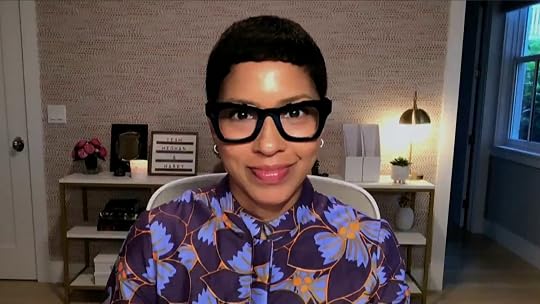
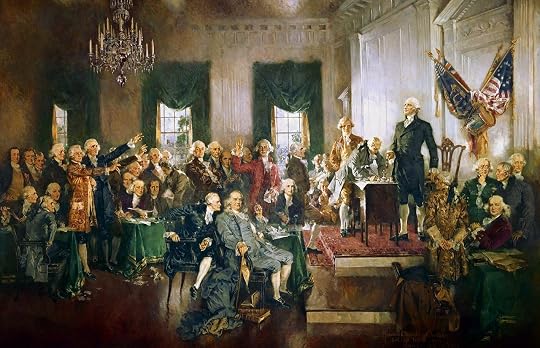
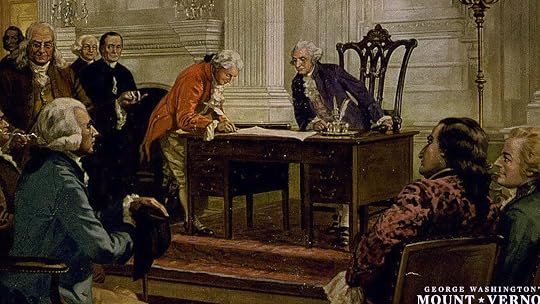
**Within my review are the images of author, Melissa Murray & two painted, imagined images of the Constitutional Congress.
We are told that while the framers of the constitution were united in their antipathy toward Britain, they were of different mindsets about almost everything else, with each state viewing itself as a semi-sovereign entity, many with their own currency & banking system but with each in fear of a powerful federal government. At the time the framers gathered in Philadelphia, the concept of a United States was little more than a fiction. Small states feared being dominated by larger states but because of the failure of the Articles of Confederation, most present also realized the need for a stronger central government.
There were 74 delegates, only 55 of whom attended the constitutional convention with any regularity. With Thomas Jefferson in Paris (while still a substantial influence on the proceedings) and John Adams in Great Britain, James Madison served as a guiding force. Oddly enough, Patrick Henry was against the very notion of a constitution.
It was Jefferson who urged Madison to add a Bill of Rights, including freedom of religion, press, habeas corpus + the need for trial by jury. Melissa Murray charts the development of the constitution's framework and each of the amendments, commenting on what led to the additions to the initial document.
Although, the 27 page American Constitution is the briefest declaration of purpose of any major nation- 7 articles, 27 amendments and 4,543 words, or 7,591 when the amendments are included; in hindsight, much that might have been included was left out, while some components that were included later proved ineffectual.
As an example, it seemed reasonable at a time prior to entrenched political parties to award the presidency to whomever had the most votes in an election, while the vice-president was to be the person with the 2nd most votes. However, if this key to governance had not been altered, it is difficult to fathom someone like Donald Trump partnering with Kamala Harris as his vice-president.
While the 18th amendment, which prohibited liquor nationally, stands as the only amendment to be later repealed, several amendments have served to enhance participation in the American electoral process, by allowing African-Americans (15th) & women (19th) to vote and with the 24th amendment lowering the voting age from 21 to 18.
Importantly, the 10th amendment attempted to clarify that what powers not specifically given to the executive branch were to be determined by the individual states, though the precise interpretation of and limits to this amendment are still being debated.
In spite of the enduring nature of the American Constitution, one is forced to reflect on its imperfections. As Robert D. Kaplan has phrased it:
The American narrative is morally unresolvable because the society that saved humanity in the great conflicts of the 20th century was also the society built on enormous crimes--slavery and the near-extinction of its native inhabitantsThe U.S. Constitution: A Comprehensive & Annotated Guide for the Modern Reader is more a resource volume than a book of commentary on the making of the American document and its enduring value to the people it was created to serve, particularly at a time when its inherent value to the American people seems under siege.
*Oddly enough for a fairly expensive hardcover book, the editing is rather sloppy, with an entire passage repeated word-for word on adjacent pages.
**Within my review are the images of author, Melissa Murray & two painted, imagined images of the Constitutional Congress.

September 26, 2026
I wish that I could provide a more positive review of this book, as the premise (an explanation of the "nuts and bolts" of the Constitution) is admirable and this subject is obviously a passion of the author. But I was rather disappointed in the book and found myself pushing just to finish. To be sure, there are quite a few insights concerning the Constitution and a few nuggets of background information on all seven articles, as well as the 27 amendments. But much of the book is filled with legal terms and precise, but obscure interpretations that I think would leave the average reader of American history with their eyes glazing over, especially when the author references Supreme Court cases from decades ago that, instead of shedding light on some of the Constitution's meaning, left me scratching my head. I was also very disappointed with the mistakes in the text. On two occasions the book claims that the Bill of Rights and the Constitution were ratified at the same time. Heck, no! There was no Congress to pass amendments until the Constitution got ratified. Yet in the section on the amendments, the precise year of the ratification of the Bill of Rights is provided- 1791. But the Constitution had been ratified three years earlier! Were these two sections of the book written by the same person? The book claims that Americans objected to federal taxes during the Confederation, but the Confederation Congress had no power to tax. It states that Marbury (of Marbury v. Madison) sued to become a justice of the peace in Maryland. Nope, it was in Washington, D.C. The Dred Scott decision was based on Scott's time in Wisconsin Territory, not on his time in the state of Illinois. That was why the decision included overturning the Missouri Compromise, which had nothing to do with Illinois. And Lee's surrender to grant on April 9, 1865, was not a "formal surrender" of the Confederacy. The entire war was based on Lincoln's belief that there was no legal entity called the Confederacy that could "formally surrender" to anyone. I was also disappointed that in the author's explanation of the original Constitution she did not explain where the fraction 3/5 came from in the 3/5 Compromise. In the explanation of the clause in the Constitution that guaranteed repayment of the Confederation's debt she did not point out how many of the 1787 framers held some of the papers for that debt (Charles Beard claims 40 of 55). Nor was there an explanation of why the Constitution was sent to ratification conventions rather to state legislatures (the legislatures were going to see their power diminished if the Constitution was ratified). In the end I was actually quite surprised that these shortcomings were not caught- by the author or by her editors. I read this book when I did because my students will soon be studying the Constitution. Unfortunately, I did not pick up much insight from this book.

July 25, 2026
✦ Book Review: The U.S. Constitution: A Comprehensive and Annotated Guide for the Modern Reader by Melissa Murray
✧ ᴛʜᴀɴᴋ ʏᴏᴜ ꜰᴏʀ ᴛʜᴇ ꜰʀᴇᴇ ʙᴏᴏᴋ, @SimonBooks
➤ 𝚂𝚈𝙽𝙾𝙿𝚂𝙸𝚂
Melissa Murray presents an accessible, annotated guide to the United States Constitution, examining each article and amendment through both its historical origins and its modern-day application. Rather than simply reproducing the text, she provides historical context, explains why each provision was written, and explores how constitutional interpretation has evolved through landmark court decisions and changing societal perspectives. The result is a valuable reference designed to help readers better understand one of America's most important founding documents.
➤ 𝚃𝙷𝙾𝚄𝙶𝙷𝚃𝚂
Reference books are always a little different to review because they aren't meant to be read from cover to cover like a novel. Instead, they're resources you return to whenever you want to better understand a particular subject. That's exactly where this book succeeds. Melissa Murray does an excellent job explaining the Constitution in language that's approachable without talking down to the reader. I appreciated how each section combines historical background with modern relevance, making it easier to understand not only what the Constitution says, but why those words continue to matter today. Whether readers agree with every interpretation isn't really the point. The book encourages readers to think critically about the Constitution and its role in American government rather than simply memorize its text. If you're looking for an accessible constitutional reference that provides context alongside the original document, this is an easy recommendation. 4.5 Stars
✧ ᴛʜᴀɴᴋ ʏᴏᴜ ꜰᴏʀ ᴛʜᴇ ꜰʀᴇᴇ ʙᴏᴏᴋ, @SimonBooks
➤ 𝚂𝚈𝙽𝙾𝙿𝚂𝙸𝚂
Melissa Murray presents an accessible, annotated guide to the United States Constitution, examining each article and amendment through both its historical origins and its modern-day application. Rather than simply reproducing the text, she provides historical context, explains why each provision was written, and explores how constitutional interpretation has evolved through landmark court decisions and changing societal perspectives. The result is a valuable reference designed to help readers better understand one of America's most important founding documents.
➤ 𝚃𝙷𝙾𝚄𝙶𝙷𝚃𝚂
Reference books are always a little different to review because they aren't meant to be read from cover to cover like a novel. Instead, they're resources you return to whenever you want to better understand a particular subject. That's exactly where this book succeeds. Melissa Murray does an excellent job explaining the Constitution in language that's approachable without talking down to the reader. I appreciated how each section combines historical background with modern relevance, making it easier to understand not only what the Constitution says, but why those words continue to matter today. Whether readers agree with every interpretation isn't really the point. The book encourages readers to think critically about the Constitution and its role in American government rather than simply memorize its text. If you're looking for an accessible constitutional reference that provides context alongside the original document, this is an easy recommendation. 4.5 Stars

June 26, 2026
Rating: ⭐️4.25/5
Many Americans are confidently wrong about their constitutional rights.
You see this online all the time. People shouting on social media about violations of freedom of speech, due process, and all manner of treason that they most assuredly believe is true… only for a legal expert to point out they are dead wrong. It gets rather annoying to say the least. However, each of us have a civic duty to be good citizens that must strive to understand our governments and the forces at play.
Given the current state of governance in the U.S.… that duty is more important than ever.
This book is genuinely helpful if you are a 1L taking your first con law class or a general member of the public. It goes over things in a largely easy to follow format and you can choose how much to engage with each constitutional provision. That being said, if you already took con law then this book is more just reference material to look back on when you need a refresher. It pretty much covers all the highlight cases you talked about in class and thus can become a tad tedious.
I’m not gonna penalize a book that the author has expressly said is meant for people who don’t know much about the constitution leaving this as a solid recommend if you are the right audience.
Many Americans are confidently wrong about their constitutional rights.
You see this online all the time. People shouting on social media about violations of freedom of speech, due process, and all manner of treason that they most assuredly believe is true… only for a legal expert to point out they are dead wrong. It gets rather annoying to say the least. However, each of us have a civic duty to be good citizens that must strive to understand our governments and the forces at play.
Given the current state of governance in the U.S.… that duty is more important than ever.
This book is genuinely helpful if you are a 1L taking your first con law class or a general member of the public. It goes over things in a largely easy to follow format and you can choose how much to engage with each constitutional provision. That being said, if you already took con law then this book is more just reference material to look back on when you need a refresher. It pretty much covers all the highlight cases you talked about in class and thus can become a tad tedious.
I’m not gonna penalize a book that the author has expressly said is meant for people who don’t know much about the constitution leaving this as a solid recommend if you are the right audience.

September 3, 2026
Melissa Murray’s The U.S. Constitution is an excellent resource for anyone who wants to better understand one of our nation’s most important—and often misunderstood—documents.
What impressed me most was how approachable and easy to read this book is. Although highly informative and focused on complex constitutional issues, it is written in a clear, engaging style that makes legal concepts and constitutional history easy to understand without requiring any legal background.
The book is also extremely well organized and clearly tailored to the layperson. Its thoughtful structure makes it easy to follow, while also making it an excellent reference tool to return to again and again.
I would recommend keeping a copy in every household. In a time when so much is said about the Constitution—often without a clear understanding of what it actually says—having such an accessible and informative resource readily available is invaluable.
Informative without being intimidating and scholarly without being inaccessible, The U.S. Constitution is both a worthwhile read and an excellent reference book to have on hand.
What impressed me most was how approachable and easy to read this book is. Although highly informative and focused on complex constitutional issues, it is written in a clear, engaging style that makes legal concepts and constitutional history easy to understand without requiring any legal background.
The book is also extremely well organized and clearly tailored to the layperson. Its thoughtful structure makes it easy to follow, while also making it an excellent reference tool to return to again and again.
I would recommend keeping a copy in every household. In a time when so much is said about the Constitution—often without a clear understanding of what it actually says—having such an accessible and informative resource readily available is invaluable.
Informative without being intimidating and scholarly without being inaccessible, The U.S. Constitution is both a worthwhile read and an excellent reference book to have on hand.

June 9, 2026
In this fundamental but great work, Professor Murray made the Constitution much more palatable to the modern reader, without having to go into too much of the ‘legalese’ to lose anyone who isn’t equipped with or pursuing a Juris Doctor. Her organization with every facet of the U.S. Constitution was stellar as she provided the text, origin story, commentary, clauses, SCOTUS case law, and recent political relevance. I learned some new facts, such as the Second Amendment’s use of a “well regulated militia” to potentially quell slave rebellions and the women’s suffragist movement working in opposition to Black men’s voting enfranchisement in pursuit of the Nineteenth Amendment. I was hoping that the Fourteenth Amendment would get a lot of love, and Professor Murray did not disappoint. I’ll be referring to this book many times over.

August 5, 2026
Thank you to Simon Book's History Buffs Book Club for the free book. These are my opinions.
I have been wanting to own a paper copy of the U.S. Constitution. So I was incredibly excited to receive and read this version. More than just showing what the Constitution says, it goes into great depth in explaining it.
Specifically, the author systematically goes through the origins and meaning of each article and amendment. There are times when she dogs into just a couple of words to truly explain.
With her constitutional law background, she consistently brings in court cases that have changed how the words are understood to demonstrate current meaning. And I was quite impressed that she did so without adding opinion throughout. This is very much a textual analysis that also talks about original intent and how both lead to modern Supreme Court opinions. It was simultaneously quite relevant and not politically biased.
I keep hearing regular calls for more civics education, and this is a great place to start or supplement. I am glad I read it, and I know I will return to it regularly as a reference.
I have been wanting to own a paper copy of the U.S. Constitution. So I was incredibly excited to receive and read this version. More than just showing what the Constitution says, it goes into great depth in explaining it.
Specifically, the author systematically goes through the origins and meaning of each article and amendment. There are times when she dogs into just a couple of words to truly explain.
With her constitutional law background, she consistently brings in court cases that have changed how the words are understood to demonstrate current meaning. And I was quite impressed that she did so without adding opinion throughout. This is very much a textual analysis that also talks about original intent and how both lead to modern Supreme Court opinions. It was simultaneously quite relevant and not politically biased.
I keep hearing regular calls for more civics education, and this is a great place to start or supplement. I am glad I read it, and I know I will return to it regularly as a reference.
June 15, 2026
A++++
This should honestly be made compulsory reading for all US Citizens.
While I was certainly familiar with some of the bigger picture ideas behind the US Constitution and how it is and has been implemented, this book really solidified those facts.
Professor Murray breaks it down, piece by piece, without boring you to death and explained in language that can be accessible to today's readers.
The biggest takeaways for me were how dynamic the Constitution has been as of late, the number of pending Supreme Court cases that could render 200+ years of interpretations on their heads, and walking away with even greater understanding of my personal feelings regarding forced birth practices and their very real connection to chattel slavery and forced reproduction.
This should honestly be made compulsory reading for all US Citizens.
While I was certainly familiar with some of the bigger picture ideas behind the US Constitution and how it is and has been implemented, this book really solidified those facts.
Professor Murray breaks it down, piece by piece, without boring you to death and explained in language that can be accessible to today's readers.
The biggest takeaways for me were how dynamic the Constitution has been as of late, the number of pending Supreme Court cases that could render 200+ years of interpretations on their heads, and walking away with even greater understanding of my personal feelings regarding forced birth practices and their very real connection to chattel slavery and forced reproduction.

July 5, 2026
Should be read by everyone to understand what The US Constitution says. It includes the text of the Constitution so you have the text along with information about the origin of the provision, summary of its effect, and explanations of its interpretation by the courts in easy to understand, straightforward and unbiased language. Also includes information specific to any ongoing controversy about meaning of specific provision. Will say that the writing, while is informative, it's dry and does not make for a very compelling or exciting read. But not sure that would be reasons to choose the book to read in the first place or reason to not read or avoid reading it. It's for needed knowledge and information!
August 2, 2026
I’ve seen this book described as handy for incoming law students - agree, and plan to pass this along to my own kid working towards that path. However, as an incoming law student in 1999, not only is this the book I wish I’d had then but, more than 20 years into my own transactional practice, I thoroughly enjoyed Prof. Murray’s methodical walkthrough. A must-read for anyone - lawyer, aspiring lawyer, or American trying to understand today’s world through the Constitution’s lens. (Side note - if you enjoyed this book, the Strict Scrutiny podcast with Prof. Murray and her cohosts is an awesome way to keep pace on how our Constitution continues to be shaped, reshaped and - of late - disregarded.)
June 26, 2026
This book is made up primarily of the US Constitution that is broken out into articles, sections, clauses and amendments with easy to read commentary that puts the original into easier to comprehend language while also citing key examples of cases relevant to each article, section clause or amendment.
The book is very informative and references cases from the late 1700's just after ratification up to 2025 cases. While I believe the author bent over quite a bit to provide a non-partisan recounting of the Constitution and related cases and decisions, I would have enjoyed more personal criticisms and backstories.
The book is very informative and references cases from the late 1700's just after ratification up to 2025 cases. While I believe the author bent over quite a bit to provide a non-partisan recounting of the Constitution and related cases and decisions, I would have enjoyed more personal criticisms and backstories.

June 21, 2026
I’ve kept a pocket copy of the U.S. Constitution at my desk since my first week of law school. When I served as a public defender and on Capitol Hill, you were likely to find one in the breast pocket of my suit jacket. What the Supreme Court has done to distort this document since I first started studying it is all but beyond comprehension. I say “all but” because @profmmurray has written an exceptional book, in neutral terms and lay language, helping us understand what it really says, what it really means, and how to understand it in the context of Supreme Court rulings. ⚖️
July 17, 2026
As a Strict Scrutiny listener, I was very excited for this book. It is very informative and insightful as it goes through the nuances of the Constitution, some of which I knew and many of which I did not. The audiobook was slightly awkward because it has to be, since you're hearing the whole Constitution, then having it repeated again for the annotated parts, but it served to go from big picture to small picture, reiterating the text, so it could've been worse. Definitely worth a read or listen to help understand the governing document of our nation and why it works the way it does.
Displaying 1 - 30 of 56 reviews