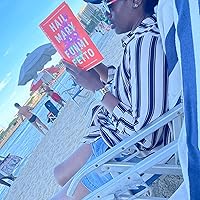
*This book is published in the USA with the title HAVING IT ALL* ''This is a book for evey woman. Optimistic and hopeful.'' PHILIPPA GREGORY
''A passionate, provocative case for change.'' ADAM GRANT
IT''S NOT IN YOUR HEAD. IT''S IN THE DATA.
To be a woman today is to be overwhelmed from every angle. The data proves that the odds are still stacked against us - biologically, culturally, economically. But that same data can empower us to make choices that will reclaim our time, energy and help us find joy.
In Femonomics, economist Corinne Low explodes the myths about what makes women successful and happy such - What if flexible working isn''t the answer, and we actually need more boundaries? - What if the gender happiness gap was as important as the gender pay gap? - What if you had the power to prioritise things you actually value, rather than the things that other people value? - What if being more ''successful'' actually meant putting family before work?
Femonomics gives you the tools to design the life you want. It will teach you how to turn your time into money, how to work out what you value, how to invest in the right partner, how to plan your career at every stage, how to organise your family life - and ultimately how to make the world work for you.
Thanks to NetGalley, the publishers and the author for an ARC in exchange for an honest review.
A well-researched and convincing collection of essays that mainly address the changes that women can make in their lives to redress some of the imbalances caused by systemic sexism.
3.5 stars
What I liked: - When this book was focussed on facts and data, it was at its strongest by far. I learnt some really interesting new information and there was a strong reference list at the end of the book. - The advice in here is good, strong counsel that I would mostly agree with and can actually think of certain people I know that would benefit from reading it. I think it would be a particularly useful read for anyone about to undergo a big life change, such as welcoming a child or considering a divorce. - The author's voice is interesting, assertive and speaks from the perspective of several under-represented groups, so I found it to be a worthy read in that regard. - This book is a great foil to "Lean In" theory and doesn't shy away from challenging that, and a few other respected authors e.g. of parenting books. - It also challenges several commonplace concepts that readers may make incorrect assumptions about, or have heard misinformation about. I really liked the authors ability to question status quo and look for the research behind the things we are often told about "women at work". - I'm sure this book will be controversial in some circles but again, the author doesn't shy away from having strong opinions, and backs them up with evidence. That really strengthens this book.
What I wasn't so keen on: - I actually expected the book to be more data-focussed than it was, based on the title "What Data Tells Us About Women's Lives". Whilst the book was well-cited, there weren't that many times when data were introduced to the reader, which surprised me, especially since these paragraphs were some of the strongest in each chapter. Following on from that, I felt there were some rambles and personal anecdotes that could've been edited down. - This edition of the book is intended for markets outside of the USA but is still very USA focussed. Perhaps it could've been more generic/international in its tone for this edition? - There is a LOT of parenting advice and discussion. The author touches on how having children is a choice, but ultimately delves deeply into parenting challenges quite far beyond other aspects of domestic life and without discussing child free women in the same level of detail as mothers. It could've been interesting to see more discussion around policy and statistics relating to the global child-free movement.
Something that gave me pause for thought: - Finally, not a compliment or a criticism, but this is a big one: this book is clearly marketed at and has its sights aimed upon women as the target audience. It explicitly challenges the idea of women having to "do the work" in order to fix sexism in work and domestic environments, yet almost every actionable point in here is for women. I think I ultimately found this jarring. Of course there's nothing stopping a man from reading this, but when it refers to "us" and "we" for women, and "them" for men, there is less chance that men are going to read it and enact the kind of changes we would like them to make in work and home contexts. There are some men I have worked with who I would love to send this book to, but I would be surprised if they would read it based on the way it is written, which is a shame. Am I turning the work back onto women to make it palatable for men? Maybe! It's a complicated one.
Overall this was an interesting read that I wouldn't hesitate to recommend.
3.5 stars A really well researched and edited book, this was insightful and encouraging. I appreciate how Low clearly laid out the statistics behind the patriarchy, but then gave very real and helpful suggestions to combat these disadvantages. My only criticism/drawback was the intense focus on partnership, marriage and children. If I had picked this book up later in life I’m sure it’d be a 5 star read, but as someone who isn’t married or a parent, I felt entire parts of the book were not applicable to me. However, this was still a really motivating read with important information and told in an entertaining way!
Thank you to NetGalley and the publishers for kindly providing an ARC in exchange for an honest review. #Femonomics #NetGalley. All opinions are my own.
A thoughtful take on womanhood and the economic challenges that marriage and family can have on your career and happiness. This book is a new perspective on how to 'have it all' and what that actually could look like
There is a fair amount of data, but equally lots of the authors lived experience is in here, giving the book an autobiography feel in sections. There are also lots of anecdotes from friends and colleagues.
The book is heavily centered on family life, and making careers and motherhood work better for women- and detailing how the system fails mothers in so many ways. If you plan to have a family, this is an interesting read but if that's not the case then this book might not be for you.
Thank you Netgalley for allowing me to read, and review this book.
Everything has its price: domestic labour, child care, lost hour of sleep, mental load of home admin, Women are taught from early childhood - these are their fundamental responsibilities, anything else they want in life - can only be on top of the above, otherwise you are not good enough. The book is very pragmatically laying out how women should not assume that if they do this themselves - it is free, no, it is not and as such should be as strongly negotiated as the job description and the salary.
This book is the non-fiction version of 'The Women's Room' and 'I Don't Know How She Does It'. Downside is that the author gives many personal anecdotes instead of the strong data theme of the title. When data is used, it is generally from American studies and the studies were often conducted by women. Upside, there can never be too many books about how work affects women.
The author is mainly working from her personal experience in giant companies and desk based jobs, teaching, and with friends who gave up desk jobs to take up nursing because the hours were definite. She looks at general division of labour and domestic productive work (housework) including who minds the kids and whether divorce works for women. Whether two adults need to work, who gets the higher paid job and for how long bosses expect women to take lower pay (until their child bearing days are over, she says) and what women should do if they are unhappy or unable to cope.
The author seems to think she addresses only women - probably in real life, she does, but a book can be read by anyone. She mainly looks at women who are married or divorced, have a degree, and want or have children. In my e-ARC, there are no graphs, just blank spaces, but there were not many pages given over to them. I felt a few dataviz pages would be extremely helpful and could get points across or highlight under-studied areas. There was also no index, so I had to wade through the notes after each chapter, bundled at the end, to see if 'More Work For Mother' was cited. It wasn't, and I don't know why not, as Ruth Schwartz Cowan covered the same ground about the historical division of labour in America.
While the author kept on about breastfeeding and doing every bit of the work around the house, I was thinking that when I was being raised, women and men fed by bottle, and the children were pressed into service at home literally as soon as they were old enough, and walked or cycled to school by themselves if possible. Hover-parenting is, as she says, a very recent invention. While I was in school, my father and two brothers walked past the garage every Thursday to catch a bus, but I, who was cycling to school, was told to put the bins out. Why me? Well, seems it didn't matter if I was late. I wasn't catching a bus. One week I was so cross about this, that I 'forgot' to put the bins out. I was told to make sure not to forget next week. My mother wasn't going anywhere.
My main request is that the author - who graduated, worked for McKinsey, and took up being a professor - cease only to think of giant firms, and do some research on women who run their own businesses. A woman totally responsible for her firm and her income, especially if her job involves physical labour and being on the spot, probably cannot take time off to have children. Lucky if she can take time to find a life partner. If she takes three years out to study for a degree, she has to find the money for it and has no income to pay her mortgage while studying. There will be no grants as she is not coming off the unemployment register. While saying briefly that it's good to do tasks in small steps - like folding clothes - the author ought to tell readers to take any course online (maybe even free) or a night class, year's certificate, or a module of a degree, if a degree is unattainable. If nothing else this will keep the woman's skills and CV updated.
Friends tell me that two children were just affordable, but the third child meant there was an economic loss by the mother continuing to work, with taxes for the couple, childcare and perhaps a second car adding costs. Therefore the mother, who had already had substantial time out of the workforce or a part-time job, had to stop work. This is not covered. In Europe, by stopping work, the woman loses contributions towards a state and a business-run pension. This is not covered. I don't recall seeing the word pension anywhere. Some women are widowed, with or without children, and have to try to re-enter the workforce or manage without a substantial income. This is not covered.
Citations I would expect, are strangely absent. Dr. Spock is cited, but not Barbara Ehrenreich whose groundbreaking undercover journalism 'Nickel and Dimed' showed how women in middle age were among those workers sleeping in cars, taking two or three jobs in order to live indoors, and unable to afford a shirt on sale in the cheap store where they worked. There is not a single mention of Artificial Intelligence (AI) and how it is taking jobs from workers - mainly desk jobs, the kind that women have adapted to doing. Try 'Employment is Dead' by Deborah Perry Piscione. 'The One Per Cent Solution' by Gordon Lafer shows how the American civil service is shedding jobs - like public libraries and administration - either closing them or selling the work off to firms. And mainly the admin jobs lost are those held by women, especially women of colour. The firms have been cutting the workforce and outsourcing jobs to other countries, online.
Good read, and timely, but needs to be less restricted in vision to people like the author. Notes start p. 253, index would start p. 269 but blank in my copy. I read an e-ARC from Net Galley. This is an unbiased review.
3.5 ⭐️ There is much to recommend this book, I appreciated being provided the data to back up the ‘sense’ of where things are unfair, stacked against women or in fact at times rules meant to help women inadvertently undermine them. I especially appreciated the chapter looking at broader structural changes that would help everyone in the workplace. That said I felt data was sometimes used just to demonstrate points that meant it felt more like a self help book than the essay on women, work and the structures that work against them. If it hadn’t contained the ideas about how to work through or around these challenges, yes I think it would have been too dry and probably depressing so I think the authors personal insights were a valuable contribution. It did feel, I guess somewhat understandably to lean very heavily into her experiences such as her divorce being followed by a single sex relationship where we know these discrepancies tend not to exist. It feels a bit petty to bring it up as it is such a small part of it and I am trying to keep in mind this is an American book where care of their work and leave entitlements they have some of the lowest breastfeeding rates in the world but it seemed to miss some really key facts in this realm. It is true that breastfeeding mums are generally woken more times a night than non breastfeeding mums they actually overall get more sleep overall as oxytocin promotes sleep for both in the dyad. As for pumping, not many mums enjoy this experience but failing to acknowledge that it is a valid choice to want to exclusively breastfeed and that for many women to continue breastfeeding at all pumping can be a necessary part of that.
hello and good morning this book was revolutionary for me. even though i have never been married (and after reading this, i must say i am quite glad i am not yet), i relate to so much that’s in this book? i’m happy i am currently single and did not choose to stay in my past relationships that made me so conflicted about whether i was asking for too much (i wasn’t). i love that she wrote explicitly about utility functions and preferences and budget constraints, because even though i think that on some level i knew that i shouldn’t be comparing myself to others, her explicitness helped me pinpoint why. and as someone who fell in love with economics so many years ago and took so many econ classes and still find myself so inexplicably drawn to its concepts and models, her use of the terminology has changed something in my mind to truly recognise how i should be navigating my life. btw, her examples of her ex asking her not to go up the eiffel tower as a romantic gesture, and how her current wife doesn’t ask her what to make for dinner on nights that are hers - these are so crazy specific but like so relatable?? i never really knew how to explain to people why these types of things bother me and can drive me to end a relationship, and in those moments, i thought i was crazy for thinking that these are negative things but now i feel so much more reassured :’)
This entire review has been hidden because of spoilers.
Femonomics is an accessible and thought-provoking exploration of the modern patriarchal economic system, and its impact on women.
I really enjoyed the simple breakdown of economic concepts, and Low's central theory of 'utility' is thought-provoking. I can already see myself using some of her ideas to help frame my own life.
It's more of a self-help read than I anticipated - I was expecting at least a little intersection with feminist theory (the fact that the wages for housework movement doesn't get a mention feels like an oversight) and a little more data. There's a heavy focus on romantic relationships and raising children which gets a little repetitive at times - especially with the strong US-focus.
However, I love that Low doesn't claim personal economics is easy or suggest a one size fits all approach. Getting the most out of your life looks completely different for different people, so Low suggests questions you can ask yourself rather than prescribing which steps you might take. Drawing on experience from her own life and her friends' provides some helpful real-world context.
An engaging and entertaining read, Femonomics offers some solid, non-preachy advice.
*Thank you to Netgalley for the arc in exchange for an honest review*
This book is both fantastic and frustrating, and for that reason it took me a long time to finish. I’ve read very few economics books that I actually enjoyed (one prior to this), and Femonomics is definitely on the better end of that spectrum. A feminist look at economics and the structures/systems that hold women back is a welcome read, and one more women should read.
That said, for a book written by a queer woman, this focuses heavily on cis, straight women. Granted, the author was previously married to a man, but as a bisexual woman married to a woman, I still found it a little bit difficult to relate to, especially the family/household sections. The sections relating to work and systems are interesting, and holds more relevance to me. It did make me aware of a lot of sexist machinations in the work environment that I had not noticed before.
Low also addresses the expectation on women to "have it all", and the modern world's pressures to have picture worthy lives. While she is not the first to write about it, her clear and evidence-based take on it is refreshing.
Femonomics provides hardcore evidence, which is then explained without dumbing it down. This is a very special skill and surely indicates that the author is a fantastic lecturer. I enjoyed that. What caught me unawares was that, somewhere past the middle, Femonomics goes from a didactic, down-to-business, task-oriented work, to a life-coaching/self-help/motivational treatise. Maybe the difference was too jarring, or maybe I just wasn’t in the mood for a motivational book. The advice is good! Her points are good! It just took my final impression down a notch.
Anyway: this is absolutely worth investing time in - although perhaps straight women will find it more relatable than queer women will.
Thank you to Hodder Press and Netgalley for providing this eARC.
The way the author explores feminist topics, not with an undertone of rage or inciting anger, but with a very solid and realistic framework for how to navigate. She feels so composed, in a good way. Like she’s above the noise, sees clarity.
It’s practical, it’s well informed, it’s researched, data and science. The author somehow feels like a dependable auntie! I don’t know how else to explain!
As an almost 30 year old, I recognise so many of the internal thought patterns and behaviours that I did myself that the author explains why, and what you should do. And I do think it would’ve been interesting to read this as I graduated uni, but I also am not sure how much I would’ve really taken on board. When you’re young (I say as still being a relatively young person), you just think you know better, or you don’t believe the advice that older people give you.
This book is validating for women with a whole range of ambitions, whether they be career or personal, and no matter what you value. If you value work life balance, leisure time - totally valid. If you value travel and luxury - totally valid. If you value making an impact and altruistic purpose - totally valid.
Femonomics feels far more like a “self help” book than an economic argument. It is also very light on data, despite the title.
Chapter 4 focuses in quite some depth on steps individuals can take to manage credit card debt. Low goes as far as to recommend apps that might be useful for the reader. Chapter 6 leans heavily into career advice specific to women. The fact the advice is specific to women is entirely expected - that’s the point of the book. However, large swathes of the chapter are just that, advice, based on the author’s experiences. Chapter 9 is the final nail in the coffin. The chapter focuses on time management. Again, there is little data here; Low choose to discuss topics such as how to save money for the future and prioritise leisure activities.
Whilst I like the idea put forward by the author, in chapter 9, that we can attribute points to how we choose to spend our time, and effectively “invest” points into activities we want to commit to, I just felt after finishing this book that this was a guide the reader could use to improve certain aspects of their life, as opposed to an economics book.
This entire review has been hidden because of spoilers.
Femonomics is one of those books which feels like it's changing your life as you read it. I think copies should be given out for free to everyone in their early 20s. The insights are brilliant and backed by cold, hard, well-reasearched evidence. The writing style is engaging and witty. This is one of the best non-fiction books I've read. A real highlight is the fact that this book isn't focused on telling women all the things they've done "wrong". The focus is on what the research shows and, most importantly, what this means for navigating life
Although this book is fundamentally about experiences I intrinsically know to be true, I still benefited hugely from reading it. Low uses a combination of data, studies and personal anecdotes to step us through the ways in which women take on the burden of a household.
I love that Low focuses her perspective on how to maximise happiness rather than how to maximise ‘everything’ (a perspective I feel we hear all too often).
I look forward to reading this again at a later point in my life when some of these themes become front of mind (EG children, competing careers, etc).
More like 3.5 I was really looking forward to reading this as it was written in post COVID context and although it's sad to read that little has changed with regards to men and women, there are now books that place a huge emphasis on MEN to act up, lean in and do better.
This book is for anyone who is struggling with the balance of being a woman in a world set up for men.
A book reminder that "you are doing more than enough- literally, you are doing it all."
I really liked the statistics in this book that hammer home the point that women are at a disadvantage in the first place. However, I feel like Low implies that her advice is very simple to implement when it really isn't. I also found it quite dense at some points, so I wouldn't say it was necessarily helpful. I found the book interesting, though.
Definitely worth reading and some. wry informative ideas and perspectives
Especially love how she dive into the well designed researches to illustrate ideas, and how she leverage the economic terms and concepts as tools to help women navigate the world and maximise their utility. I really enjoy her writing and her insights.
A no-nonsense look at: - why you can't, and shouldn't, try to do it all - putting a price on love, child-bearing, and child-bearing - planning (financially) for a future that may never happen - reclaiming your time, and your self - using data to guide your life and career choices
A must-read, must-keep, must-consult regularly kind of book.
Just as Ramit Sethi can teach you to be rich - if you just redefine what rich means, this book can show you how to have it all, if you just change your idea of what that looks like.
There were definitely some interesting observations but not as many actionable take aways as I was hoping for.
Very centered on American POV and lifestyle. Centered on financial means of upper middle class Skipped the chapters on raising children and divorce as well as most of the afterword as they were not beneficial for me. I like the overall concept of the book though
Some really pragmatic salient points to help women balance their careers, families and the role their partners play in this but sadly hidden amongst a lot of gumpf.
Less data driven, more personal reflection and opinion. Some insightful information but definitely not the book I expected based on the title and blurb.