What do you think?
Rate this book


288 pages, Hardcover
First published August 26, 2025
The Communist Party followed the science of zero COVID to its logical conclusion—barring people from their homes, testing people on a near daily basis, and doing everything else it could to break the chains of transmission. Four decades ago it followed the science to forcibly prevent many pregnancies in the pursuit of the one-child policy. We can agree that science is real, but we have to keep in mind that there is a political determination involved with how to interpret the science, and that is something the Lawyerly Society is better at. It has lawyers interested in protecting rights, economists able to think through social science, humanists who consider ethics and many other voices in the mix attempting to open policy prescriptions up for debate. China doesn't have a robust system for political contestation. Engineers will simply follow the science until it leads to social immiseration.It's worth noting that China adjusts its data as needed to avoid bad news. China’s official total for COVID-19 deaths was around 125,000 while other scholarly estimates come to nearly 2 million excess deaths. The book also notes that some of the older people said that the lockdown wasn’t the worst thing to happen to them pointing to the Cultural Revolution. Younger people born after 1990, however, who had known only rising prosperity had their first real taste of the disaster that could be inflicted by the engineering state.
I don't see much danger that Americans could wake up one day with a government that effectively steamrolls every opposition to building big projects, and I don't expect Chinese will encounter a government at last willing to leave them alone. Rather, I hope that China learns to value pluralism while embracing substantive legal protections for individuals, and the United States recovers the capability to build for its people.The author’s mixture of sharing his personal experiences together with descriptions of events in China was fascinating and surprisingly interesting to read. I found this to be one of the most candid descriptions of life in modern day China that I’ve ever read.
I don't want to get rid of lawyers. Rather I want to help lift the engineers, and also their technocratically-minded brethren, the economists, back up. Not to raise them onto a pedestal but to elevate them so that there are other voices in the mix. The United States could use fewer lawyers who devote their careers to litigating the life out of government agencies and more lawyers of the dealmaker bent, who are interested in working out how to deliver better services.
I am sure that no two peoples are more alike than Americans and Chinese.
A strain of materialism, often crass, runs through both countries, sometimes producing veneration of successful entrepreneurs, sometimes creating displays of extraordinary tastelessness, overall contributing to a spirit of vigorous competition. Chinese and Americans are pragmatic: They have a get-it-done attitude that occasionally produces hurried work. Both countries are full of hustlers peddling shortcuts, especially to health and to wealth. Their peoples have an appreciation for the technological sublime: the awe of grand projects pushing physical limits. American and Chinese elites are often uneasy with the political views of the broader populace. But masses and elites are united in the faith that theirs is a uniquely powerful nation that ought to throw its weight around if smaller countries don't get in line.
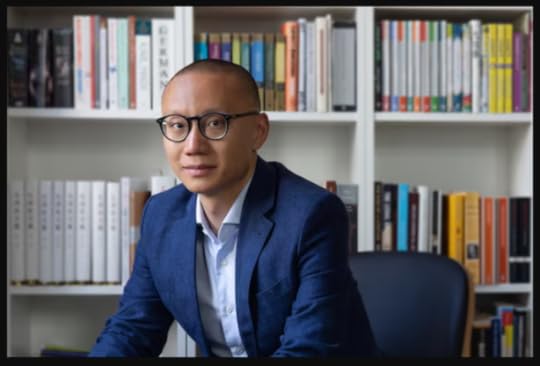
"...using means that ran roughshod over many—an approach rightfully disdained by much of the world. It is also a reminder that the United States once knew the virtues of speed and ambitious construction. Traversing dazzling metropolises and gigantic factories, Breakneck will illuminate the astounding progress and the dark underbelly of the engineering state. The lawyerly society has virtues, too, to teach China. Each superpower offers a vision of how the other can be better, if only their leaders and peoples care to take more than a fleeting glance."
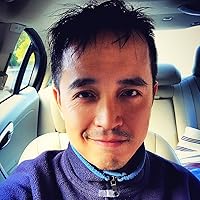
"My parents and I emigrated from China to Canada when I was seven. During high school, we moved to the woodsy suburbs of Philadelphia (where my mom and dad still live). After going to New York for college and Silicon Valley for work, I returned to China to investigate its technology developments. I learned to appreciate something vital: The country is always in motion. Living in Hong Kong, Beijing, and then Shanghai was a good education not only because these were China’s most prosperous economic zones. For six years, I lived through a period of economic dynamism that gave way to smothering political repressiveness. I experienced top leader Xi Jinping’s ongoing mobilization of the country for great-power competition. I tracked the expanding web of US restrictions on Chinese tech companies, as well as their struggle to escape from American restraints. And I endured all three years of Xi’s pursuit of zero-Covid, which started impressively until it plunged the country into broad misery..."
"China learned so well from the United States that it started to beat America at its own game: capitalism, industry, and harnessing its people’s restless ambitions. If you want to appreciate what Detroit felt like at its peak, it’s probably better to experience that in Shenzhen than anywhere in the United States."
The starkest contrast between the two countries is the competition that will define the twenty-first century: an American elite, made up of mostly lawyers, excelling at obstruction, versus a Chinese technocratic class, made up of mostly engineers, that excels at construction.Surprisingly, he makes a pretty good case -- overstated in places, but generally sound, I think. I definitely come away from it better informed about China and the challenges of US/China relations than when I began it.
Breakneck is written from a perspective that makes most political scientists tart and many historians grumpy.But, as Walt Whitman wrote, “If you done it, it ain't bragging.”, and Wang done it.