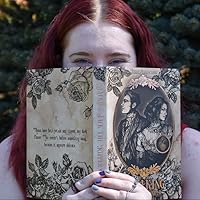
For readers of The Cloisters and Counterfeit, Natalie Lemle’s debut novel offers an insider’s view into the world of stolen artifacts and the hidden networks that link museums to organized crime, when a woman is forced to remember the summer she spent on an archaeological dig in Italy, as everyone she knew then may now be in danger.
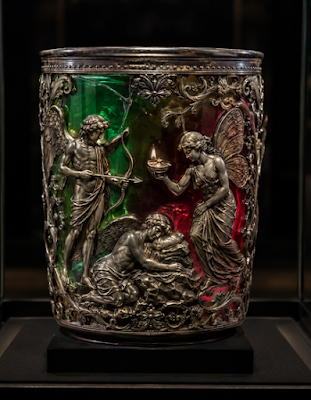
Successful trusts and estates attorney Lena Connolly is asked by a colleague to assist on a the Italian government claims an artifact was looted and sold to a museum illegally and is seeking repatriation. The object in question is a cup made of dichroic glass, which would have been rare even in Ancient Rome, let alone thousands of years later.
Lena has done everything she can to put the study abroad summer she spent on an archaeological dig in the Italian Alps behind her. Her dreams of being an archaeologist shattered when her mentor Cyrille disappeared and her enigmatic boyfriend Giamma went dark, but with this new case, the past comes roaring back.
Told in alternating timelines, Artifacts follows young Lena as she falls in love with both archaeology and Giamma on the streets of Torino while her adult self pieces together what truly happened on the dig, now a fully restored Roman villa with World Heritage status. The dichroic cup, Lena discovers, may have been taken from the very site she helped unearth.
Powerful and exuberant, Natalie Lemle’s Artifacts brings readers behind the museum glass and asks questions about cultural heritage and the historical preservation of our shared sense of humanity.
Natalie Lemle studied classics and art history at Tufts University and earned an MFA in creative writing from Emerson College. She is the founder of art_works, an art advisory connecting contemporary artists with global companies, and previously worked in corporate relations at the Museum of Fine Arts, Boston. She serves on the boards of the ICA/Boston and the Associates of the Boston Public Library. Artifacts is her first novel.
Artifacts is a mystery-thriller about an archeological dig excavating a Roman villa in the Italian Alps. Lena, the protagonist works at the site as an undergrad, and 20 years later she becomes involved in connected case about stolen heritage items as a lawyer. The legal case becomes a reason for her to reconstruct the people and events of her college experience in Italy.
There’s quite a bit to like about the plot and the story is relatively propulsive. At first I thought the novel’s themes would be about memory, nostalgia, history and art, or maybe a literary exploration of who owns art and history. Those themes, to the degree they were present, end up so far in the background of the mystery plot that they felt neglected. I was also a bit overwhelmed by the degree everything was connected in the end while struggling to grasp why I should be worried about danger for anyone or whether I cared about ‘ndragheta and corruption. On top of all of this, Lena, was a struggle for me as a character because she is so passive and so naive. Her decisions as a lawyer also annoyed me because they seemed implausible and her sole affirmative act to investigate her own connection to the case seemed to veer into ethical violations of her duty of confidentiality and loyalty for no good reason.
I think the novel will appeal to people that hate loose ends and want a page turner, but I think it could have been a stronger novel if it had been more character driven and nuanced.
I'm shocked this has such a low Goodreads rating, and it's a reminder to trust what you love over the ratings.
I really enjoyed this one. I loved how it wove together history, art, archaeology, and intrigue. It also opened my eyes to a corner of the Roman Empire I knew nothing about, in a region I don't think I've ever read about before. I finished it clamoring to learn more, which is one of my favorite things a book can do.
Is it perfect? No. The main character could have been developed a bit more, and with a little more finesse this could have read like a Da Vinci Code-style thriller set high in the Italian Alps. But for a debut? This was fantastic, and I'm already looking forward to whatever Lemle writes next. Don't let the rating scare you off. This one's worth following your own taste on.
Extremely interesting historical fiction combined with mystery and suspense. I loved the historical details throughout which kept me reading more than the mystery.
Some of Lena’s personal story could have used some additional editing, but the characters surrounding the dig, the artifacts’ theft and black market dealings were intriguing.
Four rating based on length and editing needs but overall entertaining and compelling history. I look forward to the author’s next book.
Ambitiously, this thriller tries to fuse a broad array of topics and interests: law, classical studies, archeology, the museum underworld and artifact looting, a missing person mystery, family estrangement and related dynamics, childhood trauma, mental illness, young romance, matcha lattes, viticulture, and more. The block chain even makes an appearance or two! However, as signaled by this lengthy (yet incomplete) list, the story becomes a mudslide of too many subplots, unnecessary details and characters, and frequent mini lectures and cultural allusions. What’s more, the protagonist makes improbable or baffling choices, especially toward the end of the book. Overall, a disappointment, though I enjoyed the archeological and university trappings.
I was hooked early. The “who done it” and “how will it end” kept me up late at night rooting for Lena. And Natalie paints such a vivid picture of NYC and Italy I felt I was right there with her.
I’ll have to read this again because the amount and layers of historical detail and references to ancient civilizations are incredible and I’m sure there are many more layers of meaning I’ll get on a second or third read. Would be great for a bookclub to discuss with friends to really see the complexity of the case from different perspectives and to reflect on the role of archeology, museums, and historic objects in reflecting the past.
I was so excited to read this book, combining museum provenance research, an archaeological dig, an American student on a European study abroad trip, classical art history, and potentially a cozy murder mystery…so many intersections with my Venn diagram of interests! And then, getting into it, there were even more—like a family backstory of growing up Mennonite. Just how many niches can a single story fill?
Not too many, as it turns out. This story is entirely too fragmented, and many of the doors opened ended up going nowhere, including the Mennonite backstory, which by the end seems like a fragment left over from an early draft, the result of poor editing. There’s a lot of “tell, don’t show” as we follow the main character trying to guess and suppose what other characters are thinking (or know, or want her to know) that’s supposed to create intrigue about who’s lying and who is trustworthy, but it was so surface-level I stopped caring or trying to keep track, hoping simply that all would be unraveled before the end. The story tries to work in too many awkwardly disconnected subplots (sisterhood and family relationships, female friendship, ambivalence over having children, and convoluted Italian politics) that there wasn’t enough time to fully flesh out what seemed to be the main stories, the complicated web of artifacts transported through collections, the art market, and the museum and university systems, and the hapless lawyer who finds herself in the middle of a web of intrigue and organized crime…a web that proves to be too complicated even for the author, who by the end sets most of the storylines down entirely unresolved. The ending was astonishing in its unfinished-ness, abandoning the protagonist right in the act of fleeing from the bad guys! (Maybe? Or maybe they simply reached a quota for murdering enough people that the threat she posed in the previous chapter is no longer seen as significant?) I get the allure of an open-ended finish, sometimes, but here it felt terribly sloppy. Given the promise I started off with, this one was entirely disappointing for me.
This entire review has been hidden because of spoilers.
This book is thick with detail and brings to light the ethical concerns of cultural heritage, theft, ownership rights, and history aspects of discovered artifacts. That aspect was intriguing. Personally, I am big on character development and connecting to a main character in my favorite reads, and this book was less compelling on that front.
Thanks to NetGalley and Simon and Schuster for the ARC of this book in exchange for my honest review.
When I first picked up Artifacts by Natalie Lemle, I was convinced it would be exactly the kind of novel I love. Archaeological digs, ancient history, forgotten villas, and a mystery rooted in the past are all things that immediately grab my attention. On paper, this book had everything going for it. The historical backdrop, particularly the story surrounding the Cupid and Psyche cup, was fascinating, and the excavation itself felt authentic enough to make me wish I could join the dig. Unfortunately, despite having such an intriguing premise, the novel never quite lived up to its potential for me because of one major issue: its protagonist.
The story follows Lena, a young archaeologist who joins an excavation at a Roman villa in Italy. As the dig progresses, discoveries begin to emerge that connect the present with centuries-old secrets, particularly through the excavation of the beautiful Cupid and Psyche cup. The novel alternates between archaeological discoveries and the emotional lives of the people uncovering them, blending history with contemporary relationships. There's an underlying mystery about the villa and the people who once lived there, and I genuinely enjoyed seeing how each artifact slowly revealed another piece of the past. Lemle clearly has a passion for archaeology, and it shines through in every description of the dig. The meticulous attention to excavation techniques, preservation, and the excitement of uncovering history felt authentic and engaging.
The historical elements were easily my favorite part of the novel. I loved learning about the villa and imagining the lives of the Romans who once occupied it. The mythology surrounding Cupid and Psyche added another layer of symbolism that I appreciated, and the titular artifacts became much more than simple objects buried underground. They represented memory, legacy, and the way human stories survive long after the people themselves are gone. Every time the novel focused on the excavation or revealed another historical clue, I found myself completely invested.
Unfortunately, the same can't be said for Lena.
For me, Lena was one of the most frustrating protagonists I've read in quite some time. She's incredibly passive, constantly allowing life to happen around her rather than actively participating in it. Instead of making decisions or driving the story forward, she spends much of the novel reacting to other people. Her insecurity and indecision quickly became exhausting rather than sympathetic. I kept waiting for her to grow into someone more confident or capable, but that transformation never really arrived in a satisfying way.
More than anything, Lena made me cringe. Many of her interactions felt awkward in a way that wasn't endearing, and her inability to communicate honestly with the people around her became repetitive. There were several moments where I wanted to shake her and tell her to simply speak up or make a choice. While flawed characters can often be compelling, Lena's passivity made her difficult to root for. Instead of feeling emotionally invested in her journey, I found myself wishing the story would return to the archaeological discoveries as quickly as possible.
The supporting cast fares somewhat better, although they primarily exist in relation to Lena's emotional struggles. They each have moments of personality and depth, but few leave a lasting impression because the novel spends so much time inside Lena's hesitant perspective. Ironically, I found the long-dead Romans whose lives were reconstructed through artifacts more interesting than many of the living characters.
Natalie Lemle's writing itself is strong. Her prose is thoughtful and descriptive without becoming overly dense, and she has an impressive ability to make ancient objects feel alive with history. The pacing during the excavation scenes worked particularly well, capturing both the painstaking patience archaeology requires and the thrill of making an unexpected discovery. Even when I was frustrated with the characters, I never doubted the author's knowledge or enthusiasm for her subject matter.
What makes Artifacts disappointing isn't that it's poorly written—far from it. It's that the most interesting parts of the novel revolve around the setting, the history, and the archaeological mystery rather than the people experiencing it. Every chapter spent uncovering the villa, discussing Roman life, or examining the Cupid and Psyche cup reminded me why I picked up the book in the first place. Every chapter centered on Lena reminded me why I struggled to finish it.
In the end, Artifacts is a novel with an excellent premise, rich historical detail, and an obvious love for archaeology. If you're fascinated by ancient history, Roman excavations, or the process of uncovering the past, there's plenty here to appreciate. I certainly found myself captivated by those elements. However, for me, the novel was held back by a protagonist who was simply too passive to carry the emotional weight of the story. I wanted to love this book because it contained so many things I'm naturally drawn to, but Lena's personality continually got in the way of my enjoyment. While I don't regret reading Artifacts, I ultimately came away feeling that the excavation itself was far more memorable than the person leading us through it.
A unique archaeological adventure with tons of detail, but the plot was pretty hard to track. I appreciated the research, even if the story didn’t fully pull me in.
(w) (wish i was summering in italy on a morally questionable yet undeniably cool archeological dig where i randomly met my morally questionable yet hot italian fling who sends me into a trauma spiral about my morally questionable yet alluring professor a decade later)
A well-crafted novel that blends mystery and suspense with history and archaeology, demonstrating how they often intersect in unsavory ways.
This is a novel that requires a bit of knowledge coming in, so I’m not sure it has the commercial appeal of, say, The Cloisters or The Bequest. As someone with an academic background in this stuff, I found it refreshingly intricate and far better informed about the realities of museums and acquisitions than most Fiction that touches on the subject.
Though I’m not sure I fully agreed with the ultimate conclusion reached here from a moral and academic standpoint, this book did do a very good job of recognizing that repatriation and the acquisition and sale of antiquities is a lot more complicated than often thought. This is not and has never been a black and white issue, and kudos to Lemle for painting a much more sophisticated and enlightened portrait of this than we usually get in Fiction.
The story is well paced and well structured, and it does the academics of it all justice, another thing often missing from mystery/thrillers that make a go at this subject.
*I received an ARC of this book in exchange for an honest review.*
First of all, I love this cover!! It’s gorgeous! 😍
I enjoyed the history and the artifacts were all interesting, but I had a hard time staying engaged in the story, unfortunately. Not sure if I just had a hard time connecting with the FMC or if it was something else I just can’t put my finger on. It most likely was a me problem, so I still recommend checking this one out! 👏
Thank you to partner Simon & Schuster for the gifted advance reader copy in exchange for my honest review! ❤️
👏 My 👏 kind 👏 of 👏 book 👏. Wish it were woven slightly tighter and didn’t dribble off at the tail end, but every page was pure joy to read. +0.5⭐️ for educational value about pre-Roman civilisations in northern Italy. Also kinda weird Libby wouldn’t let me download to kindle so I literally read the whole book on my phone. Gotta admit I didn’t hate the convenience.
If I’m being honest I’m still super confused about a lot of the happenings in this book - I’m not sure I’ve ever read a more intricate book - but I am FASCINATED by Natalie Lemle. I can’t believe this is a debut.
Author Natalie Lemle is a writer and art world professional who founded the firm art_works, which helps corporations and private individuals build and manage collections of contemporary art. In this novel, Lemle uses an accusation against a museum to highlight aspects of archaeology, looting of archaeological sites, cultural heritage, illegal sales of historic artifacts, criminal involvement, government complicity, and more.
Now on to my book review.
*****
It's 2022 and Lena Connolly, a trusts and estates attorney at a New York law firm, is asked to assist on a cultural heritage case. Lena is told the firm is representing Fordham University, whose museum is accused of housing looted art.
The main item in contention is a dichroic glass cup with figures of Cupid and Psyche. Italian authorities claim the cup was illegally excavated and exported, and they want it back.
Lena's fluency in Italian makes her an asset on the case, as does her summer volunteer work on an archaeological dig in Orbagne, Italy in 2004. At the time, Lena was an undergraduate at Columbia University, with an interest in archaeology.
The story toggles back and forth between 2022 - when Lena is working on the lawsuit against Fordham, and 2004 - during Lena's time on the Orbagne site.
The Orbagne dig involves the excavation of La Villa del Frutetto, an ancient Roman villa with a surrounding farm and orchard. The project has two co-directors: a French professor named Cyrille DuPuy - whose archeology seminar Lena took at Columbia University;
and Piettro Botti - an Italian archaeologist.
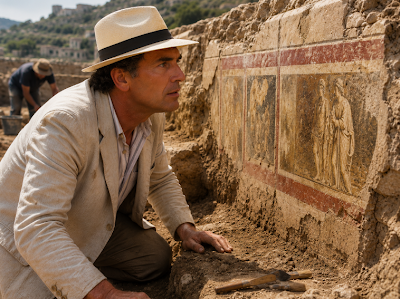
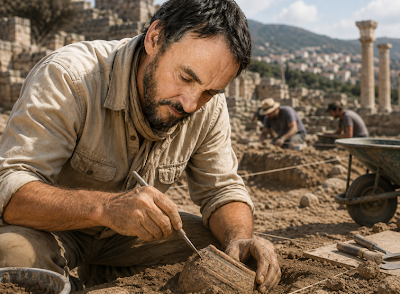
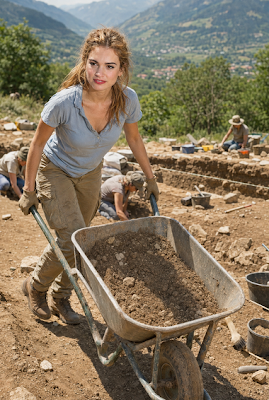
On the dig, Lena describes removing wheelbarrow after wheelbarrow of backfill from her assigned trench; using a trowel to excavate pottery shards; being thrilled at the emergence of a fresco with a vivid red top; documenting ancient finds; etc.
The 2004 chapters also include extensive discussions of Roman archaeological sites as well as Roman history, architecture, aqueducts, mythology, poetry, and literature - all peppered with Italian phrases as well as Greek and Latin derivations of words.
As examples:
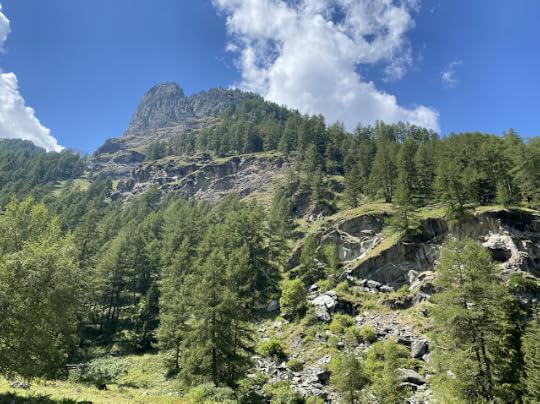
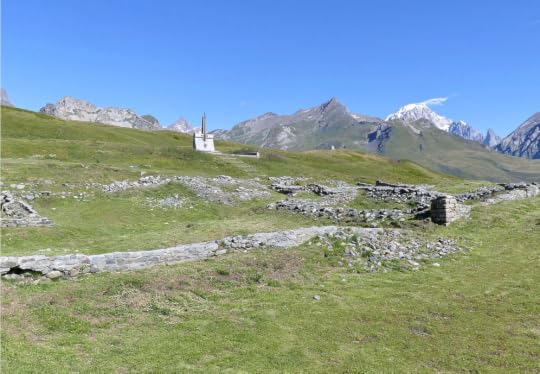
⛩️ ⛩️ Lena recalls her first conversation with Cyrille DuPuy at Columbia University: "My dig, he said, is in the mountains. Near the Petit-Saint-Bernard Pass - that is, where Hannibal made his crossing with the Carthaginians. We will discuss the archaeology of this region starting with the age of Augustus." And Lena thinks, "I knew about the Punic Wars, about Hannibal charging over the Alps with his elephants - but I knew nothing about ancient life in those mountains: the stone monuments the Romans went on to destroy and replace with their amphitheater, villas, and temple to Jupiter."
The foundation of the Roman temple to Jupiter near the Petit-Saint-Bernard Pass
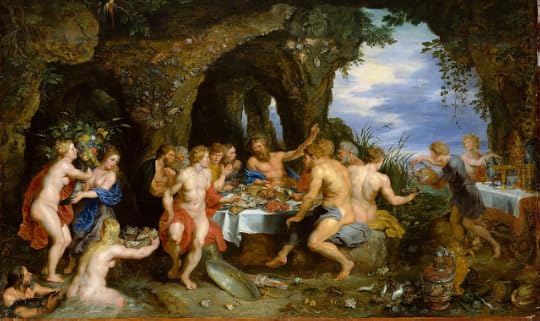
⛩️ ⛩️ Looking at a poster of 'The Feast of Achelous', Lena thinks, "Every time I look at it I see something new: a shell in the lining of the cave walls; a detail in one of the ancient vessels on the ground; a new facial expression on one of the figures facing Achelous the river god, who gestures to the water where his lover Perimele has been turned into an island by Neptune so he can hold her in an eternal embrace."
⛩️ ⛩️ Learning that a Roman mansio (stopping place for rich travelers) has a "fanum" dedicated to the goddess Epona Augusta, Lena observes, "I looked it up and learned it was the etymological root of the word profane. A fanum was a Roman temple built over a Gallic sacred place. Something that was profane was not sacred, because it was "pro" - outside of - a "fanum."
I felt like I was getting an education along with a novel.
Getting back to the story, while Lena is working in Orbagne she falls in love with Giamma Piromalli, a handsome Italian who's working on his PhD in art history. Lena is disturbed to learn Giamma's father has ties to the 'Ndrangheta (the Calabrian mafia), reputed to be ruthless men who loot archaeological sites, traffic in stolen antiquities, and traffic cocaine. It later appears the 'Ndrangheta may have been implicated in stealing and selling the dichroic cup.
That's not the only trouble in Orbagne. There's minor looting before the dig begins; there's friction between the co-directors; and Cyrille DuPuy disappears one morning, and no one seems to care. Lena goes to the police about her former professor, but they refuse to take a report and tell her to go to the French authorities. Cyrille's disappearance still haunts Lena twenty years later, and she uses Italy's lawsuit against Fordham as an excuse to return to Orbagne and look around.
In the chapters set in 2022, the accusation against Fordham gives Lena the opportunity to familiarize herself with matters surrounding art theft. Buying and selling antiquities (or donating them for a tax break) involves issues of provenance, export licenses, due diligence, ownership, ethics, cultural heritage, historical preservation, art repatriation, and so on.
For instance:
⛩️ ⛩️ "The book 'Art Crime' by John Conklin stated that art theft was the third-largest area of international crime, after drug smuggling and arms trading...the plundering of ancient sites for artifacts comprises nearly 90 percent of all art theft transpiring in the world today."
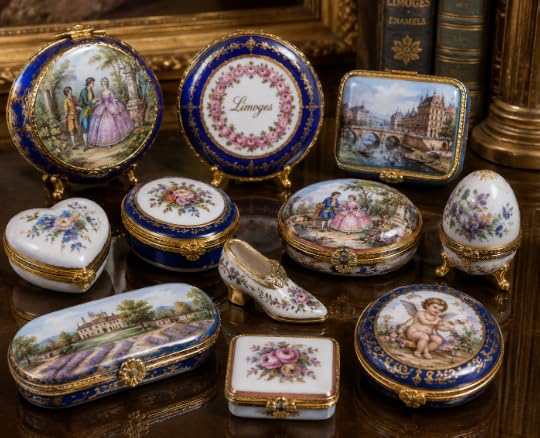
⛩️ ⛩️ Speaking about art donations, an expert says. "Ever since the tax code was changed...I've been advising my clients to donate valuable artworks within their lifetime in order to reap maximum benefits....My client with the Limoges enamels, for example...reduced his tax bill by 60 percent the year he donated to the Frick."
⛩️ ⛩️ Referring to cultural heritage law, an attorney says, "My team won a case a few years ago, brought against an art dealer who was implicated in selling Nazi-looted paintings to some oil family in the fifties...The case fell under government enforcement and compliance. The court was determined not to have jurisdiction. The claims were dismissed."
Once again, I felt like was learning a good deal.
The suspense aspects of the novel are augmented by issues in Lena's personal life.
To illustrate:
⛩️ ⛩️ Lena had a terrible childhood with a (now deceased) mentally ill mother and absent father; Lena is now completely estranged from her father and won't even speak to him.
⛩️ ⛩️ Lena's older sister Jinny is pregnant, which causes Lena angst. Lena observes, "When she told me about the pregnancy...I was only thinking about nature versus nurture, and inheritance, and of Jinny and I cowering on the beige living room couch in our childhood home during our mother's paranoid tirades."
⛩️ ⛩️ Lena is close to her best friend Lakshmi, whom she met in her Columbia archaeology seminar. The women spend time together, speak on the phone, confide in one another, and so on. This appears to be the most positive relationship in Lena's life.
All this helps round out the novel.
I liked the book's historical and technical details, and didn't mind looking up the meaning of the many Italian phrases. On the other hand, some of the book's suspense elements are murky and confusing. That said, I enjoyed the story and recommend it to readers interested in the subject.
Thanks to Netgalley, Natalie Lemle, and Simon & Schuster for an ARC of the book.
This book has archeology, musuem dealings, art looting, and organize crime at the heart of it! This was a slow moving story filled with mystery and antiquities. Once the story developed more, about halfway through, it hooked me in on the mystery surrounding that summer in Italy, at the archeological dig. I did feel like our main character was a bit obscure, I found myself not being able to relate or understand her well. Overall, I love the mysterious dive into archeology, looking to the past can be dangerous. Thank you NetGalley and Simon Books for the e-Arc!
Artifacts cannot fully decide on what kind of story it wishes to be, so it spans several genres at once. There’s parts of a law procedural that I suspect would have people working in the law field screaming with the flagrant disregard for the law, a dark summer romance, a murder mystery, and a commentary on the predatory practices within the rare artefact fields.
Lena isn’t an easy protagonist to follow along with, she’s highly critical of others in her vicinity (notably twenty year olds who don’t spend their time doing exactly what she did) and she reminds me entirely of the horror victim who refuses to run away from the killer as she blindly goes along with several incredibly shady situations with no inkling that something isn’t right.
The plot shifts between the modern day and an earlier dig which doesn’t flow well as characters are introduced in the modern day with the weight of the past relationship before the reader is aware of their existence. Added into the mix with a complex relationship with her parents and sister, it is difficult at time to keep track of who is aware of what is happening where. There’s also a jump right at the end to try and drag out the final reveal which caught me off guard and thinking I’d missed some pages.
There is interesting points about the impact of museums and the need for provenance of items vs when this cannot be found, and I liked the history behind the locations, but this was few and far between amongst everything else that was happening.
Artifacts is bogged down by an execution that makes a genuinely interesting premise feel overcrowded and underdeveloped.
The themes presented by Lemle have great potential. Artifacts has an interest in archaeology and who is allowed to write history, exploring how stories change depending on who controls the narrative and how the past carries different meanings depending on who claims it. Unfortunately, the book does not fully develop these ideas, and they remain promising background noise that neither shape the rest of the story nor Lena's personal arc.
The major issue with Artifacts is its overwrought descriptions, abstract jargon, and niche references. It's possible to write a book that includes niche material and uses it well, but Artifacts fails to make its specialized material useful to the narrative. References are fine when they are integrated into character, atmosphere, or theme, but in Artifacts, it felt more like sediment burying the rest of the novel's genuinely interesting components.
As someone with zero interest or knowledge in any of the topics presented, the insistence on these details felt muddy and confusing. Paragraphs upon paragraphs felt more like a lecture than a compelling narrative and made it difficult to follow the specifics of the plot, let alone connect with any of the characters.
The heavy use of Italian felt especially grating and created a weird narrative distance. Since Lena is fluent in Italian, by not translating the Italian passages, the reader is locked out of information possessed by the protagonist, which interrupts alignment with her as a character. These structural issues served as amplifiers for smaller issues that would have otherwise been negligible or forgivable.
Lemle tries unsuccessfully to balance a mafia mystery, a legal procedural, a traumatic family history, and an academic tone. Each narrative thread twists and stumbles in its own clumsy way. The mafia subplot adds danger but not much substance, while the family subplot involving Lena's sister and mother has emotional potential but is never fully interrogated. As a result, the novel feels busy without feeling rich.
Artifacts immediately introduces a relatively sizeable cast of characters who serve an important function but are thin and underdeveloped. They each hold a small key to the plot, but because they are given so little interiority or distinction, they blur together rather than deepening the story, making them feel like plot devices rather than fully realized characters.
Lena has all the ingredients for a fascinating protagonist. She has a deadly, intriguing cocktail of unreliable narrator traits: dissociation, memory fog, and naivete. Though she is a lawyer, she is herself an archaeologist of sorts, going back in time to unearth memories and histories and rewrite the story she once told herself to believe. The potential for connection between Lena's character arc and the overarching themes of historical preservation was incredibly compelling.
Ultimately, Lena's character feels uncontrolled. It's difficult to understand her motivations or to feel invested in what happens to her. Her job as a lawyer feels more like a necessary plot device rather than a meaningful part of her characterization. Since the story deals with questions of ownership, history, and justice, her legal background could have been utilized to deepen the book's themes, but it never feels fully integrated.
When the author does take the time to address the larger questions introduced at the beginning of the book, it feels like the summary to a thesis. Characters talk at each other about the importance of cultural preservation, about the benefits and failings of museums and historical sites. A single mention at the very beginning of the book is given to the complicated colonial histories of artifacts and state ownership, and the topic is never meaningfully addressed again.
The narratives wrap up with a tidy bow, with convenience rather than emotional payoff or complex outcomes. Thematically, Artifacts culminates in a resolution that feels politically rancid. The ending imposes a clean administrative solution backed by private tech infrastructure and surveillance, which feels out of place in a book that sets up questions about contested memory and the instability of history.
The novel's interest in the idea that artifacts and people hold multiple histories means that ending with a "true history" flattens the entire premise. The whole point should be that histories, cultural or personal, are historically entangled, not that they have one recoverable truth that can be certified. An ending that should feel liberatory feels stale and coldly corporate. Ironically, it retroactively rewrites the entire claimed purpose of the book and makes everything land with even less force.
I received an ARC of this title in exchange for an honest review.
I received a free advanced reader copy of this book from NetGalley.
This story reminded my a lot of The Stolen Queen by Fiona Davis in terms of dual timelines, stolen artifacts, a main character that was involved in an archeological dig in the past and museums. There are, however, a lot of differences to set this apart. Beware of spoilers below.
Lena works in law but gets pulled into a case involving artifacts at Fordham University’s museum that may have been stolen and that Italy wants back. While working on this case, her time spending a summer at a dig site comes to mind and the connections between the donor to the museum and what Lena experienced as an undergrad are too close to be coincidental.
I liked that Lena was in law, and seeing the stolen artifacts and repatriation through a lawyer’s eye and the legalities involved with it was interesting. We are led to believe that this Dichroic Glass cup links Lena’s past and present and I was interested in seeing its ‘founding’ as it were in Lena’s past but that is not the case. We never hear or see a glimpse of this cup in the past Lena’s story so its significance in the present falls a little short. Lena’s character in itself could also have been fleshed out more. Her relationship with her sister is fraught both in the past and present with no clear resolution, and she is clearly struggling with some shady things that happened during the summer of the dig but we don’t really get a clear arc for her character and so I’m just left feeling eh. Also, as a very small side note, I wish we had more dig time in the past but the story was more focused on Lena’s relationship with Giamma which does make sense as that criminal aspect plays heavily into future Lena’s life. I just enjoy the archeology aspect and wish we had more of that in the story.
The reason for my 3.5 out 5 star rating comes largely from the ending of the book. To me it felt so abrupt that I actually went back to make sure I didn’t accidentally skip a page. Beware of spoilers below! There is this sense of danger for Lena especially since Pietro has been murdered and she’s encouraged by her friend to leave now but yet she joins Si in going back to the villa one more time and then the story just finishes? There is no resolution to the danger, and to Lena’s story and instead we are just left hanging. What’s going to happen with Giamma? Giamma is such a big part of the story from Lena’s past and we are shown how he is part of the criminal activity and how past Lena struggled to face that aspect. Present day, however, there is no resolution to his story. Had his criminal ways just been in the past to get back to the US as he led Lena to believe? Is he still apart of that world and behind the stolen artifacts donated to Fordham? Why did Si let Lena believe she was in danger in Italy, that she can’t speak freely on the phone, but when Lena gets there Si is like “oh great you made it!” and is, in fact, not in danger. Pietro was always an ambiguous figure in past Lena’s life and in the present he does takes a step forward and speaks out, putting a spotlight on the villa and criminality involved and then abruptly gets murdered. Great for building the stakes and tension in the story but we as readers are just left hanging.
Overall I was enjoying the story but the abrupt and unsatisfactory ending made me reevaluate the rating I was planning to give to this book. Normally with so many loose ends I would assume there is going to be a sequel but I don’t get the impression of that with this book. So while I did enjoy the archeology with the criminal aspect and the repatriation aspect, I feel like it was not executed well in the story and there is no actual ending, leaving me feeling slightly frustrated and bereft.
Listen, I love a good mess. And Artifacts by Natalie Lemle is an absolute Mediterranean salad of ancient crime, trauma flashbacks, and a main character who keeps tripping into morally grey legal territory like it’s her brand. It's got the bones of a highbrow literary thriller, but keeps tossing in wild mafia shenanigans like someone dared it to become The Da Vinci Code with tenure.
Our leading lady Lena Connolly is a trusts and estates attorney. Which, okay, not sexy on paper, but apparently “vaguely bored lawyer with a suppressed archaeology kink” is enough to launch a full spiral. The second someone brings her a case involving a stolen ancient cup made of rainbow glass (yes, dichroic, but also gay chalice energy), she’s yeeted right back to the Italian dig site of her youth, where things were hot, suspicious, and extremely above her pay grade.
Past Lena was out here falling in love with archaeology and with Giamma, a beautiful local man whose dad just happens to be a walking RICO charge. Add a mentor who straight-up disappears into the night, an artifact that may or may not have been looted on Lena’s watch, and about 42 unanswered emails from the ethics committee, and you’ve got yourself a plot.
We bounce between timelines. Young Lena in Italy, thinking she’s on a sexy Indiana Jones field trip, and older Lena lawyering her way through institutional gaslighting and cultural repatriation lawsuits. But here's the thing. Adult Lena is somehow less emotionally coherent than her collegiate self. This woman finds out she maybe helped traffic an ancient artifact and her reaction is basically a shrug and a vague comment about closure. Girl, what?
The dual timelines almost work, but it’s like watching two half-formed plots running on parallel tracks and occasionally waving at each other across time. The mystery? Intriguing. The moral questions? Genuinely thoughtful. The emotional stakes? Somewhere off-page taking a nap. I wanted Lena to either totally crack or go full Veronica Mars, but she just kind of... middle-manages her way through personal revelation.
Also, the sheer amount of mythological deep-cuts and ancient Roman side quests in this book? It’s giving “graduate seminar PowerPoint with a body count.” If you’ve ever yelled “WHERE is the provenance document?” at a museum exhibit, congrats, this book is your new problematic fave.
But while the plot sometimes folds in on itself like cursed origami, Lemle does manage to sneak in some big, chewy questions. Who gets to own history? What happens when we put our faith in institutions that are low-key laundering ancient loot through Ivy League connections? And, my personal favorite, why do hot men with mysterious accents always have bodies in the metaphorical (or literal) basement?
By the end, you’re not sure if Lena has solved a mystery, uncovered a conspiracy, or just deeply violated like five clauses of attorney-client privilege, but it feels like a win. The final chapters bring enough heat to make the earlier slog worth it... mostly. I wanted more from her personal arc, especially that weirdly unresolved family trauma breadcrumb trail, but the ancient cup drama? Deliciously messy.
This one’s a 3.5 star ride. A little dusty, a little tangled, but absolutely worth it if you like your thrillers with side-eye, stolen art, and the occasional academic meltdown.
Whodunity Award: For Making Me Suspect Both the Mafia and the Museum Gift Shop
Big thanks to Simon & Schuster and NetGalley for the ARC, and for trusting me with ancient artifact drama I absolutely would’ve fumbled in real life by yelling "IS THIS CURSED?" out loud in a museum.
Chaos, but make it academic and emotionally unhinged—because this book had me questioning not just the mystery, but my own moral compass somewhere between an Italian villa and a very bad decision I would’ve absolutely made at twenty.
Natalie Lemle’s Artifacts pulled me into a sun-drenched archaeological dig in the Italian Alps and then quietly wrecked my peace with questions about memory, ownership, and the stories we tell ourselves to survive. Thank you to Simon & Schuster and NetGalley for the gifted ARC.
This is one of those layered, slow-burn, brainy reads that doesn’t spoon-feed you anything. We follow Lena across two timelines: her younger self, naive and aching to belong during a summer abroad filled with excavation, academia, and a dangerously charming local (hi, Giamma—walking red flag, but make it irresistible), and her older self, now a lawyer tangled in a case involving stolen artifacts that feels a little too close to home. And when I say close, I mean buried-secrets-coming-back-to-haunt-you kind of close.
What I loved most is how this book isn’t just about stolen antiquities—it’s about stolen certainty. Lena is not your typical strong, decisive heroine. She’s passive, observant, sometimes frustratingly complicit, and deeply human. Watching her piece together her past while navigating a present that demands accountability felt like watching someone excavate their own guilt layer by layer. It’s quiet, tense, and honestly? A little haunting.
“History doesn’t disappear. It waits.”
That line lives rent-free in my brain now because it perfectly captures the entire vibe of this story. The atmosphere is lush and immersive—you can practically feel the dust of the dig site, taste the wine, and sense the undercurrent of danger simmering beneath every interaction. The relationships are messy, the ethics are murky, and the line between right and wrong is basically a suggestion.
That said… this book does not hold your hand. The plot can get dense, the timelines blur a bit, and not every thread gets a satisfying bow at the end. If you’re here for a clean, fast-paced thriller, this might test your patience. But if you love literary mysteries that prioritize mood, theme, and character over tidy resolution? You’re going to eat this up.
This is for the reader who highlights passages, Googles historical references mid-chapter, and texts their book club like “wait… do we trust him or am I spiraling?” It’s for the ones who don’t mind sitting in ambiguity and maybe even enjoy it a little too much.
For me, this landed at a thoughtful, slightly conflicted, but ultimately appreciative 3.5⭐️—because while it didn’t fully sweep me off my feet, it absolutely lingered in my head long after I turned the last page.
⭐⭐⭐✨
Would you rather have all the answers handed to you… or be left digging through the emotional rubble like Lena, trying to decide what truth you can actually live with?
“Artifacts “ is loosely based on Fordham University Museum of Greek, Etruscan and Roman Art’s return of over 200 artifacts back to Italy in 2021. It was the largest-ever repatriation agreement between the two countries, and mostly linked to a single unscrupulous antiquities dealer (who escaped because of statute limitations). The book spotlights an ancient cup of Dichroic glass, which is a rare and amazing artifact.
Lena/Maddalena, a young international tax lawyer, on the partner-track and who usually deals with estates, is recruited by her firm primarily (she thinks) because she speaks Italian,a language she learned fluently during a Classics seminar/archeological dig eighteen years ago. Their client is the university art museum which is obviously sensitive about having possibly acquired looted artifacts. As she investigates deeper, Lena also encounters (coincidence?) many of the same people who were on that collegiate dig nearly two decades ago. What was disturbing about that time was a mysterious looting, a lover with familial criminal connections and an art history degree, and a professor who disappeared in Italy.
This is a fascinating story that incorporates disparate topics like ancient irrigation techniques, Calabrian criminal gangs, and modern-day art restitution. It’s Lena’s first person POV over two timelines: an overseas summer internship in 2004 and and a legal assignment in 2022. The author emphasizes the little known fact that art theft is the third-largest area of international crime, after drug smuggling and arms trading.
I found “Artifacts” extremely interesting but way too complicated at times. I ended the book still without a clear understanding of how Lena’s summer in Italy as a teenager was actually an unrealized dangerous time for her and why the past might catch up with her now, although she had nothing more than a fling with vivid memories. We also get a backstory about her mother and a way too knotty relationship with her older sister that added some depth to her character but could have been eliminated. There’s quite a bit of philosophy about our connections to ancient objects and the meanings of mythical stories — however, if you consider this a mystery story, those ruminations can be lost on the reader just looking for a solution. All in all, a good debut for Natalie Lemle. 4 stars.
Literary Pet Peeve Checklist: Green Eyes (only 2% of the real world, yet it seems like 90% of all fictional females): YES we have an intriguing green eyed man in a boutique.m Horticultural Faux Pas (plants out of season or growing zones, like daffodils in autumn or bougainvillea in Alaska): YES Mistletoe actually does grow in Egypt, and not just on oaks, but hardwoods like apples, elms and poplars.
Thank you to Simon & Schuster and NetGalley for an advanced reader copy!
This novel blends archaeology, stolen artifacts, black market art sales, organized crime, and shady museum donations to generate charitable deductions, all wrapped in a complex plot involving a dig in the Italian alps.
During a summer at Columbia University, classist student Lena Connolly goes to work on a dig in the Italian alps with her art history professor, Cyrille. There’s tension at the dig between American Cyrille, who’s focused on the pre-Roman historical and religious significance of the site and Italian Pietro who wants to show its provincial importance. There Lena falls in love with Giamma, a handsome local boy who’s both pursuing a Ph.D. in art history in Columbia while currently taking time out of his studies to help out his Dad who’s a leader in the ’Ndragheta, a large Calabrian crime syndicate. Lena knows looting has occurred at the dig site, but she still helps Giamma get a valuable blackmarket artifact into France. Wrapped in much mystery and intrigue, Cyrille vanishes one night from the site never to be seen again.
Fast forward and Lena’s a seasoned estate attorney in New York City, working to defend Fordham University from having to repatriate to Italy a rare dichroic glass chalice. Turns out that this artifact and other donated connect back to the Italian Alps dig, possible looting, and the Italian mafia.
There’s much Roman and Greek history to take in, along with mythology, gods and goddesses, politics and religious and culture tensions between the Romans and those they conquered. But the plot does get overly convoluted as it jumps back and forth in time, with constant new revelations creating murkiness as to what actually transpired. And the character development proves thin, and Lena’s character questionable. For instance you being left wondering at the naiveness and lack of morality of Lena as she both accepts $18,00 for helping get a looted artifact out of Italy and at the same time never realizes how much organized crime wraps into this or questions the foundations of her own morality.
At the very heart of the novel is the much larger question of artifacts themselves: should they be housed in their country of origin or where most people will be able to see and appreciate them; how much responsibility do museums have for tracing back provenance or spotting fraud produced documents of origin; what role does organized crime play in using artifacts to launder money? The ethics ambiguity leaves much to muse over.
Thanks to Simon & Schuster and NetGalley for an advanced reader’s copy
Thank you Simon Books for the gifted copies; the premise of this is so different from what I’ve read before that I was immediately intrigued and elevated it high on my tbr of new 2026 releases.
I know nothing about archaeology and never would I be mistaken for a history buff, of any kind, so this book threw me into topics that essentially are almost entirely new-to-me. I do enjoy art and taking time to wander and reflect in museums (though I don’t get this chance very often), so there was still something that pulled me in. It did take a while to adjust because there’s a lot of terminology that is unfamiliar and quite a bit of Italian thrown in without translation, but that could be a struggle for some readers.
It is a dual timeline slow burn, more character-driven than plot, and there’s a mystery under the layers. And there are a lot of layers: several characters, subplots, various mythologies, and other aspects, and somehow by the end most loose ends are tied but not all, though I did feel things were rushed at the conclusion. While I didn’t particularly feel drawn to Lena or any of the side characters, I still was curious about how things would unfold.
Overall it was fine. I wasn’t blown away and I think that was mostly due to all the layers and parts, several of which I was unacquainted with, but also I personally struggled with the flow of the writing. Even though very much a slow burn at times it was almost like it suddenly, briefly, moved too fast for me to make the connections, but again, unfamiliar fields and topics to me. Anyways, I’m grateful for the publisher for sending me copies and giving me the chance to review. I probably won’t literally visit Italy this year but at least I did in my mind. Too bad it didn’t also come with some pasta and pizza.