

What do you think?

Bone of My Bone
Bram Stoker Award–nominee and USA Today bestseller Johanna van Veen unveils a sapphic folk-horror tour de force—perfect for fans of The VVitch and The Salt Grows Heavy. A skull's grin is eternal…
The year is 1635.
Sister Ursula, a young nun fleeing the ruins of her convent, and Elsebeth, a sharp-witted peasant, escape a band of marauding soldiers and disappear into the Bavarian forest. War scorches the land, and no one survives it alone. Amid the devastation, they find something in the arms of a dying the gilded skull of a saint.
It is said that if you reunite the saint's skull with her body, a wish will be granted. Desperate for salvation, and each with secret desires of their own, Ursula and Elsebeth follow a ragged map across the blighted countryside. But darkness follows them. A necromancer, drawn to the relic's power. The saint herself, whispering at night. And as the lines between blessing and curse blur, the women must face a harrowing the magic they seek comes at a cost.
At the journey's end, they'll face an impossible choice—one that could tear apart everything they know… or bind them to each other forever.
The year is 1635.
Sister Ursula, a young nun fleeing the ruins of her convent, and Elsebeth, a sharp-witted peasant, escape a band of marauding soldiers and disappear into the Bavarian forest. War scorches the land, and no one survives it alone. Amid the devastation, they find something in the arms of a dying the gilded skull of a saint.
It is said that if you reunite the saint's skull with her body, a wish will be granted. Desperate for salvation, and each with secret desires of their own, Ursula and Elsebeth follow a ragged map across the blighted countryside. But darkness follows them. A necromancer, drawn to the relic's power. The saint herself, whispering at night. And as the lines between blessing and curse blur, the women must face a harrowing the magic they seek comes at a cost.
At the journey's end, they'll face an impossible choice—one that could tear apart everything they know… or bind them to each other forever.
368 pages, Paperback
First published May 26, 2026
About the author
Johanna van Veen
6 books1,932 followersJohanna van Veen grew up in the Netherlands with her two sisters. She received an MA in English Literature with a specialization in early modern literature, as well as an MA Book and Digital Media with a specialization in early modern book history.
Ratings & Reviews
Friends & Following
Create a free account to discover what your friends think of this book!
Community Reviews
Displaying 1 - 30 of 1,149 reviews

April 14, 2026
I'm not surprised that Johanna van Veen's next adult novel will be all whimsical and charming, because I would need a break from horror too after writing that brutal of a book. After publishing two gothic horror novels she now changes pace with this terrifying blend of war story and folk tale. The book is set during the Thirty Year's War in Bavaria, Germany, which is a time of violence, plague and hunger. I would put trigger warnings for just about everything, because the inhumane reality of war takes up a big part of this book. It's a story about what the human body and mind can endure before they break completely and about how a person can possibly keep their faith in a world so hopeless. Every character in this book has been through hell. We mainly follow Sister Ursula, a nun who had to flee her convent, and Elsebeth, a young woman who might be the only survivor of her entire village. There seems to be no safety in the world for either of them, but after meeting in a dire situation, they become travel companions and find a little bit of protection in each other. After they come across a dying man carrying a saint's skull, they decide to search for the saint's grave to reunite the skull with the rest of the body. It's said that this deed will grant them a wish, and why not cling to this sliver of hope? It's of course not an easy journey. Vile soldiers wait around every corner, food is sparse but sickness is plenty, there is always the opportunity of being accused as a witch and burned at the stake, and, on top of all that, war is the perfect playground for dark creatures with deathly powers. I really liked how German folklore was embedded into the story and how it was used as a way to contrast fictional and human monsters. If I remember correctly, there was a similar plotline in The Warm Hands of Ghosts by Katherine Arden and if you ever wished that that book was more horror, then Bone of my Bone should be your next read. The dark and heavy atmosphere was so well done here. It always feels wrong to say that I loved the atmosphere when a book is so full of gruesome themes, but when an author does it well, it's just so captivating to me. I also love Johanna van Veen for writing such a story and thinking that it's all horrific enough already and that we don't need to deal with homophobia on top of that too. So of course women's love prevails in this book. Ursula and Elsebeth make a great couple in my opinion, but their romantic beginnings really were too rushed. They basically know each other for a day before they are passionately kissing and only another week passes until they are in love completely. But I also get that they were both lonely and surrounded by death, desperately seeking connection and a person to successfully protect after they failed to save their loved ones before. In my mind they just belonged together in the second half of the story, but I still would have preferred if they had known each other for longer. I do have to say that them calling each other "mein Liebchen" (my little darling) made my skin crawl every time. As a German, that is such a grandmother's phrase to me and I don't ever want to read it again in a steamy sapphic scene, please and thank you. But my little criticisms aren't really dimming my reading experience in this case. There were so many discussions that I read with great interest in here. About religion and guilt and shame, about accepting flaws but also about just not caring about them anymore. (Honestly, what a badass move at the end.) The whole book just really did it for me and I can only recommend it. But seriously, check the trigger warnings.
Huge thanks to NetGalley and Poisoned Pen Press for providing a digital arc in exchange for an honest review.
Huge thanks to NetGalley and Poisoned Pen Press for providing a digital arc in exchange for an honest review.
June 7, 2026
4.5☆
I anticipated being easily drawn into this novel and the anticipation paid off. Bone of My Bone is filled with German folk lore, horrific beings, gore, sapphic love and religious beliefs.
The events of this Gothic historical horror occur in 1635 during the 30 Years War. The atrocities of war surround the protagonists; starvation, cannibalism, pillaging, rape, and murder, and it was also a time when plague ravaged the world. Van Veen has used words to paint vivid mental pictures of the gruesomness, but it is not over the top. Please take time to read the trigger warnings for this novel. There are many.
Elsebeth and Sister Ursula are complete opposites. Elsebeth is a fiesty scrapper, who has lost her faith in God. She is a tough farm girl with determination to fight for her life. Sister Ursula is a young woman who has spent her life sheltered within the walls of a convent. She is cowardly, as she often states throughout the novel, and she has a papist response to everything. Despite their polarity Elsebeth and Ursula join together to fight for their lives, the lives of one another and against the evil lurking around them.
Even though the two women are faced with real and paranormal horror they are able to find beauty in the small moments. Neither becomes so calloused or frozen in fear that they can't see the brief flashes of good in their situation. They find love.
Favorite Quote:
"There are filth and rottenness in this world; I've been forced to contemplate plenty. But I've found that, if I see something of great beauty and I look at it for a long time until I have a clear picture of it in my mind, then I can call up that picture whenever there's filth and rottenness, and that makes it easier to bear."
Elsebeth
I anticipated being easily drawn into this novel and the anticipation paid off. Bone of My Bone is filled with German folk lore, horrific beings, gore, sapphic love and religious beliefs.
The events of this Gothic historical horror occur in 1635 during the 30 Years War. The atrocities of war surround the protagonists; starvation, cannibalism, pillaging, rape, and murder, and it was also a time when plague ravaged the world. Van Veen has used words to paint vivid mental pictures of the gruesomness, but it is not over the top. Please take time to read the trigger warnings for this novel. There are many.
Elsebeth and Sister Ursula are complete opposites. Elsebeth is a fiesty scrapper, who has lost her faith in God. She is a tough farm girl with determination to fight for her life. Sister Ursula is a young woman who has spent her life sheltered within the walls of a convent. She is cowardly, as she often states throughout the novel, and she has a papist response to everything. Despite their polarity Elsebeth and Ursula join together to fight for their lives, the lives of one another and against the evil lurking around them.
Even though the two women are faced with real and paranormal horror they are able to find beauty in the small moments. Neither becomes so calloused or frozen in fear that they can't see the brief flashes of good in their situation. They find love.
Favorite Quote:
"There are filth and rottenness in this world; I've been forced to contemplate plenty. But I've found that, if I see something of great beauty and I look at it for a long time until I have a clear picture of it in my mind, then I can call up that picture whenever there's filth and rottenness, and that makes it easier to bear."
Elsebeth

May 30, 2026
Thanks to NetGalley and Poisoned Pen Press for the ARC!
🌟🌟/5
For me, 'Bone of My Bone' is Johanna van Veen's weakest work yet, which is such a shame because it's also the book that I thought had the most potential. I mean, a sapphic folk/religious horror with Germanic folklore?! The concept couldn't have been better. Unfortunately, this book didn't work for me and might just go down as one of my least favourite reads of the year.
There's still quite a lot that I liked about 'Bone of My Bone'. As always, Johanna van Veen's ability to conjure up incredibly horrifying visuals in my mind remains unparalleled. Rotting flesh, bulging eyeballs, plague-afflicted bodies...this book has it all. I absolutely do not recommend it (or any of van Veen's adult horror novels, for that matter) if you're squeamish. I thought the author's portrayal of the horrors of war and famine was very effective. I also like how concepts from Germanic folklore like the Nachzehrer and the Aufhocker (with a few creative liberties) were incorporated into the story. Some aspects of Ursula's character development, like her overcoming fear, were well done. I also liked
The romance was a major letdown for me. It was very much insta-love and the protagonists literally kissed within a day of meeting each other. Ursula's incessant talk of God and religion was grating and took me out of the story. As much as I respect all faiths, this is something I personally prefer not to read about in books. I felt like I was being lectured, and that's not something I expected when I heard that this was a religious horror novel. Elsebeth was somewhat more compelling, but I couldn't deeply care for either of them. I also didn't find the setting to be immersive. van Veen's previous gothic horror novels had an impeccable sense of setting, this one did not. I appreciate the author for openly admitting that geography and topography are not her strong suit. However, this really took away from my enjoyment of the book. The climax had one very cool plot twist, but otherwise felt comical and the confrontation with the villain cartoonish. There was a certain thing about the resolution at the end that I did not like. My explanations are probably too handwavy, but I can say only this much without getting into spoilers.
Overall, 'Bone of My Bone' was a huge disappointment for me, and I wouldn't recommend it. Her debut 'My Darling Dreadful Thing' remains my favourite of hers so far. I'm still interested in reading her upcoming adult fantasy, though. I'm excited to see what a lighthearted novel by Johanna van Veen feels like!
🌟🌟/5
For me, 'Bone of My Bone' is Johanna van Veen's weakest work yet, which is such a shame because it's also the book that I thought had the most potential. I mean, a sapphic folk/religious horror with Germanic folklore?! The concept couldn't have been better. Unfortunately, this book didn't work for me and might just go down as one of my least favourite reads of the year.
There's still quite a lot that I liked about 'Bone of My Bone'. As always, Johanna van Veen's ability to conjure up incredibly horrifying visuals in my mind remains unparalleled. Rotting flesh, bulging eyeballs, plague-afflicted bodies...this book has it all. I absolutely do not recommend it (or any of van Veen's adult horror novels, for that matter) if you're squeamish. I thought the author's portrayal of the horrors of war and famine was very effective. I also like how concepts from Germanic folklore like the Nachzehrer and the Aufhocker (with a few creative liberties) were incorporated into the story. Some aspects of Ursula's character development, like her overcoming fear, were well done. I also liked
The romance was a major letdown for me. It was very much insta-love and the protagonists literally kissed within a day of meeting each other. Ursula's incessant talk of God and religion was grating and took me out of the story. As much as I respect all faiths, this is something I personally prefer not to read about in books. I felt like I was being lectured, and that's not something I expected when I heard that this was a religious horror novel. Elsebeth was somewhat more compelling, but I couldn't deeply care for either of them. I also didn't find the setting to be immersive. van Veen's previous gothic horror novels had an impeccable sense of setting, this one did not. I appreciate the author for openly admitting that geography and topography are not her strong suit. However, this really took away from my enjoyment of the book. The climax had one very cool plot twist, but otherwise felt comical and the confrontation with the villain cartoonish. There was a certain thing about the resolution at the end that I did not like. My explanations are probably too handwavy, but I can say only this much without getting into spoilers.
Overall, 'Bone of My Bone' was a huge disappointment for me, and I wouldn't recommend it. Her debut 'My Darling Dreadful Thing' remains my favourite of hers so far. I'm still interested in reading her upcoming adult fantasy, though. I'm excited to see what a lighthearted novel by Johanna van Veen feels like!

Review of advance copy received from Netgalley
my first dive into Johanna van Veen & it definitely won't be my last. the concept was interesting, I loved the setting, the gothic tones & the horror aspects were done pretty well.
that being said, I found Ursula & Elsebeth to be...underdeveloped?? I think for me the story started to lose me with the romance. I did not pick up from the synopsis that this was going to be so romance forward, which is probably on me. I'm not a romance person even more so if it's a "insta love" kind of situation which is what this was.
I wish we had gotten to actually know our characters, or at least made it more of a subplot vs a big focus, instead of just throwing them into this insta love relationship...the romance kind of took over the main plot the further the story goes on, at least for me.
I found Otto & the necromancer much more interesting & would have really enjoyed reading their POVs more. If this had leaned into the darker side of the setting & the whole "we're running through the countryside with a random magical skull while a necromancer is on the loose after us" plot this might have been a five star read
I think those who enjoy romance will definitely eat this up but for me I'm landing on a 3.5 ✨
Thank you to NetGalley & the publisher for this arc in exchange for an honest review
that being said, I found Ursula & Elsebeth to be...underdeveloped?? I think for me the story started to lose me with the romance. I did not pick up from the synopsis that this was going to be so romance forward, which is probably on me. I'm not a romance person even more so if it's a "insta love" kind of situation which is what this was.
I wish we had gotten to actually know our characters, or at least made it more of a subplot vs a big focus, instead of just throwing them into this insta love relationship...the romance kind of took over the main plot the further the story goes on, at least for me.
I found Otto & the necromancer much more interesting & would have really enjoyed reading their POVs more. If this had leaned into the darker side of the setting & the whole "we're running through the countryside with a random magical skull while a necromancer is on the loose after us" plot this might have been a five star read
I think those who enjoy romance will definitely eat this up but for me I'm landing on a 3.5 ✨
Thank you to NetGalley & the publisher for this arc in exchange for an honest review

May 26, 2026
**4.5-stars**
❤️🖤❤️🖤❤️🖤❤️🖤❤️🖤❤️
Bone of My Bone is a historically-set Religious Horror novel set during the time of the Thirty Years' War. It's Sapphic, contains a lot of gore, and also some really interesting elements stemming from Germanic Folklore.
We follow Ursula, a nun, and a peasant girl named Elsebeth. Both women are fleeing from marauding soldiers. Ursula has fled her convent, and Elsebeth, after the loss of her entire family, is trying to make her way to her Aunt's home.
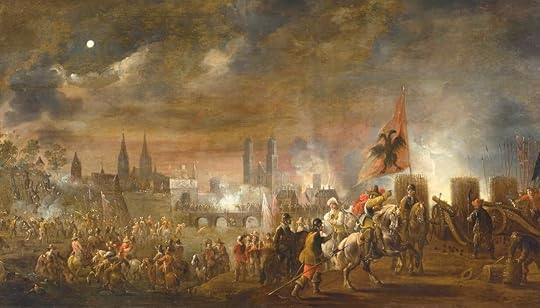
They meet on the road after Elsebeth jumps in to protect Ursula from an attacking soldier. Once they're safe, the women have a chat, and decide it would be safer for them both if they travel together. Safety in numbers, and all that.
Keeping to the woods in the hopes they won't be spotted by any more soldiers, they happen upon a dying man. He's clutching a glass box, within which lies the gilded skull of a Saint. Ursula immediately recognizes it for what it is, and also knows that it's said that if you reunite the Saint's skull with it's body, you'll be granted a wish.
In these horrific times, both women have a lot to wish for. They discuss it a bit, and decide they have nothing to lose. It's worth a shot. Thus, they scoop up the reliquary and begin their quest.
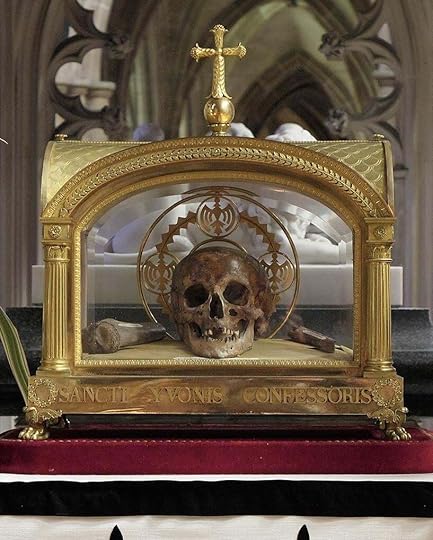
There's a map to where the Saint's body is said to be, but there's certainly a lot of ground to cover. Unfortunately, the dangers on the road are plentiful, and it's not just the soldiers they need to fear. There's also a Necromancer, drawn to the power of the skull, who is hot on their heels.
Will they be able to survive the dangers of the road, dodge the Necromancer and be able to reunite the Saint's skull with her body? There's only one way to find out.
Johanna van Veen has done it again!
This is such an excellent blend of Historical, Religious and Folk Horror. The setting is rich with detail, gritty and brutal. There's dirt, grime, gore, blood, and everything in between.
Ursula and Elsebeth were both well-developed and I found their quest to be gripping. Gore is mentioned-above, and I loved how gory it was, but I also appreciated the softer character moments than van Veen included.
I was a bit intimidated by this going in, but instantly found it so accessible. I had concerns it would be challenging, I think because I found the synopsis a little confusing. Nevertheless, I had nothing to be concerned about.

Having the quest gave the story great focus, and also allowed Ursula and Elsebeth to bond more quickly due to their reliance upon one another for safety.
I've heard some people mention it's too heavily-focused on religion, and understand people having those opinions, but I feel like it makes sense due to the historical context of the story, and Ursula's role within the church as a nun.
The Thirty Years' War is such a horrible period of history, and it's not one I've read a lot about in a fictional way. I liked that van Veen chose that time period. It's certainly made me more curious about that war and to imagine what life was like during that time is truly horrifying.

This is only the 2nd-novel I've read from van Veen, but she's quickly jumped the ranks of my go-to authors list. I still need to read My Darling Dreadful Thing. I have a feeling I'm going to love that one just as much.
Thank you to the publisher, Poisoned Pen Press, for providing me a copy to read and review. I can't wait to get a hard copy of this for my shelves!!
❤️🖤❤️🖤❤️🖤❤️🖤❤️🖤❤️
Bone of My Bone is a historically-set Religious Horror novel set during the time of the Thirty Years' War. It's Sapphic, contains a lot of gore, and also some really interesting elements stemming from Germanic Folklore.
We follow Ursula, a nun, and a peasant girl named Elsebeth. Both women are fleeing from marauding soldiers. Ursula has fled her convent, and Elsebeth, after the loss of her entire family, is trying to make her way to her Aunt's home.
They meet on the road after Elsebeth jumps in to protect Ursula from an attacking soldier. Once they're safe, the women have a chat, and decide it would be safer for them both if they travel together. Safety in numbers, and all that.
Keeping to the woods in the hopes they won't be spotted by any more soldiers, they happen upon a dying man. He's clutching a glass box, within which lies the gilded skull of a Saint. Ursula immediately recognizes it for what it is, and also knows that it's said that if you reunite the Saint's skull with it's body, you'll be granted a wish.
In these horrific times, both women have a lot to wish for. They discuss it a bit, and decide they have nothing to lose. It's worth a shot. Thus, they scoop up the reliquary and begin their quest.
There's a map to where the Saint's body is said to be, but there's certainly a lot of ground to cover. Unfortunately, the dangers on the road are plentiful, and it's not just the soldiers they need to fear. There's also a Necromancer, drawn to the power of the skull, who is hot on their heels.
Will they be able to survive the dangers of the road, dodge the Necromancer and be able to reunite the Saint's skull with her body? There's only one way to find out.
Johanna van Veen has done it again!
This is such an excellent blend of Historical, Religious and Folk Horror. The setting is rich with detail, gritty and brutal. There's dirt, grime, gore, blood, and everything in between.
Ursula and Elsebeth were both well-developed and I found their quest to be gripping. Gore is mentioned-above, and I loved how gory it was, but I also appreciated the softer character moments than van Veen included.
I was a bit intimidated by this going in, but instantly found it so accessible. I had concerns it would be challenging, I think because I found the synopsis a little confusing. Nevertheless, I had nothing to be concerned about.
Having the quest gave the story great focus, and also allowed Ursula and Elsebeth to bond more quickly due to their reliance upon one another for safety.
I've heard some people mention it's too heavily-focused on religion, and understand people having those opinions, but I feel like it makes sense due to the historical context of the story, and Ursula's role within the church as a nun.
The Thirty Years' War is such a horrible period of history, and it's not one I've read a lot about in a fictional way. I liked that van Veen chose that time period. It's certainly made me more curious about that war and to imagine what life was like during that time is truly horrifying.
This is only the 2nd-novel I've read from van Veen, but she's quickly jumped the ranks of my go-to authors list. I still need to read My Darling Dreadful Thing. I have a feeling I'm going to love that one just as much.
Thank you to the publisher, Poisoned Pen Press, for providing me a copy to read and review. I can't wait to get a hard copy of this for my shelves!!

June 20, 2026
I really enjoyed this one! Johanna van veen is an insta read author for me so I was ready for this! It’s definitely not my favourite book of hers I’ve read so far but I still really enjoyed it. It was definitely a bit different and harsher than her other books but I actually really liked that about it.
Its horror is a lot more realistic than her other books as well. The writing and vibes were immaculate as always! This couple was also my favourite out of the other two as well. I just didn’t fall completely in love with it like her other two books but, once again I still really enjoyed this one!
Its horror is a lot more realistic than her other books as well. The writing and vibes were immaculate as always! This couple was also my favourite out of the other two as well. I just didn’t fall completely in love with it like her other two books but, once again I still really enjoyed this one!
July 12, 2026
Elsebeth and Ursula are both on the run after soldiers have destroyed their homes and killed their loved ones. During a chance encounter, they discover the skull of a saint. Ursula explains that this needs to be returned to its body, and once that happens, they will be granted one wish. They aren’t the only ones who want the skull. A necromancer is determined to take back what was rightfully his, destroying anything that’ll get in his way.
The atmosphere, mixed with the time period, set the tone for a very bleak novel. Woven together are the horrors brought upon by the war, the plight to return the relic to its body, and the budding relationship between Elsebeth and Ursula despite their religious differences. All of this made for a very compelling read and one that I could not put down.
My only issue is that I think there was almost too much folklore thrown into the mix. It pains me to say that because I truly love novels with folklore, but having the Necromancer, Nachzehrer and Aufhocher all in the same novel just felt like too much. If the focus was on just one, it would’ve helped build a little bit more depth to the novel. While I enjoyed it and it was impossible to put down, it was missing the emotional connection for me. It had all the right elements; I just needed to spend a little bit more time with the characters to get emotionally attached. Everything just moved too quickly.
Long story short, I really like this novel, I just needed a little bit more from it. All of the elements were there, it just needed to dig a little deeper.
This is now my third book by this author, and I would have to say, although it was still good, it would have to be my least favorite. My Darling Dreadful Thing still is holding the top spot. This author truly knows how to write a gothic horror novel. I’m patiently waiting for the next novel!
3.5 rounded up!
The atmosphere, mixed with the time period, set the tone for a very bleak novel. Woven together are the horrors brought upon by the war, the plight to return the relic to its body, and the budding relationship between Elsebeth and Ursula despite their religious differences. All of this made for a very compelling read and one that I could not put down.
My only issue is that I think there was almost too much folklore thrown into the mix. It pains me to say that because I truly love novels with folklore, but having the Necromancer, Nachzehrer and Aufhocher all in the same novel just felt like too much. If the focus was on just one, it would’ve helped build a little bit more depth to the novel. While I enjoyed it and it was impossible to put down, it was missing the emotional connection for me. It had all the right elements; I just needed to spend a little bit more time with the characters to get emotionally attached. Everything just moved too quickly.
Long story short, I really like this novel, I just needed a little bit more from it. All of the elements were there, it just needed to dig a little deeper.
This is now my third book by this author, and I would have to say, although it was still good, it would have to be my least favorite. My Darling Dreadful Thing still is holding the top spot. This author truly knows how to write a gothic horror novel. I’m patiently waiting for the next novel!
3.5 rounded up!

September 15, 2026
firstly, thank you to the publisher for an arc!
i highly, highly recommend paying attention to the trigger/content warnings johanna van veen kindly lists at the start of the book because this was extremely brutal.
i loved johanna van veen's blood on her tongue, a disgustingly gorey and sapphic deliciously gothic novel, and so of course i was beyond excited to dive into bone of my bone, and of course the audiobook started off disgustingly gorey, enough so to churn my morning coffee in my stomach... but i fear that it was too brutally gorey and cruel for my taste. i am quite familiar with horror and gore, as a novice horror reader, and while i understand humans can commit horrible, evil deeds, especially during times of war and global unrest, but i felt that some of the descriptions of trauma were just too harsh and unnecessary. even the trauma not inflicted by humans were extremely unsettling, but i wonder if that was van veen’s whole point?
majority of this book revolves around two young women, one a fleeing nun and the other a peasant girl who is the sole survivor of her village, as they attempt to reunite the skull of a saint with her body, in the hopes that the rumors are true, and the saint will grant them each a wish... there was plenty of religious talk and religious emphasis, so if religion is not your thing, be warned!
i highly, highly recommend paying attention to the trigger/content warnings johanna van veen kindly lists at the start of the book because this was extremely brutal.
i loved johanna van veen's blood on her tongue, a disgustingly gorey and sapphic deliciously gothic novel, and so of course i was beyond excited to dive into bone of my bone, and of course the audiobook started off disgustingly gorey, enough so to churn my morning coffee in my stomach... but i fear that it was too brutally gorey and cruel for my taste. i am quite familiar with horror and gore, as a novice horror reader, and while i understand humans can commit horrible, evil deeds, especially during times of war and global unrest, but i felt that some of the descriptions of trauma were just too harsh and unnecessary. even the trauma not inflicted by humans were extremely unsettling, but i wonder if that was van veen’s whole point?
majority of this book revolves around two young women, one a fleeing nun and the other a peasant girl who is the sole survivor of her village, as they attempt to reunite the skull of a saint with her body, in the hopes that the rumors are true, and the saint will grant them each a wish... there was plenty of religious talk and religious emphasis, so if religion is not your thing, be warned!

Review of advance copy received from NetGalley
1.5 ★
i had so many issues with this book and I’m disappointed because i enjoyed the authors other 2 books i read. since it’s set in the 1600s, there’s a lot of old-timely language but it’s inconsistent and just got on my nerves. the two fmcs: Ursula and Elesebeth reacted so odd towards each other, then you add in the insta love & “mayhap” i should throw myself off a bridge.
”I am not fully sane, not anymore, mayhap not ever again, for madness is truly a kind of place, and once you wander in too deep, you can’t find your way out again.”
the religious undertones were so grating, it felt like i was being preached at and being sentenced to death by boredom at the same time. the only pov that was slightly interesting was Otto’s and that’s only bc of the whole necromancy thing. all of the elements failed for me in this story, even the horror wasn’t convincing. it couldn’t have been more opposite of what i wanted.
➷ thanks to NetGalley, the author and Poisoned Pen Press for the arc, all opinions are my own.
i had so many issues with this book and I’m disappointed because i enjoyed the authors other 2 books i read. since it’s set in the 1600s, there’s a lot of old-timely language but it’s inconsistent and just got on my nerves. the two fmcs: Ursula and Elesebeth reacted so odd towards each other, then you add in the insta love & “mayhap” i should throw myself off a bridge.
”I am not fully sane, not anymore, mayhap not ever again, for madness is truly a kind of place, and once you wander in too deep, you can’t find your way out again.”
the religious undertones were so grating, it felt like i was being preached at and being sentenced to death by boredom at the same time. the only pov that was slightly interesting was Otto’s and that’s only bc of the whole necromancy thing. all of the elements failed for me in this story, even the horror wasn’t convincing. it couldn’t have been more opposite of what i wanted.
➷ thanks to NetGalley, the author and Poisoned Pen Press for the arc, all opinions are my own.
May 27, 2026
A perfect horror fantasy/grimdark novel for people who enjoyed the grim atmosphere of Christopher Buehlman's Between Two Fires and the lesbians in Joe Abercrombie's The Devils. Presumably also for fans of The Starving Saints, though I haven't gotten to that one myself yet. Bone of My Bone tells the story of a nun and a peasant girl during the Thirty Years War. After discovering the skull of a saint, they set out to reunite it with its body, unknowingly pursued by a necromancer and plagued by revenants of German folklore.
van Veen is a talented author with a great eye for despair. It's easy to tell which parts of this novel compelled her: the undead, the religious shame, tenderness in the relationship between two women desperate to find peace. It's also clear where her attentions drifted: the setting, the historical context, the everything else about religion. Consequently, these aspects felt underdeveloped and sprinkled in as needed instead of a necessary component to the story. Van Veen admits as much in her author's note, and while I don't begrudge an author for being particular with what she wants to emphasize in her own book, I see another version of Bone of My Bone that feels more complete. I see myself recommending it often without personally returning to it.
Thanks to Netgalley and Poisoned Pen Press for the ARC
van Veen is a talented author with a great eye for despair. It's easy to tell which parts of this novel compelled her: the undead, the religious shame, tenderness in the relationship between two women desperate to find peace. It's also clear where her attentions drifted: the setting, the historical context, the everything else about religion. Consequently, these aspects felt underdeveloped and sprinkled in as needed instead of a necessary component to the story. Van Veen admits as much in her author's note, and while I don't begrudge an author for being particular with what she wants to emphasize in her own book, I see another version of Bone of My Bone that feels more complete. I see myself recommending it often without personally returning to it.
Thanks to Netgalley and Poisoned Pen Press for the ARC

July 2, 2026
What a wild journey! Definitely recommend if you enjoyed Between Two Fires. More thoughts to come!

January 8, 2026
There’s a certain level of expectations you set for authors once you’ve read one of their books, but I’m not sure if that’s ever possible with Johanna van Veen’s stories. She creates a certain level of grotesque imagery that I’ve never read before, certainly not with the vivid details she creates.
First, let’s start with the POV’s. There are three main characters you follow. Ursula, a papist (roman catholic) nun whose innocence is what seemingly gets her into the most trouble. Elsebeth, a peasant farm girl who has no family left. And Otto, a soldier whose horrible sins could fill a book.
Something I caught onto within the first few chapters is that only Elsebeth’s POV is in first person while the other two MCs are in third person. Even now I can’t figure out why this is so, but there must be a meaning behind it.
As crazy as this may sound, this is a love story. One where nothing, not even God, could stop it from happening.
I thought I would be able to prepare myself for the amount of detail I would read about rotting bodies, but of course I still found my jaw dropping while following their story. It takes a certain ability to be able to create a folk horror such as this and not leave out the sort of sickening details that were put into Bone of My Bone to the point where it’s disturbing. But oddly enough I like it?
Johanna van Veen has a way of creating a story that just leaves you with more questions, I think a specialty of hers. It’s quite obvious though that she does her research on history, something I respect when creating a story such as this.
Obviously, this is a work of fiction and many of the things that went on in this are not things that can truly happen. But, people in the 1600’s did believe they could.
I’m creeped out, have so many questions, and wish there was more because of the open ending. What I do know is that I also liked it, a lot.
Thank you NetGalley and Poisoned Pen Press for the ARC, a truly terrifying book indeed.
First, let’s start with the POV’s. There are three main characters you follow. Ursula, a papist (roman catholic) nun whose innocence is what seemingly gets her into the most trouble. Elsebeth, a peasant farm girl who has no family left. And Otto, a soldier whose horrible sins could fill a book.
Something I caught onto within the first few chapters is that only Elsebeth’s POV is in first person while the other two MCs are in third person. Even now I can’t figure out why this is so, but there must be a meaning behind it.
As crazy as this may sound, this is a love story. One where nothing, not even God, could stop it from happening.
I thought I would be able to prepare myself for the amount of detail I would read about rotting bodies, but of course I still found my jaw dropping while following their story. It takes a certain ability to be able to create a folk horror such as this and not leave out the sort of sickening details that were put into Bone of My Bone to the point where it’s disturbing. But oddly enough I like it?
Johanna van Veen has a way of creating a story that just leaves you with more questions, I think a specialty of hers. It’s quite obvious though that she does her research on history, something I respect when creating a story such as this.
Obviously, this is a work of fiction and many of the things that went on in this are not things that can truly happen. But, people in the 1600’s did believe they could.
I’m creeped out, have so many questions, and wish there was more because of the open ending. What I do know is that I also liked it, a lot.
Thank you NetGalley and Poisoned Pen Press for the ARC, a truly terrifying book indeed.

June 28, 2026
3.5 ⭐
احتمالاً بشه از این کتاب، یک فیلم گیشهپسند اقتباس کرد. یه داستان تقریباً تینیجری رومنس، اونم از نوع کوئیر با فضای فانتزی و Folk Horror؛ اگر یکی از کاراکترهای اصلی سیاهپوست باشه، دیگه خوراک نتفلیکسه!!
در سال 1618، اشراف پروتستان، فرمانداران فردیناند دوم (شاه کاتولیک) رو از پنجرهی کاخ صدارت به بیرون پرتاب کردند و این آغاز نبردی بین کاتولیک و پروتستانها بود که کل اروپا رو درگیر کرد و تا سال 1648 طول کشید؛ که به جنگ سیساله معروف شد.
داستان در اتمسفر جنگ سیساله روایت میشه. الیزابت، دختر دهقانی هست که خانوادهش رو در این جنگ از دست داده و اورسلا، راهبهی بسیار معتقدی که با حملهی نظامیان به صومعه، مجبور به فرار شده.
این دو دختر خیلی زود باهم دوست و همسفر میشن. در راه مردی رو پیدا میکنند که در حال جان دادن هست و با خودش یک بستهی ویژه داره: یک جمجمه!
مرد پیش از اینکه آخرین نفسهاش رو بکشه، از دخترها خواهش میکنه تا این جمجمه رو به بدن برسونن و اگر این کار رو بکنند، به یکی از آرزوهاشون میرسند...
خوشحالم از اینکه بعد از عمری تونستم یک کتاب Fantasy Romance رو به پایان برسونم! برای این ژانر زیادی پیر شدم و اکثراً حوصلم نمیکشه و دراپ میشه. اما دو عنصر جنگ و دین که به داستان اضافه شده، لوس بودنهای این سبک رو تا حدی کاور کرده بود و حداقل برای من کشش ادامه دادن داشت.
این اولین کتاب چاپ 2026 بود که خوندم و الان حدوداً یک ماه از انتشارش میگذره و من دو سه هفته پیش، یعنی حدود 10 روز بعد از انتشار رسمیش، pdf کتاب رو دانلود کرده بودم. :))
نقض کپیرایت مسئلهی خوشحالکنندهای نیست، اما اگر میخواست رعایت بشه، احتمالاً تعداد قابلتوجهی از کتابها به دست ما نمیرسید. فلذا درود و هزار درود بر تورنت!!
کتاب فعلاً ترجمه نشده و اگر قرار باشه ترجمه بشه، حذفیات بسیاری خواهد داشت.
تیر 405
احتمالاً بشه از این کتاب، یک فیلم گیشهپسند اقتباس کرد. یه داستان تقریباً تینیجری رومنس، اونم از نوع کوئیر با فضای فانتزی و Folk Horror؛ اگر یکی از کاراکترهای اصلی سیاهپوست باشه، دیگه خوراک نتفلیکسه!!
در سال 1618، اشراف پروتستان، فرمانداران فردیناند دوم (شاه کاتولیک) رو از پنجرهی کاخ صدارت به بیرون پرتاب کردند و این آغاز نبردی بین کاتولیک و پروتستانها بود که کل اروپا رو درگیر کرد و تا سال 1648 طول کشید؛ که به جنگ سیساله معروف شد.
داستان در اتمسفر جنگ سیساله روایت میشه. الیزابت، دختر دهقانی هست که خانوادهش رو در این جنگ از دست داده و اورسلا، راهبهی بسیار معتقدی که با حملهی نظامیان به صومعه، مجبور به فرار شده.
این دو دختر خیلی زود باهم دوست و همسفر میشن. در راه مردی رو پیدا میکنند که در حال جان دادن هست و با خودش یک بستهی ویژه داره: یک جمجمه!
مرد پیش از اینکه آخرین نفسهاش رو بکشه، از دخترها خواهش میکنه تا این جمجمه رو به بدن برسونن و اگر این کار رو بکنند، به یکی از آرزوهاشون میرسند...
خوشحالم از اینکه بعد از عمری تونستم یک کتاب Fantasy Romance رو به پایان برسونم! برای این ژانر زیادی پیر شدم و اکثراً حوصلم نمیکشه و دراپ میشه. اما دو عنصر جنگ و دین که به داستان اضافه شده، لوس بودنهای این سبک رو تا حدی کاور کرده بود و حداقل برای من کشش ادامه دادن داشت.
این اولین کتاب چاپ 2026 بود که خوندم و الان حدوداً یک ماه از انتشارش میگذره و من دو سه هفته پیش، یعنی حدود 10 روز بعد از انتشار رسمیش، pdf کتاب رو دانلود کرده بودم. :))
نقض کپیرایت مسئلهی خوشحالکنندهای نیست، اما اگر میخواست رعایت بشه، احتمالاً تعداد قابلتوجهی از کتابها به دست ما نمیرسید. فلذا درود و هزار درود بر تورنت!!
کتاب فعلاً ترجمه نشده و اگر قرار باشه ترجمه بشه، حذفیات بسیاری خواهد داشت.
تیر 405

June 10, 2026
Bone of My Bone (the cover lured me in, I truly confess) is a richly atmospheric blend of folk horror, historical fiction, and dark fairy tale. Set against the devastation of the Thirty Years' War, the novel follows Sister Ursula and Elsebeth on a haunting journey through the Bavarian wilderness, carrying a saint's gilded skull that promises to grant a wish. What captivated me most was the novel's sense of place. The war-ravaged countryside feels alive with superstition, dread, and ancient forces lurking just beyond the edge of the firelight. The relationship between Ursula and Elsebeth develops naturally, and the sapphic romance adds genuine emotional weight to the story. The whispers of the saint, the pursuit of the necromancer, and the growing uncertainty over whether the relic is a blessing or a curse kept me turning pages. While the pacing occasionally slows during the middle sections, the atmosphere and character work more than compensate. A beautifully written and deeply unsettling folk-horror tale that will appeal to readers who enjoy dark legends, doomed quests, and morally complex choices. I really enjoyed reading it and can recommend it to every horror fan!
February 1, 2026
This book was very clearly NOT a book for me.
While the premise promises atmospheric sapphic folk horror set against a brutal historical backdrop, the execution was not anything I could connect with. The pacing felt slow and laborious, with heavy emphasis on religious reflection and historical detail that I personally found tedious rather than immersive. The constant focus on faith, guilt, and God overwhelmed the narrative and made it difficult for me to stay engaged.
I also struggled with the characters. The central relationship leaned heavily on instalove and I never grew attached to either FMC. The central myth of the saint and the wish, which should have been the most compelling element ended up being utterly underwhelming.
That said, this is clearly a very specific book with a clear vision. Readers who enjoy slow, bleak historical horror, heavy religious themes, and moody storytelling over character connection may find much to appreciate here. Unfortunately, it was a slog for me, and I had to push myself to finish.
Thank you to NetGalley and the Poisoned Pen Press for the opportunity to read this and share my thoughts.
While the premise promises atmospheric sapphic folk horror set against a brutal historical backdrop, the execution was not anything I could connect with. The pacing felt slow and laborious, with heavy emphasis on religious reflection and historical detail that I personally found tedious rather than immersive. The constant focus on faith, guilt, and God overwhelmed the narrative and made it difficult for me to stay engaged.
I also struggled with the characters. The central relationship leaned heavily on instalove and I never grew attached to either FMC. The central myth of the saint and the wish, which should have been the most compelling element ended up being utterly underwhelming.
That said, this is clearly a very specific book with a clear vision. Readers who enjoy slow, bleak historical horror, heavy religious themes, and moody storytelling over character connection may find much to appreciate here. Unfortunately, it was a slog for me, and I had to push myself to finish.
Thank you to NetGalley and the Poisoned Pen Press for the opportunity to read this and share my thoughts.
June 13, 2026
audiobook (11 hours) narrated by Amy Noble
Publisher: Tantor Media, Inc.
Amy Noble does a good job narrating Bone of My Bone.
She is an English actor with credits across TV, movies and theater which includes voiceover work, most notably with Netflix on major projects including Black Mirror. While she doesn't appear to have any nominations or awards as of yet, her voice is clear, her character voices are good, and her emotions are prominent and well placed.
Bone of My Bone is a relatively accurate historical world dropped into a magical fictitious and inescapable horror fantasy, for these characters.
I had been admiring the details as being well noted in time and place throughout the book, and was delighted when the author made notes to the why's of some of her choices and the authenticity of the time in her notes at the end of the novel.
This is a conversation driven story. We get to know the characters through their thoughts and conversations. While there is a main character, we are not restricted to her thoughts and conversations as the perspective does switch a few times here and there with chapters from the perspective of others. It's done well and doesn't feel confusing or out of place.
Due to the conversation forward style of the novel, the character building is slow and the world is at first more atmospheric as it comes into focus as the characters move through the world.
While not fast paced or slow, it has an even cadence but more importantly, the thoughts and conversations are interesting and spark curiosity. I also like that although the tone and conversation are obviously from a different time, the wording isn't overly intentional, dramatic or difficult to get through with too much fancy prose. It is casual conversation and personal introspection of which would be likely spoken of and thought of at this time if one happened to find themselves in a similar circumstance.
I would rate this a solid 3.5 - 4 stars. It feels stronger than a 3, especially with its solid ending, but maybe a smidge under a 4 for me. I am giving it a 4 however.
Good read.
Publisher: Tantor Media, Inc.
Amy Noble does a good job narrating Bone of My Bone.
She is an English actor with credits across TV, movies and theater which includes voiceover work, most notably with Netflix on major projects including Black Mirror. While she doesn't appear to have any nominations or awards as of yet, her voice is clear, her character voices are good, and her emotions are prominent and well placed.
Bone of My Bone is a relatively accurate historical world dropped into a magical fictitious and inescapable horror fantasy, for these characters.
I had been admiring the details as being well noted in time and place throughout the book, and was delighted when the author made notes to the why's of some of her choices and the authenticity of the time in her notes at the end of the novel.
This is a conversation driven story. We get to know the characters through their thoughts and conversations. While there is a main character, we are not restricted to her thoughts and conversations as the perspective does switch a few times here and there with chapters from the perspective of others. It's done well and doesn't feel confusing or out of place.
Due to the conversation forward style of the novel, the character building is slow and the world is at first more atmospheric as it comes into focus as the characters move through the world.
While not fast paced or slow, it has an even cadence but more importantly, the thoughts and conversations are interesting and spark curiosity. I also like that although the tone and conversation are obviously from a different time, the wording isn't overly intentional, dramatic or difficult to get through with too much fancy prose. It is casual conversation and personal introspection of which would be likely spoken of and thought of at this time if one happened to find themselves in a similar circumstance.
I would rate this a solid 3.5 - 4 stars. It feels stronger than a 3, especially with its solid ending, but maybe a smidge under a 4 for me. I am giving it a 4 however.
Good read.

May 23, 2026
Wanted to love this so much but this just wasn’t it. I’ve tried to boil it down to my biggest issues which are:
1. Unlikable Characters: Frankly, I didn’t like Elsbeth or Sister Ursula. Both came off as one dimensional but poising as having complicated feelings. Each seemed to think they are the worst possible person in the ENTIRE WORLD and I really got sick of them having their I’m-the-Shittiest contest for 1/3rd of the book; while CONSTANTLY reassuring the other that no they are the Good One. Overly dramatic, nonsensical (you’re damned for being raped?), and I don’t believe they’re ever so deep “love”. These 2 were just plain stupid, boring, and kind of verging on a toxic relationship. By the end, I actually was way more invested in Otto’s redemption arch and the necromancer, who both honestly had a way more engaging presence. I agreed with the necromancer on pretty much everything and was rooting for him.
2. POV / Writing Style Choices: I personally love perspective changes between chapters. It’s a good way to ensure your readers don’t get bored with one character. However, I just really couldn’t get past the mismatch of perspective/tenses through the story. We are 1st Person during Elsbeth’s chapters but Third Person for Ursula and Otto? It was really hard going back-and-forth between tenses and there really wasn’t an even distribution of perspectives throughout. Most was from Elsbeth’s POV so what was the point of the others? And why no necromancer POV? Also the old-timey writing was pretty cringey at times. I’ve seen it done well and this was definitely not an example of that.
3. Lack of Homophobia: After reading the Historical Context, I understand why Elsbeth and Ursula did not struggle with their lesbian feelings/relationship. BUT you cannot have a book centered around religion (with the backdrop of a literal religious war) and just completely avoid topics of homophobia. ESPECIALLY when one of the main characters is a NUN and is already struggling with guilt/fear of sin. I read sapphic historical fiction FOR those kinds of conversations/exploration. If you don’t want to bring up homophobia, then write a different story. 1600s Europe is not the timeframe nor the locale for you. Seems like a cop out quite frankly (or just lazy writing) to completely avoid the topic and pretend it’s a non-issue; how very privileged of you to just remove the hard topics!
3. The Point/Purpose - Bluntly, what was the point of this story? At the end of a book I like to ask myself, “What can I take from this? What lesson did I learn?” This story seemed to have no purpose at all and I’m confused what I was supposed to get from it. The entire journey was for not. As the reader, we knew it but still had to watch these 2 idiots stumble through the charade. What did I learn? God doesn’t listen? The Devil does so rock out like a witchy bitchy? Life just sucked in the 1600s?
I really enjoy JVV’s writing style but I’m sadly becoming very disenchanted the more I read her new works. My Darling Dreadful Thing is still in my Top 5 books, which is why I know JVV is capable of better than this!
1. Unlikable Characters: Frankly, I didn’t like Elsbeth or Sister Ursula. Both came off as one dimensional but poising as having complicated feelings. Each seemed to think they are the worst possible person in the ENTIRE WORLD and I really got sick of them having their I’m-the-Shittiest contest for 1/3rd of the book; while CONSTANTLY reassuring the other that no they are the Good One. Overly dramatic, nonsensical (you’re damned for being raped?), and I don’t believe they’re ever so deep “love”. These 2 were just plain stupid, boring, and kind of verging on a toxic relationship. By the end, I actually was way more invested in Otto’s redemption arch and the necromancer, who both honestly had a way more engaging presence. I agreed with the necromancer on pretty much everything and was rooting for him.
2. POV / Writing Style Choices: I personally love perspective changes between chapters. It’s a good way to ensure your readers don’t get bored with one character. However, I just really couldn’t get past the mismatch of perspective/tenses through the story. We are 1st Person during Elsbeth’s chapters but Third Person for Ursula and Otto? It was really hard going back-and-forth between tenses and there really wasn’t an even distribution of perspectives throughout. Most was from Elsbeth’s POV so what was the point of the others? And why no necromancer POV? Also the old-timey writing was pretty cringey at times. I’ve seen it done well and this was definitely not an example of that.
3. Lack of Homophobia: After reading the Historical Context, I understand why Elsbeth and Ursula did not struggle with their lesbian feelings/relationship. BUT you cannot have a book centered around religion (with the backdrop of a literal religious war) and just completely avoid topics of homophobia. ESPECIALLY when one of the main characters is a NUN and is already struggling with guilt/fear of sin. I read sapphic historical fiction FOR those kinds of conversations/exploration. If you don’t want to bring up homophobia, then write a different story. 1600s Europe is not the timeframe nor the locale for you. Seems like a cop out quite frankly (or just lazy writing) to completely avoid the topic and pretend it’s a non-issue; how very privileged of you to just remove the hard topics!
3. The Point/Purpose - Bluntly, what was the point of this story? At the end of a book I like to ask myself, “What can I take from this? What lesson did I learn?” This story seemed to have no purpose at all and I’m confused what I was supposed to get from it. The entire journey was for not. As the reader, we knew it but still had to watch these 2 idiots stumble through the charade. What did I learn? God doesn’t listen? The Devil does so rock out like a witchy bitchy? Life just sucked in the 1600s?
I really enjoy JVV’s writing style but I’m sadly becoming very disenchanted the more I read her new works. My Darling Dreadful Thing is still in my Top 5 books, which is why I know JVV is capable of better than this!
This entire review has been hidden because of spoilers.
June 28, 2026
2.5: The story seriously drags in more than a few places. I was surprised as I expected to enjoy this one, and there are aspects I did like, but it was just an average read for me. The prose itself is very different from the author's past works. It is not quite as smooth, and the diction felt cacophonous. I know this is an odd thing to try to explain, but I just didn't like the way the diction sounded in my head as I read it. It made me wonder if the author changed editors or something like that. I also struggle with love affairs that form instantly, without foundations. Such relationships always feel forced to me. I would say, if you can get this from the library or on sale, it is worth it if you love the genre. But don't waste your money if you have to pay top dollar.

June 26, 2026
I feel like a broken record at this point, but I truly need this author to continue writing sapphic, very gothic horror for all my days please and thank you.

January 12, 2026
Such a creative read! This novel had combined folk horror elements I’ve not read before. Those elements worked for the world building in creating a world I would definitely want to read more about. The pacing was excellent and had me eager to read the next chapter. The ambiance was fairly dark, although they did seem to have mostly good weather. The characters were well developed and interesting. I thought a nun might be bland, but she wound up being more spicy than expected. I would highly recommend this!
Thank you to NetGalley for the ARC in exchange for my honest review.
Thank you to NetGalley for the ARC in exchange for my honest review.

January 18, 2026
3.75 full rtc but though i have legit issues with the pacing, i did really enjoy myself
first of all let’s be clear: i really enjoyed reading this and i DO recommend it to enjoyers of gruesome historical tales. that being said, i don’t think it was as strong as the other of this author’s books that i’ve read (My Darling Dreadful Thing). but let’s talk about what i liked.
the writing of the time period and the sources of further reading provided at the end make it clear that van veen put the work in when it came to researching the 1630s for her setting. the highest praise i feel i can give any historical fiction is that it makes me want to delve into my own research, and this certainly did. i will say that one or two word choices felt a bit too modern (calling someone a “fucker,” for example), but nothing truly egregious.
i also appreciated the detailed inclusion of folk monsters that would’ve been known in that region of europe at the time. the myriad ghouls and undead that attack our protagonists add a supernatural element of terror to the existing wartime dread of being surrounded by death. i particularly liked the parallel drawn between the unwilling dead used in necromancy and the civilians, particularly women, brutalized by roaming soldiers.
another pro: this book is truly unsettling in more ways than one. there were plenty of lines that made me so deeply uncomfortable that weren’t even particularly gory. when the blood and viscera did start flying, it was vivid and electric. this author really has a talent for crafting lines that stick with you whether you want them to or not. as with all books, and especially horror, check the CWs on this one if you don’t want an unpleasant surprise.
kind of a pro AND a con here: the romance. i figured that the sapphic relationship would be fairly center stage here, as that was the case with the last book i read by this author. what surprised me is how fast these two women were having emotionally romantic thoughts about each other.
“I have known her for scarcely a day, and already I find myself craving her touch.”
i’m not fundamentally against a fast-moving romance, and they are operating on wartime-survival-brain. still, this pacing (more typical of the romance genre) felt mismatched with a story that is otherwise primarily horror.
HOWEVER. i still enjoyed the relationship between ursula and elsebeth once i got over the pacing of their attraction. there were legitimate reasons for them to like each other, it was only the speed of the attachment that threw me. i still don’t know how i feel about elsebeth’s chapters being the only ones in first person, if only because i don’t see a particular narrative reason for it. that being said, it didn’t ruin her chapters for me, which is huge bc i usually hate first person + present tense.
the biggest thing keeping me from a higher rating, despite my overall enjoyment, was the pacing. the last few chapters in particular felt rushed, and i didn’t feel the full impact of some decisions and reveals as a result.
i mean this in the most affectionate way, though: i want this book to be longer! i love ursula and elsebeth working together, and i love the way they chose each other over even God and the only family they’d known.
first of all let’s be clear: i really enjoyed reading this and i DO recommend it to enjoyers of gruesome historical tales. that being said, i don’t think it was as strong as the other of this author’s books that i’ve read (My Darling Dreadful Thing). but let’s talk about what i liked.
the writing of the time period and the sources of further reading provided at the end make it clear that van veen put the work in when it came to researching the 1630s for her setting. the highest praise i feel i can give any historical fiction is that it makes me want to delve into my own research, and this certainly did. i will say that one or two word choices felt a bit too modern (calling someone a “fucker,” for example), but nothing truly egregious.
i also appreciated the detailed inclusion of folk monsters that would’ve been known in that region of europe at the time. the myriad ghouls and undead that attack our protagonists add a supernatural element of terror to the existing wartime dread of being surrounded by death. i particularly liked the parallel drawn between the unwilling dead used in necromancy and the civilians, particularly women, brutalized by roaming soldiers.
another pro: this book is truly unsettling in more ways than one. there were plenty of lines that made me so deeply uncomfortable that weren’t even particularly gory. when the blood and viscera did start flying, it was vivid and electric. this author really has a talent for crafting lines that stick with you whether you want them to or not. as with all books, and especially horror, check the CWs on this one if you don’t want an unpleasant surprise.
kind of a pro AND a con here: the romance. i figured that the sapphic relationship would be fairly center stage here, as that was the case with the last book i read by this author. what surprised me is how fast these two women were having emotionally romantic thoughts about each other.
“I have known her for scarcely a day, and already I find myself craving her touch.”
i’m not fundamentally against a fast-moving romance, and they are operating on wartime-survival-brain. still, this pacing (more typical of the romance genre) felt mismatched with a story that is otherwise primarily horror.
HOWEVER. i still enjoyed the relationship between ursula and elsebeth once i got over the pacing of their attraction. there were legitimate reasons for them to like each other, it was only the speed of the attachment that threw me. i still don’t know how i feel about elsebeth’s chapters being the only ones in first person, if only because i don’t see a particular narrative reason for it. that being said, it didn’t ruin her chapters for me, which is huge bc i usually hate first person + present tense.
the biggest thing keeping me from a higher rating, despite my overall enjoyment, was the pacing. the last few chapters in particular felt rushed, and i didn’t feel the full impact of some decisions and reveals as a result.
i mean this in the most affectionate way, though: i want this book to be longer! i love ursula and elsebeth working together, and i love the way they chose each other over even God and the only family they’d known.


Review of advance copy received from NetGalley
Most of this was just okay but then the ending made cry so it’s a 3.5 stars actually. I don’t really know what else to say about this honestly. It’s a lot of walking around 17th century Bavaria and talking about God and the difference between Catholicism and Protestantism.
I liked the characters and did ultimately find the story and their dynamics quite endearing, but the philosophising about God and whether desiring another woman carnally is a sin did get a bit boring after a while. And I’m someone who has a scientific interest in religion, even though I’ve never been religious myself, so this should kinda be up my alley. And it was, at first, but it just went on for a bit too long.
In fact the whole book felt like it went on for just a bit too long. I think it might’ve worked better as a ~200 page novella, rather than a 350 page novel, cause I feel like there wasn’t enough plot to fully justify that page count. As is, it was fine, but dragged quite a bit, though - to be fair - I wasn’t ever bored while reading.
Tropes and such:
- a gay nun
- necromancy
- lots of religious philosophising
- bit of body horror (kind of)
- one of the main characters is a bedazzled skull
----
Thank you to Poisoned Pen Press for the ARC
I liked the characters and did ultimately find the story and their dynamics quite endearing, but the philosophising about God and whether desiring another woman carnally is a sin did get a bit boring after a while. And I’m someone who has a scientific interest in religion, even though I’ve never been religious myself, so this should kinda be up my alley. And it was, at first, but it just went on for a bit too long.
In fact the whole book felt like it went on for just a bit too long. I think it might’ve worked better as a ~200 page novella, rather than a 350 page novel, cause I feel like there wasn’t enough plot to fully justify that page count. As is, it was fine, but dragged quite a bit, though - to be fair - I wasn’t ever bored while reading.
Tropes and such:
- a gay nun
- necromancy
- lots of religious philosophising
- bit of body horror (kind of)
- one of the main characters is a bedazzled skull
----
Thank you to Poisoned Pen Press for the ARC

August 14, 2026
Just say those three little words to me and I go all heart-eyes: Johanna... van... Veen...
So, you might need to brace with me here because I’m going to embark upon a loooong lovestruck ode to her flabbergasting latest achievement. van Veen’s 2026 publication is her valediction to Historical Horror (she also categorises ‘Bone of My Bone’ as Religious Horror and Folk Horror) because her next novel is going to be fae lesbian Fantasy! But just like the author's past two adult novels, ‘Bone of My Bone’ stays with lesbian Gothic Horror in the meantime (thanks for the lesbian rep – we can always rely upon you for a fair deal, van Veen!).
In ‘Bone of My Bone’, Johanna van Veen situates two Sapphic heroines confronting a figurative sheer cliff-face of lived trauma. Scaling the summit of humanity during conflict and plague is a harrowing ascent for them, and a nigh-impossible one. After opening the novel with a sensitive and nuanced introduction to the triggering aspects in the book, the author portrays the atrocities of the Thirty Years War in Bavaria without flinching from rape, killing, and senseless violence:
I’m really hoping that my babbling can do some justice to her genius. Ok, here goes...
Milton scholars like van Veen will attest that John Milton’s work is constantly in energetic dialogue with other texts, particularly as influenced by his Latin studies and his Latin compositions. Milton was very much a writer of the Classical tradition, his poetry refashioning and often directly citing classical Greek and Roman materials.
Johanna van Veen will have been feeling it as she quoted ‘Long is the way and hard, that out of Hell leads up to the light’, because not only is it one of Milton’s best-known lines, but it is also one of his most direct translations of the Latin poem that most influenced him: the poet Virgil’s first-century-BCE pro-Augustan epic, ‘The Aeneid’.
In that work, Aeneas (the ancestor of Rome’s founders) travels to the underworld, and is warned before he descends that, ‘it is easy to descend into Avernus […] But to retrace your steps and get back to upper air, That is the task, that is the undertaking.’ (Seamus Heaney’s translation of the Latin, facilis descensus Averno; [...] sed revocare gradum superasque evadere ad auras, hoc opus, hic labor est). By underscoring this line, Johanna van Veen explicitly figures seventeenth-century Bavaria as hell; Milton’s Christian hell, yes, but – through allusion – most interestingly, the Roman hell, Avernus/Dis.
So now we get to look at classical portrayals of the underworld. There are many familiar narratives: the three-headed dog Cerberus; the ferryman of the river Styx, Charon; Sisyphus pushing his rock up that hill; Tantalus just out of reach of refreshment. But there’s one episode that eclipses them all and one that I suspect might be the most well-known. That is, the tale of Orpheus and Eurydice.
And where do we find the earliest intact extant version of the Orpheus and Eurydice narrative? You guessed it – in Virgil again. His didactic poem 'The Georgics' is ostensibly an agricultural manual, but Virgil in point of fact is putting forward a blueprint for post-civil-war Rome (post-Antony and Cleopatra, post-Battle of Actium). Bees in a hive act out Octavian (later to be renamed Caesar Augustus) and Antony’s civil war in a sweet piece of political allegory. Through this, Virgil illustrates the ideal society under the Augustan order and the citizens of the new Empire’s virtuous nature. (Stay with me here!)
Yet, within this ideological political text, we get a delicate epyllion that unfolds the most tender-hearted love story - a love story set in hell, a love story so heartbreaking that it moves the queen of the underworld (Proserpina, latinised from Persephone) to grant Eurydice a reprieve and to allow Orpheus his wife’s return out of hell to the upper air.
Not so strange, then, that we could be reading a socio-political work, but find ourselves caught up in a love story. I see you, Johanna van Veen, recreating that exact scenario:
(By-the-by – as every classicist with a pulse knows – Virgil liked to rework and reuse his own poetry, and he repeats material from ‘The Georgics’ in ‘The Aeneid’. That line from ‘The Aeneid’ that we’ve seen Milton quoting is Virgil at his most self-referential: evadere ad auras […] hic labor est re-enacts a passage from ‘The Georgics’, iam luce sub ipsa […] Ibi omnis effuse labor. He repurposes the language from his Orpheus and Eurydice episode as he pictures Aeneas seeing his mother when he visits the underworld.)
Virgil’s playing with Virgil, Milton’s playing with Virgil, van Veen's playing with Milton. It becomes clear that it’s all one giant stacking game, once Johanna van Veen spotlights Milton’s epic as the frame within which we are to view ‘Bone of My Bone’. What can I say? Legendary!
Sticking with love stories for the moment, Milton draws a direct line from Virgil’s Eurydice to his own Eve when he describes the ‘the Fiend, Meer Serpent in appearance’ attacking Eve in Book IX of ‘Paradise Lost’:
Expertly delicate, van Veen further compounds her palimpsesting; Virgil’s Eurydice becomes Milton’s Eve, becomes van Veen’s Elsebeth: ‘“She smiles, and it’s like a bank of clouds breaking so that golden sunlight can fall on the earth, and I think to myself that life may not be so bad after all if I had her smile at me like that every day.”’
Why do I get such a buzz from the author going back to Orpheus and Eurydice for her romance? Because through it, van Veen opens up the knowledge that love has the power to move even the pitiless Furies of hell to weep (quin ipsae stupuere domus atque intima Leti Tartara caeruleosque implexae crinibus anguis Eumenides), and the queen of hell to overthrow the natural order (redditaque Eurydice superas veniebat ad auras […] namque hanc dederat Proserpina legem). In this way, the context of a Virgilian inheritance via John Milton adds strata to Ursula and Elsebeth’s love story.
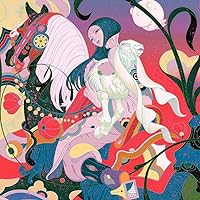
Ursula and Elsebeth together are a marvel. Their discussion of philosophical abstracts like religious differences, guilt, shame, death, resilience, hope, is the perfect foil for the depravity and horror in the novel (‘“You aren’t damned, Elsebeth,” Sister Ursula says calmly. “Being raped is not a sin.”’). Their connection shines all the more brightly because of the darkness amidst which it glimmers (‘“How can I be so afraid and yet live?”’). Think of the ornamented saint’s skull relic for a moment, look at that tremendous cover: if the dead gaping skull represents the face of war, the bond between Elsebeth and Ursula is the metaphorical ornate gilding upon it. Wow, van Veen! Such unity of form takes my breath away.
I think the author’s message is twofold: yes, I see her bringing historical religion-fuelled political atrocities to light (perhaps parallelling the Thirty Years War to current global religion-fuelled political brutality). That’s what hits you right away. But at the same time, I see ‘Bone of My Bone’ as an illustration of the transformative and sustaining power of love. In my view, foremost, ‘Bone of My Bone’ is a love story: Johanna van Veen’s final three lines tell us so: ‘I love her. I love her. I love her.’
Ultimately, by quoting from Milton’s epic as her title, van Veen draws in the threads of Ursula and Elsebeth’s romance around the Miltonic presentation of Love’s dilemma. At the crucial moment when Adam chooses Eve over God in ‘Paradise Lost’ Book IX, he says to her:
van Veen flips another of Milton’s most-quoted lines to affect an exquisite ending to her love story: ‘“The mind is its own place, and in itself can make a heaven of hell, a hell of heaven”’ becomes, ‘For as long as I am with her, Earth itself is Heaven.’
That line is also a Miltonic callback to Virgil: it’s Milton capturing the essence of Virgil’s Roman goddess Juno railing against Imperialism in Book VII of Virgil’s ‘Aeneid’ (Flectere si nequeo superos Acheronta movebo). Our own minds can’t quite avoid hearing the echo of how Milton has Satan finish this statement: ‘“Better to reign in Hell, than serve in Heav’n.”’ ‘Earth itself is Heaven’ acquires nuance.
Eventually, we must ask ourselves, why does van Veen do all this? From my view, I see her as an author cats-cradling the line of literary inheritance from Virgil’s ‘Georgics’ to Virgil’s ‘Aeneid’, to Milton’s ‘Paradise Lost’, right up to ‘Bone of My Bone’. She is effectively replicating some of Milton’s own aims: tapping into the Virgilian legacy of political allegory in order to lend power to her analysis of the inhumanity of war (‘Men so love to spoil and break one another’s toys’).
Asides the love story, van Veen’s novel focusses in on religious reforms within the Holy Roman Empire at the time of the Thirty Years’ War. I hope I’ve shown how, to do this, she reaches back through the religiosity of Milton’s Republicanism during the English Civil War, to Augustus’s religious reforms at the birth of the Roman Empire.
‘The Aeneid’ is a treatise upon the glorious struggle that it took Caesar Augustus to establish the magnificence of his Roman Empire upon the fall of his adoptive uncle Julius Caesar’s Roman Republic. So, it’s political propaganda written at the establishment of a new regime following civil war. Sound familiar? Through Milton and his denunciation of imperialism and colonialism in ‘Paradise Lost’ (‘“Hail, horrors, hail”’), Van Veen expertly re-weaves Virgilian commentary upon national upheaval and religious conflict at the establishment of the Roman Empire with the Thirty Years War’s national upheaval in Bavaria and religious conflict within the Holy Roman Empire in the seventeenth century (‘“Farewell happy fields! Where joy forever dwells”’).
‘Bone of my Bone’ also depicts the struggle for a soul between good and evil, as simplistic as that sounds. It thus creates the space for van Veen to figure a necromancer and a saint’s relic in the novel, as well as numerous ‘undead’ dead (drawn from Germanic folklore but also perhaps inspired by Satan’s legions of fallen angels?).
(Side tangent: William Blake illustrated both ‘Paradise Lost’ and the Inferno from Dante Alighieri’s ‘Divina Commedia’. In many ways, Thirty-Years-War Bavaria also struck me as Dante's Inferno. Who is who, though? I have this feeling I want to say the skull is Dante, but who’s Virgil? Who’s Beatrice?)
Other reviewers with more headspace for stuff other than intertextuality will be digging into Johanna van Veen’s commentary on body autonomy here (it’s my fifth book this year featuring this theme); how the necromancer resituates the soldier rapist as the raped: ‘she was just a thing to him, as I am to my necromancer’, and how people metamorphosise into the monsters within them.
But I’m going to wrap up here; I’m unapologetic about my review comprising a Milton-and-the-Classical-Tradition-101 tutorial, since van Veen’s quotations from ‘Paradise Lost’ at the opening of each section and in her title, and in the novel’s very final words, allow me to situate ‘Bone of My Bone’ within this reading of mine. I can’t say a thank you enormous enough to match my gratitude for the eARC via NetGalley from Sourcebooks UK | Poisoned Pen Press, and I’m only sorry it’s taken me so long to pull my thoughts together!
So, you might need to brace with me here because I’m going to embark upon a loooong lovestruck ode to her flabbergasting latest achievement. van Veen’s 2026 publication is her valediction to Historical Horror (she also categorises ‘Bone of My Bone’ as Religious Horror and Folk Horror) because her next novel is going to be fae lesbian Fantasy! But just like the author's past two adult novels, ‘Bone of My Bone’ stays with lesbian Gothic Horror in the meantime (thanks for the lesbian rep – we can always rely upon you for a fair deal, van Veen!).
In ‘Bone of My Bone’, Johanna van Veen situates two Sapphic heroines confronting a figurative sheer cliff-face of lived trauma. Scaling the summit of humanity during conflict and plague is a harrowing ascent for them, and a nigh-impossible one. After opening the novel with a sensitive and nuanced introduction to the triggering aspects in the book, the author portrays the atrocities of the Thirty Years War in Bavaria without flinching from rape, killing, and senseless violence:
‘Sister Ursula wonders if there’s perhaps a limit to what the human mind can take before it either cracks or grows callous. If horrors happen to you all the time, do they stop being horrors and simply become ordinary life? That would explain why soldiers can murder and maim with such ease.’Describing Ursula and Elsebeth’s climb up from war’s brutality, van Veen quotes John Milton’s ‘Paradise Lost’: ‘Long is the way and hard, that out of Hell leads up to light.’ And this is the point where I state that Johanna van Veen literally could not do more to win my love. Why? Because framing this novel with ‘Paradise Lost’ (she quotes specific passages from it at the opening of every section in the book as well as the title, and its final words) unlocks layers and layers and layers of literary allusion from her postgrad in Early Modern Literature, which mashes up beautifully with the stuff of my own doctorate.
I’m really hoping that my babbling can do some justice to her genius. Ok, here goes...
Milton scholars like van Veen will attest that John Milton’s work is constantly in energetic dialogue with other texts, particularly as influenced by his Latin studies and his Latin compositions. Milton was very much a writer of the Classical tradition, his poetry refashioning and often directly citing classical Greek and Roman materials.
Johanna van Veen will have been feeling it as she quoted ‘Long is the way and hard, that out of Hell leads up to the light’, because not only is it one of Milton’s best-known lines, but it is also one of his most direct translations of the Latin poem that most influenced him: the poet Virgil’s first-century-BCE pro-Augustan epic, ‘The Aeneid’.
In that work, Aeneas (the ancestor of Rome’s founders) travels to the underworld, and is warned before he descends that, ‘it is easy to descend into Avernus […] But to retrace your steps and get back to upper air, That is the task, that is the undertaking.’ (Seamus Heaney’s translation of the Latin, facilis descensus Averno; [...] sed revocare gradum superasque evadere ad auras, hoc opus, hic labor est). By underscoring this line, Johanna van Veen explicitly figures seventeenth-century Bavaria as hell; Milton’s Christian hell, yes, but – through allusion – most interestingly, the Roman hell, Avernus/Dis.
So now we get to look at classical portrayals of the underworld. There are many familiar narratives: the three-headed dog Cerberus; the ferryman of the river Styx, Charon; Sisyphus pushing his rock up that hill; Tantalus just out of reach of refreshment. But there’s one episode that eclipses them all and one that I suspect might be the most well-known. That is, the tale of Orpheus and Eurydice.
And where do we find the earliest intact extant version of the Orpheus and Eurydice narrative? You guessed it – in Virgil again. His didactic poem 'The Georgics' is ostensibly an agricultural manual, but Virgil in point of fact is putting forward a blueprint for post-civil-war Rome (post-Antony and Cleopatra, post-Battle of Actium). Bees in a hive act out Octavian (later to be renamed Caesar Augustus) and Antony’s civil war in a sweet piece of political allegory. Through this, Virgil illustrates the ideal society under the Augustan order and the citizens of the new Empire’s virtuous nature. (Stay with me here!)
Yet, within this ideological political text, we get a delicate epyllion that unfolds the most tender-hearted love story - a love story set in hell, a love story so heartbreaking that it moves the queen of the underworld (Proserpina, latinised from Persephone) to grant Eurydice a reprieve and to allow Orpheus his wife’s return out of hell to the upper air.
Not so strange, then, that we could be reading a socio-political work, but find ourselves caught up in a love story. I see you, Johanna van Veen, recreating that exact scenario:
‘Mayhap it’s unholy, this love for her that has taken root inside my breast, but I am weak and can’t rip it out. I fear it has grown too strong for that anyway, and to pull it out now would wound me terribly. Not that I want to rip it out. I want to nurse it like a bit of coal so it can keep me warm. For so long, I have survived on small sips of beauty, but now that I’ve drunk deeply of it, I’d rather die than go without.’In appreciative wonder, I clearly see van Veen playing with Milton and Virgil. Milton’s like a go-between. ‘Paradise Lost’ turns the key in a lock and uncovers all the goodies we care to find in both ‘The Georgics’ and ‘The Aeneid’.
(By-the-by – as every classicist with a pulse knows – Virgil liked to rework and reuse his own poetry, and he repeats material from ‘The Georgics’ in ‘The Aeneid’. That line from ‘The Aeneid’ that we’ve seen Milton quoting is Virgil at his most self-referential: evadere ad auras […] hic labor est re-enacts a passage from ‘The Georgics’, iam luce sub ipsa […] Ibi omnis effuse labor. He repurposes the language from his Orpheus and Eurydice episode as he pictures Aeneas seeing his mother when he visits the underworld.)
Virgil’s playing with Virgil, Milton’s playing with Virgil, van Veen's playing with Milton. It becomes clear that it’s all one giant stacking game, once Johanna van Veen spotlights Milton’s epic as the frame within which we are to view ‘Bone of My Bone’. What can I say? Legendary!
Sticking with love stories for the moment, Milton draws a direct line from Virgil’s Eurydice to his own Eve when he describes the ‘the Fiend, Meer Serpent in appearance’ attacking Eve in Book IX of ‘Paradise Lost’:
‘Such ambush hid among sweet Flours and ShadesThis is Milton ventriloquising Virgil’s description of the circumstances of Eurydice’s death; she’s running through tall grass and does not see the hidden snake, her imminent death (immanem ante pedes hydrum moritura puella servantem ripas alta non vidit in herba Georgics Book IV). Her encounter with the serpent sees her carried away to Avernus.
Waited with hellish rancour imminent
To intercept thy way’
Expertly delicate, van Veen further compounds her palimpsesting; Virgil’s Eurydice becomes Milton’s Eve, becomes van Veen’s Elsebeth: ‘“She smiles, and it’s like a bank of clouds breaking so that golden sunlight can fall on the earth, and I think to myself that life may not be so bad after all if I had her smile at me like that every day.”’
Why do I get such a buzz from the author going back to Orpheus and Eurydice for her romance? Because through it, van Veen opens up the knowledge that love has the power to move even the pitiless Furies of hell to weep (quin ipsae stupuere domus atque intima Leti Tartara caeruleosque implexae crinibus anguis Eumenides), and the queen of hell to overthrow the natural order (redditaque Eurydice superas veniebat ad auras […] namque hanc dederat Proserpina legem). In this way, the context of a Virgilian inheritance via John Milton adds strata to Ursula and Elsebeth’s love story.
Ursula and Elsebeth together are a marvel. Their discussion of philosophical abstracts like religious differences, guilt, shame, death, resilience, hope, is the perfect foil for the depravity and horror in the novel (‘“You aren’t damned, Elsebeth,” Sister Ursula says calmly. “Being raped is not a sin.”’). Their connection shines all the more brightly because of the darkness amidst which it glimmers (‘“How can I be so afraid and yet live?”’). Think of the ornamented saint’s skull relic for a moment, look at that tremendous cover: if the dead gaping skull represents the face of war, the bond between Elsebeth and Ursula is the metaphorical ornate gilding upon it. Wow, van Veen! Such unity of form takes my breath away.
I think the author’s message is twofold: yes, I see her bringing historical religion-fuelled political atrocities to light (perhaps parallelling the Thirty Years War to current global religion-fuelled political brutality). That’s what hits you right away. But at the same time, I see ‘Bone of My Bone’ as an illustration of the transformative and sustaining power of love. In my view, foremost, ‘Bone of My Bone’ is a love story: Johanna van Veen’s final three lines tell us so: ‘I love her. I love her. I love her.’
Ultimately, by quoting from Milton’s epic as her title, van Veen draws in the threads of Ursula and Elsebeth’s romance around the Miltonic presentation of Love’s dilemma. At the crucial moment when Adam chooses Eve over God in ‘Paradise Lost’ Book IX, he says to her:
‘[…] flesh of flesh,Concordantly, Sister Ursula (our Adam) chooses Elsebeth (our Eve) over her own religion.
Bone of my bone thou art, and from thy state
Mine never shall be parted, bliss or woe.’
van Veen flips another of Milton’s most-quoted lines to affect an exquisite ending to her love story: ‘“The mind is its own place, and in itself can make a heaven of hell, a hell of heaven”’ becomes, ‘For as long as I am with her, Earth itself is Heaven.’
That line is also a Miltonic callback to Virgil: it’s Milton capturing the essence of Virgil’s Roman goddess Juno railing against Imperialism in Book VII of Virgil’s ‘Aeneid’ (Flectere si nequeo superos Acheronta movebo). Our own minds can’t quite avoid hearing the echo of how Milton has Satan finish this statement: ‘“Better to reign in Hell, than serve in Heav’n.”’ ‘Earth itself is Heaven’ acquires nuance.
Eventually, we must ask ourselves, why does van Veen do all this? From my view, I see her as an author cats-cradling the line of literary inheritance from Virgil’s ‘Georgics’ to Virgil’s ‘Aeneid’, to Milton’s ‘Paradise Lost’, right up to ‘Bone of My Bone’. She is effectively replicating some of Milton’s own aims: tapping into the Virgilian legacy of political allegory in order to lend power to her analysis of the inhumanity of war (‘Men so love to spoil and break one another’s toys’).
Asides the love story, van Veen’s novel focusses in on religious reforms within the Holy Roman Empire at the time of the Thirty Years’ War. I hope I’ve shown how, to do this, she reaches back through the religiosity of Milton’s Republicanism during the English Civil War, to Augustus’s religious reforms at the birth of the Roman Empire.
‘The Aeneid’ is a treatise upon the glorious struggle that it took Caesar Augustus to establish the magnificence of his Roman Empire upon the fall of his adoptive uncle Julius Caesar’s Roman Republic. So, it’s political propaganda written at the establishment of a new regime following civil war. Sound familiar? Through Milton and his denunciation of imperialism and colonialism in ‘Paradise Lost’ (‘“Hail, horrors, hail”’), Van Veen expertly re-weaves Virgilian commentary upon national upheaval and religious conflict at the establishment of the Roman Empire with the Thirty Years War’s national upheaval in Bavaria and religious conflict within the Holy Roman Empire in the seventeenth century (‘“Farewell happy fields! Where joy forever dwells”’).
‘Bone of my Bone’ also depicts the struggle for a soul between good and evil, as simplistic as that sounds. It thus creates the space for van Veen to figure a necromancer and a saint’s relic in the novel, as well as numerous ‘undead’ dead (drawn from Germanic folklore but also perhaps inspired by Satan’s legions of fallen angels?).
(Side tangent: William Blake illustrated both ‘Paradise Lost’ and the Inferno from Dante Alighieri’s ‘Divina Commedia’. In many ways, Thirty-Years-War Bavaria also struck me as Dante's Inferno. Who is who, though? I have this feeling I want to say the skull is Dante, but who’s Virgil? Who’s Beatrice?)
Other reviewers with more headspace for stuff other than intertextuality will be digging into Johanna van Veen’s commentary on body autonomy here (it’s my fifth book this year featuring this theme); how the necromancer resituates the soldier rapist as the raped: ‘she was just a thing to him, as I am to my necromancer’, and how people metamorphosise into the monsters within them.
But I’m going to wrap up here; I’m unapologetic about my review comprising a Milton-and-the-Classical-Tradition-101 tutorial, since van Veen’s quotations from ‘Paradise Lost’ at the opening of each section and in her title, and in the novel’s very final words, allow me to situate ‘Bone of My Bone’ within this reading of mine. I can’t say a thank you enormous enough to match my gratitude for the eARC via NetGalley from Sourcebooks UK | Poisoned Pen Press, and I’m only sorry it’s taken me so long to pull my thoughts together!
June 27, 2026
Johanna Van Veen does it yet again 🙌🏻

May 30, 2026
Running from an attack on civilians by a band of rogue soldiers along the main road, two complete strangers, Sister Ursula, a nun, and a peasant named Elsebeth, escape the bloodshed. Deciding it is safer to travel to their separate destinations as a pair, the two women stumble upon a dead man holding the gilded skull of a saint. They discover that if they reunite the saint’s skull with her body, they will each be granted a wish. In a time of war, devastation, and loss though, Ursula and Elsebeth are not the only people who could do with a wish or two. The skull is being hunted and, now, so are they.
Bone of My Bone by Johanna van Veen is not at all what I was expecting. First, I want to thank NetGalley and Poisoned Pen Press for giving me a free copy in exchange for my honest review. I thoroughly enjoyed van Veen’s last book, Blood on Her Tongue, so I went into this read with higher expectations. Being a huge history nerd and a big horror fan, I was all on board for a historical horror set during the Thirty Years’ War. While the first couple of chapters perfectly captured how bleak the Bavarian countryside likely was in 1635, it was all downhill after that. Had I known that this book was going to heavily lean into the romance genre and incorporate one of my least favorite romance tropes on top of that (insta-love), I never would have picked it up. I LOATHE insta-love. I couldn’t ever get behind Ursula and Elsebeth as a couple as a result because their relationship felt so unrealistic, which was a huge bummer. I wanted to like them. They just didn’t work for me. In addition, I am all for historical accuracy and this time period was inherently very religious. However, I am also a big fan of balance. This book felt like I was trapped in a never ending Mass seated next to a very active confessional booth while two complete strangers sitting in the pew next to me had oral sex the whole service. In short (too late), this was written with a very heavy hand with regards to the religiosity of the time. Again, I know this was appropriate for the time period, but “mayhaps” it was not exactly on my to-do list to read a 350-page sermon somehow coupled with one of the strangest relationships I’ve seen put to page. I think van Veen just set out to do too much and it showed because very little ended up being done well. Even the main antagonist was disposed of off page. There were sexually deviant soldiers, a violent war, the plague, Protestant v. Catholic conflict, revenant zombies, sexual trauma, grief, a whole co-dependent relationship, masochism, necromancers, a talking skull, starvation, a theme of women suffering according to random men’s whims, a severely under-explored antagonist, and everything in between all occurring in the span of about a week. The author was trying to fit in too much and it all suffered. I cannot give this more than the rating I’ve given it, though it pains me. 1/5 stars
Bone of My Bone by Johanna van Veen is not at all what I was expecting. First, I want to thank NetGalley and Poisoned Pen Press for giving me a free copy in exchange for my honest review. I thoroughly enjoyed van Veen’s last book, Blood on Her Tongue, so I went into this read with higher expectations. Being a huge history nerd and a big horror fan, I was all on board for a historical horror set during the Thirty Years’ War. While the first couple of chapters perfectly captured how bleak the Bavarian countryside likely was in 1635, it was all downhill after that. Had I known that this book was going to heavily lean into the romance genre and incorporate one of my least favorite romance tropes on top of that (insta-love), I never would have picked it up. I LOATHE insta-love. I couldn’t ever get behind Ursula and Elsebeth as a couple as a result because their relationship felt so unrealistic, which was a huge bummer. I wanted to like them. They just didn’t work for me. In addition, I am all for historical accuracy and this time period was inherently very religious. However, I am also a big fan of balance. This book felt like I was trapped in a never ending Mass seated next to a very active confessional booth while two complete strangers sitting in the pew next to me had oral sex the whole service. In short (too late), this was written with a very heavy hand with regards to the religiosity of the time. Again, I know this was appropriate for the time period, but “mayhaps” it was not exactly on my to-do list to read a 350-page sermon somehow coupled with one of the strangest relationships I’ve seen put to page. I think van Veen just set out to do too much and it showed because very little ended up being done well. Even the main antagonist was disposed of off page. There were sexually deviant soldiers, a violent war, the plague, Protestant v. Catholic conflict, revenant zombies, sexual trauma, grief, a whole co-dependent relationship, masochism, necromancers, a talking skull, starvation, a theme of women suffering according to random men’s whims, a severely under-explored antagonist, and everything in between all occurring in the span of about a week. The author was trying to fit in too much and it all suffered. I cannot give this more than the rating I’ve given it, though it pains me. 1/5 stars

June 15, 2026
4.5
By far her goriest and gayest novel to date which I love!!! I also adored the authors note at the end so much, an author shouldn’t have to justify a fictional tale even if rooted in some history but I do love her opinions!!
I got the eARC but read it after publication, thank you NetGalley!!!
By far her goriest and gayest novel to date which I love!!! I also adored the authors note at the end so much, an author shouldn’t have to justify a fictional tale even if rooted in some history but I do love her opinions!!
I got the eARC but read it after publication, thank you NetGalley!!!
May 23, 2026
Bone of My Bone is a novel of historical fiction set during Germany's Thirty Years' War. There is a heavy focus on three real life horrors present during this time: torture and sexual violence committed by soldiers; famine; and the plague. The book also uses the lens of Catholicism and Calvinism as experienced by the two main characters to shape the narrative. In addition to supernatural elements from religion, the story is also shaped by the inclusion of some traditional German folklore that manifests itself through the appearance of creatures such as the Nachzehrer, Aufhocker, and a Necromancer who serves as the chief antagonist. Lastly, the author incorporates a touching love story that captures the tenderness shared between two women who have both been marked by trauma and grief.
The book begins by introducing Elsebeth and Ursula, who find themselves fleeing from violence together. Along the way, they encounter a dying man who entrusts them with the relic of a saint - a skull that needs to be reunited with the rest of its remains. The quest given to the two women forces them to reckon with their own faith and doubt while creating a space for a growing bond between them. They soon learn that a more sinister creature is in search of the skull which places them face to face with a powerful source of evil.
This is certainly a dark story that should not be read without heeding the trigger warnings provided by the author. However, it also focuses on love and resilience in the face of overwhelming suffering and trauma. The book explores the experience of characters who are both perpetrators and victims of violence and the effects it has on their lives. Readers who enjoy historical fiction and folk horror may want pick this one up.
Thanks to NetGalley and the publisher for providing an advance reading copy in return for an honest review.
The book begins by introducing Elsebeth and Ursula, who find themselves fleeing from violence together. Along the way, they encounter a dying man who entrusts them with the relic of a saint - a skull that needs to be reunited with the rest of its remains. The quest given to the two women forces them to reckon with their own faith and doubt while creating a space for a growing bond between them. They soon learn that a more sinister creature is in search of the skull which places them face to face with a powerful source of evil.
This is certainly a dark story that should not be read without heeding the trigger warnings provided by the author. However, it also focuses on love and resilience in the face of overwhelming suffering and trauma. The book explores the experience of characters who are both perpetrators and victims of violence and the effects it has on their lives. Readers who enjoy historical fiction and folk horror may want pick this one up.
Thanks to NetGalley and the publisher for providing an advance reading copy in return for an honest review.

May 29, 2026
Don’t kill me but I enjoyed Blood on Her Tongue more than Bone of My Bone (😭). Buuuuut, this novel still had a lot going for it, especially the medieval-esque atmosphere. The folklore, the horror and the setting felt old and grimy in the best way possible.
The first half of the book is super slow, which I actually didn’t really mind since we spend a lot of time getting to know both Elsebeth and Sister Ursula. My biggest issue was that when their relationship started becoming really interesting, the book was basically done.
The main characters romance also went from 8 to 80 in what felt like a single chapter. I know this is an actual romance trope but the sudden intensity wasn’t really my thing. There was something poetic about their relationship though, and yes, I cried a lot at the end.
A thank you to the author, the publisher and NetGalley for providing me a copy of the book in exchange for an unbiased and honest review.
The first half of the book is super slow, which I actually didn’t really mind since we spend a lot of time getting to know both Elsebeth and Sister Ursula. My biggest issue was that when their relationship started becoming really interesting, the book was basically done.
The main characters romance also went from 8 to 80 in what felt like a single chapter. I know this is an actual romance trope but the sudden intensity wasn’t really my thing. There was something poetic about their relationship though, and yes, I cried a lot at the end.
A thank you to the author, the publisher and NetGalley for providing me a copy of the book in exchange for an unbiased and honest review.

June 8, 2026
3.5 stars rounded up. Set in 1635 during the bloody Thirty Years’ War, Bone of My Bone follows two women – Ursula, a nun fleeing the ruins of her convent, and Elsebeth, a peasant – on a quest across war-torn Bavaria. After escaping a group of marauding soldiers, the women chance upon a dying man with an unsettling object in his arms: the gilded skull of a saint. Stories say that if you reunite a saint’s skull with its body, you’ll be granted a wish. But Ursula and Elsebeth aren’t the only ones who know about the skull’s power, and they find themselves battling a malevolent magic as their quest takes them across scorched and dangerous lands.
Gothic, sapphic, and steeped in Germanic folklore, Bone of My Bone is an intriguing and thoroughly unique blend of historical, folk, and religious horror. I’ve never read anything quite like this book before, and I was hooked from the first page. It feels historically accurate from a language and storytelling perspective, but it reads as so accessible at the same time. I felt like the book was teaching me about a lot of things – religious practices of the period, creatures from German folklore (that are straight-up nightmare fuel, honestly), the Thirty Years’ War itself – without ever feeling dry or lecture-like; it all just flowed naturally through the narrative.
Johanna van Veen’s writing is immersive and descriptive; the atmosphere of the book is dark, gritty, and gory, but it’s balanced with welcome moments of softness and tenderness. It’s also more philosophical than I expected in the way it explores the darker sides of religion (and religious shame and guilt), devotion, love, and sacrifice. Both Ursula and Elsebeth are well-developed characters with unique viewpoints, inner lives, and traumas. The romance between them did feel like instalove to me, and I found myself not actually needing the romance – or I needed it to be a slower-simmering one. I think the book would’ve worked just as well, and their bond would’ve felt just as meaningful, if things had progressed more slowly and organically. There’s something to be said for romantic tension, and I missed it here.
Overall, Bone of my Bone is a gripping and immersive exploration of the atrocities of war and the complexities of religion – and there are some truly frightening creatures too. Thank you to Poisoned Pen Press for the complimentary reading opportunity.
Gothic, sapphic, and steeped in Germanic folklore, Bone of My Bone is an intriguing and thoroughly unique blend of historical, folk, and religious horror. I’ve never read anything quite like this book before, and I was hooked from the first page. It feels historically accurate from a language and storytelling perspective, but it reads as so accessible at the same time. I felt like the book was teaching me about a lot of things – religious practices of the period, creatures from German folklore (that are straight-up nightmare fuel, honestly), the Thirty Years’ War itself – without ever feeling dry or lecture-like; it all just flowed naturally through the narrative.
Johanna van Veen’s writing is immersive and descriptive; the atmosphere of the book is dark, gritty, and gory, but it’s balanced with welcome moments of softness and tenderness. It’s also more philosophical than I expected in the way it explores the darker sides of religion (and religious shame and guilt), devotion, love, and sacrifice. Both Ursula and Elsebeth are well-developed characters with unique viewpoints, inner lives, and traumas. The romance between them did feel like instalove to me, and I found myself not actually needing the romance – or I needed it to be a slower-simmering one. I think the book would’ve worked just as well, and their bond would’ve felt just as meaningful, if things had progressed more slowly and organically. There’s something to be said for romantic tension, and I missed it here.
Overall, Bone of my Bone is a gripping and immersive exploration of the atrocities of war and the complexities of religion – and there are some truly frightening creatures too. Thank you to Poisoned Pen Press for the complimentary reading opportunity.
Displaying 1 - 30 of 1,149 reviews