

What do you think?

Lyra Falconis #1
Lyra Falconis and the Core of Tomorrow
BOOK 1: "Lyra Falconis and the Core of Tomorrow"
"When the future is a tapestry of infinite threads, one girl's vision will decide which to cut, which to weave, and which to burn."
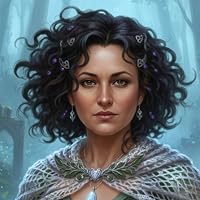
Lyra Falconis’s gift is a curse that fractures her mind: eyes of two colours that see not the future, but all possible futures—a chaos of branching paths that no one else can endure.
When she is taken to Luminarcanum, the citadel where Seers shape destiny, she believes she has found a refuge. Instead, she uncovers the greatest lie of all: her grandfather, leader of the ancient Chronarchy, has decided free will is a flaw in the cosmos. And to correct it, he will wield the power of Absence—the primordial void that annihilates time, choice, and possibility itself.
To fight the unravelling of reality, Lyra must unite with legendary outcasts: a genius Artificer of Oneiric Matter, a Keeper of Forbidden Memories, and a Prophet who fears his own visions. Their war will not be fought on battlefields, but within the heart of the Quantum Weave, the very fabric of tomorrow.
Lyra must confront the blood legacy she carries and learn the deepest truth: her power is not meant to predict the future. It is meant to sculpt it. And the most courageous choice will not be for a perfect world, but for a free one—fragile, chaotic, and magnificently imperfect.
An epic fantasy about the weight of choice and the courage to embrace uncertainty, for readers of Philip Pullman and V. E. Schwab.
"When the future is a tapestry of infinite threads, one girl's vision will decide which to cut, which to weave, and which to burn."
Lyra Falconis’s gift is a curse that fractures her mind: eyes of two colours that see not the future, but all possible futures—a chaos of branching paths that no one else can endure.
When she is taken to Luminarcanum, the citadel where Seers shape destiny, she believes she has found a refuge. Instead, she uncovers the greatest lie of all: her grandfather, leader of the ancient Chronarchy, has decided free will is a flaw in the cosmos. And to correct it, he will wield the power of Absence—the primordial void that annihilates time, choice, and possibility itself.
To fight the unravelling of reality, Lyra must unite with legendary outcasts: a genius Artificer of Oneiric Matter, a Keeper of Forbidden Memories, and a Prophet who fears his own visions. Their war will not be fought on battlefields, but within the heart of the Quantum Weave, the very fabric of tomorrow.
Lyra must confront the blood legacy she carries and learn the deepest truth: her power is not meant to predict the future. It is meant to sculpt it. And the most courageous choice will not be for a perfect world, but for a free one—fragile, chaotic, and magnificently imperfect.
An epic fantasy about the weight of choice and the courage to embrace uncertainty, for readers of Philip Pullman and V. E. Schwab.
115 pages, Kindle Edition
Published October 27, 2025
About the author
Cynthia M.
4 books50 followersMy name is Cynthia. I was born in Sicily in 1975, but I live in Germany now. Though, to be honest, I never really left Sicily.
As a girl, I wrote to survive—to give voice to a sensitivity no one around me understood. Then, for over twenty years, I stopped. I set aside writing, books, that part of myself. But life was wiser than me. The love of my family, my children, taught me that you can always light a candle instead of adding to the darkness.
I started again at fifty, with two very different books: a fantasy saga and a guide for young readers. They both say the same thing: everything we need to get back on our feet is already inside us.
Then came The Silence of Pantelleria. And with it, I truly came home. It's a mystery, yes, but it's also my real Sicily: made of silences, genuine people, and a murder that tears through it all. Writing it, I learned something uncomfortable—absolute justice might not exist. But the duty to seek it? That does exist.
Today I believe that stories heal. Whether I write about magic, inner strength, or hidden truths, it's always the same gesture: to remind whoever is reading that there's always a reason to rise again. Even if, sometimes, you have to go back to the beginning to find it.
As a girl, I wrote to survive—to give voice to a sensitivity no one around me understood. Then, for over twenty years, I stopped. I set aside writing, books, that part of myself. But life was wiser than me. The love of my family, my children, taught me that you can always light a candle instead of adding to the darkness.
I started again at fifty, with two very different books: a fantasy saga and a guide for young readers. They both say the same thing: everything we need to get back on our feet is already inside us.
Then came The Silence of Pantelleria. And with it, I truly came home. It's a mystery, yes, but it's also my real Sicily: made of silences, genuine people, and a murder that tears through it all. Writing it, I learned something uncomfortable—absolute justice might not exist. But the duty to seek it? That does exist.
Today I believe that stories heal. Whether I write about magic, inner strength, or hidden truths, it's always the same gesture: to remind whoever is reading that there's always a reason to rise again. Even if, sometimes, you have to go back to the beginning to find it.
Ratings & Reviews
Friends & Following
Create a free account to discover what your friends think of this book!
Community Reviews
Displaying 1 - 8 of 8 reviews

April 17, 2026
I came to ‘Lyra Falconis and the Core of Tomorrow’ after reading a lot of fantasy books by indie-authors in the past 4 months, and I am very glad indeed that the trail of indie-fantasy reads ultimately led me to it. Published on 31 October 2025, running to a modest 189 pages, and billed as the first volume in a projected trilogy, Cynthia M.'s indie debut is exactly the kind of unassuming, soft-hearted, philosophically ambitious little middle-grade fantasy that I love to champion. It is a book that belongs on the shelf beside the earnest old paperbacks of our childhoods, not on the cynical display table of the latest erotic-fantasy franchise for teenagers and younger readers (I don’t know what else to call these sickening TikTok and BookTok promoted fantasy books currently read by the teenagers and young adults of today!? God save me from them both!); and it has rather stolen my heart!
The premise is a proper fairy-tale of a premise. Lyra Falconis, an orphan marked by heterochromatic blue-and-amber eyes, is spirited away to a place called Luminarcanum — a name one rolls delightedly over the tongue — where she is taught that she is what the book terms a Visionary, basically not merely one who glimpses what may come, but one who can judge among the many branching futures and choose, and the past in ways of course! She is joined by a brilliant Artificer, a Keeper of memory, and a Seer of fate, and together they must confront ‘The Hourglass’, headed, in a genuinely painful stroke, by Lyra's own grandfather. The Hourglass's terrible object is to impose upon all reality a perfect, sterile, frictionless order, sweeping chaos and free will alike into a chilling emptiness that is, quite literally, the absence of anything at all.
Dear reader, I love this premise. I shall say so plainly. A tidy, bloodless, abstract nothingness as the great antagonist of a children's fantasy is a stroke of moral imagination of which C. S. Lewis himself would have approved, and Madeleine L'Engle before him (I prefer the latter – C.S. Lewis somehow I always manage to read when I have the viral fever! Sometimes he gives me the Viral Fever!). The IT of ‘A Wrinkle in Time’ — that dreadful disembodied brain with its dream of perfect uniformity on Camazotz — is a close first cousin of Cynthia M.'s Hourglass. So too, from a rather different shelf, is Tolkien's Sauron, whose terrible passion for a single perfect order is the engine of all his menace. The great insight of the Christian humanist imagination, of the Augustinian tradition, and indeed of much of the Vedantic and Puranic wisdom that I teach daily in my AS & A Level and IBDP tuition classroom/s, is precisely this — that a free, imperfect, possibility-filled creation is infinitely more precious than a frozen and faultless design.
That Cynthia M. has made this the beating philosophical heart of a compact middle-grade fantasy is, I think, a rather marvellous thing. In an age when children's literature is flattened ever more into franchise, merchandise, violent erotica (what else can I say!?!? Come on I have read them!) and market research, here is a small indie volume prepared to stake itself on a real conflict of ideas.
A word must now be said about the author, because her own note on Goodreads is itself a small piece of literature. Cynthia M., born in 1975 in a village too tiny for any cartographer, describes her experience of self-publishing with the beautiful image of ‘shouting in the desert.’ She shouts, she tells us, daily; many days no one answers; but she keeps on, because she writes of her stories as a mother might write of her children — loved, believed in, protected, whether or not the world has happened to glance their way. If you read nothing else about this book before you purchase it, go and read her author biography. It is tender, clear-eyed, and deeply moving, and it is the voice of hundreds upon hundreds of indie authors whom I have come, over this past year of reviewing, to admire enormously.
As to the book itself, it is, unashamedly, a first volume. It is not a polished Big Five hardback; it is brisk, it is compact, and it is far more interested in heart and idea than in lingering at leisure over every descriptive flourish. To which I say - good. Not every children's book needs to run to six hundred pages, believe me on that one. Sometimes what a young reader needs is precisely this — a swift 189-page journey, with a lovely name for the magical school, a heroine with mismatched eyes, a grave betrayal within the family itself, and a final, hard-won choice between the cold tyranny of imposed perfection and the warm, messy, possibility-filled freedom of the real. Cynthia M. gives us exactly that, with genuine affection for her heroine and genuine conviction in her theme.
On a wacky note, at times in the story – I was on the side on the grandfather because I see the world too clearly and too closely – and it does not please me or comfort me in any way. At times, the violence, the hate, the idiotic nature of inhumane behaviour, it makes me want to dissolve my personality and just merge with the ethers and even forget I have an essence or soul of my own; something in the light of what the Grandfather was indicating. That reminds me of the Sayings and many commentaries I have studied and read on the Koran all my life right from the time I was 16 years of age – that men see the world too clearly up on a mountain – and that is when trouble always begins – upon a mountain. You see the world too clearly from a higher perspective in other words, like the Prophet Muhammad saw Mecca and the Arab Pretentious world of his youth too clearly upon Mount Hira, and that is when his pain and trouble began. But that is going too deep into comparative theology and philosophy which is indicative of this book by Cynthia but not required right now in this review.
I closed the book with the quiet satisfaction that I had spent a few unhurried hours in the company of a humane, philosophically serious storyteller who loves her Lyra, believes in her Luminarcanum, and means every word she writes. For a middle-grade reader of ten or twelve ready for their first brush with the great ideas of free will, determinism, imperfect creation, and generational betrayal — and for any older reader who has not yet forgotten what fantasy is for – this is for you!
My 5 stars, warmly given. Not because ‘Lyra Falconis and the Core of Tomorrow’ is the most sentence-perfect prose I shall read this year — it is not, and Cynthia M. herself, to her considerable credit, has said as much in her own candid self-review on Goodreads, which I found disarmingly honest and typical of the humility of the very best indie authors. Five stars because the book has the far rarer quality of a real soul. Because it is trying, and succeeding, in saying something genuinely worth saying to young people about freedom, chaos, imperfection, and the preciousness of a world that might yet unfold in any one of a thousand ways. And because, to borrow her own lovely image, if Cynthia M. keeps shouting in her desert, I for one am very glad to have stopped, turned back, and listened. I for one love listening in a desert and I find great peace in a desert. But somehow, I always land on top of a mountain or a hill LOL!
Warmly recommended for readers aged ten and upwards, for lovers of Madeleine L'Engle and classic middle-grade fantasy, for champions of indie and self-published children's literature, and for anyone — young or old — who still believes that an imperfect, free, and possibility-rich world is worth defending against the tidy tyranny of a sterile nothingness.
I shall most certainly be picking up Book Two.
I here there is an Italian Edition to the book which I shall also read again and review – in Italian or rather Roman Catholic Church Ecclesiastic Italian. There are some perks of being a Catholic Biblical Theologian and soon apparently, one of the most highly educated female Catholic Theologians in India.
I hope my Italian with a bit of my Ecclesiastical Latin does Cynthia’s Italian version justice.
The premise is a proper fairy-tale of a premise. Lyra Falconis, an orphan marked by heterochromatic blue-and-amber eyes, is spirited away to a place called Luminarcanum — a name one rolls delightedly over the tongue — where she is taught that she is what the book terms a Visionary, basically not merely one who glimpses what may come, but one who can judge among the many branching futures and choose, and the past in ways of course! She is joined by a brilliant Artificer, a Keeper of memory, and a Seer of fate, and together they must confront ‘The Hourglass’, headed, in a genuinely painful stroke, by Lyra's own grandfather. The Hourglass's terrible object is to impose upon all reality a perfect, sterile, frictionless order, sweeping chaos and free will alike into a chilling emptiness that is, quite literally, the absence of anything at all.
Dear reader, I love this premise. I shall say so plainly. A tidy, bloodless, abstract nothingness as the great antagonist of a children's fantasy is a stroke of moral imagination of which C. S. Lewis himself would have approved, and Madeleine L'Engle before him (I prefer the latter – C.S. Lewis somehow I always manage to read when I have the viral fever! Sometimes he gives me the Viral Fever!). The IT of ‘A Wrinkle in Time’ — that dreadful disembodied brain with its dream of perfect uniformity on Camazotz — is a close first cousin of Cynthia M.'s Hourglass. So too, from a rather different shelf, is Tolkien's Sauron, whose terrible passion for a single perfect order is the engine of all his menace. The great insight of the Christian humanist imagination, of the Augustinian tradition, and indeed of much of the Vedantic and Puranic wisdom that I teach daily in my AS & A Level and IBDP tuition classroom/s, is precisely this — that a free, imperfect, possibility-filled creation is infinitely more precious than a frozen and faultless design.
That Cynthia M. has made this the beating philosophical heart of a compact middle-grade fantasy is, I think, a rather marvellous thing. In an age when children's literature is flattened ever more into franchise, merchandise, violent erotica (what else can I say!?!? Come on I have read them!) and market research, here is a small indie volume prepared to stake itself on a real conflict of ideas.
A word must now be said about the author, because her own note on Goodreads is itself a small piece of literature. Cynthia M., born in 1975 in a village too tiny for any cartographer, describes her experience of self-publishing with the beautiful image of ‘shouting in the desert.’ She shouts, she tells us, daily; many days no one answers; but she keeps on, because she writes of her stories as a mother might write of her children — loved, believed in, protected, whether or not the world has happened to glance their way. If you read nothing else about this book before you purchase it, go and read her author biography. It is tender, clear-eyed, and deeply moving, and it is the voice of hundreds upon hundreds of indie authors whom I have come, over this past year of reviewing, to admire enormously.
As to the book itself, it is, unashamedly, a first volume. It is not a polished Big Five hardback; it is brisk, it is compact, and it is far more interested in heart and idea than in lingering at leisure over every descriptive flourish. To which I say - good. Not every children's book needs to run to six hundred pages, believe me on that one. Sometimes what a young reader needs is precisely this — a swift 189-page journey, with a lovely name for the magical school, a heroine with mismatched eyes, a grave betrayal within the family itself, and a final, hard-won choice between the cold tyranny of imposed perfection and the warm, messy, possibility-filled freedom of the real. Cynthia M. gives us exactly that, with genuine affection for her heroine and genuine conviction in her theme.
On a wacky note, at times in the story – I was on the side on the grandfather because I see the world too clearly and too closely – and it does not please me or comfort me in any way. At times, the violence, the hate, the idiotic nature of inhumane behaviour, it makes me want to dissolve my personality and just merge with the ethers and even forget I have an essence or soul of my own; something in the light of what the Grandfather was indicating. That reminds me of the Sayings and many commentaries I have studied and read on the Koran all my life right from the time I was 16 years of age – that men see the world too clearly up on a mountain – and that is when trouble always begins – upon a mountain. You see the world too clearly from a higher perspective in other words, like the Prophet Muhammad saw Mecca and the Arab Pretentious world of his youth too clearly upon Mount Hira, and that is when his pain and trouble began. But that is going too deep into comparative theology and philosophy which is indicative of this book by Cynthia but not required right now in this review.
I closed the book with the quiet satisfaction that I had spent a few unhurried hours in the company of a humane, philosophically serious storyteller who loves her Lyra, believes in her Luminarcanum, and means every word she writes. For a middle-grade reader of ten or twelve ready for their first brush with the great ideas of free will, determinism, imperfect creation, and generational betrayal — and for any older reader who has not yet forgotten what fantasy is for – this is for you!
My 5 stars, warmly given. Not because ‘Lyra Falconis and the Core of Tomorrow’ is the most sentence-perfect prose I shall read this year — it is not, and Cynthia M. herself, to her considerable credit, has said as much in her own candid self-review on Goodreads, which I found disarmingly honest and typical of the humility of the very best indie authors. Five stars because the book has the far rarer quality of a real soul. Because it is trying, and succeeding, in saying something genuinely worth saying to young people about freedom, chaos, imperfection, and the preciousness of a world that might yet unfold in any one of a thousand ways. And because, to borrow her own lovely image, if Cynthia M. keeps shouting in her desert, I for one am very glad to have stopped, turned back, and listened. I for one love listening in a desert and I find great peace in a desert. But somehow, I always land on top of a mountain or a hill LOL!
Warmly recommended for readers aged ten and upwards, for lovers of Madeleine L'Engle and classic middle-grade fantasy, for champions of indie and self-published children's literature, and for anyone — young or old — who still believes that an imperfect, free, and possibility-rich world is worth defending against the tidy tyranny of a sterile nothingness.
I shall most certainly be picking up Book Two.
I here there is an Italian Edition to the book which I shall also read again and review – in Italian or rather Roman Catholic Church Ecclesiastic Italian. There are some perks of being a Catholic Biblical Theologian and soon apparently, one of the most highly educated female Catholic Theologians in India.
I hope my Italian with a bit of my Ecclesiastical Latin does Cynthia’s Italian version justice.
July 25, 2026
Let me start with a confession: I'm not a fantasy fan. Or at least, I didn't think I was. I went into this book expecting spells, magic wands, and spectacular duels. Instead, it completely caught me off guard – and thankfully so.
Lyra's story is so much more than a simple fantasy adventure. It's a journey into the contradictions we all know too well: the chaos that overwhelms us and that desperate need for silence, for peace, for a center that always seems just out of reach. The plot isn't perfect, but that's exactly what makes it feel real. And the balance between action and reflection is so subtle that you barely notice it – until it stays with you long after you've put the book down.
The writing, maybe a little raw in places, has a strength I didn't expect: it's bold, almost philosophical at times, and it makes you pause and think. And I loved that. This isn't a book that distracts you – it's one that asks you questions.
Then there's the friendship. The bond between Lyra and her companions isn't just there for show. It's genuine, felt in the little things, in the silences, in the small gestures. I loved how the author managed to make it so alive and real.
"Chaos is not the enemy of silence," the old man whispered to her. "It is its guardian. Every storm carries within it the seed of a deeper calm."
And this passage really hit me:
"She didn't know if they would survive until dawn. But she knew that if the world were to crumble, they would fall together, holding hands."
In the end, that's what this book is really about: the quiet battle we all fight to stay human, to stay connected to something true.
I have to say thank you to Cynthia M. for having the courage to write a story that dares to be more than just a fantasy. For putting heart and thought into every page. And I, who don't even like the genre, am here saying I'll definitely read the sequel. Because Lyra Falconis isn't just a character – she's a companion on the journey.
Lyra's story is so much more than a simple fantasy adventure. It's a journey into the contradictions we all know too well: the chaos that overwhelms us and that desperate need for silence, for peace, for a center that always seems just out of reach. The plot isn't perfect, but that's exactly what makes it feel real. And the balance between action and reflection is so subtle that you barely notice it – until it stays with you long after you've put the book down.
The writing, maybe a little raw in places, has a strength I didn't expect: it's bold, almost philosophical at times, and it makes you pause and think. And I loved that. This isn't a book that distracts you – it's one that asks you questions.
Then there's the friendship. The bond between Lyra and her companions isn't just there for show. It's genuine, felt in the little things, in the silences, in the small gestures. I loved how the author managed to make it so alive and real.
"Chaos is not the enemy of silence," the old man whispered to her. "It is its guardian. Every storm carries within it the seed of a deeper calm."
And this passage really hit me:
"She didn't know if they would survive until dawn. But she knew that if the world were to crumble, they would fall together, holding hands."
In the end, that's what this book is really about: the quiet battle we all fight to stay human, to stay connected to something true.
I have to say thank you to Cynthia M. for having the courage to write a story that dares to be more than just a fantasy. For putting heart and thought into every page. And I, who don't even like the genre, am here saying I'll definitely read the sequel. Because Lyra Falconis isn't just a character – she's a companion on the journey.
August 5, 2026
What can I say... I didn't know what to expect, but it surprised me. The story – I'm not sure if I can say this – is strange, but damn surprising. There are so many characters I liked, including, of course, the protagonist Lyra, but also – strangely – Kaelen, with his know-it-all attitude. Deep down, though, I think he's in love with Lyra. I wish I could have gotten to know all the characters better. I'm sure I want to read the second book in the saga, but I don't think I've seen the third one!
One passage that stayed with me:
"Sometimes you have to get lost to find out where you're really going."
Highly recommended.
One passage that stayed with me:
"Sometimes you have to get lost to find out where you're really going."
Highly recommended.
August 3, 2026
I absolutely loved this book! Lyra isn't your typical perfect heroine—she's a real girl, with her fears and her doubts. The story hooked me right away and I couldn't stop reading. There were moments that made me question the plot and others that truly moved me. I recommend it to everyone!

February 6, 2026
I won this in a Goodreads giveaway and was pleased with the story. I do, however, feel that the story was very rushed and missing a lot of descriptive information. The story has so much potential; I just wish it would’ve been more fleshed out.

February 23, 2026
I won this in a giveaway
April 26, 2026
I really wanted to like this. I won it in a Goodreads review. It was hard to follow. First I want to say this has amazing potential. I really want to learn more about the world and magic system. The school sounds really cool. The story was interesting from time to time. The problem is didnt always understand how we got from one place to the next. The items being used werent explained enough. There was no time spend developing the school and talking about how others used magic. The naught took a bit to understand. Also the 1st half of this read like a children's novel. Something along the lines of the babysitter'club or Land of stories, which by the way are great books. I understand the need to label young adult but there needs to be more meat to the novel. When something happened to a particular character I was just not invested at all what happened. It needs more connection. It has so much potential. Over all not a bad story just a little rough.
February 14, 2026
Lyra Falconis and the Core of Tomorrow: An Author Rereads Herself (and Doesn't Hold Back)
Yes, I know: reviewing your own book is a bit like complimenting yourself. But I did it for a serious reason: this is the first volume of a trilogy, and I wanted to understand—honestly—what works and what to improve in the next ones.
What I still love: The soul of the book is intact. Lyra is exactly the girl I wanted her to be: curious, brave, imperfect. And the idea that wonder can bloom from fragility is a message I believe in even more now.
What I noticed with distance: My younger pen was more enthusiastic than refined. There are passages where I would have given more breathing room, and others where I rushed as if afraid of boring the reader. Some dialogues I would write differently today. And yes, I found typos that made me smile and sigh at the same time.
Yes, I know: reviewing your own book is a bit like complimenting yourself. But I did it for a serious reason: this is the first volume of a trilogy, and I wanted to understand—honestly—what works and what to improve in the next ones.
What I still love: The soul of the book is intact. Lyra is exactly the girl I wanted her to be: curious, brave, imperfect. And the idea that wonder can bloom from fragility is a message I believe in even more now.
What I noticed with distance: My younger pen was more enthusiastic than refined. There are passages where I would have given more breathing room, and others where I rushed as if afraid of boring the reader. Some dialogues I would write differently today. And yes, I found typos that made me smile and sigh at the same time.
Displaying 1 - 8 of 8 reviews