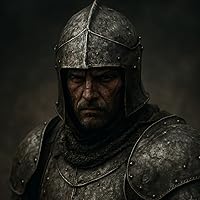
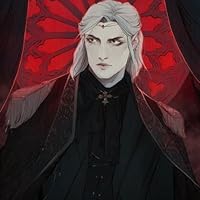
Shogun meets Game of Thrones in the blockbuster epic fantasy event of the year
'Family feuds, political savagery and complex characters on both sides of an epic, unfolding war . . . I loved it' Nicholas Eames
'A sprawling, complex fantasy epic that builds toward a brutal finale' Fonda Lee
Sen Hoshiakari is an exiled prince of a clan that lost everything in his father's failed rebellion. Deprived of his birthright, Sen is determined to restore his family's lands and honour at any cost.
Rui is a peasant girl who saved Sen's life on the night his family were put to the sword. But now, she is adrift and unsure of her place in the world, not knowing that the gods themselves have plans for her.
As civil war throws the empire into chaos, and demons seek vengeance on the living, Sen and Rui must fight for both their clan and their shared future . . .
But vengeance demands a bloody price.
Debut author A. S. Tamaki weaves a powerful tale of ambition, vengeance and sacrifice in this masterful fantasy retelling of an ancient Samurai saga, packed with memorable characters, stunning worldbuilding and epic adventure
'The Book of Fallen Leaves is lyrically told, rife with history and political intrigue . . . a book that is both vast and intimate - with battles that leap off the page and characters who yearn to do what's right' Andrea Stewart
A. S. Tamaki grew up in Los Angeles, where he spent his childhood climbing trees and making short films in his backyard. After working in Hollywood for several years, he now lives in the Pacific Northwest, and when he’s not writing, spends his time routesetting at local climbing gyms. The Book of Fallen Leaves is his first novel.
This is the first book in a long while that has literally kept me up all night so I could finish it...
This is a mashup of Shogun, Game of Thrones and, most importantly, Princess Mononoke. A fantasy set in a feudal-Japanese inspired world, with warrior monks, forest-spirits, loyal retainers and assassinations aplenty. Tamaki grips you immediately with one of the strongest opening chapters I've ever read... and it doesn't let up.
There is a large cast of POVs, side-characters, factions to get to grips with. The rich history adds a lot to your experience as you're finding your feet. Each character pulls you in, with their various conflicts written incredibly well. This book does 'escalation' masterfully. Every chapter gets bigger, either in scope or intensity, and the final 40% of The Book of Fallen Leaves is some of my favourite writing of the year. The factions could have been a lot more unique imo, and I'd have loved to have experienced more world-building in terms of customs and rituals and language, but at the core of this book is the incredible story of characters seeking to avenge their family, people committing deeds 'for the greater good', POVs from demon-warriors, found family and friendship.
Tamaki has forged a masterpiece of a Book#1 here. This is the book that NEEDS to be on everyone's lips...
Had the honour of interviewing A. S. Tamaki and Papa John Gwynne together - YouTube
2026 feels like a resurgence in epic fantasy. It has never gone away, but are we about to see a new peak?
The Book of Fallen Leaves is a feudal-Japanese inspired fantasy . This is a book where history seeps into the present. It is not just there as dressing, it provides real depth and richness to the world. It feels lived in. And it feels dangerous. Tensions of previous wars and conflicts weigh heavily, and a new war is brewing.
What stands out to me most about The Book of Fallen Leaves is just how accomplished this is. This is an ambitious debut that has to balance political intrigue with character building, magic and pacing. It does so with numerous factions at play that are playing a complex game of chess to gain the upper-hand. But the reader is never lost in this manoeuvring and puzzle solving, nor is the pacing brought down. It is gripping, with a great balance between action and moments to breath and build momentum once again.
“You can’t be king of the mountain without standing on a pile of bones.’”
We follow a range of PoV’s that refreshingly encompass a wide breadth of the population. We have peasants, warriors and nobles, each with specific roles in society that are being contorted, challenging their understanding of the world and forcing them to make a decision and choose a side. A lot of epic fantasy is guilty of dealing just with the higher echelons of society, but here we see the ripple effects and also how the broader population can influence the big picture.
The main strength of The Book of Fallen Leaves is its consistency, from its pacing to the strength of the cast as a whole to the world-building. In this way it reminded me of Fonda Lee’s Greenbone Saga and Richard Swan’s Grave Empire, as both have a strong cast and a plot with real drive, and each PoV offers an engaging story that helps fill in the puzzle of the overall story.
Due to the numerous factions and complex (but understandable) political intrigue, I would not recommend this as a palette cleanser. Apart from that, I will be recommending this all year to anyone who will listen. If you like epic fantasy, this could become a new favourite. I cannot wait for book 2!
Set in a feudal-Japanese-inspired world on the brink of civil war, violence and civil unrest allows ancient demons to break free and seek vengeance. Sen Hoshiakari is an exiled prince of a disgraced clan, determined to reclaim his family's lost lands and honor. Rui is peasant girl who saved Sen's life and is now seeking purpose for her life.
…our futures are not a river flowing in time, rushing directly to one destination. They are like pages in a book, among a vast uncountable library of books. Your futures are there: you may choose one. Or not. You may end up in a different book altogether.
Where this failed me was the overload of names and events with a feeling that it was too slow. This was slow-paced with the plot only getting moving at around 50%.
I liked both our main characters even if they felt like slightly more fleshed out caricatures. I loved being immersed in the historic Japanese world even if I wished there was more culture. I love political intrigue, however this lacked nuance and was more blunt violence.
I appreciated that the characters were working within a corrupt, broken system. Furthermore, by getting 5+ POVs, you can see the situation from different angles. Then again, they didn’t feel distinct enough.
Spring will come, and with it, flowers, the bloom of fleeting life, but none will be there to see them. Instead of music, you’ll hear the thrumming of horses on hard dirt. Instead of painting, you’ll see the vibrancy of blood. The bells would ring not for the coming of another year, but in mourning, for the dead.
As you can tell from my review, this had so much potential to be a new favourite. However, it just missed the mark each time. This is an impressive debut effort though.
The Book of Fallen Leaves had a slower start for me, and it took some time to fully settle into the world and political dynamics. I appreciate the ambition and the depth of the worldbuilding, but there were stretches where I felt confused and occasionally a little lost.
That said, there were some scenes that were genuinely strong. When the action picked up, the writing felt vivid and immersive, and those moments really stood out.
Overall, I liked parts of it more than others. It’s clearly aiming for epic scope, but the pacing and clarity didn’t always work for me. I’m planning to try the audiobook when it releases to see if that format helps the story click more smoothly.
unfortunately, i am soft dnf-ing this for now; while this is not a hard dnf, i am not sure when i will return to this book and series.
perhaps i didn’t give the story and characters a fair chance, but i do fear i am having trouble connecting with newly released epic fantasies and romantasies; i may have to stay away from these genres for a while.
——
very excited to dive into this japanese-myth inspired epic fantasy, following an exiled son of a traitor that is determined to restore his clan to their former glory! not to mention, i have the fairyloot edition and it's absolutely stunning
4.0 Stars This was a solid piece of epic fantasy centered around historical samurai. I found the characters and plots to be wonderfully complex and morally gray.
As someone interested in Japanese history, this re-imagining was right up my alley. I liked that this one didn't shy away from the brutality realities of this time.
I would recommend this book to readers who have enjoyed other fantasy stories inspired by historical Asia, such as the Poppy War. I look forward to reading more by this author.
Disclaimer I received a copy of this book from the publisher.
Firstly, thank you to Orbit Books and the author, Alex Tamaki for trusting me with an ARC of The Book of Fallen Leaves, in exchange for an honest, un-biased review.
The Book of Fallen Leaves is an epic, east-Asian fantasy, filled to the brim with adventure, excitement, political rivalries, rival clans, Gods and Demons.
Somewhere between Game of Thrones and Shogun, this is not for the faint-hearted. It is a complex, and layered story, with a multi-narrative perspective that provides thorough insight into all sides of the warring factions that you can understand the reasons for all sides of the conflict.
At it's heart, The Book of Fallen Leaves is a story of dualities. From Sen and Rui, two young children cast off together, and their journeys into becoming more than each of them ever thought they could be - one high-born, one low-born, each destined to walk a different path. To two rival clans, each vying for the right and power to lead their people to victory. To the Gods and Demons that reside in the shadows, watching and waiting.
I want to reiterate that this is a complex story. There is a very heavy focus on the politics that have both preceded this story, and the ongoing tumult of both class, birth right, and duty, and it really needs to be savoured. This isn't a story you can speed your way through, it should be digested slowly and steadily.
In addition to the complex political landscape, there are a lot of characters, and thanks to the handy character summaries included at the start of the book, that does make it much easier on the brain when perspective shifts. But at times it be confusing, especially when these characters cross paths.
That said, I adored it.
It was everything I wanted from an epic samurai fantasy. It's visceral, it's real, and it's dark.
I genuinely think this book is going to blow up on release and everyone will be talking about it.
The Book of Fallen Leaves releases March 2026, I'd highly recommend giving it a look and adding to your TBR.
It is not perfect, but I think that is mainly due to the complexity. That could entirely be me, and that it took me a good 4-5 weeks to get through this because of life, and a desire not to rush.
The Book of Fallen Leaves is the first book in The Autumn Empire series, and the start to an epic Japanese-inspired fantasy filled with politics, Gods and many warring factions, following on from an attempted coup that is still having repercussions 20 years later.
This book SHOULD have been completely perfect for me, as someone who adores political epic fantasy. Unfortunately, it just wasn’t. I found it nigh impossible to connect with any of the characters, and I didn’t feel any sort of kinship to them. Despite the world-building being incredibly intriguing, I struggled to differentiate between places or picture where each character was. A map could have helped, but my ebook version did not have one (I am unsure if the final release does). I wasn’t captured by the plot at all, and even at the halfway point I didn’t feel that the characters were going anywhere, physically or otherwise. I am usually a big fan of slowburn plots, but this one just did not work for me at all.
I have had zero drive or interest in this story since I started it, and that’s such a shame as I was so intrigued by the premise and world when I first heard about the book. This is a soft dnf, as I would like to attempt to read this again at a later date, possibly when the next book in the series is out. For now, however, I must admit defeat.
Overall, The Book of Fallen Leaves gets 3/5 stars. A fantastic premise with some very skilful prose, but just not the book for me at this moment in time.
thank you to Netgalley and the publisher for an e-arc in exchange for an honest review! <3
The vibes are very similar to A Song of Ice and Fire/Game of Thrones, so if you're more into the political side of epic fantasy than actual fantastical elements, then definitely give this novel a try.
I'm someone who's more into fantasy than hardcore politicking, but somehow, this novel really grabbed my attention and I couldn't look away.
Being an epic fantasy, you really have to pay attention to details, especially the relationships between the characters and between the clans. Interclan history played a huge role and it was easy to get lost amidst both the context and the subtext. (And this isn't including the different monk factions and their allegiances either to the clans or the emperors or themselves.) I'll definitely have to do a reread before the sequel so I can remember everything that I've read.
The novel started out with a POV chapter featuring a couple of demons that haunt this world. The darkness and death really set the mood for the story. Going with the ASOIAF/GOT comp, they were giving white walker vibes in the early seasons when you weren't exactly sure what they were and what they were capable of. The dread and the mystique were written really well.
The summary only mentioned two MCs, Sen and Rui. Not including the few POV chapters with the demons, there were about three more POV characters. They held different positions in the clans, all with varying levels of allegiances to their clans due to war and familial history.
Like I said, this novel is the definition of epic fantasy.
Sen and Rui were more of the young coming of age fantasy trope type of POVs, and I really enjoyed their chapters. They were a lot more easier to digest than the other POVs and actually served as a mini palate cleanser in between all of the heavy politics. (Don't get me wrong, they were both immersed in clan and country politics, but their situations were more easily digestible and slightly more straightforward instead of convoluted.)
The other three POVs, Kai, Yora, and Yaeko, brought more of a political nuance to the narrative. Through their POVs, we saw the inner workings of the clans, including intraclan and interclan politics. I won't lie; it was difficult to understand what was going on sometimes with all of the scheming and plotting, especially with each characters' levels of knowledge of what was going on.
Talk about a silo mentality. This is the type of novel where the audience learns alongside each of the characters, which is both frustrating and rewarding.
And with that, this novel isn't for everyone. But if you love epic fantasy with a ton of politics, then you should definitely give this a try.
“Death, it was said, was unholy in the eyes of the enlightened. To kill was to be unclean, and courtiers would never so besmirch their souls. They had outlawed executions for two hundred years in their search for purity. They would not kill. But now, where are we? A court, surrounded by killers. Hunters. Men who knew the scent of blood.”
An Empire on the cusp of civil war. Gods and demons breaking free. Two people fated to go to war in a world that won’t allow for peace.
Sen Hoshiakari is the son of a traitor. His father, leader of the Gensei clan, attempted a rebellion against the Emperor and was slaughtered when Sen was just a child. Sen was rescued on that fateful night and taken to live in hiding, in Kitano, away from the Empire’s rule. Rui, a no’in (lowborn) was also there during the slaughter, and her family was also killed, but along with Sen she too was rescued. Now their destinies intertwine once more as a coup by the Keishi clan throws the Empire into civil war and further bloodshed is on the horizon. With Gods and Demons at their heels Sen and Rui must fight for family, for freedom but also for love.
The Book of Fallen Leaves by A. S. Tamaki is a sublime epic fantasy debut. There’s so much depth and scope to this novel—an empire in turmoil, warring monks, samurai, demons and gods, and a deep philosophical reflection on the realities of warfare, of taking life.
I immediately loved this book right from the opening chapters as we enter this dark world where the barrier that holds back the spirit realm is thinning, monks have broken into factions against each other, and a politically tension filled Empire is present. Tamaki’s prose is almost lyrical, it’s atmospheric, you can really feel the emotion seeping through which is always my favourite kind of writing as it never fails to draw me in. Throughout Tamaki injects much Japanese mythology and also highlights the Japanese concept of two souls within us, the calm and the chaos. This was something that I felt was cleverly explored as this motif is illustrated not only in our characters but in the narrative structure as well, which you’ll see later on. This is a book with an expensive cast of characters and I do advise readers to refer to the characters list at the beginning because it really does help to clarify which characters belong to which clan. Despite this large cast I found each main PoV to be distinct, I found each key player memorable and further found that they did share a common theme; of finding their place in this world.
Sen has never known his real family, has never seen what their glory once was, has never known their true history. Growing up in hiding, away from the Empire’s clutches, he has very little experience of politics or war. Yet he is an heir nonetheless, he is a central figure to his remaining family and Gensei clan, a prince and a key to uniting them. With this he struggles, how can Sen fight for a family he has never known? When his teachers are shaping him to strive for peace, when he too believes in peace, how can he then ride proudly into a war? Then there is Rui, a peasant woman who was always kept on the outside, always looked down upon by nobles, never fitted in, wanting love yet never truly experiencing it. Rui only wanted to protect and care for nature, for life, but instead was thrown into a violent world. Let me tell you these two characters broke my heart, Tamaki portrays their inner turmoil so well and Rui and Sen’s relationship, their longing for each other, is so achingly beautifully written.
“Will we never move on, Yora thought, or will it color the rest of our lives? The old ones said the past was never gone; perhaps they were right. It lives within us still, he thought: each day brings its own ghosts. Each day the wounds reopen.”
The Book of Fallen Leaves is a Samurai saga retelling, and though I’m not familiar with the original tale, I’d love to discover more. The world is set in feudal-Japan and therefore the remaining POVs serve to illustrate the Empire’s political conflicts. My beloved Yora, once Captain of the Imperial Guard and now turned a poet and adviser, was a character who was filled with deep regret and sorrow. He had seen too much bloodshed, he knew the true meaning of loss, of betrayal, but he also knew that a fight was coming and was desperately trying to keep the peace. Kai, also a Gensei heir (being Yora’s niece and Sen’s older sister) remembers her father and is determined to restore her family’s place, to take back their lands and their rights. She however, is no warrior, she’s never had experience leading her people, but when she runs out of political negotiation options, a choice to fight or kneel is all that’s left to her. Yaeko on the other hand, being close to the Keishi clan, gives insight into how the coup is being played out. Yaeko goes through much conflict as she’s forced to fight against those she once stood beside, as she leaves behind her family’s beliefs and carves her own path. This is a very political heavy book, one that explores the history of the lands and the clans which have shaped the way the world is at present. Tamaki fantastically portrays the intricacies of an Empire facing political strife because of this history.
A true highlight of the book for me was the philosophy that Tamaki injects into this narrative—it amazed and awed me with its depth. The philosophy is oh so stunningly written with lines and imagery that really makes a reader think. For example, through the monk Jobo, who teaches Sen a lot, we are shown that Sen won’t kill a sacred serow, he does not wish to take life, but Jobo reflects that to be a warrior innocents will be killed by your hand. Tamaki begs the reader to consider what it really is to be a warrior, a samurai, even an emperor. What is the true horrific reality of war? What is it to take a life? The entire story explores the balance between peace and war and when is the right time to fight. Is there a right time? Whereas the first half of the book saw our characters pushing for peace, the second half turned into an all out battle as the clans collided. The action here was incredible, vividly detailed and the fear, the guilt, the primal urge to survive was perfectly portrayed. Tamaki is a clever writer indeed as again, he represents two sides, within the novel there is the calm and the chaos.
This was a book that very much embodied everything I love: characters with emotional complexity, a dark war torn world with myth and monsters, a story grand in scope. Tamaki has delivered a masterfully written debut, one that every fantasy reader needs to devour.
“If you gain power on the merit of defeating a tyrant, who will you be when you take the tyrant's place? You want to be a better ruler: good. But you’ll still be sitting in the exact same chair. That’s what I fear.”
ARC provided by Nazia at Orbit Books in exchange for an honest review—a huge thank you for the copy! All quotes used are taken from an ARC and are subject to change upon publication.
*The Book of Fallen Leaves* is the first book in the *Autumn Empire* trilogy by A.S. Tamaki; released earlier this year, it turned out to be a fantastic surprise. I first heard about it on a BookTube channel I follow, and when I saw it described as a mix of *Game of Thrones* and *Shogun*, I was eager to read it—and I can confirm that the book draws inspiration from both those worlds. The story features multiple points of view, but the two main ones belong to the siblings Sen and Kai. Having lost their family and everything they owned when they were young, they now seek to gain power and fight for their birthright; they are compelling characters to follow. There is also Rui, a character with an intriguing storyline triggered by a specific event, and I look forward to seeing more of her in future books. The plot follows these characters as they vie for power and control over their nation's lands. The book contains significant violence—including gore in places—since it involves samurai fighting with katanas, making the combat scenes quite graphic at times. To me, this book has everything epic fantasy readers love: well-crafted characters, strong narrative development, intricate political intrigue, and beautifully written relationships. *The Book of Fallen Leaves* is perfect for anyone interested in a power struggle between rival houses and the lengths to which individuals will go to achieve their goals; I highly recommend it to fans of epic fantasy and, of course, Japanese-inspired settings.
Huge thanks to NetGalley & the publishers for a chance to review this arc! I started reading my Fairyloot edition but ended up switching to my e-arc.
« You know, blood is just blood… it doesn’t set your path in stone. Doesn’t define you. »
I had high expectations for this but sadly ended up dnf’ing at 50%. There’s a lot of repetition… and when I say a lot - almost every second page has repetitive dialogue/worldbuilding/inner monologues. There could easily be 75 words to explain something that could’ve been summarized in a single sentence.
« Who am I, she wondered, when the world says I’m one thing, but I feel like I’m something else? Who will I become if what the world makes of me is not what I want? »
I love high fantasy, but for the 50% I read… there wasn’t any fantasy at all. I saw some reviewers mentioning the fantasy came in around the end but that’s not enough for me, personally. It’s very political and that’s something I usually enjoy but I found myself extremely underwhelmed.
There’s a lot of POVs and they were sometimes interchangeable. I kept forgetting whose pov I was reading and what the character’s name was. I didn’t find the characters necessarily likeable and I definitely never warmed up to the mmc Sen. A few characters were described as ‘smart’ but it wasn’t necessarily showed on page… if it was ; well, what was shown didn’t really impress me.
I think it was a very ambitious concept and I wish I had liked this better.
—•pre read This book is dedicated to the teachers 🥹 oh my heart ❤️🩹
This book has absolutely gobsmacked me. Whatever I try to write will not even come close to doing this novel justice. It’s high fantasy. It’s sweeping. It’s epic, it’s groundbreaking, haunting… I could go on and on with all these single words and none of them come close to touching even the barest hint of what it has to offer.
It is over 500 pages of political intrigue, dynastic families and power struggles, gods and demons, power of man and… other. It’s a story of loss, of families (blood and found), and desperately wanting to find where you fit in the world. Told in the most beautiful prose, we see straight into the hearts of each of our characters. Their hopes, their dreams, their machinations and ultimately their downfall. Kai, the remaining family noble of a doomed line that sought power in a failed coup. Sen, the hidden heir to a dynasty that shouldn’t exist whose heart lies both with his chosen family and the one he never knew. Rui, my gods Rui. My heart breaks for Rui but something tells me she is more than she seems, every time she’s knocked down she will fight to get back up. Yora, known as the Poet, the brother to one of the failed dynasties but allowed to stay in court because of his alliances to the emperor’s family. But where are his alliances, really. The warrior monks, the demons and gods… And I’m barely touching the SURFACE of this book. See what I mean? It’s so epic that epic makes it feel small.
I didn’t want to finish this book. I didn’t want to leave. I nearly cried when I got to the last pages. But that ending though… I am so hooked. I can’t wait for the second book because I have a feeling it’s going to be even more amazing!
Huge huge thank you to Orbit Books for the gifted eARC in exchange for an honest review. All opinions are my own. Once again, Orbit is over here knocking it out of the park with these incredible fantasy books this year. My bookshelf is starting to bend from buying all these bangers! (Can’t stop, won’t stop.)
Many thanks to the publishers for sending me an arc of this book.
First, I want to say that this is entirely my opinion, this shouldn’t influence your view of the book. You should go ahead and read it, without taking in consideration that I didn’t like it. This is just my opinion as a reader and as a reviewer. 🫶🏻
“The book of fallen leaves” started so good. The first chapter hooked me and I was so sure I was going to love it. It has a lot of fun elements that I usually like in a fantasy: interesting worldbuilding, engaging writing style and intriguing history. I liked the part about the gods and the complexity of the game that these political classes are playing. Even the action scenes were well-done and I was saddened by the fact that we don’t have a lot of them. I was intrigued by the setting, a Japanese era that made me want to read “Shogun”. There are even demons and a good atmosphere setting, with beautiful landscapes that made me want to travel to Japan, heh.
Unfortunately, the book wasn’t for me. Which is a shame, because I am a fantasy lover. Is my favourite genre, especially epic and high fantasy. I was promised something similar to “A Game of Thrones”, but I couldn’t see a lot of similarities to it. I don’t want to sound like I don’t appreciate the book or the story, but I wish publishers would stop comparing every release with these big series that everyone or almost everyone loves.
I don’t want to say a lot of bad things about the book, but there are some people who told me they’re excited for my thoughts, so here we go. I struggled with so many aspects of “The book of fallen leaves” and I had some moments when I actually got mad while reading it. I wasn’t a fan of the pacing. For a book of 583 pages (my arc copy), there is a lot of repetition and info dumping. The author keeps telling us the same thing over and over again. About the world, the history, the gods, the politics and so on. While the plot is complex, it moves very slow. I reached page 283 and only now were things starting to happen, but not a lot of things because half of the chapter was only info dumping. Because of this, my interest was starting to fall. I couldn’t care about what’s going to happen anymore, so I had to DNF.
The other thing that I didn’t enjoy were the characters. There are SO MANY!! I had to go back in the book in every chapter so I can remember who is who. So many allegiances and relationships between characters that we never meet, we just hear about them. It was like reading for a test in history, with all these emperors, young emperors, old emperors, retired ones, demon ones, lords, old lords, wives of old lords, new wives and old wives, children, children’s children, daughters of regents and sooooo on. Because of this, I couldn’t care about our main characters. What started as engaging became annoying. One of them is repetitive and has the same thoughts in all the chapters, she asks the same questions every time I was reading her pov. The other povs.. couldn’t care less. The author tried to create a romantic relationship between our main characters, but it felt so forced, having no chemistry whatsoever. Usually, I’m not upset about hearing about everyone and their parents, but only when we need it. At the same time, the author doesn’t say the cities names. I reached page 283 and I still don’t know where the capital. Throughout the whole book, until where I stopped, he says only “we have to reach the capital”, “the capital is in danger”, “things are happening in the capital, “don’t trust the people from the capital”. What’s the capital? What’s the name of this whole world? What’s the difference between the marks on the map? We have points, circles, circles around the points, stars? What’s the difference? Can someone tell me? It sounds like I hate this book, but I don’t. I’m just disappointed by how it was done. I didn’t felt the fantasy in it. Just because we hear about some gods and demons it makes it fantasy? We don’t have magic, or I didn’t read about it until the page i stopped. We don’t have supernatural elements, except in the prologue, and I’m not sure it was real or not. So why the comparison to “A song of ice and fire”? Only because it’s a popular book series?
I will not continue the series nor I will trust these publishers who make all these comments on how “this book is the next this or that”, because it’s not. It never is. I’m sad that I didn’t like it, i reaaaally tried to finish it. I even used a 60 minutes timer to read without scrolling on my phone and I still couldn’t finish it. I understand why some people loved it or why they could love it, but fyi, it’s very slow paced with a lot of info dumping. I was promised an epic fantasy, and epic adventure, but all I got was disappointment in the form of confusing chapters, repetition and political drama.
Y lo mejor de todo es que es EXACTAMENTE lo que promete: Canción de Hielo y Fuego pero en un mundo basado en la tradición japonesa con Samuráis.
Atención, tiene MUCHOS personajes, y cada uno es de su madre y de su padre (literalmente) pero a mí al menos no me ha parecido TAN TAN complejo. Si que a veces te lías con los parentescos, pero os aseguro que la trama VALE LA PENA.
¿La magia inspirada en la princesa mononoke? A mí sinceramente me ha recordado más a la guerra de la Amapola, con unos dioses crueles de la hostia que te dan poder sí, pero pagando un precio terrible q cambio.
La construcción de personajes también es brutal, con sus conflictos muy marcados a lo largo de la historia, he visto reseñas que decían que los personajes de este libro son planos, pero claro, cuando curraba en Ikea también había gente que me preguntaba si las velas se podían comer.
Incluso los secundarios dejan marca, personajes sin POV pero que amas igual (Jobo MVP)
Y ahora vamos a hablar de lo que para mí es LO MEJOR del libro (Sin spoilers).
EL FINAL
OH. DIOS. MÍO (inserte voz de Janice)
He leído Sanderlanchas MUCHO más flojitas que este final. Que sí, que te chupas 300 páginas de politiqueo, no te voy a engañar, pero que tienes el batallote japo de tu vida, también te lo digo.
Desde el primer capítulo de una calidad extrema, me ha mantenido enganchado. Si os gusta la cultura japonesa, os moló Shogun y el tipo de política estilo Juego de Tronos (libros) este libro también será un 10 para vosotros. O no. No sé. No soy 100tyfiko.
DNF @ 60%. The first chapter was superb! after that it only goes downhill. The writing feels unnatural, there are too many names that don't have an impact (I love game of thrones and every Name felt important to me), the characters feel like 15 years old and it's too simplistic. It wants to be big and epic but sadly it doesn't feel like that.
What a fantastic book! This was absolutely 100% in my wheelhouse. I adore anything samurai or Asian inspired, and since The Last Samurai is one of my all time favourite films, this one immediately grabbed my attention.
For me, The Book of Fallen Leaves felt like the lovechild of an adult version of Across the Nightingale Floor and a battle sequence straight out of Shogun. The pacing is relentless and once it starts, it does not let up. The entire story revolves around a single, sprawling battle, but what makes it so compelling is how A.S. Tamaki tells it through multiple POVs. Each perspective adds a new layer , showing the politics, the personal motives, the spiritual undercurrents, and the eerie presence of magic and spirits that weave through the chaos.
Sen Hoshiakari is a standout and his arc is powerful and satisfying but I have to say my favourite POV was Rui. Her internal conflict amidst the external carnage was just chef’s kiss writing.
My only small gripe, I really wish my copy had a character list and allegiance chart at the start. With all the Japanese names and house affiliations, it took a bit to get my bearings in the early chapters.
But honestly, that’s a tiny quibble in what was otherwise a brilliant read. It ticked every single one of my personal boxes. Pacy, emotional, brutal, beautiful. I was hooked start to finish.
Thank you, Netgalley and Orbit, for approving me with an eARC of this book in exchange for an honest review.
- For the review in Italian please scroll down -
This book has been marketed as 'Game of Thrones meets Shogun'. I should warn you straight away that it doesn't quite live up to the standard set by Game of Thrones. I can't comment on Shogun as I haven't read it. Actually, the book is a retelling of the Japanese epic poem The Tale of Heike, with which I'm not familiar. For me, it might as well not have been a retelling. Given that retellings generally don't appeal to me, this was actually a plus for the book.
Before starting this book, I’d noticed a long list of critical reviews and DNFs, so I’d lowered my expectations, expecting a slow-paced beginning. However, I was surprised by just how intriguing I found the book, and I couldn’t put it down.
This book features a wide cast of characters. We follow Sen Hoshiahari, the son of the Gensei clan leader who sparked a disastrous rebellion. In order to be saved and protected, Sen was taken into exile to the empire’s borders as a child and kept hidden. Sen’s life becomes intertwined with that of Rui from the moment they are both taken to safety and exiled from the empire. We also follow the stories of Sen’s sister and uncle, who are more deeply involved in the emperor’s court, as well as those of other characters from different houses who are sometimes noble allies or antagonists. In the background, there is a war between clans, political intrigue, and spirits, demons, and gods with their own agendas. I found the glossary of characters very useful, especially when the Japanese names of different characters were written in a similar way.
Let’s start with what I felt was the weakest aspect: the setting. Although we know from the blurb that the book is set in feudal Japan, it could be set on the hill behind my house and it wouldn't make any difference. Despite the pleasant descriptions during scene changes, I never felt as though I was in feudal Japan or an East Asian setting.
Although the main plot is political in nature, the first volume, and the first part in particular, focuses on the characters’ introspections. This makes the book a character-driven introduction, which I greatly appreciate. I enjoyed the in-depth exploration of the characters, who are very human and are constantly torn between their sense of duty and their desires. This is all accompanied by a calm narrative and scenes of simple daily life. Although Sen and Rui seemed a little immature for their age, I still found their stubbornness and goals credible. Moreover, given that they have led isolated and sheltered lives with little life experience, it is understandable that they have not reached an appropriate level of maturity for their age. Perhaps it would have worked just as well to make them a few years younger. Nevertheless, I think the author did a very good job of expressing the characters’ inner conflicts, particularly Kai's. She is Sen's sister and finds herself entangled amongst the court nobles. I found the Gensei clan characters (Ren, Sui and Kai) the most successful overall, while the others seemed a bit flat, although their central role in the military strategy made up for this.
I found myself torn about the style. At times, I found it very solemn and evocative; at others, I thought some of the dialogue was a bit artificial. Despite this, I enjoyed the writing overall, especially considering it’s a debut novel. It’s the kind of book where I can overlook certain technical flaws because other aspects, as I mentioned above, kept me glued to the pages.
The fantasy element remains rather subtle in this first volume. There are spirits and presences linked to the world of the dead, but many aspects of the system have not yet been fully explained. However, rather than seeing this as a shortcoming, I interpreted it as a deliberate choice by the author to lay the foundations for further development of these elements in subsequent volumes.
While the first part is characterised by a slow pace, the second part picks up the pace thanks to a series of battles and the interference of gods and malevolent spirits. I’m not usually a fan of combat scenes, but I thought this section was well handled, with perspectives from characters not involved in the battle interspersed throughout, which I liked. The book ends with many unanswered questions about the choices the characters will face, the desires of the gods and the fate of the other houses. I’m very curious to read the sequel and find out what happens next.
In my opinion, the most important thing to know is this: the book makes it clear very early on what it’s all about. If you don’t connect with the tone and characters within the first few chapters, it’s unlikely that will change as you read on. However, if you find yourself hooked from the outset, the novel has all the ingredients necessary to keep you engaged until the very end. Overall, despite a few flaws mainly linked to the artificiality of certain scenes and dialogue, I found it a promising debut with interesting, engaging characters.
------------------------------- Recensione in italiano Questo libro è stato commercializzato come Game of Thrones x Shogun. Vi avviso già che non raggiunge le vette di Game of Thrones, mentre non posso esprimermi su Shogun, dato che non l'ho letto. In realtà, il libro si propone come un retelling di un poema epico giapponese dal titolo "The Tale of Heike", che non conosco, e pertanto è come se non fosse stato nemmeno un retelling per me. E dato che, in generale, i retelling non mi soddisfano molto, questo è stato un punto a favore del libro.
Prima di iniziare questo libro, avevo già notato una lunga serie di recensioni critiche e DNF, quindi avevo rimodulato le mie aspettative e mi ero preparata psicologicamente ad affrontare un libro che, secondo quanto avevo letto, sarebbe stato lento nella prima parte. Invece, sono rimasta sorpresa da quanto il libro sia riuscito a incuriosirmi e non sono riuscita a staccarmi dalle pagine.
In questo libro abbiamo un ampio cast di personaggi. Seguiamo Sen Hoshiahari, figlio del capo clan Gensei, che innescò una ribellione finita male e che, per essere salvato e protetto, fu portato in esilio da bambino ai confini dell'impero e tenuto nascosto. La vita di Sen è intrecciata a quella di Rui, dal momento in cui entrambi furono portati in salvo e allontanati dall'impero. Oltre a loro, seguiamo le vicende della sorella di Sen e dello zio, più coinvolti alla corte dell'imperatore, e di altri personaggi appartenenti ad altri casati, talvolta nobili alleati o antagonisti. Sullo sfondo, una guerra tra casati, intrighi politici, spiriti, demoni e dei con i loro piani. È presente anche un glossario dei personaggi che mi è stato molto utile, soprattutto quando i nomi giapponesi di personaggi diversi erano scritti in maniera simile.
Partiamo dall'aspetto che, secondo me, è stato il meno riuscito: l'ambientazione. Sappiamo dalla quarta di copertina che il libro è ambientato nel Giappone feudale, ma potrebbe essere ambientato sulla collinetta dietro casa mia e non farebbe alcuna differenza. Nonostante le piacevoli descrizioni durante i cambi di scena, non mi è mai sembrato di essere nel Giappone feudale o in un'ambientazione orientale.
Nonostante la trama principale sia di stampo politico, questo primo volume, e in particolare la prima parte, si concentra sull'introspezione dei personaggi, rendendo il libro un'introduzione molto incentrata sui personaggi, cosa che apprezzo molto. Ho apprezzato molto l'approfondimento dei personaggi, molto umani, divisi costantemente tra il loro senso del dovere e i loro desideri, il tutto accompagnato da una narrazione pacata e scene di vita semplice. Nonostante Sen e Rui mi siano sembrati un po' immaturi per la loro età, li ho trovati comunque credibili nella loro caparbietà e nei loro scopi. Inoltre, avendo condotto una vita isolata e protetta, con poche esperienze di vita, è comprensibile che non abbiano raggiunto una maturità adeguata alla loro età. Forse avrebbe funzionato anche il fatto di dargli qualche anno in meno. Nonostante ciò, secondo me, l'autore è stato molto bravo a esprimere i conflitti interiori dei personaggi, soprattutto quelli di Kai, la sorella di Sen, che si trova invischiata tra i nobili di corte. Nel complesso, ho trovato i personaggi del clan Gensei (Ren, Sui e Kai) i più riusciti, mentre gli altri mi sono sembrati un po' piatti, anche se il loro ruolo centrale all'interno della strategia militare ha compensato.
Lo stile mi ha lasciata un po' combattuta. A tratti l'ho trovato molto solenne e persino evocativo, mentre in altri momenti alcuni dialoghi mi sono sembrati un po' artificiosi. Nonostante ciò, nel complesso ho apprezzato la scrittura, soprattutto considerando che si tratta di un esordio. È uno di quei libri in cui riesco a chiudere un occhio su alcuni difetti tecnici, perché altri aspetti, di cui ho parlato sopra, mi hanno tenuta incollata alle pagine.
La componente fantastica, almeno in questo primo volume, rimane piuttosto sfumata. Ci sono spiriti e presenze legate al mondo dei morti, ma molti aspetti del sistema non sono ancora stati spiegati del tutto. Più che una mancanza, però, l'ho percepita come una scelta con cui l'autore sta semplicemente gettando le basi per sviluppare meglio questi elementi nei volumi successivi.
Se la prima parte è caratterizzata da un ritmo lento, la seconda parte acquista più ritmo, anche grazie a una buona dose di battaglie e all'intromissione di dei e spiriti malevoli. Non sono una fan dei combattimenti, ma devo dire che questa parte è stata ben gestita e intervallata da punti di vista di personaggi non coinvolti nella battaglia, e questo mi è piaciuto. Il libro si conclude lasciandomi con molte domande sulle scelte che i personaggi dovranno affrontare, sui desideri di questi dei e sul destino degli altri casati. Sono molto curiosa di leggere il seguito e scoprire cosa succederà.
La cosa più importante da sapere, secondo me, è questa: il libro mostra molto presto cosa vuole essere. Se entro i primi capitoli non si entra in sintonia con il tono, il ritmo o i personaggi, difficilmente la situazione cambierà andando avanti. Al contrario, se scatta subito la curiosità, allora il romanzo ha tutte le carte in regola per coinvolgere fino alla fine. Nel complesso, nonostante qualche difetto legato soprattutto all'artificiosità di alcune scene e dialoghi, l'ho trovato un esordio promettente, con personaggi interessanti e abbastanza carismatici da spingermi a continuare la serie.
Had to DNF this after about 150 pages in. Not only is it apparently boring (I didn't get far enough to judge) it is unreadable.
The author has an aggrevating comma filled writing style that nobody should have to suffer through. Additionally, they have the tendency to shower you with unnecessary details, doubling up on information and just plain old bad grammar. If edited this book might have been good, but I'm just not going to put more time into it to find out if the story is worth it.
I would still like to thank Netgalley and Orbit for the e-ARC, this shows the wisdom of read before you buy.
Finally comps that are accurate and that help to describe the book while also falling short of exactly what the book is.
Yes this is a political and military fantasy akin to game of thrones, relying on mystical and unexplained (as yet) fantastical forces. Yes it incorporates samurai culture and will certainly recall the sharp dialogue and breathtaking scenes of Shogun.
And yet…it’s also more than simply a mashup of these two things. It’s truly an epic historical fantasy with an insanely good cast of characters.
Yes the beginning is somewhat slow moving, and the character development is not instant but the payoff is so worth it.
I am really excited to see where this series goes! Thanks to Orbit and Netgalley for a galley in exchange for an honest review.
This book had some great moments but for me, the pacing was a bit uneven, and a few ideas felt more interesting in concept than in execution. Some sections lingered too long, while others I wanted to explore more deeply.
Overall, it’s a quiet, introspective read that will work best for readers who enjoy slower, mood-driven stories, even if it didn’t completely click for me.
"El poder es un sistema, como una noria hidráulica, que no funciona si un solo eje carga con todo el esfuerzo"
Esta novela era una de las novedades que más esperaba este año. Política, luchas por el poder entre clanes y mitología asiática, tenía en un principio todo lo necesario para ser una de mis mejores lecturas. Y sin embargo... Tengo que decir con pesar que no fue para mi.
"El libro de las hojas caídas" empieza con una revolución fallida, un joven príncipe heredero de los Gensei, Sen, exiliado siendo muy niño por los crímenes de su padre. Un clan que busca poder resarcirse y recuperar el poder con el paso del tiempo, y todo ello aderezado con mitología y dioses vengativos. Por otro lado también tenemos a Rui, una joven plebeya que fue encontrada junto con Sen el día en el que lo perdió todo. La novela gira en torno a la lucha por el poder entre los distintos clanes que pueblan la región, un guerra civil que lleva cocinándose varios años, a la vez que los dioses traman sus propios planes.
Voy a empezar con una cosa que sí me gustó de la novela: la construcción del mundo. Me parece que para ser la primera novela del autor presenta un mundo interesante, sólido y bien planteado, lo suficientemente atractivo como para querer saber más de él. El problema fue que en mi humilde opinión no va acompañado de una trama y unos personajes a la altura. La novela tiene muchos puntos de vista, bastantes personajes que no llegan a estar bien definidos ni tienen personalidades muy marcadas que los hagan ser destacables y recordables. Eso se traduce en confusión. Yo que soy una persona acostumbrada a leer novelas de fantasía largas, densas, y con muchas voces narrativas, me encontré más de una vez (y de dos, y de tres) yendo a la guía de personajes a comprobar quién era quién. Y creo que gran parte de la culpa de esto es la poca profundidad con la que están desarrollados. También creo que una novela tan ambiciosa se le quedó grande a un autor tan primerizo, y quizá hubiese sido mejor quitar puntos de vista y centrarse más en menos personajes protagonistas, pero desarrollarlos mejor. El propio Tamaki llega a comparar su libro con "Canción de hielo y fuego", y verdaderamente se ve la intención, pero... No llega. Y tampoco es que yo esperaba que lo hiciese, pero sí que esperaba haber conectado un poquito más.
Por otro lado, la trama... Aquí tengo que decir que no creo que sea una mala historia per se, el problema es que cuando a mi los personajes no me dicen absolutamente nada... También me cuesta disfrutar de lo que ocurre. Creo que el ritmo es un poquito irregular, relegando la acción para las últimas 130 páginas, tramo que se me hizo especialmente pesado, porque ya sabéis lo que me pasa a mi cuando hay mucha acción seguida en una novela de fantasía. Que desconecto.
Así que sí, en definitiva... Creo que no es un mal libro, y para ser la primera novela del autor tiene algún elemento destacable. Pero no ha sido para mi, no conecté con los personajes ni con la historia, y me dejó bastante fría.
The Book of Fallen Leaves blew me away with just how vast and detailed, well, everything was , from the worldbuilding, history, magic, POVs (we love characters with emotional complexity) and politics, it's an intricate and multi layered story and I found myself completely immersed, I'd say this is definitely for fans who enjoy a plot thick with political intrigue and enjoy a more slow burn start to a series, the first half felt like watching a chess game with the political strategy and motives/loyalty of each character coming into play, the second half is BOOoOoOm the action, there are a lot (😅) of characters but if you're familiar with epic fantasy thats kinda their jam, it doesn't take long to get a grip on who's who etc, the pace picks up around the 60% mark, the battle scene is visceral, it's almost poetic, Tameki's writing is incredibly cinematic and I felt I was standing amongst the bloodshed, I really enjoyed this and can't wait to see where the next book takes us, an epic historical fantasy with an unforgettable cast of characters
I have so many thoughts on this. First, I am sad. I was really looking forward to this. Second, I think I am going to take a break from buying debut high fantasy authors for a while. There were so many areas that fell short. We didn't get nearly enough character development. At some point it was just a list of names doing stuff to another list of names. No sense of investment. With more than 5 POV characters, I really only felt like 2 of them had any appeal. So many of the scenes were just the POV characters observing rather than participating or affecting action. Too much effort was spent on trying to build a complex political environment and not enough in making us care.
Everything else I want to say is spoilery and I won't get into it here.
This is a book that will really appeal only to a certain type of fantasy reader. And I'm really glad that the author decided to tell this story. However, I personally could not recommend this book to others as political drama is not something I typically enjoy as a fantasy reader. This did not really have a ton of fantasy elements or world-building.
I really struggled to understand the characters and their motivations, it felt like all of them were pawns with no agency, and while I do understand that that is maybe the point, It didn't hook me. I didn't truly care for their cause and root for them as I felt that I should. The story was very slow and the jumping around to different characters was difficult and I felt myself constantly referring back to the family tree, also, I believed for a large portion of this book that Sen and Rui were siblings, as the family tree places them together in such a way.
Unfortunately this one was a miss for me, but the comp titles seem to be very apt.
I was given this advanced copy for free in exchange for an honest review by NetGalley and the publisher. All thoughts and opinions are my own
Review:
While the comparison to Game of Thrones and Shogun might be more showy and get more people to pick it up based on their enjoyment of the TV shows, I think a better comparison is someone like Steven Erikson, an author that throws you into the deep end. There's a lot going on at all times with almost no handholding or explanation of what or why it's happening. This problem (or blessing depending on your perspective) is intensified by having a ton of POV characters and not all of them were as interesting to me as others. I would've read a book just about Sen, while I often fell asleep in other chapters. I feel like readers need a roadmap of the many plot threads within The Book of Fallen Leaves; without a second book out to know where they're going, it's hard to recommend this book.
This gets a 3 star rather than a 2 because I would pick this up and reread it again in the future when book 2 is out. I need some resolution on plot points and this first book is very much a set up book for things to come.
☀️ Fun Factor 1/5 (I struggled for two weeks to read this) ☀️ Writing Style 3/5 ☀️ Characters 3/5 ☀️ Plot 2/5 (So many plotlines that seem unrelated) ☀️ Setting 3/5 (Kinda sorta Japan but not really) ☀️ Gore 4/5
☀️If this were a movie it'd be rated: R for violence, gore, terror
☀️FOR FANS OF: Readers with patience and a love for Japanese inspired world building and aesthetics.
☀️Ultimate verdict: ⭐⭐⭐
☀️Best Character Award goes to: Sen is very easily the best among the protagonist POV characters
The Book of Fallen Leaves, the debut novel from AS Tamaki, is an epic story of political intrigue and warring clans infused with gods, demons, and evil spirits who intercede and interfere with the world of men. Inspired by a Japanese samurai saga, The Tale of the Heike, with roots in epic fantasy, the intentional world building leads to one of the most bingeable closing segments of a book. that I have read in some time.
First, it is important to understand that this is a book one, and the first two parts of the book (divided into four parts total) are dedicated to character introduction and world building. Where I have seen some reviewers complain about the number of characters and character names, anyone who has read any kind of epic fantasy should not see this as a problem. It may take a bit of time to get used to the characters names, but our main 5 or 6 characters continue to show up, and you get used to it and figure things out pretty quickly (in addition to a provided character list). By the end of part one, I was totally comfortable with the main players, the clans, and their respective roles. The world is inspired by feudal Japan, with three main warring clans who previously overthrew an emperor, and then fought amongst themselves for power. We also get some backstory on the gods, demons, and spirits who interact with the world of man. These are more hinted at in the first half, building a slow tension and introduction to the fantastical elements of the story.
Tamaki's measured, intentional approach to world building lays the foundation for the second half of the book, which begins to accelerate and does not stop until the last page. I read the last 40% or so of the book in one sitting - I genuinely could not put this down. The final battle of the book is truly cinematic, with breathtaking descriptiveness and at times gut wrenching emotional moments. It sets up the rest of the story to come in such a wonderful way. Tamaki's writing is fantastic, and often poetic, even in the heat of battle. The fantasy elements of this book are so interesting, using gods and demons who work both on their own and through humans to interact with the physical world. There is lots of mystery still left to these elements at the end, which to me makes this all the more intriguing.
This book is often advertised as Shogun meets Game of Thrones. I personally do not tend to like these sorts of comparisons, as I feel it creates certain expectations and can put readers in the wrong mindset. Is it like Shogun in that it is inspired by feudal Japan and includes period appropriate fighting - yes. Is it like Game of Thrones in that we have warring clans, lots of characters and political scheming for the seat of the emperor/power - yes. But the Book of Fallen Leaves is its own story, and lends a wonderfully unique voice to this world, independent of either of those works. Readers who love intentional world building, epic fantasy, political intrigue, and a mysterious fantasy element will love this book. While I did get this as an ARC, I have already pre-ordered my own copy and fully intend to reread this one. I cannot wait for the next book in the series, and would highly encourage you to check this one out!
Thank you to NetGalley and Orbit books for the opportunity to read and review this ARC!
The Book of Fallen Leaves started off with a bang, and I really thought this was going to be a five star read. I studied Japanese art history in college, and we talked a lot about the supernatural/ghosts/demons so I was really excited for this. Unfortunately, the beginning is completely different in content and tone from the rest of the book. This book missed the mark for me in several ways.
The characters (and there’s a wide cast) are not fully fleshed out. They feel like caricatures. When there are so many to keep track of with nothing memorable or unique about them, they become indistinguishable from one another.
This book is supposed to be epic fantasy but there really aren’t fantasy elements throughout most of it and it reads more like historical fiction. There is political intrigue, but it is so slow and repetitive that it got very boring.
The dialogue was not written well. It seemed written more like how people might actually speak but unfortunately that translates to the page really poorly. For example, here’s one snippet: Her heart wrenched in her; her muscles cramped and seized. She crumpled. “I don’t want to kill.” “You must.” “No.” “You must.” “No!”
Book 1/? in the adult epic fantasy The Autumn Empire series by A.S. Tamaki - I will probably feel bad about 1-starring this and change it later, but for now, I'm just too frustrated and feeling a little bit insulted over how unpolished this book is. The story does nothing at all really, the plot and characters are all bland cliches, and the most frustrating part is that the "epic" and breathless tone the author often takes indicates to me that he doesn't understand what his book is doing or not doing. There's a struggle here to flesh out the tenets of storytelling, characterization, pacing, and tone. The writing is thin and often fragmented despite its prose-y flourishes - the flourishes sometimes add mood but nothing else, like to characterization or theme or ways to interpret the plot. The book's marketing isn't as off as other reviewers are saying it is - the main gap between this book and the comp titles is writing experience and fullness of the story - but the massive reach to GoT and Shogun still does it a disservice and makes it look like a cheap motion to sell copies. 1/5
Trigger warnings for intense violence and gore, mild sexual content, and child endangerment
It was odd just how few early reviewers had much concrete to say about this novel, and it was their reviews I was skimming to see if I wanted to give this book a shot, lol. "it's like game of thrones" and "it truly was epic" and "it has multiple POVs and sometimes it's slow" don't exactly help. What are this book's themes? What is it actually about? How did it make you feel?
Well, it seems like the answer is: it's not really ABOUT anything. It is ABOUT the two main characters, Sen and Rui, surviving the clashes and politics of this country in the same way that Shogun is about a white Englishman navigating court politics of Japan, and in the same way that ASOIAF (if your comp title is "Game of Thrones" in 2026, I feel like that's a signal for "I haven't actually read much epic fantasy") is about chosen-one outcasts fighting the status quo while ice elves come to plunge the world into an ice age, while the powerful do nothing but infight.
As in, The Book of Fallen Leaves does have a plot. It also tells you multiple times that war is bad - vengeance is a slippery slope - empire is bad - what political fantasy is (lol) - how systems of control work - why there is a status quo - given to us in thick paragraphs of uninspired prose and dialogue. It has something to say (mostly well-worn Hallmark card impressions or advice, just make it East Asian epic fantasy) as well as having a plot, and it's strange how these two things do pretty much nothing to help one another, resulting in something that's deeply derivative and uninteresting to read. It feels like this book wanted to be an Asian epic fantasy first, and the actual story it had to tell was dragged along behind this goal like it was either a necessary evil or simply a chance to put a TV show or movie deal dream of a young someday-author into a more likely and feasible book format, prioritizing vibes, visuals, and a general sense of intensity and politicking over - once again - actual prosaic storytelling.
Shogun and ASOIAF are beloved not because of their plots or even because of what they end up saying, but because of why they're saying anything in the first place, and because of how they say it (epically, devastatingly, relatably, prosaically, demonstrating theme and human heart). Not to mention the numerous memorable characters between them.
Shogun has something to say about where real power resides; how women and the marginalized use their influence in ways that society allows; how the "East" is perceived from a Western lens and vice versa; culture clash; and much more. A very full and active story is built around these thoughts to express themes and contradictions, aided by the author's interest in detail. ASOIAF is my favorite series of all time and I could go on forever about the myriad things that it says, not the least of which being: the society-destroying nature of other-ization and dehumanization, the double standards and lose-lose situations that women exist in both irl and in fantasy/fiction almost ubiquitously, same with the disabled and disenfranchised, commentary on the ironies and misunderstandings perpetuated by the fantasy genre, the insidiousness of patriarchy, the lie and the ideal of knighthood + heroism, I could go on.
Not every work labeled "epic fantasy" needs to be something philosophical or masterful or even complex. But it's noticeable when you've read something that's a few hundred pages long and you get to the end and find that it has pretty much no point except "things happened, wait until you see what happens next." Stuff happens, such as fights and betrayals. Religion and state clash. There is a sense of struggling in an unjust world and hope for a better future - but there's a strange lack of intention, of deliberateness, behind it all. There's something missing here. Specificity, a greater purpose or unifying narrative I suppose, rather than just a unifying setting or struggle. Which don't feel to be the same thing. The book doesn't just feel unpolished to me - it feels unfinished.
I've suspected this to be the case with many Orbit and sometimes Tor releases over the past few years where the imprint will market a midlist of chunky 400-650 page fantasy novels under the epic fantasy or (less common nowadays) grimdark fantasy label and most of what I can glean from what other reviewers say about these novels is "it was long, but the concept is great! i might read more." And that's like 99% of what you can find about the story. So I've been very hesitant to pick up those titles of the last several years, because you'd think that if a 600-page novel was truly epic, people would be hotly debating themes, theorizing about why characters made certain decisions, anticipate where characters will end up in the next book, fanning out about characters or relationships, stuff like that. So my impression is "ideas are cheap, execution is everything," but I've also gotta read at least some of them for myself or be left forever wondering if I'm missing out on my favorite genre.
So far I remain unconvinced of this crop of fantasy writing of the last 5 or even 10 years, and despite my determination to be better at quickly keeping up with new "epic" fantasy releases, I'll still say I haven't even found a handful where I didn't think something like "this should've been reworked to be not just shorter but tighter and more deliberately crafted," "this feels like it really wants to be something else that already exists and is better," or "this doesn't want to be a book at all, it wants to be a movie, video game, or a TTRPG." Just like other readers, it bothers me when rumors come down the pike of publishers telling fantasy authors that their books have a hard word count ceiling (450 pages or even much less was a rumor I heard secondhand), yet at the exact same time, the average midlist fantasy novel is so bloated and aimless, I can't exactly defend those books either. Prose remains lacking on average and there's also a lack of craft and deliberateness of structure, and this is all beside my very personal taste in fantasy being basically nowhere to be found, lol, which I try to set aside. But I also simply feel that part of the epidemic is fantasy that's shallow fare when the titles that authors say they love and are inspired by are anything but shallow. I want something more out of fantasy than just a time sink or an occasional thrill, especially if the book is asking for 500-700 pages' worth of my time, and ESPECIALLY especially if it's a series wanting me to invest in multiple books.
This is where I want to commend Tamaki in that it shows that he cares about craft and emotion and that he wants to take the reader on a journey. My main problem lies in that this book feels unfinished and not quite developed. The story lacks shape and relies a little too much on cliche. The plot leaves the impression of going through the motions rather than trying to express something specific or give any particular character a meaningful journey. The chapter layout and POVs feel like they're trying to suggest purpose and cohesion at times, but the story doesn't feel deep enough to encourage the reader to dig for purpose or meaning, if there even is anything deeper to find than the straightforward, telling prose that resorts to chopping itself into punchy pieces in order to communicate motion and plot tension. So the book feels lengthy while also being not that deep. I don't feel like even this many POVs was justified
This might be an unfair example, but shouldn't actually be unfair - this book's opening chapter. A new author should be workshopping and polishing that opening chapter to brain-melting perfection if you're trying to get an agent and then get your book published. If nothing else, the publisher should be providing an editor to help it get there once the author is agented and the book snatched up.
As the first indication of what this book will deliver, I finished the opening chapter thinking: 1) the writing is organic but kinda awkward, and 2) idk who any of these people are, but the author definitely relishes in violent death because that's where the most interesting prose was 🤣I get an impression that there is a conflict, that something supernatural is colliding with the world of humans and meddling in politics, that Things Are Happening, but I don't know what any of it means or where we are. Tamaki goes for the old dubious advice of "start in the middle of the action" that some fantasy authors take way too literally, and the chapter is over quickly with little to no character interiority from anyone on the page and pretty much no context. It's disorienting and frustrating - the only "hook" to speak of is the violence, which comes with an awkwardly overexplained, simple application of demon magic that an editor should have tightened up if not the author himself. The ensuing conversation is weirdly repetitive even within just this short chapter, and without context it's borderline cheesy fare.
I bring this up because the book that follows does much of the same in macro - relishing in descriptions of violence and gore with no emotional resonance or purpose in that violence, characters with little interiority who blend together, a reliance on physical description with evocative prose to create a setting or mood but not to express character or theme, a lack of culture or context for this fantasy world, and sliiiiightly awkward writing. The first chapter tells on the book is what I'm saying, which I guess is what it's supposed to do lol, but it's also just not great and the repetitive in-your-face writing in what should be the showcase of a long book is simply not a great sign.
The surface-level physical descriptions of even magical things is always a major letdown for me because it almost never has anything to do with the voice or experiences of the POV character, there's no saturation of what this magical or visual could mean to or how it could be perceived by any in-world cultures, often no imagery at all is used in the prose - the only utility to this kind of writing is telling the irl human reader exactly what to visualize and what to think as if we are reading the blow-by-blow of a movie screenplay rather than a narrative. The Book of Fallen Leaves and its disembodied outside POV looking down upon or far over at the ostensible POV character makes it a big example of this, where everything is observed from a distance and the listed POV character has almost no inner voice that we are attuned to. Often the prose gives us a flourish of a physical description or mood, but otherwise, we are reading a movie screenplay and we are meant to visualize what's being described as stage blocking for human-shaped puppets or chess pieces meant purely for the modern irl reader, strangely cutting the actual fantasy narrative and the POV characters out of the storytelling equation.
This especially annoyed me with the frequent descriptions of written words appearing on a demon's skin. We've all seen this visual in a movie or show one time or another, so we know what Tamaki is getting at, but in the end it's a repetitive and ultimately empty description. I got excited a couple times when Tamaki focused on the politics of wearing clothes for example, thinking that the descriptions and pitfalls described there would play into the story somehow, but they never do.
The awkward writing feels unfair to criticize, except that it's everywhere and almost on every page, so it's death by a thousand cuts.
The comma thing didn't bother me as much as it did other readers, but it's still an issue imo because the comma placement is both incorrect and it gets in the way of the cadence of what's being said in the reader's head. Incorrect comma use isn't gonna bother anyone if the commas don't register as you're reading, like if it follows natural colloquial stops regardless of where you're at in a sentence clause. But Tamaki uses a comma quite literally anywhere and everywhere you could ever maybe expect to see either a correct OR well-intentioned but incorrect comma lol. So we get comma placement in the correct grammatical places AND comma placement that slashes soooo many clauses in two or even into thirds or more - all in the same sentence. Regardless of the author's writing style, this is 100% the fault of the publisher and it's a clear sign to me that Orbit is going the way of recent rumors and not providing editors with sufficient time or pay to do their jobs, or simply not providing authors with any editors at all at certain stages. The result is that some of the author's vision of the flow and cadence of the writing is retained, which kept making me think of "organic" and slightly shapeless but floaty, bouncy writing - but it also gives the impression that the writing is not confident or grounded. Kind of unsteady first draft-ish stuff, spaghetti thrown at a wall to get the visual on the page type stuff that never gets properly shaped later. Raw clay. You know what I mean. This adds to the lack of identifiable voice in the POVs.
Another writing issue on almost every page is a bunch of slightly-to-the-left misuses of common phrases. You don't "loose" a BOW, you "loose" an ARROW when you're shooting with a bow-and-arrow. When someone bleeds, there isn't a "reddening flow," since it's not like people bleed clear or some other color before the red comes, it's just immediately red - a small thing, but it's weird and makes less sense the second time you think about it. People aren't keen AT hearing, it's keen OF hearing - even if this is meant to be a linguistic quirk to add something to the world, a flavor for the prose, it didn't work for me. "There Nihira slowed, staring through the gulley, his eyes sharp as glass." What does eyes being sharp as GLASS have to do with keen vision? All of this is in just the first several pages.
I have zero patience anymore for this "we are all complicit in empire" schtick in epic fantasy. I unfortunately read The Raven Scholar shortly before this, where the big reveal of the major theme of the story was exactly that, and funnily enough, a chessmaster character in that book said "we are all complicit" and a certain chessmaster character in THIS book says the exact same thing. It seems to have fascinated a certain stripe of Western liberal that the banality of evil is a real thing and that the guilt over benefiting from colonialism is a cross we all bear. I truly want to tear my hair out because I know I'll be reading this incredibly heavyhanded delivery of the theme in epic fantasy for years to come.
Authors - we know! We KNOW what empire is and why it is bad. You are preaching to the choir, and the people who don't care about the evils of empire or who just want to read sword slashy blood splattery betrayal-y fantasy are going to plug their ears so they can better enjoy what they tell themselves they want to read anyway. What is the issue here? Do we think Dune was missing a scene where Paul or Chani or any Fremen character breaks the Fourth Wall to tell the reader why intergalactic empire is evil? Is there some great action item we can take away from being told this for the hundredth time? More importantly, what action items can fantasy characters not living in modern times take away from this that DON'T signal with every word that this is a not-so-secret message directly for the reader? The worst part is that my recent reads with this theme boast the thinnest of worldbuilding, the most obvious of themes, the most obvious and unimaginatively derivative characters - won't your passion for this subject be better served by deeply thinking through a human, messy, heartfelt story where the characters exist within, are crushed by, and misuse their privileges to subjugate those within and threatened by empire? Wouldn't it be more interesting to tie characters and worldbuilding and actions into this theme instead of spelling it out word-for-word directly on the page, repeatedly? Wouldn't that be more original, more flavorful, more deliberate, more earnest? I'm begging y'all
“If you gain power on the merit of defeating a tyrant, who will you be when you take the tyrant’s place? You want to be a better ruler: good. But you’ll still be sitting in the exact same chair. That’s what I fear.” This sounds good at first, but it's one more heavyhanded stroke at the themes because it's the voice of the author telling us in so many words what the book is about, what we should worry about, and which characters' futures and decisions we should worry for. It's all so cheap and lazy
I'm glad I'm not the only reader whose brain pretty much shut off at the onset of the final act. This is where the big battle is starting and we're supposed to be truly frightened for our core characters at this point, but the storytelling, plot, and characters simply do not materialize and so this act and its epic-ness don't materialize either. There's just not much here from a storytelling standpoint. In epic fantasy, we've seen all these character archetypes before beyond a brief attempt at signaling an aroace character - okay, but respectfully, so what? - we've seen this shallow attempt at political plotting before - the most basic passing knowledge of East Asian mythology means we're familiar with the vague magic side of this story, too.
Great epic fantasy remains vanishingly scarce in my view - I'm still trying to figure out exactly why. Wishing this author the best in his further books
Thanks for the eARC in exchange for an honest review to Little, Brown Book Group UK and netgalley.
The Book of Fallen Leaves is the kind of fantasy debut that asks you to slow down and trust it — and for the most part, that patience pays off. Drawing on Japanese history and mythology, A.S. Tamaki has built a world that feels genuinely lived-in, with a story that grows heavier and more gripping as it goes.
Plot
The story takes its time getting moving, which will frustrate some readers but ultimately works in the book's favour. Political tension, religious conflict and the slow creep of war all simmer together across the first half, before things boil over in a finale that earns every bit of the violence it delivers. There are no cheap shortcuts here — consequences feel real, and earlier threads pay off in satisfying, sometimes brutal ways.
Characters
The two leads are both well-drawn and genuinely conflicted. One is pulled toward war despite being raised to value peace; the other just wanted a quiet life and keeps getting dragged into chaos. That gap between who they wanted to be and who the world is forcing them to become is where most of the emotional weight sits. The supporting cast is large, perhaps a little too large — keeping track of all the factions and allegiances can be tricky, especially early on.
World-Building
This is the novel's strongest suit. Tamaki weaves Japanese mythology into the world naturally, so it never feels like window dressing. The idea that every person carries two souls — one calm, one chaotic — runs through both the characters and the story itself, giving everything a pleasing sense of coherence. The prose is elegant without being overdone.
Verdict
Not a perfect book, but a very good one. If you enjoy slow-burn epics with strong atmosphere and real emotional stakes, this one is well worth your time.