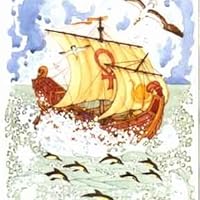
A new collection from one of the UK’s most celebrated biographers, novelists and critics - and, as these stories show, a quite brilliant literary artist.
Wrote For Luck ranges from North Norfolk to Chicago, from sordid old antique dealers to glamorous young writers, from glorious local gossips to frustrated academics. These stories abound with gleeful absurdity, waspish humour, and awkward, exquisitely English conversations. But they are also rich in melancholy and the heady sadness of people struggling to find a place in the world. Some are fascinatingly strange; others are uncomfortably familiar. Some are simply hilarious - and all are touchingly human.
David John Taylor (born 1960) is a critic, novelist and biographer. After attending school in Norwich, he read Modern History at St John's College, Oxford, and has received the 2003 Whitbread Biography Award for his life of George Orwell.
He lives in Norwich and contributes to The Daily Telegraph, The Guardian, The Independent, New Statesman and The Spectator among other publications.
He is married to the novelist Rachel Hore, and together they have three sons.
A mixed bag collection of stories written between the mid-Nineties and 2015, Wrote for Luck made less of an impression on me than Stewkey Blues, D. J. Taylor’s more recent volume of Norfolk-set stories. Curiously, the Norfolk stories in Wrote for Luck seem to me the most successful, particularly Blow-ins , a sad little tale of a couple trying to make a go of a second-hand bookshop in an out of season coastal town, and, Wonderland, a witty and tellingly tart tale of modern academic life, set in an unnamed university (clearly the University of East Anglia) with echoes of Malcolm Bradbury’s The History Man.
My thanks to Galley Beggar Press for my copy of this short story collection.
This collection of fifteen short stories from novelist and essayist D J Taylor written over a number of years. Indeed the year when the story was written is given in the book. The stories cover a number of different scenarios but the theme that runs throughout is how the protagonists arrived at the point in their live the story reflects. In some it causes them to look back, in others, how to move forward.
As with most short story collections there were some stories that stood out amongst the rest. Rather timely though written years ago, The Disappointed is set during the 1996 world cup. Whilst the male protagonist is effervescent with his enthusiasm for the England and Germany game his partner is not as interested. The setting allows her to reassess her relationship, her understanding of herself and her partner. By the end of the evening she is mirroring her partner’s disappointment though for completely different reasons.
Other stories deal with the unexpected struggles of being the partner of a younger woman, finding yourself having to fit into a crowd you thought you had left behind, coming to terms with where you are now at in life. In Wonderland we find the story of Amy whose identity and live is partly changed when circumstances alter her husband’s career and her son grows up to behave differently than expected. In another Lucy returns to her old University town to give a talk on her new novel, causing her to reflect on how she got to be at that point in her life. Another story that stood out for me was To Brooklyn Bridge which sees Ruth about to let go of her old live and enter the world of a female college, in the time when such steps were the exception rather than the norm.
Some of the stories felt almost complete tales. Others appeared to be more of a glimpse into people’s lives, a chapter in the ongoing tale that continues off page.
I find with most short stories that each reader will take something different away from each story. I may miss suitable nuances that others pick up on and which take the tale in a different direction for them. In some of these stories I felt I understood what the author intended to put across. In others it was as if I was almost there but the truth behind the story was just out of my grasp. One thing that did throw me off slightly was the fact that the same character names appeared in a number of stories but the characters weren’t the same people, or at least I assumed they were not.
The great thing about short story collections is that they are easy to dip in and out of. They can fit into lunch breaks or a spare 10 minutes and mean you have a sense of completion when one of the tales has been read, even though more remain to be discovered.
An interesting collection and one I am glad I read.
An unusual collection of stories which offers a zoom lens onto a set of human interactions. Reading these pieces is like an Edward Hopper exhibition. Evocative, melancholy and mere slices of experience, so the reader finishes each story curious about the background, the characters and what happened next. Because in the stories themselves, nothing much happens at all. Yet the atmosphere, the routine, the sense of entrapment and stasis evoke the same dreamlike feeling of wondering how on earth you got yourself into this situation. Habitual relationships, lukewarm likes and dislikes, aberrant behaviour, muted earthquakes and bored affection takes the characters through dinner parties, picnics, academia, village life, disappointments, awkward family gatherings and weather forecasts. From the first story, Some Versions of Pastoral, these stories have a visual quality. Waiting for their guests in a Suffolk garden, we meet ‘Mr and Mrs Underwood, who, proud and statuesque, like the elders of some benighted South American tribe, finally discovered in their Amazonian bolt-hole’. Taylor has a gift at inhabiting a head, regardless of age, gender or nationality, with such fullness the reader’s loyalty is absolute. In the title story, Wrote for Luck, you’re Lucy, desperate to shake up suburban Wimbledon. You wince all the way through Birthday Lunch, feel capable of subtle savagery throughout Blow-Ins and grow bitter in Wonderland. The stories are crafted with deceptive skill, so much so you think you could be overhearing a conversation in a coffee shop. Curiosity engendered by the situations, natural dialogue and plausibility of characters make these vignettes feel uncomfortably familiar. Like a master chef, Taylor’s brilliance is extracting the essence by reduction.
Wrote for Luck, by D.J. Taylor, is a collection of fifteen contemporary short stories. I am a fan of the short story form. With so few words available to tell a tale each must earn its place. I lost count of the number of times I had to set this book down in order to absorb a phrase or appreciate the imagery that the author had conjured up.
The collection opens with ‘Some Versions of Pastoral’, a snapshot of lives lived. A younger couple pay a visit to an elderly couple, taking tea with them in their small, charmless garden. It is a world within a world, enclosed by high hedges and anachronistic attitudes. The hostess implores that they be careful with the china cups, causing her guest to wonder:
‘What heights had the tea-cup scaled in its past life that such efforts had to be made to preserve it?’
I found this story along with ‘Wrote for Luck’, ‘The Disappointed’ and the concluding tale, ‘Wonderland’, particularly poignant. The deft writing wove life and depth into the times, places and people with a satisfying gift of cleverly spun prose.
The stories made me question what draws us to particular individuals amongst all those we encounter in a lifetime. Perhaps it is a fleeting glimpse of a characteristic we admire, something that we long to share with them or learn from them. In time, as we get to know a person better, we may discover that this glimpse did not herald a major part of their being. Perhaps it was merely a thought, a momentary act that they feel no requirement to repeat. What they are, what is important to them, what they strive to be, may be something quite different. In spending time trying to reignite the spark admired we say more about ourselves than about them.
This collection of stories takes us into the lives of a variety of characters and examines how they see themselves and how they are seen by others. The writing is nuanced, teasing out flaws and gently mocking arrogances.
I enjoyed the author’s depictions of men holding forth on subjects they were convinced they knew more about than their listener. Be it the music of Pink Floyd, the talents of a footballer or a character’s place within a hierarchy at work these men displayed a patronising contempt for those whose talents or views differed from their own. There was an all too familiar refusal to accept that thinking may be flawed.
Literature can be an ameliorating force which encourages us to see ourselves in perspective. This collection of stories offered variety of place, time and people yet each of its snapshots appeared both universal and personal. I saw aspects of myself and of those I know. The mirror held up was entertaining, discomforting and enlightening.
This is the first book in a new short stories list being compiled by Galley Beggar Press. If subsequent titles are as impressive as this one then we may anticipate a welcome injection of quality writing to come.
My copy of this book was provided gratis by the publisher, Galley Beggar Press.
An unusual collection of stories which offers a zoom lens onto a set of human interactions. Reading these pieces is like seeing pictures from an Edward Hopper exhibition. Evocative, melancholy and mere slices of experience, so the reader finishes each story curious about the background, the characters and what happened next.
Because in the stories themselves, nothing much happens at all. Yet the atmosphere, the routine, the sense of entrapment and stasis evoke the same dreamlike feeling of wondering how on earth you got yourself into this situation. Habitual relationships, lukewarm likes and dislikes, aberrant behaviour, muted earthquakes and bored affection takes the characters through dinner parties, picnics, academia, village life, disappointments, awkward family gatherings and weather forecasts.
From the first story, Some Versions of Pastoral, these stories have a visual quality. Waiting for their guests in a Suffolk garden, we meet ‘Mr and Mrs Underwood, who, proud and statuesque, like the elders of some benighted South American tribe, finally discovered in their Amazonian bolt-hole’.
Taylor has a gift at inhabiting a head, regardless of age, gender or nationality, with such fullness the reader’s loyalty is absolute. In the title story, Wrote for Luck, you’re Lucy, desperate to shake up suburban Wimbledon. You wince all the way through Birthday Lunch, feel capable of subtle savagery throughout Blow-Ins and grow bitter in Wonderland.
The stories are crafted with deceptive skill, so much so you think you could be overhearing a conversation in a coffee shop. Curiosity engendered by the situations, natural dialogue and plausibility of characters make these vignettes feel uncomfortably familiar. Like a master chef, Taylor’s brilliance is extracting the essence by reduction.
There's never really a good reason to use the phrase "It's not you - it's me," but I can't think of a better way to describe this book. I could absolutely appreciate, and even at times relish, the author's vocabulary and playfulness with words and scenes, and I'd spend a few moments dissecting the layers of different turns of phrase or images. And I think that if I had read one or two of these stories, I could appreciate them, like I'm assuming they were originally intended, but the impending library due date set my pace, and I plowed through. And they stacked one on top of another in my mind and just started to build up and get depressing. They highlighted the grim truths and pithy nuances of the many faults that people could have. I read to add a fantastic element to everyday life, to coat the ordinary with imagination and expand for just a little while outside of what's technically possible, but this book kept battering me over the head with gritty realism.
I have been dipping into this collection when I've been on a bus journey or to an appointment when I knew there would be enough waiting time to read a whole story. While I enjoyed the writing, some of the stories left me feeling a little unsatisfied.