We are entering a brave new world, thanks to AI. We must shape this future to the advantage of everyone, and not just a select few.
Thinking with The Brave New World of AI tells the story of AI from its very beginnings through the eyes of Vasant Dhar, currently Robert A Miller Professor at the Stern School of Business, and Professor of Data Science at New York University. Professor Dhar lived through the invention of AI algorithms and their various permutations until today. He brought AI to Wall Street in the 90s and was the first to teach AI at NYU Stern. Through his story and the lessons that it reveals, we learn about AI’s progress and reversals, its promises and dangers, and what we need to address before the machine gets away from us. Thinking with Machines is essential reading for AI enthusiasts and learners at all levels seeking knowledge on the greatest technological advancement of our time.
A simple book on the basics of what the latest hype of Artificial Intelligence and its use in everyday life is going to be. The book introduces us to early behavioural psychology from the likes of Simon Herbert and Daniel Kahneman.
The author takes us on his journey of discovery of AI and Data science with snippets of his life choices that led him to this book. The book is mostly an optimistic take on the adoption of new technologies. The invention of Reason and planning models, followed by Prediction models of AI, has something that was new to me and was covered poignantly.
PATTERN EMERGES BEFORE REASON BECOMES APPARENT
The use of Information Ratio, Parallel Computing, Neural Network and Tangled Hierarchy are some of the concepts covered succinctly. One of the examples that caught my attention was that of Roger Federer and the relationship between matches won and points won ratio, truly mesmerising.
The author explored three main fields, and AI is affecting the performance. Namely, Trading in the Stock Market, Medical Diagnosis and self-driving. All three fields were covered extensively and with sufficient real-world examples.
The crucial question posed by the author is LESS INTELLIGENT BEING CONTROLLING A HIGH INTELLIGENT BEING! is the centre of it all..
The author explains the psychology of the reliable prediction ability of the AI and trust in the AI. This is another example of expect the unexpected because the most reliable AIs were the least trusted! The rationale given in COST OF ERROR. E.g. trading AI is not highly reliable and is trusted because losses are tolerable, and self-driving cars are not because cost is life, ie everything!
The conclusion of some of the deep questions that are relevant to everyone, like everyone is using and is affected by AI, who will dictate the rules of engagement for using an AI? Government? Corporation?
What about the self-preservation tactics used by AI...
I think this is a good book for everyone who has a life. AI is here to stay, and we must actively take part in understanding and modifying how society adapts to the new ubiquitous tech. My only nag with this book is that it does not address the dark sides that already exist and how they are planning and plotting to use AI (The drug industry, surveillance industry, etc.)
This was great, I love AI and how quickly it's advancing and how much it will be essential to human evolution. I never know enough to argue for ai and it's advancement so this book was a good start on understanding a little of eh background and thinking critically about the next stages, so yeah, this helps a bit.
This book is an engaging, practical exploration of how AI changes decision-making and creates organizational advantage. Dhar writes with infectious enthusiasm for discovery, and he explains complex ideas clearly without talking down to the reader — an approach that made the book both inspiring and validating for someone with hands-on experience in applied machine learning.
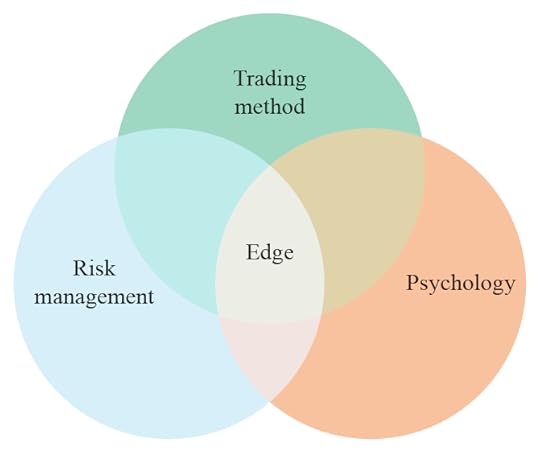
Dhar opens with a useful history of AI, tracing the shift from human-crafted logic to systems that detect patterns before their reasons are understood. That narrative reinforces a central message for business leaders: data-driven systems need a coherent story and a clear edge. The book’s discussion of “edge” is sharp and actionable — outperforming requires more than good models; it requires identifying and exploiting advantages that competitors don’t see.
Several chapters emphasize the human role that remains indispensable. Dhar distinguishes “learn to think” from “to think,” arguing that learning how to ask the right questions is critical for success. That point resonates strongly: without the right questions, important signals are missed and outcomes suffer. He also makes a useful distinction between finding patterns and acting on them — machines are often superior at pattern detection, while humans bring tacit knowledge and judgment about what to do next. Dhar’s point about measuring business performance relative to model benchmarks is especially relevant.
The book also tackles important technical and organizational themes. Feature engineering is treated as an art — and, rightly, arguably the most important part of building an effective model because it stems from asking the right questions. Dhar’s discussion of tail risks and the extremes of model performance is clear and sobering: the best outcomes can exceed expectations and the worst can be far worse than anticipated, creating opportunities to arbitrage.
Dhar outlines three ways to be “AI-proof” — deep knowledge, insatiable curiosity, and the habit of asking the right questions — qualities that also map directly to hiring criteria for high-performing teams.
Finally, Dhar raises ethical and practical concerns about truth, context representation in data, the cost of error, and systems being used in unintended ways. These are measured, important caveats that temper the book’s optimism with necessary caution.
Overall, this is a concise, well-argued book for those who want both conceptual clarity and practical insight on leveraging AI without losing sight of human judgment, risk, and organizational edge.
“Thinking with Machines” is like a guided tour through the evolution of artificial intelligence, told by someone who has actually lived through and shaped that history. This makes the story feel so coherent, comprehensive and engaging. The book moves smoothly from early machine learning ideas to deep learning and on toward questions of general intelligence, without losing clarity or dumbing anything down. I especially liked how it kept looping back to what it all means for real-world domains like finance, autonomous vehicles, medicine, sport and even law, which I’d never really connected to AI before.
What really hooked me was the way Vasant Dhar weaves in conceptual tools for thinking better about predictions and uncertainty: ideas like having an “edge” and how it compounds, why grounding questions properly matter, how base rates can quietly make or break a forecast and what separates superforecasters from the rest of us. Alongside the examples of AI applications, important emerging ethical and governance issues are explored and these are explored more thoroughly discussed in the final chapters. Dhar’s acknowledgement that many of these problems remain unresolved made me just that little bit more nervous about the next chapters of AI in our current world...
The narration by Jonathan Todd Ross works really well for this kind of material: clear, well-paced and expressive enough to keep dense ideas interesting instead of exhausting. The audio format made it easy to keep listening through some fairly complex sections without feeling overloaded. The downside of the audiobook version, though, was missing out on the graphics, tables and links that get referenced but not always fully described.
Thinking with Machines is a fabulous, stimulating read that offers plenty of food for thought. The book balances accessibility with rich insight, making it an ideal primer in today’s AI-saturated world while encouraging deeper reflection and questions.
Thank you to RB Media, NetGalley and Vasant Dhar for an advance listening copy of this book.
Got a free copy of this book at the launch event at NYU. I knew I would actually read it after the very interesting author interview (sometimes AI talks are pure gobbledygook, so the fact that Vasant Dhar could clearly articulate and communicate the book's themes was a very good sign). Dhar has been involved in the development of AI, beginning as a graduate student at the University of Pittsburgh in 1979, but the science goes back even further, to the 40s and early 1950s. His book describes the evolution of AI from Expert Systems to Machine Learning to Deep Learning to General Intelligence, uses charts and graphs, though sparingly, and never gets too technical to glaze over the eyes of the layman. He centers his use cases and discussions in at least three industries: healthcare/medicine, finance (in which he made his career outside of teaching and research at NYU), and transportation. He weighs in on which industries need it the most, where it is most and least likely to succeed, what it means for human beings competing for jobs, and finally, how deeply we should trust and regulate artificial intelligence. Dhar strikes me as neither an AI optimist nor a pessimist, which I suppose makes him a realist. He certainly harbors some skepticism of a future unbridled by any regulation. He feels humans must put in guardrails for our own safety. He also says that lazy individuals who do not cultivate their own intelligence, knowledge, and curiosity, but come to use AI exclusively as a crutch, will be its first victims as AI learns to think, perform, and do a job better than they ever will. But students who learn to use AI judiciously, only after they have trained their own minds the old-fashioned way, through exercising their own brains, will be those individuals sought out by employers as experts who use AI as a tool. Wisdom that I have tried to pass along to my kids as they go through their college years, hopefully with the use, but not overuse, of Chat GPT.
I got Thinking with Machines as a gift and couldn't put it down. Vasant Dhar doesn't lecture. He walks you through forty-plus years at the center of AI, from early Wall Street trading systems in the '90s to the questions his NYU students are wrestling with today, and the full story falls into place in a way it never has before.
Several passages hit close to home. I found myself reminiscing about parts of my career that were unfolding during those same periods. That resonance caught me off guard and made the book personal.
The core idea is what hooked me: there's no "versus" anymore. It's not humans fighting machines. Or humans getting replaced. It's humans thinking with machines as genuine cognitive partners. Dhar shows how that partnership already plays out in medicine, investing, and sports, then makes you rethink where AI belongs in each of those areas and where it doesn't.
The chapters on the coming split are right on. People who master AI as an extension of how they think will pull ahead of those who drift into passive use. His straight-talk advice for schools, companies, and governments on building guardrails before things accelerate further isn't alarmism. It's an experienced voice saying, "Here's how we keep AI humane, fair, and under control."
I finished the book feeling sharper, more optimistic, and genuinely excited about the next decade. These are exciting times. If you lead a team, teach students, shape policy, or just want to stay relevant in an AI-driven world, read this. It's the rare five-star book that makes you think and maybe changes how you think for good.
"Thinking with Machines" is a captivating exploration of the journey of artificial intelligence, narrated by someone who not only witnessed but actively contributed to its development. This personal touch adds coherence and depth to the narrative, making it both comprehensive and engaging. The book transitions seamlessly from the foundational concepts of machine learning to more advanced discussions about deep learning and general intelligence, all while maintaining clarity and avoiding jargon.
One standout feature for me was how Vasant Dhar continually relates AI developments to practical applications across various sectors, including finance, healthcare, autonomous vehicles, sports, and even legal systems. This connection really broadened my understanding of AI's reach and implications.
The insights into better prediction and dealing with uncertainty were particularly enlightening. Concepts like having an "edge," the significance of grounding questions, and the influence of base rates on forecasts were framed in a way that was not only informative but thought-provoking. Moreover, the essential ethical and governance discussions presented in the latter chapters highlight the unresolved challenges we face in the AI landscape, instilling a sense of caution about future advancements.
Overall, "Thinking with Machines" is a thought-provoking and insightful read, striking a wonderful balance between being accessible and analytically rich. It serves as a perfect introduction for anyone looking to navigate today’s AI-driven world.
This was a fantastic book by Vasant Dhar that I can't recommend enough! What makes it especially compelling for me is that it was completely accessible for a general or lay audience, but also helpful to those deep in the field because it enables you to step back and look at the forest as a whole. Along these same lines, his thoughts on the importance of "framing" and asking open questions from the perspective of somebody who knows nothing about a subject is a very powerful approach when interacting with AI. Indeed, he takes the same approach to the subject matter of this book! As a true "Polyglot" or "Pracademic" this book is one of those rare pieces of writing that is valuable at multiple levels and keeps you thinking even after you put it down. My guess is that it will be worth re-reading several times over well into the future, as it becomes valuable in different ways as my own learning and knowledge matures.
A very instructive--and frightening-- explanation of the development, functions and future of AI written clearly enough for people, like me, with little technological aptitude. Dhar explains a technology that will transform our very way of life (think electricity or the steam engine) and that is, essentially, science fiction come to real life. Here's an observation Dhar makes about the latest paradigm of AI that caught my attention, as I am sure it will yours: "One thing is certain. An intelligent alien species arrived in late 2022 that knows how to communicate and learn from its environment...it presents new kinds of risks associated with how it accomplishes its goals. We cannot turn it off now, unless we turn off the electricity that powers it." I hope we all keep in mind where the power plug is.
Thinking with Machines is a smart, engaging, and genuinely thought-provoking read. Despite the author’s impressive academic background, this is not an academic book in the dry or inaccessible sense. It is written to stimulate the reader, provoke reflection, and open up a broader conversation about how we live with technology (AI). Rather than treating technology as something intimidating, the book encourages us to think about how AI can amplify what is best in us and help us preserve what matters most about being human. It is a thoughtful, relevant, and rewarding read. A book about AI that never forgets the people using it — miraculous behaviour, frankly.
Prof Dhar comes to this book with multiple years of experience working at the intersection of AI, Finance, Academia and Thought Leadership. As a Professor at Stern and a podcasters, Prof Dhar provides a fascinating historio-graphical view which is scholarly yet personal. The book is technical in some parts, especially the ones where it gets to the heart of algorithms and their workings but largely it deals with the big picture issues of the history present and future of Human Machine Interaction.
I thoroughly enjoyed this book. It opened my eyes to the potential of AI and where we actually are when it comes to the frontier of these advancements. This book also gave me something to think about in terms of my career and replaceability with AI. From reading, my biggest takeaway is that AI will either make people more efficient or more dependent on their AI. Those who become dependent will eventually get their jobs automated away, those who use AI to make themselves more productive will flourish.
interesting journey from a short personal bio to paradigm shifts in AI, predictions for the future of humanity, and the necessary steps we as a society need to take moving forward in work/governments/self growth
some really prescient chapters here and thought provoking predictions of how AI might change how humans work, i’m looking forward to picking this book up again years into the future and comparing how things turned out
This book explains how humans interact with AI and what lies ahead as these systems become more embedded in our daily lives. Also highlights emerging trends while showing how AI is reshaping the way we think, work, and make decisions.
The author’s expertise in AI and digital systems is evident, with complex ideas explained clearly and effectively. It offers fresh perspectives by presenting AI as a collaborative partner in thinking and decision-making, supported by practical examples.
I greatly enjoyed Professor Dhar's book balancing his personal and professional journey with depth and insights on machine learning and AI. I've read dozens of books on AI from doomers to boomers and his strikes me as one of the most balanced and thoughtful grounded on his experience at work, research, and his learnings from a wide range of experts. Entertaining and important book at key time.
This book failed to inspire me, beyond the title. I read this in 2026, and at that time the references and examples were still hot from the press. This is hard to do in this fast evolving domain.