

What do you think?

Nat Turner #1-2
Nat Turner: A Graphic Novel
The fascinating and action-packed true story of an American freedom fighter, written and illustrated by Kyle Baker as a graphic novel--collecting all four issues of his critically acclaimed miniseries.The story of Nat Turner and his slave rebellion, which began on August 21, 1831, in Southampton County, Virginia, is known among school children and adults. To some he is a hero, a symbol of Black resistance and a precursor to the civil rights movement; to others he is monster, a murderer whose name is never uttered. In Nat Turner, acclaimed author and illustrator Kyle Baker depicts the evils of slavery in this moving and historically accurate story of Nat Turner's slave rebellion. Told nearly wordlessly, every image resonates with the reader as the brutal story unfolds.Find teaching guides for Nat Turner and other titles at abramsbooks.com/academic-resources/te... graphic novel collects all four issues of Kyle Baker's critically acclaimed miniseries together for the first time. The book also includes a new afterword by Baker."A hauntingly beautiful historical spotlight. A-" —Entertainment Weekly"Baker's storytelling is magnificent." —Variety"Intricately expressive faces and trenchant dramatic pacing evoke the diabolic slave trade's real horrors." —The Washington Post"Baker's drawings are worthy of a critic's attention." —Los Angeles Times"Baker&'s suspenseful and violent work documents the slave trade's atrocities as no textbook can, with an emotional power approaching that of Maus." —Library Journal, starred review
208 pages, Kindle Edition
First published June 15, 2006
About the author
Kyle Baker
281 books88 followersLibrarian note:
There is more than one author in the GoodReads database with this name
Kyle John Baker is an American cartoonist, comic book writer-artist, and animator known for his graphic novels and for a 2000s revival of the series Plastic Man.
Baker has won numerous Eisner Awards and Harvey Awards for his work in the comics field.
There is more than one author in the GoodReads database with this name
Kyle John Baker is an American cartoonist, comic book writer-artist, and animator known for his graphic novels and for a 2000s revival of the series Plastic Man.
Baker has won numerous Eisner Awards and Harvey Awards for his work in the comics field.
Ratings & Reviews
Friends & Following
Create a free account to discover what your friends think of this book!
Community Reviews
Displaying 1 - 30 of 263 reviews

April 15, 2012
It is said the great masters of the comic book art form can tell a complete story without the use of any dialogue and instead rely solely upon their visual storytelling skills. In his self-published graphic novel, Kyle Baker approaches such rarefied strata by using his powerfully expressive visuals to tell the story of Nat Turner, a once and former American slave, who achieved folk hero status since much of his story has been suppressed. One side sees him as a messiah figure and another as a monster who has had a hand in the deaths of dozens of individuals. He is a polarizing figure to say the least. It is a great story, with moments that could lend itself to be depicted exquisitely in a graphic novel. But it seemed that Baker could only sustain his greatness for half of his story. The second half becomes a jumbled mess of pictures and excerpts from Nat Turner’s own confessions. It is an attempt to tell as much story as it can in the remaining pages but it became a quagmire the story could never quite recover from.
Despite its flaws, this is an excellently written and drawn graphic novel. Much of the praise it has received is deserved. It is one of those adult comic books that forces you to think as you read it and compels one to decide. Who is Nat Turner? Is he a hero, a murderer, a monster or a savior? Baker provided a list of the sources he has used in his research and to help the reader to help form a decision.
This is not for children. There is much violence and gore depicted. The drawings are done monochromatically, so the reader is saved from seeing much of the spurting blood from a decapitation. I read the 208 pages quite easily, as there is barely any dialogue and the author helps the reader move along with his excellent visual storytelling.
Despite its flaws, this is an excellently written and drawn graphic novel. Much of the praise it has received is deserved. It is one of those adult comic books that forces you to think as you read it and compels one to decide. Who is Nat Turner? Is he a hero, a murderer, a monster or a savior? Baker provided a list of the sources he has used in his research and to help the reader to help form a decision.
This is not for children. There is much violence and gore depicted. The drawings are done monochromatically, so the reader is saved from seeing much of the spurting blood from a decapitation. I read the 208 pages quite easily, as there is barely any dialogue and the author helps the reader move along with his excellent visual storytelling.

October 8, 2011
I bought and read this book because of three reasons: (1) it’s graphics and oh the illustrations are so exquisite looking; (2) the book looks a real bargain at P180 with the 280 thick glossy pages and (3) I have been vacillating in finally cracking my copy of 1967 Pulitzer Price-winning and Time 100 book, William Styron’s The Confessions of Nat Turner open. Why? It seems like a daunting book to read: thick, historical and it has a picture of a black man looking over a horizon in a pensive mood that gives an impression of a heavy book to read.
So, I told myself that if I would know who Nat Turner was in just few hours that would be a sweet deal. Of course with the hope that this book would make me really interested to read further about him and finally start and finish that Styron’s Pulitzer book. Good thinking. I liked Nat Turner and it made me feel like searching for my copy of Styron’s among the stacks of my tbr books.
Nat Turner (1800-1831) must have been in most American history books. He was one of those historical people who were hard to categorize whether a hero or a villain, a friend or a foe, a saint or a devil. Why? Nat Turner was an American Slave who led the black uprising in Southampton, Virginia in 1831 resulting to the deaths of 53 (based on the book) whites. As a slave, he was not taught how to read by anyone so one day, he picked up the bible and miraculously, he learned how to read all by himself! His people looked at him as some sort of a messiah who would lead them out of slavery because he knew how to read! So, he did what he had to do and one night he dreamed of a serpent and he interpreted it as a sign from heaven above so he told his people to kill their white masters.
I am recounting the first half of the story because reading Nat Turner is an interesting experience. On that part of being a slave sold in the market together with his family and all the ordeals he had to go through as a slave, my heart was all for him and I wept looking at the illustrations like the one with his father being seized by the white bastards (excuse the language). Then after a page or two, when he and his black minions were on the killing rampage, I did not know how to react and at some point asked myself what the hell (excuse the language again) was going on. Oh, I am just being carried away by the emotional roller-coaster brought about by reading this book. Simply say, there is no hero in this book. Baker presented both Nat Turner’s strengths and weaknesses. Just like all of us, Nat Turner has both sides.
And the amazing thing is that: Baker did the storytelling almost wordless. For somebody like me who had no idea who Nat Turner was, there are excerpts from the actual confessions Nat Turner uttered to his lawyer Thomas Ruffin Gray in 1831 when he was in jail prior to his hanging. Otherwise, the graphics are totally void of any words except ones like ”Run, daddy, run!” cried Turner when his father was being seized by the white bastards (oh, I just can’t help it).
If the story told via illustrations will not make you angry, you are a cold-hearted stone!
So, I told myself that if I would know who Nat Turner was in just few hours that would be a sweet deal. Of course with the hope that this book would make me really interested to read further about him and finally start and finish that Styron’s Pulitzer book. Good thinking. I liked Nat Turner and it made me feel like searching for my copy of Styron’s among the stacks of my tbr books.
Nat Turner (1800-1831) must have been in most American history books. He was one of those historical people who were hard to categorize whether a hero or a villain, a friend or a foe, a saint or a devil. Why? Nat Turner was an American Slave who led the black uprising in Southampton, Virginia in 1831 resulting to the deaths of 53 (based on the book) whites. As a slave, he was not taught how to read by anyone so one day, he picked up the bible and miraculously, he learned how to read all by himself! His people looked at him as some sort of a messiah who would lead them out of slavery because he knew how to read! So, he did what he had to do and one night he dreamed of a serpent and he interpreted it as a sign from heaven above so he told his people to kill their white masters.
I am recounting the first half of the story because reading Nat Turner is an interesting experience. On that part of being a slave sold in the market together with his family and all the ordeals he had to go through as a slave, my heart was all for him and I wept looking at the illustrations like the one with his father being seized by the white bastards (excuse the language). Then after a page or two, when he and his black minions were on the killing rampage, I did not know how to react and at some point asked myself what the hell (excuse the language again) was going on. Oh, I am just being carried away by the emotional roller-coaster brought about by reading this book. Simply say, there is no hero in this book. Baker presented both Nat Turner’s strengths and weaknesses. Just like all of us, Nat Turner has both sides.
And the amazing thing is that: Baker did the storytelling almost wordless. For somebody like me who had no idea who Nat Turner was, there are excerpts from the actual confessions Nat Turner uttered to his lawyer Thomas Ruffin Gray in 1831 when he was in jail prior to his hanging. Otherwise, the graphics are totally void of any words except ones like ”Run, daddy, run!” cried Turner when his father was being seized by the white bastards (oh, I just can’t help it).
If the story told via illustrations will not make you angry, you are a cold-hearted stone!

August 25, 2016
The story of Nat Turner and the revolt named after him is told in this unflinching GN. No punches pulled here; this is a look at what happens when a group of individuals decide that violence is the only option available. Should be read with the perspective of so many who are oppressed. Caution: some of the scenes are very disturbing.

December 19, 2012
Almost the whole story of Nat Turner's Rebellion is told through some very impressive artwork, and it is an important story to know from American history that might generally get ignored. And unfortunately relevant, in giving a righteous example of what to do when a repressive regime reigns hell down on its people. Maybe this could be seen as a serious response to Django Unchained for a curious reader wondering about slave rebellions/revolts, and William Styron's novel The Confessions of Nat Turner would also be a good one to read here. An exploration about the uses of violence in times of political turmoil. I liked it. Includes, later on, some of Turner's own words, some analysis and commentary for those that might want to know more.
Erica Chenoweth's research about resistance to repression has to be part of this discussion. As she and her team found, 3.5% of the relevant population's resistance to any site of oppression is likely to be successful in achieving its goals. And the most successful stratgies are non-violent ones. But what happens when all options for non-violent resistance are erased? I write this is a pacifist, a much experienced non-violent resister who knows violence may sometimes be ncessary to overthrow oppression, as in the American Revolution or the War against Hitler.
Erica Chenoweth's research about resistance to repression has to be part of this discussion. As she and her team found, 3.5% of the relevant population's resistance to any site of oppression is likely to be successful in achieving its goals. And the most successful stratgies are non-violent ones. But what happens when all options for non-violent resistance are erased? I write this is a pacifist, a much experienced non-violent resister who knows violence may sometimes be ncessary to overthrow oppression, as in the American Revolution or the War against Hitler.

January 13, 2010
Oh man, can we talk?
This graphic novel was a very intense and worthwhile read. I was into comics as a kid, but graphic novels in the 21st century are of an entirely different make and model. Kyle Baker is a phenomenal artist in his own right, but the combination of just enough writing and his rich renderings still has me riveted. What a history lesson! And I can see why historians would have tried to squash this one. Given the time period, the last thing they would have wanted was a continual slave uprising. Better to keep them fearful and ignorant... and while the brutal tactics employed by slavers worked, for how long would always be the question. How long before the tables turned?
I'm not sure if this is for children, but children and others were involved. Everyone ought to read and experience this. It leaves a lasting impression. Turner's tactics were brutal and swift, but no more so than what continued for at least another 100 years afterwards.
The sweep of this book is a non-stop ride from beginning to end. Well worth it for anyone who has never heard of or who only knows the name, Nat Turner.
This graphic novel was a very intense and worthwhile read. I was into comics as a kid, but graphic novels in the 21st century are of an entirely different make and model. Kyle Baker is a phenomenal artist in his own right, but the combination of just enough writing and his rich renderings still has me riveted. What a history lesson! And I can see why historians would have tried to squash this one. Given the time period, the last thing they would have wanted was a continual slave uprising. Better to keep them fearful and ignorant... and while the brutal tactics employed by slavers worked, for how long would always be the question. How long before the tables turned?
I'm not sure if this is for children, but children and others were involved. Everyone ought to read and experience this. It leaves a lasting impression. Turner's tactics were brutal and swift, but no more so than what continued for at least another 100 years afterwards.
The sweep of this book is a non-stop ride from beginning to end. Well worth it for anyone who has never heard of or who only knows the name, Nat Turner.

October 9, 2016
I gave this 5 stars on my first read four years ago, but this time around I decided this is something I should not rate. Oh yeah this is really good and informative and the art is top notch, but it's a historical time that is bloody, cruel and morally grey (the rebellion murdered children and babies). I don't know, I recommend it, it's just a historical event I think is best unrated. Now, my original review:
This graphic novel was fantastic! This captures the essence of the rebellion that Nat Turner began and the cruelty of slavery. Nat turner was always a character that was glossed over in our history books, and I didn't even realize it until now.
Nat Turner died without complaint or protest; he just took a final peaceful breath and allowed himself to be hung. Witnesses reported that many of the people present were unsettled because he didn't go out yelling and begging. Nat Turner, while maybe not a peaceful rebel is still an important figure in our history that shows the extent of our conduct when mistreated, and even if you may not agree with him (I agree on the WHY but not the HOW) he still deserves more than a few sentences in our textbooks
This graphic novel was fantastic! This captures the essence of the rebellion that Nat Turner began and the cruelty of slavery. Nat turner was always a character that was glossed over in our history books, and I didn't even realize it until now.
Nat Turner died without complaint or protest; he just took a final peaceful breath and allowed himself to be hung. Witnesses reported that many of the people present were unsettled because he didn't go out yelling and begging. Nat Turner, while maybe not a peaceful rebel is still an important figure in our history that shows the extent of our conduct when mistreated, and even if you may not agree with him (I agree on the WHY but not the HOW) he still deserves more than a few sentences in our textbooks
September 1, 2018
This graphic novel of the life of Nat Turner doesn't pull any punches. The brutality of slavery is graphically portrayed, so you get a much stronger emotional response to these horrors, and that provides context for the actions of Nat Turner. The violence is simply shocking. One interesting point about this book is that there are no words in the comics themselves. Instead, the comic panels are accompanied by the words from Nat Turner's confession. So, in a sense, the comic brings a historical document to life. Overall, this is a deeply emotional book that is worth reading.

June 11, 2025
Recommended for excellence in visual storytelling and historical importance.
Most of the first half of Kyle Baker's book is wordless and not directly from The Confessions of Nat Turner:
The heinous kidnapping and abduction from Africa.
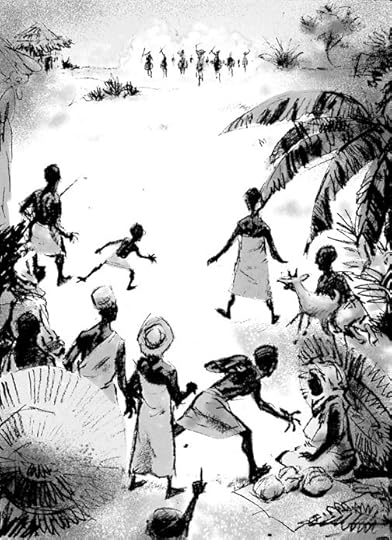
The literally torturous Middle Passage.
[image error]
The literal tortures of the American plantation.
[image error]
Turner's loving family enduring the hateful institution.

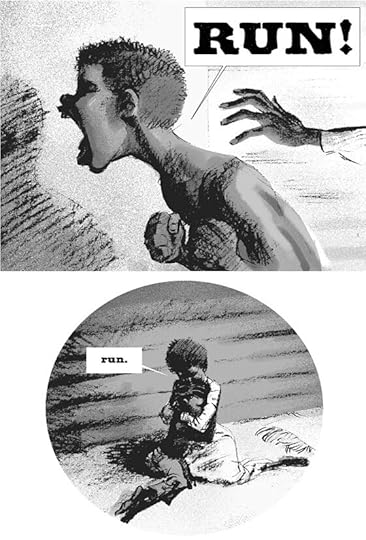
The second half comes almost exclusively from The Confessions. Turner's documented words only make a brief attempt at the Why so the vast majority is a summation of the Where and the How of August 21, 1831.
After finishing this graphic retelling, i immediately read the Gutenberg Project's freely available ebook of The Confessions because i wanted to know how much Baker had to leave out. Answer: very little. I think you don't need to read the original if you've read the comix version.
Most of the first half of Kyle Baker's book is wordless and not directly from The Confessions of Nat Turner:
The heinous kidnapping and abduction from Africa.
The literally torturous Middle Passage.
[image error]
The literal tortures of the American plantation.
[image error]
Turner's loving family enduring the hateful institution.
The second half comes almost exclusively from The Confessions. Turner's documented words only make a brief attempt at the Why so the vast majority is a summation of the Where and the How of August 21, 1831.
After finishing this graphic retelling, i immediately read the Gutenberg Project's freely available ebook of The Confessions because i wanted to know how much Baker had to leave out. Answer: very little. I think you don't need to read the original if you've read the comix version.

February 17, 2021
Content notes: violence, killing children, whipping, enslavement, abuse of women, branding, feeding people to sharks, loss of limbs, and an execution/lynching.
As far as how violence is depicted throughout the book, I felt like the brutality of the systematic enslavement of Africans by Europeans was portrayed in a way that doesn't pull any punches but also doesn't linger or fetishize. I am certainly not the definitive judge of these things, but as someone who is trying to think more deeply about the depiction of violence. In serving up this important story of violent revolt to an ignorant audience it appears as if Baker thought very deeply about how to convince people (who might be generally against violence) of the rightness of Turner's cause and actions. In this book, the narrative definitely started out in a far different place and time then I was expecting, but this does an excellent job of setting readers up for the context of Turner's rebellion in 1831.
Jumping back to Kyle Baker, perusing his lengthy entry on Wikipedia I came away with the following information. Baker was born in Queens, New York, and while in high school he became an intern at Marvel - despite thinking he would get into funny comics not superheroes. He went on to do work on Classic X-Men, Truth: Red, White & Black, Deadpool, Why I Hate Saturn, Elseworlds 80 page giant, Plastic Man, The Spirit, House in Space, Mystery in Space, Goosebumps volume 3, and The Bakers: Babies and Kittens among many many many other works. He's won many Eisner and Harvey Awards, as well as several Glyph Comic Awards. My library carries many of his titles and I will certainly be circling back to more of his work.
What kinds of keywords would I use to describe this book? Storyboarding, creative nonfiction, American history, biography, and revolution.
The Goodread's description is: " The story of Nat Turner and his slave rebellion—which began on August 21, 1831, in Southampton County, Virginia—is known among school children and adults. To some he is a hero, a symbol of Black resistance and a precursor to the civil rights movement; to others he is monster—a murderer whose name is never uttered.
In Nat Turner, acclaimed author and illustrator Kyle Baker depicts the evils of slavery in this moving and historically accurate story of Nat Turner’s slave rebellion. Told nearly wordlessly, every image resonates with the reader as the brutal story unfolds."
The word choices for this comic is perhaps one of the most interesting choice made in the making of this comic. Namely, the choice to use the words of Nat Turner themselves, as recorded by Thomas R Gray in The Confessions of Nat Turner, The Leader of The Late Insurrection of Southampton, VA. divided into very digestible and effective chunks placed adjacent to the visual narrative. Otherwise, long sections of this book are wordless and the art really carries the narrative. An unusual choice, I do think there is a particular power to the use of original documents and this was done very well.
The art in this book is very dynamic. With a very limited colour palette, Baker focuses a lot on facial expressions and movement. It often felt like the characters were jumping off the page.
Being a book very focused on the rebellion lead by Nat Turner, the gender and sexuality aspects are a bit one note. That said, the first section of the book focuses on the enslavement of his mother. Baker also includes Nat Turner having his own love and children and then being sold away from each other.
Race is obviously a focus of this book and Kyle Baker doesn't pull punches. Besides the obvious white vs Black dynamic, Baker also showed a Black foreman punishing other Black slaves. Baker doesn't take easy ways out.
Obviously slavery is kind of separate from class. Let's just take a minute to think about how many people are still wealthy because their families owned slaves and the ways that poor whites were (with a few exceptions) convinced to side with the rich plantation owners rather then building solidarity with Black slaves.
Ability vs disability is not explored in a traditional sense, but we are witness to people having their bodies ripped apart and destroyed as a means of control and suppression.
Overall this was not a very fun read, obviously, but one that left me with a certain level of awe. Not only because this is a really important but overlooked part of history, people fighting for their own freedom, but also because of the amount of skill that went into the construction of the book. Five out of five stars, will be highly recommending to many people.
As far as how violence is depicted throughout the book, I felt like the brutality of the systematic enslavement of Africans by Europeans was portrayed in a way that doesn't pull any punches but also doesn't linger or fetishize. I am certainly not the definitive judge of these things, but as someone who is trying to think more deeply about the depiction of violence. In serving up this important story of violent revolt to an ignorant audience it appears as if Baker thought very deeply about how to convince people (who might be generally against violence) of the rightness of Turner's cause and actions. In this book, the narrative definitely started out in a far different place and time then I was expecting, but this does an excellent job of setting readers up for the context of Turner's rebellion in 1831.
Jumping back to Kyle Baker, perusing his lengthy entry on Wikipedia I came away with the following information. Baker was born in Queens, New York, and while in high school he became an intern at Marvel - despite thinking he would get into funny comics not superheroes. He went on to do work on Classic X-Men, Truth: Red, White & Black, Deadpool, Why I Hate Saturn, Elseworlds 80 page giant, Plastic Man, The Spirit, House in Space, Mystery in Space, Goosebumps volume 3, and The Bakers: Babies and Kittens among many many many other works. He's won many Eisner and Harvey Awards, as well as several Glyph Comic Awards. My library carries many of his titles and I will certainly be circling back to more of his work.
What kinds of keywords would I use to describe this book? Storyboarding, creative nonfiction, American history, biography, and revolution.
The Goodread's description is: " The story of Nat Turner and his slave rebellion—which began on August 21, 1831, in Southampton County, Virginia—is known among school children and adults. To some he is a hero, a symbol of Black resistance and a precursor to the civil rights movement; to others he is monster—a murderer whose name is never uttered.
In Nat Turner, acclaimed author and illustrator Kyle Baker depicts the evils of slavery in this moving and historically accurate story of Nat Turner’s slave rebellion. Told nearly wordlessly, every image resonates with the reader as the brutal story unfolds."
The word choices for this comic is perhaps one of the most interesting choice made in the making of this comic. Namely, the choice to use the words of Nat Turner themselves, as recorded by Thomas R Gray in The Confessions of Nat Turner, The Leader of The Late Insurrection of Southampton, VA. divided into very digestible and effective chunks placed adjacent to the visual narrative. Otherwise, long sections of this book are wordless and the art really carries the narrative. An unusual choice, I do think there is a particular power to the use of original documents and this was done very well.
The art in this book is very dynamic. With a very limited colour palette, Baker focuses a lot on facial expressions and movement. It often felt like the characters were jumping off the page.
Being a book very focused on the rebellion lead by Nat Turner, the gender and sexuality aspects are a bit one note. That said, the first section of the book focuses on the enslavement of his mother. Baker also includes Nat Turner having his own love and children and then being sold away from each other.
Race is obviously a focus of this book and Kyle Baker doesn't pull punches. Besides the obvious white vs Black dynamic, Baker also showed a Black foreman punishing other Black slaves. Baker doesn't take easy ways out.
Obviously slavery is kind of separate from class. Let's just take a minute to think about how many people are still wealthy because their families owned slaves and the ways that poor whites were (with a few exceptions) convinced to side with the rich plantation owners rather then building solidarity with Black slaves.
Ability vs disability is not explored in a traditional sense, but we are witness to people having their bodies ripped apart and destroyed as a means of control and suppression.
Overall this was not a very fun read, obviously, but one that left me with a certain level of awe. Not only because this is a really important but overlooked part of history, people fighting for their own freedom, but also because of the amount of skill that went into the construction of the book. Five out of five stars, will be highly recommending to many people.

February 18, 2018
No question this is a feat of art and storytelling, one with impact beyond the cover's close. I can't imagine any reader wouldn't have a complicated experience, which poses a challenge in articulating response.
The depictions of brutality, both of the slave trade and of the rebellion, can be difficult to navigate. Important. Essential. Eye-opening. But repulsive (intentionally so) all the same. That the story is largely wordless, leaning on the images to convey narrative and emotion with enough nuance to fully represent events but also enough visual indicators to propel plot, is rather magnificent. The use of monochromatic shading lends somberness and remove to the striking images as well. Masterfully crafted.
When text is introduced (around the panels, not part of them), it is limited to brief excerpts of Turner's confession. This can be difficult to integrate, as the style of speaking is formal and of its time, which may read as stilted or archaic to modern audiences. However, what struck me most profoundly was the testimony of the rebellion itself. Suddenly his words had chilling clarity, and that deepened the horror even as I felt compelled to empathize with the motivation. That Baker can stir such stomach-churning conflict in his reader is exceptional.
The depictions of brutality, both of the slave trade and of the rebellion, can be difficult to navigate. Important. Essential. Eye-opening. But repulsive (intentionally so) all the same. That the story is largely wordless, leaning on the images to convey narrative and emotion with enough nuance to fully represent events but also enough visual indicators to propel plot, is rather magnificent. The use of monochromatic shading lends somberness and remove to the striking images as well. Masterfully crafted.
When text is introduced (around the panels, not part of them), it is limited to brief excerpts of Turner's confession. This can be difficult to integrate, as the style of speaking is formal and of its time, which may read as stilted or archaic to modern audiences. However, what struck me most profoundly was the testimony of the rebellion itself. Suddenly his words had chilling clarity, and that deepened the horror even as I felt compelled to empathize with the motivation. That Baker can stir such stomach-churning conflict in his reader is exceptional.

February 15, 2015
I appreciate Kyle Bakers even-handedness in his narration of the Maafa (black holocaust), Nat Turner's life and rebellion. Books like this scare me sometimes because upon being read it can really peel back the layers of "political correctness" and expose a person's true biases, intelligence, and agendas. This book would function as a good tool for America's 12 step program for humanization, particularly step one: breaking denial. Are you one of the ones that IMMEDIATELY digests Nat Turner's slaughter without appropriately weighing in his Generational and Societal circumstances ? If you are, you may need such a program. Good job Kyle Baker!

September 2, 2008
A brutal, unflinching look at Nat Turner. Mike Wallace may have used the title "The Hate that Hate Produced" when discussing the Nation of Islam, but it perfectly fits the story of Nat Turner, and this book captures the violence and bitterness of slavery and Turner's seething revenge. The illustrations are perfect, and the fact that 90 percent of the comic is wordless, with only a few quotes taken directly from "Confessions" makes it starkly haunting.

July 2, 2014
It has been said that one benchmark of truly great storytelling in comics is whether the writer/artist—because in such stories (excepting a "stunt" that Marvel Comics published some time ago), that person is often one and the same—can tell an effective story without the use of words, only pictures. If that is indeed the benchmark, then veteran comics creator Kyle Baker has written, if not the apotheosis of such storytelling, something that comes very close.
Baker's work Nat Turner tells the true story, little-heard in the United States because of its notoriety in some parts of the country, of a slave insurrection in Southampton County, Virginia in 1831, led by the title character, something of a warrior-prophet not unlike the leaders of the Ghost Dance movement towards the end of the nineteenth century. As the book's description on the cover states, Turner is variously seen as a hero for his fight to garner civil rights for African-Americans in the face of racism and genocidal slavery, or as a bogeyman whose very name is not spoken because of the deaths of more than fifty slaveholding whites in his insurrection. Baker himself indicates that he had only read of Turner while in school in one sentence in an American history textbook, and that he only learned more about Turner in an extensive discussion in The Autobiography of Malcolm X. What Baker does, therefore, in the Nat Turner graphic novel is to portray the story of Turner in graphic detail, leaving no aspect unseen: Baker shows the horrors of the American slave trade and the practice of slavery, and Baker does a great deal to humanize Turner in the face of the inhumanity of owning other human beings as property. It is true that far more attention is given to rendering the African-American characters in three dimensions than the whites, but then again, these white families owned slaves and had a vested interest in dehumanizing them in every manner possible. Perhaps most telling, even as Baker shows the slaughter of the children of slaveowners, is the doll one white child holds as she goes to sleep: It is that of a stereotypical African-American child.* The white children in Baker's story are hardly immune to racism, and they are taught from an early age to reinforce the status quo.
*I had originally thought to use the racist term for such a stereotype, albeit with some trepidation, because I felt as if those of a non-racist bent would immediately grasp the shock inherent in a child's owning such a plaything. However, after long and hard internal debate, I opted against doing so, because, like racism itself, the word is vulgar and repulsive and does not belong in anything other than academic discourse.
Nat Turner is nearly perfect storytelling. The only words, apart from those taken directly from contemporary accounts of the slave trade and The Confessions of Nat Turner themselves, are "Run, Daddy, Run!", spoken by a youthful Turner when his father escapes involuntary servitude—and that makes for a more powerful story. Baker cannot be accused of making up the story, although he naturally tells it from the perspective of one involved in the historical events—that goes with the territory of such endeavors—and he lets the artwork speak for itself. Whether in its portrayal of the inevitable degradation of the slave revolt by some of its participants' getting drunk off the slaveowners' liquor, or in the wrenching tragedy of African-American families torn apart by the operation of law, Nat Turner does an excellent job of what it sets out to do. Noteworthy is Baker's foreword to this collection, in which he notes that whites bred slaves for strength and hardiness and numbers, yet suppressed this stronger majority by denying them the right to literacy; just as Turner's rebellion was ultimately sparked by his learning to read and write in defiance of the law, so too does Baker suggest the final downfall of slavery by showing, in its final panels, a slave reading The Confessions of Nat Turner in secret. Baker is explicit in his demonstration that in literacy there is power, and to that effect the graphic novel Nat Turner ought to be a must-read for everybody who loves reading, and who loves freedom.
One final note: Image Comics originally published Nat Turner in two volumes, to the second of which, Revolution, I gave four stars. I credit this to my having read the two halves of the story so far apart in time; Nat Turner benefits from being read as a cohesive whole.
Baker's work Nat Turner tells the true story, little-heard in the United States because of its notoriety in some parts of the country, of a slave insurrection in Southampton County, Virginia in 1831, led by the title character, something of a warrior-prophet not unlike the leaders of the Ghost Dance movement towards the end of the nineteenth century. As the book's description on the cover states, Turner is variously seen as a hero for his fight to garner civil rights for African-Americans in the face of racism and genocidal slavery, or as a bogeyman whose very name is not spoken because of the deaths of more than fifty slaveholding whites in his insurrection. Baker himself indicates that he had only read of Turner while in school in one sentence in an American history textbook, and that he only learned more about Turner in an extensive discussion in The Autobiography of Malcolm X. What Baker does, therefore, in the Nat Turner graphic novel is to portray the story of Turner in graphic detail, leaving no aspect unseen: Baker shows the horrors of the American slave trade and the practice of slavery, and Baker does a great deal to humanize Turner in the face of the inhumanity of owning other human beings as property. It is true that far more attention is given to rendering the African-American characters in three dimensions than the whites, but then again, these white families owned slaves and had a vested interest in dehumanizing them in every manner possible. Perhaps most telling, even as Baker shows the slaughter of the children of slaveowners, is the doll one white child holds as she goes to sleep: It is that of a stereotypical African-American child.* The white children in Baker's story are hardly immune to racism, and they are taught from an early age to reinforce the status quo.
*I had originally thought to use the racist term for such a stereotype, albeit with some trepidation, because I felt as if those of a non-racist bent would immediately grasp the shock inherent in a child's owning such a plaything. However, after long and hard internal debate, I opted against doing so, because, like racism itself, the word is vulgar and repulsive and does not belong in anything other than academic discourse.
Nat Turner is nearly perfect storytelling. The only words, apart from those taken directly from contemporary accounts of the slave trade and The Confessions of Nat Turner themselves, are "Run, Daddy, Run!", spoken by a youthful Turner when his father escapes involuntary servitude—and that makes for a more powerful story. Baker cannot be accused of making up the story, although he naturally tells it from the perspective of one involved in the historical events—that goes with the territory of such endeavors—and he lets the artwork speak for itself. Whether in its portrayal of the inevitable degradation of the slave revolt by some of its participants' getting drunk off the slaveowners' liquor, or in the wrenching tragedy of African-American families torn apart by the operation of law, Nat Turner does an excellent job of what it sets out to do. Noteworthy is Baker's foreword to this collection, in which he notes that whites bred slaves for strength and hardiness and numbers, yet suppressed this stronger majority by denying them the right to literacy; just as Turner's rebellion was ultimately sparked by his learning to read and write in defiance of the law, so too does Baker suggest the final downfall of slavery by showing, in its final panels, a slave reading The Confessions of Nat Turner in secret. Baker is explicit in his demonstration that in literacy there is power, and to that effect the graphic novel Nat Turner ought to be a must-read for everybody who loves reading, and who loves freedom.
One final note: Image Comics originally published Nat Turner in two volumes, to the second of which, Revolution, I gave four stars. I credit this to my having read the two halves of the story so far apart in time; Nat Turner benefits from being read as a cohesive whole.

July 29, 2023
Can I say Whoa! the artwork was amazing and I could feel it--and had tears welled in my eyes. It was brutal as well. Artistic work definitely spoke to me. Story was pretty good.
April 16, 2019
Who doesn’t love a good graphic novel? This book is the perfect way to get non-readers into a good book. Based on true accounts, Nat Turner (the graphic novel) is about a young man’s effort to resist slavery during the 1800’s. For some people, he was a hero. Unfortunately for others, they wished him dead. Nat Turner would later be acknowledged as courageous man from the pre-Civil Rights movements, but this book shows him before the fame. It depicts how hard it was for people like Nate to feel brave enough to make a difference.
The idea of slavery is typically first introduced very simply in elementary school, and later dissected in middle school. It’s important to talks about these hard topics because middle schoolers need to hear about it, otherwise history may repeat itself. How do we get students to read about slavery without assigning an autobiography of Frederick Douglas? That’s where this graphic novel comes in: it uses beautiful illustrations and minimal speech to explain what happened during the rebellion. It’s a fascinating read and relevant for any 6th, 7th, or 8th grader. English-language-learners can definitely gain a deep understanding from this book because the pictures help reinforce the events.
This book would pair well with a cross-curricular study of the Civil Rights Movement and the slave rebellions that sparked change. There are so many ways this book can touch on perspective: looking at Kyle Baker (the author) and his note in the back of the novel, or examining how everyone in the story reacts to Nat Turner’s actions, or how the world views the event. Students could be asked to take a stand on whether people in the 1800’s would have been supportive of the events. This could serve as a mentor text for students to create their own comic about. Maybe they can depict other events of the same time period in a similar format? It could be a great creative opportunity for students to examine other big events from the Civil Rights era and try to illustrate both sides. This is one of those books that takes an extremely historical event and makes it easier to comprehend. It’s teacher and student friendly, which makes for a great conversation-starter in the classroom.
The idea of slavery is typically first introduced very simply in elementary school, and later dissected in middle school. It’s important to talks about these hard topics because middle schoolers need to hear about it, otherwise history may repeat itself. How do we get students to read about slavery without assigning an autobiography of Frederick Douglas? That’s where this graphic novel comes in: it uses beautiful illustrations and minimal speech to explain what happened during the rebellion. It’s a fascinating read and relevant for any 6th, 7th, or 8th grader. English-language-learners can definitely gain a deep understanding from this book because the pictures help reinforce the events.
This book would pair well with a cross-curricular study of the Civil Rights Movement and the slave rebellions that sparked change. There are so many ways this book can touch on perspective: looking at Kyle Baker (the author) and his note in the back of the novel, or examining how everyone in the story reacts to Nat Turner’s actions, or how the world views the event. Students could be asked to take a stand on whether people in the 1800’s would have been supportive of the events. This could serve as a mentor text for students to create their own comic about. Maybe they can depict other events of the same time period in a similar format? It could be a great creative opportunity for students to examine other big events from the Civil Rights era and try to illustrate both sides. This is one of those books that takes an extremely historical event and makes it easier to comprehend. It’s teacher and student friendly, which makes for a great conversation-starter in the classroom.

Read
August 2, 2015This book was so very very disturbing to me, it touches so much on Race, History, Religion and basic Right/Wrong....and as much as I hate slavery and the abhorrent acts that were perpetuated on an entire race of people for hundreds of years, nevertheless I cannot celebrate Nat Turner's Rebellion.
This graphic novel is interspersed with passages from Nat Turner's Confession, in which it casually mentions killing babies in their cradles and beheading toddlers. It lists 55 (white) people that were killed....23 of them were children.
I'm not arguing that against throwing off the shackles of slavery, or fighting for freedom, but I cannot condone the slaughter of innocents for any reason.
However this book/story is not without merit, it clearly shows how keeping the slaves ignorant was used to help perpetuate slavery, and how education helped Nat Turner to see beyond his circumstances. Though, I think he spent a bit too much time reading Old Testament Passages commanding mass genocide and too little time reading where Jesus spoke of peace and nonviolence, and not repaying evil with evil.
Ultimately I am just left feeling disturbed. I cannot approve or overlook the acts that were committed. But I also feel that little modern white girl me shouldn't judge something I can never truly understand. So "Killing babies is wrong NO MATTER WHAT" is having a shouting match with "YOU Weren't there you can never understand!" in my head.
Maybe it's not the point. Maybe the point is only that we need to always remember, no matter the discomfort, no matter the shame, what we (the human race) are truly capable of, and to always have hope that we will continue in our evolution to something better.
This graphic novel is interspersed with passages from Nat Turner's Confession, in which it casually mentions killing babies in their cradles and beheading toddlers. It lists 55 (white) people that were killed....23 of them were children.
I'm not arguing that against throwing off the shackles of slavery, or fighting for freedom, but I cannot condone the slaughter of innocents for any reason.
However this book/story is not without merit, it clearly shows how keeping the slaves ignorant was used to help perpetuate slavery, and how education helped Nat Turner to see beyond his circumstances. Though, I think he spent a bit too much time reading Old Testament Passages commanding mass genocide and too little time reading where Jesus spoke of peace and nonviolence, and not repaying evil with evil.
Ultimately I am just left feeling disturbed. I cannot approve or overlook the acts that were committed. But I also feel that little modern white girl me shouldn't judge something I can never truly understand. So "Killing babies is wrong NO MATTER WHAT" is having a shouting match with "YOU Weren't there you can never understand!" in my head.
Maybe it's not the point. Maybe the point is only that we need to always remember, no matter the discomfort, no matter the shame, what we (the human race) are truly capable of, and to always have hope that we will continue in our evolution to something better.

June 28, 2017
Over the years, Kyle Baker has proven himself to be a strong writer and a brilliant artist. In NAT TURNER, he chooses to let his subject tell his own story, and use his formidable art to clarify, illuminate, and provide counterpoint to Turner's words.
This is the story of Nat Turner's slave rebellion, so it's a not a nice story. But it should not be "nice." Baker doesn't shy away from the horrors of slavery or the horrors of the rebellion, and he masterfully uses the graphic novel form to highlight the tragedy, the power, and the emotion of the event, leaving the reader to do the work of interpretation and analysis.
This is a powerful book, and one that deserves to be read, debated, analyzed, and discussed in schools, colleges, and book clubs.
This is the story of Nat Turner's slave rebellion, so it's a not a nice story. But it should not be "nice." Baker doesn't shy away from the horrors of slavery or the horrors of the rebellion, and he masterfully uses the graphic novel form to highlight the tragedy, the power, and the emotion of the event, leaving the reader to do the work of interpretation and analysis.
This is a powerful book, and one that deserves to be read, debated, analyzed, and discussed in schools, colleges, and book clubs.

September 27, 2016
Excellent drawings. And the story is certainly powerful. I remember buying a book about Nat Turner's rebellion in New Orleans, read it when back in Europe along with a book on Frederick Douglass (whom I preferred).
This book is good, but it leaves me with some questions about the biography of Turner, though: what was that thing which supposedly happened before he was born, that his mother told him about? Did his father escape, or was he caught? The woman captured in Africa and shipped to America into slavery, was that his grandmother or another relative, or is that part invented by the author (alternatively, borrowed from another story)?
This book is good, but it leaves me with some questions about the biography of Turner, though: what was that thing which supposedly happened before he was born, that his mother told him about? Did his father escape, or was he caught? The woman captured in Africa and shipped to America into slavery, was that his grandmother or another relative, or is that part invented by the author (alternatively, borrowed from another story)?
February 1, 2024
this graphic novel is a masterpiece! I was really supposed to skim it for my graphic novel class and within twenty minutes I had devoured it from start to finish. I literally could NOT put it down.
the art style is so beautiful and captivating and the emotions were simply jumping out of the page. Baker’s ability to illustrate suffering and pain without a single use of text (especially in the first section of the book), is unparalleled!!
the art style is so beautiful and captivating and the emotions were simply jumping out of the page. Baker’s ability to illustrate suffering and pain without a single use of text (especially in the first section of the book), is unparalleled!!

November 25, 2017
This book is extraordinary. Primary source material supplements haunting art for an important, empathetic examination of Nat Turner. We should all question how he has been remembered in history, and this book does just that.

April 26, 2016
The artwork was beautiful. There were some moments where I wanted more from the text because I was struggling with understanding everything happening in the images (but maybe that's just me).

February 27, 2017
Nat Turner was a African American slave in Southampton County Virginia who was born in 1800. He led a slave rebellion in August 1831 and was executed that November. When he was in jail awaiting execution, a white lawyer named Thomas R. Gray visited him and wrote down Turner's own story which was published in 1831 as The Confessions of Nat Turner. This is not to be confused with the 1967 novel of the same title by the white Virginia author William Styron. However both Styron's novel and the graphic novel Nat Turner by Kyle Baker are derived from Gray's original Confessions.
The illustrations for Baker's Nat Turner wordlessly illustrate the original 1831 Confessions which appears as text set in the graphic novel. The words of the original Confessions and Baker's graphic narrative enhance each other, creating a most powerful document for understanding Turner's life and motivation. Originally self published as a four part series, Nat Turner sold out two printings and won several prizes in 2006, including an Eisner Award for best reality-based work. Since 2008 it has been published as a single volume through a commercial press.
Part One is called "Home" and tells the story prior to that covered in Gray's Confessions of Nat Turner of Nat's mother being captured in Africa by slavers, transported to the coast, and put onto a slave ship to America where she is sold as a slave. Part Two is called "Education" and tells the remarkable story of Nat, a gifted child with mysterious powers, who can read, who is deeply spiritual, and starts to receive visions and messages. At the same time, he is witness to the brutality of human slavery all around him and as it effects him and his parents, wife and children. After his wife and children are sold away from him, his visions take a dark turn where he sees white spirits and black spirits engaged in battle and blood flowing in streams. He is told to be prepared to receive a sign to begin his fight against the Serpent. The first sign of a solar eclipse marks the beginning of Part Three - Freedom in which Nat starts to tell a select group of close associates of his visions and they make plans for the rebellion. The Great Barbados hurricane of August 1831, which turned the Sun blue as far north as Virginia was to Nat Turner, the sign he had been waiting for to begin the slaughter. He and his four allies went into houses in the dark of night, killing all the whites, taking their weapons and horses, and recruiting followers from their slaves. Before they were eventually stopped, there were about 60 armed freed slaves following him and over 55 dead whites in their trail. Part Four - Triumph details Turner's last days.
I had read Gray's book The Confessions of Nat Turner prior to reading Baker's graphic novel, and I find the combination of the hauntingly expressive images with the simple straightforward text an exceedingly effective manner to present Nat Turner's life and activities to a modern audience. The story is compelling to me because I live just two hours from the site of the rebellion, and slave conditions would have been the same here as they were for Nat Turner in Virginia. Baker has made the story one that I will never forget. At the end of the book is a Bibliography of further readings and a Teacher's Guide that would make this a powerful classroom instructional tool.
The illustrations for Baker's Nat Turner wordlessly illustrate the original 1831 Confessions which appears as text set in the graphic novel. The words of the original Confessions and Baker's graphic narrative enhance each other, creating a most powerful document for understanding Turner's life and motivation. Originally self published as a four part series, Nat Turner sold out two printings and won several prizes in 2006, including an Eisner Award for best reality-based work. Since 2008 it has been published as a single volume through a commercial press.
Part One is called "Home" and tells the story prior to that covered in Gray's Confessions of Nat Turner of Nat's mother being captured in Africa by slavers, transported to the coast, and put onto a slave ship to America where she is sold as a slave. Part Two is called "Education" and tells the remarkable story of Nat, a gifted child with mysterious powers, who can read, who is deeply spiritual, and starts to receive visions and messages. At the same time, he is witness to the brutality of human slavery all around him and as it effects him and his parents, wife and children. After his wife and children are sold away from him, his visions take a dark turn where he sees white spirits and black spirits engaged in battle and blood flowing in streams. He is told to be prepared to receive a sign to begin his fight against the Serpent. The first sign of a solar eclipse marks the beginning of Part Three - Freedom in which Nat starts to tell a select group of close associates of his visions and they make plans for the rebellion. The Great Barbados hurricane of August 1831, which turned the Sun blue as far north as Virginia was to Nat Turner, the sign he had been waiting for to begin the slaughter. He and his four allies went into houses in the dark of night, killing all the whites, taking their weapons and horses, and recruiting followers from their slaves. Before they were eventually stopped, there were about 60 armed freed slaves following him and over 55 dead whites in their trail. Part Four - Triumph details Turner's last days.
I had read Gray's book The Confessions of Nat Turner prior to reading Baker's graphic novel, and I find the combination of the hauntingly expressive images with the simple straightforward text an exceedingly effective manner to present Nat Turner's life and activities to a modern audience. The story is compelling to me because I live just two hours from the site of the rebellion, and slave conditions would have been the same here as they were for Nat Turner in Virginia. Baker has made the story one that I will never forget. At the end of the book is a Bibliography of further readings and a Teacher's Guide that would make this a powerful classroom instructional tool.

October 23, 2008
I've been thinking about this book, off and on, since I finished it. It's rare that a comic has this kind of effect on me. I love me some Batman, but most of his stories are popcorn. This was a steak dinner, with A1 sauce...and a hot towel.
The story of Nat Turner isn't one that is told, really told, in school. As Baker mentions in his introduction Turner is usually relegated to a paragraph in most history books,if that, but most all of us know his name and know he was important.
Well, Nat Turner was a hero and a monster. The leader of a slave rebellion, Turner (along with fellow rebels) would go on a killing spree, murdering 60 white men, women, and children. His actions were monstrous, they had to be, and Baker presented this story in its rawest form. It wasn't gratuitous, but it also did not hide the fact that Turner was responsible for a night of terror. For this, he was probably viewed back then as a Charles Manson-type (many probably feel the same way about him now). But just presenting the actions he was responsible for in the rebellion don't paint the full picture of a man enslaved all of his life, abused, beaten, separated from his family (twice), and pretty much wronged at every turn. These other sections are present in the book, and Baker goes out of his way to show Turner's whole life and why he was driven to do what he did and why he was capable of doing so. This is an autobiography as much as it is a chronicle of the rebellion.
I love that Baker presented this story with absolutely no words, other than those from Turner's actual confession (which act as narration), and just let the art tell the story. It takes an amazing artist to do such a thing, and Baker was more than up to the task. The story felt like it was slightly embellished in spots, to lighten the tone a bit. This was present in Turner's childhood segments, but the scenes that needed to carry a real emotional weight did so in spades. You can tell Baker has a deep respect for Turner, but he doesn't sugar coat the events of the rebellion. There is a little lionizing of Turner, but for the most part Baker just presents the events (as he knows them to be) and leaves any interpretation up to the reader.
I don't think everyone will like what they see, but this feels like it should be a mandatory book. Mandatory for who I don't know, but it feels important and something that should be experienced by anyone interested in America's history.
I saw Kyle Baker at last years Baltimore Comic-con, but I didn't talk to him. I knew he was the guy who did Plastic Man, and while cool, it wasn't really my cup of tea. Now, I wish I had read this before the show so I could have talked to him about it. I really hope beyond hope that he attends again this year. I have some real questions past the "I loved your art on Blue Beetle!" type stuff one usually says to a creator.
The story of Nat Turner isn't one that is told, really told, in school. As Baker mentions in his introduction Turner is usually relegated to a paragraph in most history books,if that, but most all of us know his name and know he was important.
Well, Nat Turner was a hero and a monster. The leader of a slave rebellion, Turner (along with fellow rebels) would go on a killing spree, murdering 60 white men, women, and children. His actions were monstrous, they had to be, and Baker presented this story in its rawest form. It wasn't gratuitous, but it also did not hide the fact that Turner was responsible for a night of terror. For this, he was probably viewed back then as a Charles Manson-type (many probably feel the same way about him now). But just presenting the actions he was responsible for in the rebellion don't paint the full picture of a man enslaved all of his life, abused, beaten, separated from his family (twice), and pretty much wronged at every turn. These other sections are present in the book, and Baker goes out of his way to show Turner's whole life and why he was driven to do what he did and why he was capable of doing so. This is an autobiography as much as it is a chronicle of the rebellion.
I love that Baker presented this story with absolutely no words, other than those from Turner's actual confession (which act as narration), and just let the art tell the story. It takes an amazing artist to do such a thing, and Baker was more than up to the task. The story felt like it was slightly embellished in spots, to lighten the tone a bit. This was present in Turner's childhood segments, but the scenes that needed to carry a real emotional weight did so in spades. You can tell Baker has a deep respect for Turner, but he doesn't sugar coat the events of the rebellion. There is a little lionizing of Turner, but for the most part Baker just presents the events (as he knows them to be) and leaves any interpretation up to the reader.
I don't think everyone will like what they see, but this feels like it should be a mandatory book. Mandatory for who I don't know, but it feels important and something that should be experienced by anyone interested in America's history.
I saw Kyle Baker at last years Baltimore Comic-con, but I didn't talk to him. I knew he was the guy who did Plastic Man, and while cool, it wasn't really my cup of tea. Now, I wish I had read this before the show so I could have talked to him about it. I really hope beyond hope that he attends again this year. I have some real questions past the "I loved your art on Blue Beetle!" type stuff one usually says to a creator.

February 14, 2014
This book is a super fast read, and not because there are a significant amount of graphics to text. Personally I enjoyed having to use my mind significantly more with the closure in this story compared to many other graphic novels I have read lately that has almost made me into an automaton when it comes to multiple panels with texts in them. Being able to fill in some of those gaps with my own imagination rather than what the next text bubble says really just give it that realistic feeling to me since this is supposed to be the confession of a murderous African-American slave. The images really give the story from abduction, to escape, to family separation, to minuscule details about the daily lives of a slave almost as well as the movie series "Roots" in my book. The use of the grey scale really helps add that dark mood that was hung over slavery because it truly was a dark and depressing moment in American history. This is the first historical graphic novel I have read and actually ever enjoyed. The one thing I did not like was how there would be long pieces of text from the actual confession stuck in between story lines. I just found this distracting and over all not needed. The pages with just panels spoke more to me than all the text pages ever could. There was one quote though that blew my mind and it's right after Nat was caught days after him and about 50 other slaves when on the murderous break out which read, "Question: Do you not find yourself mistaken now? Answer: Was not Christ crucified"(189)? This guy really thought killing 55 men, women, children, and elderly was the right way to seek revenge for enslaving them and taking his family. I would never in a million years believe that someone would think what they were doing was moral, especially since you were killing innocent children that never once show you that they weren't compassionate for you. Solely killing based on the color of their skin, that seems a little backwards to be fighting for equality, but kill people because they're white (Book is about slavery not the equalization of America, just what I thought because they always wanted their freedom).
I would recommend this graphic novel to anyone that enjoys slave stories, historical stories, or enjoy a great photo slasher now and again. It's almost like a graphic novel of "Scream", but not at all. Just tread with caution my friends for some of the images in this story will make you want to go cuddle the nearest thing and apologize for anything you have ever done wrong to it.
I would recommend this graphic novel to anyone that enjoys slave stories, historical stories, or enjoy a great photo slasher now and again. It's almost like a graphic novel of "Scream", but not at all. Just tread with caution my friends for some of the images in this story will make you want to go cuddle the nearest thing and apologize for anything you have ever done wrong to it.
November 12, 2017
As a novice to the world of graphic novels and comics, Nat Turner was a plunge into the icy waters of this genre. The book follows the story of Nat Turner’s slave rebellion, with the type of honesty and integrity modern, historical retellings often lack. Nat Turner is an engaging lead. Intelligent from a young age, he grows up aware of his position as a slave, with ambitions to leave the state the white men have trapped him in. He is constantly sure of himself, always aware of what his white masters think, and is cunning and calculating.
The story is devoid of many words. The only words in the book are the spoken testament from Turner himself, from a lawyer. It is mostly conveyed pictorially, and yet I, as the reader, found myself following the story with intense focus. The sheer emotion conveyed through the drawings carried the narrative beautifully. The monochromacy of the pictures enhances the dramatic tone of the narrative. At some points, the story seemed to be a bit harder to follow, especially considering I had no background knowledge of Nat Turner’s slave rebellion. This, however, didn’t hinder my overall enjoyment of this book.
The book excelled in its unbiased telling of Turner's story. Too often, the truth is blurred by the author’s own prejudices and agendas. The characters are humans, not martyrs or heroes. They are people with human motivation and actions, which endeared me to the novel all the more. Morally, the characters are grey, much like the charcoal drawings they are encased in. The slaves who carry out the rebellion, slaughter their masters and their families with no remorse. As I read the description of the murders, I found myself feeling uncomfortable. I realized this was due to how genuine Kyle Baker’s story telling was. On the other hand, they don't shy away from the brutalities the slaves face at the hands of their masters, either. The pictures do not shy away from the brutality. I was much happier for it.
Whether you view Turner as a hero or villain, one can’t deny what a strong impression he leaves on the reader. He proclaims himself as a prophet, and uses god’s revelations to guide his actions. He is a devout Christian, and yet slaughters without guilt. He is three dimensional, and real, and I applaud Baker for not dulling the cruelty in this story.
The story is devoid of many words. The only words in the book are the spoken testament from Turner himself, from a lawyer. It is mostly conveyed pictorially, and yet I, as the reader, found myself following the story with intense focus. The sheer emotion conveyed through the drawings carried the narrative beautifully. The monochromacy of the pictures enhances the dramatic tone of the narrative. At some points, the story seemed to be a bit harder to follow, especially considering I had no background knowledge of Nat Turner’s slave rebellion. This, however, didn’t hinder my overall enjoyment of this book.
The book excelled in its unbiased telling of Turner's story. Too often, the truth is blurred by the author’s own prejudices and agendas. The characters are humans, not martyrs or heroes. They are people with human motivation and actions, which endeared me to the novel all the more. Morally, the characters are grey, much like the charcoal drawings they are encased in. The slaves who carry out the rebellion, slaughter their masters and their families with no remorse. As I read the description of the murders, I found myself feeling uncomfortable. I realized this was due to how genuine Kyle Baker’s story telling was. On the other hand, they don't shy away from the brutalities the slaves face at the hands of their masters, either. The pictures do not shy away from the brutality. I was much happier for it.
Whether you view Turner as a hero or villain, one can’t deny what a strong impression he leaves on the reader. He proclaims himself as a prophet, and uses god’s revelations to guide his actions. He is a devout Christian, and yet slaughters without guilt. He is three dimensional, and real, and I applaud Baker for not dulling the cruelty in this story.

September 23, 2017
Never did I think I would come upon a graphic novel about Nat Turner. As Nat Turner was the author of the most infamous slave rebellion in the antebellum South, I absolutely had to buy this book. There are few words in the beginning, just harrowing images. This book begins with the capture of people in Africa, from the perspective of Nat Turner's mother. Turner was extremely religious (which I did not realize,) and believed himself to be a prophet and an instrument of God. He saw signs, and spoke of things that happened before his birth. He believed that he was destined to do something great, and that God would show him the way. This was an interesting revelation, because I've often wondered how Nat Turner got other slaves to shake off their own fear to begin this rebellion. Years of slavery would obviously build resentment and a desire for revenge, but it also easily broke spirits and left slaves believing that freedom was impossible to achieve by force. I think Nat Turner's religious fervor, his intelligence, and his calm sense of purpose must have helped inspire his friends to assist him with his cause. The book ends in a series of grisly murders that left me conflicted. I have always admired Nat Turner. This guy was a badass, and to read his own account of the rebellion was intriguing. However, it all made me sad. It's so depressing that slavery ever even existed, that humans can treat other humans in such a demeaning, heartlessly cruel manner. It's also just terrible that I exult over the murder of a multitude of white people at the hands of slaves. If one group hadn't enslaved the other, Nat Turner's vengeance spree wouldn't have been necessary. Humanity never seems to learn. As I write this, the Rohingya are being persecuted. Why can't we be kind to people different than us?
What is this addiction to being superior to others? At any rate, the images in this book are beautiful, and I liked that the author included so much of Nat Turner's own account of what happened, as well as other historical documents. I read it in under an hour.
What is this addiction to being superior to others? At any rate, the images in this book are beautiful, and I liked that the author included so much of Nat Turner's own account of what happened, as well as other historical documents. I read it in under an hour.

February 20, 2015
Nat Turner’s story will disturb and discomfort readers, as it should. He organized a slave rebellion which resulted in the deaths of around 60 white individuals ranging from infants in cradles to old women. This makes Turner a divisive figure. After spending almost 31 years in slavery, were his actions justified?
This book tells the story primarily through wordless illustrations and excerpts from THE CONFESSIONS OF NAT TURNER (compiled and edited by Thomas R. Gray). The illustrations evoke strong emotions from the reader, never shying away from gruesome truths, and the excerpts help clarify what’s going on. However, even with my familiarity with the rebellion, I got a little lost sometimes. By taking the confession in excerpts, the narrative becomes choppy, with unknown individuals being referenced without introduction. The limited color scheme and chaotic style also made it difficult to differentiate characters and note action.
I was also disappointed to note that the controversy surrounding the reliability of CONFESSIONS was not mentioned. Thomas R. Gray was a down-on-his luck lawyer who used his connections with the jail to interview Turner. Gray likely knew most, if not all, of the white victims, and he would not have looked kindly on Turner, seeing him instead as an opportunity to cash in on the sensationalism—with cash that would come from a white audience who identified with the white victims. Turner, on the other hand, would also have had little respect for Gray, but would probably have cooperated to an extent in order to get his story out.
Still, it is a fast, engaging, powerful way to introduce readers to the rebellion and the man behind it, and I think most readers will continue on to research it independently.
The book contains graphic images of violence, including the murder of children. I wouldn’t recommend it younger than high school.
This book tells the story primarily through wordless illustrations and excerpts from THE CONFESSIONS OF NAT TURNER (compiled and edited by Thomas R. Gray). The illustrations evoke strong emotions from the reader, never shying away from gruesome truths, and the excerpts help clarify what’s going on. However, even with my familiarity with the rebellion, I got a little lost sometimes. By taking the confession in excerpts, the narrative becomes choppy, with unknown individuals being referenced without introduction. The limited color scheme and chaotic style also made it difficult to differentiate characters and note action.
I was also disappointed to note that the controversy surrounding the reliability of CONFESSIONS was not mentioned. Thomas R. Gray was a down-on-his luck lawyer who used his connections with the jail to interview Turner. Gray likely knew most, if not all, of the white victims, and he would not have looked kindly on Turner, seeing him instead as an opportunity to cash in on the sensationalism—with cash that would come from a white audience who identified with the white victims. Turner, on the other hand, would also have had little respect for Gray, but would probably have cooperated to an extent in order to get his story out.
Still, it is a fast, engaging, powerful way to introduce readers to the rebellion and the man behind it, and I think most readers will continue on to research it independently.
The book contains graphic images of violence, including the murder of children. I wouldn’t recommend it younger than high school.

August 25, 2011
Started VERY strong, very reminiscent of the old wordless books from Lynd Ward, etc. (The only words being small excerpts written by Turner himself.) If the book continued like that, this would be a real masterpiece, but when the big events start happening, we get panels and panels of violence and lists of who went where and killed whom. The interesting parts of the story got snowed under by the facts (although there are a few poignant moments even in the midst of the chaos.) So the brilliance of the first half was sort of lost in the second half. Surely there's more to say about the uprising than that a large group of slaves just started killing people. We get some idea of Turner's motivations, but was he crazy? Destined? Called by God? A genius supervillain (or superhero)? Even though this can't really be answered, I never felt like the writer even picked, to grant some sort of perspective.
I really liked, in the introduction, when the author said that Nat Turner is always mentioned as an important figure, but never explained. Unfortunately, this book didn't explain much more than that. I got a little bit, but not really enough. Even the events of the rebellion are hazy: I can list a lot of facts, or maybe a timeline, but I don't really know what happened.
I really liked, in the introduction, when the author said that Nat Turner is always mentioned as an important figure, but never explained. Unfortunately, this book didn't explain much more than that. I got a little bit, but not really enough. Even the events of the rebellion are hazy: I can list a lot of facts, or maybe a timeline, but I don't really know what happened.

August 10, 2019
Nat Turner is a violent story and therefore a violent book. The story is told through images with occasional excerpts of text from Turner’s confessions. The images are done in sepia tones. Due to its violent and graphic nature, this is a book for mature young adults/teens and older.
Nat Turner is a haunting, violent story of Turner’s insurrection on August 21-22, 1831, which resulted in the murders of 55 people. It is told through powerful images and selected excerpts from Turner’s confession as told to Thomas R. Gray while Turner was in prison awaiting his hanging.
Throughout Nat Turner, Baker relays the horrors of slavery and the power of the printed word, in this case of the Bible. More specifically, we see:
* How slaves were rounded up and captured in Africa;
* How slaves were shackled, branded, and transported aboard rat-infested ships;
* How slaves were stripped of clothing and of dignity;
* How slaves were treated and their children raised to perform chores and duties with little to no education;
* How given these conditions, Nat Turner was raised;
* How Turner led the rebellion and the murders;
* How the power of education, reading, and the Bible empowered Turner and other slaves to find the direction and courage to rebel.
*
* I Gave it 4 👏🏾👏🏾👏🏾👏🏾

November 18, 2015
This book is a very interesting book on the largest slave rebellion in U.S. history. Nat Turner led a rebellion that killed 55 people in Southampton County, Virginia, before the violent suppression of it and Turner's own execution. The book is mostly illustration, except for narration from The Confessions of Nat Turner. I am thought this was a decent read for such somber and powerful subject-matter as slavery and murder. This is, I believe, my first work by Kyle Baker, but I am interested in reading Why I Hate Saturn as well.
Displaying 1 - 30 of 263 reviews