

What do you think?

The Canons of Dort
The Canons of Dort is the explanation of the judicial decision regarding objections to the faith of the Reformation, from the official church council held in The Netherlands in 1618-1619. Jacobus Arminius (1560-1609) was a Dutch theologian and prominent pastor in Amsterdam. He was eloquent and well educated, his sermons attracting large audiences not only for their content but for their controversy. According to Arminius, the orthodox faith of the Reformation was wrong. He taught that God chooses for salvation only those whom He has foreseen will believe. By 1592 Arminius had been formally accused of heresy. In 1610, his zealous followers presented five objections to the standard confessions of faith from the Reformation; the theology behind these objections came to be called Arminianism.
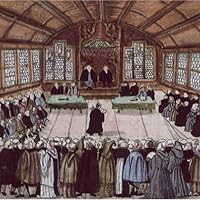
The whole church was caught up with theological debate, and a council was called to resolve the controversy. The Synod of Dort concluded with a rejection of Arminianism, and in The Canons of Dort set forth the orthodox Reformed doctrine on each point; today these are sometimes referred to as the doctrines of grace. As termed in the original preface, it is a “judgment, in which both the true view agreeing with God’s Word concerning the aforesaid five points of doctrine is explained, and the false view disagreeing with God’s Word is rejected.”
The whole church was caught up with theological debate, and a council was called to resolve the controversy. The Synod of Dort concluded with a rejection of Arminianism, and in The Canons of Dort set forth the orthodox Reformed doctrine on each point; today these are sometimes referred to as the doctrines of grace. As termed in the original preface, it is a “judgment, in which both the true view agreeing with God’s Word concerning the aforesaid five points of doctrine is explained, and the false view disagreeing with God’s Word is rejected.”
60 pages, Kindle Edition
First published May 4, 2014
Ratings & Reviews
Friends & Following
Create a free account to discover what your friends think of this book!
Community Reviews
Displaying 1 - 30 of 30 reviews

April 8, 2021
Great read, I agree with all the points and thought that the Biblical support was strong. This quote from the Conclusion will be forever relevant:
"Therefore this Synod of Dort in the name of the Lord pleads with all who devoutly call on the name of our Savior Jesus Christ to form their judgment about the faith of the Reformed churches, not on the basis of false accusations gathered from here or there, or even on the basis of the personal statements of a number of ancient and modern authorities—statements which are also often either quoted out of context or misquoted and twisted to convey a different meaning—but on the basis of the churches’ own official confessions and of the present explanation of the orthodox teaching which has been endorsed by the unanimous consent of the members of the whole Synod, one and all."
"Therefore this Synod of Dort in the name of the Lord pleads with all who devoutly call on the name of our Savior Jesus Christ to form their judgment about the faith of the Reformed churches, not on the basis of false accusations gathered from here or there, or even on the basis of the personal statements of a number of ancient and modern authorities—statements which are also often either quoted out of context or misquoted and twisted to convey a different meaning—but on the basis of the churches’ own official confessions and of the present explanation of the orthodox teaching which has been endorsed by the unanimous consent of the members of the whole Synod, one and all."

June 8, 2023
4/5 stars because I feel 4/5 Calvinist most days

March 5, 2025
Totally
Unreal:
Learning
Interesting
Protestant-church-history
Unreal:
Learning
Interesting
Protestant-church-history
May 20, 2025
A clear defence of reformed theology
If you are reading this book you most likely already know what it is. Nevertheless, Canons is a defense of reformed theology and an answer to the Armenianism which had gained a foothold in 16th century Dutch church, and continues to be a popular doctrine, in parts. The writers take a direct approach to answering these doctrines and the translators do an excellent job of communicating the resolutions of the Synod of Dort. This is must read material for every believer.
If you are reading this book you most likely already know what it is. Nevertheless, Canons is a defense of reformed theology and an answer to the Armenianism which had gained a foothold in 16th century Dutch church, and continues to be a popular doctrine, in parts. The writers take a direct approach to answering these doctrines and the translators do an excellent job of communicating the resolutions of the Synod of Dort. This is must read material for every believer.

May 19, 2024
One of the very best of all the confessions. Extremely rich in both doctrine and devotional flavor.

August 31, 2020
This was my last reading of what the reformed churches call the 3 forms of unity or 3FU(Belgic Confession, Hiedelberg Cathecism and Canons of Dort). The Canons of Dort were written by the Synod of Dordretch to counter the doctrine of the remonstrants(early Arminians). Its filled rich with arguments and scripture references that refresh our minds and affirm the doctrines of grace. All in all, a great historic document! Full marks!

July 26, 2016
Wow, this is a wonderful and weighty read. We will be discussing this in the officers training class I'm taking this week, and I'm sure I'll be discussing this with people for the rest of my life. This is a must read. Read it, study it and let your heart be in awe of the love and wisdom of our sovereign God.

August 11, 2026
Beautiful.

August 8, 2016
The Canons of Dort is an important document in the history of the Christian church. It is basically a collection of doctrinal statements that were agreed upon by a synod that assembled in the Netherlands in 1618 to settle the recent controversies that had arisen as a result of the theological teachings of Jacob Arminius (1506-1609). 62 Dutch delegates of the Reformed Churches of the Netherlands were joined by 27 delegates from 8 other countries for the purpose of addressing and responding to the heretical views presented in what was called the Remonstrance of 1610.
The Remonstrant views, while in the minority, caused such a serious conflict that they could no longer be ignored. A synod was formed and 154 sessions were held over a period of seven months. The representatives focused their attention on the five points in the Remonstrance: 1) election based on foreseen faith, 2) the death of Christ for all men equally, 3) the free will of man to choose salvation, 4) the resistibility of grace, and 5) the possibility to fall from grace. Using scripture, the doctrines they held to were explained, followed by the views that were rejected with scriptural support. These five debated points that refuted the views of the Remonstrance came to be known as the five points of Calvinism, which are: 1) Total depravity of man, 2) Unconditional election, 3) Limited Atonement (aka Particular Redemption), 4) Irresistible Grace, and 5) Perseverance (or Preservation) of the Saints.
Another term we "Calvinists" actually prefer for these Reformed doctrines is Doctrines of Grace. If you've heard of Calvinism but aren't clear what the "Five Points" teach or why they're important, this little document will be helpful to you.
The Remonstrant views, while in the minority, caused such a serious conflict that they could no longer be ignored. A synod was formed and 154 sessions were held over a period of seven months. The representatives focused their attention on the five points in the Remonstrance: 1) election based on foreseen faith, 2) the death of Christ for all men equally, 3) the free will of man to choose salvation, 4) the resistibility of grace, and 5) the possibility to fall from grace. Using scripture, the doctrines they held to were explained, followed by the views that were rejected with scriptural support. These five debated points that refuted the views of the Remonstrance came to be known as the five points of Calvinism, which are: 1) Total depravity of man, 2) Unconditional election, 3) Limited Atonement (aka Particular Redemption), 4) Irresistible Grace, and 5) Perseverance (or Preservation) of the Saints.
Another term we "Calvinists" actually prefer for these Reformed doctrines is Doctrines of Grace. If you've heard of Calvinism but aren't clear what the "Five Points" teach or why they're important, this little document will be helpful to you.

February 4, 2024
Reading this document as a reformed Calvinist is like reading the Declaration of Independence as a patriotic American. You can just feel the camaraderie oozing out of the pages even though you are historically separated hundreds of years. You have new appreciation for those who were there, who did what they did, and wrote what they wrote. Of course, not everyone will feel this way when they read a document like this. Dort was intentionally polemical and outlined the five responses to the arguments against Calvinism. This is where the five points of Calvinism was born, though that moniker would be given later on. But this is black coffee Calvinism here. Straight out of the pipe. Look for thorough and intentionality in this document. Every word was chosen carefully and for good reason - there is no fluff to be found. The Canons are unsurprisingly pastoral too, knowing who was involved in the writing process. There are warnings to this doctrine from those who hold it dear. It is almost like a father teaching his son how to use a knife or a gun - if there is carelessness with this doctrine, not only will the doctrine itself be mangled, but spiritual death is a real possibility. But when used and believed rightly, it is like putting on prescription glasses or contacts for the first time - everything becomes crisp and clear and you wonder how you have gone so far without it. The writing of this document was our battle of Saratoga where things started to turn in the right direction. It is worth revisiting often.

May 27, 2020
A great number of misconceptions and confusion would be cleared up if people bothered to read the primary sources! This is my first time reading the Canons since I first stumbled on Reformed Theology, and I am grateful that I went back to read through them with a deeper understanding. The Canons express a great deal of pastoral, theological passion on a topic that matters greatly, and I wish more people shared their passion.

February 25, 2020
Helpfully explains the doctrines of grace, AKA 5 points of Calvinism, from the Bible. Each section (head) contains articles that present truth positively, followed by a description of errors (false doctrine), followed by a rejection of errors that shows from Scripture why the errors are unbiblical.
Make sure you read a version that contains the Scripture references! Here it is on A Puritan's Mind. You can also listen to the audio recordings from the URC.
Notes
Introduction to the Canons of Dordrecht
The Canons of Dort is the only document of the Three Forms of Unity that was composed by an ecclesiastical assembly (the Synod of Dordrecht, 1618-1619).
The Canons are the result of Synod's judgment of the Five Points of the Remonstrance, an Arminian movement within the Reformed churches of the Netherlands. Because that was their purpose, the Canons have a narrower scope than other Reformed documents.
First Head of Doctrine: Of Divine Predestination
"Article 1. As all men have sinned in Adam, lie under the curse, and are deserving of eternal death, God would have done no injustice by leaving them all to perish, and delivering them over to condemnation on account of sin, according to the words of the apostle …" Rom 3:19, 23; 6:23
"Article 6. That some receive the gift of faith from God and others do not receive it proceeds from God’s eternal decree … According to which decree He graciously softens the hearts of the elect, however obstinate, and inclines them to believe, while He leaves the non-elect in His just judgment to their own wickedness and obduracy." Acts 15:18; Eph 1:11
"Article 7. Election is the unchangeable purpose of God whereby, before the foundation of the world, He hath out of mere grace, according to the sovereign good pleasure of His own will, chosen … a certain number of persons to redemption in Christ, whom He from eternity appointed the Mediator and Head of the elect, and the foundation of salvation. … " Eph 1:4-6; Rom 8:30
"Article 9. This election was not founded upon foreseen faith, and the obedience of faith, holiness, or any other good quality or disposition in man, as the prerequisite, cause, or condition on which it depended; but men are chosen to faith and to the obedience of faith, holiness, etc. …" Eph 1:4
"Article 10. The good pleasure of God is the sole cause of this gracious election … " Rom. 9:11–13; Acts 13:48
"Article 11. And as God Himself is most wise, unchangeable, omniscient, and omnipotent, so the election made by Him can neither be interrupted nor changed, recalled or annulled; neither can the elect be cast away, nor their number diminished."
"Article 12. The elect in due time, though in various degrees and in different measures, attain the assurance of this their eternal and unchangeable election, not by inquisitively prying into the secret and deep things of God, but by observing in themselves, with a spiritual joy and holy pleasure, the infallible fruits of election pointed out in the Word of God—such as a true faith in Christ, filial fear, a godly sorrow for sin, a hungering and thirsting after righteousness, etc."
"Article 14. As the doctrine of divine election by the most wise counsel of God was declared by the prophets, by Christ Himself, and by the apostles, and is clearly revealed in the Scriptures, both of the Old and New Testament …"
"Article 15. … others are passed by in the eternal election of God; whom God … hath decreed to leave in the common misery into which they have willfully plunged themselves, and not to bestow upon them saving faith and the grace of conversion; but leaving them in His just judgment to follow their own ways, at last for the declaration of His justice, to condemn and punish them forever, not only on account of their unbelief, but also for all their other sins."
"Article 16. … Those who do not yet actively experience within themselves a living faith in Christ or an assured confidence of heart, peace of conscience, a zeal for childlike obedience, and a glorying in God through Christ, but who nevertheless use the means by which God has promised to work these things in us — such people ought not to be alarmed at the mention of reprobation, nor to count themselves among the reprobate; rather they ought to continue diligently in the use of the means, to desire fervently a time of more abundant grace, and to wait for it in reverence and humility."
"Article 17. Since we are to judge of the will of God from His Word, which testifies that the children of believers are holy, not by nature, but in virtue of the covenant of grace in which they, together with the parents, are comprehended, godly parents have no reason to doubt of the election and salvation of their children whom it pleaseth God to call out of this life in their infancy."
"Article 18. To those who murmur at the free grace of election and just severity of reprobation, we answer …" Rom 9:20; Matt 20:15; Rom 11:33-36
Other verses: John 6:39; 15:16; 17:6; Acts 13:48; Eph 1:4; 2:3-9; Rom 8:30, 33; 9:11, 18; 11:6; 2 Tim 1:9; 1 John 4:10; Matt 11:25-26; 13:11; 24:24; Luke 10:20
Second Head of Doctrine: Of The Death Of Christ And The Redemption Of Men Thereby
"Article 3. The death of the Son of God is the only and most perfect sacrifice and satisfaction for sin, and is of infinite worth and value, abundantly sufficient to expiate the sins of the whole world."
Other verses: John 10:15, 27; Isa 53:10; Eph 2:3
Third and Fourth Heads of Doctrine: Of the Corruption of Man, His Conversion to God and the Manner Thereof
"Article 4. There remain, however, in man since the fall the glimmerings of natural light, whereby he retains some knowledge of God, of natural things, and of the differences between good and evil, and discovers some regard for virtue, good order in society, and for maintaining an orderly external deportment. But so far is this light of nature from being sufficient to bring him to a saving knowledge of God and to true conversion, that he is incapable of using it aright even in things natural and civil. Nay further, this light, such as it is, man in various ways renders wholly polluted, and holds it in unrighteousness, by doing which he becomes inexcusable before God."
"Article 8. As many as are called by the gospel are unfeignedly called. For God hath most earnestly and truly shown in His Word what is pleasing to Him, namely, that those who are called should come to Him. He, moreover, seriously promises eternal life and rest to as many as shall come to Him and believe on Him."
"Article 16. But as man by the fall did not cease to be a creature endowed with understanding and will, nor did sin which pervaded the whole race of mankind deprive him of the human nature, but brought upon him depravity and spiritual death …"
"Error 4: Who teach that the unregenerate man is not really nor utterly dead in sin, nor destitute of all powers unto spiritual good, but that he can yet hunger and thirst after righteousness and life;"
"Error 5: Who teach that the corrupt and natural man can so well use the common grace (by which they understand the light of nature), or the gifts still left him after the fall, that he can gradually gain by their good use a greater, namely, the evangelical or saving grace and salvation itself."
Rejection of Error 6: "God infuses new qualities of faith, of obedience, and of the consciousness of His love into our hearts:" Jer 31:18; 33; Isa 44:3; Rom 5:5.
Other verses: Eph 1:19; 2:1, 5; Gen 6:5; 8:21; Ps 51:10, 19; 147:19, 20; Matt 5:6; Acts 14:16; 16:6, 7; Ezek 36:26; 2 Thess 1:11; 2 Pet 1:3; Rom 9:16; 1 Cor 4:7; Phil 2:3
Fifth Head of Doctrine: Of the Perseverance of the Saints
"Article 5 … By such monstrous sins, however, they greatly offend God, … grieve the Holy Spirit, …"
"Article 8. Thus, it is not in consequence of their own merits or strength, but of God’s free mercy, that they do not totally fall from faith and grace, nor continue and perish finally in their backslidings; which with respect to themselves is not only possible, but would undoubtedly happen; but with respect to God, it is utterly impossible, since His counsel cannot be changed, nor His promise fail, neither can the call according to His purpose be revoked, nor the merit, intercession, and preservation of Christ be rendered ineffectual, nor the sealing of the Holy Spirit be frustrated or obliterated."
"Article 10. This assurance, however, is not produced by any peculiar revelation contrary to, or independent of the Word of God, but springs from faith in God’s promises, which He has most abundantly revealed in His Word for our comfort; from the testimony of the Holy Spirit, witnessing with our spirit, that we are children and heirs of God (Rom. 8:16); and lastly, from a serious and holy desire to preserve a good conscience and to perform good works."
"Article 11 … Meanwhile, Scripture testifies that believers have to contend in this life with various doubts of the flesh and that under severe temptation they do not always experience this full assurance of faith and certainty of perseverance."
Rejection of Error 1: "For the Holy Scripture testifies that this follows out of election, and is given the elect in virtue of the death, the resurrection, and intercession of Christ:" Rom 8:32-35; 11:7
Rejection of Error 5: "… the Holy Scriptures constantly deduce this assurance, not from a special and extraordinary revelation, but from the marks proper to the children of God and from the constant promises of God. So especially the apostle Paul:" Rom 8:39; 1 John 3:24
Rejection of Error 7: "Christ Himself, in Matt. 13:20, Luke 8:13, and in other places, evidently notes, besides this duration, a threefold difference between those who believe only for a time and true believers, when He declares that the former receive the seed in stony ground, but the latter in the good ground or heart; that the former are without root, but the latter have a firm root; that the former are without fruit, but that the latter bring forth their fruit in various measure with constancy and steadfastness."
Rejection of Error 9: Christ has prayed that believers should infallibly continue in faith. Luke 22:32; John 17:11, 15, 20
Other verses: 1 Cor 1:8; Rom 5:8-9; John 10:28-29; 1 John 5:18
Make sure you read a version that contains the Scripture references! Here it is on A Puritan's Mind. You can also listen to the audio recordings from the URC.
Notes
Introduction to the Canons of Dordrecht
The Canons of Dort is the only document of the Three Forms of Unity that was composed by an ecclesiastical assembly (the Synod of Dordrecht, 1618-1619).
The Canons are the result of Synod's judgment of the Five Points of the Remonstrance, an Arminian movement within the Reformed churches of the Netherlands. Because that was their purpose, the Canons have a narrower scope than other Reformed documents.
First Head of Doctrine: Of Divine Predestination
"Article 1. As all men have sinned in Adam, lie under the curse, and are deserving of eternal death, God would have done no injustice by leaving them all to perish, and delivering them over to condemnation on account of sin, according to the words of the apostle …" Rom 3:19, 23; 6:23
"Article 6. That some receive the gift of faith from God and others do not receive it proceeds from God’s eternal decree … According to which decree He graciously softens the hearts of the elect, however obstinate, and inclines them to believe, while He leaves the non-elect in His just judgment to their own wickedness and obduracy." Acts 15:18; Eph 1:11
"Article 7. Election is the unchangeable purpose of God whereby, before the foundation of the world, He hath out of mere grace, according to the sovereign good pleasure of His own will, chosen … a certain number of persons to redemption in Christ, whom He from eternity appointed the Mediator and Head of the elect, and the foundation of salvation. … " Eph 1:4-6; Rom 8:30
"Article 9. This election was not founded upon foreseen faith, and the obedience of faith, holiness, or any other good quality or disposition in man, as the prerequisite, cause, or condition on which it depended; but men are chosen to faith and to the obedience of faith, holiness, etc. …" Eph 1:4
"Article 10. The good pleasure of God is the sole cause of this gracious election … " Rom. 9:11–13; Acts 13:48
"Article 11. And as God Himself is most wise, unchangeable, omniscient, and omnipotent, so the election made by Him can neither be interrupted nor changed, recalled or annulled; neither can the elect be cast away, nor their number diminished."
"Article 12. The elect in due time, though in various degrees and in different measures, attain the assurance of this their eternal and unchangeable election, not by inquisitively prying into the secret and deep things of God, but by observing in themselves, with a spiritual joy and holy pleasure, the infallible fruits of election pointed out in the Word of God—such as a true faith in Christ, filial fear, a godly sorrow for sin, a hungering and thirsting after righteousness, etc."
"Article 14. As the doctrine of divine election by the most wise counsel of God was declared by the prophets, by Christ Himself, and by the apostles, and is clearly revealed in the Scriptures, both of the Old and New Testament …"
"Article 15. … others are passed by in the eternal election of God; whom God … hath decreed to leave in the common misery into which they have willfully plunged themselves, and not to bestow upon them saving faith and the grace of conversion; but leaving them in His just judgment to follow their own ways, at last for the declaration of His justice, to condemn and punish them forever, not only on account of their unbelief, but also for all their other sins."
"Article 16. … Those who do not yet actively experience within themselves a living faith in Christ or an assured confidence of heart, peace of conscience, a zeal for childlike obedience, and a glorying in God through Christ, but who nevertheless use the means by which God has promised to work these things in us — such people ought not to be alarmed at the mention of reprobation, nor to count themselves among the reprobate; rather they ought to continue diligently in the use of the means, to desire fervently a time of more abundant grace, and to wait for it in reverence and humility."
"Article 17. Since we are to judge of the will of God from His Word, which testifies that the children of believers are holy, not by nature, but in virtue of the covenant of grace in which they, together with the parents, are comprehended, godly parents have no reason to doubt of the election and salvation of their children whom it pleaseth God to call out of this life in their infancy."
"Article 18. To those who murmur at the free grace of election and just severity of reprobation, we answer …" Rom 9:20; Matt 20:15; Rom 11:33-36
Other verses: John 6:39; 15:16; 17:6; Acts 13:48; Eph 1:4; 2:3-9; Rom 8:30, 33; 9:11, 18; 11:6; 2 Tim 1:9; 1 John 4:10; Matt 11:25-26; 13:11; 24:24; Luke 10:20
Second Head of Doctrine: Of The Death Of Christ And The Redemption Of Men Thereby
"Article 3. The death of the Son of God is the only and most perfect sacrifice and satisfaction for sin, and is of infinite worth and value, abundantly sufficient to expiate the sins of the whole world."
Other verses: John 10:15, 27; Isa 53:10; Eph 2:3
Third and Fourth Heads of Doctrine: Of the Corruption of Man, His Conversion to God and the Manner Thereof
"Article 4. There remain, however, in man since the fall the glimmerings of natural light, whereby he retains some knowledge of God, of natural things, and of the differences between good and evil, and discovers some regard for virtue, good order in society, and for maintaining an orderly external deportment. But so far is this light of nature from being sufficient to bring him to a saving knowledge of God and to true conversion, that he is incapable of using it aright even in things natural and civil. Nay further, this light, such as it is, man in various ways renders wholly polluted, and holds it in unrighteousness, by doing which he becomes inexcusable before God."
"Article 8. As many as are called by the gospel are unfeignedly called. For God hath most earnestly and truly shown in His Word what is pleasing to Him, namely, that those who are called should come to Him. He, moreover, seriously promises eternal life and rest to as many as shall come to Him and believe on Him."
"Article 16. But as man by the fall did not cease to be a creature endowed with understanding and will, nor did sin which pervaded the whole race of mankind deprive him of the human nature, but brought upon him depravity and spiritual death …"
"Error 4: Who teach that the unregenerate man is not really nor utterly dead in sin, nor destitute of all powers unto spiritual good, but that he can yet hunger and thirst after righteousness and life;"
"Error 5: Who teach that the corrupt and natural man can so well use the common grace (by which they understand the light of nature), or the gifts still left him after the fall, that he can gradually gain by their good use a greater, namely, the evangelical or saving grace and salvation itself."
Rejection of Error 6: "God infuses new qualities of faith, of obedience, and of the consciousness of His love into our hearts:" Jer 31:18; 33; Isa 44:3; Rom 5:5.
Other verses: Eph 1:19; 2:1, 5; Gen 6:5; 8:21; Ps 51:10, 19; 147:19, 20; Matt 5:6; Acts 14:16; 16:6, 7; Ezek 36:26; 2 Thess 1:11; 2 Pet 1:3; Rom 9:16; 1 Cor 4:7; Phil 2:3
Fifth Head of Doctrine: Of the Perseverance of the Saints
"Article 5 … By such monstrous sins, however, they greatly offend God, … grieve the Holy Spirit, …"
"Article 8. Thus, it is not in consequence of their own merits or strength, but of God’s free mercy, that they do not totally fall from faith and grace, nor continue and perish finally in their backslidings; which with respect to themselves is not only possible, but would undoubtedly happen; but with respect to God, it is utterly impossible, since His counsel cannot be changed, nor His promise fail, neither can the call according to His purpose be revoked, nor the merit, intercession, and preservation of Christ be rendered ineffectual, nor the sealing of the Holy Spirit be frustrated or obliterated."
"Article 10. This assurance, however, is not produced by any peculiar revelation contrary to, or independent of the Word of God, but springs from faith in God’s promises, which He has most abundantly revealed in His Word for our comfort; from the testimony of the Holy Spirit, witnessing with our spirit, that we are children and heirs of God (Rom. 8:16); and lastly, from a serious and holy desire to preserve a good conscience and to perform good works."
"Article 11 … Meanwhile, Scripture testifies that believers have to contend in this life with various doubts of the flesh and that under severe temptation they do not always experience this full assurance of faith and certainty of perseverance."
Rejection of Error 1: "For the Holy Scripture testifies that this follows out of election, and is given the elect in virtue of the death, the resurrection, and intercession of Christ:" Rom 8:32-35; 11:7
Rejection of Error 5: "… the Holy Scriptures constantly deduce this assurance, not from a special and extraordinary revelation, but from the marks proper to the children of God and from the constant promises of God. So especially the apostle Paul:" Rom 8:39; 1 John 3:24
Rejection of Error 7: "Christ Himself, in Matt. 13:20, Luke 8:13, and in other places, evidently notes, besides this duration, a threefold difference between those who believe only for a time and true believers, when He declares that the former receive the seed in stony ground, but the latter in the good ground or heart; that the former are without root, but the latter have a firm root; that the former are without fruit, but that the latter bring forth their fruit in various measure with constancy and steadfastness."
Rejection of Error 9: Christ has prayed that believers should infallibly continue in faith. Luke 22:32; John 17:11, 15, 20
Other verses: 1 Cor 1:8; Rom 5:8-9; John 10:28-29; 1 John 5:18
October 30, 2025
Good stuff. It was good to get to read through the various counterpoints of the doctrines of TULIP and their responses. "Calvinism," as what we call these doctrines today, was the result of this Synod in response to the heresies of Arminius. Calvin had actually been dead for half a century before the Synod took place. Read Glenn S. Sunshine's book The Reformation for Armchair Theologians to learn what "Calvinism" actually referred to at this time!
I think it would be good for every reformed person to read the Canons of Dort at some point, just to be familiar with the rejections and responses.
I think it would be good for every reformed person to read the Canons of Dort at some point, just to be familiar with the rejections and responses.
March 14, 2025
This is one of the central creedal bases of the Reformed Church in America. It deals with only one issue, Arminianism (which is a questioning of the traditional Reformed view of the doctrine of Predestination). This is one of the documents in the joint RCA and Christian Reformed Church in North America publication Our Faith.
I picked up this digital copy to make citations from the Canons easier. I put it on both my Bible Commentary and Calvinism shelves.
I picked up this digital copy to make citations from the Canons easier. I put it on both my Bible Commentary and Calvinism shelves.
March 14, 2024
I never read the Canons of Dort in detail before but reading it and seeing how the Synod addressed specific issues on Calvinism and even those who oppose the doctrines of grace in a Scriptural manner. Much of the questions in SocMed about Calvinism are addressed in the Canons wonderfully, carefully, and pastorally.

May 9, 2020
One of the most influential and important documents in Church History. Very few churches and pastors today could so clearly and definitely lay out their doctrinal stance like these men did, especially united as a group.
August 4, 2019
Timeless.

Read
December 13, 2022I liked a lot of this. Anything I didn't like was probably because I'm Lutheran.

June 3, 2024
Great summary of reformed soteriology and keen polemics against Arminianism
July 20, 2024
I've read the Canons of Dort through a few times now (will continue to read through it and refer to it often) and each time it gets better and better.

January 4, 2025
Grace, grace, grace.

April 27, 2025
Beautiful articulation of the work of Christ in the gospel

July 7, 2025
Not a Calvinist and probably never will be, but I appreciate the thought, time, and scripture put into these canons.

November 10, 2025
Thoroughly Biblical defense of Reformed Predestination
February 20, 2026
fire exposition.
This entire review has been hidden because of spoilers.

November 3, 2022
This is required reading for anyone who studies Reformed Theology or considers themselves "Calvinists." Concise, cogent, and surprisingly devotional at times.
Forget what you think you know about "5-point Calvinism" Double predestination, etc. until you have read the Canons of Dort.
5/5 Excellent.
Forget what you think you know about "5-point Calvinism" Double predestination, etc. until you have read the Canons of Dort.
5/5 Excellent.

June 24, 2021
10/20/22 Update: The Canons of Dort are so life-giving for a polemical document. They are joyful to read, and looking back on my original review, I think I’ve mostly given up a double intent after reading Turretin.
Original Review:
The more I read the primary sources of the Reformation, the more I come to realize I had a lot of caricatures in my mind and the more I am coming to the conviction that Reformed soteriology is Biblical. The point I still have difficulty with is limited (or definite) atonement. While reading these canons has helped a little, it still seems to me that the Trinity had a double intent to the atonement; one intent to have Christ die for all so that His sacrifice would be sufficient to justify any who would come to Him in faith, thereby grounding the general gospel call; and one intent to have Christ die only for the elect so that His sacrifice would be the meritorious cause of our salvation and the grounding of our effectual calling. Therefore, it would still be right to tell a sinner, Christ died for you. It seems this is contrary to some Reformed theologians, like Turretin and Owen, but I’m not sure if it is contrary to Calvin or even the Canons of Dort. I’m not sure whether to call myself a 4 point Calvinist or a 5 point Calvinist who affirms a double intent of the atonement. Maybe someone can help me here?
Original Review:
The more I read the primary sources of the Reformation, the more I come to realize I had a lot of caricatures in my mind and the more I am coming to the conviction that Reformed soteriology is Biblical. The point I still have difficulty with is limited (or definite) atonement. While reading these canons has helped a little, it still seems to me that the Trinity had a double intent to the atonement; one intent to have Christ die for all so that His sacrifice would be sufficient to justify any who would come to Him in faith, thereby grounding the general gospel call; and one intent to have Christ die only for the elect so that His sacrifice would be the meritorious cause of our salvation and the grounding of our effectual calling. Therefore, it would still be right to tell a sinner, Christ died for you. It seems this is contrary to some Reformed theologians, like Turretin and Owen, but I’m not sure if it is contrary to Calvin or even the Canons of Dort. I’m not sure whether to call myself a 4 point Calvinist or a 5 point Calvinist who affirms a double intent of the atonement. Maybe someone can help me here?

November 9, 2015
Anyone seeking to understand the discussion between Calvinism and Arminianism must read this document. Long before the famous (or infamous, depending on your perspective) TULIP acronym, the Canons of Dort served as the official, Reformed response to Arminian teaching. This particular version, published by Chapel Library, is clearly printed and could be perfect to hand out at the resource center or library of your church. It is worth your read regardless of theological persuasion.

May 8, 2022
Beautiful articulation of the reformed faith; election, perseverance of the saints, Jesus death for his elect, total depravity and effectual calling.
A fifteen page masterpiece!
A fifteen page masterpiece!
Displaying 1 - 30 of 30 reviews