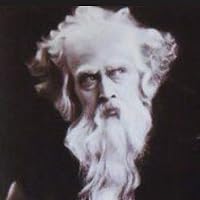
In Mario und der Zauberer verarbeitet Thomas Mann ein Reiseerlebnis aus dem faschistischen Italien 1926: Ein schaustellender Hypnotiseur bannt die Urlaubsgäste magisch, macht sie zu willenlosen Marionetten. Aus seiner kleinen Strandnovelle wurde eine politische Parabel. »Es war mir merkwürdig«, schrieb Thomas Mann 1931 an Claire Goll, »wie aus dem Persönlichen und Privaten etwas Symbolisches und Ethisches erwuchs.«
Thomas Mann was a German novelist, short story writer, social critic, philanthropist, essayist, and Nobel Prize laureate in 1929, known for his series of highly symbolic and ironic epic novels and novellas, noted for their insight into the psychology of the artist and the intellectual. His analysis and critique of the European and German soul used modernized German and Biblical stories, as well as the ideas of Goethe, Nietzsche, and Schopenhauer. His older brother was the radical writer Heinrich Mann, and three of his six children, Erika Mann, Klaus Mann and Golo Mann, also became important German writers. When Hitler came to power in 1933, Mann fled to Switzerland. When World War II broke out in 1939, he emigrated to the United States, from where he returned to Switzerland in 1952. Thomas Mann is one of the best-known exponents of the so-called Exilliteratur.
Diese Erzählung ist nur interessant, wenn man als Leser beginnt, sehr viel, vor allem politisches, in den Text hineinzuinterpretieren. Der Text alleine ist frei von Spannung oder Unterhaltung.
Eines der wichtigsten Bücher des 20. Jahrhunderts, das heute leider wieder von erschreckender Aktualität ist.
Die erste Hälfte ist eine meisterhafte, sensible und feinfühlige Schilderung eines Landes auf dem Weg in den Faschismus, geprägt von Vorurteilen, Xenophobie und kleinbürgerlicher Gewaltbereitschaft.
Die zweite Hälfte ist eine Parabel, die weit über ihre konkrete Zeit und ihren unmittelbaren Gegenstand hinausweist. Sie zeichnet ein zeitloses Bild populistischer Demagogen, die mit ihrer suggestiven Rhetorik riesige Menschenmengen manipulieren und verführen können. --------------
One of the most important books of the twentieth century, and one that is, unfortunately, becoming more relevant again with each passing day.
The first half is a masterful, subtle, and deeply sensitive portrayal of a society on the road to fascism, shaped by prejudice, xenophobia, and petty-bourgeois violence.
The second half is a parable that reaches far beyond its historical setting and immediate subject matter. It offers a timeless portrayal of populist demagogues who, through their suggestive rhetoric, are capable of manipulating and seducing vast crowds.
Mann kann es einfach. Liest sich auch ohne den politischen Hintergrund ein wenig wie Hoffmann in Bestform, mit ist es eine geniale Allegorie auf die Dynamiken des Faschismus