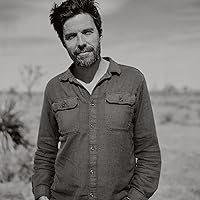
Mapping the past—and the future—of American trails.
"Dillon Osleger is a new voice in the wilderness, and what a voice it is." —Jason Roberts, Pulitzer Prize–winning author of Every Living Thing
In Trail Work, Dillon Osleger excavates the forgotten trails of the Western United States. He shows how one of the greatest infrastructure investments in the nation's history—paths through our public lands—has been rubbed away by time and deliberate neglect. Osleger unearths the wagon roads, water sources, trap lines, and Indigenous trading trails that once knitted the West together. He reveals centuries of path building, more than two-thirds of a nationwide network of trails and campgrounds, now erased from the map. Dwindling federal investment and privatized timber forests, ranches, and oil fields have blocked access to public lands, prompting to Osleger to How can we better care for the places that are claimed for the American public, but are too often abandoned or sold? Osleger has trail eyes like no other from his years as a trail builder, geologist, professional mountain biker, and public lands advocate. Here he offers a land ethic born of joy in stewardship, attention to history and community, and living and cycling lightly. From the Central California Coast to the Sierra Nevada, out to Colorado and up to Washington, Osleger embarks on a wayfinder's journey, revealing an atlas of lost trails for everyone who loves the outdoors.
Trail Work is a beautifully written exploration of America's public lands that blends environmental history, memoir, adventure, and conservation into an inspiring and thought-provoking narrative. Dillon Osleger brings the rare perspective of someone who has not only studied the landscape but has physically worked to restore and maintain it, giving every page a sense of authenticity and purpose.
What makes this book especially compelling is its ability to reveal the hidden history beneath familiar landscapes. Osleger shows that trails are far more than recreational routes—they are records of Indigenous trade networks, early settlements, conservation efforts, and generations of people who shaped and cared for the land. By uncovering forgotten pathways, he also uncovers forgotten stories, reminding readers that preserving public lands means preserving our collective history.
The writing strikes a wonderful balance between reflection and investigation. Whether describing remote mountain trails, abandoned wagon roads, or the challenges facing modern public lands, Osleger combines careful research with vivid storytelling that makes readers feel connected to the landscapes he explores. His passion for stewardship shines through without ever becoming preachy, instead inviting readers to appreciate the importance of protecting these shared spaces for future generations.
I also appreciated how the book addresses contemporary issues surrounding conservation, public access, and land management while remaining hopeful. Rather than simply documenting what has been lost, Trail Work offers a vision of restoration built on community involvement, historical understanding, and responsible stewardship.
Trail Work is one of the most thoughtful and emotionally resonant books about public lands I’ve read in a while. Osleger understands that trails are never just lines across a landscape — they are records of memory, labor, migration, stewardship, loss, and belonging. What makes this book so compelling is the way it moves fluidly between geology, history, ecology, cartography, and personal narrative without ever losing sight of the deeper question at its heart: what does it mean to remain connected to a place? Beautifully written and deeply humane, Trail Work belongs in the lineage of writers who understand that conservation begins not only with protection, but with relationship.
This book gives insight into the trails, stories, and history we have lost while also teaching us how to be better advocates for our public trails through the lens of the authors own journey into environmental activism and trail rediscovery. This book also highlights how we, as a country, have commodified our outdoor spaces for use for its resources instead of making connection and meaning to those places.
The more I read, the more this read grew on me. What started as an obsession on the nature of trails turned into a very thoughtful discourse on land management and how we so often fail to uphold, protect, and repair our public lands. I finished the read, not only eager to work for change, but sharing in Dillon's fascination with the trails themselves
I was strongly drawn to the premise of this book - that we have inherited an incredible legacy of trails on public lands which we are now losing to neglect, disturbance, and privatization, and a renewed land ethic is needed to reverse these trends - but feel the book struggled to deliver on this premise and stretched its ideas into a book-length form through padding and repetition. I wish the book had made more use of introducing secondary characters that support the main ideas, for example by visiting organizations working to maintain trails or who represent the type of land ethic the author espouses. Ultimately, I'm excited to see this topic getting the attention it deserves and the related discourse that this book is inspiring.
Around the time that I read this book, I also read an article by Dillon Osleger in High Country News (HCN) titled 'The Plight of the Pinecone Cowboy'. HCN has since added an editor's note to the article stating that HCN had "discovered that the author misrepresented details of his reporting, leading to significant errors in both the story’s framing and its factuality." and has published the results of an investigation into these errors, which can be read here: https://www.hcn.org/investigation-int.... This raises questions about the author's credibility in other works, including this book.