

What do you think?

Little Edna's War
They tried to erase her.
Instead, she became a legend.
At just seven years old, Edna Szurek risked everything to smuggle food through holes in the Warsaw Ghetto wall, knowing each step could be her last. By the age of 10, she was the youngest decorated member of the Polish resistance. And by the end of the war, she had defied every Nazi plan for her destruction.
Though she fought armed with a pistol, Edna's true weapons were wit, bravery, and an unshakable love for her sister. Disguised as a Catholic girl, she even earned a medal from Pope Pius XII, who never knew he was honoring a Jewish child who had outsmarted the Reich.
Drawn from over five hours of her firsthand testimony recorded by the USC Shoah Foundation, this powerful memoir traces Edna's impossible from the ashes of a shattered birthday celebration to the brutal reality of a POW camp, escaping the deadly confines of the Warsaw Ghetto to find the hidden safety of a convent sanctuary.
Edna Szurek should not have survived the Holocaust. But she did. And her story will stay with you forever.
A gripping, well-done narrative that does justice to Edna's amazing story. The narrative is moving and vulnerable, reflecting on a terrifying time in history and examining the aftereffects of those experiences on the children who confronted them. Readers will grieve, cheer, and be inspired. – BookLife, Publishers Weekly
Instead, she became a legend.
At just seven years old, Edna Szurek risked everything to smuggle food through holes in the Warsaw Ghetto wall, knowing each step could be her last. By the age of 10, she was the youngest decorated member of the Polish resistance. And by the end of the war, she had defied every Nazi plan for her destruction.
Though she fought armed with a pistol, Edna's true weapons were wit, bravery, and an unshakable love for her sister. Disguised as a Catholic girl, she even earned a medal from Pope Pius XII, who never knew he was honoring a Jewish child who had outsmarted the Reich.
Drawn from over five hours of her firsthand testimony recorded by the USC Shoah Foundation, this powerful memoir traces Edna's impossible from the ashes of a shattered birthday celebration to the brutal reality of a POW camp, escaping the deadly confines of the Warsaw Ghetto to find the hidden safety of a convent sanctuary.
Edna Szurek should not have survived the Holocaust. But she did. And her story will stay with you forever.
A gripping, well-done narrative that does justice to Edna's amazing story. The narrative is moving and vulnerable, reflecting on a terrifying time in history and examining the aftereffects of those experiences on the children who confronted them. Readers will grieve, cheer, and be inspired. – BookLife, Publishers Weekly
366 pages, Paperback
Published November 7, 2025
About the author
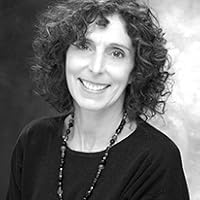
Janet Bond Brill
10 books42 followersJanet Bond Brill was born and raised in New York City, the daughter of a prominent stage and screen actor and a psychoanalyst. After graduating from Walden School at sixteen and earning her B.S. in Biology from the University of Miami, she spent seven years as a flight attendant for Pan American World Airways before returning to academia.
Dr. Brill holds a Ph.D. in Exercise Science from the University of Miami, along with two master’s degrees—one in Exercise Science from the University of Miami and another in Nutrition Science from Florida International University. She is the author of four nationally recognized health books, including Cholesterol Down and Blood Pressure Down, published by Random House, as well as numerous scientific papers and articles for lay publications.
After thirty-seven years of knowing and loving her mother-in-law, Holocaust survivor Edna Stefania Brill, Dr. Brill moved from health writing to historical memoir. Little Edna’s War (pub date 1/27/26) records Edna’s extraordinary experiences for future generations—her first memoir and her most important work.
Dr. Brill lives in Pennsylvania with her husband Sam, Edna’s son. Together they have three children—Rachel, Mia, and Jason—and two grandchildren. In recent years, Dr. Brill has also written and published three children’s books for her grandchildren, bringing imagination and wonder to bedtime stories that bridge generations.
Dr. Brill holds a Ph.D. in Exercise Science from the University of Miami, along with two master’s degrees—one in Exercise Science from the University of Miami and another in Nutrition Science from Florida International University. She is the author of four nationally recognized health books, including Cholesterol Down and Blood Pressure Down, published by Random House, as well as numerous scientific papers and articles for lay publications.
After thirty-seven years of knowing and loving her mother-in-law, Holocaust survivor Edna Stefania Brill, Dr. Brill moved from health writing to historical memoir. Little Edna’s War (pub date 1/27/26) records Edna’s extraordinary experiences for future generations—her first memoir and her most important work.
Dr. Brill lives in Pennsylvania with her husband Sam, Edna’s son. Together they have three children—Rachel, Mia, and Jason—and two grandchildren. In recent years, Dr. Brill has also written and published three children’s books for her grandchildren, bringing imagination and wonder to bedtime stories that bridge generations.
Ratings & Reviews
Friends & Following
Create a free account to discover what your friends think of this book!
Community Reviews
Displaying 1 - 15 of 15 reviews

January 11, 2026
The true story of Edna Stefania Brill, a Holocaust survivor and WW2 child hero, as written by her daughter-in-law.
Little Edna was four in 1939, the year Hitler decided to invade Poland. Before this, she had been growing up in a large, loving Jewish family, in a rather affluent section of Warsaw. Once the Occupation began, living conditions steadily declined for Jews. The walls went up around what was referred to as “The Warsaw Ghetto”, and thousands were packed into crowded spaces without adequate food, water, or sanitation. When the “liquidation” began, Edna and her older sister Miriam, with the guidance of their brother Yakov, managed to escape the systematic roundups and avoid being deported to labor camps. Using their wits, hiding their identity as Jewish, and with the help of a few kind souls they met along the way, these children survived, unlike so many others. By the time the Warsaw Uprising was being planned by partisans, Miriam and Edna had established themselves as Resistance Workers, at the ages of 17 and 9.
This story of extreme determination and bravery, held onto in the midst of unspeakable horrors that no child should ever experience, was absolutely unputdownable. I will certainly be purchasing a copy after its release in January 2026.
*I received a digital copy from Netgalley in exchange for an honest review. All opinions are strictly my own.*
Little Edna was four in 1939, the year Hitler decided to invade Poland. Before this, she had been growing up in a large, loving Jewish family, in a rather affluent section of Warsaw. Once the Occupation began, living conditions steadily declined for Jews. The walls went up around what was referred to as “The Warsaw Ghetto”, and thousands were packed into crowded spaces without adequate food, water, or sanitation. When the “liquidation” began, Edna and her older sister Miriam, with the guidance of their brother Yakov, managed to escape the systematic roundups and avoid being deported to labor camps. Using their wits, hiding their identity as Jewish, and with the help of a few kind souls they met along the way, these children survived, unlike so many others. By the time the Warsaw Uprising was being planned by partisans, Miriam and Edna had established themselves as Resistance Workers, at the ages of 17 and 9.
This story of extreme determination and bravery, held onto in the midst of unspeakable horrors that no child should ever experience, was absolutely unputdownable. I will certainly be purchasing a copy after its release in January 2026.
*I received a digital copy from Netgalley in exchange for an honest review. All opinions are strictly my own.*

January 1, 2026
First book of the year was definitely a banger!! Couldn’t put it down. It is told from the point of view of Edna, a polish jew living in Warsaw, and each section of the book, roughly a year in her life, is so vastly different from the last. She begins as a happy, sassy five year old from a very well to do family… then the war begins with a literal bang while she is at a friend’s birthday party across town.
Things proceed slowly at first, and we witness how it becomes less ideal to be Jewish, but through the eyes of a small child who doesn’t really understand it all. Then the formerly fancy part of town is turned into a ghetto. More people move in. Conditions get worse. Then the wall is built and it suddenly begins to accelerate quickly. Men disappear. Food is scarce. Their brother Yakov has been smuggling food in from the Aryan side of the wall and he involves Edna and their sister Miriam in this as well.
On the other side of the wall they get to be normal kids again and it’s such a stark contrast to their lives in the ghetto.
Then it’s decided that they need to get out, and live on the other side of the wall. Their older sister Hannah is meant to join them but she won’t leave.
The family who is meant to shelter the girls has an informant, so they soon end up on the streets, where they use the guise of catholic orphans. From a family of musicians, they make their money singing on street corners, and are often given a room at night from kindly strangers… and eventually one of these kind folks is in the Polish Home Guard, which they too join.
The Warsaw Uprising was horrific to read about, from how mercilessly the Germans killed civilians as payback, to how the Russians - their supposed allies - just hung back to let Warsaw fall.
The girls end up in a POW camp, and at the end of the war end up resettled in England to finish their education, and it’s wild to see Edna - a decorated war hero and child soldier - now just a boarding school girl!
I liked how each section started with what her new name would be. It was interesting to see how she managed to forget some parts of her past so thoroughly, that she truly began to believe she was Catholic, and she even forgot that she’d had a brother at first.
This one is a keeper.
Things proceed slowly at first, and we witness how it becomes less ideal to be Jewish, but through the eyes of a small child who doesn’t really understand it all. Then the formerly fancy part of town is turned into a ghetto. More people move in. Conditions get worse. Then the wall is built and it suddenly begins to accelerate quickly. Men disappear. Food is scarce. Their brother Yakov has been smuggling food in from the Aryan side of the wall and he involves Edna and their sister Miriam in this as well.
On the other side of the wall they get to be normal kids again and it’s such a stark contrast to their lives in the ghetto.
Then it’s decided that they need to get out, and live on the other side of the wall. Their older sister Hannah is meant to join them but she won’t leave.
The family who is meant to shelter the girls has an informant, so they soon end up on the streets, where they use the guise of catholic orphans. From a family of musicians, they make their money singing on street corners, and are often given a room at night from kindly strangers… and eventually one of these kind folks is in the Polish Home Guard, which they too join.
The Warsaw Uprising was horrific to read about, from how mercilessly the Germans killed civilians as payback, to how the Russians - their supposed allies - just hung back to let Warsaw fall.
The girls end up in a POW camp, and at the end of the war end up resettled in England to finish their education, and it’s wild to see Edna - a decorated war hero and child soldier - now just a boarding school girl!
I liked how each section started with what her new name would be. It was interesting to see how she managed to forget some parts of her past so thoroughly, that she truly began to believe she was Catholic, and she even forgot that she’d had a brother at first.
This one is a keeper.

January 12, 2026
Little Edna’s War follows the life of Edna Szurek, a young girl whose world collapses when the Germans invade Warsaw in 1939. The book moves through her early childhood in a loving Jewish family, the terror of the bombings, the creation of the Warsaw Ghetto, and the years she survives by hiding, disguising herself, and relying on her wits. It traces her shifting identities, her impossible choices, and her struggle to stay alive as the city around her crumbles. By weaving Edna’s memories with historical detail, the book creates a vivid, painful, and hopeful record of one child’s endurance during the Holocaust.
This was a very emotional book for me. The writing is direct and heartfelt, and I felt pulled into Edna’s world with a force that surprised me. The author keeps the language clean and clear, which makes the fear and confusion in those early scenes even more powerful. I kept pausing, letting the weight of simple moments sink in. A child worrying about getting to a birthday party on time. A sister brushing dust from her eyes after a bombing. A mother trying to hide her terror during Shabbat dinner. These small pieces made the horror feel close and personal, and I found myself dizzy from potent emotions more than once. The story isn’t dressed up with complicated language. It just lets the emotional truth stand on its own, and that honesty worked on me.
I found myself thinking a lot about how identity shifts under pressure. Edna changes names and roles. She becomes a Catholic girl, then a street kid, then a resistance courier. The writing never turns this into a grand point. It shows how a child adapts because she has no other choice. That quiet, matter-of-fact tone made the whole journey feel even more heartbreaking. The book also captures how memory can be both a lifeline and a wound, and I felt that each time Edna reached for a song her mother once sang or tried to remember something about the home she lost. I kept wanting to reach into the pages and steady her. The storytelling brings out that kind of protective instinct.
I was moved by both the writing and the spirit behind it. The book is written with deep care, and you can feel the author's love for Edna in every scene. I’d recommend this book to readers who want a personal lens on the Holocaust, especially those who connect more with intimate, character-driven stories than with broad historical overviews. It’s also a strong choice for anyone who wants to understand how children survive the unthinkable. It’s painful, yes, but also full of strength, and I’m glad I read it.
This was a very emotional book for me. The writing is direct and heartfelt, and I felt pulled into Edna’s world with a force that surprised me. The author keeps the language clean and clear, which makes the fear and confusion in those early scenes even more powerful. I kept pausing, letting the weight of simple moments sink in. A child worrying about getting to a birthday party on time. A sister brushing dust from her eyes after a bombing. A mother trying to hide her terror during Shabbat dinner. These small pieces made the horror feel close and personal, and I found myself dizzy from potent emotions more than once. The story isn’t dressed up with complicated language. It just lets the emotional truth stand on its own, and that honesty worked on me.
I found myself thinking a lot about how identity shifts under pressure. Edna changes names and roles. She becomes a Catholic girl, then a street kid, then a resistance courier. The writing never turns this into a grand point. It shows how a child adapts because she has no other choice. That quiet, matter-of-fact tone made the whole journey feel even more heartbreaking. The book also captures how memory can be both a lifeline and a wound, and I felt that each time Edna reached for a song her mother once sang or tried to remember something about the home she lost. I kept wanting to reach into the pages and steady her. The storytelling brings out that kind of protective instinct.
I was moved by both the writing and the spirit behind it. The book is written with deep care, and you can feel the author's love for Edna in every scene. I’d recommend this book to readers who want a personal lens on the Holocaust, especially those who connect more with intimate, character-driven stories than with broad historical overviews. It’s also a strong choice for anyone who wants to understand how children survive the unthinkable. It’s painful, yes, but also full of strength, and I’m glad I read it.
January 14, 2026
Little Edna's War is a powerfully moving true story about Edna Szurek's survival as a child in Nazi-occupied Warsaw in World War II. Author Janet Bond Brill is Edna's daughter in law who carefully and thoughtfully wrote Edna's memoirs, beautifully capturing her fears, terror, tragedies, grit, determination, and hope. The weighty and rich words are nothing short of heart stopping and electrifying.
As a Holocaust reader who has learned from reading well over one hundred books about this horrendous time in history, I was particularly stunned and aghast by this one. Human beings are capable of incomprehensible cruelty on one hand yet extreme kindness, enterprise, resilience, and cleverness on another. It is critical for survivors to bear witness and tell their stories and important for everyone to listen and learn from them.
Edna was only four when the first bombs changed her life as a Jew in Warsaw forever. Her affluent family was large and loving, cultured and musical. She and her older sister, Miriam, had an unbreakable bond which contributed to saving their lives on several occasions. They escaped the Jewish Ghetto and spent four years on the streets singing and dancing for money on street corners on the Aryan side. The nights kind people did not take them in were spent in churches. Miraculously, they became verified non-Jewish citizens and had to live as being Catholic without any errors. Edna was only nine when she became the youngest soldier in the Polish Resistance along with Miriam, earning medals. From singing on street corners they knew the city well. Every single step led to the next remarkable step. They lived through the Uprising, Polish surrender, starvation, disease, degradation, and POW camp. I like that the author includes the aftermath and lives of those in the book, too, for the complete picture. The photographs add a personal touch.
Little Edna's War is beyond phenomenal. My brain is spinning and I am at a loss of words to describe my intense feelings about this masterpiece. Edna and Miriam and their other family members were heroines and heroes. I will never forget their stories.
As a Holocaust reader who has learned from reading well over one hundred books about this horrendous time in history, I was particularly stunned and aghast by this one. Human beings are capable of incomprehensible cruelty on one hand yet extreme kindness, enterprise, resilience, and cleverness on another. It is critical for survivors to bear witness and tell their stories and important for everyone to listen and learn from them.
Edna was only four when the first bombs changed her life as a Jew in Warsaw forever. Her affluent family was large and loving, cultured and musical. She and her older sister, Miriam, had an unbreakable bond which contributed to saving their lives on several occasions. They escaped the Jewish Ghetto and spent four years on the streets singing and dancing for money on street corners on the Aryan side. The nights kind people did not take them in were spent in churches. Miraculously, they became verified non-Jewish citizens and had to live as being Catholic without any errors. Edna was only nine when she became the youngest soldier in the Polish Resistance along with Miriam, earning medals. From singing on street corners they knew the city well. Every single step led to the next remarkable step. They lived through the Uprising, Polish surrender, starvation, disease, degradation, and POW camp. I like that the author includes the aftermath and lives of those in the book, too, for the complete picture. The photographs add a personal touch.
Little Edna's War is beyond phenomenal. My brain is spinning and I am at a loss of words to describe my intense feelings about this masterpiece. Edna and Miriam and their other family members were heroines and heroes. I will never forget their stories.
May 18, 2026
There are some stories that tear your guts with emotion as you follow the challenges and trials of your protagonist. What makes this story even more powerful is it is true and the author is the granddaughter of Edna. Stories of Jewish survival during the Holocaust can seem unbelievable. But they are not. For some reason Jews have been the scapegoat for so many that even those who witnessed and realized what was going on did nothing. In fact, most of the Polish people supported the annihilation. A jarring case in point, Edna and her sister Miriam who survived by their wits, courage and remarkable singing talent, are taken in by an elderly lady. They feel sorry for her and try their best to help her. She loves them until Edna, in a fevered state, calls her sister’s real name, and not the good Catholic ones that have kept them safe. The woman reacts in a vicious and hateful way. She throws the two girls into the street, forgetting all the good they brought to her. While there are some good people, to be Jewish was a death sentence.
This story, amongst so many others, sticks in my brain and saddens and sickens me to realize we have not come that far. Antisemitism is rearing its ugly head again and there are those who would follow the Nazi plans if they could. Hatred of someone else just for “being” makes no sense. I am glad that there are books like this that tell the story. Edna will not only survive but she will be honoured for her bravery. But it is as her alter-ego and when she finally reveals her true identity years after the war, all those accomplishments will be left behind.
But Edna had the final victory. Not only did she survive but she built a remarkable family. Her’s would be a rags to riches success story no matter what the background. Her story for its tribulations is even more amazing and poignant. Thank you for telling this tale. I wish it was required reading. Five purrs and two paws up.
This story, amongst so many others, sticks in my brain and saddens and sickens me to realize we have not come that far. Antisemitism is rearing its ugly head again and there are those who would follow the Nazi plans if they could. Hatred of someone else just for “being” makes no sense. I am glad that there are books like this that tell the story. Edna will not only survive but she will be honoured for her bravery. But it is as her alter-ego and when she finally reveals her true identity years after the war, all those accomplishments will be left behind.
But Edna had the final victory. Not only did she survive but she built a remarkable family. Her’s would be a rags to riches success story no matter what the background. Her story for its tribulations is even more amazing and poignant. Thank you for telling this tale. I wish it was required reading. Five purrs and two paws up.
May 2, 2026
Janet Brill has meticulously and lovingly reconstructed er beloved mother-in-law's story of survival during WWII. A resident of Warsaw, from a cultured and sucessful loving family, her world was turned upside-down when the Nazi's invaded Poland. We meet little Edna at age four, and follow her through her bitter and excrutiating journey through the evils of WWII. A beautiful childhood turned into a nightmarish struggle. Her strength and courage and the close companionship of her sister Miriam, enabled her to overcome the worst in order to survive. Harrowing though it is, the story is also inspiring and we see the courage and strength that enabled her not only to survive her sad childhood, but live on as the matriacrh of her family. The love and devotion that was poured into the writing of this very personal story if evident throughout.

December 19, 2025
“Warsaw stood magnificent along the Vistula River- a tapestry of monument-lined boulevards, elegant palaces, verdant parks, and classical bistros…What a marvelous time to be alive-a toddler blessed with a loving family…Music infused our family life…We would sing…after dinner, knocking rhythmically on the table, filling the night with laughter.”
September 1, 1939, Edna Szurek, just shy of five years old, attended her best friend’s birthday party along with her older sister, Miriam. Suddenly, without warning, bombs fell…walls collapsed. The naivety of childhood ended, and with it, safety. How would one get home amid the rubble and fallen bricks? “Miriam’s hand remained locked with mine, a lifeline in chaos. Her presence was my only certainty.” Arriving home after a two day ordeal “...we lost ourselves in music and movement, laughter and love, temporarily insulated from the new reality that waited beyond our walls.” Still, Miriam with Edna in tow, would go to the cinema. They especially enjoyed movies with singing and dancing.
It started with German patrols, on foot or in vehicles, enemy forces slowly surrounding Warsaw, dropping bombs while concurrently issuing an ultimatum to surrender. New restrictions were issued daily. “Row after row of (soldiers), their boots striking the cobblestones in perfect unison, creating that terrible rhythm that would echo in my nightmares for years to come.”
In the year 1940, the Warsaw Ghetto was created. Heavily guarded, there would be no passage between the Ghetto and the “Aryan side” of Warsaw. As the confined Jewish population increased exponentially, food rations became scarce. In order to feed their family, six year old Edna and twelve year old Miriam were schooled in how to squeeze through a crack in the Ghetto wall, purchase food on the Aryan side and slip back undetected. “Two parallel worlds existed, separated only by a wall of brick and mortar.”.
Promises were made to ensure that able-bodied men from the Ghetto were found for a German construction project. If Papa was proven to be a valuable asset, the family might be able to resettle in the east. Lies!!! Men boarding the transport were ordered to leave their suitcases. They were told that their possessions would follow. From the Aryan side, Edna and Miriam witnessed the deportations. Again, piles of suitcases were left behind. “What began as desperate attempts to feed our family soon became something more. We discovered that beyond the wall, we could be different people entirely-Polish children who sang for coins rather than…marked for death.”
Edna and Miriam spent four years on the streets of Warsaw posing as Polish orphans. They sang Polish folk songs and harmonized in songs they learned from the movies. They sang and danced for tips. Sometimes a family or a widow would shelter them for the night. It was however imperative that they never develop a set pattern of movement. They must always be vigilant watching for those who might betray them. Take, for example, Papa’s friend who promised to provide the sisters with bed and board. The next day, the wife requested that both girls go with her to the market. Spotting the Gestapo in their line of vision, in unison, they kicked the wife and ran in different directions to evade capture, hiding in alleyways until the danger passed.
Edna and Miriam Szurek were destined to live life on the Aryan side of Warsaw posing as Catholic Polish orphans Stefcia and Marysia-Marja Skolkowska. “With each repetition of my new name, I felt my old self recede…Each repetition felt like swallowing a stone…The false name scraping against my throat where Edna used to live.”
How to embrace life on the Aryan side of Warsaw. “You must pretend you are a person who belongs there. Walk around during the day, take the tram, visit the cinema, go to the library, sit at cafes-live the same day-to-day life that they do…Live for the future, not the past. Talk as if you have much to look forward to.” These lessons for living proved to be vital when, at age nine, Kajtek nee Stefcia nee Edna became the youngest soldier in the Polish Home Army. She traveled during gunfire, sometimes through sewers, as a courier routing orders to field commanders. As a street performer, Katjek knew every street, every alley and every tram route. For her valor, she earned an audience with the Pope. He thought she was Catholic.
Edna Stefania Brill entrusted her daughter-in-law, author Janet Bond Brill with her recollections, reinforced by historical archives, to tell her story in this posthumous memoir. With “a lifetime of insight, introspection, and keen observation”, Edna personified “strength in adversity”. A photo of Edna at her 50th Wedding Gala shows a remarkable woman whose “laughter…could brighten the darkest day.”
A highly recommended read.
Thank you Janet Bond Brill, PhD for the print copy in exchange for an honest review.
April 25, 2026
Little Edna's War is unlike any biographical war story I've ever read. Meticulously researched and masterfully written (by Edna's daughter-in-law), the book continues to linger in my mind and heart.
Janet Bond Brill, PhD, has captured the plucky essence of a little blonde Jewish girl in wartime Warsaw posing as a Catholic orphan. Inseparable from her older sister Miriam, Edna boldly survives the Nazi horrors through clever, street-smart, and heroic activities. It's not only a poignant history lesson, but a lesson of hope, determination, and love. What a powerful film or miniseries it would be!
Janet Bond Brill, PhD, has captured the plucky essence of a little blonde Jewish girl in wartime Warsaw posing as a Catholic orphan. Inseparable from her older sister Miriam, Edna boldly survives the Nazi horrors through clever, street-smart, and heroic activities. It's not only a poignant history lesson, but a lesson of hope, determination, and love. What a powerful film or miniseries it would be!

January 9, 2026
What an amazing, brave little girl. What a story! Enjoyed every minute of it, even although I had a box of hankies right beside me.
This book is well written by someone who knows and understands the horrors of Ghetto Life. Stories like this need to be told, so that future generations know the bravery and resilience of this time.
Thank you to the Netgalley Coop, to Janet Bond Brill for bringing Edna's story to life.
This book is well written by someone who knows and understands the horrors of Ghetto Life. Stories like this need to be told, so that future generations know the bravery and resilience of this time.
Thank you to the Netgalley Coop, to Janet Bond Brill for bringing Edna's story to life.
April 7, 2026
Little Edna’s War is a beautifully written and emotionally resonant historical novel that captures the human experience of conflict with sensitivity and depth. Janet Bond Brill crafts a compelling story of resilience and survival, drawing readers into a world shaped by hardship and courage. Engaging and heartfelt, this book is a memorable addition to the genre of historical fiction.

April 24, 2026
This BOOK! At times I had to walk away, the horror of what the Nazi’s put the Jewish population thru, so inhumane.
What fierce sisters, to defy all odds and survive thru the streets of Warsaw. How very brave. This is a quick read, I put it down a few times, but could not stay away.
Read this, brilliant true story of these brave sisters.
What fierce sisters, to defy all odds and survive thru the streets of Warsaw. How very brave. This is a quick read, I put it down a few times, but could not stay away.
Read this, brilliant true story of these brave sisters.
February 20, 2026
A most read to truely understand what is happening in the world today. We need to remember.
May 17, 2026
Incredible true story.
June 8, 2026
Little Edna's War is unforgettable. Janet Brill brings to life the plucky essence of a little blonde Jewish girl in wartime Warsaw posing as a Catholic orphan. Little Edna, inseparable from her older sister Miriam, boldly survives the Nazi horrors through her clever, street-smart, and heroic activities. This true story page-turner is meticulously researched, poignant, and delivers lessons of hope, determination, and love.
June 6, 2026
The book was well written, but VERY sad and disturbing. All WW2 genre books are just heartbreaking. But, the more I read, the more educated I become and there are so many stories out there that go untold. I didn't understand the devastation that occurred in Warsaw, and this was enlightening and educational. This is the author's first book and it was well written. She wrote this book for her mother-in-law and she recounted the trauma of that time so well, you almost felt like you were there with them on this very scary and life threatening journey.
Displaying 1 - 15 of 15 reviews