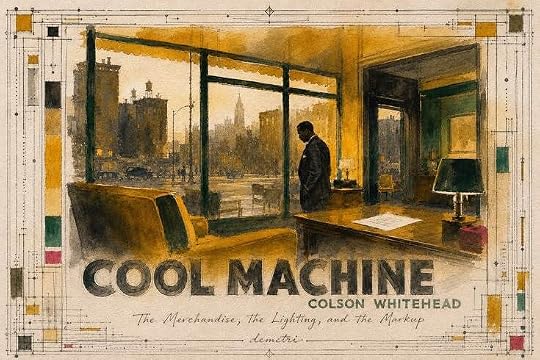
From #1 New York Times bestselling author and two-time Pulitzer winner Colson Whitehead, an exuberantly entertaining novel that brings to life 1980s New York in the magnificent final volume of his Harlem Trilogy
1981. New York City is beginning to emerge from financial ruin and decline, energized by rampant real estate development and a Wall Street unchained by Reagan-era predatory capitalism. Up in Harlem, successful business owner/master fence Ray Carney has just been named Sterling Furniture’s Dealer of the Month. When the banks won’t give his beloved wife Elizabeth a loan for her new travel agency, however, Carney gambles on one last heist, and finds himself entangled with a legendary criminal mastermind.
1983. To some, Carney’s friend and partner in crime, Pepper, is a stone-cold sociopath. To others, a top thief with questionable people skills. Either way, he’s feeling his age in his troubled gut and his aching bones. When he takes on a bodyguard gig as a favor to Elizabeth, he’s plunged into the alien territory of the East Village art and club scene. Luckily for him, whether you’re uptown or down, everyone speaks the same language of violence—Pepper is a native speaker.
1986. Carney has always been haunted by his inability to save his cousin Freddie. Now, twenty years after Freddie’s death, he has a chance to rescue Freddie’s son from the violent forces of the city. But coming out of retirement and teaming up with Pepper again will mean risking the safety and security he’s spent decades building for his family, with only one shot to get it right.
With his usual pitch-perfect prose, Whitehead paints a portrait of a city in transition, where shimmering skyscrapers rise to the heavens as displaced people huddle in abandoned tunnels below. In a dazzling display of protean imagination, Cool Machine roves all over the city, from Windows on the World to the Meadowlands, to show that in New York, and in the lives of Whitehead’s vivid characters, it’s what’s below the surface that reveals the truth.
COLSON WHITEHEAD is the #1 New York Times bestselling author of eleven works of fiction and nonfiction, and is a two-time winner of the Pulitzer Prize, for The Nickel Boys and The Underground Railroad, which also won the National Book Award. A recipient of MacArthur and Guggenheim fellowships, he lives in New York City.
Harlem Shuffle is the first book in The Harlem Trilogy. The second, Crook Manifesto, will be published in 2023.
A literary fiction trilogy is already a rare treat for readers, so one from an incredible two-time Pulitzer Prize winner is a glorious freaking gift. Cool Machine closes out Whitehead's Harlem Trilogy about Ray Carney, an NYC furniture salesman and master fence. This third story is set in the 1980s, when Reaganomics has been unleashed on the economy, and the country is lulled into thinking they have money to spend. In need of a loan to get his wife's travel agency off the ground, Ray makes one more questionable (and certainly illegal) business decision. How will Ray and his partner, the lovable sociopath Pepper, fare this last time around? —Liberty Hardy
“The only permanent tenants were hustle and impermanence.”
“The river Broadway, giver of life, drowner of hopes, channel of dark lights and bright shadows, a potholed majesty whose ever churning waters washed the sins of the day so you can start again tomorrow. “
This book concludes the story of Ray Carney. He owns a Harlem furniture store and is a part time fence for stolen goods. Ray is a wonderful character. He and his family evolve over the course of the trilogy. This book has some entertaining crime sequences, but what I liked most was the beautiful writing and the insightful presentation of the changes in New York City from 1981 to 1986. If you read the entire trilogy you will get a very interesting picture of NYC. I’ve enjoyed this trilogy and I’m sorry that it’s over. I also recommend the audiobook read by Dion Graham, who is terrific as usual.
This is another great novel by one of my favorites. This book ends the Harlem trilogy. Ray is now getting older but those criminal instincts are still there. New York City (loved the dedication) was changing during these novels and even more so in this last one. The three years are separated and seamless. The character of NYC in this book is my fav one of the series. Whilst Ray changes quite a bit, the city also changes around him. The writing is again very good. A fitting end to the series.
(Note: I received an advanced reader copy of this book courtesy of NetGalley)
In this last installment of his Harlem trilogy, Whitehead provides one final book that is as much about New York City as it is about the heists, betrayals, and other schemes that his characters get swept up in, and rather openly and unashmedly so. And it’s precisely why I enjoyed it as much as I did its two predecessors, because besides being a thrilling ride, Colson Whitehead yet again makes the city come richly and immersively alive in all of its fierce and gritty glory.
This is the third in Whitehead’s Harlem Trilogy and set in New York in the 1980s, though at three distinct time periods, 81, 83 and 86, which make up the three distinct parts to the book.
In common though, are the two main characters, Ray Carney, and his tough guy sidekick, Pepper. Whitehead’s strength is in his writing about the city which is at a particularly exciting time in its history; it makes the book. Otherwise, it lacks the freshness of Harlem Shuffle, which is by some way the best of the trilogy.
In 1981, the bank rejects Carney's wife Elizabeth for a business loan to start a travel agency. He then risks everything on a high-stakes heist, which brings him into contact with one of the city’s most renowned mobsters at a time of great mob violence.
In 1983 New York is just emerging from its economic struggles which raised the crime rate so significantly. Art, music and culture are thriving, as Pepper sees an unlikely opportunity in the East Village club scene. This third of the book does seem out of place, and a little forced.
In 1986 as Wall Street and the arts scene boom Ray Carney comes out of retirement to rescue his late cousin's son from the greed and violence of those who hold power in the city.
The middle section is of the least interest. If that were half its length, perhaps even shorter, the novel as a whole would have benefited.
All of the books in Colson Whitehead’s Harlem Trilogy have provided a vivid picture of the dramatic changes that occurred in New York City from the mid 1950’s to the mid 1980’s from the perspective of Ray Carney, owner of a furniture store who also fences stolen jewelry to augment his income. The reader is given an entertaining picture of Ray’s pride in being Sterling Furniture’s first black Dealer of the Month. Yet it is also clear that it is the underbelly of greed and graft that is rampant throughout the city - highlighting the best and worst about life in the Big Apple.
Ray Carney’s Final Appraisal “Cool Machine” closes Colson Whitehead’s Harlem Trilogy by asking what happens when the biggest score arrives with paperwork instead of a gun. By Demetris Papadimitropoulos | July 22nd, 2026
Ray Carney pauses inside the showroom’s gold-black hush, where furniture, paperwork, window light, and the city beyond the glass turn “Cool Machine” into a study of value, appetite, and the polite threat of the future.
Desire needs staging. In Ray Carney’s world, a sofa is angled beneath the right lamp, given a payment plan, and made to whisper to a tired couple that their apartment may yet become a home. Carney – furniture man, fence, husband, father, landlord, survivor – has spent Colson Whitehead’s Harlem Trilogy learning that the credentialed world and the back-room world share more vocabulary than either side admits. In “Cool Machine,” the final Carney account, that shared vocabulary starts to spark. This is not another backslide into the old room. It is a novel of appraisal: how objects are displayed, how want gets upholstered as taste, how theft becomes history once enough respectable people learn to say it without blinking.
Even before anyone pulls a gun, Carney is arranging himself for inspection. It is 1981, and Sterling Furniture has named him Northeast Regional Dealer of the Month, an honor so minor and so life-sized that Whitehead lets it glow with tender absurdity. Carney dresses for a phone interview, offers trade-magazine patter, and privately edits out the bloodier parts of his résumé. His pride is real, which is what makes the scene sting. Recognition, in America, has a way of arriving with a small insult folded inside the envelope. He has built a storefront, a family, an invoice of respectability, and he has kept the side door oiled.
Carney’s showroom honor glows with modest ceremony and private sting, turning a trade-magazine recognition into an image of respectability, performance, and the side door that never quite closes.
Much of the novel moves through three dated jobs: 1981, 1983, 1986. Uncle Rich, a legend dragged back from criminal folklore, pulls Carney into a scheme involving stolen sapphires, old betrayal, Grand Central’s understructure, the Waldorf, and Jesse Owens’s Olympic medal. Pepper, aging but still professionally allergic to foolishness, is hired to protect an art transaction and soon finds himself entangled with a stolen Fang Ngil mask. Carney, in the last movement, tries to save Robert, the son of his dead cousin Freddie, after Robert witnesses a mob killing tied to city contracts, cable money, and the sturdy municipal trade in favors. These are jobs with receipts, ghosts, appraisals, and zoning implications.
Each section asks what kind of theft has been dressed for sale. The first turns on a medal, an object whose afterlife of insult and glory far exceeds its market price. Uncle Rich does not want Jesse Owens’s medal because it is valuable in the simple sense; he wants it because value has been grotesquely misassigned. The second turns on an African mask whose passage through collectors and hustlers exposes the comedy, and worse, of people mistaking possession for stewardship. The third turns on a young man’s life, but also on Harlem property. By the end, the largest score is not a jewel, a briefcase, or a relic. It is a development offer, courteous and ravenous, arriving with numbers clean enough to frighten a man.
The first movement runs on locks, tunnels, bad timing, and professionals who regard amateurs as weather to be endured. Uncle Rich is less a man than a story wearing shoes again. He has the glamour of criminal expertise and the instability of someone who may have mistaken his own legend for a pension plan. Carney, meanwhile, is participant and auditor. He studies the job as if it were a sales floor with worse lighting: exits, pressure points, merchandise, liabilities, the customer’s real desire. The hidden route beneath the city becomes Carney’s route into reading it.
In the shadowed understructure beneath the city, Jesse Owens’s medal catches the cover’s gold like history being carried through a service entrance, small in scale but morally impossible to miss.
Restitution, in the Pepper section, is not announced as virtue. It has to be dragged through basements, galleries, clubs, cash, blood, and a stolen mask. Pepper enters the East Village art world with the contempt of a man who has seen more honest fraud in back rooms. He is hired by Wade Patterson, a collector swollen with taste and cash, and soon finds himself chasing Dee Void, reading LJ and Aaron’s repatriation work, and confronting a killer with a face-removal specialty that does not invite second appointments. The Ngil mask could have remained only a gaudy object in a gaudy plot. Instead Whitehead makes the hand holding it matter. Pepper, who is not built for speeches about repair, eventually sees the plain angle: sometimes making something less wrong is better than getting paid.
In the final movement, Freddie’s old wound returns in a new body. Freddie is dead, but Robert carries the old mixture of panic, charm, bad timing, and doomed improvisation. Carney’s rescue of Robert is not noble in any sentimental sense. It is practical, compromised, frightened, and overdue. The ghostly apartment visitations, with their sly holiday flavor, do not soften the plot so much as expose its emotional ledger. Carney failed Freddie. Robert gives him a chance not to correct the past – no one gets such charitable financing – but to make a different kind of payment.
Prose, here, is not decoration but detection. Whitehead’s sentences are comic with ballast, crowded but rarely slack, full of city evidence: graffiti, service corridors, storefront glass, bank forms, hotel guts. A line begins in furniture lore and exits through race, municipal decay, advertising, family shame, or the metaphysics of coffee tables. He writes as though every object in the city has a rap sheet and every slogan knows more than it should. The sentences keep making illicit little connections before the plot catches up: sofa to marriage, marriage to debt, debt to banks, banks to race, race to crime, crime to property.
At its best, that prose makes New York behave less like a backdrop than a working floor plan. Graffiti, subway platforms, hotel service corridors, showroom windows, car signs, club bathrooms, abandoned bars, safe doors, and office towers all move money, fear, or longing. This is not nostalgic grime arranged under amber light. It is a city of appetite and concealment, always learning new uniforms. A criminal with a pistol may be easier to understand than a banker with a form, an art collector with a provenance story, or a developer with projections. The gun is crude. The paperwork has manners.
Pepper remains one of the trilogy’s sharpest instruments because he is almost allergic to self-description. His body, by now, describes him. Stomach, back, fatigue, reflexes, pain: all of them file reports, most marked overdue. In the Ngil section, Whitehead lets Pepper’s aging become more than comic wear and tear. He is still dangerous, but danger has started charging interest. His decision about the mask works because it is not presented as conversion. Pepper does not become tender in any theatrical sense. He simply recognizes a rare clean angle in a dirty room and takes it.
Pepper and the Ngil mask are held in a green-black room of custody and consequence, where the question is not only what has been stolen but who has the right to keep holding it.
A lesser novel would oppose Carney’s furniture business and his criminal life as hypocrisy: respectable front, crooked truth. “Cool Machine” is shrewder than that. The business is not false. Carney loves the store. He loves quality, display, repair, customer satisfaction, and the little democratic glamour of a household object that lets someone imagine dignity. That is why his crookedness has weight. He is not a gangster pretending to be a merchant. He is a merchant who knows that the respectable economy has always needed side entrances, coded margins, and men willing to carry things after dark.
Digression costs the book something. Whitehead can turn any room into pocket sociology, any passing brand into a comic essay, any object into a theory of want. The abundance is dazzling, and sometimes one half-click too eager. The East Village material, for all its snap and perversity, occasionally arrives already sentenced: poseurs pose, collectors covet, avant-garde chatter reveals its own invoice. The satire is often exact, but the reader may sometimes feel the recognition landing before the scene has fully sprung its trap. The novel does not lack movement; it occasionally has too many brilliant errands.
Inside the triptych, that unevenness has a job. Each part enlarges the scale of taking: historical humiliation, cultural extraction, family danger, speculative possession. Still, the Pepper-centered section can feel like a freestanding blade lodged inside Carney’s final account. It fits the architecture, though not always the pulse. Part One and Part Three press directly on Carney’s idea of himself. Part Two widens the lens. The widening matters, but it loosens the Carney wire.
Most revealing is the recurring fantasy of getting out. Carney wants out of crime. Green wants out into the suburbs. Uncle Rich wants one last underworld flourish before disappearance. Pepper wants out of obligation, or perhaps out of digestion. Robert wants out of the city altogether. Even New York wants out of its old body, shaking off fiscal ruin, graffiti, vacant lots, and busted storefronts in favor of glass, cable, finance, and development. The question is whether “out” is a place, a class position, a moral condition, or just another sales pitch with nicer stationery. Exit, too, has closing costs.
A doorway, a young man, and Carney’s belated care turn the Robert/Freddie wound into a muted study of family debt, fear, and the cost of making one rescue work.
Its claims on the present arrive through the side door, without placards. “Cool Machine” touches gentrification, art restitution, Black access to capital, and infrastructure graft because those pressures arise from the plot, not because the novel has been decorated with relevance. Elizabeth’s denied business loans are not an inserted talking point; they are a domestic pressure that helps push Carney toward dirty money. The Ngil mask is not a seminar object; it changes Pepper’s behavior. Van Wyck Realty’s offer is not a wink from the present; it is the book’s final and most devastating renovation of theft.
The sharpest gift “Cool Machine” gives Carney is not innocence but a merchant’s eye trained into judgment. He knows that things do not simply possess value. They are appraised into value through placement, story, scarcity, desire, intimidation, memory, and paperwork. A medal can be worth less than its history and more than anyone has the right to own. A mask can be merchandise to one person and a wound to another. A radio sign can be a plea, then a dare. A building can be a family asset, a neighborhood anchor, or a developer’s beachhead, depending on who is looking and how far ahead his money can see.
In a clean, pale office light, forms and offer sheets become the dangerous objects, showing how “Cool Machine” shifts its threat from guns and tunnels to desks, signatures, and respectable rooms.
Read beside a few ancestors, the novel’s kinships sharpen without explaining away its peculiar machinery. Chester Himes’s “A Rage in Harlem” offers antic Harlem criminal voltage; Walter Mosley’s “Devil in a Blue Dress” clarifies the Black operator moving through hostile economies of legitimacy; Donald E. Westlake’s “The Hot Rock” shadows the comic mechanics of the job that keeps changing shape. But Whitehead is less feverish than Himes, less detective-shaped than Mosley, and more intent on history’s receipts than Westlake. His distinction is not the caper alone. It is the amount of social information he can smuggle inside a joke before the joke reaches the curb.
Old New York, in a lazier historical novel, would sit still for décor. Here the details – cable companies, art scenes, real estate speculation, municipal contracts, changing storefronts – alter what the characters can see and what they can plausibly want. Here, a heist is also a floor plan. It is a way of moving through service corridors, the floor plan power prefers when it wants privacy.
Pressed too firmly, Whitehead’s house joke – everyone has a hustle – can flatten distinctions. A mobster, a collector, a banker, a fence, a developer, and a public official may all enter crooked arrangements; they do not foul the room in the same way. The novel usually knows this. Occasionally, its satirical confidence gets there a beat early. The effect is not fatal. It is more like a display window in which every item has been handsomely arranged, though one or two could have remained in the stockroom.
Of the trilogy’s three volumes, “Cool Machine” feels least like discovery and most like culmination. That is compliment and caveat together. It does not reinvent Carney. It refines the pressures around him until his old dilemma – am I straight, crooked, or some city-bred third thing? – can be answered only by expanding the scale. By my measure, the novel lands at 86/100, which corresponds to 4/5 stars: a very strong finale, superb at the level of sentence and system, limited not by thinness but by overabundance, not by lack of intelligence but by the occasional glide of its own fluency.
Under all the jokes, “Cool Machine” is about the city’s talent for laundering appetite into progress. Street criminals take things. Collectors preserve things they should not have. Politicians route things. Developers project things. Furniture men sell things, and sometimes fence them, and sometimes see too clearly that the difference between a showroom and a front is less structural than atmospheric. Whitehead’s best joke is that Carney’s chosen profession, so square and upholstered, may be the perfect training for seeing through American legitimacy.
Late in the book, Van Wyck Realty’s offer for Carney’s buildings makes the old criminal dream look almost quaint. Here is the jackpot without the getaway car, the stolen future without the broken glass. The number is enormous. The pitch is rational. The city is changing; men who can read the change will profit; men who cannot will be filed under local color. Carney, who has spent decades understanding surfaces, recognizes the shine. He also recognizes the hook beneath it.
Harlem’s buildings stand under black-gold pressure as the future arrives as an offer, making property, escape, and temptation feel like one last appraisal.
Only a little of this settles the nerves, and even that comes with a bill. Robert survives by leaving. Pepper returns to his own life, patched but not transformed. Elizabeth and Carney remain bound by love, exasperation, enterprise, and the practical weather of marriage. The children have their own orbits. The store faces turnover. Harlem’s future is already being appraised by men who know how to make hunger sound like opportunity. There is no absolution, only a quiet after the offer has been made and before the customer decides what he can afford to lose.
So the last image returns Carney to appraisal, not escape. He stands before the future as he has stood before sofas, safes, stones, masks, medals, customers, gangsters, and fools: measuring finish, weight, cost, angle, story. “Cool Machine” does not grant him purity, which would insult everything it knows. It grants him recognition. The city has returned with one more pitch, dressed better than the last, and Ray Carney – dealer of the month, fence of the old school, husband of Elizabeth, son of Harlem’s crooked instruction – can see the merchandise, the lighting, and the markup.
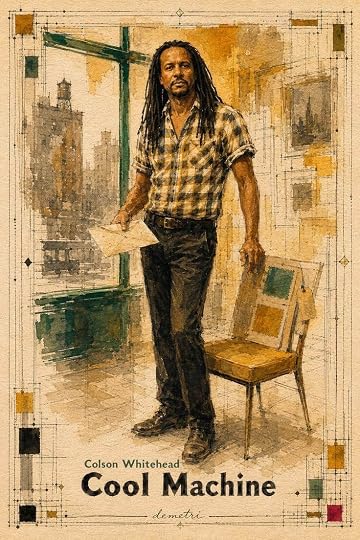
Colson Whitehead Portrait Inspired by “Cool Machine” A literary watercolor portrait of Colson Whitehead filtered through the novel’s world of showroom light, paperwork, Harlem geometry, and the cover’s black-gold-green atmosphere.
“Cool Machine” Cover-Palette Swatch and Usage Sheet
“Cool Machine” Proportional Wash Map
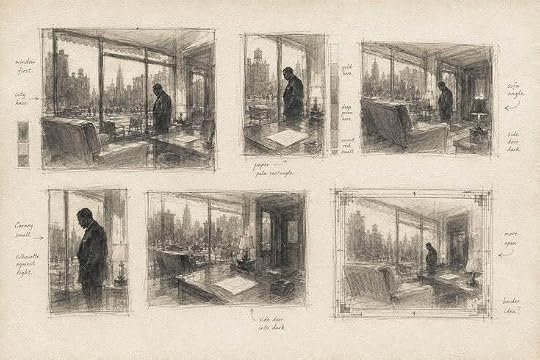
“Cool Machine” Compositional Thumbnail Sheet
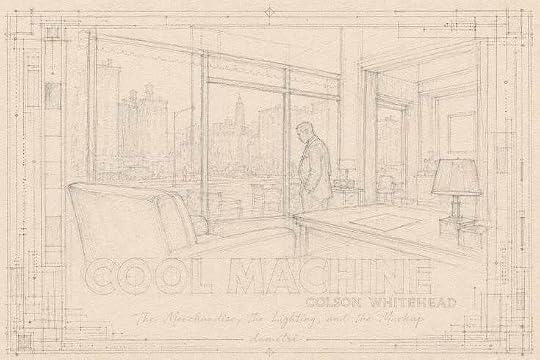
“Cool Machine” Faint Graphite Underdrawing
“Cool Machine” Pencil and First Wash Stage
“Cool Machine” Outer Border Details Study
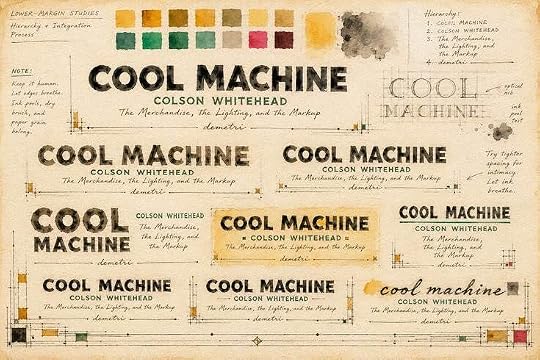
“Cool Machine” Lettering and Signature Study
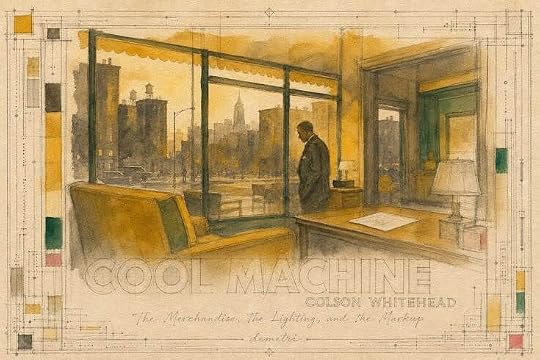
“Cool Machine” Nearly Complete Watercolor Stage
“Cool Machine” Detail Crop Study
All watercolor illustrations by Demetris Papadimitropoulos. Watercolors are done on 140lb vellum and then scanned into the computer using an Epson scanner. From there, they are finalized in Procreate. All art and opinions are my own.
Cool Machine is the final book in Colson Whitehead’s delightful crime trilogy following the life and times (and crimes) of furniture salesman and fence Ray Carney. The first book, Harlem Shuffle, had three short stories set in the 1960s. The follow up - Crook Manifesto - brought Ray into the 1970s. Cool Machine follows the same pattern. Three individual (but related) stories set in 1981, 1983 and 1986, each one zeroing in on a different aspect of crime in New York.
The first story – City at Night – plays out as a heist. In the summer of 1981, Ray ends up falling in with notorious criminal Uncle Rich, and despite his better judgement agrees to help him with a couple of jobs. This is despite the fact that Ray is usually off the tools - he makes his money as the middleman between criminals and those who can offload their goods. This story plays out with rival gangs, secret railway tunnels and an audacious heist of some valuable and significant memorabilia. The second story – Here Comes Sue Simmons – is the spiritual follow-up to Nefertiti T.N.T., the second story in Crook Manifesto. As with that story, the focus is on Ray’s cousin Pepper, in this case trying to track down a suitcase full of stolen money and a valuable African mask while also being tailed by a dead-eyed, violent assassin. The third story – No Radio – brings the focus back to Ray as he tries to help his nephew who is on the run after witnessing a mafia killing. Each of these three stories is a gem in itself but there are plenty of callbacks to earlier characters and events producing a feeling of richness that extends beyond the page.
Ray is once again at the centre of these stories and is a complex character. He has his official side – running a successful furniture business in Harlem. To the point where he is being lauded as Salesman of the Month in the first story and featured in the company newsletter. Ray is a family man now with two grown children who are both on the straight and narrow. But he also has his criminal side. Something that Uncle Rich acknowledges and draws on:
Yes, the fence was working out fine. A cool machine. It was in the man’s blood. Ruthless and cunning, even if he didn’t want to admit it to himself.
And in the two stories in which he features most, Ray has to draw on those qualities to get through.
Once again, the other main character of these stories is New York city itself. And in the 1980s New York was a boom town, bursting with new building, full of yuppies but also prone to corruption. Whitehead continues to chart the way that the city and its people were changing particularly through Ray’s eyes and his concept of “churn”.
...Carney came to recognise churn in the streets and avenues, in the very structure of the city itself. Tenements and townhouses went up, were demolished, were replaced by new buildings, which were replaced in turn. Ethnic tribes arrived, struggled, moved on, were replaced by the next group of strivers… The enclaves and ghettos rose, fell and were reborn.
The most amusing aspect of this comes from the title of the third story which refers to the stickers that people would put on their cars to alert would be thieves that they had taken their radio with them. Suffice to say none of the characters who comment on this (and all of them do, including the ageing Mafia hitman) are complimentary about those people.
Cool Machine is an enjoyable and triumphant conclusion to Whitehead’s Harlem trilogy. Whitehead once again delivers three short, sharp and crime stories that take readers around New York and each build to tense conclusions. But overall this is another love letter to a complicated city reflected in the life and adventures of a complicated character.
It is 1981: Ray Carney, full-time businessman and part-time fence, has been trying hard to walk the straight-and-narrow as he restores his furniture store operation from a devasting fire. However, the need to help his wife Elizabeth with a sudden cashflow problem in her own business finds Ray getting involved in a few more heists, where things quickly go deadly wrong. It is 1983: Pepper, Ray’s long-time friend, protector, and partner in crime, has been engaged as a bodyguard for Elizabeth’s most important client. The assignment soon turns, throwing Pepper into an unfamiliar world involving the city’s avant-garde art scene, the search for stolen African artifacts, and a series of gruesome murders committed by a deranged hitman. It is 1986: Ray reflects on his life and career, still lamenting the inability to save his cousin Freddie from an untimely end some two decades earlier. When Freddie’s son Robert goes missing under suspicious circumstances with Mafia connections, Ray gets a chance for redemption and enlists Pepper’s help to solve the mystery.
So go the basic plots of the three novellas comprising Cool Machine, the concluding book in Colson Whitehead’s Harlem Trilogy. Preceded by Harlem Shuffle, which was set in the 1960s, and Crook Manifesto, set in the 1970s, this volume continues the exploits of Ray and Pepper as they age somewhat gracefully into a new decade. Beyond chronicling the exploits of those two human protagonists, though, the special brilliance of this series is the way the author elevates the city of New York itself to the status of a main character. Indeed, Cool Machine finds the city emerging from a decades-long malaise of economic deprivation and physical decline to a time of hope and prosperity—from Wall Street to the Bronx, if a little unevenly distributed—ushered in by Reagan-era policies. This is the New York City of Tom Wolfe’s The Bonfire of the Vanities, warts and all, but told from the point of view of people living well north of Central Park.
Having read with considerable enjoyment the first two books in the trilogy, I was really looking forward to this final installment. Happily, nothing about Cool Machine was in any way disappointing. In telling this part of Ray and Pepper’s saga, the author maintained a stylistic symmetry—the story is packaged in three sections set a few years apart within a single decade—that I found useful in creating a sense of continuity across the entire project. Also, as in Crook Manifesto, the first novella in this volume features Ray’s story, while the second focuses on Pepper’s activities, and the last section brings Ray and Pepper together for a final collaboration. That was a satisfying division for me because, although I suspect that Ray was meant to be the main protagonist with his moral dilemmas creating the dramatic tension, I found Pepper to be a far more interesting character. As always, Whitehead’s writing is sharp throughout and the crime capers presented here are even more interesting than those in the previous two novels. This is an easy book to recommend, particularly for those who are already invested in the series.
Colson Whitehead es un nombre que siempre está presente en las listas de recomendacioens literarias. Recuerdo haber escuchado por primera vez de él cuando publicó su novela “El ferrocarril subterráneo” y pensar que algún día lo iba a leer, pues había quedado intrigado con la sinopsis y las opiniones de otros lectores.
Cool Machine es el cierre de la aclamada Trilogía de Harlem de Colson Whitehead. Ambientada en la vibrante, caótica y cambiante Nueva York de los años 80, la obra se divide en tres secciones cronológicas (1981, 1983 y 1986). A través de estas páginas seguimos los pasos de Ray Carney, un comerciante de muebles que no logra desprenderse del todo de su faceta como "perista" (vendedor de mercancía robada), y su temible pero fascinante socio, Pepper. Desde atracos que salen mortalmente mal debido a líos mafiosos, pasando por la escena artística del East Village y el tráfico de antigüedades, hasta una búsqueda desesperada por salvar al hijo de un viejo socio, la novela funciona como un recorrido criminal por las entrañas de una ciudad que transita entre la decadencia económica y la opulencia de la era Reagan.
Aunque la premisa es sólida, el libro sufre un bajón fuerte en la segunda sección (1983); todo el viaje de Pepper por el submundo del arte moderno se siente estirado, forzado y desconectado del alma de la trilogía. Además, Whitehead abusa de la exposición pesada, utilizando diálogos poco naturales para refrescarle la memoria al lector sobre eventos de los libros anteriores o para explicar tramas de fondo de manera muy tosca.
Por último, me hizo falta ver un poco más de emociones; Ray Carney parece extrañamente plano o indiferente ante traumas brutales, como presenciar tiroteos y muertes a su alrededor, lo que me impidió conectar profundamente con su dilema moral.
El punto fuerte e incuestionable del libro es la ciudad de Nueva York. Whitehead tiene un talento descomunal para convertir las calles, los barrios y el ambiente ochentero en un personaje vivo que late, cambia y respira en cada página.
Por otro lado, Pepper se roba el espectáculo por completo. Es un personaje brutal, peligroso y lleno de matices que resulta mucho más magnético e interesante que el propio protagonista. Las tramas criminales, cuando entran en acción, están llenas de giros ingeniosos y cliffhangers al final de cada capítulo que te obligan a seguir leyendo. La estructura simétrica del libro y el ingenio de la prosa demuestran que, a nivel técnico y de estilo, Whitehead sigue siendo un autor muy dotado.
En resumen, Cool Machine es un libro entretenido, y según he escuchado de otros lectores, digno para la trilogía, pero se queda a medio gas si lo comparamos con sus predecesores. Precisamente por esto, y tras haberle dado una calificación de 3 estrellas, me he quedado con muchas ganas de probar con otra novela del autor en la que su narrativa brille con todo su esplendor literario. Mis próximas lecturas de Whitehead serán, sin duda, obras que he visto por años en mis recomendaciones de Goodreads como Los chicos de la Nickel o El ferrocarril subterráneo.
Cool Machine, the third book in the Harlem Trilogy, begins in 1981 when Ray Carney is doing better than ever. His furniture store is thriving and he is about to be featured in a respected trade publication. His wife’s travel agency has also taken off. But his children have left home, he has experienced losses of people he loved, and New York is changing faster than he can absorb.
And then there’s that other Carney, the fence with a foot in the jewellery business. He’s no longer a player, but it’s a part of himself he can’t quite let go. So when a local legend is rumoured to be back in action, Carney can’t resist getting involved.
So begins the first of Cool Machine’s three linked novellas. The second, and perhaps the most interesting, features Pepper, a key secondary character in the earlier novels, who gets to step forward and take the lead in his own story. Pepper is an appealingly amoral criminal with an interesting perspective on life (and in this case the art world). The third shows the two men moving on as they age and reflecting on their futures (though I started when I realised Carney is only 55!).
I’ve read all the books in the Harlem trilogy and this has the same beautiful writing and wry humour. At its heart is New York, as Carney observes the city’s social and cultural changes, each book featuring a different decade. His experience and family connections gives a particular insight into the hierarchies and histories of Black Harlem, from exclusive members’ clubs to political activism to criminal gangs.
I also love the way that Carney genuinely does care about furniture! He’s not an undercover criminal masquerading as a small business owner, both elements of his character are real and co-exist in a conflict that many of us will recognise (albeit in a less dramatic form).
It’s sad to say goodbye, but Cool Machine is a great end to the Harlem trilogy.
A splendid finale (apparently) for the author’s entertaining Harlem trilogy sees Ray Carney and Pepper getting older and maybe a little wiser in the 1980’s, though with their customary swerves onto the wrong side of the line.
Once again, there are three stories spread out across several years, this time in the Reagan era for the US and the “broken windows” era for New York. In the first, Carney gets drawn into accompanying Uncle Rich on his last two jobs: one for the money and one for himself. Next, Pepper becomes a bodyguard for an out of towner looking to buy an illicit piece of African art. In the elegiac finale, with both Carney and Pepper looking at the sunsetting of their careers, Carney’s cousin’s son has disappeared and Carney feels an obligation to help him.
As with the previous novels, the plots are simple and often entertaining hooks for many a discursive ramble into the past as well as the present (in the novel) state of Harlem, New York, and its Black population. As skyscrapers shoot up, the city seems invigorated and renewed, but who gets the benefit and who pays the price? These excursions give the novel its rich depth while also giving more nuance to Carney and, especially, Pepper.
I was sad that there was a little less about Ray’s furniture store which has been a wacky pleasure in the previous novels but it was at least partly compensated for by the development of his wife’s travel business. There are fewer colorful street gangsters (with their Runyonesque names) and more cold-eyed killers and sleazy politicians, but I guess that’s the sign of the times.
This sadly seems to be where the author wants to leave Harlem and Carney, but I highly recommend that if this sounds appealing to you to start with Harlem Shuffle and the 1960’s.
Thanks to Knopf Doubleday and Netgalley for the digital review copy.
I enjoyed the first novel in the Harlem trilogy, the second not so much, and this one even less. I just felt that the concept had grown old, and I gained nothing in reading about yet more of Ray Carney’s shenanigans. Set in 1981 New York, Cool Machine follows Ray, a furniture dealer in Harlem who is also reluctantly and intermittently a fence for stolen goods. The city is changing fast, fuelled by Reagan-era capitalism, real estate speculation, and widening inequalities and Carney is trying to stay respectable while the world around him grows more ruthless. At the start of the novel, Carney appears to have achieved a measure of stability: his business is thriving, and he is committed to going straight. But when his wife, Elizabeth, is denied a bank loan to start her own travel agency, Carney is pulled back into the criminal underworld for what he hopes will be one final job. This decision draws him into increasingly dangerous territory, involving high-stakes heists, powerful criminal figures, and the shifting economies of 1980s New York, where crime, business, and politics are often intertwined. Along the way, familiar characters return, including his associate Pepper, whose role deepens as the story unfolds. The novel moves through a series of interconnected episodes showing Carney repeatedly trying and failing to separate his legitimate life from his criminal entanglements. By the end, the novel becomes not just a crime story but a portrait of Harlem and New York at a particular time and place, and that aspect I found interesting, but essentially by then I had become bored with Ray and his escapades.
Cool Machine (The Harlem Trilogy #3) by Colson Whitehead Thank you to Doubleday for the ARC 💛 ⭐ 4 stars ⭐⭐⭐⭐
This was such a sharp, gritty, and satisfying close to the Harlem Trilogy. Colson Whitehead once again makes New York feel alive on the page, not just as a setting, but as a living, scheming, changing force.
Ray Carney is trying to stay respectable, or at least respectable enough, but of course one last job has a way of becoming something much bigger. Then there’s Pepper, who might honestly steal the whole book. He is brutal, strange, aging, dangerous, and somehow endlessly compelling. Together, their stories capture a city shifting under their feet, full of money, violence, ambition, and ghosts.
I loved how the book moves through the 1980s in sections. It gives the story shape while showing New York changing decade by decade, from Harlem to the East Village to the shiny towers rising above everyone left behind. 🏙️
What I Loved • Whitehead’s portrait of 1980s New York • Pepper, who remains fascinating and terrifying • The crime capers felt tense, smart, and layered • A strong sense of closure for Ray and the trilogy
What Didn’t Fully Work for Me • Some exposition felt a little heavy • A few emotional moments could have hit harder
Overall, Cool Machine is stylish, entertaining, and full of bite. A fitting final ride through Whitehead’s Harlem, where everyone is hustling, history is always watching, and the city never stops moving. 📚✨
Ray Carney has just been awarded Sterling’s furniture dealer of the month and life is good in his part of Harlem. The year is 1981 and he is looking to expand his business with his wife Elizabeth, who wants to own a travel agency, but the banks don’t want to lend them money. So Ray finds himself going back to his old life and doing one final heist with a legendary criminal. Two years later Carney asks his friend Pepper, a renowned sociopath, to do a job for him on behalf of his wife. The job is a gig as a bodyguard in the East Village. It’s a bit out of his comfort zone, but violence isn’t, and when it comes down to it. He’s happy anywhere in New York City if he has to be the aggressor. Three years go by, and Carney is still plagued by the loss of his cousin Freddie. So when he has a chance to extricate Freddie’s boy from the violent situation, he knows it is time to step up. With the help from the notorious Pepper, Ray Carney will have risk it all if is to get out of this, and survive with everything he holds dear. The Harlem Trilogy is one of those bodies of work that comes along once in a generation. Colson Whitehead has a writing style that’s pure gold. His use of language and the characters he writes about are truly remarkable. This particular book in the trilogy is a showcase of 80’s New York, and the author captures the atmosphere and essence perfectly, you almost feel like you have gone back in time. This is one of the best books I’ve read this year and highly recommend it.
Cool Machine is Colson Whitehead's third novel in his so-called Harlem trilogy. The first novel, Harlem Shuffle, was like a lightning bolt out of the blue--both a departure for the author and a wildly compelling plot with great writing. Crook Manifesto, the second in the series, was almost as good. But is there a problem with going to the well too often? His new book, Cool Machine, shows Carney (the protagonist in all three novels) as an established pillar of his Harlem community--a trusted,. dependable furniture store owner. But increasingly, Carney wants to go deeper into his side-vocation--that of a fence, handling loot stolen in New York during various heists. Unlike in the earlier novels, he actively pursues criminal activities, often at risk to himself and possibly his family.
But the execution of Cool Machine feels lacking somehow. The prose doesn't sparkle quite as often, Carney remains oddly impervious to the emotional trauma of being held up at gunpoint (and witnessing the deaths of others), and some of the writing feels slapdash. Also, there's a lot of exposition, both relating to the earlier novels, and in the voices of different characters, many of whom provide information in a blunt manner, i.e., not really how people would speak. It's jarring to read at times, and diminishes the novel's authenticity.
Colson Whitehead remains a wizard with language, but Cool Machine inevitably lacks the freshness of the great novel, Harlem Shuffle.
Colson Whitehead has such confidence in presenting the voices of his characters. I can see how a lot of people might think how Carney goes on about contemporary furniture is boring. But the character is deeply interested, and I just go along with him because Carney as a character is so alive on the page. So I guess that now I am a person interested in contemporary furniture? Thanks, Mr. Whitehead!
He’s endlessly inventive, spinning a story that’s full of complexity, taking you along with it to wholly unexpected places. His storytelling reminds me a bit of Louise Erdrich’s, a little of Dickens’, and this is high praise.
I enjoyed this third in the trilogy because it was so well written and I liked spending time with Carney and Pepper again. It’s not really as good as the first two in the trilogy- it sags in the middle- but it’s still pretty good.
Am I going to have to read The Nickel Boys now? I just couldn’t when it came out. My son Henry was just the age of those boys in the reform school-hell and we’d just gone through DOTUS’s family separation policy. I was reading an ARC of Underground Railroad right when the shitbag was elected in 2016, and it was great, but it destroyed me. I was too raw and afraid when Nickel Boys came out. But, Colson Whitehead is an incredible writer, and Henry’s older now, and my friends on the BookRiot podcast (who don’t know they’re my friends) say it’s his best book.
I've been looking forward to this book for a while. Thanks to Net Gally for an ARC.
If you've read the first to books of the Harlem Trilogy, little will surprise you here. It's a new decade - the glamourous, neon-1980s - and whether they want to be or not, Carney, Pepper, et al. are still in the churn.
I loved the first two books in this series and reread them so I was ready for this read. The same things I love in the first two - the Mosley-esque crime, watching the characters change over time, and meticulously detailed time period recreation, the humor - are all present here.
Through 81 chapters spread out over three novels, Whitehead has accomplished a fully realized picture of people growing and changing (or staying the same) over time in a city that relentlessly changes. I think he lands the conclusion. Altogether these books are, for this reader, a huge accomplishment.
Seven bazillion bonus stars for referencing Richard Edsen - RICHARD GODDAMN EDSEN - in this book. That reference - to the first drummer of the band Sonic Youth (and parking lot attendant in Ferris Bueller's Day Off) - is beyond obscure, but made this reader laugh out loud with joy and recognition. I think there's an earlier novel in which Whitehead references SY in the acknowledgements; in a recreated world so rich with historical detail, this bit reminded me of the specificity of Whitehead's NYC. So real you can touch it - if you dare.
Eds. Note: Future Matt, this was not your best reading experience. It took you a while. The detail in these books add up over time, and reading them all in a row (this last one minus wonderful audio) was hard, a chore even. You were reading TJ Klune for an author visit. You started the Parable of the Sower WHILE reading this. It's May and - new dishwasher aside - you are tired of the constant churn in your world, too. Carney's getting older - you aren't doing a damn thing different. Reread the whole trilogy - better spaced out, less ARC pressure - in a year or two.
DRAFT. As part of a reading group for a book festival, I had the privilege of reading the ARC. Typically. I avoid reading anything that might have spoilers, including even dust jackets and publisher’s notes. After reading several chapters, I glanced at the cover and realized (duh) that this was the third in the Harlem trilogy. I looked online to see if I should read the first two before finishing this book. A few notes said to capture the full arc of the main character it was best to read all three. With that in mind, I put Cool Machine aside and read the first two books.
Whitehead‘s writing is absolutely extraordinary. The story begins in the 1960s in a very gritty youthful and rough around the edges New York City. As the main character, Ray Carney develops and grows reflecting on his life and lessons. Cool Machine picks up on the story in the 1980s. As the main character has aged and mellowed, so does the tale with a bit less violence and grit than in the first two books. Reading this saga reminds me of listening to bands that I have liked very much that astounded me with their very first album, but grew and matured into a more robust and refined experience. What an incredible writer and what a gift to establish cadence, language, and vignettes that matches and polishes the arc of the characters.
The final book of this excellent trilogy sees Ray Carney, furniture store owner and more than occasional fence growing into comfortable middle age as NY changes - yuppifying - around him and force of nature Pepper gradually succumbs to human frailties.
The novel has an elegiac tone, calling back previous heists in the series, with Carney beginning and ending the novel, while Pepper has his own story in the middle section of the three cons that make up the book. In the first, Carney needlessly gets involved with a legendary heist man and realises his criminal instincts and competence are part of his make-up. The second focuses on Pepper, being a shaggy dog about an old mask and a 'melancholy hit man'. In the third Carney and Pepper have settled into lawful existence but try to save a kid accidentally mixed up in a mob murder. They help him avoid the criminal life that fate had in store for Carney and Pepper, and we realise that maybe, just maybe, despite the gripes about change, things have got a little better.
It's a misdirection of a crime novel, sucking the reader in with elaborate heists and towering characters, while sneaking in thoughts about getting older, knowing yourself and the vibrant, constant reinvention of the big apple.
Cool Machine This story, the third and last in a series about Ray Carney, a Harlem business owner and part time fence. Harlem and New York City had changed in the last decade. The city had experienced financial problems and there was destruction in many parts of Manhattan and the Bronx. There were references to the former days when Harlem was a hot spot for entertainment in NYC. As the story progressed there are signs of rebirth in the city.
The first story took place in 1981. Carney’s wife Elizabeth wanted to expand her travel agency but was unable to get a loan from local banks. So he got involved in a big heist with some of his cronies to earn the money.
The second story took place in 1983. Elizabeth had asked Pepper, one of their criminal friends, to act as a bodyguard to someone hoping to buy a stolen African mask.
The final story takes place in 1986 when Carney’s cousin’s son witnessed his boss being gunned down. The boy realized that it was a mob hit and asks for Carney’s help hiding from the gangsters.
I enjoyed the series and the characters. I lived and worked in NYC in the period covered by the story. The book brought back memories.
I received this ARC from the publisher and Edelweiss in exchange for an honest review.
Our 3rd meeting with Carney, furniture shop owner and fence, in New York in the 80s. Carney’s business (and his wife’s) is a success, his children have left the nest and his life is at a crossroads.
Mirroring the previous books in the trilogy, the book is divided into 3 parts, one focusing on his associate Pepper, and 3 different years across the decade. New York is changing and demands change of its inhabitants, including the crooks and lowlifes.
As always, the writing is good and Whitehead surely knows how to tell a story. The first section, where Carney teams up with a legendary thief, is the weakest, lacking narrative drive. Pepper’s section is the opposite and one warms to Pepper, getting too old for the game but clear in his principles and his sense of self.
The third returns the focus to Carney (with a brief cameo from Pepper) as he takes on the mob in defence of a family member, bringing back painful memories.
A strong finish to a trilogy which traces the social and political history of New York City over 3 decades.
(I was given an advance copy in exchange for an honest review)
I had to read this book having read the previous two episodes of the Harlem trilogy. In this episode we catch up with the same characters across three separate timelines in the 1980s - 1981,1983 and 1986. In 1981 Ray involves himself in a final heist which expands his past role as fence into something much more risky. In 1983 Pepper acts as a bodyguard for a client of Elizabeth's travel agency. He is not a well man and whilst in the men's room his client is robbed and he is determined to make things right. In 1986 Ray is called upon to save his nephew from a very difficult situation.
The three timelines read as three separate storylines. They are somewhat tied up in 1986 mainly because there is an update on all the main characters and what they are doing now. The furniture shop doesn't play such a central role in this book, but it still pops up throughout. I love this, it feels like a very unique setting in a book series.
I also particularly like that the story is told from the point of view of the criminal. The police and the law are there in the background but this is not their story.
The writing is superb and I enjoyed being taken back to a non digital era. I guess these crimes would play out somewhat differently now! It feels right to retire these characters now, although I'm a bit sad there won't be a fourth episode. It would make a great TV series.
Many thanks to NetGalley and the publisher for an early copy of this book in exchange for an honest review.
This read was nostalgia a trip for me...I spent time during my late teen and early teen years visiting in NYC, and Colson Whitehead has created a novel that has so many references that feel familiar to me. The first two books in this trilogy felt like "historical fiction" in a sense, but this one was suddenly, for me, contemporary. Mr. Whitehead's writing is clean and sharp...he never pulls a punch, as the saying goes. This book is no different. I enjoyed seeing where Carney was in his life, and learning more about his wife, Pepper in this book, and I liked how the city seemed like a character that sprawled all over the storyline. While I don't think a reader needs to have read both of the previous books, at least reading the first, Harlem Shuffle, probably helps the reader feel more invested in the characters and knowing what is happening to them. Plus, Harlem Shuffle is a good read. I'm a little perplexed about telling more about the book without adding spoilers, so I will just say that like a rollercoaster, it took me on a ride.
My thanks to Doubleday and NetGalley for the eARC of this book. All opinions are solely my own.
A special thanks to DoubleDay for sending over a galley! What a privilege!
3.5 stars! Cool Machine is part three of Colson Whitehead’s Harlem Trilogy. I’ll admit, I didn’t read part two (Crook Manifesto), but you don’t need to in order to understand this book. Like the other installments, we follow Carney and familiar faces as they navigate the highs and lows of a crime-ridden Harlem/New York City—thieves, fences, crooked politicians and cops, and the pressure of making a name for yourself, for better or worse.
I really enjoyed catching up with these characters, now in their 50s and 60s, as they reckon with being pulled back into the criminal world, sometimes unknowingly. Themes of “one last job,” health scares, and reconsidering past choices added depth and realism. I especially loved reading about NYC as someone who lives there. While the pacing was occasionally slow as Whitehead filled in backstory, the writing was strong throughout, making this an overall solid and worthwhile read—as expected from Whitehead.
A solid end to the Harlem Shuffle trilogy, Cool Machine follows Ray Carney through the ups and downs of the 80s as he flirts with more dangerous jobs in his sideline, goes straight, and gets pulled into the underworld again. Readers reunite with some familiar characters and are introduced to some new ones as well. And, of course, the book is all about atmosphere with 1980s New York (and Harlem, specifically) playing a huge role.
One thing to note with Cool Machine is that there is not one central plot point driving the narrative forward. Something will resolve and there will still be more book left. This initially had me off kilter, but as the narrative progresses you see how everything fits into the arc of Carney’s story. Still, this can be emotionally exhausting as a reader. Also, the abrupt changes in perspective that happen throughout the book can feel jarring. Even with these factored in, it was an engaging and enjoyable read.
Thanks to Netgalley and Doubleday for this advance review copy.
I hadn’t read the previous two books in this series set in New York but I don’t think it really mattered as the book works as a standalone. However it was so good it made me want to read the first two. The main character is Ray Carey, owner of a furniture showroom and occasional fence for thieves. His friend Pepper is a thief and the other main protagonist in the story which is set in the early 1980s. Both Carney and Pepper are drawn into schemes through acquaintances which put them in extreme danger and they need all their skills to succeed. Both are ageing black men and would prefer a quiet life but they have a strong sense of justice and an urge to help others. Carney tries to help a friend recover Jesse Owen’s Olympic gold medal while Pepper tries to find a stolen African mask in order to return it to Africa in restitution. I was gripped by the plot and the characters right to the end. Thanks to Netgalley and the publisher Penguin Random House for an advance copy in return for an honest and fair review.