STALIN'S APOSTLES is a radical new look at the way five people allowed their obsession with Communist ideology to overshadow any sense of morality or decency - or loyalty to their country. Why did these gilded, charming men, blessed with brains, and beauty and opportunities, choose to betray their country? Using recently declassified files, STALIN'S APOSTLES explores as never before the treachery of Donald Maclean, Guy Burgess, Kim Philby, John Cairncross and Keeper of the Queen's Pictures Anthony Blunt, all radicalised while at Cambridge University in the 1930s. Their clandestine supply of British and US intelligence material gave Stalin an inside track on US and British decision-making until the implosion of the spy-ring in May 1951. There was barely a secret, barely a decision made, that Stalin did not know about, thanks to his Cambridge spies, and his networks in the United States. The Five became tools in Stalin's imperial scheme, responsible directly and indirectly for the death of thousands of men and women fighting against Soviet domination. Shielded for so long by the British Establishment, four of the five were never prosecuted for their crimes. As STALIN'S APOSTLES reveals, they were exposed as much by their own incompetence as by forensic investigation by the CIA, MI5 or MI6. And in time another dictator emerged as ruthless as Stalin, but with an even greater desire to establish a Russian Empire that would threaten Western democracy. The legacy of the Cambridge Five is not only in the graveyards of eastern Europe, but at the heart of Putin's Kremlin.
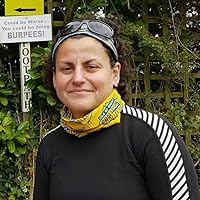
Antonia Senior is a writer and journalist. After many years at The Times, she is now freelance. She writes columns, book reviews and features for various national publications, including The Times, the Guardian and the Financial Times. Antonia lives in London with her husband and two children.
Review of advanced reader copy received from Netgalley
The Apostles at Cambridge University is a secret society founded in 1820 as an exclusive club for its male only membership to debate and discuss questions ranging from the existence of God to the nature of truth. Its biblical inspired name comes from the fact that there were twelve original members, just as there were 12 apostles of Jesus. Meeting on a Saturday night, members ate sardines (whales in society jargon) on toast and drank coffee then a pre-selected speaker would deliver a paper on a specific topic. Following the presentation members would debate and discuss the issue and then vote on a question. After the vote lots were then drawn to determine next week’s agenda.
A number of prominent Cambridge students have been society members, among them economist John Maynard Keynes, novelist E.M. Forster and political theorist, author, and husband of Virginia Woolf, Leonard Woolf. Yet the Apostles society is probably best known for its most infamous members, Guy Burgess, Anthony Blunt and John Cairncross. These three men worked as spies for the Soviet Union and from the late 1930s until the early 1950s passed secret intelligence to their Soviet handlers. These three, along with fellow Cambridge alumni Kim Philby and Donald Maclean, formed the most infamous spy ring in British history; the Cambridge Five.
The story of these five men and their betrayal of their country is the focus of the new book by journalist and podcaster Antonia Senior. The title Stalin’s Apostles is drawn from the links between the Cambridge Five and the Apostles society at their alma matter. Yet it also conveys what Senior sees as the level of devotion that these men had to the political agenda of the Soviet dictator. The book is divided into seven parts but these correspond to three periods of time. Parts one and two cover the men’s recruitment and infiltration of the British Government prior to the Second World War. Parts three, four and five examine the five’s wartime activities while the shorter final two sections detail the early Cold War activities and the final unravelling of the spy ring, including Burgess, Maclean, and ultimately Philby’s, flights to Moscow.
At its core this book is a Second World War spy thriller. The first sections set up the wartime drama and the final two parts conclude the story and provide the action packed denouement, but the real substance comes in Senior’s detailed depictions of how the five men fed reams of high value intelligence back to the Soviet Union. Senior is a talented writer and she ensures that the book remains exciting and engaging throughout. Additionally, her work is exceptionally well researched and the author draws on a number of archival sources to make her arguments. She clearly has a deep knowledge and passion for her subject and it is evident in her writing.
Despite the detailed descriptions of how, when and where the five passed secrets to their Soviet handlers, this book is not the work of a dispassionate historian coldly assessing the facts. As Senior argues throughout the book, these men knowingly betrayed their country and its allies resulting in real human suffering. The author does not shy away from moral judgments on the men’s actions. As she demonstrates in an early section of the book, by the time the Second World War started, the five would have been well aware of the brutal nature of Stalin’s regime. Yet they continued to work for him. Senior also outlines the consequences of these actions in detail. The most famous example is Maclean’s role in passing atomic secrets to the USSR but her best and most affecting analysis comes when discussing Poland and the Baltic States. She demonstrates how during Allied negotiations with the USSR regarding the future of these states, the intelligence the five spies gave the Soviets resulted in real suffering for many Poles, Lithuanians, Latvians and Estonians.
The presence of Stalin in the title reveals that the Soviet dictator will be a key character in the book. In Senior’s presentation of the story, the Cambridge Five worked for Stalin and sought to advance his political agenda. She even goes so far as to claim, backed only by circumstantial evidence, that intelligence passed on to the Soviet Union ended up on Stalin’s desk and influenced his decision making. While, when it comes to the Yalta Conference and Maclean’s intelligence regarding the British Government’s position on the Post-war order, this argument could well be correct, Senior does not provide the proof. Without access to Russian archives (and even then) such a claim is impossible to substantiate. Granted, on a certain level, equating the Soviet Union as a whole with Joseph Stalin makes sense. The Soviet leader was such a dominating personality and he undoubtedly did exercise more unilateral power than other Allied leaders such as American President Franklin D. Roosevelt or British Prime Minister Winston Churchill. While Roosevelt and Churchill operated in democratic systems with checks and balances, Stalin did not have these constraints. Yet the Soviet system was still a complex machine where other power brokers in both the military and the intelligence agencies held tremendous power.
What is particularly missing from the work is a discussion of Soviet intelligence institutions and practices. The most glaring omission is that Senior never discusses the division between different Soviet intelligence gathering agencies. The most important division for the period is between Soviet foreign military intelligence (GRU) and the interior ministry and secret police of the Soviet Union (NKVD and later the MGB then the KGB). During the Second World War the GRU and NKVD operated separately. This division is why when Igor Guzenko, a cypher clerk at the Soviet embassy in Ottawa defected with a trove of intelligence, the Cambridge Five were unaffected by these revelations. Guzenko provided GRU sourced intelligence while the Five spied for the NKVD. While reducing the Soviet Union’s decision making to one man is a useful shortcut for the writer who wanted to focus on the five British spies, this approach simplifies a story that is much more complex and ultimately more interesting.
Flattening and simplifying the complexities of the Cambridge Five case is necessary given the scope and scale of their spying. Senior’s ambition to tackle the entire story of all five members of the spy ring is admirable. She has spoken in pre-release interviews of how Kim Philby attracts the most attention resulting in the important role the other four played being obscured by Philby’s bright light. Yet when writing about these men, comparisons will inevitably be drawn between Senior’s work and Ben Macintyre’s A Spy Among Friends: Kim Philby and the Great Betrayal from 2014. Macintyre’s book was so successful it was converted into a six episode TV mini-series by ITV in 2022.
Reading A Spy Among Friends I was left with wanting to know more about the other four members of the spy ring. Macintyre focuses on Philby and while his contemporaries appear in the narrative, they are secondary characters. Senior, by contrast, equally focuses on all five. It was her inclusive approach that drew me to her book in the first place. Having completed the book I now question whether the story is too big to be told in one work. With the luxury of focusing on one character, the Kim Philby in Macintyre’s work is a vivid character who jumps off the pages. Without similar space, Senior’s descriptions of the Cambridge Five feels relatively flat. Especially when espionage and betrayal are such personal and idiosyncratic actions, being able to delve into the subject’s personality and history really helps the reader to at least partially understand why they chose to take the dramatic step of betraying their country.
The lack of depth to each character forces Senior to rely on broader, sweeping explanations for these men’s actions, such as allegiance to Stalin or commitment to communist ideology. While these explanations may be superficially true, deeper character studies of committed spies often reveal that their motivations are much more tangled and driven by the personal as well as the political. After finishing Stalin’s Apostles I am left with the impression that Senior would have been better served focusing on one or two of the five and presenting their story. She certainly has the research and writing ability to do so. A more intimate portrait of one would probably reveal much more about Second World War and early Cold War espionage than a broader survey of the Cambridge Five.
“A captivating, psychologically probing spy saga” is Publishers Weekly’s description of Stalin’s Apostles. The book catalogues over twenty years of subterfuge in obtaining British secrets and how the spy game was played. But the story of five men’s callus betrayal of their country is so deeply disturbing and incomprehensible that Antonia Senior, the book’s author, sets out to correct the record and focus on the “hideous damage” these men did to the world and not on why they chose an ideology or how their class within British society drew them into anti-imperialism thinking or even the mythic stature the Russians have given to bolster Putin’s authoritarianism.
The Cambridge Five - Kim Philby, Guy Burgess, David Maclean, Anthony Blunt and John Cairncross - go down in history as provocateurs and duplicitous rogues of the worst kind. From their boozy days at Cambridge to their boozy ends, these five did more to bring Stalin’s dark vision of communism to fruition and without ever checking into what that vision was - as written in this book the appalling number of people killed by Stalin and the vicious erasing of land and livelihood is heart wrenching to read. Prompted to obtain positions of prominence and influence in the British government or society especially during wartime, these men managed to do that, especially Maclean and Philby - Maclean as an important attaché and Philby as eventual head of MI5’s Soviet counterintelligence desk. But they were also bumbling at times. But the incredible amount of material they smuggled to the Soviets is daunting to read about and their malevolence is sobering.
Of particular note is the lack of security on all sides. Material could be taken home - there is a reference to John Cairncross picking up paper and stuffing it in his pants when he was at Bletchley Park. And of course during WWII everyone was focused on the Nazis not the Soviets who were allies. These men also displayed a cold disdain for lives lost by their treachery / after all it was about creating a world revolution which was supposed to take place in Britain and Germany to smaller countries were expendable.
The book is divided into seven sections each dealing with a period of the men’s journey in spying. The WWII years were the most interesting I believe. The author went into recently opened Albanian and Lithuanian archives to update the damage these five did to innocent lives of people fighting for their freedom. The Nazi years only shows how evil both sides were and how trapped people were in choosing a side - neither was a good one. One of Philby’s last acts before he defected was to expose David Cornwall (aka John Le Carré) as a British agent
The last years of these men’s lives were filled with loneliness, alcoholism and a soulless existence. A fitting end to men who gave no thought for others in their pursuit of personal ends.
This is an excellent account of the Cambridge Five - Kim Philby, Donald McLean, Guy Burgess, Anthony Blunt and John Cairncross. The five were Apostles, relating to a Cambridge student club, and indeed, there has always been something rather forgiving in much that has been written about these men. They are viewed through the lens of men of their class and background. Academically bright, flirting with communism in the thirties, comfortable in the old boys' network, the clubs and bars where those in intelligence felt safe recruiting from those of their own background. It was those from the working class who didn't play the game. Those trade unionist leaders, with a megaphone and an attitude. Not Kim Philby, surely, whose background was the same as so many others who were in espionage.
Antonia Senior, author and podcast host of Spy Masters, attempts to show how dangerous this attitude is. From attitudes at the time (why list that any of those men were members of a club known to support communism, or that one had married a known communist? Youthful indiscretions are best covered up so as not to ruin their careers...). Indeed, even now, some see members of the Cambridge Five as oddly romantic, who see their loyalty to a cause as somehow noble. Senior shows that these men were able to betray not only their (my) country but also themselves. They knew Stalin was responsible for many deaths - they assisted him and were involved in deaths themselves. Even if they didn't see the outcome, they knew what it might be and glibly held behind their ignorance.
This book tells of the Old Boys Network that is still so much in play today, visible in issues such as the Epstein files, where men of power, influence and wealth have avoided being brought to account for their involvement in crimes. It is somewhat like being in a Le Carre novel, where we learn of betrayal, of the disbelief that men seen as part of the establishment, glibly betrayed their country. Before World War II, during the war and during the Cold War. Of their recruitment, their active years in positions of power and influence, of their downfall. I found it an excellent read and recommend it highly.
I read a free digital advance review copy provided by the publisher via NetGalley.
This deeply researched book follows the members of the Cambridge Five spy ring from their indoctrination, through their spying activities, which often betrayed resistors from Iron Curtain countries, to the several years they fell under suspicion due to increasing numbers of Soviet defectors, to their final years, which were usually liquor-soaked and lonely. These men—Kim Philby, Guy Burgess, Donald Maclean, John Cairncross, and Anthony Blunt—started out as dewy-eyed believers in Marxist theory and in the Soviet Union as a country living Marxist ideals. They continued to be true believers despite the Molotov-Ribbentrop pact and Stalin’s terror. Some seemed to have doubts in their much later years, and certainly the three who fled to Moscow grew to despise their lives in the USSR, but these men mostly come across as overgrown, drunken boys who enjoyed the game of spying, the feeling of being in the middle of great events, and knowing more than others all around them.
If you’re familiar with the Cambridge Five, you won’t be shocked to read about how these men were able to slide smoothly into important government jobs despite their communist sympathies during their college years being known. They were from the right class, they knew people, and that’s what mattered. Author Senior explores the particular draw of communism to Cambridge intellectuals during the 1930s, and dives deep into the very British class attitudes, and machinations, particularly by Philby, that allowed him to evade exposure far longer than he should have.
An excellent read, both as history and an examination of deeply flawed personalities.
This is by far one of the most frustrating books I have ever read. That's not Antonia Senior's fault, though! She has done a wonderful job with Stalin's Apostles. However, reading about the sheer incompetence of nearly everyone in the narrative is mind-blowing. This includes the actual apostles! They were just lucky enough to be going against governments that were completely asleep at the wheel.
For the uninitiated, the Cambridge Five were five communists who would ultimately rise to the highest levels of British government and society while filtering all the biggest secrets to Stalin. Stalin, you may know, is one of the most ruthless and disgusting mass murderers in human history. Needless to say, this narrative is certainly not going to make the apostles look like, well, the actual Apostles.
The five men — Kim Philby, Anthony Blunt, Donald Maclean, Guy Burgess, and John Cairncross — would be active for decades. They would directly lead to the death of many partisans trying to break into the Iron Curtain. While Senior is not sympathetic to these men for obvious reasons, she keeps a mostly neutral tone on them. That said, she doesn't need to editorialize much to make them look bad between the backstabbing, severe alcoholism, narcissism, and spousal abuse. Perhaps being a spy is bad for your mental health?
Senior makes this read like a novel and it flies by. You may be pulling your hair out in frustration, but you will still enjoy the reading part of it.
(This book was provided as an advanced reader copy by NetGalley and PublicAffairs.)
This is a brilliant book. I loved getting lost in this world of intrigue, moves, and countermoves, although unfortunately it had very real consequences for millions of people.
Senior does an incredible job of humanising the spies so we see the world from their eyes. She captures how recanting Communism, to them, would be like abandoning their identity & social capital. She highlights the spies' Anglocentric exceptionalism & how their love of country coexisted with their betrayal. This latter contradiction is what stands out to me, partly because I saw their actions as betrayal while the spies saw their actions as patriotism.
This line between loyalty & self-deception was one of my favourite parts of the book. We see how Britain was imagined as the vanguard of world revolution, which allowed the spies to discount the Great Terror and Soviet starvation as “Russian (read: lesser) communism,” separate from the ideal they believed Britain could realise. Yet, despite this, they funnelled reams upon reams of intelligence from their government offices to their handlers.
It was also interesting to see a broader "failure of the imagination" among British officials. To them, it was simply unfathomable to believe that well-connected, upper-class men ("good chaps") could betray their country so completely.
Holy smokes was this book a ride of intrigue, espionage, deception, drama and pure luck. Journalist Antonia Senior does an incredible job of weaving together this tapestry of characters who made up the Cambridge Five, Guy Burgess, Anthony Blunt, John Cairncross, Kim Philby and Donald Maclean. Senior did a massive amount of deep diving research to tell the story of these men and how they were inspired to accept the offer to become a spy for the Soviet Union. It is so hard to believe that the British government were clueless that young men would spy for the USSR that even if you had declared yourself a follower of Marxism in your college days, that would not preclude you from getting in and rising to a high enough ranking position in government where you could receive sensitive or confidential information. It just blows my mind how all this took place and for how long it continued. I highly recommend this book if the Cold War interests you or you enjoy spy novels cause this reads like a fast pace thriller. If you liked the Hulu series The Americans, you will absolutely devour this novel. A 5/5 star!
Thank you, Antonia Senior and Public Affairs for providing this eARC via NetGalley for review.
As an American, maybe I just missed the memo on the British spies for Stalin, but this was new information for me and I LOVE learning new things.
I found Stalin's Apostles to be well researched and an engaging read. While I sometimes had a little trouble keeping the different spies straight, that wasn't due to an error by the author but rather my own tracking as their stories wove together. These men led very interesting lives and there was just a lot of good information about their time corresponding with the Soviets.
The only thing I could have wished for was a little more information about their childhoods. I'd be interested to see how that time shaped their subsequent choices as young men and then as fully formed adults. I understand that information can be harder to come by though as you tend to know less people in childhood, your memory can be more spotty during those years, and the men had been selective (and with with varying degrees of truth) in what they reported about their own lives.
Overall, I found it to be a well researched book on a worth while topic. I'd recommend it to anyone interested in that section of history.
Thank you to NetGalley and PublicAffairs for the chance to read this book in exchange for my honest review. As always, all opinions are 100% my own.
Amazing. I had a vague knowledge of the Cambridge Five but did not realize how much damage they did. Britain and the United States kept sending anti-communist refugees back into their countries conquered by the Soviet Union after World War II as partisans, and the detailed information that the five spies gave the Stalin regime caused almost all of them to either be killed or captured. The partisans taken alive faced a horrible choice: either work as double agents for the Stalin regime and entrap others, or face torture and death - not only of themselves but of their families.
One thing the book did not and probably could not answer - why these men continued to work for Stalin after the brutal nature of his regime became obvious.
well researched, lucidly written, excellently structured. this was an extremely informative book peppered with just the right amount of personal anecdotes and impressions to humanize history even as it deals with the unsavoriest of characters. espionage is not dashing romance and intrigue; it has real consequences for real people and senior does not shy away from bringing all the pigeons home to roost. the specifics of balkan and baltic resistance against the soviets, moreover, are lesser-known in the tales of the first half of the 20th century, so i definitely appreciated learning more about that as well.
thanks to netgalley and publicaffairs for the e-arc!
This was a remarkable book. I was unfamiliar with the Cambridge 5, though I was certainly aware that the Soviets had spies in both the UK and the US during the Cold War era. To read about the depths of the betrayals carried out by Stalin’s five and the way in which the betrayals were carried out is part infuriating and part mystifying. This book has certainly filled in some gaps in my own thinking on the Cold War and will inform my own teaching on the subject moving forward. This book is an easy 5 stars from me. I would highly recommend it to anyone who has interest in the Cold War, spy thrillers, and general 20th century history.
Thank you to NetGalley and PublicAffairs for this advance ARC in return for an honest review.
Stalin's Apostles follows the recruitment and the eventual exploits of the "Cambridge Five," "Kim" Philby, Guy Burgess, Anthony Blunt, Donald MacLean and John Cairncross.
In the waning moments of the Depression, many of Britain's young upper class were disillusioned and the Bolshevik Revolution in Russia, seemed to be just the elixir. One of the Russian "illegals" surmised that these University Communists would be perfect "spies" for Mother Russia, and Josef Stalin, if properly cultivated now, and they would hopefully rise to important roles in the British Government, given their station in life.
Although more familiar with Kim Philby, and to a lesser extent, Guy Burgess and Donald Maclean, I was somewhat surprised to learn that John Cairncross and even Anthony Blunt may have been more "prolific" spies in the beginning. Senior tends to focus on the effect the Cambridge 5's efforts had on Stalin's attempts to have a greater post-WWII foothold in Eastern Europe and how he was able to stack the deck in any negotiations with the US and England by knowing their strategies before hand.
Given the scope of the betrayals of these 5 Russian spies, Senior related the shear number of documents stolen and copied by these men rather illuminating the contents of their betrayals. I also would have liked to hear more about the aftermath of some of these leaks as well as what transpired once Burgess, Maclean, and ultimately, the "Third Man" Philby defected and how they were treated by the Country they spied for. Nonetheless a fascinating read for anyone wanting to learn about this era of the Cold War, or even those with more than a passing knowledge of these events.
Surprised how young they were when they got locked in intellectually, so show trials and Stalin’s crimes couldn’t shake their resolve. Stay open, friend, no matter how long we may live.
Every once in a while I find myself reading a history book that's the right formulation of accessible and information rich while also tracing a path along the twisty passageways that connect seemingly disparate events, and it makes my tiny brain light up like a fireworks display :)
This is just such a book.
I must admit I found myself being rather disappointed at the reviewers who carped about there being too many places and names in this book. This story threads its way through European history from the 1930s all the way to the present. How can a work of such epic scope *not*?
This story has so many dimensions. On the one hand, it's a story about the British establishment just positively FALLING OVER ITSELF to avoid coming to terms with a truth that over time it increasingly couldn't avoid.
On another, it's a story about Stalin and how he used his spies to give him the upper hand over and over as he dealt with his nemesis - the capitalist west.
I could go on and on about this book. It's easily my favorite history book of the last several years, and as time goes by having read it, like any fine piece of writing I find myself experiencing new revelations as I ruminate :)
If you're looking for something to half pay attention to at the beach, maybe give this one a pass, but if you're a student of history or even someone who enjoys a story with implications that resound through the years, this is a book not to be missed!