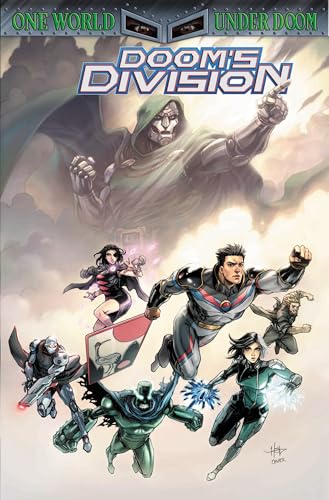
Sifting between propogandist pedagogy and voicing an earnest belief, between flames that brutalize and flames that cauterize, between feuding disciplines of mutual opportunism. DOOM'S DIVISION queries whether people brave enough to scrutinize themselves are also brave enough to scrutinize their leaders.
The pan-Asian heroics of DOOM'S DIVISION constitute an excellent but spoiled example of "other" superhero comics that tend to flitter about in the background. Good characters. Compelling drama. Solid artwork to complement solid action. And an anticlimactic and wasted conclusion. Such is the life of the average reader of American comics.
On the heels of Tiger Division (2022), and on the shoulders of one of Marvel's uncountable annual events, readers return to South Korea but with an eye toward learning how the country's most notable hero team fares under the authoritarian gaze of Doctor Doom. Neat. But when a "renegade" Japanese metahuman (Sunfire) starts taking out Doom's regional allies, the Tiger Division jumps into action. The flexible but argumentative cohort of a pop star (Luna Snow, ice powers), demigod (Mr. Enigma, elemental powers), energy magic-user (Lady Bright), robotic tactician (Gun-R II), and power user (Taegugki) finds itself stuck defending increasingly dark and deformed principles. Sunfire presses the Tiger Division to discern whether it values protecting Doom's legacy more than the citizens its leader tramples.
DOOM'S DIVISION falls into the familiar ranks of books that were good but could have been spectacular. Few know what goes on in the mind of the senior editorial staff members who authorize tie-in books but steer their outcomes toward traditional "nobody wins; nobody loses" conclusions. In the case of the current comic, the Tiger Division witnesses a legitimate stress-test: Luna is having second thoughts about being a mouthpiece for the government, other Asian superheroes risk fomenting rebellion in the open, and the team's point-person bureaucrat (White Fox) is acting more and more like a despot.
That's the good news. The bad news is that the comic doesn't exactly stick to these tests of endurance. Some tests push characters to their limit (interesting), but others conclude in a ribald betrayal that is quickly walked back as a double-cross (not interesting). Some tests force characters to remember why they do what they do (interesting), but other tests toe the line of retconning the whole damn story by the end of the fifth issue (not interesting).
So, where's the value in a book like this? The expanded cast intrigues: female heroes join the fight from The Philippines (Wave, water manipulation), China (Aero, wind manipulation), and Vietnam (Karma, empath). And yet, their contributions to the story feel limited across the book's five-issue run. The art is fantastic, and the expansive and extraordinarily complicated fight scenes are worth checking out, but the story's most compelling twists and turns don't always pan out. Indeed, what's the point of a plot twist if the story simply straightens itself out again? The events of DOOM'S DIVISION don't change the lives of its characters, they simply change their color and shape.