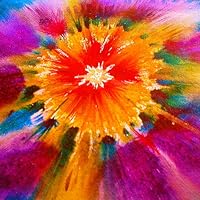
Drawing the traditional circular designs known as mandalas is a meditative practice, a healing exercise in times of crisis, and a pleasurable act of creativity. As a symbol of the Self, the mandala provides a connection to our innermost being. The forty-eight drawings presented here for coloring include designs inspired by forms of nature, Native American and Tibetan sand paintings, Hindu yantras, Turkish mosaics, the illuminations of Hildegarde of Bingen, and the art of M.C. Escher. These mandalas are organized according to the Great Round of Mandala, a scheme of twelve archetypal stages that represents a complete cycle of personal growth. Thus, to do the coloring book from start to finish will carry the reader through a balanced experience of change, guided by the accompanying text.
While I long ago read the text on mandalas and stages of growth and development and religious/sacred influences at the beginning of this coloring book and that accompany each picture, I left it on my "reading" list until today when I truly finished coloring the last picture since I did in fact often jump around in the book, re-reading sections, contemplating and, yes, coloring in a variety of mediums from oil to pencil watercolors to crayon and colored pencils to colored markers and metallic pens. The earliest date I see notated was spring/summer of 2004 on two pictures so I've left that as the "start" date for reading.
For me, coloring is where I can let go of all the normal word-oriented prayer and writing I do. It may arise from strong feelings or a desire for self expression or a kid place of filling in the shapes, but the mandala coloring book allowed for flowing reflection and connection to universal forms without language being the predominant conveyer. As a reader, I consume and savor words, but there are times when the words can take back seat to the actual story. This was a narrative in form, for which I'm grateful.
I picked up this book because I wanted a coloring book for me and this one looked pretty, plus I was interested in learning more about mandalas.
The author ties art history, color psychology, and Jungian thought together to create a very interesting introduction.
The author suggested that working within a mandala is an especially therapeutic form of art, and my experience meshed with this. I like art on its own, this felt even more soothing than making regular art. I'd be curious to know whether others experienced something similar.
Excellent little book of exercises. I'm not 100% into all the new ageyness of it, but some of the ideas were appropriate.
Now...I don't want to brag, but I think that some of my mandalas were better than the ones on the cover done by the author. (Some are worse, of couse, but we don't have to talk about them...)
This book opened the door of Manadalas - circles of self exploration - for me. I now create my own circles and fill them myself, but I will go back to this book when I want to focus on something already 'there.'
I loved this book! I believe I bought it in 2002 when I was looking for a fun coloring book that wasn't babyish. I ended up leading a small workshop on mandalas in part because of this book! The information on history and process was great! And of course the coloring pages are phenomenal.
Basically a big coloring book of mandalas. On the back each page has an explanation of the symbolism of the mandala. I used to xerox these for kids when I worked in private practice.
Got this book so I can start planning a crochet design of a mandala. Thought that a coloring book was a great idea so I can play around with color choices and stitch ideas.