Jump to ratings and reviews
Rate this book

Dream Cycle

The Dream-Quest Of Unknown Kadath

Rate this book
In H.P. Lovecraft's "The Dream-Quest of Unknown Kadath", Randolph Carter, a seasoned dream traveler, seeks the mysterious sunset city from his dreams. After the gods of the dream world cut off his access to the city, he embarks on a perilous quest to find the gods themselves atop the unknown mountain of Kadath. His journey lies through strange landscapes with strange creatures; and guided by his knowledge of the dreamlands' customs and languages Randolph Carter is ready to confront the gods and learn the city's true location.

Besides "The Dream-Quest of Unknown Kadath" story, this book offers 5 more tales by H.P. Lovecraft.

242 pages, Mass Market Paperback

First published May 1, 1943

331 people are currently reading
5403 people want to read

About the author

H.P. Lovecraft

6,040 books19.2k followers
Howard Phillips Lovecraft, of Providence, Rhode Island, was an American author of horror, fantasy and science fiction.

Lovecraft's major inspiration and invention was cosmic horror: life is incomprehensible to human minds and the universe is fundamentally alien. Those who genuinely reason, like his protagonists, gamble with sanity. Lovecraft has developed a cult following for his Cthulhu Mythos, a series of loosely interconnected fictions featuring a pantheon of human-nullifying entities, as well as the Necronomicon, a fictional grimoire of magical rites and forbidden lore. His works were deeply pessimistic and cynical, challenging the values of the Enlightenment, Romanticism and Christianity. Lovecraft's protagonists usually achieve the mirror-opposite of traditional gnosis and mysticism by momentarily glimpsing the horror of ultimate reality.

Although Lovecraft's readership was limited during his life, his reputation has grown over the decades. He is now commonly regarded as one of the most influential horror writers of the 20th Century, exerting widespread and indirect influence, and frequently compared to Edgar Allan Poe.
See also Howard Phillips Lovecraft.

Wikipedia

Ratings & Reviews

What do you think?
Rate this book

Friends & Following

Create a free account to discover what your friends think of this book!

Community Reviews

5 stars
2,937 (35%)
4 stars
2,809 (33%)
3 stars
1,767 (21%)
2 stars
654 (7%)
1 star
207 (2%)
Displaying 1 - 30 of 659 reviews
Profile Image for Bill Kerwin.
Author 2 books84.3k followers
June 7, 2019

The Dream Quest may not be Lovecraft's best effort, but it is undeniably one of his most significant. It is a bridge—and a key—to his two greatest periods. Paradoxically, it is also both his most far-flung fantasy and his most revealing personal work.

Before The Dream Quest came the short stories influenced primarily by Poe and organized around a single effect (“The Outsider” to “Pickman's Model,” 1921–1926) and after came the Cthluhlu-mythos novellas set in haunted, particularized landscapes (“The Colour Out of Space” to “The Haunter in the Dark,” 1927–1935). In between, though, there is this rambling dream-fantasy--stretching over valleys, seas, and caverns, all the way to the titanic black sculptures of the farthest North—which begins on the model of Vathek, in Dunsanian style, boasts an Edgar Rice Burroughs' Mars-style plot, and ends with a “Wizard of Oz” moral: “Dorothy, there's no place like home.”

H.P.'s life was in transition too. After his beloved mother's death, he married Sonia Greene, seven years his senior, and the thirty-year-old Howard and his “take-charge” bride moved to Manhattan to seek their fortune. But her business failed, his stories fizzled: after a couple of years, she relocated to Chicago, and he returned to Providence.

The Dream Quest was written not long after H.P.'s return to Rhode Island, and it is filled not only with an enthusiasm for finely detailed landscapes and the flora and fauna which inhabit them, but also with a nostalgia for his own New England landscapes and the characters and spectres of his previous work, to which he frequently alludes. (For example, the eponymous “hero” of “Pickman's Model” appears here, under the name of “the ghoul who once was 'Pickman.'")

Around the time that H.P. was writing The Dream Quest, he remarked, in a letter to Clark Asthon Smith: “Like Antaeus of old, my strength depends on repeated contact with the soil of the Mother Earth that bore me.” This elaborate dream fantasy, in an odd way, brought him even closer to this insight. Lovecraft's next major work was the short novel The Case of Charles Dexter Ward. It is set in the city of Providence, Rhode Island, realized with particular descriptive detail, and its hero—whatever his origins--looks a lot like H.P. Lovecraft himself.
Profile Image for Lyn.
2,009 reviews17.6k followers
April 30, 2019
Dream Quest of Unknown Kadath craft beer commercial take 17:

Randolph Carter: Hi, I’m Randolph Carter, star of Lovecraft’s Dream Quest of Unknown Kadath -

Cthulhu: And I’m Cthulhu and need no introduction.

CUT!

Dream Quest of Unknown Kadath craft beer commercial take 26:

Cthulhu: I drink Dream Quest of Unknown Kadath craft beer because it tastes great.

RC: and I drink it ‘cause it’s less filling. It’s the Dream Cycle side of Lovecraft’s canon, while referencing the darker Cthulhu stories, it is more fantasy than horror –

Cthulhu: that’s right Nancy –

CUT!

Dream Quest of Unknown Kadath craft beer commercial take 42:

RC: Dream Quest of Unknown Kadath craft beer, clean and refreshing, harkening back to a more whimsical, fantastic time of Edgar Rice Burroughs and L. Frank Baum –

Cthulhu: Yep, it is to my mythos as lemonade is to Jack Daniels – as to my Old Ones as Air Supply is to Black Sabbath –

CUT!

Dream Quest of Unknown Kadath craft beer commercial take 61:

Cthulhu: I don’t always drink craft beer, but when I do, I like to drink Arrogant Bastard Ale –

CUT!

Dream Quest of Unknown Kadath craft beer commercial take 77:

RC: Dream Quest of Unknown Kadath craft beer takes you back to dreamy, fantastic yarns of an older, more innocent time, inspiring later writers like Jack Vance and John Varley –

Cthulhu: And the Care Bears and Smurfs. So drink Dream Quest of Unknown Kadath craft beer, if you like your fantasy hoppy as an IPA and not too boozy – or horrific.

description
Profile Image for Sr3yas.
223 reviews1,036 followers
June 10, 2018
*Opens the door*

My friend, The Dreamlands
of Dylath-Leen, Ulthar, Oriab, Celephaïs, even the accursed Plateau of Leng and the unknown golden city of Kadath awaits your pre...


I love Lovecraft's tales from Cthulhu cycle, but his Dream cycle tales and I have a rocky relationship. And Dream-quest of Unknown Kadath is THE Dream cycle tale. It tells the odyssey of Carter through the vast dreamlands to find the mysterious unknown city, Kadath. As Carter progresses through his quest, he gets kidnapped and gets taken to the moon, makes allies with cats, gets kidnapped by flying monsters, makes allies with ghouls, gets kidna... Okay, I'm going to stop now.


Lovecraft wrote this novella in the 1920s, and just like his novel The Case of Charles Dexter Ward, Lovecraft never published the story in his life because he thought it was crap. Now, I disagree with Lovecraft about the quality of Charles Dexter Ward, but his instinct about Kadath is quite accurate.

It's crap.

Okay, that's a bit harsh. It's a vast, imaginative story filled with diverse creatures, gods, civilization, and worlds. But ultimately it's pointless and even unreadable at times.

Nevertheless, Dream-quest is an important tale as Lovecraft weaves characters and stories from his previous works to this gigantic dream. He brings our protagonist from The Statement of Randolph Carter (1919), supporting characters from Pickman's Model (1926), Celephaïs (1920), The Cats of Ulthar (1920), The other gods (1921) and probably more that I missed. Lovecraft has never connected so many short stories together like this in any of his other works. I just wish he had a better story to tell.

The cats are cool though.


There are also five short stories included in this collection, all from dream cycle. The Silver Key and Through the gates of Silver Key is soft sequels to Randolph Carter's Journey, and while The Silver Key is fun-ish, the latter is a cosmic mess with a decent ending.

The White Ship and The Strange High House in the Mist are the two decent short stories in this collection, and it tells the stories of men who brushed with the wonders and gods of other worlds.


Verdict: When it comes to Lovecraft's Dream cycles, the shorter the stories are, the better.
Profile Image for Doug.
85 reviews69 followers
May 6, 2022
This is the closest HP Lovecraft ever got to a high fantasy novel, and boy oh boy it doesn’t disappoint. Flying cats, goblins and ghouls, Egyptian-like gods. This story pulls no punches. It’s like Tolkien and Lewis Carroll and Edgar Allan Poe all morphed into the same writer and took a ton of hallucinogens. One of my all time favorite Lovecraft works.
Profile Image for P.E..
966 reviews761 followers
July 12, 2021
The narration mimics the churning of dreams to a fault, in their ceaseless wheeling, reeling, spinning, unraveling, halting, scooting,...

In the living maze of events there is no lack of dead-ends, u-turns, desire-paths, unforeseen developments, and yet the story remains invested with some selfsame and tangible presence throughout.

Not to mention the series of apexes in the course of the plot.

As a result, this ranks as a top-tier brand of sheer, unfettered fantasy!


Osmotic Soundtrack :
Azathoth 1 - Cryo Chamber
Azathoth 2 - Cryo Chamber
Profile Image for Werner.
Author 4 books718 followers
June 20, 2020
Note: The edition to which I attached this review isn't the one I read. Because this novella is short (141 p.), it's hard to find free-standing printings of it. I actually read it in the Bluefield College library's 1970 Ballantine Books printing, with a worthwhile introduction by Lin Carter, The Dream Quest Of Unknown Kadath (Adult Fantasy Series) by H.P. Lovecraft , which has the same title but binds the novella with five other works by Lovecraft. However, I didn't read the other five at this time. Though it wasn't published until after his death, the author wrote this, according to his letters, primarily in 1926-27, making it one of his earlier works..
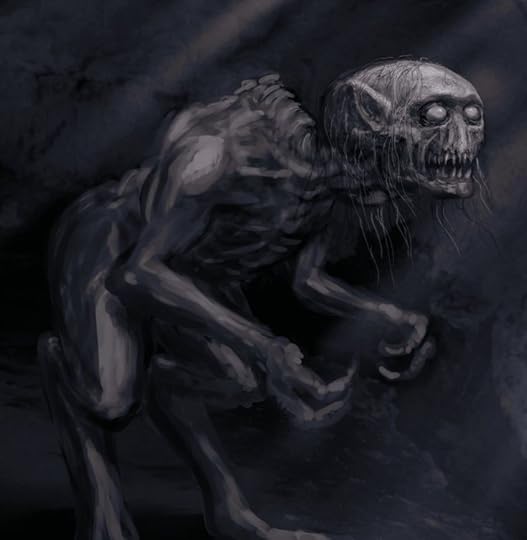
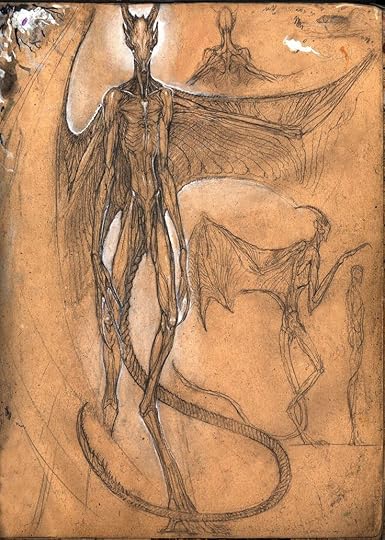
Dreams played an important part in HPL's writing. By his own statement, a lot of his story ideas came to him in dreams, as did fictional elements and motifs like the scary "night-gaunts" who inhabit some of his tales (and who play a significant role here). Quite a few of his stories posit the idea that dreams are a vehicle of communication between humans and... other entities, or that they can be windows to realities unseen by waking eyes. ("The Dreams in the Witch House" comes to mind, for example.) So it isn't surprising that, as the title implies, it's in vivid dreams that his protagonist here first beholds the mysterious, ethereally beautiful city he feels compelled to search out, and that his quest plays out in a deep dream. That protagonist is Randolph Carter, who appears also in several other Lovecraft tales ("The Silver Key," "The Unnameable," and "The Statement of Randolph Carter," just to list the ones I've read), and who's thought by many to be an alter ego for the author himself.

Lovecraft is primarily known as an author of naturalistically-explained, but dark and horrific, speculative fiction that imagines sinister entities beyond the realm of normal experience, some but not all of which is directly connected with what has come to be called his "Cthulhu Mythos" (the first work of that corpus proper, "The Call of Cthulhu," was published in 1927, the year this book was finished) with its concept of the Elder Gods or Great Old Ones, powerful malevolent entities that ruled the primeval Earth and remain dangerous. Much of his fiction outside of the Mythos proper have features that relate to or adumbrate it. The same could truthfully be said of this novella, to a significant degree. There are evocations of the characteristic Lovecraft idea of "cosmic horror," "mindless" and unwholesome "Outer Gods" who rule the void of space, headed up by the demonic Azathoth, and whose messenger is the "crawling chaos" Nyarlathotep (both names are echoed in the Mythos stories). We also have references to the "Pnakotic Manuscripts," and many allusions to ideas of ancient, pre-human races, unholy cults with grisly rites, horrible places and beings in the bowels of the Earth as well as space. An earlier Lovecraft story, "Pickman's Model," is directly referenced here as well; the sinister creatures from there are also here, where they're identified as "ghouls," and a prior acquaintance between Carter and Richard Upton Pickman is posited. (Unlike at least one Goodreader, I didn't find the treatment of Pickman and the ghouls irreconcilably inconsistent in tone or details with the earlier story --though let's say that there were some "developments" between the two....)

For all that, though I've classified most of Lovecraft's work as science fiction, I've classified this as fantasy, to suggest a distinction in content and tone. One could argue that his whole body of fiction has a great deal of basic commonality, and he didn't necessarily divide it up in his own mind the way some later readers do (he didn't coin the term "Cthulhu Myhos" --August Derleth did-- and those stories don't actually have an entirely consistent or compatible body of exact details). And this novella doesn't feature "magic" as such, which we usually consider a key aspect of fantasy. But the world of dreams here is an objective place, though intangible to the waking world; normal cats here can jump from Earth to the dark side of the moon on a nightly basis, and much of the world-building has the characteristic tropes of a fantasy world. Many readers familiar with classic fantasist Lord Dunsany --whose work Lovecraft read and highly praised-- have detected a Dunsany influence here and in several other early Lovecraft works, though I haven't read enough of Dunsany's writing to claim that myself. (And I haven't read much of this strand of HPL's work to be very familiar with it, either, though arguably "The Doom That Came to Sarnath" is in that vein.) But be that as it may, it's difficult to see the literary vision here as strictly explainable in naturalistic terms. The tone is also different from the Lovecraft writings I've called science fiction; we have less emphasis on existential pessimism, more description of beauty and grandeur as well as horror, a kind of storytelling that's more positive and upbeat than is his wont elsewhere. (Of course, the quest narrative itself that structures the book is a traditional fantasy motif.) This is a markedly different side of Lovecraft's creativity compared to most of my prior reading.

Stylistically, this is a tour de force (Lovecraft, of course, is one of the writers I most admire just as an English-language stylist); his command of vocabulary, language and diction is impeccable, and he perfectly adapts his style to his purpose. Some of his most effective passages are here. (He did send me to the dictionary a few times, but that's not a bad thing!) As in most of his work, he concentrates solely on male characters, and prefers to rely on straight narration, usually summarizing dialogue rather than delivering it verbatim (except where the latter kind of delivery has an essential dramatic effect). He also chose, as he said in a Dec. 1926 letter to Derleth, to write it "continuously... without any subdivision into chapters" (an idea he apparently got from William Beckford's Vathek). But these characteristics do not make it at all tedious to read. The level of originality in the imagination is amazing; the pace is steady and the plot eventful and suspenseful. (It's a quick read, not solely because it's relatively short.) It's also unpredictable, especially in the denouement and ending --and yet (without stating any spoiler) I realized that the ending was perfect for the story. My only regret now is that I waited so long to read this!
Profile Image for Mir.
4,974 reviews5,332 followers
November 12, 2020


Prodigious, phosphorescent, hideous, terrible, eldritch, sinister, lightless, mad, incalculable, gibbering, twisted, detestable, blasphemous, grotesque, swarming, splendid.

That's just the first page.

Even if you've never read Lovecraft, you've probably heard about his purple prose and overwrought descriptions. Well, this is Lovecraft at his purplest and wroughtest. And longest. How long was it actually? I don't even know (I read it in an annotated collection) but it felt like it went on forever, ironically kind of like some dreams that seem to last for months of subjective time. Added to the stylistic issue was the fact that this novella is mostly descriptive. Carter is journeying, trying to find a way back to the city of his dreams. And most of the page time is him describing what he sees, most of which he doesn't like. Oh, and there's minor racism, but you know to expect that from HP, right?

When there was action or conversations this wasn't bad. I liked the parts with the cats, and the ghouls, and the scene were he finally gets to talk to an old one. And it was interesting how the depictions of and attitudes to different imaginary creatures shifted over the course of the story, which added to the dream-like feel. There was just way too much travelogue for my taste. I should have known I wouldn't love this because although I really like the *idea* of the Dreamlands the prose in those stories is my least-favorite of HPL's. I recommend trying an earlier, shorter Dreamlands story before jumping into this (that makes sense chronologically, anyway).

Now I can read The Dream-Quest of Vellitt Boe and all I can say is, you better be worth it.
Profile Image for Algernon.
1,840 reviews1,164 followers
August 30, 2016

I remember thinking Lovecraft is not really my cup-of-tea when I first tried to read some of his stories. To a twelve years old curious about science and about voyages of discovery, the mystical and obscure master of horror could not compete with the likes of Jules Verne, Karl May or Alexandre Dumas. So it took almost 40 years (and a homage novella written this year by Kij Johnson) to make me come back to these nightmares realms ruled by malefic gods.

At the start of the quest, Randolph Carter looks to me like a scion of John Carter of Mars : he goes to sleep and wakes up in an alternate world, where he is carving out a kingdom for himself with daring sword and unflinching courage. Lovecraft may share the starting point with Burroughs, but the focus of the story is not pulpy planetary romance (alas! no scantily clad princess of Barsoom awaits Randolph in the Dreamland) but an indepth exploration of the hidden and often scary depths of our subconscious mind.

Carter resolved to go with bold entreaty whither no man had gone before, and dare the icy deserts through the dark to where unknown Kadath, veiled in cloud and crowned with unimagined stars, holds secret and nocturnal the onyx castle of the Great Ones.

While John Carter lies down in the desert and dreams of distant stars, Randolph Carter goes in his sleep to a magical city of indescribable beauty, a twilight wonder of marble halls, slender columns and twisting alleys by a topaz sea, a city that is locked against him by the hands of invisible Great Ones.

It was a fever of the gods, a fanfare of supernatural trumpets and a clash of immortal cymbals. Mystery hung about it as clouds about a fabulous unvisited mountain. [...] Vaguely it called up glimpses of a far forgotten first youth, when wonder and pleasure lay in all the mystery of days, and dawn and dusk alike strode forth prophetic to the eager sound of lutes and song, unclosing fiery gates towards further and surprising marvels.

Is Randolph on a quest to rediscover his youthful enthusiasm for the world, his thirst for adventure and for distant shores? How did the world of adults betrayed him, disappointed him? What made him reject the present day and take refuge in fantasy? A brief foray into the biography of the author, a sensitive man, alternatively passionate and depressive, tormented by life in the metropolis and yearning for a return to his home in Providence, Rhode Island, may offer an answer to these questions, but it is not a prerequisite for enjoying the journey Randolph Carter embarks on.

So to Celephais he must go, far distant from the isle of Oriab, and in such parts as would take him back to Dylath-Teen and up the Skai to the bridge by Nir, and again into the enchanted wood of the Zoogs, whence the way would bend northward through the garden lands by Oukranos to the gilded spires of Thran, where he might find a galleon bound over the Cerenarian Sea.

These names are resonant with promise of adventure and marvels, but right from the start the quest is threatened by the true rulers of the Dreamland, lesser and higher gods that dance to unknown tunes and bicker among themselves while turning a blind eye to the pityful affairs of human ants. To unlock the gate of the sunset city, Randolph must address his plea to the highest supernatural authority in the universe. Problem is, the higher you climb up the god's ladder, the more fickle and irrational the gods become. I am not truly familiar with the Cthulhu Mythos, but I believe there exists in the Lovecraft oeuvre a coherent vision of the things that lurk in the shadows of the waking world. The present novella is a prime example of this vision.

Always upward led the terrible plunge in darkness, and never a sound, touch or glimpse broke the dense pall of mystery.

A quick browse of the florid prose favoured by Lovecraft in describing these 'superior' beings can partly explain his lasting influence on readers and writers interested in the study of the supernatural:

unearthly immanence
tyrannous gods
elder witchery
cryptical
sinister
Cyclopean
gargantuan
prodigious void
gigantic, blind, voiceless, mindless
crawling chaos
grotesque


Makes you wonder what kind of nightmares haunted the dreams of Lovecraft, what existential dread sent him into despair and made him imagine that there is no ultimate answer to the question of life, nothing but a last amorphous blast of nethermost confusion which blasphemes and bubbles at the centre of all infinity

I didn't much like this bombardment of lurid images, this insistence that we are doomed by invisible chaos, not when I was twelve, and honestly not so much now in my fifties. But I can at least appreciate the monumental struggle of the individual against the darkness waiting to engulf him every night, the heavy price paid by the artist, by the dreamer who dared to descend into Hell and bring back to us a clarion call of warning and an entreaty not to loose sight of our private sunset city, this symbol and relic of your days of wonder

Lovecraft, like Randolph Carter, was constantly plagued by night-gaunts, ghouls, gugs, ghasts, zoogs, moon-beasts, shantak-birds and evil priests, but parts of the Dreamland are still reminiscent of his youthful days of wonder. The author's utopia bears witness to the less savoury things I heard about the author : a W.A.S.P. exclusive resort, male only, darkies to be used as slaves or servants or cannon-fodder. Cats are allowed favored-nation status, but that's about it as far as Lovecraft is concerned. Most of the racial insensivity is not particular to Lovecraft, but a mirror of the larger views held by his anturage and by a lot of philosophers and political leaders of the period the story was written. Same can be said about the purple prose, something most of the readership expected in their Weird Tales. I would never recommend banning an author for his private views, especially since his contribution and influence on the genre is undeniable.

Since October with its Halloween themed reads is just a month away, I plan to further explore the universe of Lovecraft. I am sure there are more haunting gems to be discovered among his stories:

Perched on that ledge night found the seeker; and in the blackness he might neither go down nor go up, but only stand and cling and shiver in that narrow place till the day came, praying to keep awake less sleep loose his hold and send him down the dizzy miles of air to the crags and sharp rocks of the accursed valley. The stars came out, but save from them there was only black nothingness in his eyes; nothingness leagued with death, against whose beckoning he might do no more than cling to the rocks and lean back away from an unseen brink.
Profile Image for Theo Logos.
1,271 reviews288 followers
October 11, 2024
In this novella Lovecraft successfully set about capturing the unreality of dreaming. Less horrific and more trippy than most of his other material, (though it contains many tendrils that reach into his horror mythos) The Dream-Quest of Unknown Kadath doesn’t so much have a plot as it does a palpable feeling. Here, Lovecraft’s infamous purple prose actually adds to the tale rather than distracting from it. As I listened to it on audiobook, I fell under the spell of the music of his relentless barrage of baroque prosody. Somehow it seemed oh so familiar. With a start, I realized that listening to it felt very much like listening to a cosmic Dr. Seuss!
Once thought, I couldn’t unthink it. So here, for your consideration, is —

The Dream-Quest of Unknown Kadath
(as written by Dr. Seuss)


In Upper Dreamland where the fetid fungi grows
And the voonith howl
On the blasphemous plateaus,
Where weird eyed Zoogs ferment
their curious wine
And the Cats of Uthar purr
(in three quarters time!)
Came a doomed and desperate dreamer —
Randolph Carter, they say
He was off to see strange place,
Yes, he was off and away!

He walked up and down steep steps
‘neath the fabled Peaks of Throk
Where the gibbering ghouls romp,
and the red-footed Whomps cavort.
He prowled labyrinthine caves
and the unhallowed vaults of Zin,
He braved the Outermost Abyss
(And that’s just where he began!)

As a daemon trumpet blew its hideous, tinny blast
And the heedless Great Ones howled
and the heedless Great Ones danced,
While the nightgaunts sailed
through the Elder Dark
and the toadlike moonbeasts
threatened to eat his very heart,

Carter rode the monstrous Shantak
O’er the gilded spires of Thran
In search of Unknown Kadath
(Which he dreamed and dreamed again)
He prayed to the hidden gods of Dreaming,
Even as he slept,
Yet always was he haunted by that crawling chaos,
Nyarlathotep!
Profile Image for Rose.
795 reviews48 followers
November 30, 2016
Well, that was painful!! At least I can say this book didn’t beat me - I read the whole damn thing *pats self on back*.

I used to think back in the first half of the last century that authors were paid by the word. If you read some of the old stuff you’ll see how they tend to ramble a lot. However, I think in this case he was paid by the adjective and adverb. Seriously, you couldn’t fit another one in this story if you were using size 8 font and a crowbar. Does everything have to be described so intensely? I think not. You could probably cut 50 pages out just by stopping the over-descriptiveness.

To give you some idea of Lovecraft’s writing, at least in this story, imagine Neil Gaiman and his most fantastical story ever. Now pump him full of LSD and magic mushrooms et voila, Lovecraft.

So, the story…as descriptive as it was, and as weird as it was, was overwhelmingly boring. The protagonist, Carter, has discovered a city in his dreams that he can see but cannot get to but he really, really wants to go there. This is the story of his travels through dreamland in search of this city. My dreamland is better than his. Really, everyone’s dreamland is better than his. It was dark and full of monsters, and cats – apparently Lovecraft had a fondness for cats.

Would I recommend this? Hell no. Not to the average reader anyhow. Only people who’ve previously read Lovecraft should look at it. The rest of you, step away from the book.
Profile Image for Love of Hopeless Causes.
721 reviews56 followers
February 15, 2016
Better on audiobook. Not an entry level volume. Dream-quest is a strange first choice since it was a Lovecraft first draft. This advanced mythos touches on several stories not present here. This volume would be better if it contained the, Cats of Ulthar and other tales. No doubt this has to do with some publishing brouhaha. A better collection can be had for free online. Beware, Dream-quest has subject matter repugnant to many.

The Silver Key and Through the Gates of the Silver Key, are my two favorite mythos stories. As for you, find a better collection.

Celephais, White Ship, and the Strange High House in the Mist, are reviewed under their titles.

Here is my preferred order, assuming you read all of the Dreamlands: Hypnos as best introduction-- then chronological, Doom that Came to Sarnath, Quest of Iranon, the Other Gods, Hypnos, Cats of Ulthar, Celephais, Strange High House, Dreamquest, Silver Key, Through the Gates, The White Ship.
Profile Image for Garden Reads.
256 reviews154 followers
October 14, 2022
Buena novela de Lovecraft, muy imaginativa pero escrita de manera terrible, repetitiva, lo que me hace bajarle la calificación.

Acá conocemos a Randolph Carter, uno de los personajes recurrentes de Lovecraft que muchos señalan como su alter ego, que viaja al mundo onírico en busca de la ciudad de Kadath, la morada de los dioses, lo que lo llevara a múltiples aventuras por este mundo que incluira unas criaturas roedores llamadas zoogs, una ciudad de gatos, un viaje a la isla de Oriab, un paseo por el Pnath, el inframundo... entre otras aventuras que harán que Carter nos muestre de cerca está misteriosa tierra.

Novela que escuche por audiolibro y que pese a qué es muy imaginativa y está llena de aventuras para la mitad se vuelve repetitiva, Carter va de un lado a otro salvándose por los pelos; embarcándose, caminando, montando criaturas aladas... que muchas veces entran y salen de escena casi como deus ex machina y que por momentos parecieran solo ocurrencias sobre la marcha del autor al escribir su novela, pues aparte de la búsqueda poco más es lo que ofrece de trama. La mayoría solo dificultades en el camino que alejan o acercan a nuestro protagonista a su objetivo, y esto precisamente es lo que termina cansando. Los motivos de Carter por llegar a Kadath nunca llegan a ser del todo claros, y aunque te involucras con la busqueda hasta cierto punto jamás llegamos a sentir que Carter esté ralmente en verdadero peligro, pues sabemos que en cualquier momento puede despertar para escapar de la muerte.

La pluma de lovecraft, por otra parte, en esta novela recuerda mucho a "Las mil y unas noches" contando todo como si fuese un cuento más de dicho libro, sin entregarnos detalles excesivos de la travesía o implicandonos demasiado lo que a mi parecer tampoco le ayuda mucho a la historia.

En fin, una buena aventura, entetenida, pero lamentablemente escrita de manera muy básica y poco prolija. Aunque bueno, hasta donde sé Lovecraft nunca llegó a publicar esto en vida, por algo habrá sido.

Si eres fan de Lovecraft sin duda te la recomiendo. Si no eres fan de este autor es mejor que comiences por sus cuentos primero, hay varias referencias a ellos en esta novela.
Profile Image for Tijana.
866 reviews288 followers
Read
December 21, 2017
Ovo apsolutno i definitivno nije knjiga od koje treba početi s čitanjem Lavkrafta, utoliko pre što su neke njegove stvari zapravo sasvim okej.
To na stranu... šta reći, ovde Lavkraftove mane u pogledu jezika i stila dolaze do punog izražaja. Sve je užasno, stravično, jezivo i čudovišno. I smrdljivo. Ali, varijacije radi, sa mnogo sinonima i to uglavnom latinizama da bi lepše zvučalo. Samo da su izbačeni izlišni epiteti (jer zaista nema potrebe da se svaki put kad se pomene biće koje se hrani lešinama istovremeno pomene i da je neprijatnog mirisa, imajte malo poverenja u čitaoce aman) knjiga bi bila solidno kraća.
Pravde radi treba reći da je Lavkraft solidno maštovit i da ume da izazove pravu horor jezu iako (opet) ova knjiga ni na tom planu nije najbolji primer. Zemlja snova kojom Lavkraftov junak ovde cunja ne bi li našao Kadat a potom i bezimeni grad za kojim zapravo traga - nema u sebi gotovo ničeg oniričnog, sve je nepomerljivo i trajno, nema pretapanja i alogičnosti karakterističnih za snove kakve možemo naći kod (recimo) Kafke ili Kortasara - fantastični svet koji nam se predstavlja ima mnogo više zajedničkog sa pričama lorda Dansejnija. Ima, dakle, upečatljivih slika, ali one potonu pod teretom neumereno kitnjastog jezika.
I konačno ključni i zaključni problem: Monstruozno, fabulozno, neizrecivo i neopisivo sam se razočarala.
Profile Image for Craig.
6,343 reviews177 followers
July 14, 2023
I read this one years ago and decided to re-read it after having recently finished Kij Johnson's excellent The Dream-Quest of Vellitt Boe. I found that I didn't really remember it well at all, and it was a bit of a slog to get through. There's no dialog, just a seemingly endless list of made-up exotic place and character names in a dream world travelogue. It reminded me of works from an earlier time, William Morris or William Hope Hodgson's The Night Land perhaps. Lovecraft's mastery of language is quite effective (your vocabulary always increases with him!), and his ability to create disquieting and atmospheric settings is wonderful, but there's not much of a story connection. This edition also includes four short stories and a novella that was written in collaboration with E. Hoffman Price, Through the Gates of the Silver Key, all of which I did enjoy. My favorite was The Strange High House in the Mist.
Profile Image for Nicolai Alexander.
134 reviews27 followers
March 18, 2025
Oh, wow, I had so much fun reading this one! Fantasy and horror combine to make a weird and exotic tale brimming with what I see as a joy of writing, love for adventure and nerdy enthusiasm for cool monsters. Most of you probably know that Lovecraft is known for his cosmic horror short stories about otherworldly deities, all wrapped up in unspeakable terrors, cryptic writing and dark mysterious intimations and stuff like that, but this story is much easier to digest. Yes, it’s ominous and provides that familiar sense of insignificance and feeling of being up against something you will never understand nor stand a chance against, but this entire dream quest also feels like acting out your best childhood fantasies about being an adventurer in a faraway magical realm. It’s got that playfulness to it that puts a smile on my face and makes me want to pick up a sword and charge ahead with all my friends. It may sound silly, I know, but that’s because this novel IS a bit silly, even borderline whimsical at times, which we may thank Lord Dunsany for, but it’s still Lovecraftian at its core.

Currently, I’m reading my way through Lovecraft’s Dream Cycle, and “The Dream Quest of Unknown Kadath” is one of his longest stories. It’s about Randolph Carter - a recurring character – and his experiences in the dreamlands in search of a majestic city of marvels. Kadath from the title is a mountain of onyx crowned by an onyx castle, and this is where the dream gods of Earth reside. They are known as the “Great Ones”, which are protected by even more powerful deities called “The Other Gods”. Throughout the story, we follow Carter on his quest through the dreamlands to find the city of his dreams. And let me tell you: it’s a wiiiiild ride!

I’m going to have to add some paragraphs to better show you what’s so great about it. In the opening lines, for instance, Lovecraft immediately pulls you in by establishing so strikingly and effectively that, for Carter, the city

was a fever of the gods, a fanfare of supernal trumpets and a clash of immortal cymbals. Mystery hung about it as clouds about a fabulous unvisited mountain; and as Carter stood breathless and expectant on that balustraded parapet there swept up to him the poignancy and suspense of almost-vanished memory, the pain of lost things and the maddening need to place again what once had been an awesome and momentous place. (106)


I’m in awe at Lovecraft’s ability to manifest all kinds of dark mysteries and create so vividly an acute sense of overwhelming cosmic danger. Like this:

There were, in such voyages, incalculable local dangers; as well as that shocking final peril which gibbers unmentionably outside the ordered universe, where no dreams reach; that last amorphous blight of nethermost confusion which blasphemes and bubbles at the centre of all infinity - the boundless daemon sultan Azathoth, whose name no lips dare speak aloud, and who gnaws hungrily in inconceivable, unlighted chambers beyond time amidst the muffled, maddening beating of vile drums and the thin, monotonous whine of accursed flutes; to which detestable pounding and piping dance slowly, awkwardly, and absurdly the gigantic Ultimate gods, the blind, voiceless, tenebrous, mindless Other gods whose soul and messenger is the crawling chaos Nyarlathotep. (107-108)


While at the same time capturing that sense of admiration for all kinds of unknown marvels:

In this low fanfare echoed all the wonder and melody of ethereal dream; exotic vistas of unimagined loveliness floating from each strange chord and subtly alien cadence. Odours of incense came to match the golden notes; and overhead a great light dawned, its colours changing in cycles unknown to earth's spectrum, and following the song of the trumpets in weird symphonic harmonies. Torches flared in the distance, and the beat of drums throbbed nearer amidst waves of tense expectancy. (185)


And how he just casually adds plenty of world-building in what initially seems like a mundane ocurrence:

“though old lava-gatherers had warned him not to camp there at night, he tethered his zebra to a curious pillar before a crumbling wall and laid his blanket in a sheltered corner beneath some carvings whose meaning none could decipher.” (125)


One of the things I enjoyed the most, though, was the impressive menagerie of fantastical beings. There were for instance the curious, but sensitive zoogs who dwell in fungi-infected forests. They are sworn enemies of the adorable warrior kittens whom Carter befriends along the way. Then there are mute tickling monstrosities, bloated tentacle-writhing sociopaths, the giant gugs and the ghasts and darkness-creeping, corpse-eating worms called dholes, which “are known only by dim rumour, from the rustling they make amongst mountains of bones and the slimy touch they have when they wriggle past one. They cannot be seen because they creep only in the dark.” (131)” And of course a whole bunch of bloodthirsty, but loyal ghouls. I just think it’s so impressive to create so many kinds of monsters, long before Dungeons & Dragons became a thing.

Also, there are references to elements in other short stories and appearances of earlier characters that you would recognize if you have read them. I don’t think all of them is necessary to enjoy or understand what is happening, although I do think “Pickman’s Model” provides some interesting context.

But if you haven’t read anything of Lovecraft yet and are sort of worried all his writings are too bleak and out there, I would recommend starting here, because this is, as I mentioned, more digestible, but also a great way to get a feel for the scope of his imagination and style of writing. Not to mention it’s considered one of his most significant pieces. Just bear in mind that it’s novel length and that Lovecraft didn’t seem very pleased with it himself. He completed the story in 1927, but never published it. Instead, it was published posthumously in 1943. Lovecraft said that “it isn't much good; but forms useful practice for later and more authentic attempts in the novel form." He also said that "Randolph Carter's adventures may have reached the point of palling on the reader; or that the very plethora of weird imagery may have destroyed the power of any one image to produce the desired impression of strangeness." (H. P. Lovecraft, Selected Letters Vol. 2, pp. 94-95; cited in Joshi and Schultz, p. 74.)

Do I agree? Well, it’s not perfect. It certainly doesn’t really deserve a full five star rating, because I can tell that it’s a draft: somewhat unfinished and unedited. The narrative might seem like it’s meandering aimlessly in parts, and sometimes it feels like you’re taking one step forward, two steps back. There are some deus ex machina issues and plot holes and needless repetitive elements, but after a while as I got more and more into it, I didn’t care about any of those things and just went with the flow and enjoyed it. It was really fun and cool and exciting!

You know, I became reminded of the fascinating power of language and why I love reading, because it’s chock-full of things that make my imagination sing with delight 😊
Profile Image for ᴥ Irena ᴥ.
1,654 reviews242 followers
March 18, 2015
4.5

The Dream Quest of Unknown Kadath is a wonderfully creepy horror story of one man's quest to find and reach a forbidden place with an unexpected and great ending. The lack of dialogue shouldn't be a surprise to any Lovecraft lover, but the imaginative way this story is told and filled with unearthly creatures while the protagonist is searching for a way to get to his destination should be enough to overlook that.

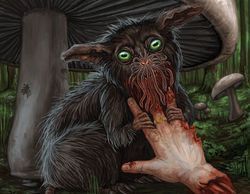
The main character is Randolph Carter who meets many strange and terrifying beings on his journey; beings like zoogs, ghasts, gugs, nightgaunts and so on.
zoogsghastsgugsnightgaunts
Whatever Randolph Carter encounters, whatever happens to him on his journey, he never stops going forward. There isn't a single place or a tavern where people don't try to warn him off his quest to get to Kadath. He never wavers. One of the beautiful things is that he gets help from unlikely sources.

There are so many references to other Lovecraft's stories here, I am certain I missed a few. Some of well-known characters play an even greater role than you might expect. Here you'll find out what happened to Kuranes and where exactly Pickman ended up after he had disappeared. The cats of Ulthar don't just make an appearance, but rather give this story a fairy tale touch. Even Nyarlathotep has a role to play.

Now, you can choose to read this story partly as a commentary on society. I'll simply read it as fantasy.
Profile Image for Dan Henk.
Author 11 books38 followers
September 28, 2012
I think Lovecraft often gets a bad rap. People read that he influenced the modern greats, everyone form authors like Stephen King and Clive Barker, to movie makers like John Carpenter and Wes Craven, and then dive into his books expecting the same fare. He wrote for a different era. His mind-bending, first person surrealistic approach to a creeping, nameless horror stunned and fascinated huge segments of early century America. The America that read, that is, which wasn't nearly what it is today. I enjoy his approach, even if some of it is a bit florid, but his ideas are dauntless. They broke conventions and rearranged the way a future breed of horror authors would look at the world. Even today, I find them stunningly original, and well worth the read. If any sound familiar, it is only because they have been copied, usually far less efficiently, by later day authors.
Profile Image for Maureen.
213 reviews226 followers
November 17, 2009
the most boring lovecraft i have ever read. a lot of mythology here but not really much story. more of a travelogue -- it's back on the shelf. not sure when i will finish it.

*******

i did go back and finish it but i must say it was excruciating. again, this is the disappointment i felt when i began to read lord dunsany who had been cited as influential by so many, and found that there really wasn't much of a story but rather a beautiful picture of strange places and people. so sadly, i will not be able to recommend this lovecraft. it's useful to read as a bestiary and atlas of his worlds, but i'd rather be given the opportunity to skip all the dry text and look at illustrations and maps instead.

and yes, i did like that army of cats. where do you think the two stars came from?
Profile Image for Knjigoholičarka.
150 reviews8 followers
January 2, 2019
Izgleda da imamo više unosa za jednu te istu knjigu, pa vas kao e-bibliotekar u ovoj virtuelnoj avliji ovim putem molim da ne duplirate već unete knjige. Baza podataka na Goodreadsu bi trebala da nam svima bude od pomoći da lakše nađemo ono što nam treba, bilo da je u pitanju neko sasvim određeno izdanje za kojim tragamo, utisci drugih čitalaca o delu ili makar unošenje knjige u listu koja je nama lično od nekog značaja.
Hvala na razumevanju.
Profile Image for elpida_la_blue.
117 reviews34 followers
July 11, 2017
Αν το παραλληλίσεις με την "αρχέγονη αναζήτηση του άγνωστου εαυτού", είναι ακόμα πιο τρομακτικό και συγκλονιστικό. Αξεπέραστος Λάβκραφτ. Ήμουν συνοδοιπόρος του Κάρτερ κάθε στιγμή. Ήμουν κι εγώ εκεί.
Profile Image for Nate D.
1,654 reviews1,252 followers
Read
March 18, 2023
Back in college, I worked for a few semesters shelving books in the sub-basements of the library, which for some reason set its 3rd floor at ground level. Two floors below that was a largely-ignored fiction section, dimly lit by flickering lights that turned off automatically when no one was around (or if you just stood still thumbing through some dusty tome or another for too long). The farther corners never really got direct light, giving the whole space a perfect kind of eerie-cozy twilight feel, and in retrospect, it was a pretty amazing place to work. Not least because I usually kept up with my shelving pretty well and found time to browse the more esoteric sections when no one was around (almost always). Naturally, this was the perfect place for reading Lovecraft for the first time. Most people tend to be less than thrilled with the oneiric fairy tale that is Dreamquest, I think, but in that context those strange winding mythologies were just about right.

What I'd managed to forget, however (revisiting this as an audiobook while working later on), is just how much of Lovecraft's racism is directly on display here in the descriptions of the peoples of far ends of his dreamscapes. The residents of any particular place are invariably lumped into one racial character, and while "evil" races is a horrible trope of far more recent fantasies than Lovecraft's, Lovecraft didn't have to invent something like an orc to serve as the locus of his loathing, instead there seem to be entire reviled human nations. In Kadath, flesh-eating ghouls are more humanized than the residents of his recurring plateau of Leng. Lovecraft's become more notorious for this over the years since I first read this, his failings more broadly recognized, but I was still surprised to realize just how visibly on the surface his biases lie.
Profile Image for Dfordoom.
434 reviews125 followers
April 20, 2008
H. P. Lovecraft’s The Dream-Quest of Unknown Kadath is one of his fantasy, rather than horror, stories. Lovecraft was very much influenced by the great British fantasist Lord Dunsany. It’s exactly what the title says it is – it’s a dream quest, wherein the great dreamer Randolph Carter dreams a dream to find the fabulous sunset city which he has so far never quite been able to reach in his dreams, because the gods (possibly the gods of Earth, or the more mysterious outer gods) have prevented him. It’s a book which really has no right to work. There isn’t much of a plot, and Lovecraft’s prose is even more impossibly overblown and overelaborated and generally overdone than normal. But somehow it does work. The prose is unbelievably purple, but it suits the dreamworld perfectly, and captures the right mood of impossibleness. The dreamworld Lovecraft creates is bizarre and grotesque, but sometimes beautiful and often glorious. The army of cats is absolutely fabulous! And the idea of the cats who, at night, climb to the highest rooftops and then leap to the dark side of the moon – it’s just a marvellous idea and it works beautifully. There are whimsical moments such as this, and there’s humour (and Lovecraft’s humour is often underestimated). If you’ve only read his horror his fantasy will come as a surprise, and a very pleasant surprise. I liked this one very much.
Profile Image for Patryx.
459 reviews150 followers
March 18, 2019
Carter non perse i sensi né si mise a urlare, perché era soltanto un sognatore...
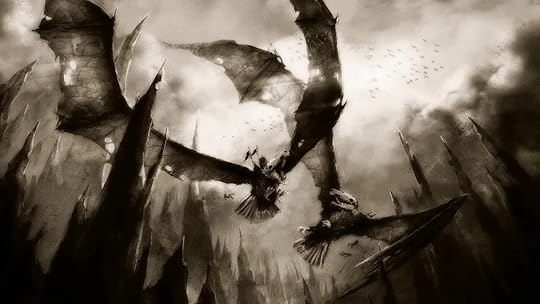
Le mie sensazioni rispetto a questo breve romanzo di Lovecraft sono abbastanza contrastanti: da un lato, uno stile coinvolgente e una grande capacità di creare mondi immaginari, dall’altro la fatica di seguire una narrazione fatta quasi del tutto di descrizioni, con pochi personaggi e ancora meno dialoghi.


Soltanto alla fine sono riuscita a entrare pienamente nell’ottica dall’autore e a dare un senso (abbastanza evidente una volta capita la chiave di lettura) alle sue scelte stilistiche. Una lettura che probabilmente va fatta tutta d’un fiato per poterla apprezzare al meglio: leggere poche pagine al giorno non facilita l’immersione nell’atmosfera onirica che è il mezzo per riuscire a identificarsi con il protagonista e rimanere, come lui, del tutto spiazzati davanti all’ovvietà del percorso da seguire per raggiungere la meravigliosa Città del Tramonto (oppure capire tutto molto prima che ce lo spieghi Nyarlathotep, il Caos Strisciante).
Profile Image for David Sarkies.
1,931 reviews383 followers
December 30, 2017
Kubla Cthulu
30 December 2017

While this rather long short story was not necessarily based upon the poem with an interesting background by Coleridge, it still reminded me of it quite a lot, except of the part where he is woken up halfway through his opium induced dream state by some guy from Portlock who refused to go away to get him get back to his trip (well, it didn't happen that way, but it still sounds cool). Actually, considering Lovecraft was a bit of a teatottler then descending into a heroin induced dream isn't really his style, though I should remember that this is not so much a story about him, but a story about one of his reoccurring character's: Rudolph Carter.

The version that I read has a short story about Carter before this one, though it is probably more a statement than a story. However, one thing that seems to have been consistent with the Lovecraft stories that I have read so far has the main character wander into some ruins or whatnot, come across a deep pit descending into the Earth, and upon entering these pits uncovering some indescribable horror. In a way I was starting to expect more of the same, except that Dreamquest of Unknown Kadath does take a different path.

Much like Kubla Khan, Carter has a dream of a beautiful and magnificent city, and decides that he must go and look for this city, however the only beings that happen to know the location of this city are the old gods of Earth. The only way for Carter to reach them though is to go on a dream quest, so he descents into the world of dreams and goes on what is quite a long, and adventurous, journey, to look for the gods and discern the location of this magnificent city. In the process he gets kidnapped by some rather disreputable sailors, leads an army of cats against some monstrous entities, and makes some friends with ghouls, who happen to be the souls of those who have died.

In a way this story is somewhat different than what one would expect from Lovecraft in that it is more of a fantasy adventure than a horror story. Okay, a lot of the horror elements are still present, though unlike many of the other stories, it seems as if Carter is able to deal with them without going insane – maybe it has something to do with him being in a dream world than in reality. In many cases it reads like a fantasy story, though, with the exception of the ghouls, ghasts, and cats (and humans), most of his encounters involve creatures with names worthy of Cthulu himself. Oh, and it is also set in the world of Cthulu, which means that the elder gods that Carter seeks aren't the anthropomorphic gods that we are all familiar with (and Nyarlanthotep, the crawling chaos, seems to regularly make an appearance).

One of the interesting things about this mythos that I discovered happens to do with the cats. It seems as if cats are not only antagonistic towards many of the nasties that inhabit Lovecraft's realms, but they are actually able to deal with them. I guess this idea stems back to the Egyptians who first domesticated cats so that they could deal with the snakes, but then raised them to some godlike status. In a way the suggestion is that having a cat around is a good thing because against the supernatural and the horrific they are much more capable defenders than are dogs (and Stephen King even borrowed the idea for one of his short stories). In fact the image of Carter wandering through the world among and army of cats was somewhat cool. Mind you, like the cats that we all know, these cats also have a mind of their own, and don't so much travel with Carter because he persuaded them to, but rather for their own reasons.

Then there is this idea of the dream. Carter seems to go into the dream world to escape from the dull and dreary would in which he lives to find something that he believes is truly glorious. Mind you, whether anything in the world of Cthulu can be truly consider glorious, as opposed to horrific, is a question open to debate, but this dream that Carter had no doubt grabbed his imagination to make him want to leave the familiar and travel to the fantastic. Yet, interestingly, the further we descend into the dreamquest, the more we forget that we are actually living in a dream. It is sort of like the statement 'reality is a state of mind without drugs'. Many people take drugs (in fact most of them) to escape reality – in a way they provide a gateway to the world of dreams, a world where the dreariness of society no longer exists. The problem is that the more you descend into the world the more you become disconnected from reality.

Dreams are always funny, and those annoying alarm clocks that yank us out of a world that appears to be much better than the work-a-day world in which we exist are the bane of our existance. Yet, like drug users, when we catch a glimpse of this heavenly realm the more we pursue them, and the more we disconnect ourselves from reality. In fact there are people that make substantial amounts of money, and countless pieces of literature, about interpreting dreams. In a way we want to attain that heavenly realm in much the same way that Carter wanted to reach this heavenly city. Yet the reality is that we are always dragged back into the real world by annoying men from Portlock, and like Coleridge, we simply cannot return.

Profile Image for Dana Campbell.
12 reviews5 followers
August 12, 2012
Reading this was like slogging through quicksand. I wanted to enjoy it, I really did, but I just couldn't. I read at least 50 pages a day. This 101 page book took me the entire month to read. It's like Lovecraft sat down and said how many elaborate adjectives can I fit into each sentence. I have an expansive vocabulary so I only had to lookup a word every few pages but I can imagine most people would need a dictionary every few sentences. Also nothing happens. The book over there the most terrifying thing you've ever seen and in that corner something even more horrific. I couldn't care about Carter. I also had no idea why he was on this journey.

The part at the end about the spheres of music was vaguely interesting. I've also heard that Lovecraft thought this was the worst thing he had ever written so I'm not entirely sure why the book club picked this instead of another of lovecraft's books and I would definitely give Lovecraft another try at some point. If Goodreads let you give half stars I would give this 2 & 1/2 stars because I wanted to like it but I just couldn't.
Profile Image for Gallant Duke.
110 reviews1 follower
August 1, 2025
Υπάρχουν ταξίδια που σε ρίχνουν στα δόντια του χάους. Κι έπειτα υπάρχουν ταξίδια που σε αφήνουν να περιπλανηθείς — με πλήρη συνείδηση — στα αιώνια σύνορα του ονείρου. Η Αναζήτηση της Άγνωστης Καντάθ του Λάβκραφτ ανήκει στη δεύτερη κατηγορία. Δεν είναι ένα παραμύθι. Είναι μια εσωτερική περιήγηση, ένας σπειροειδής κατήφορος σε κόσμους που η λογική μόνο πληγές αφήνει.

Ο Ράντολφ Κάρτερ, ανδρείος περιηγητής των Ονείρων, είναι ίσως ό,τι πιο κοντινό έχει ο Λάβκραφτ σε ήρωα — και την ίδια στιγμή, ο λιγότερο ηρωικός από όλους. Στην αναζήτησή του για την «άπιαστη» Καντάθ, συναντά γάτες που μιλούν, ακατονόμαστους θεούς και αρχαίες πολιτείες σκαλισμένες στην αιωνιότητα. Το βιβλίο σφύζει από αρχέγονο δέος, μα συνάμα ακολουθεί μια δομή κυκλική, σχεδόν εφιαλτικά επαναλαμβανόμενη, σαν παλιός λαβύρινθος που ξεχνά να οδηγήσει στη λύση.

Κι εδώ βρίσκεται και η ένστασή μου.
Ως χρονοταξιδιώτης των λέξεων, σέβομαι βαθύτατα τη σύλληψη· όμως, ενίοτε, η αφήγηση μοιάζει πιο πολύ με κατάστιχο περιγραφών παρά με δραματουργία. Ο αναγνώστης δεν βιώνει τόσο, όσο παρατηρεί. Ο Λάβκραφτ χτίζει με αρχιτεκτονική μεγαλοπρέπεια, αλλά αρνείται τα θεμέλια της συναισθηματικής ταύτισης.

Κι όμως… δεν μπορώ, δεν τολμώ να δώσω λιγότερο από 4 στα 5.

Διότι αυτό το έργο, παρότι ατελές στις αρετές του ρυθμού και της έντασης, θεμελιώνει ένα ολόκληρο υποείδος. Η σύλληψη του κόσμου των Ονείρων, δεκαετίες πριν τους Sandman του Gaiman, πριν τα planes του D&D και τις επιμέρους διαστάσεις του multiverse, ήταν πρωτόγνωρη. Και ο ίδιος ο Κάρτερ — ασυνήθιστα ανθρώπινος για το σύμπαν του Λάβκραφτ — αποτελεί, χωρίς να το γνωρίζει, έναν μύστη του φανταστικού, όπως όλοι εμείς.

Αν κάποιος θελήσει να γευτεί τις ρίζες της φανταστικής λογοτεχνίας που αναμιγνύει την εσωτερικότητα του ψυχολογικού τρόμου με την απεραντοσύνη της κοσμικής φαντασίας, οφείλει να περάσει από την Καντάθ. Έστω κι αν δεν την βρει ποτέ.
Profile Image for Dan.
639 reviews54 followers
July 31, 2022
The Dream-Quest of Unknown Kadath is always classified as a novella. But it is 42,590 words in length. The SFWA defines a novella as being 17,501 to 40,000 words. Therefore, it is technically a novel, not a novella.

This novel was published in 1943, some six years after Lovecraft's death, and in the middle of WW II. Lovecraft is thought to have begun writing this story some time in the autumn of 1926, finishing the "draft" on January 22, 1927.

I suspect too many people have paid too much importance to the word "draft." The novel doesn't read like one. It is internally consistent and complete. I can't see any more work the author would have needed to do on it except perhaps that the manuscript is simply one long, undivided text. An editor would have divided it into chapters. I would bet Lovecraft submitted the manuscript for publication as it is and that it was rejected at least once. I think it telling Lovecraft never revised the manuscript during his lifetime. That has to be because he considered it complete and finished as well.

This novel is the longest of the stories that make up the Dream Cycle and the longest of Lovecraft's works to feature protagonist Randolph Carter. Along with his 1927 novel The Case of Charles Dexter Ward, this novel is considered one of the most significant achievements of this period of Lovecraft's writing.

The Dream Cycle stories comprise an internal series in Lovecraft's ouvre that never became popular. Written between 1918 and 1932, they are about the "Dreamlands", a vast alternate dimension that can only be entered via dreams. Lovecraft's Dream Cycle combines elements of horror and fantasy into an epic tale that illustrates the scope and wonder of humankind's ability to dream.

The structure of this book is straightforward: the journey in the form of a quest. It is the simplest plot to write. Budding authors struggling to devise plots should consider the journey quest because it comes ready made with all the facets one needs when writing a novel, namely a beginning (setting out on the quest), middle (progressing to the goal), and end (reaching the end, or goal, of the journey). It's easy to invent obstacles to be overcome. Characters can be introduced to the protagonist and disposed of at will. And so on.

It's a very common structure. The Wonderful Wizard of Oz is an example of one everyone knows, as is Alice's Adventures in Wonderland / Through the Looking-Glass. Andre Norton used it for most of her novels. In fact I can't think of a single one of Norton's I have read (which requires more fingers to count with than I possess) that didn't feature it. It's the most popular fantasy structure there is.

Lovecraft's is a poor version of the quest story. One only has to compare L. Frank Baum's to readily see why Lovecraft's is so inferior. Baum has Dorothy encounter allies and enemies while on her quest. There is a great deal of interpersonal drama and characters with clear motivations in conflict with one another as they try to achieve their goals. This crucial aspect of good storytelling, so well done by Baum, barely exists at all in Lovecraft's version of the quest. Randall Carter's quest starts with the fact he wants to reach a place, no clear reason why. So he asked where the place was. He didn't get a good answer. So he went elsewhere to ask again and again. Carter went somewhere else, saw something else. And on and on the bare plot goes. It's completely narrated. Never is a scene portrayed and there's very little drama and no interpersonal tension anywhere to be found.

So why am I giving this book three stars? Well, it does have some good worldbuilding. The language used to narrate the quest is top notch, beautiful to read. The story itself has a good first five percent as the situation is set up. It also has a strong conclusion in the last ten percent of the story in which the reader finally gets to enjoy some dialog rather than just have everything narrated. The dialog is flawed, unfortunately. Modern writers know better than to allow a speaker to go on and on the way the unnamed Other God of Kadash does here. They would break the dialog up by having Carter interject here and there, have a sentence of decscription to show how the dialog was being delivered and received before continuing it. But none of that for Lovecraft. Still, after reading so many pages of narration, even flawed dialog such as this is much appreciated.

I also really like the ending. It's a famous type of quest ending that works here just like it does in many other quests. I never get tired of Baum and Lovecraft's theme, that happiness or contentment lies in learning to appreciate what we have rather than be unhappy and striving.

But man! Reading much of that middle 85% was such interminable work. Long paragraph after long paragraph of description. I was going to give this novel two stars until the dialog began in that last 10% conclusion section to just barely save this novel. I thought most other readers would be unable to forgive Lovecraft that 85% of dreary reading, as I did, but I'm incorrect in that assumption. This story is averaging nearly four stars somehow on Good Reads. Go figure!
Profile Image for Marc *Dark Reader with a Thousand Young! Iä!*.
1,502 reviews312 followers
November 12, 2023
On reread, in the context of Lovecraft's The Complete Fiction, I enjoyed it vastly more than my earlier experience. Becoming accustomed to Lovecraft's style of dense prose in blocky paragraphs made this seem almost casual in comparison to his earlier stories. I adored how it tied in many earlier stories, each enjoyable in its own right, and made them more significant in retrospect. I was better able to mentally divide the chapterless, breakless book into distinct episodes, and this made Carter's journey a lot more fun and pulpy and heroic. But thank goodness that his next even longer story, The Case of Charles Dexter Ward, includes chapter and section numbers.

My original review from 2019 follows:

This is one of Lovecraft's longest stories, and per the annotation (I read this is H.P. Lovecraft: The Complete Fiction) was never prepared for publication by the author. As a result, it could use a little polish; it repeats itself in several places. Overall though it appears to be a mostly finished work. It definitely has a dream-like quality, in the way that events carry on almost rhythmically, without a break (literally, there are no chapter or section breaks, just a wall of text). The protagonist/dreamer Randolph Carter journeys through the Dreamlands, a place some humans go while they sleep in the natural world, in search of a city or land that he had unforgettable visions of at the outset. This is the titular unknown Kadath. He travels to new towns, pursues leads and tries for new information from the residents in each place, and gradually explores essentially this entire small world, including an extensive underground, in furtherance of his quest. There is not a word of dialogue until near the very end, and even then only one being speaks in quotations. This makes it difficult to get any sense of personality from Carter. He has a singular motivation, but no identifiable character traits.

I read it with a sense of obligation, in preparation to read a contemporary take on this story (The Dream-Quest of VellittBoe), and unfortunately the content did not do much to alleviate that sense. I have read my share of Lovecraft, just not this story in particular to date. I have experience with his Dreamlands, however, through Brian Lumley's series of books set there, beginning with Hero of Dreams. That series uses the setting for fun, pulpy, old-school (and very male) adventuring. Especially in comparison, overall the original Lovecraft story is kind of a drag.
Profile Image for Katy.
1,293 reviews307 followers
October 26, 2012
Synopsis: Three times Randolph Carter dreamed of the marvelous city, and three times was he snatched away while still he paused on the high terrace above it. All golden and lovely it blazed in the sunset, with walls, temples, colonnades and arched bridges of veined marble, silver-basined fountains of prismatic spray in broad squares and perfumed gardens, and wide streets marching between delicate trees and blossom-laden urns and ivory statues in gleaming rows; while on steep northward slopes climbed tiers of red roofs and old peaked gables harbouring little lanes of grassy cobbles. It was a fever of the gods, a fanfare of supernal trumpets and a clash of immortal cymbals. Mystery hung about it as clouds about a fabulous unvisited mountain; and as Carter stood breathless and expectant on that balustraded parapet there swept up to him the poignancy and suspense of almost-vanished memory, the pain of lost things and the maddening need to place again what once had been an awesome and momentous place.

My Thoughts: Although it took me an unforgivably long time to get this whole story read, it was not through lack of interest, I assure you. I have looked at many reviews, and it appears that a lot of readers just didn't "get it" - describing it as a "travelogue" or such. But this... this is a brilliant little piece of dream-world building, and the ultimate aspiration of any lucid dreamer is to create a world as vivid as the world Randolph Carter creates for his own dreams (or at least I aspire to such - I have had dreams from which I have awakened, most reluctantly, while in the process of begging whomever I am with in the dream to hold me there somehow). Others complain of Lovecraft's racism, but ignore the fact that he was just parroting the thoughts of the time. Besides, anyone who venerates cats the way this guy does can't be all bad, right?

I reveled in the lush prose, enjoyed the horrors he creates in this short. I highly recommend Lovecraft to people who, like me, love words.
Displaying 1 - 30 of 659 reviews

Can't find what you're looking for?

Get help and learn more about the design.