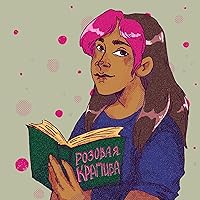
Роман, впервые опубликованный в 1792 году (в «Московском журнале», редактором которого был сам автор), а в 1796 году вышедший отдельной книгой. Входит в список обязательной литературы для средних школ.
Father of Nikolay Mikhaylovich Karamzin (Николай Михайлович Карамзин) served as an officer in the Russian army. He was sent to Moscow to study under Swiss-German teacher Johann Matthias Schaden; he later moved to Saint Petersburg, where he made the acquaintance of Dmitriev, a Russian poet of some merit, and occupied himself with translating essays by foreign writers into his native language. After residing for some time in Saint Petersburg he went to Simbirsk, where he lived in retirement until induced to revisit Moscow. There, finding himself in the midst of the society of learned men, he again took to literary work.
In 1789, he resolved to travel, and visited Germany, France, Switzerland and England. On his return he published his Letters of a Russian Traveller, which met with great success. These letters, modelled after Irish-born Poet, Laurence Sterne´s , (1713 – 1768), Sentimental Journey, were first printed in the Moscow Journal, which he edited, but were later collected and issued in six volumes (1797-1801).
In the same periodical Karamzin also published translations from French and some original stories, including Poor Liza and Natalia the Boyar's Daughter (both 1792). These stories introduced Russian readers to sentimentalism, and Karamzin was hailed as "a Russian Sterne".
In 1794, Karamzin abandoned his literary journal and published a miscellany in two volumes entitled Aglaia, in which appeared, among other stories, The Island of Bornholm and Ilya Muromets, the latter a story based on the adventures of the well-known hero of many a Russian legend. From 1797 to 1799 he issued another miscellany or poetical almanac, The Aonides, in conjunction with Derzhavin and Dmitriev. In 1798 he compiled The Pantheon, a collection of pieces from the works of the most celebrated authors ancient and modern, translated into Russian. Many of his lighter productions were subsequently printed by him in a volume entitled My Trifles. Admired by Alexander Pushkin and Vladimir Nabokov, the style of his writings is elegant and flowing, modelled on the easy sentences of the French prose writers rather than the long periodical paragraphs of the old Slavonic school.
In 1802 and 1803 Karamzin edited the journal the European Messenger (Vestnik Evropy). It was not until after the publication of this work that he realized where his strength lay, and commenced his 12 volume History of the Russian State. In order to accomplish the task, he secluded himself for two years at Simbirsk, the Volga river town where Vladimir Ilych Ulyanov, a.k.a. Lenin, (1870 - 1924), was born. This town was known then, after Lenin, for some 60 years as Ulianovsk, while Saint Petersburg became Leningrad till around 1990.
When emperor Alexander learned the cause of his retirement, Karamzin was invited to Tver, where he read to the emperor the first eight volumes of his history. He was a strong supporter of the anti-Polish policies of the Russian Empire, and expressed hope that there would be no Poland under any shape or name In 1816 he removed to St Petersburg, where he spent the happiest days of his life, enjoying the favour of Alexander I and submitting to him the sheets of his great work, which the emperor read over with him in the gardens of the palace of Tsarskoye Selo.
He did not, however, live to carry his work further than the eleventh volume, terminating it at the accession of Michael Romanov in 1613. He died on the 22nd of May (old style) 1826, in the Taurida palace. A monument was erected to his memory at Simbirsk in 1845.
I've never read this in school (like so many other books, I'm ashamed...), but yet again I wish I had.
For me it's not just a story of unfortunate love, it's a story of how men and society perceive virginity. Ahah, I know, I'm going way too far, but this was one of the things in this short story that stuck out the most. It's actually said between the lines, I never would've noticed it as a teenager, but I notice it now and it's important. Of course, you'll say "hey, it was 18th century, what do you expect?" Nothing, really. But my point is that it's not 18th century anymore. And yet the problem is still here. Oh, oh, and that line (don't know how it was translated to English) "she found pleasure in pleasing him". Of-fucking-course she did. Of course...
The author is one of the greatest in Russia, he "made" new Russian literary language. And in this story he's trying to make up sympathize not only with Liza, but also with Erast. Sorry, Karamzin, not gonna work on me. ;D
Anyway, this story is underrated, I think. It's important to read it if only to see all the innovations in Russian literature. And if you can see some other themes - like mine or something different - good for you.
Eigentlich eine banale Geschichte: Wohlhabender junger Mann („Erast“) aus der Großstadt verführt unschuldiges Mädchen („Lisa“) vom Lande und lässt sie sitzen. Was sie für mich besonders gemacht hat, ist zweierlei. Obwohl bereits 1792 veröffentlich schildert sie nahezu modern, wie anfängliche Faszination in Verliebheit, Verliebheit in Liebe und Liebe in Begehren umschlägt. Und während Erast für Lisa auch dann noch die Liebe ihres Lebens bleibt, wird sie für ihn mit der sexuellen Erfüllung nur noch eine von vielen. Glücklicherweise driftet Karamsin nicht in eine Moralpredigt ab, sondern schildert Erast als ehrlichen, einfühlsamen, aber letztlich schwachen Mann. Die Geschichte ist Pflichtlektüre der 9. Klasse in russischen Schulen, und ich kann gut nachvollziehen, dass die Jugendlichen sie gerne und mit Gewinn lesen. In die fast gleichaltrige Lisa können sie sich vermutlich gut hineinversetzen, um Erast nachfühlen zu können, bedarf es aber etwas mehr Lebenserfahrung.
Für mich war dies die erste russische Literatur in Originalfassung (also kein Easy Reader) und auch deshalb eine bleibenden Leseerfahrung.
Anmerkung: Ich wundere mich, ob es diese Geschichte war, die Boris Akunin dazu anregte den Helden seine Fandorin-Romane auch diesen Vornamen zu geben. Eine KI-Anfrage scheint dies zu bestätigen und hat zudem auf seine ethymologische Herkunft von „Eros“ hingewiesen. Auch Lisas Name ist für ein russisches Bauernmädchen eher ungewöhnlich und macht den Charakter zu einem allgemein gültigen Sinnbild der unschuldigen Liebe.
Книга на первый взгляд производит впечатление очень наивной, поверхностной, в то же время излишне вычурной и переполненной искусственными украшениями, однако всё становится на свои места, как только думаешь о том, когда была написана эта книга. 1792 год. Задолго до произведений Пушкина и Гоголя. Практичечки за столетие до Толстого и Достоевского. Читая эту книгу, понимает чтó был для русской литературы XIX век.
Книгу рекомендую всем, кто интересуется русской классикой.
Metų iššūkio sąraše užims vietą: "romantizmo epochos kūrinys". Trumputė, bet labai žavinga "veronikos" istorija. Tikras romantizmo literatūros pavyzdys: nuostabi gamta ir jos daug daug, širdį plėšantys jausmai, emocijos viršūnėse ir duobėse. Žavinga, miela. Toks "gerietiškas" kūrinys, tuo pačiu pamokymo prasmę turintis.
Read with my teenage daughter and had a great discussion about the immaturity and dangers of dating young, the importance of purity and accountability, the selfishness of suicide, and more. Thanks to Jeremiah, my true Charlotte Mason visionary, for using great stories to creatively inspire thoughts, ideas, and discussions about life’s greatest questions.
Ernest er giving Angel í Buffy með þetta, þegar hann nær "peak happiness" (ugh) þá verður hann bara ömurlegur og leiðinlegur. Mjög góð smásaga samt, mæli með. Smá svipuð stemning og Dafnis og Klói að vissu leyti, þetta svona barnsleg ást og óvissa þegar kemur að kynþroska, nema í rússneskum búning.
Another good example of Russian literature sentimentally exploring the theme of love between characters of different classes, with belonging to a higher class not necessarily translating into a higher standard of behaviour. A beautiful peasant Liza, grappling with the hardships of life after the death of her father, falls in love with a true representative of a wastrel estate, a young boyar Ernest. The love which brings poor Liza closer to her death, once Ernest betrays her by getting engaged to marry a rich widow. Having read Kuprin's Olesya just before this love story, I could not but compare the two heroines: they were so different in spirits, but so similar in what they could sacrifice in the name of love. Similarly, although the style of writing of the two authors differs, Karamzin's Russian is also beautifully rich, but is more stern when compared to Kuprin's more laid-back narration. The only thing that I believe would have made poor Liza's love story more powerful, is giving it more depth by expanding the length.
Чувства, мысли, природа... Бедная хорошая девочка Лиза повстречала на свою беду красивого, доброго, но ветренного барина. Ну какая простая деревенская девочка не влюбится в обходительного красавца, нашептывающего ей слова любви? И все мы знаем, чем заканчиваются такие истории. Богатые барины женятся на богатых барынях, а бедные девочки остаются с разбитым сердцем. И топятся потом в реке.
Сентиментализм такой сентиментализм...
This entire review has been hidden because of spoilers.
This seduction-leading-to-destruction plot is as conventional as it comes in European sentimentalism, and Karamzin was introducing this as a novelty in Russia (going so far as to drop the patronymics), but the Russians always manage to give their genres a twist. The deviant Erast is not a plain devil, as we were manacheistically used to in the West at that point, he's a poor devil, one feels sorry for him. His intentions seem pure, he is not trying to manipulate Liza, but he is weak. He's already the seed of the superfluous hero, it seems to me, with the gambling ruining his life, the devious military life, the fascination with purity but inability to tend for it. This story is laughable in many ways, not the least of which is the naive way, akin to Ancient Greek novels, in which peasants are described (Pushkin will take care of that!), but the thing is, they are described. Where had one read a literary work about peasants before, much less one that provided them with psychological complexity? Alexander Shakhovskoy said that sentimentality "was born in England, ruined in France, became pretentious in Germany, and was brought to us in a truly laughable condition." This laughable condition was nevertheless highly influential in Russian literature of the first half of the nineteenth century. What would the elegiac tradition, or Pushkin's ironic sentimental prose, or Gogol's sentimental humanism, have been like without Karamzin?
PS: Is it me or is this Liza (whose father, despite the absence of patronymic, we know was also an Ivan) being winked at by the Lizaveta Ivanovna of the Queen of Spades, who in turn is being winked at by the Lizaveta Ivanovna of Crime and Punishment? Mind=blown.
lol this is a short story which i why i added 20 books to my gr goal 2024 cuz we’ll be reading a lot of them in slavic 45. anyway it was very digestible and surely there will be plenty of interesting things to discuss in class.
"He desired more, more, and, finally, could desire nothing but he who knows his own heart, who has reflected on the quality of his most tender pleasures, he, of course, will agree with me that the fulfillment of all desires is the most dangerous temptation of love."
E' difficile scegliere quante stelle dare a questo brevissimo racconto che può tenere occupati sì e no una mezz'ora e a cui mi sono avvicinata per curiosità più che per interesse e solo dopo aver letto i romanzi di Akunin in cui è stato più o meno citato direttamente. Non si fa in tempo a cominciarlo che si è già alla fine e il solo titolo basta per capire quale sarà l'esito della storia, anche se ciò non toglie che sia comunque un raccontino con un suo messaggio, ben scritto e con delle immagini e dei simboli che saranno sì poco originali, ma usati nel giusto modo. Lasciare un commento senza raccontare cosa succede sarebbe un'impresa impossibile, non metto in spoiler, ma sappiate che quanto segue sintetizza l'intero raccontino.
La povera Lisa che dà il titolo alla storia altri non è che una giovane contadina russa orfana di padre che si prende cura di sua madre (donna in là negli anni che non riesce ad accettare la perdita del marito) e ogni mattina raccoglie fiori per andare in città, a Mosca, a venderli per una manciata di copechi. E' durante una di queste giornate che Lisa incontra Erast, un ragazzo di bell'aspetto e dai modi gentili che rimane colpito dalla ragazza e le fa promettere di non vendere più ad altri i suoi fiori. E' così che nasce un sentimento tra i due giovani, inizialmente puro e innocente, come pura e innocente è la povera Lisa, ma che presto viene corrotto e segna l'abbandono e la perdita della ragazza.
L'ingenua Lisa si innamora di un estraneo gentile che si fa ben volere anche dalla madre (la quale, povera donna, non vede mai con sospetto Erast dopo averlo conosciuto) e che le offre, per qualche tempo, la possibilità di evadere dalla vita semplice e monotona a cui si è sempre dedicata, coinvolgendola però nelle sue pericolose illusioni. Karamzin non scende molto nei dettagli per descriverci i suoi personaggi, ma ci permette di capire che Erast è un ragazzo tendenzialmente buono, anche se dal carattere debole e che, da una vita di piaceri e senza scopo, era passato a uno stato di malinconia che l'ha portato a guardare Lisa con gli occhi di un idealista eccessivamente romantico. Lisa, con i suoi fiorellini e la sua semplicità, ai suoi occhi è un angelo, l'incarnazione di quell'ideale che potrebbe portargli la pace e la gioia che la sua precedente condotta non gli ha permesso di trovare. Eppure, questa sua altra vita non è stata messa a tacere per sempre, i vecchi istinti sono sempre lì e tornano quando la povera Lisa (ah, è difficile chiamarla solo Lisa!), avvolta dall'amore che Erast le suscita e le dichiara e avvolta dalle sue belle parole e dalle sue promesse, rifiuta di sposare un altro e rinnova la forza del suo sentimento per Erast. E' in quel momento, marcato da una forte e spaventosa tempesta, che Erast non si contiene e Lisa si lascia andare, ma è anche in quel momento che per Erast le cose cambiano e Lisa, ai suoi occhi, non impersona più quell'ideale di innocenza e purezza che tanto lo avevano attratto e si allontana da Lisa, arrivando al distacco definitivo e all'inganno. Senza alcun tatto le confessa di non essere stato pienamente sincero e di aver dovuto sposare una ricca vedova per risollevare le finanze dissipate dal gioco. La nostra povera Lisa, delusa, tradita e ormai "perduta" (e con lei e come lei tutto ciò che incarna non solo per Erast, anche all'interno del racconto) vede come unica via quella del suicidio. Come l'Ofelia shakespeariana, la Lisa di Karamzin si getta in un fiume e così pone fine alla sua esistenza ora misera, seguita dalla madre che non regge la notizia e muore di crepacuore. Ad Erast, che non è mai stato sincero né con la povera Lisa (le promette, ma non si compromette) né con se stesso (perché credo che per lei qualcosa provi davvero, ma è troppo immaturo per accettare i suoi sentimenti, fare i conti con le proprie azioni e mettersi nei panni della ragazza, a cui dà anche dei soldi per lavarsi la coscienza, senza pensare a cosa implichi questo suo gesto), non rimane che vivere gli anni che gli rimangono in compagnia di una vera e veramente sentita malinconia e di un costante rimorso che lo porterà, poco prima di morire, a incontrare l'io narrante (perché sì, c'è un io narrante che, as usual, serve per dare un suo tocco di veridicità alla storia) e a raccontagli la tragica storia della povera Lisa, la donna amata e uccisa, per sempre affidata alle amorevoli carezze di una natura bella e immacolata come è stata lei in vita.
A love story between an innocent, naive young lady, and a rich, spoiled, pleasure-seeking baron. I am amazed by the author's exceptional ability to convey the characters' feelings to the reader, and I felt tremendous sympathy towards the female figure.
Siužetas: buvo varginga merga (t.y. kaimietė), buvo turtingas čiūvakas (t.y. rusų kilmingasis iš miesto) -> mergai čiūvakas patiko, nes turtingas -> mergą tėvai ištekino už kaimo balvono -> merga nusiskandino -> čiūvakui px, nes jis turtingas ir iš miesto.
Pasakos moralas, kad jei esi bomžas, tai turi pataikaut rusų caraičiam, nes kitaip bus pizė. Ar kažkas tokio. :gūžčioja_pečiais:
Bet knyga skirta YA skaitytojams, tai ką žinau, gal aš nepakankamai jaunas.