Jump to ratings and reviews
Rate this book

Three Tenses: A Transmission from the Nineties

Rate this book
An elegant, iridescent mosaic of autobiographical fragments, both real and invented, forming a portrait of a creative life, from the life of the Pulitzer Prize finalist for Same Bed Different Dreams

In 1998, Ed Park wrote a memoir and saved it to the vanishing technology of the floppy disk, losing it for more than twenty years. Until one day, emptying out an old, unmarked box in his family’s cramped New York City home, he came across a hefty manila folder. Out slid the only remaining copy of Three Tenses.

The piece of writing that Park found—“a voice lesson, a language experiment, an autobiography with lies, a document of sustained artistic bliss of a sort that I have never found again”—was an assemblage of beguiling anecdotes, sly observations, and collected esoterica, produced within the confines of the shoebox apartment of his twenties and only now allowed to see the light of day. Two Ed Parks emerge on the within the prose of the young, struggling writer arises the voice of the artist he would become.

Profound, wily, and beautifully wrought, Three Tenses is a meeting of memory and myth, confession and obfuscation, coalescing to offer a singular picture of creativity in action.

224 pages, Hardcover

First published August 11, 2026

Loading...
Loading...

About the author

Ed Park

40 books36.2k followers
I'm the author of the memoir THREE TENSES: A TRANSMISSION FROM THE NINETIES (August 2026). THE REPAIRER OF REPUTATIONS, a work of weird horror, will appear on 9/29/26—preorder now!

My novel SAME BED DIFFERENT DREAMS (2023) was a finalist for the Pulitzer Prize, and won the Los Angeles Times Book Prize for fiction and the Asian Pacific American Award for Literature.

My debut novel, PERSONAL DAYS (2008), was a finalist for the PEN/Hemingway Award, the Asian American Literary Award, and the John Sargent Sr. First Novel Prize.

AN ORAL HISTORY OF ATLANTIS, a collection of stories written over 25 years, was longlisted for the PEN Faulkner Award and appeared on numerous best-of-the-year lists, including those of Time, Booklist, NPR, and the Boston Globe.

What else? I'm a founding editor of THE BELIEVER, and I've written for The Atlantic, Harper's, The New York Review of Books, The New Yorker, Bookforum, The Baffler, and elsewhere. (Check out ed-park.com or https://linktr.ee/edpark for some recent pieces.)

NB, I am *not* the author of THE WORLD OF THE OTTER, by the late nature writer Ed Park, but it's worth picking up if you see a copy (and like otters).

Ratings & Reviews

What do you think?
Rate this book

Friends & Following

Create a free account to discover what your friends think of this book!

Community Reviews

5 stars
11 (26%)
4 stars
15 (35%)
3 stars
13 (30%)
2 stars
2 (4%)
1 star
1 (2%)
Displaying 1 - 21 of 21 reviews
Profile Image for Ed.
Author 40 books36.2k followers
December 5, 2025
The best memoir I ever wrote!
Profile Image for Derek Driggs.
866 reviews89 followers
August 22, 2026
Not fiction and not memoir; a series of varying vignettes, each of which serves as a sort of word-painting of moments in time, consciousness, memory, experience. Nothing here bothers to claim a narrative, and each new moment stubbornly refuses context, other than a sort of aesthetic floating: swirls and flashes and waves of syntax, words chosen carefully to illustrate that to remember, or to think about remembering, or to remember thinking—all of these are acts of creation, inseparable from language itself.

It helps that Park manages often to be funny as well as poignant, and that he is somehow too real to be sentimental but never feels cynical, either.
Profile Image for Desirae.
3,463 reviews200 followers
September 4, 2026
Ed Park’s Three Tenses: A Transmission from the Nineties is one of those books that is difficult to describe without also describing the strange circumstances of its existence. Originally written in 1998, when Park was in his twenties, the manuscript was saved to a floppy disk and subsequently disappeared for more than twenty years. During the pandemic, Park rediscovered a paper copy in an old box, essentially stumbling across a version of himself that he had forgotten. What follows is not quite a traditional memoir, but something much more interesting: a transmission from the past, sent forward through time and received by the writer he eventually became.

I found the concept of this memoir fascinating. There is something wonderfully strange about a person encountering their younger self not through photographs or memories, but through their own words. Park’s younger voice has been preserved in all its curiosity, pretension, humor, uncertainty, and intellectual restlessness. The book becomes a conversation between two versions of the same person, with the reader standing somewhere in between.

The structure is unconventional. Rather than presenting a chronological life story, Park gives us roughly 1,500 brief fragments, many beginning with the word “In.” These observations jump between memories, places, people, books, language, travel, family, romance, work, and the peculiar details that catch the attention of an inquisitive mind. Park writes about growing up as the son of Korean immigrants in Buffalo, his time at Yale, travels through South Korea and Europe, and his attempts to establish himself as a journalist and copy editor in New York. There are also digressions into Korean history, New York City, literature, obscure facts, dreams, fears, and the wonderfully random pieces of information that somehow become lodged in our minds.

What I particularly enjoyed is that Park doesn't try to force these fragments into a conventional narrative. The book is much more interested in consciousness than plot. One observation leads to another, sometimes logically and sometimes seemingly by nothing more than association. There is a feeling of rummaging through someone's mental attic and finding objects that are fascinating precisely because you don't know why they were saved.

There is also something wonderfully nostalgic about the book. Not nostalgia in the sentimental sense, but nostalgia for a time when thoughts could be recorded without immediately becoming content, when information was something you stumbled upon rather than something delivered constantly through a screen. The nineties here feel both familiar and strangely distant.

At only 224 pages, Three Tenses is a very short memoir, but I think its brevity works in its favor. I found it incredibly refreshing to read something that doesn't seem desperate to explain itself or turn every experience into a grand revelation. Park simply offers these little pieces of a life and allows the reader to decide how they fit together.

Ultimately, Three Tenses feels less like reading someone's autobiography and more like receiving a message from a younger person who didn't realize he was writing to the future. It is funny, peculiar, intelligent, occasionally bewildering, and completely unlike most memoirs I've read. Most importantly, it made me think about memory itself—what we choose to preserve, what we forget, and what happens when the person we used to be suddenly speaks back to us.
Profile Image for Jack Everett.
87 reviews15 followers
August 28, 2026
Three Tenses by Ed Park

After trudging through the horrors of Dasa Drndic’s Trieste, I was in serious need of a palate cleanser and something a little lighter in subject matter, and there waiting for me was Ed Park’s new work Three Tenses.

In its preface, Ed, full of charm, explains this “autobiographical structure” he has built. Rather than writing a straight-up autobiography (“I was born blah blah blah...”), Park gives us little snippets and moments from a life. It’s a life filled with tidbits, facts, and quotes that hold equal weight, charm, and abstraction. Each one of these tiles, as he calls them, makes up a mosaic of a life.

These little transmissions don’t give us the whole picture, but they leave us with an indescribable feeling of what life is all about. A life where the mundane and useless go up against the utterly profound. It’s a really refreshing work, and I’m glad big publishers are willing to publish a book like this. I also really enjoyed peering into Ed’s mind, seeing a writer at work and finding his “voice,” to use that horrible cliché term. Three Tenses is like a literary sketchbook of ideas that are being tested and explored. It has this strange, almost “Letters to a Young Poet” vibe, where Ed Park acts as both Rilke and the young poet Kappus. A conversation happens between transmissions, and it's really fun to engage with. If you're looking for something a little different in your literature, check this work out.
Profile Image for Mikala.
514 reviews8 followers
Review of advance copy received from NetGalley
August 10, 2026
Three Tenses is a strange little book, and I mean that mostly as a compliment. Ed Park wrote it in 1998, saved it to a floppy disk, lost it for two decades, and rediscovered the only surviving printout in a box during the pandemic. What he found, and what he retyped almost word for word, is a memoir built from roughly 1,500 tiny fragments, each just a few lines long and each beginning with the word "in." The result reads less like a story and more like a book of poems, hopscotching from his childhood in Buffalo to a post-college stint in Korea to his broke, aspiring-writer years in New York.

There is no plot to follow, no arc, no real beginning or end, and I think that is the point. The tiles pile up like pebbles, and your brain starts doing the work of finding patterns, catching the themes and places that keep circling back. When it works, the individual lines are genuinely lovely, little polished capsules of memory, invention, and half-remembered esoterica. When it does not, it can feel like scattered musings that do not quite connect, closer to a young writer's notebook than a finished narrative. Your patience for that will depend on how much you enjoy language for its own sake.

For me it landed somewhere in the middle. It is interesting, it is unusual, and there are moments that stick with you after you close it, but it is also easy to drift in and out of rather than get pulled through. If you love Ed Park's other work, or writers like David Markson who build books out of fragments, this is a fascinating glimpse of the artist before he became one.
2,145 reviews61 followers
Review of advance copy received from NetGalley
July 14, 2026
My thanks to NetGalley and Random House for an advanced copy of this book, that looks at a life trying to find itself, a path that takes the writer around the world, making and creating experiences, real and imaginary, told in snippets that jump from place, time, true and fictional

I am not a fan of memoirs. Mostly because I know that memory is not only fallible, but can be used to protect oneself from the reality we find ourselves in. Like Homer Simpson looking into a mirror, and seeing a muscular image, instead of, well Homer Simpson. I know I Star Wars in 1977, I am sure that it was on Father's Day, and my Dad and I saw it together. Seeing the movie is true, the Father's Day might not be, and I lack the courage to find if Star Wars was even playing in Connecticut in June of 1977. However that is my story and I am sticking to it. Memory can fill in the blanks when needed, like the brain helping out an lazy eye, compensating for weakness by working harder. Another thing about memories is looking back can be humbling. If I was to see the person I was in the nineties, I would probably be equally embarrassed and disgusted. Though I say that for the person I was in 2025. Ed Park is far braver than I am. And a much better writer. Three Tenses: A Transmission from the Nineties by Ed Park is a work of memoir, rememberance, biography of creative, fiction and a little more, a look at an artist who wanted to grab the world, was surprised when the world grabbed back, and the moments that made up his life.

COVID was rough for many. For Ed Park it was suddenly finding himself in a smaller place than expected, with a spouse working from home, and children learning by Zoom. Park had a small office and here he found tucked away a manuscript from the far past of the 1990's. A work of biography thought lost to floppy disk irrelevance, but typed up and saved to the cloud of today. The book is a work of fiction and nonfiction, told in almost snippets or tiles. Tiles that can be moved around through time, space, even confidence levels. This is the portrait of an artist as a roamer, with bits in Korea and New York and other places both real and imagined. Books are discussed, love is found, confused, maybe lost, maybe never even really started. Park writes, reads, watches movies, and writes some more. Slowly the tiles merge, a pattern seems to appear, but things get a little lost again. Just like life.

I still remember, and this is a true memory Park's Same Bed Different Dreams and being blown away by the concept the writing and the ideas. A book I continue to push on customers and friends, and an author I really look forward to. This is no exception. At first I thought I was lost, but I soon found a rhythm to the writing. A mix of real moments and imaginary ideas. Autofiction with a bit of Burroughs/Gysin cut-up technique tossed in. Park is a really good write, and even in snippets creates sentences that are better than most books. One gets the feel of a young wordsmith finding there way, that pretension that fills so many early pages, but with nuggets still showing amidst the word salad. There is a sense of distance not just from the setting the 1990's, but because of all the countries Park travelled to. New York is not like Korea, and the writing reflects that also.

A challenging book, and maybe not the best one to go to people hey you have to read this. I enjoyed it quite a lot, and found myself just hitting random pages on my ereader. Park is so good at creating small moments, moments that resonate even after the book is closed. Capturing ideas, feelings, emotions, and even the confusion of entering a world that has never really been revealed. A book a quite enjoyed, and one that I know I will be flipping through again. I look forward to what Ed Park has planned next.
Profile Image for Richard Derus.
4,573 reviews2,377 followers
Review of advance copy received from NetGalley
August 9, 2026
Rating: 4* of five

The Publisher Says: An elegant, iridescent mosaic of autobiographical fragments, both real and invented, forming a portrait of a creative life, from the life of the Pulitzer Prize finalist for Same Bed Different Dreams

In 1998, Ed Park wrote a memoir and saved it to the vanishing technology of the floppy disk, losing it for more than twenty years. Until one day, emptying out an old, unmarked box in his family’s cramped New York City home, he came across a hefty manila folder. Out slid the only remaining copy of Three Tenses.

The piece of writing that Park found—“a voice lesson, a language experiment, an autobiography with lies, a document of sustained artistic bliss of a sort that I have never found again”—was an assemblage of beguiling anecdotes, sly observations, and collected esoterica, produced within the confines of the shoebox apartment of his twenties and only now allowed to see the light of day. Two Ed Parks emerge on the page: within the prose of the young, struggling writer arises the voice of the artist he would become.

Profound, wily, and beautifully wrought, Three Tenses is a meeting of memory and myth, confession and obfuscation, coalescing to offer a singular picture of creativity in action.

I RECEIVED A DRC FROM THE PUBLISHER VIA NETGALLEY. THANK YOU.

My Review
: I've always felt oddly indifferent to memoirs, assuming they're pretty much always a load of fantasies piled up in a kind of rough shape sort of evoking a person's past. Trust them? Trust them to what? No one's memory is perfect, often it's at complete cross purposes with others who were (probably, allegedly) there, and in any case is the purpose of a memoir to be a record, settle scores—or to tell people how the writer sees the past that made them, from the ground they stand on in the present?

Ed Park takes bits and fragments of observations, memories, dreams, flat-out stuff he wishes was true, shakes 'em out of a shoebox, makes a beautiful mosaic of prose that thinks it's poetry, and says "here, read this," with a bashful smile.

I believe that woman on the subway wished people a terrible day, but not that she had black teeth. Or she had black teeth and wouldn't speak, only how then would he know she had the black teeth? Why did his parents emigrate from Korea to the US? What the hell brought them to, of all places...Buffalo?!

All the stops on the tour of his life led to his present. That's enough to tell me-the-reader that these fragments, too small to be more than thoughts that don't have deep enough edges to interconnect, exist for themselves. We already know Ed Park's work. His life is in it already, his world-view is in it already, his memoir has no heavy lifting to do that an autobiography, or later a biography, couldn't, won't, do better.

Except tell you how he felt. That's what kicked my indifference aside as I sat in the middle of the piles of thoughts and ideas wondering how I should piece them together. I shouldn't. I should respect that he didn't do it for me, so maybe the point was not to follow a narrative on its arc. That surprised me because this was Ed Park's life.

Comes the dawn....

What's more important to know about someone you care about, care for...what happened, or how they're feeling...feeling about what happened/didn't happen/could happen/might have happened? Why do so many of us have therapists if not to have someone to tell the truth about how we're feeling and maybe why we think we're feeling that way?

It's probably as coherent in this book as it is in Ed Park's mind. I don't think the framing device, discovering the floppy disk (!!) in a box during the pandemic, is really anything to get humg up on but many Goodreaders seem to have beef with it. Beats me why. Gotta start somewhere and the mass-death event only a couple years ago seems like a pretty significant road sign.

At all events I'm glad I got to know Ed Park a little, curated bit. I think I'll read his next published fiction with some added fellow-feeling.
Profile Image for Brice Montgomery.
437 reviews41 followers
Review of advance copy received from NetGalley
August 2, 2026
Ed Park’s Three Tenses: A Transmission from the Nineties is the kind of literary self-indulgence that will either remind readers why they love books or frustrate them almost immediately.

Personally, I found myself moving along that spectrum throughout the reading experience, with intrigue dissipating into irritation.

If you don’t know the premise of Three Tenses, it’s an author exhuming his personal archive. During COVID, Ed Park found a draft of a memoir that he had written decades before his literary career took off and decided to publish it. It’s easy to see why Park was fascinated by his own writing, but like many COVID-era projects, it feels marked by stale insularity.

Three Tenses is filled with scattershot, aphoristic posturings akin to Pessoa’s The Book of Disquiet, all of which are unified only by globe-spanning references to where they were written. These are the musings of a twenty-something who desperately hoped one of them would stick, but to what end? It’s a tough sell to engage with a “starving artist” gorging himself on the world, and it’s even harder to care when these locations are named purely to add some world-weary credibility to the esoteric stonerisms you'd find in any graduate school writing seminar. For example, look at how Park-the-Younger overworks a half-formed thought below:

“In New Haven, he says that you can’t call it the Orient. You can’t call it Asia. These are Eurocentric terms. In fact you shouldn’t refer to it at all—it doesn’t exist except as an imperialist or mercantile artifact. But for practical purposes, she argues, it needs a name. He suggests writing the mathematical symbol for null set.”
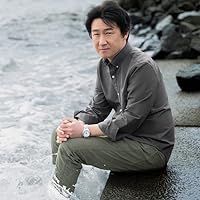

Sigh. And this is as much context as any of the one-liners receive.

If my criticism sounds harsh, it’s only because Park is an exceptional writer now, and his clarity of voice and vision anchors his more abstract sensibilities. It’s a novelty to see his writing before it was anything special, but to appreciate it, one has to fully accept a tiresome level of self-mythology. It feels like a writer asserting and overseeing his own canonization (or self-flagellation), and it’s a dull distraction from his other, wonderful books.

I’m glad Ed Park has Three Tenses, but for the rest of us, it could have stayed in just one—the past.

My thanks to NetGalley & Random House for the ARC!
Profile Image for A..
41 reviews3 followers
Review of advance copy received from NetGalley
July 25, 2026
Thanks to Random House (Will Lyman) and NetGalley for the egalley of Three Tenses.

Ed Park's Three Tenses is an odd duck of a book. Although Park calls it a memoir (he should know), I think he does the book a disservice by doing so. Three Tenses is truly its own beast. There should be a description for what this book is (Memory Mosaic? Cerebral Collage?), but I guess the problem becomes where to shelve the book, so a memoir it is.

In my mind, Three Tenses is essentially a writer's notebook crammed with musings, observations, one-liners, anecdotes, historical information, quotes from books, family history, lover's angst, travelogue, gossip, etc., all given a specific writerly shape by beginning each one with the word In. This gives each of the sections the authority of its placement within the larger text, identifies it as a puzzle piece of the much larger image. And although it is very possible to read each small section as a sort of stand-alone observation or anecdote (one feels that the book can be opened at any page for a quick hit of wit), the continued reading of the text demonstrates the interconnectedness of the pieces. There are echoes throughout the text: images, locations, references, people appear haphazardly but are recalled from pages before. It may not feel that important, but the frequency of the recollections is enough that their significance escalates, their meaning deepens. It is from this coalescing that the bigger image starts to form, which is Ed Park. Never fully, though, since this isn't that kind of memoir (because it's a writer's notebook), but enough that you get a sense of who he is at this time: a struggling writer trying to get by and yet have the best life he can have. Work sucks, life sucks, but there are moments of beauty and almost transcendence.

Three Tenses is a difficult book to recommend because of its uniqueness, although I think writers in particular would find it entertaining and useful for reading another way to structure narrative. Being called a memoir, as I said, won't help either because it fails to truly capture the unique, almost experimental nature of what Park has created. If you are a reader who likes to read books that kind of push the edge of storytelling, Three Tenses is the book for you.
Profile Image for Maggie.
48 reviews
Want to Read
August 11, 2026
As evidenced by his Pulitzer Prize nominated fever dream of a novel, Same Bed Different Dreams, Ed Park is a writer who likes to create literary puzzles where the whole is a mind-bending sum of its parts. His new (or old, depending on how you see it) memoir, Three Tenses, is a similar exercise in experimental, fragmented writing. The memoir, originally written by Park in 1998, was rediscovered by him in 2020 while trying to "Marie Kondo the clutter" in his apartment.

Written in short transmissions of prose, or as he refers to them in his introduction, “tiles,” Park collages together stray musings, recollections, and witticisms into a mosaic-like memoir. He recounts his life growing up in Buffalo as the son of Korean immigrants, his travels to South Korea and Europe, working as a copy editor, and his artistic struggles. Sprinkled between are amusing reflections and anecdotes. For instance, one paragraph simply reads: “In the museum sometimes we’re not sure which chairs are chairs and which chairs are art.” Another: "In New York I work as a copy editor. For a time I lived under the delusion that women find it charming when you correct their grammar."

There is no real chronological order to these tiles. For the most part, they are short, direct, and concise, but together, they form a captivating portrait of Ed as a writer, a lover of books, movies, grammar, and blue pen. It is a memoir unlike any other that I have ever read, but I was hooked from beginning to end. Park is a clever and witty writer whose creativity in every genre is truly remarkable.

Thank you to NetGalley for the ARC.
Profile Image for Janalyn, the blind reviewer.
4,974 reviews157 followers
August 28, 2026
Three Tenses; Transmissions from the 90s by Ed Park, this book is a fast read but it should’ve been titled pontifications from the 90s because there’s only two chapters and in each chapter he goes from one pontification to another even talking about the history of the alphabet in certain symbols that didn’t make it in the alphabet and things that should’ve and he even talks about the Greek alphabet he talks about how his friends father was a metal alchemist but that’s about all the information you get, there’s no context for the things in this book it’s just a brief sentence about his thoughts and then on to the next. I don’t know why it’s called a memoir because there’s no real deep dive into anything about his life if you exclude the post where he discusses he and his family’s time in isolation during Covid I think this was a self aggrandizing project because I myself didn’t find it interesting and there’s no real subject that he sinks his teeth into that could even slightly resemble a story. throughout the brief chapters when you think about all the writers that want to publish a book and for this author to get this dribble not only produce but a campaign to sell the book it makes you wonder what’s the criteria for getting these books published. I guess at a stretch this could be a coffee table book but it’s still begs the question why would you name it a memoir.#NetGalley, #TheBlindReviewer, #MyHonestReview,
Profile Image for Jessica DiBartolo.
119 reviews1 follower
Review of advance copy received from Publisher
August 11, 2026
I think fellow fans of Patricia Lockwood and Jenny Offill would embrace Ed Park's fragmented, non-linear reflections in this unconventional memoir that he resurfaced from 1998. I certainly appreciated his sly wit and found myself laughing out loud at passages that I would share here if I were permitted to quote from my uncorrected ARC. You'll just have to read them from your own copy when 𝗧𝗵𝗿𝗲𝗲 𝗧𝗲𝗻𝘀𝗲𝘀 hits shelves tomorrow.

It's no wonder that Park teaches creative writing at Princeton University; his love for language is apparent in the cleverly crafted sentences that fill this book. Each passage begins the same way: "In Princeton," "In New York," "In the November house," "In the fever room", but I never tired of the repetition. Instead, the rhythm drew me further into the story.

These paragraphs gradually build a picture of Park's early experiences and ambitions as a writer and provide insight into his family history and personal relationships with unnamed friends.
Profile Image for Diana Torres.
2 reviews
September 5, 2026
3.5/5

In the midst of the COVID pandemic, Author Ed Park comes across the only hard copy of a manuscript he wrote in 1998, originally saved in a floppy disk, no less. What he finds is a collection of snippets, observations, and “tiles,” all starting with “In…”

Three Tenses: A Transmission from the Nineties is definitely not your usual memoir. Far from it. Its nonlinear, stream of consciousness style is at times frustrating and challenging to read, and yet my copy is full of highlights. Ed Park’s voice is funny, engaging, and mesmerizing; his woes as a young writer finding his footing, navigating life in his 20s, is compelling and real. There is no narrative, no context, but there is a rythym, if you can find it.

Thank you to Random House and NetGalley for providing an advance reader’s copy for review. All opinions are my own.
Profile Image for Steve.
358 reviews11 followers
August 30, 2026
2.5*

Three Tenses, by Pulitzer Prize finalist Ed Park, is nearly 200 pages of the kind of short snatches of observation and reflection you'd expect to find journaled, in this case with no other context, on any random writer's Notes app.

In short bursts I found myself amused and even slightly stimulated with stretches of these micro entries but I also found that as I continued to read for longer periods, the observations could began to feel more tedious and less exciting.

The background behind how this book even came about is definitely interesting, and I certainly applaud the creativity. I probably would have enjoyed this more had I taken my time with it while reading other stuff simultaneously.
759 reviews25 followers
September 12, 2026
Three Tenses
By Ed Park

This is something of a memoir which was written in the late 1990s – and subsequently lost for over 20 years. Years later, Mr. Park found the only surviving draft buried away in a box. It must have come as quite a surprise for a now successful writer to "time travel" back to his early years, as he was trying to find his voice and discover who he was – and who he wanted to be.

There is no real narrative here. The thoughts and ideas are presented in bits and pieces as the author struggled with "becoming". While the writing is good, I found it hard to engage with the extraneousness of the presentation. I am not fond of memoirs, and this format did not pull me in.

Thanks to the publisher and NetGalley for this ARC.
Profile Image for Melissa Levis.
86 reviews1 follower
Read
July 7, 2026
Part memoir, part fever dream. You can’t really explain this book. When I started it, I have to admit, I was a little bummed. It is written in short little snippets. BUT, then I just leaned in and I went for the ride. I’m glad I did. The “snippets” are like microchapters, perfect for the short-chapter lover like me.

I liked the references to NY and Buffalo, they felt pretty familiar to me. Ed Park is an incredible writer, if he writes it I’ll read it. This book isn’t for everyone. Overall, I don’t suggest making this your first book by him. Go read Same Bed Different Dreams!

Thank you to Ed Park, Netgalley and Random House for the early eCopy!
Profile Image for Justin Bitner.
514 reviews
September 8, 2026
Many thanks to NetGalley for the eARC of this book.

Not a conventional "memoir" in any sense, and I really loved it. This is a quick read takes you through little mental vignettes from a point in time in Ed Park's life. Sometimes they are arranged by certain themes or elements, other times little thoughts accumulate randomly and bubble and fizz at certain points.

It was fun reading these short pieces and making small connections between different storylines to form a very rough outline of Park's life.
Profile Image for Feeny A.
5 reviews
September 11, 2026
Three Tenses is an intriguing and beautifully written exploration of memory, creativity, and identity. I enjoyed the unusual way Ed Park blends autobiography with imagination, making it difficult to separate fact from fiction. The writing feels thoughtful and personal while still being playful and inventive. A fascinating reflection on the life of a writer and the stories we create about ourselves.
Profile Image for Kara.
598 reviews9 followers
August 1, 2026
The premise of Three Tenses is too delicious to pass up. Ed Park wrote a fever dream of a memoir nearly 30 years ago and saved it on a floppy in pre-cloud 1998. Park lost the disk between one move or another. Life happens. In fact, enough life happened that Park practically forgot about it altogether. COVID rolls around, leading Park to sift through some boxes of old junk, and a stuffed manilla envelope gave him pause. It was a printed copy of his lost manuscript.

Instead of finding what he wrote a lifetime ago rudimentary or indecorous, Park became engrossed in the pages. After returning to them repeatedly, he decided to publish it. After reading it myself, I can absolutely see why.

Three Tenses is unusual in the best way. Instead of being strictly linear, Park tells his story in vignettes ranging from just a sentence or two to several pages. They're serious and silly, ephemeral and striking. Park's use of language is masterful. The traditional through lines of a memoir are hidden beneath the tapestry he's woven from these scraps that made up his life (until 1998), but that's how all of our lives feel when we're in the thick of it, isn't it? As long as you're not too focused on looking for that traditional storyline, you won't miss it. There's plenty here.


thanks to NetGalley and the publisher for the ARC.
Profile Image for Alfle Harriet.
81 reviews
September 4, 2026
An interesting and unusual take on memoir, with lots of short observations, memories, and ideas. I liked the writing style and some of the reflections, but the fragmented structure made it difficult for me to stay fully connected to the book. There were some great moments, but overall it felt a little uneven for me.
Displaying 1 - 21 of 21 reviews