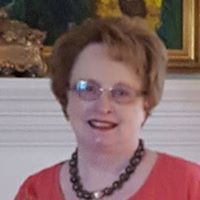
For over a decade, syndicated columnist Rheta Grimsley Johnson has been spending several months a year in Southwest Louisiana, deep in the heart of Cajun Country. Unlike many other writers who have parachuted into the swampy paradise for a few days or weeks, Rheta fell in love with the place, bought a second home and set in planting doomed azaleas and deep roots. She has found an assortment of beautiful people in a homely little town called Henderson, right on the edge of the Atchafalaya Swamp.
These days, much is labeled Cajun that is not, and the popularity of the unique culture’s food, songs and dance has been a mixed blessing. The revival of French Louisiana’s traditional music and cuisine often has been cheapened by counterfeits. Confused pilgrims sometimes look to New Orleans for a sampler platter of all things Cajun. Close, but no cigar.
Poor Man’s Provence helps define what’s what through lively characters and stories. The book is both personal odyssey and good reporting, travelogue and memoir, funny and frank. This beguiling place is as exotic as it gets without a passport. The author shares what keeps her coming home to French Louisiana.
And as NPR commentator Bailey White observes in her foreword, "Both Rheta's readers and the people she writes about will be comfortable, well fed, highly entertained, and happy they came to Poor Man's Provence ."
I had really looked forward to this book. I am moving to LA in 8 months and am reading everything about it that I can. I actually couldn't even finish this book. It was poorly thought out and whoever edited it should go back to school. Throughout the book I kept asking myself, did she even think about what she was saying before she wrote this? The overall tone of this book was of a whiny woman seeking cultural acceptance who has a very limited story telling ability.
Here are just a few examples of why I would not recommend this book to anyone:
1) The writer was talking about watching a local beauty pageant and how she strongly disagrees with beauty pageants because that they anti-feminist. Then she says "But the young cajun women are so beautiful...I suppose it would be a waste if they all turned up their noses at pageants, however anachronistic and sexist the events may be." Well, this struck me as a plainly stupid thing to say. A waste?! Why? Because then their beauty would not be objectified properly? Someone's feminist card just got revoked.
2) Discussing how nice some of her friends were, she told a story about how they were willing to lend her their only car so she could travel out of state to be with a sick relative. That is all fine and good, but then she writes "They were literally offering the shirt off their own back and wanted us to take it." The couple was NOT 'literally' offering the shirt off their own back, they were LITERALLY offering to lend her a car. Come on, this is a mistake that a high school kid knows not to make.
3) She has a slightly creepy relationship with the neighborhood children. She styles herself as some sort of feminine Mr. Rogers, and all the children come and spend quality time with her in the "Clubhouse" a.k.a. her backyard shed. Strange? Yes. Further, though she professes some deep bond with this kids, she refers to one of them as a "snaggled-tooth girl" who she hopes is not another "street urchin." She is LITERALLY calling a little girl names.
4)This writer ended up at a cock fighting match. She describes how the roosters are fitted with steel knives on their legs, which they stab their opponent to death with. She then talks about how this is not as bad as the chicken people eat every day, because those chickens are shackled to a conveyor belt, stunned, and then have their heads put through a guillotine. This is apparently much worse then cock fighting because, this author argues, "at least gamecocks die a natural death." I am sorry, but how is being stabbed to death by another rooster with knives a "natural death"???
In sum, I do not recommend this book to anyone with a modicum of sense.
I enjoy her story telling and of course much of it is relatable from growing up fairly close to where this takes place. Lots of references and anecdotes made me smile. I enjoyed reading about the people the author befriended in Henderson. Her writing made the place come to life. I made a list of some of the lesser known local musicians and restaurants mentioned so that I could look them up. A couple of specific parts of the book were strangely written (roosters-natural death in the part about cock fighting, ex- another reviewer pointed out a few things), but overall I enjoyed it.
Here is just a snippet of why I am savoring this book...
“I was born in south Georgia, grew up in Alabama, moved to Mississippi, worked years for a Tennessee newspaper, then, moved to Atlanta, which I disliked. I sometimes felt as if I had no real home. Mississippi had come closest to being that anchor most of us seem to need. I love my farm in north Mississippi, but even there I have no roots. Hill people are a bit suspicious of outsiders, which you will remain no matter how long you live there even if you were not born there. I’ve been spending time--at times, all my times--in the Iuka, Mississippi, area for more than two decades. And I still wouldn’t be invited to join the Newcomer’s Club if they had one. I think the distrust of outsiders in the hills harkens to a day when the best way to make a living was moonshine. Anyone who moves to town without a really good excuse is a potential revenuer, or the twenty-first century equivalent.
My own parents often sit around and rhapsodize about their hometown of Colquitt, Georgia, reminiscing about childhood and weaving genealogical tapestries that make my head spin. She was so-and-so before she married so-and-so’s youngest son and became so-and-so. My friends in Iuka who are natives feel the same way about north Mississippi. Listening to them talk is like reading the biblical begats aloud.
I, on the other hand, had no place on my private map that felt like the county seat of my heart. That can be a good thing. It can prevent you from boring others with non-ending stories about the Good Old Days in Pleasantville. It can give you perspective and help you keep an open mind about different cultures and mores.
But one Christmas day on a houseboat in the swamp, I identified with the floating water hyacinths. They blow with the wind and visit one shore one day and another the next. The locals cuss them.”
I have found myself enjoying this book where I thought it would put me to sleep. I was told it was charming and a true representation of what Cajun culture is truly like. While I don’t know if I would use the word charming I could say the statement "Ah we cher, dats just me yeah". It tends to be a bit repetitive with stories that turn full circle and finish themselves at the crossroads of another tale. In essence the repetitiveness is necessary to portray another part of the mystery behind the "laid back" attitude of a culture that can’t be understood unless it is experienced by outsiders. On pins and needles I await the culmination of this glimpse into a place better known to as “Cajun Country”. Jumping from the bed of painful pins and needles, the ending was every bit as interesting as the beginning, middle and all the tales falling between! I encourage you to read if you have even the most remote curiosity of "Cajun" life. Rheta Grimsley Johnson is a diverse author with an impressive following with a list of accomplishments that have intrigued me enough to seek her other publications.
Living in Luke, Mississippi, Rheta, a retired newspaper journalist for the liberal paper "The Atlanta Journal Constitution", and Don, a retired journalism professor at the University of Alabama, now avid duck hunter, purchased a getaway houseboat, the Green Queen, in the Basin Landing Marina on Henderson Lake, and later a cottage, in Henderson, Louisiana, where they would spend the next 10 years for Thanksgiving and Christmas holidays.
Her writing was just so-so, maybe because it was a bit shallow, or maybe even a little self-serving, or maybe I'm just a little bit jealous. I'm a Cajun and a direct descendant of Daniel LeBlanc and the infamous Joseph Broussard. My family migrated over here to SE Texas from SW Louisiana (just 10 minutes from the border) and she has experienced more in Louisiana, land of MY ancestors, than I ever have...and she's an outsider.
This book is short-takes and snippets of a few of her experiences. I can connect to one story when Rheta was getting her haircut, she asked the girl if she was from the area, really assuming she was because she had that heavy Cajun accent, but the girl replied, "Oh no! I'm from St. Martinville, me."...which was only about 10 miles up the road. Too funny!
Here, where I live, we say anyone above I-10 is up north...that's only about 5 minutes from my house. And one of my daughters moved all the way to Vidor, Texas. I hardly ever get to see her or my grandsons any more, at least not like I used to. But really, Vidor is only about a 15 minute drive...lolol. Cajuns really don't travel well. We love home.
And then, the author just had to go there. Politics (p. 188): Since she brought it up, I have a right to voice my opinion as well. The author obviously does not know political history when it comes to blacks and racism. It was the Democrats who have always held the blacks back. They WERE the Klu-Klux-Klan! It was the Republicans who fought for equal rights, even the right to vote. Today, it is still the Democrats who continue to dumb down by offering free this and free that. Keep them down and desperate and begging. It's all about power. She says that nothing has changed much in the Deep South, except now haters wear navy blue blazers instead of white sheets and have morphed into Young Republicans. Meanwhile, she's at St. Martinville's Evangeline park watching a marriage take place between a black man and a white woman. There doesn't seem to be a problem to me.
What's ironic is the fact that we don't see all the hate riots and destruction of property and businesses that we see and hear about on the news. All that takes place up north in those dilapidated liberal cities. Sure! There's still racism today, but it streams both ways. We just don't see it here like the lib-tards would like for us to see it. They want nothing more than to keep the hate going and racism alive.
The best you can get out of this memoir are restaurants to check out if ever travelling in the vicinity of Henderson, Louisiana. Unfortunately, Mulate’s in Breaux Bridge is no longer open. We ate there a few years back before it was sold and renamed. I’m not sure exactly when they closed, but it is now 2019…they are closed down. Mulate’s had a good run for 58 years, opened in 1953, before selling out in 2011 and renamed “Pont Breaux’s”.
• Chicken on the Bayou in Breaux Bridge, she swears they serve up the best poboys around. • Poche's Meat Market in Breaux Bridge serves buffet lunch line, highly recommended. • LeJeune's Bakery in Jeanerette still bakes the best fresh French bread from a 113 year old recipe.
BOOKS MENTIONED: • Helene Boudreaux singer and writer, wrote memoir "Cajun Survivor". (p. 48) • Greg Guirard's "Pyscotherapy for Cajuns"
FESTIVALS: Louisiana publishes a large volume of all festivals held in Louisiana throughout the year. Look into this. There's a Duck Festival in Gueydan, Frog Festival in Rayne, Crawfish Festival in Breaux Bridge...and pretty much every where else, and Bastille Day celebration in Kaplan...just to name a few.
CAJUN'S FAV CARD GAME: Learn to play the popular card game called "bourre".
NEVER KNEW: Never purchase bagged cypress chips for lawns which come from deforested cypress swamp forests. They clear-cut to make these chips and there aren't many of these cypress forests left.
POEM BY ROBERT SERVICE (p. 173): Brought tears to my eyes. It reminded me of our dog Scottie who got hit by a truck and flew into the ditch in front of the house. I ran to see and he painfully crawled out of the ditch to me and laid by my feet as the driver put his hand on his head and softly said his name, Scottie, and shot him to put him out of his misery. I had to bury him alone because my husband was working that evening. I'm just going to put that poem right here. It's a tender reminder of just how faithful dogs really are. Their love is so unconditional.
"One pearly day in early May I walked upon the sand And saw, say half a mile away, a man with gun in hand. A dog was cowering to his will as slow he sought to creep Upon a dozen ducks so still they seemed to be asleep. When like a streak the dog dashed out, the ducks flashed up in flight, The fellow gave a savage shout and cursed with all his might. Then as I stood somewhat amazed and gazed with eyes agog, With bitter rage his gun he raised and blazed and shot the dog. You know how dogs can yelp with pain; its blood soaked in the sand, And yet it crawled to him again, and tried to lick his hand. “Forgive me Lord for what I’ve done,” it seemed as if it said. But once again he raised his gun – this time he shot it dead. What could I do? What could I say? ‘Twas such a lonely place. Tongue-tied I watched him stride away, I never saw his face. I should have bawled the bastard out, a yellow dog he slew. But worse, he proved beyond a doubt that – I was yellow too."
Inaccurated information and disorganized presentation of material! Rather than writing an actual book, the author seems to have haphazardly pieced together some of her newspaper columns (or diary entries, I'm not sure which). I read this book as part of a "One Community/One Book" campaign in Baton Rouge, LA. Very disappointing!
I found this book disappointing; the quality of writing is very poor. The author writes a syndicated 500-word weekly column; this paperback reads like a simple concatenation of those columns.
I read this as part of the "One Book/One Community" event in Baton Rouge.
I couldn't make it through half the book. The content itself wasn't an issue, though I feel like Cajun Country and the Cajun way of life was a bit romanticized, as often is the case for some reason.
It definitely depicted Cajuns in a way that few authors have, giving dignity where it's due. This was a refreshing deviation from midst depictions that stick us as comic relief, bumbling idiots, and in-bred mutants.
The writing was a bit bland for my preferences. Johnson has a strong voice, making evident her experience as a journalist, but the flowing undertow was missing.
I am three-fourths Cajun and one fourth Wisconsin carpetbagger. I enjoyed this book, a book club selection, when she was reporting, but less when she painted Louisiana life as constantly joyful and fun loving. She reported truthfully the poverty and racism that exist. The carpetbagger in me may have won the day.
I'm no stranger to travel writing, but let me tell you how odd it feels to read a travel memoir of the place where you grew up as if it were some strange, foreign land. Granted, I grew up on the edge of Cajun country and not in the heart of it, but reading Rheta Johnson's memoir of discovering and moving to the swamp made me scratch my head at all the things about south Louisiana that she found surprising. "Isn't that just the way things are?" I'd ask myself.
Apparently not. Nevertheless, Ms. Johnson delved deep enough into the swamp to recount a few cultural oddities that even I was unfamiliar with (such as the alternate way Mardi Gras is celebrated in the most Cajun of Cajun small towns). Most of the time I found myself pining for a homey cabin (or "camp" as we Louisianians call our second homes) nestled back in the pines and not too far from the water. Most of all, I just miss living where you can take po-boys, red beans, and fried catfish for granted. Johnson may view it with an outsider's eyes, but I think she "gets it" more than she gives herself credit for.
Each chapter was a story unto itself which makes the reading of the book easy to read in spurts, so to speak. The information and history provided about the areas known as Cajun in Louisiana was most helpful and a delight. In the book the reader is introduced to wonderfully unique characters and a sense of fun and enjoyment of life that is not to be found in many areas of the world. In the last chapters of the book, though, the writer felt compelled to espouse too many of her own politically ideas which then led the book to be her social commentary rather than an introduction to Cajun living. This kept the book from being a great favorite. When I am reading a travel guide, which this was in a sense, I hope for that. I read political and social commentaries when I am looking for that in particular. I did not appreciate the method in which she wove the two together. Some others can blend the two effectively, but this was not done so in this case for me.
I disliked the journalistic writing style and that the book focuses on Rheta's experiences and favourite things (look out Oprah) rather than Cajun life.
What I loved was hearing about the characters, the language, the food and the places.
I felt this was more a thank you / tribute to Rheta's Henderson friends, but I still enjoyed it.
I was pleased that Rheta mentions Rebecca Wells (Author of Divine Secrets of the YA-YA Sisterhood) twice in the book as I am a big fan.
Oh, one last thing which I didn’t like was that Rheta comes across as slightly pompous through the whole book, always talking about money and her house in Henderson, her farm in Mississippi, purchasing countless boats and being charitable. Despite all this Rheta frequently claims to be averse to this kind of person.
Pretty good book. I picked this up at B&N in Lafayette - I love looking at the local sections in bookstores. I could identify with a lot of what the author wrote about in this book, especially when she talked about visiting an antique school mall in the small town of Washington, LA. My father started that antique mall years ago and I was shocked to see that the detail made into the book. It felt eerie in a way...
Her description of the people and the environment in South Louisiana is accurate - she doesn't sugar coat many of the ugly parts of life down there. In a way, it's both good and bad, but overall, an accurate portrayal of what it's like to live in South Louisiana - at least part time :)
I don't know how my husband and I missed this book when it was first published, but a close relative recently lent us his autographed copy. Our whole Alabama family knows how much we loved the 30 years we spent living and working in South Louisiana. Ms. Johnson vividly details living among the Cajuns as an outsider who is embraced by their love and community. Many of her observations are the ones we made through the years, and we lived on the other edge of Cajun country near New Orleans. She obviously didn't get into Lafourche Parish "down the Bayou" to the Politz family restaurant or to sample a Danny and Clyde's po-boy, but then who needs to go too far outside of any Cajun "region" to enjoy its gifts. Thank you, Ms. Johnson, for an riveting reading experience!
I'm really glad that I decided to continue with this book after the first two chapters. I nearly gave up (I found it VERY boring for the first three chapters), but gave it another chance. What a great read! Interesting to read about what an "outsider" thinks of this area. And I loved that Henderson sucked Rheta Grimsley Johnson in. I mean....Henderson??? I'd recommend this to anyone, but especially those who live here. I think you'll find it enjoyable, even though for the most part you're reading about what you already know.
Rheta Grimsley Johnson has always been one of my favorite journalists, so I knew I'd love her account of making a second home deep in Cajun country (especially being of Cajun descent myself). Her writing is as laser-sharp, witty, and poignant as ever, and her accounts of life in the little town of Henderson veer between kind, cranky, hilarious, and heartbreaking, usually all in the same chapter. A quick, smooth, but unforgettable read.
Light, fun true account from a journalist who visited and ended up spending much time living intermittedly for next 10 yrs. in Cajun Louisiana. Her accounts of the people, the food, and the area are written with humor, but never making fun or being demeaning of a totally different world within our USA that few people know or understand unless being there. She truly loved & respected those people and was most accepted by them which is much to her credit.
I love how Ms. Grimsley-Johnson writes. In this book, you can almost taste the shrimp and smell the french bread (when the "HOT FRENCH BREAD" sign is on). I came away with a new respect and understanding of the people of Cajun Louisiana, a people who are the butt of many jokes. I appreciate her love of the region and people, and how she makes even the seemingly tacky (like Christmas decorations)appear artful.
I think in a former (or future) life I was a Cajun. It is so heartwarming to read about this part of the country. Is it the pace of life or the attitude of the residents? I have no idea, but this is one of the areas of the country I am going to visit before I "cross over"...and for an extended visit. Keep the faith
This book is about my favorite spot in Louisiana and she captures the ambience expertly. She sets thr record straight on many misconceptions of the Cajun people and reaffirms what makes them a unique people. I love the Atchafalaya and hope everyone else will after reading this book.
Read for book club. Enjoyed this look at Acadiana through the eyes of an adopted 'Cajun'. The author is originally from Mississippi, came to Acadiana to cover a story for her syndicated newspaper column, and stayed.
Poor Man’s Provence: Finding Myself in Cajun Louisiana by Rheta Grimsley Johnson (NewSouth Books 2008) (917.63). Rheta writes on living in Cajun country part-time for ten years. Very well-told! My rating: 7.5/10, finished 2010.
I liked that this included descriptions of things the author likes about Cajun country and things she doesn't. I would have been happier to not hear about the cock fighting, but not hearing about it wouldn't mean it didn't happen, so I can understand why it's in there.