

What do you think?

Mothersucker
A chilling Korean novel of literary horror, following a grieving mother's transformation into a vampire that targets men who have harmed women—in the present, past, and future—and the female-led task force entrusted with solving the murders
On top of a mountain in Korea, buried underneath a mound of soil, 51-year-old Geum-hong wakes up transformed. Her senses are vivid, she has Herculean strength, and her appetite is deadly. The last thing she can recall of her old life is her grief. On the mountain, before losing consciousness, she had been scattering the ashes of her only daughter, who was brutally murdered by her ex-boyfriend at the age of 26. After a long trial, he received only a three year prison sentence. Geum-hong has no idea how long she’s been buried on the mountain, but she doesn’t mourn her former frailties. Her abilities may have changed, but her rage remains…
Days later, a man’s body is discovered in a nearby park. Detective Jin-seon Noh is called to the scene but soon discovers this case is unlike anything she’s seen before. The man, who was accused of stalking and harassing his ex-girlfriend only weeks before, was killed with startling force and drained of blood. As the weeks unfold and more men turn up murdered, Detective Jin-seon must race against the clock to uncover the killer before the country is upended by their dark justice.
A propulsive, lacerating exploration of power, privilege, and bigotry, Mothersucker reveals just how far a mother will go to protect the ones she loves.
On top of a mountain in Korea, buried underneath a mound of soil, 51-year-old Geum-hong wakes up transformed. Her senses are vivid, she has Herculean strength, and her appetite is deadly. The last thing she can recall of her old life is her grief. On the mountain, before losing consciousness, she had been scattering the ashes of her only daughter, who was brutally murdered by her ex-boyfriend at the age of 26. After a long trial, he received only a three year prison sentence. Geum-hong has no idea how long she’s been buried on the mountain, but she doesn’t mourn her former frailties. Her abilities may have changed, but her rage remains…
Days later, a man’s body is discovered in a nearby park. Detective Jin-seon Noh is called to the scene but soon discovers this case is unlike anything she’s seen before. The man, who was accused of stalking and harassing his ex-girlfriend only weeks before, was killed with startling force and drained of blood. As the weeks unfold and more men turn up murdered, Detective Jin-seon must race against the clock to uncover the killer before the country is upended by their dark justice.
A propulsive, lacerating exploration of power, privilege, and bigotry, Mothersucker reveals just how far a mother will go to protect the ones she loves.
194 pages, Kindle Edition
Published September 1, 2026
Ratings & Reviews
Friends & Following
Create a free account to discover what your friends think of this book!
Community Reviews
Displaying 1 - 30 of 129 reviews
September 21, 2026
an attempt was made, but not a good one.
June 6, 2026
Jeong, che significa quiete. E Ya, notte.
La notte silenziosa.
Che tutte le nostre notti possano essere tranquille.
Che possano essere tranquille.
Tranquille.
Per tutte noi.
Un racconto che è un perfetto mix tra thriller, sovrannaturale e racconto di denuncia.
Una protagonista non protagonista che diventa suo malgrado giustiziera.
Un racconto corale che parla di donne, violenza di genere e ingiustizia.
Molto particolare, molto bello.
La notte silenziosa.
Che tutte le nostre notti possano essere tranquille.
Che possano essere tranquille.
Tranquille.
Per tutte noi.
Un racconto che è un perfetto mix tra thriller, sovrannaturale e racconto di denuncia.
Una protagonista non protagonista che diventa suo malgrado giustiziera.
Un racconto corale che parla di donne, violenza di genere e ingiustizia.
Molto particolare, molto bello.
September 11, 2026
The Korean Title Was Bloody Mother. Vintage Felt That Was Too Subtle.
BWAF SINISTER SELECTION
TL;DR: The vampire is the least disturbing thing here. Kim Bohyun’s Mothersucker is built like a police procedural and cuts like a court transcript: exact, unsparing, arranged so the dread comes from the paperwork. I have not read another horror novel that trusts its structure this much. A highlight of the year.
The first body is found by a woman who took up running after her divorce. She used a free app. One minute running, two minutes walking, five times, then the walk home. It took her twenty-four attempts to run thirty minutes without stopping. On the morning in question she has been dreaming about her ex-husband standing under a streetlight, and she runs until she is somewhere she does not recognize, in a yellow haze of fine dust beside a stalled apartment construction site in Pajeong, where a small dog with a ruptured eye is barking at a storm drain. The dog’s vocal cords have been removed. It barks anyway. Inside the drain is a man burned black, kneeling, forehead to the ground, hands clasped, two branches of different lengths under the hands, mouth packed with floral foam.
That is chapter one. Chapter zero is half a page long and belongs to a woman named Geum-hong, who is on her kitchen floor watching her daughter die by the knife she peels potatoes with.
Mothersucker (the Korean title is Bloody Mother, which is less of a joke and more of a description) is Kim Bohyun’s first book in English, translated by Archana Madhavan. It runs about two hundred pages in thirty-eight short chapters, then two more, then an epilogue. Every chapter in the first part is headed with a year and a name. 2023, Jin-seon. 2017, Geum-hong. 2023, Eliza. 1969, Geum-hong. There is a cast list at the front with twenty-eight names on it and the words “murder victim” after six. Many of the names belong to women who appear for one chapter, find a body, and go. The title tells you what the killer is and the jacket tells you the rest of the premise. What the book withholds is everything else.
Here is the book this could have been. A grieving mother comes up out of the ground with fangs and a pair of pruning shears and works her way down a list of stalkers, blackmailers, lenient judges, and men who film women in bathrooms, and each one dies worse than the last, and the detective on the case is a woman who slowly comes around, and there is a scene near the end where the two of them face each other across a room and something is understood. That book exists. It is on the front table and it is fine. Kim spends a third of her pages on its apparatus (the National Forensic Service, a special investigation unit, a director who objects to the media’s name for the case because hwa means fire and hyeong means punishment and the police cannot be seen to agree) and the other two thirds on the people that book would have used as set dressing.
Those people are the point. Kyeong-shin, a bank teller, lets a tab of Xanax dissolve on her tongue outside the police station before an interview about the man who kept her compliant for months with hidden-camera footage. When she reported him, the officer asked her why she thought this had happened to her. Ga-in hikes alone on peaks with ak in the name, because those are the hard ones, and spends her Sundays beside a hospital bed where her partner has been asleep for seventy-two days after some medical students on the subway decided to find out whether she was male or female. Eliza, a farmer’s wife from the Philippines whose name in Korea became Lee-ja, which sounds like a piece of her husband’s name and a piece of her mother-in-law’s and an incomplete version of her own, walks a full circle around her village with a fever before dawn and finds what is caught in the boar trap. A janitor at the forensic hospital holds the hand of the first friend she ever made, who is a patient there. Each of them gets one chapter, written in the same close, undecorated third person, and the chapter does not explain her. She finds the body, or the trap, or the window, and the chapter ends.
The police get the same economy. Jin-seon’s father was a detective too. He has dementia now and calls her “Darling” because the memory that survived is a call he made once to her mother, from a roadside, with two knives in his back. Her partner joined the force because civil servants get approved for bank loans. The medical examiner has a temporary cartoon tattoo on the back of her hand and two rules. The profiler wears a mouth guard because she grinds her teeth, and she notices that the central database keeps surfacing new cold cases every time she runs the same search, like a news portal refreshing, and she starts to say so in the briefing and stops, because it would look like she had not done her research. (This is the most frightening paragraph in the book and it takes place at a conference table.)
This is where you are supposed to feel the horror: the bodies. Burned from the skin inward with no ignition point, still breathing while it happened, soot in the airways, carbon monoxide in the blood. The book gives you one of these in full and then trusts you. What it spends its dread on instead is paperwork. A sentencing article, reproduced whole, in which the court explains that three years is appropriate because the knife was already in the victim’s home, so nothing was premeditated. The phrase “Don’t Ask Why” assault, which is what the Korean press calls an attack it would rather not assign a motive. A tip line where men who have done the same things as the victims call in and ask for protection. Kim understands that a named real thing in the wrong register is worse than anything invented, and she keeps handing you the real thing. The vampire is the least disturbing element in the novel. She is also the only one of these voices written in the first person, and the only one allowed to love anyone out loud.
Her chapters are dated out of order. 2017, 2017, 2017, 2018, 1969, 2023, 2023, 2023, 2023, 1993. The 1969 chapter is a page and a half and takes place inside her mother’s womb, where she considers wrapping the cord around her own neck so that none of it will begin, and then hears her mother start to sing. I am not going to tell you where the 1993 chapter takes place. Madhavan’s translation keeps this plain. The sentences are short, the nouns are exact (soybean paste stew, seasoned eggplant, stir-fried zucchini, fried eggs, the doorbell), and when Geum-hong’s voice breaks it breaks into a list, which I think is how the whole book is meant to work. The individual item is bearable. The catalogue is not. When the violence arrives in her own voice it is not choreographed. Bones snap, she says, unbelievably easily. She tastes a man’s fear in his blood and reports it the way she reported the eggplant. Then she looks at the sky.
Pacing. It holds. The chapters are short enough that the white space is doing half the work, and a couple of the police chapters are functionally interchangeable (someone is tired, someone drives, a phone rings), and the book turns that sameness against you in one stretch where three consecutive chapters, from three pairs of eyes, end on the same sentence. Then come the two chapters of the second part and the epilogue. I will say only that each is written in a register the book has not used before, that one of them has footnotes, and that the epilogue is called “Someday Doughnut Club,” which is in the table of contents and which I am not going to interpret.
Complaints, such as they are: the profiler is handed a paragraph of UN and Korea Women’s Hotline statistics that reads as pasted from a research folder, and a late chapter opens on eight lines of William Blake it did not need. That’s the list.
Kim Bohyun has been at this for fifteen years. She debuted in 2011 with a short story in the literary quarterly Jaeum & Moeum, then spent most of the next decade closer to film than to publishing, winning the Korea Story Contest in 2013 and 2015; the 2013 entry, a story called “Owl Boy,” became the 2022 period thriller The Night Owl. Her first novel, in 2017, was a zombie book about a nineteen-year-old fencer with a burn scar; a director had asked her for something like Warm Bodies and she wrote a coming-of-age story instead. Her second, in 2022, was a thriller about a depressed mother turned investigator; asked about it, she said she was drawn to “depressed, mad women” because they were both herself and the women she loved, and that people used to the dark see more clearly in it. Mothersucker came out in Korea in 2024 from Safehouse, expanded from a 2018 short story in the crime magazine Mysteria. She has said she belongs fully to neither world. You can feel that here. The book is built like a script (the cast list, the dated slugs, the act break) and written like a story collection, and I have not read another horror novel, lately, that trusts its arrangement this much.
Jin-seon, at the drain, wonders whether the dog barked until its eye burst out of loyalty or out of something else, and whether dogs can feel compassion. She does not say it out loud. The dog is not the victim’s. The body goes to the National Forensic Service, with the branches.
BWAF SINISTER SELECTION
TL;DR: The vampire is the least disturbing thing here. Kim Bohyun’s Mothersucker is built like a police procedural and cuts like a court transcript: exact, unsparing, arranged so the dread comes from the paperwork. I have not read another horror novel that trusts its structure this much. A highlight of the year.
The first body is found by a woman who took up running after her divorce. She used a free app. One minute running, two minutes walking, five times, then the walk home. It took her twenty-four attempts to run thirty minutes without stopping. On the morning in question she has been dreaming about her ex-husband standing under a streetlight, and she runs until she is somewhere she does not recognize, in a yellow haze of fine dust beside a stalled apartment construction site in Pajeong, where a small dog with a ruptured eye is barking at a storm drain. The dog’s vocal cords have been removed. It barks anyway. Inside the drain is a man burned black, kneeling, forehead to the ground, hands clasped, two branches of different lengths under the hands, mouth packed with floral foam.
That is chapter one. Chapter zero is half a page long and belongs to a woman named Geum-hong, who is on her kitchen floor watching her daughter die by the knife she peels potatoes with.
Mothersucker (the Korean title is Bloody Mother, which is less of a joke and more of a description) is Kim Bohyun’s first book in English, translated by Archana Madhavan. It runs about two hundred pages in thirty-eight short chapters, then two more, then an epilogue. Every chapter in the first part is headed with a year and a name. 2023, Jin-seon. 2017, Geum-hong. 2023, Eliza. 1969, Geum-hong. There is a cast list at the front with twenty-eight names on it and the words “murder victim” after six. Many of the names belong to women who appear for one chapter, find a body, and go. The title tells you what the killer is and the jacket tells you the rest of the premise. What the book withholds is everything else.
Here is the book this could have been. A grieving mother comes up out of the ground with fangs and a pair of pruning shears and works her way down a list of stalkers, blackmailers, lenient judges, and men who film women in bathrooms, and each one dies worse than the last, and the detective on the case is a woman who slowly comes around, and there is a scene near the end where the two of them face each other across a room and something is understood. That book exists. It is on the front table and it is fine. Kim spends a third of her pages on its apparatus (the National Forensic Service, a special investigation unit, a director who objects to the media’s name for the case because hwa means fire and hyeong means punishment and the police cannot be seen to agree) and the other two thirds on the people that book would have used as set dressing.
Those people are the point. Kyeong-shin, a bank teller, lets a tab of Xanax dissolve on her tongue outside the police station before an interview about the man who kept her compliant for months with hidden-camera footage. When she reported him, the officer asked her why she thought this had happened to her. Ga-in hikes alone on peaks with ak in the name, because those are the hard ones, and spends her Sundays beside a hospital bed where her partner has been asleep for seventy-two days after some medical students on the subway decided to find out whether she was male or female. Eliza, a farmer’s wife from the Philippines whose name in Korea became Lee-ja, which sounds like a piece of her husband’s name and a piece of her mother-in-law’s and an incomplete version of her own, walks a full circle around her village with a fever before dawn and finds what is caught in the boar trap. A janitor at the forensic hospital holds the hand of the first friend she ever made, who is a patient there. Each of them gets one chapter, written in the same close, undecorated third person, and the chapter does not explain her. She finds the body, or the trap, or the window, and the chapter ends.
The police get the same economy. Jin-seon’s father was a detective too. He has dementia now and calls her “Darling” because the memory that survived is a call he made once to her mother, from a roadside, with two knives in his back. Her partner joined the force because civil servants get approved for bank loans. The medical examiner has a temporary cartoon tattoo on the back of her hand and two rules. The profiler wears a mouth guard because she grinds her teeth, and she notices that the central database keeps surfacing new cold cases every time she runs the same search, like a news portal refreshing, and she starts to say so in the briefing and stops, because it would look like she had not done her research. (This is the most frightening paragraph in the book and it takes place at a conference table.)
This is where you are supposed to feel the horror: the bodies. Burned from the skin inward with no ignition point, still breathing while it happened, soot in the airways, carbon monoxide in the blood. The book gives you one of these in full and then trusts you. What it spends its dread on instead is paperwork. A sentencing article, reproduced whole, in which the court explains that three years is appropriate because the knife was already in the victim’s home, so nothing was premeditated. The phrase “Don’t Ask Why” assault, which is what the Korean press calls an attack it would rather not assign a motive. A tip line where men who have done the same things as the victims call in and ask for protection. Kim understands that a named real thing in the wrong register is worse than anything invented, and she keeps handing you the real thing. The vampire is the least disturbing element in the novel. She is also the only one of these voices written in the first person, and the only one allowed to love anyone out loud.
Her chapters are dated out of order. 2017, 2017, 2017, 2018, 1969, 2023, 2023, 2023, 2023, 1993. The 1969 chapter is a page and a half and takes place inside her mother’s womb, where she considers wrapping the cord around her own neck so that none of it will begin, and then hears her mother start to sing. I am not going to tell you where the 1993 chapter takes place. Madhavan’s translation keeps this plain. The sentences are short, the nouns are exact (soybean paste stew, seasoned eggplant, stir-fried zucchini, fried eggs, the doorbell), and when Geum-hong’s voice breaks it breaks into a list, which I think is how the whole book is meant to work. The individual item is bearable. The catalogue is not. When the violence arrives in her own voice it is not choreographed. Bones snap, she says, unbelievably easily. She tastes a man’s fear in his blood and reports it the way she reported the eggplant. Then she looks at the sky.
Pacing. It holds. The chapters are short enough that the white space is doing half the work, and a couple of the police chapters are functionally interchangeable (someone is tired, someone drives, a phone rings), and the book turns that sameness against you in one stretch where three consecutive chapters, from three pairs of eyes, end on the same sentence. Then come the two chapters of the second part and the epilogue. I will say only that each is written in a register the book has not used before, that one of them has footnotes, and that the epilogue is called “Someday Doughnut Club,” which is in the table of contents and which I am not going to interpret.
Complaints, such as they are: the profiler is handed a paragraph of UN and Korea Women’s Hotline statistics that reads as pasted from a research folder, and a late chapter opens on eight lines of William Blake it did not need. That’s the list.
Kim Bohyun has been at this for fifteen years. She debuted in 2011 with a short story in the literary quarterly Jaeum & Moeum, then spent most of the next decade closer to film than to publishing, winning the Korea Story Contest in 2013 and 2015; the 2013 entry, a story called “Owl Boy,” became the 2022 period thriller The Night Owl. Her first novel, in 2017, was a zombie book about a nineteen-year-old fencer with a burn scar; a director had asked her for something like Warm Bodies and she wrote a coming-of-age story instead. Her second, in 2022, was a thriller about a depressed mother turned investigator; asked about it, she said she was drawn to “depressed, mad women” because they were both herself and the women she loved, and that people used to the dark see more clearly in it. Mothersucker came out in Korea in 2024 from Safehouse, expanded from a 2018 short story in the crime magazine Mysteria. She has said she belongs fully to neither world. You can feel that here. The book is built like a script (the cast list, the dated slugs, the act break) and written like a story collection, and I have not read another horror novel, lately, that trusts its arrangement this much.
Jin-seon, at the drain, wonders whether the dog barked until its eye burst out of loyalty or out of something else, and whether dogs can feel compassion. She does not say it out loud. The dog is not the victim’s. The body goes to the National Forensic Service, with the branches.

Review of advance copy received from NetGalley
Feminine rage horror meets police procedural. You learn about a string of mysterious murders committed by someone who's trying to punish men who absolutely deserve to be punished. Overall it's a quick read that definitely kept me entertained, though there are some flaws. The crime fiction elements are very repetitive, and the whole story takes itself too seriously, which causes it to land as melodramatic rather than getting at the unapologetically feral tone that it probably should have been reaching for. I still think it gets close enough to that tone. I could see what it was trying to do, and it left me with a lot of thoughts about what it means to be a victim and what it means to be safe. It's also a pretty interesting taking on vampires. I also immensely enjoyed the ending.
Credit the translator: the prose is just as smooth and propulsive as it needs to be for a police procedural. No awkward speed bumps that you sometimes see as a result of difficulties with translations.
~Thank you to NetGalley and the publisher for a Digital ARC. All opinions are my own.~
Credit the translator: the prose is just as smooth and propulsive as it needs to be for a police procedural. No awkward speed bumps that you sometimes see as a result of difficulties with translations.
~Thank you to NetGalley and the publisher for a Digital ARC. All opinions are my own.~

April 21, 2026
Un romanzo strano e indubbiamente originale. Contiene al suo interno una storia thriller sovrannaturale vampiresca collegata a tematiche di femminicidio e violenza di genere, con moralità molto grigia.
Questo mix tra realismo e fantasia è interessante, però richiede una certa dose di sospensione dall'incredulità (i risvolti fantasiosi non hanno regole precise, ma semplicemente avvengono, e questo è, secondo me, il punto debole dell'elemento fantasy).
La narrazione è trascinante, il ritmo è dinamico, con una struttura narrativa parecchio frammentata, perché formata da capitoli brevi che cambiano punto di vista in continuazione. Ciò inizialmente ha creato in me un po' di confusione, ma poi ho capito che questa scelta rimane del tutto funzionale alle intenzioni dell’autrice, ovvero: poter dar voce a tante situazioni diverse di violenza di genere, per sensibilizzare sulla questione e sull’inadeguatezza del sistema giudiziario.
È stata una lettura che mi ha commossa e indignata per l’ingiustizia degli eventi, ma anche divertita e coinvolta nei risvolti.
Questo mix tra realismo e fantasia è interessante, però richiede una certa dose di sospensione dall'incredulità (i risvolti fantasiosi non hanno regole precise, ma semplicemente avvengono, e questo è, secondo me, il punto debole dell'elemento fantasy).
La narrazione è trascinante, il ritmo è dinamico, con una struttura narrativa parecchio frammentata, perché formata da capitoli brevi che cambiano punto di vista in continuazione. Ciò inizialmente ha creato in me un po' di confusione, ma poi ho capito che questa scelta rimane del tutto funzionale alle intenzioni dell’autrice, ovvero: poter dar voce a tante situazioni diverse di violenza di genere, per sensibilizzare sulla questione e sull’inadeguatezza del sistema giudiziario.
È stata una lettura che mi ha commossa e indignata per l’ingiustizia degli eventi, ma anche divertita e coinvolta nei risvolti.
September 1, 2026
Il problema enorme di questo libro è la quarta di copertina, che dichiara nelle prime tre righe l'elemento sovrannaturale alla base del thriller e la natura dell'assassina, andando di fatto a inficiare una rivelazione che, se fosse arrivata con i tempi narrativi interni al romanzo, sarebbe stata certamente più di impatto.
Invece no, nelle prime cinque pagine è già chiaro il colpevole, il perché abbia ucciso e come abbia ucciso.
Allucinante.
Tolto questo, rimangono solo troppi personaggi piatti e una denuncia sui femminicidi calzante, ma anche piuttosto sterile.
PS. Questo è un problema mio, ma i nomi coreani sono un inferno. Non riuscivo a ricordarmene mezzo e dovevo tutte le volte andare a ricordare chi era il tal personaggio (la caratterizzazione piatta non aiutava).
Invece no, nelle prime cinque pagine è già chiaro il colpevole, il perché abbia ucciso e come abbia ucciso.
Allucinante.
Tolto questo, rimangono solo troppi personaggi piatti e una denuncia sui femminicidi calzante, ma anche piuttosto sterile.
PS. Questo è un problema mio, ma i nomi coreani sono un inferno. Non riuscivo a ricordarmene mezzo e dovevo tutte le volte andare a ricordare chi era il tal personaggio (la caratterizzazione piatta non aiutava).

May 26, 2026
Mothersucker is everything I could ever hope or ask for in a book. Female rage, revenge, AND vampirism? I was thoroughly hooked from start to finish. The multiple POVs made it a somewhat challenging read, but my only real complaint is that it was too short! I can’t wait to see what else this author puts out in the future. 5/5 stars. #NetGalley #Mothersucker

April 14, 2026
3,5 stelline


April 11, 2026
La qualità di questo romanzo coreano è altissima! Violenza, traumi e soprannaturale in un mix esplosivo di suspense e scrittura magistrale!
Una donna “vampira” giustiziera punisce gli uomini violenti per vendicarsi della scomparsa di sua figlia. Serve altro per convincervi a leggerlo?
Ah si edizione e traduzione pazzesca by Mercurio ♥️
Una donna “vampira” giustiziera punisce gli uomini violenti per vendicarsi della scomparsa di sua figlia. Serve altro per convincervi a leggerlo?
Ah si edizione e traduzione pazzesca by Mercurio ♥️

Review of advance copy received from NetGalley
And the award for ‘THE HEALING JOURNEY IS GETTING A LITTLE TOO CINEMATIC’ goes to…
Mothersucker by Kim Bohyun
And by cinematic, I of course, mean Kim Bohyun went absolutely feral.
So, Geum-hong’s daughter gets unalived by her absolutely trash ex-boyfriend, who then gets handed a flop three-year sentence 💀 Yes, you best believe I was crashing out with that absolute clown behaviour from the justice system, but this shit happens, fr.
Geum-hong goes up a mountain to scatter the ashes, gets swallowed by dirt, and spawns back in with MAXXED-OUT stats (and a vampire diet). She really skips the therapy and goes straight to john wick dark justice mode 💅🔥
And honestly, good for her.
She’s on a strictly ‘eat men who hurt women’ diet. High protein, zero crumbs left. And I am Marie Antoinetting the shit out of this situation. I say: “Let her eat toxic masculinity!”
This brand of weird girl lit has me gnawing at the bars of my enclosure. I am completely feral right now for women literally blowing up the ‘trauma-into-self-improvement’ pipeline. Just call me Nancy, I’m saying NO to the healing era, NO to the glow-up, and a HELL NO to ‘everything happens for a reason’. Just say no 😉
I grew up with the 80s cinematic ‘Working Girl’ mantra “WE make it happen” and honestly, Melanie Griffith, you ate that down. There’s a reason your daughter Dakota is so very f*!king nonchalantly wise. You clock that, Ellen… you were literally invited to the party.
This is female rage with fangs, where rage isn’t softened into therapy speak. Amen.
But then Kim Bohyun sics a female detective on Geum-hong. Now why did she have to go and do that? It’s literally ‘women trapped in a flop institutional system’ vs. ‘a woman who fully hit unsubscribe on the patriarchy’. The dynamic is actually (deliciously) unhinged. It obliterates the gap between morally indefensible and horrifically, emotionally satisfying 😬 And the deeply rancid little part of my brain whispers, ‘Okay, but like… do we actually have to catch her though? 💀
My only real complaint? 🤏
I wanted MORE ROT. I wanted more Geum-hong, more vampire era, more dirt-under-the-fingernails female rage.
It’s giving way more Cracker than I thought it would, and the multiple POVs and timelines had me hella confused. Sometimes I’d be aggressively barrelling through the chapters and have to stop and be like, ‘Wait, sorry babe, who the f*!k are you again?’ 💀 I can’t be the only one, right? 😭
But honestly, Archana Madhavan’s translation absolutely clears. It flies by so fast; this was a literal one-sitting read.
Four stars because my brain occasionally needed a corkboard and red string to remember who everyone was.
But spiritually?
I support women’s rights. And women’s wrongs.
The healing era is officially cancelled.
Rot. Grow fangs. Become a problem. WE MAKE IT HAPPEN! 🔥
Mothersucker • Kim Bohyun
Translated by Archana Madhavan
Thank you @NetGalley @dead ink
Publishing 22|10|26
Mothersucker by Kim Bohyun
And by cinematic, I of course, mean Kim Bohyun went absolutely feral.
So, Geum-hong’s daughter gets unalived by her absolutely trash ex-boyfriend, who then gets handed a flop three-year sentence 💀 Yes, you best believe I was crashing out with that absolute clown behaviour from the justice system, but this shit happens, fr.
Geum-hong goes up a mountain to scatter the ashes, gets swallowed by dirt, and spawns back in with MAXXED-OUT stats (and a vampire diet). She really skips the therapy and goes straight to john wick dark justice mode 💅🔥
And honestly, good for her.
She’s on a strictly ‘eat men who hurt women’ diet. High protein, zero crumbs left. And I am Marie Antoinetting the shit out of this situation. I say: “Let her eat toxic masculinity!”
This brand of weird girl lit has me gnawing at the bars of my enclosure. I am completely feral right now for women literally blowing up the ‘trauma-into-self-improvement’ pipeline. Just call me Nancy, I’m saying NO to the healing era, NO to the glow-up, and a HELL NO to ‘everything happens for a reason’. Just say no 😉
I grew up with the 80s cinematic ‘Working Girl’ mantra “WE make it happen” and honestly, Melanie Griffith, you ate that down. There’s a reason your daughter Dakota is so very f*!king nonchalantly wise. You clock that, Ellen… you were literally invited to the party.
This is female rage with fangs, where rage isn’t softened into therapy speak. Amen.
But then Kim Bohyun sics a female detective on Geum-hong. Now why did she have to go and do that? It’s literally ‘women trapped in a flop institutional system’ vs. ‘a woman who fully hit unsubscribe on the patriarchy’. The dynamic is actually (deliciously) unhinged. It obliterates the gap between morally indefensible and horrifically, emotionally satisfying 😬 And the deeply rancid little part of my brain whispers, ‘Okay, but like… do we actually have to catch her though? 💀
My only real complaint? 🤏
I wanted MORE ROT. I wanted more Geum-hong, more vampire era, more dirt-under-the-fingernails female rage.
It’s giving way more Cracker than I thought it would, and the multiple POVs and timelines had me hella confused. Sometimes I’d be aggressively barrelling through the chapters and have to stop and be like, ‘Wait, sorry babe, who the f*!k are you again?’ 💀 I can’t be the only one, right? 😭
But honestly, Archana Madhavan’s translation absolutely clears. It flies by so fast; this was a literal one-sitting read.
Four stars because my brain occasionally needed a corkboard and red string to remember who everyone was.
But spiritually?
I support women’s rights. And women’s wrongs.
The healing era is officially cancelled.
Rot. Grow fangs. Become a problem. WE MAKE IT HAPPEN! 🔥
Mothersucker • Kim Bohyun
Translated by Archana Madhavan
Thank you @NetGalley @dead ink
Publishing 22|10|26

Review of advance copy received from NetGalley
3.5
Mothersucker is a supernatural revenge novel by Kim Bohyun which follows, among a legion of characters, Geum-Hong, a heartbroken and grieving mother whose daughter is brutally murdered in her own home by her ex-boyfriend, an attack in which Geum-Hong herself is also assaulted.
Devastated by the light sentence the murderer receives for her daughter's death, and after her own turning, Geum-Hong decides that if justice will not be given, then it will be taken.
Mothersucker is very much a book of two halves. I felt the first part had somewhat of an identity crisis. One moment it was a police procedural, then it quickly became a series of unconnected vignettes that stretched backwards and forwards through time, seasoned with very real and sobering statistics concerning domestic abuse in South Korea. To be frank, the supernatural elements were the least horrifying aspect of the book.
As frustrating as the first half of the novel was, however, Bohyun did a wonderful job of bringing all the unrelated threads together for a satisfying conclusion.
While Mothersucker may not immediately appeal to anyone looking for a straightforward supernatural revenge story, it does reward the patient reader and is a unique offering for the genre.
Worth a look.
With thanks to Dead Ink Books for the ARC.
Mothersucker is a supernatural revenge novel by Kim Bohyun which follows, among a legion of characters, Geum-Hong, a heartbroken and grieving mother whose daughter is brutally murdered in her own home by her ex-boyfriend, an attack in which Geum-Hong herself is also assaulted.
Devastated by the light sentence the murderer receives for her daughter's death, and after her own turning, Geum-Hong decides that if justice will not be given, then it will be taken.
Mothersucker is very much a book of two halves. I felt the first part had somewhat of an identity crisis. One moment it was a police procedural, then it quickly became a series of unconnected vignettes that stretched backwards and forwards through time, seasoned with very real and sobering statistics concerning domestic abuse in South Korea. To be frank, the supernatural elements were the least horrifying aspect of the book.
As frustrating as the first half of the novel was, however, Bohyun did a wonderful job of bringing all the unrelated threads together for a satisfying conclusion.
While Mothersucker may not immediately appeal to anyone looking for a straightforward supernatural revenge story, it does reward the patient reader and is a unique offering for the genre.
Worth a look.
With thanks to Dead Ink Books for the ARC.


October 4, 2026
Ogni tanto fa bene leggere storie di vendetta.

August 11, 2026
Un fantathriller coreano in cui un essere misterioso inizia a uccidere uomini che hanno in vari modi abusato delle donne. Nessuno vuole davvero fermarlo, ovviamente xD

Review of advance copy received from NetGalley
Mothersucker
Kim Bohyun | Pantheon, Vintage, Knopf, and Anchor
Translated by Archana Madhavan.
Suspense
⭐️⭐️⭐️⭐️
Can overwhelming grief—the kind born from losing a child—change your very essence? Could it turn you into a monster? In Mothersucker, the answer is a resounding yes. 👍😁
In this haunting Korean-based thriller, Geum-Hong is a grieving mother whose daughter, Jeong-ya, was brutally murdered by her abusive ex-boyfriend. When the killer receives a ridiculously lenient three-year sentence, Geum-Hong’s mind snaps. Soon after, the horrifically burned bodies of men begin appearing across the province—each with one striking detail in common: a history of domestic abuse. As lead detective Noh Jin-seon and profiler Jeong-young investigate the cases, both begin to suspect that something supernatural is at play, though neither dares voice it aloud.
While Mothersucker eventually won me over in its second half, it was almost a DNF for me. 🤷 Early on, the story feels disjointed, reading more like standalone vignettes than cohesive chapters as it shifts abruptly between abuse victims and then police investigation. Once the narrative threads converge, however, the novel becomes an absolute page-turner.
Beyond the mystery, the book delivers a sharp social critique of how systemic bias values abusive men over law-abiding female citizens, contrasting starkly with sobering real-world statistics in South Korea, where women make up 80% of intimate partner homicide victims.🤬🤬🤬
I’m so glad I stuck with this translated ARC and will certainly be on the lookout for more of Kim Bohyun’s work.
Thank you, NetGalley and Knopf et al., for the opportunity to read this ARC in exchange for an honest review. My views are my own.
Kim Bohyun | Pantheon, Vintage, Knopf, and Anchor
Translated by Archana Madhavan.
Suspense
⭐️⭐️⭐️⭐️
Can overwhelming grief—the kind born from losing a child—change your very essence? Could it turn you into a monster? In Mothersucker, the answer is a resounding yes. 👍😁
In this haunting Korean-based thriller, Geum-Hong is a grieving mother whose daughter, Jeong-ya, was brutally murdered by her abusive ex-boyfriend. When the killer receives a ridiculously lenient three-year sentence, Geum-Hong’s mind snaps. Soon after, the horrifically burned bodies of men begin appearing across the province—each with one striking detail in common: a history of domestic abuse. As lead detective Noh Jin-seon and profiler Jeong-young investigate the cases, both begin to suspect that something supernatural is at play, though neither dares voice it aloud.
While Mothersucker eventually won me over in its second half, it was almost a DNF for me. 🤷 Early on, the story feels disjointed, reading more like standalone vignettes than cohesive chapters as it shifts abruptly between abuse victims and then police investigation. Once the narrative threads converge, however, the novel becomes an absolute page-turner.
Beyond the mystery, the book delivers a sharp social critique of how systemic bias values abusive men over law-abiding female citizens, contrasting starkly with sobering real-world statistics in South Korea, where women make up 80% of intimate partner homicide victims.🤬🤬🤬
I’m so glad I stuck with this translated ARC and will certainly be on the lookout for more of Kim Bohyun’s work.
Thank you, NetGalley and Knopf et al., for the opportunity to read this ARC in exchange for an honest review. My views are my own.

June 12, 2026
Un incubo. Raccontato in più punti di vista, con nomi coreani illeggibili. Più parti diverse. Horror praticamente. Parla solo di violenze. No grazie, troppo per me.

May 3, 2026
4+
Leggere questo romanzo è stato molto difficile e non è facile digerirlo se si è una donna.
La violenza di genere e il femminicidio sono problematiche molto discusse al giorno d’oggi (d’altronde siamo talmente regrediti che persino la definizione stessa di donna è soggetta a dibattiti continui), ma ancora non si riesce a contenerle… o non si vuole farlo.
In una società governata dagli uomini, per gli uomini, le donne non sono altro che le vittime sacrificali. E, anche se grazie ai media non se ne parla granché, nei paesi asiatici che sembrano così “avanti” rispetto a noi come la Corea del Sud e il Giappone, queste situazioni sono realtà quotidiane.
Ed è inutile specificarlo: basta chiedere a qualsiasi donna se è stata vittima di molestie, catcalling o abusi e la risposta sarà sempre e solo una.
Serviva quindi una figura vendicativa per strappare la giustizia dalle carni dei carnefici in un sistema che continua a dimostrarsi del tutto inutile e inadeguato alla protezione di metà della popolazione? Sì.
E Sangue Madre è un romanzo che parla proprio di questo. Di una madre, del suo dolore e del suo desiderio di vendicarsi.
La trama è un misto tra thriller, horror e realismo magico. La narrazione è corale e ogni capitolo si alterna con le testimonianze delle varie donne coinvolte a quelli dell’indagine condotta dalla polizia per scoprire l’identità del serial killer.
Ho apprezzato molto il personaggio di Jinseon e il suo rapporto con il padre e i colleghi. Ma è proprio per questo che il finale non mi ha soddisfatta.
Certo, il tutto ti fa urlare “GOOD FOR THEM!” perché la soddisfazione c’è e non lo nego, eppure ho sentito la mancanza di una chiusura per la sua storia. E poi lo devo ammettere: le dinamiche dei salti temporali non sono poi così chiare.
Aggiungo anche che, mentre leggevo, continuava a tornarmi in mente Le Guardiane della Notte. Sono ovviamente due libri a sé, eppure hanno diversi punti in comune.
Sangue Madre si dimostra quindi un romanzo attuale che lascia il segno, ma che ti lascia un po’ l’amaro in bocca.
Leggere questo romanzo è stato molto difficile e non è facile digerirlo se si è una donna.
La violenza di genere e il femminicidio sono problematiche molto discusse al giorno d’oggi (d’altronde siamo talmente regrediti che persino la definizione stessa di donna è soggetta a dibattiti continui), ma ancora non si riesce a contenerle… o non si vuole farlo.
In una società governata dagli uomini, per gli uomini, le donne non sono altro che le vittime sacrificali. E, anche se grazie ai media non se ne parla granché, nei paesi asiatici che sembrano così “avanti” rispetto a noi come la Corea del Sud e il Giappone, queste situazioni sono realtà quotidiane.
Ed è inutile specificarlo: basta chiedere a qualsiasi donna se è stata vittima di molestie, catcalling o abusi e la risposta sarà sempre e solo una.
Serviva quindi una figura vendicativa per strappare la giustizia dalle carni dei carnefici in un sistema che continua a dimostrarsi del tutto inutile e inadeguato alla protezione di metà della popolazione? Sì.
E Sangue Madre è un romanzo che parla proprio di questo. Di una madre, del suo dolore e del suo desiderio di vendicarsi.
La trama è un misto tra thriller, horror e realismo magico. La narrazione è corale e ogni capitolo si alterna con le testimonianze delle varie donne coinvolte a quelli dell’indagine condotta dalla polizia per scoprire l’identità del serial killer.
Ho apprezzato molto il personaggio di Jinseon e il suo rapporto con il padre e i colleghi. Ma è proprio per questo che il finale non mi ha soddisfatta.
Certo, il tutto ti fa urlare “GOOD FOR THEM!” perché la soddisfazione c’è e non lo nego, eppure ho sentito la mancanza di una chiusura per la sua storia. E poi lo devo ammettere: le dinamiche dei salti temporali non sono poi così chiare.
Aggiungo anche che, mentre leggevo, continuava a tornarmi in mente Le Guardiane della Notte. Sono ovviamente due libri a sé, eppure hanno diversi punti in comune.
Sangue Madre si dimostra quindi un romanzo attuale che lascia il segno, ma che ti lascia un po’ l’amaro in bocca.

September 3, 2026
🧛♀️ MOTHERSUCKER 🧛♀️
((Spoiler-Free ARC Review))
Title- Mothersucker
Author- Kim Bohyun
Genre- Feminist Horror Thriller
Series- Standalone
Trope City-
🧛🏻♀️ Female Rage
🧛🏻♀️ Serial Killings
🧛🏻♀️ A Mother’s Revenge
🧛🏻♀️ Korea Setting
🧛🏻♀️ Mystery, Crime, Horror
The pure feminine rage of the pages of this book! I give it a standing ovation. As a feminist, I thrive reading books written in a very infuriating, very real space. Though humans are sucking blood, they are abusive, cruel creatures. The violence and unfair treatment is sadly a universal truth. Set in Korea, Mothersucker is a story surrounding a mother’s revenge. Bodies are being discovered in Korea in the same exact compromised position. They’re men, on their knees in a prayer position, with a bite mark on their necks, bloodless and burned. There’s not a single piece of evidence left behind at each crime scene. The other similarities among the dead? They’re all men who’ve historically abused, stalked and harmed women. Geum-Hong is a grieving mother who lost her sweet daughter to a stalking on and off boyfriend. She’s feeling the ultimate pain in this life without her daughter. Her anger turns to so much more.
I LOVED THIS BOOK. So powerful, so painful, so twisty. It’s well-done. Thank you Alfred Knopf and Harper Collins for this gifted copy! I’m obsessed 🧛🏻♀️❤️
((Spoiler-Free ARC Review))
Title- Mothersucker
Author- Kim Bohyun
Genre- Feminist Horror Thriller
Series- Standalone
Trope City-
🧛🏻♀️ Female Rage
🧛🏻♀️ Serial Killings
🧛🏻♀️ A Mother’s Revenge
🧛🏻♀️ Korea Setting
🧛🏻♀️ Mystery, Crime, Horror
The pure feminine rage of the pages of this book! I give it a standing ovation. As a feminist, I thrive reading books written in a very infuriating, very real space. Though humans are sucking blood, they are abusive, cruel creatures. The violence and unfair treatment is sadly a universal truth. Set in Korea, Mothersucker is a story surrounding a mother’s revenge. Bodies are being discovered in Korea in the same exact compromised position. They’re men, on their knees in a prayer position, with a bite mark on their necks, bloodless and burned. There’s not a single piece of evidence left behind at each crime scene. The other similarities among the dead? They’re all men who’ve historically abused, stalked and harmed women. Geum-Hong is a grieving mother who lost her sweet daughter to a stalking on and off boyfriend. She’s feeling the ultimate pain in this life without her daughter. Her anger turns to so much more.
I LOVED THIS BOOK. So powerful, so painful, so twisty. It’s well-done. Thank you Alfred Knopf and Harper Collins for this gifted copy! I’m obsessed 🧛🏻♀️❤️

September 23, 2026
Thank you to NetGalley for an ARC of
Mothersucker.
First, I love the title — it’s feisty, punny, and attention-grabbing.
It's the reason why I requested an ARC before I even read the premise.
Second, I appreciated the unique twist on vampirism; revenge against scumbags is trending right now.
The idea of maternal rage turning a grieving mother into a vampire bent on vengeance is compelling.
However, a translated book was challenging to read, especially when it came to names — translations make it hard to keep track of who’s who.
There are also too many POVs, which made following characters and actions confusing.
The narrative needed to be longer in order to develop the characters (the grieving mother, the police detective, her ill dad and how he relates to the investigation) and to build the vampire world and the time-travel element — that last part genuinely intrigued me and deserved far more exposition.
Also, what’s with the victims’ positioning and the symbolism?
That's never fully developed, either.
There was so much to work with, so many loose ends, so much left explained.
I wanted to know MORE!!!
This had enormous potential; my main complaint with many books is the strong concept that's never fully realized and that applies here.
First, I love the title — it’s feisty, punny, and attention-grabbing.
It's the reason why I requested an ARC before I even read the premise.
Second, I appreciated the unique twist on vampirism; revenge against scumbags is trending right now.
The idea of maternal rage turning a grieving mother into a vampire bent on vengeance is compelling.
However, a translated book was challenging to read, especially when it came to names — translations make it hard to keep track of who’s who.
There are also too many POVs, which made following characters and actions confusing.
The narrative needed to be longer in order to develop the characters (the grieving mother, the police detective, her ill dad and how he relates to the investigation) and to build the vampire world and the time-travel element — that last part genuinely intrigued me and deserved far more exposition.
Also, what’s with the victims’ positioning and the symbolism?
That's never fully developed, either.
There was so much to work with, so many loose ends, so much left explained.
I wanted to know MORE!!!
This had enormous potential; my main complaint with many books is the strong concept that's never fully realized and that applies here.
July 5, 2026
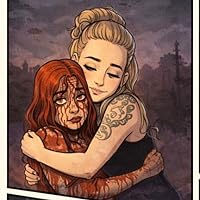
Sangue madre è uno di quei libri che dimostrano come il soprannaturale possa essere un mezzo potentissimo per raccontare temi estremamente reali. Attraverso questo l’autrice affronta argomenti come femminicidio, violenza sulle donne, stalking e abusi, costruendo un romanzo che va ben oltre la sua componente fantastica.
Quello che mi ha colpita più di tutto è stata la protagonista. Più che una giustiziera, ai miei occhi è una madre distrutta dal dolore. Ogni sua azione nasce da una perdita impossibile da elaborare, e questo l’ha resa un personaggio profondamente umano. Ho provato tanta tristezza per lei e mi è rimasta nel cuore fino all’ultima pagina. Ho amato anche il messaggio di solidarietà femminile che attraversa tutto il romanzo e che nel finale raggiunge, secondo me, il suo momento più potente. È un’immagine che mi ha emozionata molto e che racchiude perfettamente il senso della storia: donne che, in un mondo che troppo spesso le lascia sole, trovano il modo di sostenersi a vicenda.
In poco più di duecento pagine, Sangue madre riesce a essere doloroso e profondamente significativo. È una lettura che mi ha colpita più di quanto mi aspettassi e che mi porterò dietro per molto tempo.
Quello che mi ha colpita più di tutto è stata la protagonista. Più che una giustiziera, ai miei occhi è una madre distrutta dal dolore. Ogni sua azione nasce da una perdita impossibile da elaborare, e questo l’ha resa un personaggio profondamente umano. Ho provato tanta tristezza per lei e mi è rimasta nel cuore fino all’ultima pagina. Ho amato anche il messaggio di solidarietà femminile che attraversa tutto il romanzo e che nel finale raggiunge, secondo me, il suo momento più potente. È un’immagine che mi ha emozionata molto e che racchiude perfettamente il senso della storia: donne che, in un mondo che troppo spesso le lascia sole, trovano il modo di sostenersi a vicenda.
In poco più di duecento pagine, Sangue madre riesce a essere doloroso e profondamente significativo. È una lettura che mi ha colpita più di quanto mi aspettassi e che mi porterò dietro per molto tempo.
June 11, 2026
Seguimi sui social: deborah.reads 🦇
"L'assassino che Jeong-yeon stava inseguendo era un mostro generato da altri mostri. A un'azione corrisponde una reazione. Eppure qualcosa continuava a suggerirle che forse non si trattava di una metafora o di un concetto, ma di una creatura mostruosa in carne e ossa. Un vero e proprio mostro.
Un vampiro che succhia sangue umano.
Un essere immortale, che trascende i confini del tempo.."
Sangue Madre è un libro particolare, un mix di vari generi tra cui horror e thriller e grida vendetta sin dalle prime pagine. Mi ha toccato particolarmente il modo in cui ci racconta la violenza di genere inserendo una vampira giustiziera che ha perso sua figlia e vuole punire i colpevoli.
Non è una storia facile da digerire, sono stata arrabbiata per la maggior parte del tempo ma Kim Bohyun ha una scrittura dinamica e scorrevole (togliendo la difficoltà con i nomi coreani, lo ammetto) rendendo tutto più semplice.
È un libro che consiglio ma va letto con la consapevolezza della storia alla quale si va incontro.
*Gifted
"L'assassino che Jeong-yeon stava inseguendo era un mostro generato da altri mostri. A un'azione corrisponde una reazione. Eppure qualcosa continuava a suggerirle che forse non si trattava di una metafora o di un concetto, ma di una creatura mostruosa in carne e ossa. Un vero e proprio mostro.
Un vampiro che succhia sangue umano.
Un essere immortale, che trascende i confini del tempo.."
Sangue Madre è un libro particolare, un mix di vari generi tra cui horror e thriller e grida vendetta sin dalle prime pagine. Mi ha toccato particolarmente il modo in cui ci racconta la violenza di genere inserendo una vampira giustiziera che ha perso sua figlia e vuole punire i colpevoli.
Non è una storia facile da digerire, sono stata arrabbiata per la maggior parte del tempo ma Kim Bohyun ha una scrittura dinamica e scorrevole (togliendo la difficoltà con i nomi coreani, lo ammetto) rendendo tutto più semplice.
È un libro che consiglio ma va letto con la consapevolezza della storia alla quale si va incontro.
*Gifted

June 15, 2026
Lo stile estremamente semplice e lineare di questo libro trae in inganno.
Sì, perché ti spinge a divorare un capitolo dopo l’altro, seguendo vari personaggi che pian piano compongono un mosaico, e ti fa entrare in un mondo fatto di violenza e dolore. Un mondo che le donne conoscono bene, in tutte le sue forme. E se la giustizia non le tutela, dalle nebbie del lutto e della collera risorge una vampira, pronta a punire gli uomini malvagi.
Solo per questa premessa, il libro vale la lettura.
Però. Però. È un thriller sovrannaturale senza una vera conclusione, un romanzo che nel finale si perde in una serie di voci oniriche senza, per esempio, chiudere degnamente gli archi di Jeonson, Yuno e Dahae.
E anche la storia dei salti temporali appare appena abbozzata e non ben integrata nel resto della trama.
Quindi nonostante abbia apprezzato la lettura, il finale mi lascia tiepida.
Sì, perché ti spinge a divorare un capitolo dopo l’altro, seguendo vari personaggi che pian piano compongono un mosaico, e ti fa entrare in un mondo fatto di violenza e dolore. Un mondo che le donne conoscono bene, in tutte le sue forme. E se la giustizia non le tutela, dalle nebbie del lutto e della collera risorge una vampira, pronta a punire gli uomini malvagi.
Solo per questa premessa, il libro vale la lettura.
Però. Però. È un thriller sovrannaturale senza una vera conclusione, un romanzo che nel finale si perde in una serie di voci oniriche senza, per esempio, chiudere degnamente gli archi di Jeonson, Yuno e Dahae.
E anche la storia dei salti temporali appare appena abbozzata e non ben integrata nel resto della trama.
Quindi nonostante abbia apprezzato la lettura, il finale mi lascia tiepida.
October 3, 2026
3.75/5 - Although it's disgusting how current the main themes of this book are right now, I really enjoyed this. The vampiric elements were an interesting twist on the female rage/revenge narrative, and I predictably love books that feature grief. I thought the structure of the first part of the book worked really well and I liked the changing perspectives. The jumping timeline and choppiness of the chapters were well used to make the reader constantly feel a bit unbalanced. The pace was quick moving and I liked the police procedural rush. The second part of the book felt somewhat out of place for me. I enjoyed getting more clarity on the fantasy 'rules' but generally I thought part two was weak. The epilogue was a big miss for me. I didn't like the way it was written and thought it added very little to the book. I liked the way the book ended on the sort of uplifting tone of survivorship and community, but the structure had the whole book ending on a bit of downhill slope. All-in-all, I thought the book was well written (for the most part) and well translated. I would definitely seek out other work by Kim.
This entire review has been hidden because of spoilers.
May 20, 2026
3.5⭐️
Un romanzo strano ed inaspettato. Mi è piaciuto ma manca di qualcosa.
Una vampira che ammazza chiunque maltratti/abusi di una donna. Una vampira che è diventata tale per quello che lei stessa ha subito e per la perdita di sua figlia. Una vigilante ed eroina agli occhi delle vittime, ma rimane una “protagonista” che passa quasi in secondo piano. Il libro si incentra sull’investigazione della morte di questi uomini.
Interessante ed originale, decisamente fuori dagli schemi. Mi aspettavo una cosa diversa ma è comunque passabile.
Un romanzo strano ed inaspettato. Mi è piaciuto ma manca di qualcosa.
Una vampira che ammazza chiunque maltratti/abusi di una donna. Una vampira che è diventata tale per quello che lei stessa ha subito e per la perdita di sua figlia. Una vigilante ed eroina agli occhi delle vittime, ma rimane una “protagonista” che passa quasi in secondo piano. Il libro si incentra sull’investigazione della morte di questi uomini.
Interessante ed originale, decisamente fuori dagli schemi. Mi aspettavo una cosa diversa ma è comunque passabile.
September 4, 2026
If you are wanting something that is unique, haunting, emotional, and absolutely dripping with feminine rage, Mothersucker needs to be added to your TBR immediately.
My opinion ? I wouldn't complain if we had someone like this in today's world... Just saying...
If you feel a little confused by the general layout and such at first, give it time. It's a bit strange, but completely pays off in the end ❤️
My opinion ? I wouldn't complain if we had someone like this in today's world... Just saying...
If you feel a little confused by the general layout and such at first, give it time. It's a bit strange, but completely pays off in the end ❤️

June 22, 2026
3- direi, secondo me è troppo corto? la trama è così avvincente e interessante e ha delle ottime premesse, e poi la narrazione è un po’ troppo sbrigativa e poco avvincente. avrei preferito tipo 200 pagine in più e più dettagli. il finale molto carino però
September 9, 2026
Good narration and a good story too! The names were a bit of a challenge but I still enjoyed the story!!

Displaying 1 - 30 of 129 reviews