

What do you think?

Awake Awake
Mary has started remembering things that she knows aren't real—but the events feel exactly like her actual memories. Who is she, if she can't be sure she knows her own past?
A writer in her 30s struggling to make rent, Mary has moved back to her childhood town to bartend and save money, when she starts remembering absurd events, clear and visceral as if they’d really happened to her. But she knows they’re too wild to be possible. Flashing back to her school years, she searches the past for what could have caused this split in her reality. The lives of their close group of school friends have since diverged, as life choices and politics, partners and children, have taken them to different places and placed them into other stories. But Mary must reconnect with them to find solid ground again.
Set against the disorienting and rapidly changing political backdrop of the 2000s and 2010s, Booker Prize finalist Mozley’s disarming coming-of-age tale is addictively readable, and poignantly captures the shakiness of identity – both personal and national – and the anchoring force of friendship.
A writer in her 30s struggling to make rent, Mary has moved back to her childhood town to bartend and save money, when she starts remembering absurd events, clear and visceral as if they’d really happened to her. But she knows they’re too wild to be possible. Flashing back to her school years, she searches the past for what could have caused this split in her reality. The lives of their close group of school friends have since diverged, as life choices and politics, partners and children, have taken them to different places and placed them into other stories. But Mary must reconnect with them to find solid ground again.
Set against the disorienting and rapidly changing political backdrop of the 2000s and 2010s, Booker Prize finalist Mozley’s disarming coming-of-age tale is addictively readable, and poignantly captures the shakiness of identity – both personal and national – and the anchoring force of friendship.
320 pages, Hardcover
First published June 4, 2026
About the author
Fiona Mozley
9 books484 followersFiona Mozley grew up in York and went to King's College, Cambridge, after which she lived in Buenos Aires and London. She is studying for a PhD in medieval history. Her first novel Elmet was shortlisted for the Man Booker Prize 2017.
Ratings & Reviews
Friends & Following
Create a free account to discover what your friends think of this book!
Community Reviews
Displaying 1 - 30 of 79 reviews

August 14, 2026
i too have memories of things that never happened...but i think that's mostly because i'm really good at lying
(thanks to the publisher for the e-arc)
(review to come)
(thanks to the publisher for the e-arc)
(review to come)

May 11, 2026
3.75⭐️ Awake Awake by Fiona Mosley is a quiet, emotional literary fiction novel that explores memory, identity, family, and the lingering effects of the past. The story centers around Mary, a woman struggling with her memory and trying to navigate both her present reality and the fragmented pieces of her past. As the novel unfolds, it becomes a deeply reflective story about loss, confusion, and the way memories shape who we are.
Fiona Mosley’s writing was one of the strongest parts of the book for me. Her prose is atmospheric, thoughtful, and beautifully detailed. She writes emotions in such a subtle and realistic way, allowing the reader to slowly sink into Mary’s world and mindset. There’s a dreamlike quality to parts of the novel that really matched the themes of fading memories and uncertainty. Even during slower moments, the writing itself kept me interested because it was so carefully crafted.
Mary was an especially compelling character because of how vulnerable and human she felt. Her struggle with memory added an emotional depth to the story and created a sense of tension throughout the novel. I also appreciated the complexity of the relationships in the book. The interactions between characters felt layered and authentic, with unspoken emotions and histories simmering beneath the surface.
The pacing was a little mixed for me overall. Some sections felt quite slow, and there were moments where I found myself losing momentum and wanting the story to move forward more quickly. However, other parts completely drew me in, especially when more details about Mary’s memories and emotional state started coming together. Those moments made me feel genuinely invested in the story and the characters.
What really stood out to me was the way the novel explored memory not only as recollection, but as something fragile and unreliable. Fiona Mosley captures the uncertainty and emotional weight of forgetting in such an intimate way. The book feels more focused on atmosphere, emotion, and character reflection than on plot-driven action, which gave it a haunting and thoughtful tone that stayed with me after finishing it.
Overall, Awake Awake is a beautifully written and emotionally layered novel that will appeal to readers who enjoy introspective literary fiction and character-driven stories. While the pacing didn’t always fully work for me, the writing, themes, and emotional depth made it a worthwhile and memorable read.
Thank you NetGalley, Algonquin Books, and the author Fiona Mosley for the ARC in exchange for my honest review.
Publishing date: June 4th, 2026
Fiona Mosley’s writing was one of the strongest parts of the book for me. Her prose is atmospheric, thoughtful, and beautifully detailed. She writes emotions in such a subtle and realistic way, allowing the reader to slowly sink into Mary’s world and mindset. There’s a dreamlike quality to parts of the novel that really matched the themes of fading memories and uncertainty. Even during slower moments, the writing itself kept me interested because it was so carefully crafted.
Mary was an especially compelling character because of how vulnerable and human she felt. Her struggle with memory added an emotional depth to the story and created a sense of tension throughout the novel. I also appreciated the complexity of the relationships in the book. The interactions between characters felt layered and authentic, with unspoken emotions and histories simmering beneath the surface.
The pacing was a little mixed for me overall. Some sections felt quite slow, and there were moments where I found myself losing momentum and wanting the story to move forward more quickly. However, other parts completely drew me in, especially when more details about Mary’s memories and emotional state started coming together. Those moments made me feel genuinely invested in the story and the characters.
What really stood out to me was the way the novel explored memory not only as recollection, but as something fragile and unreliable. Fiona Mosley captures the uncertainty and emotional weight of forgetting in such an intimate way. The book feels more focused on atmosphere, emotion, and character reflection than on plot-driven action, which gave it a haunting and thoughtful tone that stayed with me after finishing it.
Overall, Awake Awake is a beautifully written and emotionally layered novel that will appeal to readers who enjoy introspective literary fiction and character-driven stories. While the pacing didn’t always fully work for me, the writing, themes, and emotional depth made it a worthwhile and memorable read.
Thank you NetGalley, Algonquin Books, and the author Fiona Mosley for the ARC in exchange for my honest review.
Publishing date: June 4th, 2026
August 12, 2026
Fiona Mozley places her third novel entirely inside a mind that trusts its own account completely and rarely deserves that trust. That mind belongs to Mary Mooney, a novelist in her thirties working bar shifts in York, the northern English city where she grew up.
Mary believes her late grandfather, a Jewish officer in the British army during the Second World War, once had a secret interaction with Hitler inside a Berlin garden in 1945. The whole book turns on how much of that belief we end up sharing, since Mary has been given a psychiatric diagnosis that produces vivid, detailed memories of events that seem invented after the fact.
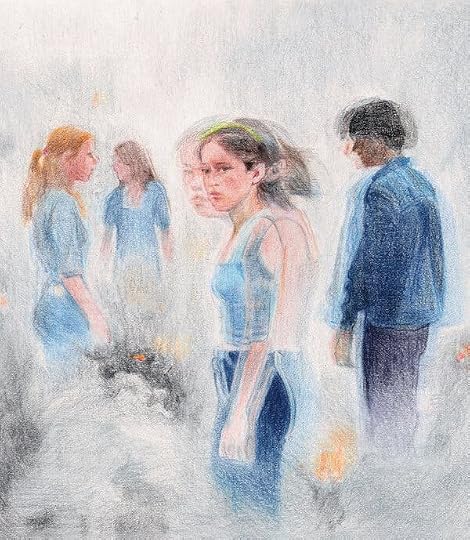
Mary's story reaches back to her school days in York, inside a tight four-person friend group that shapes everything that follows. Amelia is the group's golden girl, eager to please a domineering father, and later a single mother raising a young daughter. Eve, the sharpest and most combative of the four, turns into a war reporter covering the conflict in Syria.
Eric Schaffer, an American boy, transfers to their York school midway through and becomes a well known journalist and podcaster in adulthood, remaining Mary's closest confidant as her mental health worsens.
A fifth figure keeps reappearing across the decades without truly belonging to this group, a troubled classmate named Billy Fletcher, expelled from school as a child after a cruel prank against an elderly, wheelchair-using neighbour, who resurfaces again and again in crisis as an adult.
Youthful chapters of potato fights and pop songs sit beside chapters set decades later, where two older literary men corner Mary at a London bookshop party and hand her an elaborate secret history that appears to rewrite her family tree entirely.
Long, accumulating sentences stacked with concrete detail, an aspidistra cutting here, a flood-swollen river there, create a childhood thick enough to grieve for while also mimicking the crowded quality of a mind manufacturing its own evidence.
I felt the middle stretch dragged too much. Extended set pieces, a school assembly where the headmaster publicly interrogates Billy Fletcher, a family dinner party heavy with academic sparring between two fathers, a radio interview Mary recalls giving about her own first novel, taxed my patience considerably before their purpose became clear.
I rather it was a taut, thriller-paced descent into delusion. Alas, Mozley is working a slower, more accumulative register, closer to case history than suspense novel. The back third, when Mary's condition worsens and chronology starts to slip, had some of the momentum I was looking for.
Mary carries the book on voice alone, wry, self-lacerating, occasionally cruel toward her own history and everyone around her. Amelia and Eric are a touch thinner, useful chiefly as reflections of Mary's spiral, though Eve, absent for most of the book and present only in memory, casts the heaviest emotional weight of anyone in it. Billy Fletcher, glimpsed only a handful of times across three decades, does more with less page time than several characters granted whole chapters.
If you like unreliable narrators in the vein of Ottessa Moshfegh's self-sabotaging women, you will find familiar pleasures here, sharpened by a specifically British obsession with class, cathedral cities and the Second World War as inherited property. Despite the brevity, this is a slow read best suited to readers happy to sit with unresolved ambiguity. A study of how grief and mental illness manufacture their own convincing evidence. I loved it. A little McEwan, a little Easton Ellis, and even a pinch of Plath. Mostly Mozley, and it is wonderful.
❤️ 🇮🇱
Mary believes her late grandfather, a Jewish officer in the British army during the Second World War, once had a secret interaction with Hitler inside a Berlin garden in 1945. The whole book turns on how much of that belief we end up sharing, since Mary has been given a psychiatric diagnosis that produces vivid, detailed memories of events that seem invented after the fact.
Mary's story reaches back to her school days in York, inside a tight four-person friend group that shapes everything that follows. Amelia is the group's golden girl, eager to please a domineering father, and later a single mother raising a young daughter. Eve, the sharpest and most combative of the four, turns into a war reporter covering the conflict in Syria.
Eric Schaffer, an American boy, transfers to their York school midway through and becomes a well known journalist and podcaster in adulthood, remaining Mary's closest confidant as her mental health worsens.
A fifth figure keeps reappearing across the decades without truly belonging to this group, a troubled classmate named Billy Fletcher, expelled from school as a child after a cruel prank against an elderly, wheelchair-using neighbour, who resurfaces again and again in crisis as an adult.
Youthful chapters of potato fights and pop songs sit beside chapters set decades later, where two older literary men corner Mary at a London bookshop party and hand her an elaborate secret history that appears to rewrite her family tree entirely.
Long, accumulating sentences stacked with concrete detail, an aspidistra cutting here, a flood-swollen river there, create a childhood thick enough to grieve for while also mimicking the crowded quality of a mind manufacturing its own evidence.
I felt the middle stretch dragged too much. Extended set pieces, a school assembly where the headmaster publicly interrogates Billy Fletcher, a family dinner party heavy with academic sparring between two fathers, a radio interview Mary recalls giving about her own first novel, taxed my patience considerably before their purpose became clear.
I rather it was a taut, thriller-paced descent into delusion. Alas, Mozley is working a slower, more accumulative register, closer to case history than suspense novel. The back third, when Mary's condition worsens and chronology starts to slip, had some of the momentum I was looking for.
Mary carries the book on voice alone, wry, self-lacerating, occasionally cruel toward her own history and everyone around her. Amelia and Eric are a touch thinner, useful chiefly as reflections of Mary's spiral, though Eve, absent for most of the book and present only in memory, casts the heaviest emotional weight of anyone in it. Billy Fletcher, glimpsed only a handful of times across three decades, does more with less page time than several characters granted whole chapters.
If you like unreliable narrators in the vein of Ottessa Moshfegh's self-sabotaging women, you will find familiar pleasures here, sharpened by a specifically British obsession with class, cathedral cities and the Second World War as inherited property. Despite the brevity, this is a slow read best suited to readers happy to sit with unresolved ambiguity. A study of how grief and mental illness manufacture their own convincing evidence. I loved it. A little McEwan, a little Easton Ellis, and even a pinch of Plath. Mostly Mozley, and it is wonderful.
❤️ 🇮🇱

Did Not Finish
July 20, 2026The premise of this is so interesting and it’s clearly well written, but it’s just not drawing me in or holding my interest AT ALL. I think I was expecting something different. DNF’ing at around 22 %.
Did Not Finish
July 29, 2026dnf @ 30%. I ultimately couldn't get into the story. This is on me, as I assumed the story would have a more unsettling vibe based on the synopsis and cover.
The writing is nice, and I think it does a good job of building an atmospheric setting, but the story was too slow, and I found myself constantly rereading sentences because I was too bored to pay attention. Maybe I'll come back to it when I'm in the mood for something of this nature, but I will be putting it down for now
The writing is nice, and I think it does a good job of building an atmospheric setting, but the story was too slow, and I found myself constantly rereading sentences because I was too bored to pay attention. Maybe I'll come back to it when I'm in the mood for something of this nature, but I will be putting it down for now

August 4, 2026
This might be one of the most "literary fiction" books I have read this year. If you are looking for explosions, a linear plot, or neat little answers, run away right now. This is a 320 page character study of a woman trapped in an existential gaslight, probably. She probably is. I had a hard time putting it down, to be honest.
The reader absorbs the story of our narrator, Mary, mostly via her visits to her psychiatrist. Mary is smart, holds a steady job, maintains close friend and family bonds, and has even written an award-shortlisted book. But Mary harbors a deeply embedded memory that powerful people told her her grandfather killed Hitler. Because everyone insists this cannot possibly be true, she has come to cross-examine and weaponize doubt against her entire childhood, especially since her brother has a history of dissociative episodes.
Mozley keeps you completely invested based purely on the strength of this voice. In true literary fashion, she leaves some things unresolved at the end, choosing resolve some unexpected things instead. It is a stunning tightrope act of a novel. I loved it. 4.75 stars
(Also, as a bizarre bit of cosmic synchronicity for my reading calendar: right as I was preparing to launch “The Odyssey” as part of my Q3 Greek-themed focus, the text here dropped a sentence about a circular window reminding the mother of "the eye of the cyclops, gazing down at us like lost sailors... in search of Greeks." The universe is clearly holding up signs!)
Thanks to Algonquin Books, Fiona Mozley (author), and Edelweiss for the digital review copy of Awake Awake. Their generosity did not influence my review.
The reader absorbs the story of our narrator, Mary, mostly via her visits to her psychiatrist. Mary is smart, holds a steady job, maintains close friend and family bonds, and has even written an award-shortlisted book. But Mary harbors a deeply embedded memory that powerful people told her her grandfather killed Hitler. Because everyone insists this cannot possibly be true, she has come to cross-examine and weaponize doubt against her entire childhood, especially since her brother has a history of dissociative episodes.
Mozley keeps you completely invested based purely on the strength of this voice. In true literary fashion, she leaves some things unresolved at the end, choosing resolve some unexpected things instead. It is a stunning tightrope act of a novel. I loved it. 4.75 stars
(Also, as a bizarre bit of cosmic synchronicity for my reading calendar: right as I was preparing to launch “The Odyssey” as part of my Q3 Greek-themed focus, the text here dropped a sentence about a circular window reminding the mother of "the eye of the cyclops, gazing down at us like lost sailors... in search of Greeks." The universe is clearly holding up signs!)
Thanks to Algonquin Books, Fiona Mozley (author), and Edelweiss for the digital review copy of Awake Awake. Their generosity did not influence my review.

May 6, 2026
My review for this book was published by Library Journal in July 2026:
Booker-nominated Mozley (Elmet and Hot Stew) returns with a disorienting third novel, narrated by a protagonist who readily admits she cannot be trusted. Mary Mooney is a writer in her 30s, prone to torrents of memories that feel in her bones capital-T True, even in defiance of the factual record. With her therapist, she revisits her childhood and adolescence in York, England, spent mainly with her friends Amelia, Eve, and American-born Eric, as the quartet navigates dramatic episodes of life in the Blair-era UK: school trauma, antiwar protests, budding love, and jealousy. Mary recounts these scenes in vivid detail, confident in the role they have played in the constructed reality of her life’s history, yet she compares those close to her to actors performing in a play for her benefit. She has also come to believe, despite protestations from her friends, that her grandfather was responsible for Adolf Hitler’s death. Are these invented memories delusions of grandeur, evidence of psychosis, or, in Freud’s view, the fulfillment of a wish? VERDICT A slow-burn novel that hums with disquieting energy and likely needs a second read to be fully absorbed.
Copyright ©2026 Library Journals LLC, a wholly owned subsidiary of Media Source, Inc. Reprinted with permission.
Booker-nominated Mozley (Elmet and Hot Stew) returns with a disorienting third novel, narrated by a protagonist who readily admits she cannot be trusted. Mary Mooney is a writer in her 30s, prone to torrents of memories that feel in her bones capital-T True, even in defiance of the factual record. With her therapist, she revisits her childhood and adolescence in York, England, spent mainly with her friends Amelia, Eve, and American-born Eric, as the quartet navigates dramatic episodes of life in the Blair-era UK: school trauma, antiwar protests, budding love, and jealousy. Mary recounts these scenes in vivid detail, confident in the role they have played in the constructed reality of her life’s history, yet she compares those close to her to actors performing in a play for her benefit. She has also come to believe, despite protestations from her friends, that her grandfather was responsible for Adolf Hitler’s death. Are these invented memories delusions of grandeur, evidence of psychosis, or, in Freud’s view, the fulfillment of a wish? VERDICT A slow-burn novel that hums with disquieting energy and likely needs a second read to be fully absorbed.
Copyright ©2026 Library Journals LLC, a wholly owned subsidiary of Media Source, Inc. Reprinted with permission.
Want to Read
August 9, 2026I'm loving the resurgence of neon yellow text for book covers. very lit-fic like

August 6, 2026
3.5 ⭐️
This wasn’t what I thought it would be, but I’m kinda not complaining. I went into this thinking it would be an unhinged weird literary work, but it was a lot more introspective and reflective which I appreciated.
Themes of mental illness (diagnosed and undiagnosed), familial ties, the relationships that we form in childhood and how those grow and expand/contract in adulthood. What it means to be a woman vs a man in today’s society, and how we internalize those struggles that we find difficult to articulate.
More of a slow-burn read, I was moved by this and would definitely recommend this to others who enjoy character-driven strange reflective stories.
Thanks to Algonquin Books & NetGalley for the advanced reader copy of this book. All thoughts and opinions are my own and my review is left voluntarily.
This wasn’t what I thought it would be, but I’m kinda not complaining. I went into this thinking it would be an unhinged weird literary work, but it was a lot more introspective and reflective which I appreciated.
Themes of mental illness (diagnosed and undiagnosed), familial ties, the relationships that we form in childhood and how those grow and expand/contract in adulthood. What it means to be a woman vs a man in today’s society, and how we internalize those struggles that we find difficult to articulate.
More of a slow-burn read, I was moved by this and would definitely recommend this to others who enjoy character-driven strange reflective stories.
Thanks to Algonquin Books & NetGalley for the advanced reader copy of this book. All thoughts and opinions are my own and my review is left voluntarily.
July 19, 2026
I’m struggling to make any sense of this book and what point the writer is trying to make.
Mary is a writer, devoted to her friends, grieving her beloved father, and solicitous of her younger brother who appears to be suffering from schizophrenia. She also fears she too is psychotic, having a number of (apparently) false memories.
We learn about Mary’s past and how her relationships have survived the passage into adulthood.
Mary is a writer, devoted to her friends, grieving her beloved father, and solicitous of her younger brother who appears to be suffering from schizophrenia. She also fears she too is psychotic, having a number of (apparently) false memories.
We learn about Mary’s past and how her relationships have survived the passage into adulthood.

April 7, 2026
Awake Awake is a descriptive journey that begins with a vivid recounting of Mary’s childhood and the cast of characters she remembers fondly. The author is clearly talented, using a lush writing style to capture these memories and create sensory experiences for the reader.
However, the story’s pace was too slow to maintain momentum. I found myself setting the book aside for days at a time, and upon picking it back up, I struggled to feel invested in Mary and her storyline. While I truly enjoyed the author's writing style, the narrative fell short of capturing my interest.
Thank you Algonquin Books and NetGalley for the ARC in exchange for an honest review
Rating ⭐️⭐️
Genre Literary Fiction
Buy/Skip/Borrow
Skip. While the writing is vivid, the slow-burn nature of the plot may not satisfy readers looking for a more engaging, character-driven hook.
Read if you like descriptive narratives that feel like real memories
However, the story’s pace was too slow to maintain momentum. I found myself setting the book aside for days at a time, and upon picking it back up, I struggled to feel invested in Mary and her storyline. While I truly enjoyed the author's writing style, the narrative fell short of capturing my interest.
Thank you Algonquin Books and NetGalley for the ARC in exchange for an honest review
Rating ⭐️⭐️
Genre Literary Fiction
Buy/Skip/Borrow
Skip. While the writing is vivid, the slow-burn nature of the plot may not satisfy readers looking for a more engaging, character-driven hook.
Read if you like descriptive narratives that feel like real memories

September 7, 2026
Thank you to Algonquin Books and Netgalley for the ARC!
This was, unfortunately, not my cup of tea, even though there were multiple points in the story where it did get interesting enough for me to stick it out till the end. (Alexa, play ‘Umbrella’!)
The confusion in memory that Mary goes through in turn sets a different kind of confusion in the reader’s mind, which, if you think about it, is kind of an immersive experience. But the writing isn’t gripping enough and the dialogue in many places feels repetitive and the prose veers towards erring on the wrong shade of purple.
I wish I had liked this book because stories showcasing the unreliability or fickleness of memory are usually right up my lane. However, there is something about this book that turned into the wrong lane, and I found myself frowning at the end page, exclaiming out loud, “What was that?”
Phew. That’s an experience. Not a great one. But an experience nevertheless.
This was, unfortunately, not my cup of tea, even though there were multiple points in the story where it did get interesting enough for me to stick it out till the end. (Alexa, play ‘Umbrella’!)
The confusion in memory that Mary goes through in turn sets a different kind of confusion in the reader’s mind, which, if you think about it, is kind of an immersive experience. But the writing isn’t gripping enough and the dialogue in many places feels repetitive and the prose veers towards erring on the wrong shade of purple.
I wish I had liked this book because stories showcasing the unreliability or fickleness of memory are usually right up my lane. However, there is something about this book that turned into the wrong lane, and I found myself frowning at the end page, exclaiming out loud, “What was that?”
Phew. That’s an experience. Not a great one. But an experience nevertheless.

August 7, 2026
Really enjoyed Fiona Mozley’s Elmet and Hot Stew, but was confounded by Awake, Awake. I enjoyed the core plot of Mary Mooney’s life: her family, friends and her upbringing and if it had just been that it would have been a four star read for me. The confounding came with the sub plot of Mary’s supposed experience of psychosis and/or disassociative memory loss. I patiently waited for the confluence in the narrative and it never happened. This had nothing to do with the understanding of the nature of psychosis. It just didn’t gel. I felt like I was reading two different novels: one with a strong plot and the other with an abundance of missteps and lack of fluency

August 7, 2026
Not nearly as good as Hot Stew, but an interesting novel.
I liked this when viewing it mostly as a coming of age novel, and Mozley writes sharply and observantly about how we evolve as individuals and as reflections of the people around us.
The false memory piece of this was a lot less successful, which is a shame since that’s clearly meant to be the centerpiece of the novel. Alas, you could tell the exact same story without it and this would probably be a better book.
There are some structural flaws in that regard as well, mostly in asking the reader to assume some things are real even though we’ve been told that many are not, and seemingly picking and choosing which to confirm are real. Had this been done to further blur the line between reality and the imagined it might have been fine, but the book only wanders in that direction occasionally and without any discernible logic.
*I received an ARC of this book in exchange for an honest review.*
I liked this when viewing it mostly as a coming of age novel, and Mozley writes sharply and observantly about how we evolve as individuals and as reflections of the people around us.
The false memory piece of this was a lot less successful, which is a shame since that’s clearly meant to be the centerpiece of the novel. Alas, you could tell the exact same story without it and this would probably be a better book.
There are some structural flaws in that regard as well, mostly in asking the reader to assume some things are real even though we’ve been told that many are not, and seemingly picking and choosing which to confirm are real. Had this been done to further blur the line between reality and the imagined it might have been fine, but the book only wanders in that direction occasionally and without any discernible logic.
*I received an ARC of this book in exchange for an honest review.*

September 5, 2026
This was different and I’m not sure what to make of it. It’s a novel worth discussion as there is a lot up for interpretation. Mozley is certainly a skilled writer. Given our unreliable narrator, Mary, I’m not sure what was real or not. But since this was a work of fiction, does it matter? Perhaps it does, because no one likes being engaged in a story and finding it was a dream or (in this case, possibly?) a psychotic break. I’m left scratching my head on this.

September 11, 2026
What is this? I almost dnf this but I didn't.
September 11, 2026
I am not sure what this was about. I need someone smarter than me to explain it.
June 11, 2026
Thank you Algonquin for the gifted early copy!
⏳Awake Awake will be out 08/04! ⏳
“A writer in her 30s struggling to make rent, Mary has moved back to her childhood town to bartend and save money, when she starts remembering absurd events, clear and visceral as if they'd really happened to her. But she knows they're too wild to be possible. Flashing back to her school years, she searches the past for what could have caused this split in her reality. The lives of their close group of school friends have since diverged, as life choices and politics, partners and children, have taken them to different places and placed them into other stories. But Mary must reconnect with them to find solid ground again.”
Mary is an intriguing narrator because she has false memories that are completely real to her. As the story moves between past and present, memories start to blur together, making it hard to know what actually happened. I enjoyed the uncertainty because it elevated what could have been a simple mystery into something much more psychological. I also really enjoyed the coming-of-age aspects of the story. Mary's relationships with her family and childhood friends are at the heart of this novel, and the detailed memories she has with them are so realistic that it is both satisfying and conflicting because they are so enjoyable while also making you wonder, is this real?
Mozley's writing is thoughtful and often beautiful, particularly when dealing with nostalgia, loss, and the lingering effects of the past.
Awake Awake is one of those books that slowly pulls you in. It starts out feeling like a story about family, friendship, and growing up, but it gradually becomes something much stranger as it explores memory, identity, and what happens when you can't fully trust your own mind. This one will stay in my mind for a long time. 5/5 ⭐️⭐️⭐️⭐️⭐️
⏳Awake Awake will be out 08/04! ⏳
“A writer in her 30s struggling to make rent, Mary has moved back to her childhood town to bartend and save money, when she starts remembering absurd events, clear and visceral as if they'd really happened to her. But she knows they're too wild to be possible. Flashing back to her school years, she searches the past for what could have caused this split in her reality. The lives of their close group of school friends have since diverged, as life choices and politics, partners and children, have taken them to different places and placed them into other stories. But Mary must reconnect with them to find solid ground again.”
Mary is an intriguing narrator because she has false memories that are completely real to her. As the story moves between past and present, memories start to blur together, making it hard to know what actually happened. I enjoyed the uncertainty because it elevated what could have been a simple mystery into something much more psychological. I also really enjoyed the coming-of-age aspects of the story. Mary's relationships with her family and childhood friends are at the heart of this novel, and the detailed memories she has with them are so realistic that it is both satisfying and conflicting because they are so enjoyable while also making you wonder, is this real?
Mozley's writing is thoughtful and often beautiful, particularly when dealing with nostalgia, loss, and the lingering effects of the past.
Awake Awake is one of those books that slowly pulls you in. It starts out feeling like a story about family, friendship, and growing up, but it gradually becomes something much stranger as it explores memory, identity, and what happens when you can't fully trust your own mind. This one will stay in my mind for a long time. 5/5 ⭐️⭐️⭐️⭐️⭐️

Review of advance copy received from NetGalley
I am not sure whether it is advisable to pay too much attention to the history of a place; whether the contemporary drive to memorialise serves to prohibit repetition – as we are often told – or whether it mimics the procession of intrusive thoughts that harass a troubled mind. It is possible these repetitive utterances plough deep furrows in our collective unconscious; that they draw out the poison from the ground and scatter it across the land. And does this truly inoculate us? Or do we walk through a toxic landscape with a righteous but ultimately false certainty we are protected? Deep furrows allow the flood to spill through the same channels, making these channels deeper and then, when the flood waters abate, we arrive confidently with our spades and hoes and make the ditches deeper still, or we line them with stone and we say, ‘This is where the river has always flowed; this is where the river will always flow.’
Fiona Mozley’s debut novel “Elmet” – a rurally based (South West of her York birthplace) Northern-England Gothic tale of a small family and which examined abandoned communities, property ownership, gender roles and inequality, bought her to immediate prominence in 2017 when it was included on the Booker Longlist. That year was probably the most predictable and strongest Booker longlist of all time – as seen both before the list (no less than 8 books were in the top 10 of the Goodreads Listopia and 11 in the top 20) and after the list (with longlisted books winning pretty well every other major English-language novel literary prizes on both sides of the Atlantic). Alongside those 11 though were two debuts of which “Elmet” was one – and not just in Elmet’s case a debut but a previously unheralded one. My review of Elmet (which I managed to pick up due to a I think erroneous early Kindle availability) was I believe the first (other than by a friend of the author) anywhere online or in print. The other notable feature of the 2017 year was that the judges then proceeded to drop almost all the really well known books at shortlist stage and include both debuts – although in my view deservedly in this case. “Elmet” went on to win the Polari Prize, be shortlisted for the Ondaatje Prize and longslitged for both the Women’s and Dylan Thomas Prizes.
Her second novel “Hot Stew” was also Dylan Thomas Prize longlisted but otherwise did not match her debut’s success. Very different in setting (a sprawling Soho building) and cast (a Dickensian ensemble) it shared themes of property ownership and gentrification.
This her third novel is a return to York (the City itself) and in many ways is very different again although I was reminded of a description she gave of the aims of “Elmet”: “I wanted to capture the ambiguity of local historical recollections; to say something about their double-edged thrall … very particular relationship with their history; in which the cultural memory is almost haunted by certain eras or events”.
The novel is told in first person by Mary – a York born and based novelist successful by literary standards (her debut is shortlisted for a reasonably prestigious prize, she has a US book tour) but not economically (she shares a small house and works in a Cinema bar); her father based a priest based at York Minister, looking back across her memories of her life (personal, familial, friends and world events) and sifting through them for a sense of truth.
The first chapter recalls the last of a series of memorably exuberant birthday parties (held on the farm of the foster parents of two twin classmates) and which introduces us to some important characters : Billy Fletcher – one of the twins and already known as something of a “nutter”, and Mary’s two closest friends – the quiet Amelia (daughter of a property developer) and fiercely brave Eve (bought up by her divorced mother, herself a close friend to Mary), as well as by future reference to Eric (a son of two New York based writers who later move for a short period to York with Eric joining the friendship group).
The second chapter though starts with the opening sentences which sum up much of the novel ”All is recollection save for the slender membrane of now. Every present thought, every present feeling, collides with a league of their familial ghosts. And if our lives in this moment seem flimsy, that is because they are. We dwell on that slim edge of experience while the waters of all that has been foam and swell”.
From there, and partly if not largely we realise due to her sessions with a psychiatrist Sita, these memories are unpacked in a series of interrelated strands.
The interactions between the four friends (and with their parents) and how these develop through childhood and afterwards – with complexities being introduced by an unacknowledged attraction between Amelia and Eric, by differences in worldviews between Amelia and Mary’s parents, and later by Eve’s much more activist worldviews. We sense early on that there is a story of loss also associated with Eve.
World events – initially 9-11 and the Anti-Iraq war protests (and a peace camp/squat that Eve joins unbeknownst to her mother) but later and ultimately much more consequentially the Syrian civil war – Eve who studies at the SOAS becoming increasingly drawn to the Kurdish cause.
Recurring memories of appearances of Billy Fletcher
And then – much more distinctively a series of seemingly false memories (at least in the view of both common sense and others testimonies) but which to Mary are as real as her more shared memories – in which at a series of three literary events in London she gets to know two writers who realise that she plays a crucial part in a historically suppressed event they are uncovering ……. Her Jewish Doctor grandfather present at a successful British mission to assassinate Hitler in his Berlin bunker.
And with her brother (a musical prodigy as a child) still living with her parents (her father having struggled with his Anglo-Catholic faith in light of the evil in the world and quitting his Church role to take up a form of Gnosticism) already suffering psychotic episodes involving Nazis we and she (and those around her) question what is happening in her mind.
There is some really beautiful literary writing in this novel particularly around the idea of memories, some really nostalgia filled writing about the girl’s childhood and also some really interesting examinations of how the childhood friends drift both apart and together as they grow up and become more or less politically aware in a post 9-11 world.
If I had a criticism I wonder if the novel would have had a better balance and consistency if Mary’s memories while seemingly false (or at least falsifiable by others) were more plausible ones – particularly when connected to her brother’s episodes they felt so implausible as to make this part of the novel, while thematically vital to its ideas of memory rather disconnected narratively.
And I almost wondered if the author felt the same, or at least wanted to de-emphasise the actual memories (rather than the idea of unreliable memory) by towards the novel’s end refusing to resolve this part and instead to reforeground the story of Billy in an episode which neatly links to the opening birthday party chapter and, in my reading, causes the other friends to live up a little to Eve’s more fearless attitude to the issues of the present rather than the past.
Mozley is a talented writer – young enough for a third Dylan Thomas listing I think (which would be deserved), and I would not rule out other prize success for this book (which of course is an automatic Booker entry).
My thanks to John Murray for an Arc via NetGalley

August 5, 2026
Her memories are vivid...but are they real?
Mary Mooney, a writer whose early promise has waned and is now struggling to make ends meet, returns to York, her hometown, She works there as a bartender, and is grappling with disturbing memories. The most concerning part of the memories is that some, possibly all, of them aren't actually real...but they seem very real to Mary. Are they symptoms of a major problem, delusions or some form of psychosis? Working with a therapist and leaning on family and several of her childhood friends to work through what is real and what is not, Mary is revisiting her personal history. Did something happen to one of her old schoolmates? Was her Jewish grandfather somehow involved in Adolf Hitler's death? Did she attend an important literary event, and if so who are the men she met there? Will Mary be able to sort out her true personal history, or will her less than reliable memory keep her from determining fact from fiction?
Awake Awake is a work of literary fiction that probes the concept of memory, identity and friendship via a decidedly unreliable narrator, 30-ish year old Mary, in the early years of the 2000's. Author Fiona Mozley has done a great job in portraying the city of York at that moment in history, utilizing it as a setting for this coming-of-age-adjacent tale. She draws parallels between Mary's uncertainty regarding her identity and that of Britain as a whole. Given the lack of clarity that Mary has over who she is and which memories are actually true, the novel itself is also unsettled in nature, having neither a linear narrative nor a clear resolution at novel's end. It is more a philosophical exercise than a traditional, plot-based story, which may or may not be of appeal to every reader. Readers of Ms Mozley's earlier books, especially Elmet, as well as fans of Julian Barnes, Evie Wyld and Kazuo Ishiguro might find this worth adding to their TBR pile. I found it to be a well-written if at times imprecise story, unusual but it an intriguing way. My thanks to NetGalley and Algonquin Books for allowing me access to the novel in exchange for my honest review.
Mary Mooney, a writer whose early promise has waned and is now struggling to make ends meet, returns to York, her hometown, She works there as a bartender, and is grappling with disturbing memories. The most concerning part of the memories is that some, possibly all, of them aren't actually real...but they seem very real to Mary. Are they symptoms of a major problem, delusions or some form of psychosis? Working with a therapist and leaning on family and several of her childhood friends to work through what is real and what is not, Mary is revisiting her personal history. Did something happen to one of her old schoolmates? Was her Jewish grandfather somehow involved in Adolf Hitler's death? Did she attend an important literary event, and if so who are the men she met there? Will Mary be able to sort out her true personal history, or will her less than reliable memory keep her from determining fact from fiction?
Awake Awake is a work of literary fiction that probes the concept of memory, identity and friendship via a decidedly unreliable narrator, 30-ish year old Mary, in the early years of the 2000's. Author Fiona Mozley has done a great job in portraying the city of York at that moment in history, utilizing it as a setting for this coming-of-age-adjacent tale. She draws parallels between Mary's uncertainty regarding her identity and that of Britain as a whole. Given the lack of clarity that Mary has over who she is and which memories are actually true, the novel itself is also unsettled in nature, having neither a linear narrative nor a clear resolution at novel's end. It is more a philosophical exercise than a traditional, plot-based story, which may or may not be of appeal to every reader. Readers of Ms Mozley's earlier books, especially Elmet, as well as fans of Julian Barnes, Evie Wyld and Kazuo Ishiguro might find this worth adding to their TBR pile. I found it to be a well-written if at times imprecise story, unusual but it an intriguing way. My thanks to NetGalley and Algonquin Books for allowing me access to the novel in exchange for my honest review.

Review of advance copy received from NetGalley
Awake Awake is the curious, somnambulant tale of Mary, a pathologically passive young woman suffering from false — but utterly convincing — memories.
We learn this quite early in the story and, of course, it makes us immediately suspicious of our narrator.
Mozley drizzles Mary’s memories across and through one another, with various parties — including Mary herself — denying any recollection of certain key events. The three unlikely memories Mary believes to be false, though they feel as real to her as any other, concern an outlandish claim regarding her grandfather’s actions towards the end of World War II, something she cannot accept as true. She does not quite recall all three events directly, but instead remembers being reminded of each previous event during the one that followed.
Though this sounds like the plot of a feverish paranoid thriller, Mozley takes us somewhere more psychologically disturbing and perplexing. Some of Mary’s memories — the ones she believes to be wholly real — conflict directly with statements she makes elsewhere, while at other times her recollections are improbably detailed, even regarding events in which she played no direct part. Everything feels subtly but persistently out of kilter.
As Mary recounts the events of her younger life — her family’s struggles, the bonds and rivalries within her friendship group — we begin to detect the currents of unrest that have shaped her character. What emerges, and what Mary herself ultimately admits, is that she is a passive presence within her own life. Though she can intellectually comprehend injustice and horror on a global scale, she feels little emotional connection to it. It takes horrors much closer to home to touch her heart.
Mozley deftly illuminates Mary’s unsettled state of mind as well as her complacency and emotional distance, and her bafflement as one of life’s observers unable to trust her memory.
We learn this quite early in the story and, of course, it makes us immediately suspicious of our narrator.
Mozley drizzles Mary’s memories across and through one another, with various parties — including Mary herself — denying any recollection of certain key events. The three unlikely memories Mary believes to be false, though they feel as real to her as any other, concern an outlandish claim regarding her grandfather’s actions towards the end of World War II, something she cannot accept as true. She does not quite recall all three events directly, but instead remembers being reminded of each previous event during the one that followed.
Though this sounds like the plot of a feverish paranoid thriller, Mozley takes us somewhere more psychologically disturbing and perplexing. Some of Mary’s memories — the ones she believes to be wholly real — conflict directly with statements she makes elsewhere, while at other times her recollections are improbably detailed, even regarding events in which she played no direct part. Everything feels subtly but persistently out of kilter.
As Mary recounts the events of her younger life — her family’s struggles, the bonds and rivalries within her friendship group — we begin to detect the currents of unrest that have shaped her character. What emerges, and what Mary herself ultimately admits, is that she is a passive presence within her own life. Though she can intellectually comprehend injustice and horror on a global scale, she feels little emotional connection to it. It takes horrors much closer to home to touch her heart.
Mozley deftly illuminates Mary’s unsettled state of mind as well as her complacency and emotional distance, and her bafflement as one of life’s observers unable to trust her memory.
August 4, 2026
Thank you Algonquin Books for providing an ARC for review consideration via NetGalley! All opinions are my own.
Fiona Mozley’s Awake Awake is a timely and uniquely modern literary novel that follows a diverse group of classmates from their school days into their thirties. I was immediately drawn in by this rich cast of characters, who represent a wide spectrum of backgrounds, religions, politics, and life paths. Mozley delivers information through seamless storytelling, making the reader feel like an organic extension of the friend group.
Alongside this group dynamic, the protagonist, Mary, works through the shifting realities of her own memories. Did her grandfather have a hand in Hitler’s death? Or do she and her brother share similar mental health struggles? These nuanced discussions on mental health are incredibly important. I appreciate how the novel centers this topic, exploring it not just in a clinical setting, but through the support from friends and family as well.
The religious and political themes are woven beautifully and authentically into the plot without feeling forced. Having lived my own formative years in the 2000s and 2010s, I can definitely attest that life isn't siloed from these issues—they really have been a constant background presence in our lives. Mozley perfectly captures the tension between activism and peace, being pro-war, or caring deeply but lacking the agency to act. The last quarter of the book brings these thought-provoking topics to a head, leaving me with several favorite quotes to revisit.
I highly recommend this to anyone who appreciates slow-unfolding, coming-of-age stories. If you also love the extra depth that subtle dialects and British settings bring to a narrative, Fiona Mozley is an author to add to your list. I certainly plan on reading more of her work.
Read more of my book reviews here...
https://fortandfield.blogspot.com/202...
Fiona Mozley’s Awake Awake is a timely and uniquely modern literary novel that follows a diverse group of classmates from their school days into their thirties. I was immediately drawn in by this rich cast of characters, who represent a wide spectrum of backgrounds, religions, politics, and life paths. Mozley delivers information through seamless storytelling, making the reader feel like an organic extension of the friend group.
Alongside this group dynamic, the protagonist, Mary, works through the shifting realities of her own memories. Did her grandfather have a hand in Hitler’s death? Or do she and her brother share similar mental health struggles? These nuanced discussions on mental health are incredibly important. I appreciate how the novel centers this topic, exploring it not just in a clinical setting, but through the support from friends and family as well.
The religious and political themes are woven beautifully and authentically into the plot without feeling forced. Having lived my own formative years in the 2000s and 2010s, I can definitely attest that life isn't siloed from these issues—they really have been a constant background presence in our lives. Mozley perfectly captures the tension between activism and peace, being pro-war, or caring deeply but lacking the agency to act. The last quarter of the book brings these thought-provoking topics to a head, leaving me with several favorite quotes to revisit.
I highly recommend this to anyone who appreciates slow-unfolding, coming-of-age stories. If you also love the extra depth that subtle dialects and British settings bring to a narrative, Fiona Mozley is an author to add to your list. I certainly plan on reading more of her work.
Read more of my book reviews here...
https://fortandfield.blogspot.com/202...

Review of advance copy received from NetGalley
I really enjoyed this one, even though it left me with more questions than answers. Honestly, that might be the whole point.
The novel follows Mary, a writer in her 30s who moves back to her childhood home in York and starts experiencing vivid memories of events that couldn’t possibly have happened. They feel completely real, which makes them even more unsettling, and sends her searching back through her past for something to hold onto.
What stood out to me most is how the book explores identity and the idea of “awakening.” The phrase “awake, awake” has biblical roots as a call to rise up and become spiritual aware and empowered. In this novel, the idea of awakening is complex and layered. Mary’s grip on her own story begins to slip, not knowing which memories are true or false. Meanwhile, the lives of her friends play out the idea of awakening in vastly different ways, shaped by politics, belief, and personal choices.
The writing is subtle and atmospheric. It moves between past and present in a way that mirrors Mary’s disorientation. My favorite part was the interactions between the friends throughout the years, which serve an anchoring point for all of them, especially as the wider political landscape shifts around them.
The book shies away from wrapping everything up neatly, and instead leaves you sitting with uncertainty. I finished it feeling a little confused, but I also can’t stop thinking about it.
If you like books that focus on mood, identity, and open-ended questions, this one is definitely worth picking up. #awakeawake #fionamozley #newrreleases #newbooks
The novel follows Mary, a writer in her 30s who moves back to her childhood home in York and starts experiencing vivid memories of events that couldn’t possibly have happened. They feel completely real, which makes them even more unsettling, and sends her searching back through her past for something to hold onto.
What stood out to me most is how the book explores identity and the idea of “awakening.” The phrase “awake, awake” has biblical roots as a call to rise up and become spiritual aware and empowered. In this novel, the idea of awakening is complex and layered. Mary’s grip on her own story begins to slip, not knowing which memories are true or false. Meanwhile, the lives of her friends play out the idea of awakening in vastly different ways, shaped by politics, belief, and personal choices.
The writing is subtle and atmospheric. It moves between past and present in a way that mirrors Mary’s disorientation. My favorite part was the interactions between the friends throughout the years, which serve an anchoring point for all of them, especially as the wider political landscape shifts around them.
The book shies away from wrapping everything up neatly, and instead leaves you sitting with uncertainty. I finished it feeling a little confused, but I also can’t stop thinking about it.
If you like books that focus on mood, identity, and open-ended questions, this one is definitely worth picking up. #awakeawake #fionamozley #newrreleases #newbooks

Read
May 4, 2026> *“All is recollection save for the slender membrane of now. Every present thought, every present feeling, collides with a league of their familial ghosts. And if our lives in this moment seem flimsy, that is because they are. We dwell on that slim edge of experience while the waters of all that has been foam and swell”*
>
Mozley's novel pulses in and out of past and present. The past is deeply rooted in British history and politics; the present is Mary's ongoing psychoanalysis sessions. The first two hundred pages were disorienting, but the final hundred pulled everything together with a quiet potency, centred on friendship and the ways people show up for each other when it matters.
Mozley's writing is sharp and poignant. Each line feels underline worthy, the kind of prose that makes you slow down because you do not want to miss anything. The novel is also meticulously researched, steeped in the detail of the Blair era and the Iraq war protests. These historical moments sit inside the narrative unevenly, sometimes feeling slightly out of place, other times illuminating exactly why a character made the choices they did.
What grounded the novel for me, more than anything else, was place. York. The city that all the characters are eventually drawn back to, no matter how far they have wandered or how many countries the novel passes through. York is stability here, and care, a place that holds these people even when they cannot hold themselves. It is also, as Mozley seems quietly aware, a city that rarely gets to be the centre of anything in fiction. It deserves to be.
>
Mozley's novel pulses in and out of past and present. The past is deeply rooted in British history and politics; the present is Mary's ongoing psychoanalysis sessions. The first two hundred pages were disorienting, but the final hundred pulled everything together with a quiet potency, centred on friendship and the ways people show up for each other when it matters.
Mozley's writing is sharp and poignant. Each line feels underline worthy, the kind of prose that makes you slow down because you do not want to miss anything. The novel is also meticulously researched, steeped in the detail of the Blair era and the Iraq war protests. These historical moments sit inside the narrative unevenly, sometimes feeling slightly out of place, other times illuminating exactly why a character made the choices they did.
What grounded the novel for me, more than anything else, was place. York. The city that all the characters are eventually drawn back to, no matter how far they have wandered or how many countries the novel passes through. York is stability here, and care, a place that holds these people even when they cannot hold themselves. It is also, as Mozley seems quietly aware, a city that rarely gets to be the centre of anything in fiction. It deserves to be.

Review of advance copy received from Publisher
Women’s Prize-longlisted and Booker Prize-shortlisted author Fiona Mozley returns with her latest book, ‘Awake Awake’. Mozley’s novel is all about memory and how childhood memory can have a major effect on someone’s adult life. Mozley’s protagonist, Mary, often has difficulty with her memory, and it’s this troublesome relationship to the past that prevents her from truly being able to live in the moment. She’s constantly attempting to put together fragments of her past.
I found Mozley’s writing highly evocative of someone grasping for meaning at a time of chaos. When Mary is unsure of the past or if her own memories are tricking her into believing something contradictory, Mozley’s book hinges on something deeper—how we often have to live in the unknown. We live in families that tell stories, and those stories can be based in truths and lies at the same time. Mozley captures beautifully that contradiction in how we often live in delusions to get through the day.
In a way, I was reminded of the classic novel, Sue Kaufman’s ‘Diary of a Mad Housewife’ where Tina also starts to question her life and past. She looks for answers in trying to piece together who she is as a person, and this is what Mary does in Mozley’s work. Mozley’s writing is inviting and confrontational at times, as we learn the full nature of Mary’s situation. How do we assess Mary’s character? How reliable can Mary be in the circumstances? Readers must ask themselves those questions. The rewards are well worth it, as Fiona Mozley’s ‘Awake Awake’ is a challenging and psychological portrait of a woman in search of answers.
I found Mozley’s writing highly evocative of someone grasping for meaning at a time of chaos. When Mary is unsure of the past or if her own memories are tricking her into believing something contradictory, Mozley’s book hinges on something deeper—how we often have to live in the unknown. We live in families that tell stories, and those stories can be based in truths and lies at the same time. Mozley captures beautifully that contradiction in how we often live in delusions to get through the day.
In a way, I was reminded of the classic novel, Sue Kaufman’s ‘Diary of a Mad Housewife’ where Tina also starts to question her life and past. She looks for answers in trying to piece together who she is as a person, and this is what Mary does in Mozley’s work. Mozley’s writing is inviting and confrontational at times, as we learn the full nature of Mary’s situation. How do we assess Mary’s character? How reliable can Mary be in the circumstances? Readers must ask themselves those questions. The rewards are well worth it, as Fiona Mozley’s ‘Awake Awake’ is a challenging and psychological portrait of a woman in search of answers.
August 23, 2026
History was chaos, top to bottom, back to front, and a human life was no different. Any attempt to decipher a lucid course would always be thwarted by the thrust of happenstance. from Awake Awake by Fiona Mozley
“I had always prized my memory. I could recall intricate, latticework details from my own life. From the deep pool of childhood and my vivid adolescence,” Mary tells us. “But now, I don’t trust myself.”
Since Mary’s brother Jos experienced some kind of mysterious breakdown, recalling events that could not have happened, Mary doubts her own perceptions.
When Mary remembers events that may not have happened, she revisits her life to understand her life, her memories, her reality. In her visits with her psychoanalyst, Mary relates stories from her life. The end of summer country party when the children ran wild and free, with mock combats and duels on a bridge which ended with falling free into the water below. It is magical to read.
At eleven, Mary and her friends were inseparable. The smart and beautiful Amelia. The driven, morally conscious Eve. The American newcomer to York, Eric, who they took under wing.
As they grew up, they diverged in their paths and politics and life choices. But when tragedy strikes one of them, they come back together.
“We are the product of our fantasies. Of our dreams,” Mary is told. Mary struggles with the rational and what she remembers, what has truly occurred, and wonders what secrets have impacted accepted truth.
I was enchanted by this haunting, beautiful, and mysterious novel. I want to read it again.
Thanks to Algonquin Books for a free book.
“I had always prized my memory. I could recall intricate, latticework details from my own life. From the deep pool of childhood and my vivid adolescence,” Mary tells us. “But now, I don’t trust myself.”
Since Mary’s brother Jos experienced some kind of mysterious breakdown, recalling events that could not have happened, Mary doubts her own perceptions.
When Mary remembers events that may not have happened, she revisits her life to understand her life, her memories, her reality. In her visits with her psychoanalyst, Mary relates stories from her life. The end of summer country party when the children ran wild and free, with mock combats and duels on a bridge which ended with falling free into the water below. It is magical to read.
At eleven, Mary and her friends were inseparable. The smart and beautiful Amelia. The driven, morally conscious Eve. The American newcomer to York, Eric, who they took under wing.
As they grew up, they diverged in their paths and politics and life choices. But when tragedy strikes one of them, they come back together.
“We are the product of our fantasies. Of our dreams,” Mary is told. Mary struggles with the rational and what she remembers, what has truly occurred, and wonders what secrets have impacted accepted truth.
I was enchanted by this haunting, beautiful, and mysterious novel. I want to read it again.
Thanks to Algonquin Books for a free book.
Review of advance copy received from NetGalley
“They told me that my Jewish grandad assassinated Adolf Hitler.”
Unfortunately, this is not really a mystery about whether Mary’s grandfather killed Hitler, nor is it interested in explaining her delusions in any definitive way. Instead, it explores how family secrecy, inherited trauma, historical knowledge, and psychiatric vulnerability can combine until someone experiences history as personal memory.
The title also seems important. “Awake, awake” appears to echo a biblical phrase, especially given her father’s spiritual awakening, though that connection is my own reading. I found it especially interesting that his break from ordinary reality is given a spiritual framework, while Mary’s and her brother’s experiences are understood as mental illnesses.
But I was much more interested in thinking about this novel than I was in actually reading it. The long childhood recollections and political conversations felt too diffuse, and I never found enough emotional pressure or narrative pull to keep me engaged. I enjoy slow and intellectually ambitious books, but I still need something I can get my teeth into. Unfortunately, this just didn’t work for me. I would definitely read Fiona Mozley’s next work, as the ideas here were so compelling.
Thank you to NetGalley and Algonquin Books for the ARC in exchange for my honest review.
Unfortunately, this is not really a mystery about whether Mary’s grandfather killed Hitler, nor is it interested in explaining her delusions in any definitive way. Instead, it explores how family secrecy, inherited trauma, historical knowledge, and psychiatric vulnerability can combine until someone experiences history as personal memory.
The title also seems important. “Awake, awake” appears to echo a biblical phrase, especially given her father’s spiritual awakening, though that connection is my own reading. I found it especially interesting that his break from ordinary reality is given a spiritual framework, while Mary’s and her brother’s experiences are understood as mental illnesses.
But I was much more interested in thinking about this novel than I was in actually reading it. The long childhood recollections and political conversations felt too diffuse, and I never found enough emotional pressure or narrative pull to keep me engaged. I enjoy slow and intellectually ambitious books, but I still need something I can get my teeth into. Unfortunately, this just didn’t work for me. I would definitely read Fiona Mozley’s next work, as the ideas here were so compelling.
Thank you to NetGalley and Algonquin Books for the ARC in exchange for my honest review.
August 5, 2026
This turned out to be quite different from what I initially expected. I thought *Awake Awake* by Fiona Mozley would feel more dreamy and disorienting, with Mary unable to distinguish dreams from reality. Instead, her mental health issues mainly manifest through false memories, which aren’t quite what I anticipated either.
There’s also a much stronger focus on the 2000s than I expected — not just Mary’s childhood and coming of age, but also the context of 9/11, global politics, and the wars of that era. And this was explored in greater detail than I anticipated. I enjoyed the coming-of-age themes and how the book explores friendship and memory over time.
Mozley's writing is well done; my rating reflects more my own expectations versus reality and how I connected with the book. Not the skill or prowess of the author.
Overall, *Awake Awake* is a story about growing up, discovering your identity, and seeking meaning. It examines memory and the stories we create to understand the world. Thanks to Algonquin Books and NetGalley for the ARC, provided in exchange for an honest review.
There’s also a much stronger focus on the 2000s than I expected — not just Mary’s childhood and coming of age, but also the context of 9/11, global politics, and the wars of that era. And this was explored in greater detail than I anticipated. I enjoyed the coming-of-age themes and how the book explores friendship and memory over time.
Mozley's writing is well done; my rating reflects more my own expectations versus reality and how I connected with the book. Not the skill or prowess of the author.
Overall, *Awake Awake* is a story about growing up, discovering your identity, and seeking meaning. It examines memory and the stories we create to understand the world. Thanks to Algonquin Books and NetGalley for the ARC, provided in exchange for an honest review.

August 20, 2026
A bit torn. The writing is lovely, the characters are very real, the world is vivid, the topic is interesting. But I wanted there to be more about memory and belief and consciousness--it felt like the issues were brought up but not then actually considered. I don't think there has to be an answer necessarily, but I wanted to feel like there was a purpose to it.
If you want a mazy, meandering meditation on memory and growing up, well, here you go. I just found myself wondering why we introduced mental illness and memory if they weren't going to have a significant effect on the narrative. Or why there was so much coverage of and reaction to current events in the news at the time.
It's funny, it's a beautiful book, but I felt that it promised more to me, and that expectation led me to feel let down where I might not have been had there not been the mental illness and memory aspects to the narrative.
If you want a mazy, meandering meditation on memory and growing up, well, here you go. I just found myself wondering why we introduced mental illness and memory if they weren't going to have a significant effect on the narrative. Or why there was so much coverage of and reaction to current events in the news at the time.
It's funny, it's a beautiful book, but I felt that it promised more to me, and that expectation led me to feel let down where I might not have been had there not been the mental illness and memory aspects to the narrative.
Review of advance copy received from NetGalley
I really enjoyed the reading experience of Awake Awake and, as a non-linear narrative, unreliable narrator, lit fic enjoyer this definitely scratched the itch I hoped it would.
Plot wise, this was really interesting. It was far more invested in world history and politics than I anticipated, and most of the time, this was well executed. There were interesting themes throughout about political polarization, the value of taking of moral stance, and the question of what we pay attention to, remember, and value. That being said, I do think this bit off just a little bit more than it could chew. There were so many through lines and pieces that, while I'm sure were meant to put the reader into a similar headspace as the protagonist Mary who is trying to sort through her own memories (which is a really clever framing and device), did mean that a lot of elements were unresolved in a way that was less than satisfying. In particular, I think that a little more clarity around the intersections or overlaps of Mary and her brother Jos' experiences would have taken this to the next level. This is where the book lost a star for me.
That being said, this is beautifully written and the actual experience of engaging the writing was deeply positive. It's lush, descriptive, and lyrical without feeling flowery which I think is a deeply difficult line to walk. The characters are all flawed and interesting and read in ways that feel accurate to the teenage into early adolescence years. Because of this, I really felt for them and was invested in their growth, happiness, and connections. The way that friendship is portrayed in this also felt realistic. The main three characters that we follow through Mary's point of view and the ways that the take care of, lie to, and navigate conflict with each other—at times disagreeing vehemently—but still loving each other because while their approaches may differ their values are ultimately aligned was really lovely. On a final note, I loved the way that this book dealt with religion and the implications of morality embedded (or not) in different variations of Christianity.
Ultimately, I loved this and will be picking up a physical copy when it's available in bookstores!
Thank you to the publisher, Algonquin Books, and NetGalley for the ARC in exchange for an honest review.
*Read the e-book ARC on e-reader*
Plot wise, this was really interesting. It was far more invested in world history and politics than I anticipated, and most of the time, this was well executed. There were interesting themes throughout about political polarization, the value of taking of moral stance, and the question of what we pay attention to, remember, and value. That being said, I do think this bit off just a little bit more than it could chew. There were so many through lines and pieces that, while I'm sure were meant to put the reader into a similar headspace as the protagonist Mary who is trying to sort through her own memories (which is a really clever framing and device), did mean that a lot of elements were unresolved in a way that was less than satisfying. In particular, I think that a little more clarity around the intersections or overlaps of Mary and her brother Jos' experiences would have taken this to the next level. This is where the book lost a star for me.
That being said, this is beautifully written and the actual experience of engaging the writing was deeply positive. It's lush, descriptive, and lyrical without feeling flowery which I think is a deeply difficult line to walk. The characters are all flawed and interesting and read in ways that feel accurate to the teenage into early adolescence years. Because of this, I really felt for them and was invested in their growth, happiness, and connections. The way that friendship is portrayed in this also felt realistic. The main three characters that we follow through Mary's point of view and the ways that the take care of, lie to, and navigate conflict with each other—at times disagreeing vehemently—but still loving each other because while their approaches may differ their values are ultimately aligned was really lovely. On a final note, I loved the way that this book dealt with religion and the implications of morality embedded (or not) in different variations of Christianity.
Ultimately, I loved this and will be picking up a physical copy when it's available in bookstores!
Thank you to the publisher, Algonquin Books, and NetGalley for the ARC in exchange for an honest review.
*Read the e-book ARC on e-reader*
Displaying 1 - 30 of 79 reviews