“Neither of us would have got so far on his own. But together we had proved impossible to stop.”
Agrippa is nearing the end of his life. Gravely ill and unhappy in his family life, he spends his remaining time writing a fictional memoir, and these words reflect on himself and Octavian, Julius Caesar’s adopted son and heir.
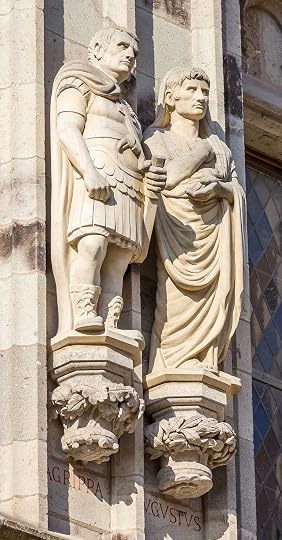
Their lasting cooperation can be considered one of the most effective political partnerships in ancient history. Agrippa and Octavian, later known as Augustus, complemented each other brilliantly: one provided the military muscle and loyalty, while the other brought cunning, the prestige of Caesar's name, and an instinct for political drama.
While tradition casts Agrippa as the gifted soldier and Octavian as the shrewd politician, in their era military command and political office went hand in hand—even if Octavian, frequently ill, was a mediocre battlefield commander.
Robert Harris recounts the decline of the Roman Republic and its ultimate demise after decades of civil wars not merely as a historical sequence, but as a meditation on the mechanics of power, the psychological effect of wielding unlimited authority, and the personal price paid at the helm.
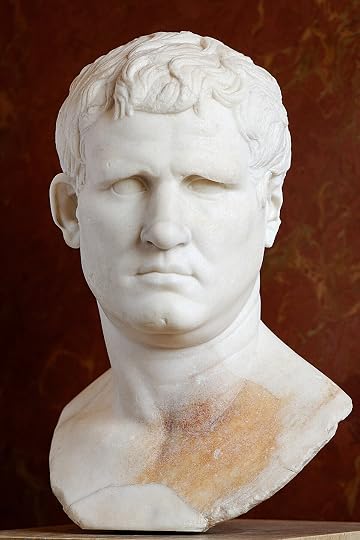
Marcus Vipsanius Agrippa, a man of plebeian origins who rose to become co-ruler of the Roman world, has long since lost his illusions. He acknowledges that “power makes monsters of us all” and that he has become almost as secretive and distrustful as Octavian. Trust becomes an unaffordable luxury as power accumulates. Power rarely brings happiness, yet power is power.
Politics is a messy business, and one might find oneself defending one of Caesar’s assassins if it prevents being "raised, praised, and erased" – a line that encapsulates Cicero’s vision of Octavian’s role in Roman power struggles.
Agrippa helps Octavian dismantle what remained of the Republic, ushering in a stealth monarchy where Octavian holds ultimate power while preserving the Senate and traditional institutions as a republican façade. Agrippa rationalizes his actions, regretting the Roman blood spilled while hoping the new era will bring stability and peace. Seismic political changes often pass unnoticed by the public:
“The Senate moved on to discuss other business. Nothing more was said about the matter, and in this way, on a quiet winter’s afternoon, Rome’s ancient Republic died—without protest, violent overthrow or fighting in the streets. Most people did not even notice, let alone care.”
That said, the Roman senatorial elite likely acquiesced to this new reality because it suited their interests—offering stability, property protection, and social prestige.
Through Agrippa’s eyes, we observe Octavian’s inner circle. Assuming only his old friend will read these memoirs, Agrippa reveals his true feelings, though his tone remains reserved and his ultimate judgment of Augustus elusive.
He cycles through loyalty, bitterness, astonishment, respect, resentment, and rivalry. Their connection began when a young Agrippa defended a frail, bullied teenager who turned out to be Caesar’s great-nephew. Agrippa was with his friend in Apollonia when they learned of Caesar’s assassination, subsequently accompanying him to Rome to claim his dangerous inheritance.
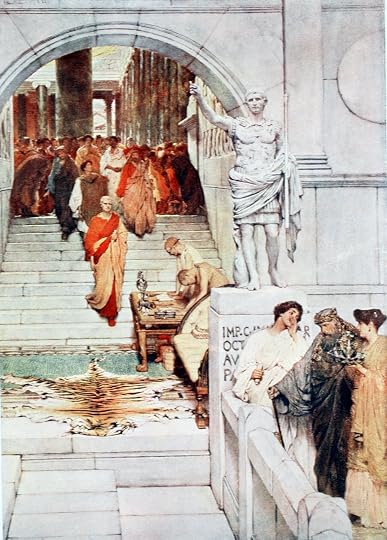
Octavian emerges as a master of dissimulation, expertly wearing different masks: the populist, the restorer of the Republic and the laws and rights of the Roman people, the stern disciplinarian, the modest first citizen (princeps), and the guardian of public morality. Augustus understood how to manipulate public opinion.
Agrippa accepts several high-level positions, including several consulships, forging a remarkable career. Yet he acts not merely from ambition, but out of a conviction that most men around him are far worse—corrupt and cowardly.
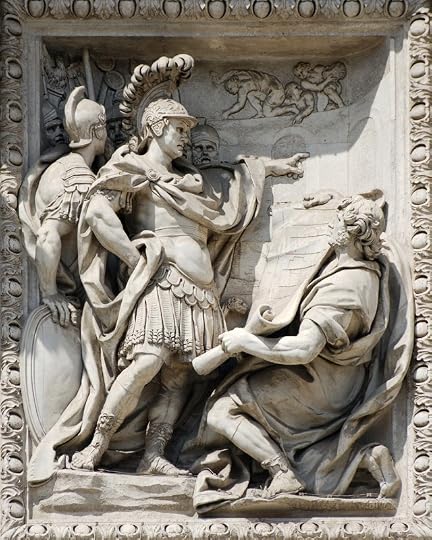
Though Agrippa designs most of the victories that anchor Caesar’s rule, he suffers under Octavian’s jealousy of his popularity among the legions. Still, despite feeling underappreciated, he remains ready to serve.
Agrippa marries Augustus’s only biological child, Julia, which draws him even closer into the imperial family. He was previously married to Augustus’s niece, Claudia Marcella. Julia and Agrippa’s children naturally stand at the forefront of Augustus’s succession plans. Was there genuine tension between Agrippa and his mighty friend? Did Augustus make Agrippa his son-in-law to bind and neutralize a potential rival? It is difficult to say. Despite an effective partnership and lasting friendship, a certain ambiguity between Agrippa and Augustus shows through. The de facto ruler relied heavily on Agrippa and elevated him, yet expected him to remain in the shadows. Despite his brilliant campaigns, Agrippa never triumphed.
Agrippa, however, was much more than just a formidable military operator and ancestor of future Roman emperors.
Harris portrays a man "most at ease on a battlefield or a building site," eager to leave an enduring mark. He does not wish to be remembered solely for slaughter, but for works that benefit generations.
He finds his feet as an organizer of public works and engineering projects. He oversees the construction of bathhouses, canals, temples, roads, bridges, and aqueducts in Rome and across the provinces, as well as building Portus Julius as a permanent naval base.
Agrippa emerges as a complex figure attempting a candid reckoning with his past. He can be brutal, and he endorses the cruelty and vindictiveness of others (e.g., the proscriptions of the Second Triumvirate). But he tries to retain inner integrity. Since few of Agrippa's own words survive, it is impossible to know how closely Harris's portrayal mirrors the real general's mindset.
Agrippa discusses his battles, infrastructure projects, and even his marriages in a no-nonsense tone fitting a Roman commander, even if some of his reflections may feel somewhat anachronistic (e.g., his thoughts on power and how it affects individuals).
The narrative covers a big chunk of history, inevitably condensing many events into a few lines. For me, this was not a problem. Overall, I found this read a fascinating window into ancient Roman history and the life of one of its great generals.
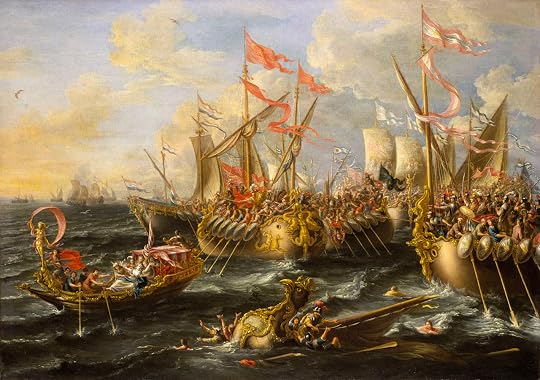
It invites us to consider counterfactuals. Was the fall of the Republican government inevitable? What if Cassius had shown greater patience and resilience at Philippi, or Antony and Cleopatra made different choices at Actium? What would Octavian have become without Agrippa, Maecenas (his able adviser and patron of the arts), or his wife Livia?
Harris introduces a theory regarding Agrippa’s origins that may explain his rise and military talents. Albeit there is no evidence to support his theory, it works well within the context of historical fiction. That said, I doubt that the real Augustus would have treated Agrippa as he did, promoting him so highly, had he known his “secret.” But perhaps the emperor was a slightly less paranoid man than I thought.