In this darkly funny and irreverent memoir, the daughter of a mail-order bride unpacks her undocumented childhood in America.
The perfect read for fans of the jaw-dropping twists of 90 Day Fiancé and the emotional gut punch of I'm Glad My Mom Died.
Growing up undocumented in Houston, Texas, Katya Suvorova learned that keeping her family together meant dodging the police, enduring her mother’s many husbands, and babysitting her younger sister instead of finishing the third grade.
Her understanding of her life shifted dramatically at seventeen, when Katya discovered her mother’s advertisement in a forgotten Eastern European mail-order bride catalog from the 1990s. As she grew older, Katya came to better understand what her mother had risked when she smuggled herself and her then three-year-old daughter from Russia into the US.
When your parents sacrifice their lives so yours can be better, to whom do you owe your future?
Ungrateful Immigrant Daughter explores difficult questions and stories both shocking and hilarious across Katya’s childhood through to an adulthood estranged from the woman who sacrificed everything for her. Her sharp, dry wit engages readers in a deeply relatable take on the experience of being a child of immigrants and unraveling a landscape of family secrets and lies, sharing her unique story of being the undocumented daughter of a mail-order bride.
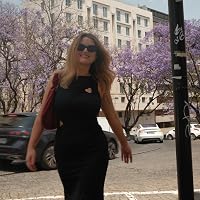
Raised as an undocumented immigrant in Texas, Katya Suvorova (she/her) is now a US citizen writing from abroad. Her work is powered by strong coffee courtesy of her husband’s amateur barista phase, a cat so unruly she once earned a spot on the no-fly list, and a three-legged dog who moves through the world like she has five legs and no regrets. Ungrateful Immigrant Daughter is her debut memoir.
The daughter of a mail order bride recounts growing up in the US as her mother, desperate for a green card, marries one abusive man after another.
My heart aches for Katya, the child that never got to be a child. She’s treated as an adult, left on her own from a very young age, and when she has a sister she’s left taking care of the sister. And it’s not just babysitting we’re talking about here. It’s cooking, cleaning, nurturing, protecting and teaching. All the things a mother should be doing, but that the mother never did. This also includes being a wife to an abusive husband. (Trigger warning!)
The book shows us OCD from a young age and how a child is affected by constant conditional love. The pursuit of a green card, more important than anything else. I understand it, and still I don’t, and I think I have that in common with Katya. The American dream (mine is the Nordic utopia) leaves out some important things. Family, culture, language and friends are cast aside for the promise of something better. In our new home we’re torn between feeling grateful for the opportunity everyone else at home dreams about, yet missing “home” immensely. The other side is lonely. But we find solace along the way, I found some in this book. We find it in others going through the same thing. Feeling seen, heard and understood. Connecting through the guilt that is put upon the children of immigrants to be grateful for all the parents went through to get them there. Not realizing that the children also had to go through a journey.
I just wanted to hug Katya when she realized she would never experience being loved and cared for in the way children are, after she had grown up without that experience. I think it’s especially hard to release a book like this into a world filled with hateful people that enjoy commenting hateful things about undocumented immigrants. I went to her Instagram and found piles of hateful comments. It’s truly horrific how people can hate an undocumented child that had no choice!
So Katya, if you’re reading this, you have an ally in me. Your story meant so much to me, as I am sure it will mean to many others. Hang in there, kid. Sending love from Norway ❤️
Thank you to the publisher and Netgalley for gifting me an arc.
Katya Suvorova’s Ungrateful Immigrant Daughter: A Memoir From the Child of a Mail-Order Bride is a tactfully written post-mortem on a stolen childhood. It is also not a book I would recommend.
Before you consider reading this book, you need to understand that its marketing description is a lie. Suvorova’s voice is blunt and good-natured, but there’s nothing “darkly funny and irreverent” about the hundreds of pages of emotional, physical, and sexual abuse that comprise the memoir. Likewise, this book has nothing in common with the lurid charm of 90 Day Fiancé, nor does it suggest that the author’s mother “sacrificed her life” so that her daughter’s could be better. If anything, Ungrateful Immigrant Daughter and its clueless marketing highlight how our culture is ill-equipped to engage with other people’s trauma.
It might seem unfair to harp so much on the conversation surrounding the memoir, but it feels vital to understanding the challenges of the book. There are two parallel stories throughout: Suvorova’s abusive childhood with her mother as an undocumented kid in the US, and her reconnection with her father as an adult in Russia. Narratively, it’s a smart approach as we see young Katya become increasingly fearful of her father while we watch her adult counterpart learn to trust him. Unfortunately, that hopeful element—the pinprick of light that pierces the darkness—is probably about 15%-20% of this otherwise oppressively bleak book. Many reviews praise the memoir, suggesting that Suvorova’s courage makes it excellent, but I’m not sure if suffering is a story.
To be clear, Suvorova is a great writer. Each interaction she describes with her mother is loathsome and anarchic, to the point that I always wanted to stop reading. Conversely, reading about her father’s love felt like a warm hug after hearing how the author was abused by every other man in her life. There's a real grace to how Suvorova tells these untellable things, and every sentence is carefully crafted. It takes tremendous bravery to write it all down, but to what end?
I’ve noted in many reviews that I believe memoirs should serve both the author and the audience, but I’m not sure Ungrateful Immigrant Daughter really does either. Every detail feels like it’s at Suvorova’s expense, and there isn’t enough context for readers to look at it with anything other than voyeurism. Aside from an occasional, half-hearted gesture at the complex reality of being undocumented—something that feels almost editorially mandated for political relevance—the memoir never feels ready to reckon with the past it revisits.
And that’s not Katya Suvorova’s fault.
My concern is that Ungrateful Immigrant Daughter inspires pity instead of empathy, and that will feel just as good to undiscerning readers. The content matter is too traumatic for most of us to process, but Suvorova also isn't able to do so in a way that sustains a memoir. As such, the book caters to an unhealthy kind of appetite and allows readers to co-opt the author's story for whatever purpose they see fit—just look at the condescension in the performatively effusive reviews. The implicit takeaway for many readers is that the author’s experience was ultimately redeemed by virtue of her obtaining citizenship, or that her experience is a case study in being undocumented. These are sensitive issues, but they can't make sense of senseless cruelty. If you make someone an object lesson, you've made them into an object.
Ultimately, Ungrateful Immigrant Daughter is an odd memoir in that it feels like the best way to respect the author is to avoid the book. At least, maybe wait until you can personally answer why it's right to stare at another person's trauma. Katya Suvorova is a brilliant writer with a bright future, but I'm not sure her past belongs to us.
I love a memoir that grabs me from the very first chapter and leaves me desperate to know more about a person's life. Katya does exactly that in Ungrateful Immigrant Daughter.
Ungrateful Immigrant Daughter: A Memoir from the Child of a Mail-Order Bride is a deeply personal memoir that explores identity, family, resilience, and the lasting impact of systems that fail to protect the most vulnerable.
Content warnings: childhood sexual abuse, childhood neglect, human trafficking, intimate partner violence, discrimination, food insecurity, and housing instability. Please take care of yourself if any of these topics may be difficult for you.
Because Katya approaches these lived experiences with such honesty and vulnerability, this memoir is both heartbreaking and incredibly rich. It left me with a renewed sense of urgency to advocate for people whose identities and circumstances often leave them with fewer protections and opportunities within our systems.
One of my favorite aspects was the structure. The memoir opens with a glimpse into a pivotal moment before taking us back to the beginning of Katya's story, gradually weaving those opening scenes back into focus. It immediately hooked me and kept me invested from beginning to end.
As someone who frequently listens to memoirs on audio, I always appreciate when an author narrates their own story, and Katya was no exception. Hearing her tell these experiences in her own voice added another layer of authenticity that made the book even more powerful.
One thought I couldn't shake while reading was that Katya and I are around the same age. That made her experiences feel especially immediate and real. It was impossible not to wonder how differently two lives can unfold simply because of the circumstances we're born into.
This book felt like sitting across from someone who trusts you enough to tell you the hardest parts of their life and leaving the conversation determined to help create a better world. Perfect for readers who appreciate honest memoirs, powerful social commentary, and stories that inspire both empathy and action. Thank you, Katya, for the courage it took to share your story. It's one I won't soon forget.
When Suvorova was three, her mother took her from their home in Russia to Mexico and then across the US border. I will never go back home again, she writes, but I don't know that yet (loc. 135*). What followed was a desperate chase for the elusive green card: men who promised stability; men who said they were looking for love; men who dangled the promise of a green card application as a carrot always just out of reach; men who threatened to turn Suvorova and her mother in to the authorities.
I didn't know it then, but there will be many, many men opening their arms in front of their apartments, town houses, homes, and saying the exact same thing. Have you ever seen anything this nice before? Only Joe will be able to say it in Russian, but we will understand. (loc. 177)
Ungrateful Immigrant Daughter is Suvorova's story of growing up undocumented and on unstable ground, not only with the men who fell in and out of her mother's life but with her mother herself. And it is a gripping story. I read half of it in one day and then slowed down (a bit) so it would last a bit longer. The story is told in two timelines, with the majority taking place during Suvorova's upbringing and a later timeline discussing her finding her biological father in adulthood. But the strongest material, by far, is about Suvorova's relationship with her mother.
With time, I will realize how scared she was. I will realize that my mother knows desperation in a way I never will. (loc. 240)
My grandmother often tells me how she begged my mom to leave me with her, but my mother refused. I think regularly of what a life in Russia would have looked like for me, who I would have become had my mom left me. Would I be someone I like more? I also never got to know the version of my mom who grew up in her home country. [...] I wonder what direction our relationship would have grown if she hadn't taken me with her to this country. (loc. 560)
This is complicated, messy material about complex, real people. It's so clear how many layers Suvorova's understanding of her mother has: someone who was smart and resourceful and determined; someone who missed her own mother; someone who took the limited options available to her and ran as far as she could with them; someone who perhaps never understood and perhaps never tried to understand her daughter; someone who looked the other way when her daughter was abused; someone whose desperation changed her irrevocably. Suvorova sees this, and she loves her mother; she sees this, and she knows that a relationship under these terms cannot be healthy for her. There's both compassion and clear-sightedness here, a difficult and delicate line that Suvorova treads well.
I'll leave out the nitty-gritty of the story, but the subtitle alone should tell you that this is an interesting one, and often a difficult one. A high four stars; recommended to anyone who is interested in complicated families or who has been thinking about immigration lately.
*Quotes are from an ARC and may not be final.
Thanks to the author and publisher for providing a review copy through NetGalley.
Whoever wrote the blurb for this book did not read it. It is a interesting book about a deeply traumatic childhood filled with abuse and neglect. There is no dark humor or wit, how they likened it to 90 day fiancé is beyond me.
I hope the marketing does not get this book negative reviews
Thank you NetGalley for access to an ARC in exchange for an honest review.
This was a stunning memoir. The weaving of memories from near and far past, the emotional intelligence Katya shows throughout, the bits of humour to cut through the hardships, it was all so beautifully done. Thank you for sharing your story Katya and showing how obtaining citizenship is not as simple as it’s made out to be, and for shedding light on the different reasons people have for immigrating and the experiences someone going through the immigration system may have. I also appreciated that Katya acknowledges throughout the memoir that her story does not speak for all immigrants of all backgrounds and she emphasizes the nuances that made some parts of her immigration experience different or “easier” than people of another ethnicity. I also appreciated that the memoir wasn’t an exploitation of Katya’s trauma, she expressed her story in a way that felt honest, rather than oversensationalized for shock value. Wishing the author peace and endless love.
"They will assume Mom has no standards because she came here desperate, that they are our saviors, and we should be grateful for basic necessities." I'd never given much thought to the children of the women we dubbed "mail-order brides". Katya Suvorova paints a vivid picture of what it's like to live with a mother who is beholden to a stream of inadequate (and abusive) American men for her right to remain in her adopted country.
This is the backdrop to Katya's childhood, being thought of as an extension to a bought wife who is basically a piece of property. Every ordinary experience — driving a car, applying for colleges, calling an ambulance — has to be viewed through the lens of being illegally in America, or being easily deportable at the whim of the kind of man who is attracted to women as subservient and dependent. It's no way for a kid to grow up in America, or anywhere really.
This in turn informs responses to the child abuse and child sexual assault Katya experiences, even therapeutic responses: "Don't tell anyone what happened. You have a big mouth. We could lose Masha if anyone finds out he hits you. Don't be ungrateful." Knowing what we know about traumatic experiences in childhood, the level of gaslighting Katya experienced was pretty incredible. It's a credit to her that she managed to get estranged from her mother, and find the bravery to write this book: "Did it really happen if I'm the only one who acknowledges it? Did it really happen if no one cares?"
With thanks to NetGalley and Alcove Press for sending me a copy to read.
I didn't care for this one. Too disjointed, and the writing was very choppy. The parts were in the beginning, as I learned some nuances of Russian (I'm a Russian speaker, but it's my second language, so I'm always trying to learn as much as possible).
Also, MAJOR WARNING for violence against an animal in here. I would have preferred that warning to the insipid note she had in the beginning saying that mentioning the Harry Potter series did not imply endorsement of the author. (No kidding? I mean, I talk about a ton of authors and, guess what, it's obvious I don't endorse every view they espouse!)
⭐⭐💫Ungrateful Immigrant Daughter by Katya Suvorova
What does a child inherit from a parent’s decision to pursue a different life? In Ungrateful Immigrant Daughter: A Memoir From the Child of a Mail-Order Bride, Katya Suvorova examines that question through her account of growing up undocumented in America as the daughter of a Russian mail-order bride. Her experiences bring together immigration, childhood trauma, family secrecy, and the complicated expectations attached to parental sacrifice. These subjects will interest readers of family memoirs and anyone concerned with how children understand circumstances they have little power to change. I approached the book with particular interest in her mother’s history, but finished appreciating the significance of the story more than the experience of reading it.
Having studied Russian history and researched the subject of mail-order brides, I valued the opportunity to encounter that experience through a daughter’s perspective. A personal account can reveal the consequences that broader historical discussions leave abstract: a parent’s pursuit of security becomes the conditions of a child’s everyday life. I could recognize the determination and risks involved in her mother’s journey to America while remaining troubled by the instability Katya experienced afterward. The memoir gives readers considerable reason to question the expectation that a child should respond to parental sacrifice with unquestioning gratitude.
The family encounters were the most affecting parts for me, particularly those involving her father and his family and her reunion with her babushka in Turkey. These moments held my attention because of the relationships themselves and the possibility of understanding a past shaped by other people’s accounts. They also made the losses within her childhood more tangible. Suvorova’s willingness to revisit painful experiences deserves recognition, and individual scenes have an emotional force that stayed with me after finishing.
My central difficulty was the narrative structure. Just as I became absorbed in one period of her life, the book shifted to another, leaving me to reconstruct the sequence before I could settle into the next scene. I understand the purpose of a nonlinear memoir. Adult knowledge can complicate a childhood memory, and an event recalled years later can acquire a different meaning. Here, however, I often felt the interruption more strongly than the connection. The shifts repeatedly disrupted the emotional momentum, and I believe a more chronological approach would have allowed the experiences and relationships to develop with greater clarity.
I also wanted more exploration of her mother’s life and the family secrets surrounding their departure from Russia. The accounts Katya receives left me uncertain about how the different explanations fit together. That uncertainty may reflect the limits of what she could discover, and I would not expect a memoir to resolve every concealed motive. Still, I wanted a clearer distinction between what she knew, what she had been told, and what remained beyond her reach. Given my interest in the historical circumstances surrounding mail-order brides, this felt like an area with considerable room for deeper reflection.
At around 2.5 stars, my response rests on a persistent gap between the passages that affected me and a structure that kept pulling me out of them. Readers interested in undocumented childhoods, difficult mother-daughter relationships, and the personal consequences of migration may find substantial value here, especially if they are comfortable with shifting timelines and unresolved family histories. I found moments worth remembering and a perspective worth hearing, but the choppy arrangement prevented the memoir from becoming a consistently absorbing read.
Thank you to NetGalley, author Katya Suvorova, and Blackstone Publish for an ALC in exchange for an honest review. #UngratefulImmigrantDaughter #NetGalley
I can't imagine being an immigrant in the United States.
I think this is a good memoir that exposes some of the challenges people face trying to come to a new country just to be safe from the country they are from. This memoir allows an opening for some empathy. The US and a lot of other colonized countries really seem to have an issue with immigrants and forget that they are people too.
Sad in so many ways, but also hopeful. Thank you to the author for pouring her soul onto the page.
Ungrateful Immigrant Daughter is a memoir in the same way A Million Little Pieces was a memoir. That is, it's not a memoir; it's overt fiction that assumes the audience knows nothing about the basics of how the US immigration system works. It hopes that you'll be too embarrassed to question a "trauma survivor" who is selling you a completely implausible story.
As a millennial from Texas with a first-generation ex whose parents immigrated from the USSR, and a husband who is also a first-generation American with naturalized parents, I immediately heard alarm bells with Katya's story. It was page after page of fiction. Perhaps there are grains of truth here and there, but she's been dishonest throughout, so who knows what's true aside from the people's names.
Maybe the casual reader isn't familiar with anti-money-laundering (AML) laws, the visas families need to visit from abroad, how parents from the USSR act, or even the cost of a Coach duffle bag in the early 2000s, but I am.
Undocumented to Citizen?
Let's start with the most glaring issue. Katya claims she and her mother illegally entered the US via Mexico in a process known as "entry without inspection" (EWI), which was a way that Americans could get back into the US without a passport from Mexico pre-9/11. An unlawful EWI from a foreigner would not allow Katya's mom to do an adjustment of status to receive a green card or citizenship for herself or Katya, even as someone who married an American. This would have required her & Katya to leave the US and apply in Russia; as a Russian passport holder, her mom would have received a 10-year entry ban to the US. As Katya claims, her biological dad blocked her adoption by Adam; as a 16-year-old with an undocumented immigrant mom and a Russian dad, Katya wouldn't have been able to get US citizenship through her stepdad Adam. To get citizenship through Adam, she would have had to legally enter the US and be legally adopted before turning 16. It makes sense that she isn't being truthful concerning her status, as the author herself claims she and her husband Liam left the US under Trump due to nebulous immigration reasons.
Katya's Bio Dad
Near the beginning of the book, Katya finds her biological dad on Facebook and reaches out. He responds that he has been waiting for this moment, as if he hasn't seen or heard from Katya since she was internationally kidnapped by her mother when she was 3 years old. Never mind that Katya reveals in the book that he visited her multiple times in the US and even brought her stepmom! He also supposedly blocked her adoption by Adam, which would mean that he had legal representation in the US. Why would a Russian father go to Houston, Texas, USA, where there is a gigantic Russian General Consulate, and never ask for assistance in retrieving his kidnapped daughter? It wouldn't be a legal fight because Katya and her mom are undocumented Russian passport holders. The consulate would have given her father help in getting his daughter back, and Katya's mom would have been arrested and deported.
Getting School Clothes
Let's suspend disbelief and say he never thought to go to the Russian consulate. Let's entertain the claim that Katya's dad is just visiting and will buy her school clothes.
Remember, the average monthly salary in Russia was around $`400 USD in the early 2000s.
12-year-old Katya, her bio-mom, step-dad, bio-dad and step-mom all go to the mall together. At the mall, her bio-dad drops thousands of dollars in cash on clothes from Abercrombie, Guess, and BEBE, so much that the return credit at Abercrombie alone is enough to sustain 3 years' worth of Christmases. Without even a question from either Katya's stepmother or her dad, he spends $6,000 USD on a single "Coach duffle bag" for a 12-year-old. Nobody questioned this, not even the stepmom, after they supposedly "emptied" their savings for this trip? Be so, for real. Never mind that Coach, an entry-level luxury brand, NEVER made a $6,000 duffle, nor could they exchange a bag for a more valuable Coach "white gold watch with a diamond." Coach's licensee for their watch division is Movado. They didn't make real white-gold watches with diamonds available at the mall, and they topped out at around $500, not $6,000.
Never mind that high-dollar returns would require ID, receipts and documentation that an undocumented immigrant wouldn't risk. Never mind that the headings with ages and years between his visits don't line up in the book.
What I do mind is that Katya claims that her dad is just a regular guy, not an oligarch or criminal. Yet, he magically gets a B-2 visa to visit his undocumented daughter AND empties his savings to take her school shopping. 1. AML laws require extensive documentation for bringing in cash over $10,000 USD. He is supposedly travelling with ALL of his savings in cash on his second visit. 2. A tourist visa to visit family is a B-2 visa that requires an interview at a US embassy in Russia or a nearby country AND requires a DS-160 form filled out, which needs the name, address, phone number, and relationship of the family member they are visiting in the U.S. AND information on who is paying for the trip—whether the applicant is funding it themselves (requiring proof of personal income or bank statements) or if a U.S. family member/sponsor is covering the costs. Visiting to see an undocumented but kidnapped daughter would have triggered a visa denial and a search for Katya and her mom by US authorities.
Babushka
As someone more familiar with the visa process than an average reader, not only are Katya's dad's visits completely improbable, but her maternal grandmother's visits are a complete legal impossibility.
Katya reveals that since being kidnapped from Russia, her maternal grandparents have divorced. We are to suspend our disbelief that the same issues Katya's dad would have needed to overcome to get a B-2 visa would have been a breeze for a divorced, elderly, retired Russian woman who had OVERSTAYED her visa at one point.
Not only would Babushka have needed to pass many consulate interviews over the years, but she'd also need to show months of bank records to support her trip and prove ties to Russia/Ukraine. She'd need evidence that she intends to return home after the visit, such as property deeds, employment contracts, business ownership, or close family members remaining behind. There is a negative percent chance that Babushka would have ever been granted 1 visa to visit her undocumented daughter and granddaughter, let alone many visas and with a visa overstay on her record.
"Nobody will believe me."
Chris was the step-dad before Adam but not the first American step-dad of Katya. After a contentious legal battle against American citizen & ex husband Chris for American citizen half-sister Masha, Katya's mom directs this sub-10-year-old Katya to act like a wife to Chris in a scheme to steal money & avoid rearranging Masha's custody. Despite zero predilection, before Katya's mom tells Katya to do wifely things for Chris, Chris begins to touch Katya illegally. When Katya is 11, Katya's mom and Adam discuss how it is a bad look for Katya's mom to have knowingly kept putting Katya in a situation to be abused by Chris in another potential custody dispute over Masha. As a late teenager, Katya is told by the district attorney that there isn't enough evidence to prosecute Chris. Despite all of this, Katya claims that she ghosts her own bio dad over social media because she can't bear that he might not believe that she was abused like the others - her mom (who orchestrated the abuse), Adam (who said this was a bad look for Katya's mom) and the DA (who didn't have enough evidence to prosecute)
More lies
Katya's book is filled with smaller plot holes, such as a 4-year-old Masha being in diapers and using a baby bottle.
1. A non-disabled 4-year-old would not be in diapers in the early 2000s due to cultural shame in both US and Russian families. 2. A woman who sometimes lived in a storage unit wouldn't spend precious money on diapers for a preschooler instead of potty-training her. 1. Babushka or Chris would have potty-trained her if Katya's mom couldn't for some reason.
Chris throws a lavish, black-tie early 1st birthday party for Masha, who schemes with Katya to get out of her birthday dress by purposely ruining it with cake frosting at Katya's direction.
Adam can take EWI undocumented immigrants who magically have adjusted-status green cards (without ever leaving the US) to the UK when Katya is 14. During this trip, Katya's mom, a European who lived without running water or toilets, is unhappy that their London hotel is in a "200-year-old" building. This same mom has no problem suddenly zig-zagging across the UK, from London to Bath to Edinburgh to Wales over the course of 5 days without a hotel room, sleeping in a rental car. When Masha leaves the car to pee and sits on a painful plant, this same mom can't identify kapriva/stinging nettles (a plant children in Ukraine and Russia can identify) and assumes it's American poison ivy, which does not grow in the UK. This mom, who comes from a country with socialized medicine, refuses the "emergency room" in the UK, which also has socialized medicine that is free at the point of use for Russian tourists, for her child because it could "cost a million dollars." Her mom believes Masha "needs a bath", even though stinging nettles and poison ivy are both made worse in a bath.
I could continue to go on and on, but suffice it to say, it takes very little knowledge of how anything works to realize that this memoir is fiction.
This entire review has been hidden because of spoilers.
The tough thing about memoirs is sometimes I wonder what they’re for. This felt a lot like voyeurism without a whole lot of overarching anything else. I suppose there’s the author’s commitment to fight tyranny because of her own traumatic experiences. And valid. Admirable. I like her as a person. I even understand her. I just wonder what end is this memoir for? It serves the author because 1) she’s always wanted to be an author and 2) her own story is clearly a plentiful source of “material.” But material for what? Just to tell us? To process? What do we do with all this? There is nothing funny or irreverent here. Why would the book blurb say that? I’m just so confused by this whole work. Maybe I’m just not very good at reading memoirs.
Thank you to NetGalley and Alcove Press for the ARC (Advance Reader Copy) of Ungrateful Immigrant Daughter by Katya Suvorova. This was quite the memoir. The hardship of being the daughter of a mail-order-bride from Russia, and all the abusive relationships her mother went through in order to get a Green Card. Katya suffered a lot growing up with a mother who would do anything to stay in America and get her citizenship. I am so glad Katya included the not so distant past, to understand that she was able to have a relationship with her now husband. There is a lot to process with this memoir. Hugs to you Katya. I gave this one 5 stars. #KatyaSuvorova #NetGalley #AlcovePress
Ungrateful Immigrant Daughter is a searing, eye-opening, and intimately honest account of what it means to come of age as an undocumented immigrant who has her childhood end too soon. I cried, I laughed, I could not put this book down. I will be thinking of Katya Suvorova’s words for years to come.
A horrific, traumatic story doesn't automatically make a good book. This memoir reports in simple, unelegant language one abuse story after the other. The clunky language that even I as a non-native noticed could be explained because large parts are written from the perspective of a child, but also the parts written from the adult perspective have unfitting metaphors and are stilistically inconsistent. The story itself is absolutely worth telling, but it could have been done better unfortunately... I also feel like this book lacked an editor for its spelling and other mistakes.
I am still processing everything. I get to read a decent amount of memoirs, and I feel like this one is one of those that will stick with me. It is a debut book, which surprised me because the writing style feels so confident and personal.
The author had to deal with so many heavy, adult problems when she was just a little girl, and I find it really heartbreaking to read about how much she had to go through just to survive, especially with moving around so much and not having a lot of support or love around her. It is definitely a sad story in a lot of parts, and it shows a very raw side of the immigrant experience that people don't usually talk about.
Every chapter of Ungrateful Immigrant Daughter by Katya Suvorova is stamped with its coordinates before a word of it begins: season, year, the narrator's age, and her school grade. Fall, early 2000s, eight years old, third grade. It reads like housekeeping. It is the most consequential decision in the book, and once you notice what it is doing you cannot stop seeing it.
How Ungrateful Immigrant Daughter Is Built
Three hundred pages: an author's note, a prologue, seven parts, sixty-odd titled chapters.
The author's note is a content warning, a statement that the book is drawn from memory with details changed, and a list of the twenty-five pseudonyms in use. A reader knows, before the prologue, what is coming and how much has been masked.
Then two timelines, cut against each other for the whole length of Ungrateful Immigrant Daughter by Katya Suvorova. One runs from a Moscow airport in the late nineties, where a three-year-old is being pried off her grandmother's legs, through Mexico, a border crossing, Idaho and Houston. The other is headed 2020, 2021, 2022, 2024, and begins with a woman in her late twenties clicking the add-friend button on her biological father's profile during lockdown.
The Child's Vocabulary
The childhood chapters of Ungrateful Immigrant Daughter by Katya Suvorova are in present tense, in the words the child actually had.
This is the technical achievement and it is harder than it looks. A woman is strangled in a kitchen and the seven-year-old holding her toddler sister cannot name it; her first guess is that the man might be about to kiss her mother. A five-year-old pushes a doll's shoe up her nose, an ambulance is called over her mother's objections, and that is how she learns, in shaky Russian, that they are not supposed to be here.
Suvorova almost never cheats by reaching forward for the adult word. She allows herself a sentence or two per chapter to say what she understood later. The gap between what the narrator can describe and what the reader can is where the effect lives.
The Second Timeline
The adult strand is not atmosphere. It is the question the childhood strand is asking.
The deepest subject of Ungrateful Immigrant Daughter by Katya Suvorova is not poverty or violence or immigration law, though it is about all three. It is being believed. By her account she disclosed what a stepfather had done when she was eleven and was told not to repeat it to the lawyers, because it would make her mother look negligent. At nineteen she reported him to the police to keep her sister out of his house, and the district attorney dropped it: the only evidence was her word, a decade on. Her mother's own lawyer told her this happens all the time.
So the 2020s chapters, in which a father she was taught to think of as a monster turns out to have spent twenty years learning English against the chance of a call, are not an epilogue. They are the answer, withheld for two hundred pages.
Ungrateful Immigrant Daughter and the Word in Its Title
The title is not a slogan being reclaimed. It is the charge sheet.
Ungrateful is what two stepfathers call her, in her account, what her mother calls her, and what she spends Ungrateful Immigrant Daughter by Katya Suvorova frightened of being. Gratitude is the instrument everyone reaches for: be grateful for the citizenship, the house, the man who paid for it, the country that let you in. The counter-case is built rather than asserted. A school friend's family, undocumented for longer and for the same reasons, mow lawns and clean houses while the narrator's mother holds a desk job; when that friend's father runs a stop sign he is taken to the border, and is still on the wrong side of it fourteen years later.
The book never says the quiet part and then rests on it. It lays the two families side by side and lets you finish the sentence. The law is sketched with the same restraint, including the provision under the Violence Against Women Act a woman in her mother's position could have used, and, the adult narrator discovers, did eventually try.
Where Ungrateful Immigrant Daughter Thins Out The adult chapters sag in the middle. Several 2020 and 2021 sections are a conversation on a sofa in which the husband asks a well-aimed question and she answers it. Ungrateful Immigrant Daughter by Katya Suvorova does not need commentary; the childhood strand supplies its own. The mother is withheld exactly where the book needs her. We get the casino in post-Soviet Russia, the freezer, the massacre nobody reported. Then the reasoning stops. Why she refused the father's offer to pay for college, why she cut off her own mother: asked, never answered. Sixty-odd chapters means some are two pages. A few land hard. Others repeat what the surrounding chapters established, and Parts 4 and 5 add nothing. The compulsion deserved more. The narrator counts the letters of her own thoughts on her fingers for most of a decade, needing them to land on the little finger. One of the best things here, retired in half a sentence about a diagnosis in college. Read It If, Skip It If
Read it if:
You want to see how much structural work a dateline can do. A grandmother is the kind of character you read for. Valentina peels bark off an American tree to prove Russian trees are sturdier, runs a lemonade business out of a Home Depot bucket with no cups, and is the only unambiguously good adult here. You like a morally unresolved teacher. A geography teacher decides this child is not stupid and hands her an advantage she has not earned, arguing that everyone else was born holding one. She felt like a fraud, wore the medals anyway, and became clever because she was treated as clever.
Skip it if:
You need a memoir to arrive at forgiveness. This one ends in estrangement, stated plainly, with no reconciliation scene. The content notes below are a wall you cannot get over. They are not decorative. Content Notes
The author's own note to Ungrateful Immigrant Daughter by Katya Suvorova names rape, kidnapping and the physical and sexual abuse of a child, and that is the floor. The sexual abuse of a child by a stepfather runs across several chapters, told in the child's vocabulary and without graphic detail, and the disclosure is suppressed by an adult. A rape occurs off the page, overheard by a child shut in a closet. Domestic violence throughout: strangulation, hair-dragging, objects thrown at a face, a woman locked in her own house. An adult strikes a teenager and denies it. Neglect: a four-year-old alone overnight, a seven-year-old made responsible for a toddler, untreated lice, hunger. Self-harm, including a scene in which a girl asks a friend to cut her. Suicidal ideation and one overdose. Two coerced terminations, described obliquely. Parental alcoholism and drunk driving with a child aboard; cocaine use; an unnamed eating disorder. Immigration detention and deportation. Racist speech from family members, and anti-immigrant abuse at school. A pet's death on the page.
Worth Your Shelf
The last chapter is set in an airport, which is where the first one was set, and the symmetry is earned rather than arranged. Between them sit three hundred pages in which almost every adult who could have helped did not. The two who did were a grandmother on a three-month visa and a teacher who bent a rule.
This is a debut, and it shows wherever the argument gets spoken aloud instead of built. It also does the thing this kind of memoir most often fails at: it refuses to let a reader round the narrator's age up. She was three and a half at the airport, seven on the worst day, ten when a household became her job. The chapter headers will not let you forget it, and that is why the book works.
In her 2026 memoir Ungrateful Immigrant Daughter, Katya Suvorova (b. 1993) recounts her extraordinarily dysfunctional childhood as the daughter of a Russian mail-order bride who brought her illegally into the United States via Mexico in the 1990s. Her mother subsequently pursued a series of relationships and marriages with American men in Idaho and Texas, ostensibly in pursuit of financial security and legal immigration status. The resulting childhood was marked by poverty, neglect, instability, and sexual abuse, all compounded by the family's undocumented status and her mother's frequently contradictory accounts of her own past.
I'm generally skeptical of memoirs written by authors in their twenties and thirties, particularly those focused almost exclusively on their childhoods. Suvorova's account offers an unusual perspective on the experiences of undocumented immigrants, mail-order brides, and the children caught up in their parents' desperate attempts to build better lives. Unfortunately, the narrative often reads more like an exhaustive catalog of childhood humiliations that don't seem cathartic for Suvorova and are unpleasant for the reader than a thoughtful retrospective. After seemingly endless anecdotes about not fitting in with her American classmates, wearing the wrong clothes, having lice for months, and attempting to sell homemade lemonade out of a Home Depot bucket without even providing cups, I found myself wondering what larger purpose these recollections were intended to serve. Suvorova's account rarely seemed to move beyond her immediate emotional experience. Her mother, whose motivations and personal history remain difficult to disentangle from her many fabrications, emerges as an overwhelmingly unsympathetic figure, while her rediscovered Russian father and his family provide a comparatively uncomplicated counterpoint.
The narrative flips repeatedly between childhood and adulthood, yet I wasn't convinced that Suvorova had achieved sufficient distance from these experiences to examine them with much perspective. This isn't to suggest that survivors of childhood trauma owe anyone forgiveness, reconciliation, or a tidy resolution to their suffering. Nevertheless, I think the most successful memoirs offer readers something beyond the accumulation of traumatic anecdotes: the insight that comes from having lived with, reconsidered, and contextualized one's experiences over time.
There's certainly value in Suvorova's willingness to share an unusual and often harrowing story, particularly one that complicates familiar narratives about immigration and the American dream. I just wish the book had offered more reflection and fewer painful childhood anecdotes. I'd be interested in reading her perspective another twenty or thirty years from now, when she may have had more opportunity to consider these experiences through a different lens.
There is nothing funny or irreverent in this book, so the publisher description is almost deceiving. It talks about processing of a childhood trauma by a child brought to the US by an illegal immigrant mother. This child in essence became a “hostage” of a sociopathic and irresponsible mother. The book is also touching a cultural phenomenon of a mail order bride as a social lift and about moral sacrifices it requires. And how potentially risky and devastating it can be for a child that is taken along her mother’s quest for immigration.
Ungrateful Immigrant Daughter: A Memoir From the Child of a Mail-Order Bride by Katya Suvorova was a harrowing read that I couldn’t put down. I finished it in one sitting.
This is not an easy memoir. The story is intense and, at times, difficult to process, especially in its portrayal of an unlikeable and complicated mother. At the same time, there are moments where she is more sympathetic, particularly considering how young she was, still in her twenties while raising a child.
While my own experience is very different, parts of the cultural background resonated with me as someone who is half Russian. It even made me miss my own babushka, which added a more personal layer to the reading experience.
Katya’s story is not unique in the United States, and she does a great job of highlighting that. She speaks to her own experience as a white undocumented immigrant while also sharing stories that reflect the realities of Hispanic undocumented immigrants.
This is a powerful and unsettling memoir that stays with you. Not an easy read, but one that is hard to look away from.
Darkly funny?! Whoever marketed this book is way off. Nothing remotely funny in this story full of abuse and negligence but the summary made me expect something different. I'm glad she turned out fine though!
Buckle up folks - this is a tough read. I am so grateful to have received an ARC of this memoir and grateful to Katya for sharing her story.
While our immigration stories are very different, I found so many of the cultural details in this book relatable. The writing is so authentic for Katya as both an adult and child, that reading this feels incredibly intimate, like peeking into someone’s diary. This is a quick read that took me 3 weeks to read just because I kept on having to take breaks to process it. Ungrateful Immigrant Daughter is a heavy book with serious triggers and isn’t something you can just breeze through.
While I find it difficult to rate a memoir at all - I mean you can’t put a rating on someone’s personal experiences - this one is an easy 5 star read just due to the incredible writing and authenticity. This may have wounded me deeper than it would other readers due to its relatability - the struggle of growing up in a culture different than your own and figuring out your own identity hit close to home.
Couldn’t recommend this more, thank you to NetGalley for the ARC and to Katya for writing & sharing her story.
Thank you to the publisher and Net Galley for the opportunity to read and review this title.
Katya Suvorova’s memoir is an honest and vulnerable telling of the author’s life as a child of a mail order bride coming to the States from Russia. Through her mother’s abusive marriages and her own trauma, the author also reveals her strength and beauty. This is seen in her relationship with her beloved grandmother and her protection of her baby sister. Too much was taken from her in childhood and still the author preserves her love for her mother, recognizing her humanity and working to find her own.
"Darkly funny and irreverent"? Comparisons to 90 Day Fiancé? I'm sorry, WHAT? I went into this expecting at least some humor, but this book was HEAVY. Like, genuinely heartbreaking and incredibly difficult to read at times. I kept waiting for the funny part, but instead it was just one devastating thing after another.
Don't get me wrong, it's a powerful memoir and I'm really glad I read it, but GOOD LORD 😭
This is a testament to why not everyone should choose parenthood. I loved this book and feel for Katya - it took strength to share her story. I do feel as though she is not healed from her trauma, while she might never be, it would be interesting to hear how she may talk about her story in 10 years. I highly recommend and feel like I will be thinking about this book for a very long time.
The author writes in first person from the perspective of herself as a child, as a child sees the world, using words she would have available and yet creates a full and at times incredibly painful picture. It’s so technically impressive. A difficult memoir but worth it.
Thanks so much to Alcove Press for the eBook. All thoughts and opinions are my own.
This memoir follows Katya as she is brought to the U.S. from Russia by her mother in the 90s. It documents the struggles they faced being undocumented immigrants and the challenges Katya overcame being raised by emotionally unstable and abusive adults.
I felt like her story is worth telling and will make you want to look out better for those around you who may be struggling. Katya was failed by so many adults around her. I appreciate that she was able to tell her story, even though it was truly heartbreaking. It immediately made me want to wake up my kids and just hold them.
I think this book would be interesting to those who enjoyed reading Educated or have complicated relationships with parents or parental figures while growing up.