TWO WOMEN WRITERS. TWO CENTURIES. A CREATIVE KINSHIP.
In the royal courts of nineteenth-century Rampur, courtesan-poet Munni Bai Hijab captivates the legendary Urdu poet Dagh Dehlvi, who immortalizes her in his verses while inadvertently eclipsing her voice.
More than a century later, Rukmini, an aspiring writer, stumbles upon Dagh's letters in the archives of the Rampur Raza Library and finds herself drawn to the fierce, flickering presence of Munni Bai Hijab. Torn between worlds-a Hindu woman in a Muslim household, a cosmopolitan spirit in a conservative town-Rukmini begins to trace the forgotten threads of Hijab's story, even as her own life starts to unravel. Her husband chases yet another doomed business idea. Her daughter walks away from medical school. And when her friendship with Daniyal, the stoic guardian of Rampur's past, deepens into desire, Rukmini must confront her greatest becoming her mother, the woman who once walked away from their family.
The Courtesan, Her Lover and I is a haunting novel of longing, ambition and women who dare to write themselves into history.
✨ A new Historical fiction recommendation for you all✨
Whenever we hear the word 'Courtesan' we instantly think about the flesh trade. But it was not just that!
When the entire world was living under the shadow of patriotism and male chauvinism, this profession was untouched by it. It was a world where the women held reins of everything.
They were connoisseurs of art, music, poetry and beauty. They were the ones putting food on the table and making ends meet.
In this book we shuffle between the lives of two women - Munni Bai Hijab of the late 19th century and Rukmini/Rukhsar of the 21st century.
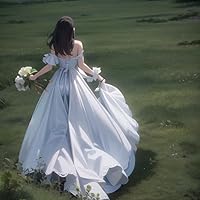
At moments it felt like there was a mirror in between those two women and the past slipped quietly into the present. (See next slide - Used AI to convert this picture I had in my mind into an actual image).
Munni bai 'Hijab' was an artist, singer and a poet, contemporary to the renowned Dagh Dehlvi of Rampur. The works of Dagh can be found in the archives and are easily accessible, however the presence of Hijab could only be found in Dagh's obsession over her through his Diwans.
History confirms her presence, not her full story. She did exist, but only in scattered references.
Rukmini on the other hand, is an aspiring woman who wants to be a writer and leaves her teaching job to be one. Amidst financial constraints, she is instantly inspired by Hijab and Dagh's love story and wants to write on it. As she discovered their story in layers, I felt deeply unsettled.
So much of the history we know today is written-erased-manipulated-rewritten. It makes me question everything we know so far 😔
It also made me think about how far we have come since then? The struggles women faced centuries ago are still present around us, just in different shapes.
It's filled with beautiful prose and I loved reading them.
It also reminded me of that series by Sanjay Leela Bhansali - Heeramandi. It was an okayish watch for me, but I think I'd rate it much better after reading this book. So if you loved the show, TRUST me this book is for you.
This entire review has been hidden because of spoilers.
This book is truly beautiful and deeply moving. It tells two different stories set in different times, yet the emotions, struggles, and fears remain the same. The novel follows two women — Hijab and Rukmini. Though separated by centuries, their lives mirror each other in many ways. Their loneliness is the same, their struggles are the same, and above all, their fear of losing themselves is the same.
What stood out to me most is how powerfully the book shows how women are silenced — whether in the past or the present. Society may change with time, but its judgment often remains the same. A courtesan and the man she loves are never accepted, and a woman who wants more than her assigned role is constantly questioned.
What I took away from this book is simple but powerful: women must choose themselves. Whether a man chooses them or not should never define their worth.
The Courtesan, Her Lover, and I is a beautifully layered story of two women writers separated by centuries yet bound by creativity and longing. The novel moves between the present-day life of Rukmani, an aspiring writer, a Hindu woman in a Muslim household, and a cosmopolitan spirit living in conservative Rampur and the 19th-century world of Munni Bai Hijab, a courtesan-poet immortalised by the legendary Urdu poet Daagh Dehlvi. The parallels between these two timelines are woven with great sensitivity, making the past and present echo each other in powerful ways.
The writing is lyrical and poetic, unfolding slowly in the beginning but gaining emotional depth as the narratives merge. Rukmani’s personal life is quietly unraveling, her husband’s failing ambitions, her daughter Gul walking away from medical school, and her growing closeness with Daniyal force her to confront her deepest fear: becoming her mother, the woman who once abandoned their family. These conflicts add intimacy and realism to the story.
More than a single woman’s journey, this novel is a story of many women, of mothers and daughters, art and abandonment, love and resilience. Tarana handles these relationships with remarkable tenderness and depth. For readers who loved watching Heeramandi or Gangubai Kathiawadi, this book feels deeply familiar yet intimate, a poignant tribute to longing, ambition, and women who dare to write themselves into history.
“The Courtesan, Her Lover, and I" is not a book you read in a straight line. It loops. It lingers. It looks back at you.
Tarana Husain Khan writes as if memory itself has a pulse-uneven, tender, refusing to be rushed. This is a story about courtesans, yes, but more deeply it's about women who were taught to be exquisite footnotes in their own lives and still found ways to leave fingerprints on history.
The courtesan here is layered beyond seduction: she is discipline, artistry, economic survival, and quiet rebellion wrapped in silk and song. @taranahusainkhan refuses to romanticize without interrogating. Love arrives not as salvation but as complication-sometimes shelter, sometimes theft. The lover is never just a man; he's a system, a risk, a mirror. And it feels deliberately modern, standing between past and present, wrestling with inheritance, guilt, fascination, and responsibility.
What struck me most is the emotional restraint. The prose doesn't beg you to feel—it trusts you will. Pain is understated, which makes it sharper. Beauty is everywhere, but it's bruised beauty, aware of its own cost. This book feels like listening to an old recording where the crackle matters as much as the voice. It doesn't glorify the past; it holds it accountable. And when you're done, you don't feel finished. You feel altered-like you've been trusted with something fragile and true.
While reading the book, I felt as if I was actually present in royal mehfils filled with poetry and elegance. The way Munni Bai and Dagh Dehlvi express their love and pain through letters and shayari is written very beautifully by the author. I completely fell in love with the poetry in this book. This was the first time I read so much shayari, and I truly enjoyed it. One important message that this book gives is that no matter which era it is old or modern restrictions on women never truly end. Both Munni Bai and Rukmini are creative women with dreams they want to fulfill, but society’s rules and expectations keep stopping them. Their lives feel very similar despite the time difference. I also found the bond between Daniyal and Rukmini very beautiful. The author has described the city of Rampur wonderfully its art, royal lifestyle, kings, their love for poetry and culture, and its history. The way this history is connected to Rukmini’s present day story is impressive and well done.
Overall, this book is an emotional, poetic, and immersive read that takes you into a rich world of history, art, love, and women’s struggles.