Is everything you've been taught about finding fulfillment wrong?
For decades, you've been told to follow your passion, find your purpose, chase happiness. It's bad advice, and somewhere inside you already know it. You're still searching, still waiting, still wondering why work feels hollow even when you're doing everything right. In an age when AI can do your job faster and cheaper, the old playbook isn't just outdated; it's a trap.
The people who live the most meaningful lives don’t find fulfillment within themselves. They stop looking inward. Entirely.
In his most personal and provocative book yet, #1 New York Times bestselling author Tom Rath — whose books from How Full Is Your Bucket? to StrengthsFinder 2.0 and Eat Move Sleep have shaped a generation — reveals that your daily superpower isn't your title, your salary, or your "brand." It's your ability to contribute to others. And it’s the one skill artificial intelligence cannot replicate.
Drawing from the clarity of a man who's lived on borrowed time since a terminal diagnosis at age fifteen, Rath combines the rigor of a researcher with the candor of a friend who refuses to let you settle. You'll discover why passion is overrated, why your childhood dreams may be holding you back, and how to build work that outlasts you.
Purpose isn't something you find. It's something you build every day, during every meeting, throughout every task, guided by one defining What's the point?
This book is not for the weak-hearted. It's a direct challenge to stop sleepwalking through your career and start doing the work only you can do. Whether you're 18 and getting started, or 48 and restless, What's the Point? is a roadmap for packing more life into your work, starting today.
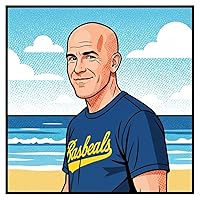
Tom is an author and researcher who studies how careers impact health and wellbeing. He has written 12 books that have sold more than 10 million copies and made hundreds of appearances on global bestseller lists. Tom's new book, WHAT'S THE POINT? TURNING PURPOSE INTO YOUR DAILY SUPERPOWER, will be released on April 28, 2026.
Tom's first book, How Full Is Your Bucket?, was an instant #1 New York Times bestseller. His book StrengthsFinder 2.0 was listed as Amazon's top selling non-fiction book of all time. Tom's other bestsellers include Strengths Based Leadership, Wellbeing, Eat Move Sleep, and Are You Fully Charged?
Tom is currently co-founder and CEO of CareerSight. He previously led Gallup's workplace business and served as a Senior Scientist. Tom was also a Vice-Chair of the VHL cancer research organization. He is a graduate of the University of Michigan and the University of Pennsylvania, where he has also been a guest lecturer. Connect with Tom at:
Tom Rath’s What’s the Point? is packed with insights that linger long after you’ve put it down—so much so that I’ve already started reading it again. At its core, the book makes a simple but powerful argument: our purpose is found in what we contribute to others. Rath’s message is both grounding and urgent. Our time is finite, and there’s no reason to wait to begin making a meaningful shift. The awareness of our own mortality becomes less of a fear and more of a motivator, prompting deeper questions: What will my legacy be? Whose lives will I have impacted? Naturally, I think of my kids, my family, and my friends. But the book pushes beyond that, into a more humbling realization—the impact we have may extend far beyond what we can see or ever fully understand. The people we influence in small, unseen ways may never know our names, just as we may never know the full reach of our contributions. That’s where the real challenge lies. As Rath writes, “...the highest expression of purpose isn't doing good for credit but doing good because good needs doing.”
A practical way to step back and think about what’s next
This book came at a good time for me. I was looking into what’s next for me professionally and personally. It felt like spending time with a knowledgeable best friend who delivered some honest messages with kindness. Spoiler: there is no magical job or role for everyone forever. But there are great purposes for everyone, and there are many ways to figure that out and get there.
The book splits its focus into three sections. I’d describe them as: 1) a reality check on the here and now, 2) looking to the future, what do you want and how can you create a path there, and 3) honing in on what’s really important for your long term, what are you leaving behind, or a firm kick up the proverbial to get you moving.
As well as delivering those hard messages in a very palatable way, this book offers what I think is its most unique and helpful attribute: practical ways to think about these questions, including experiments to help you figure things out and improve your life. These are super simple but hugely impactful. Real no brainers. You can literally go to the end of any chapter (it doesn’t need to be chronological), read the recap, do the exercise, and learn something about yourself at this point in time.
One exercise that I think anyone can do is to take the top two or three things that take the most time or effort each day (and/or that you hate doing) and ask yourself, “What’s the point in this?” Answer it thoughtfully. Who is this helping, what is it solving for, etc. I’ve found that this can create an immediate shift in how you approach something and how you feel about it. It’s one action I’ve taken since reading the book that has had a real impact on me.
I can see these exercises being useful throughout life. As things change, they can be repeated and deliver the same impact again and again. I can also see them generating insight and connection if done with a trusted other, personally or professionally, by sharing and discussing the outputs.
Lastly, the book includes a number of purpose profiles (job or role profiles). These are succinct summaries with no rose tinting and include an interesting assessment of the potential impact of AI on each role. I’m interested to see how these evolve over time. While simple and straightforward, I do wonder how useful or meaningful they would be for people earlier in their careers. Will the messages land in the same way?
Overall, I think this book is best suited to people who want to take a step back and assess their lives, whether they’re currently happy or not, and think about what could improve and how they might go about doing that.
As well as the content being top notch, this book also feels great to hold and read. Kudos to the designers.
An excellent and thought-provoking guide to driving purpose through action. Mr. Rath dispels the narrative that surrounds us in a way that can make one feel as if your purpose was handed to you on a magical index card and expected to execute. He highlights the need to break through the rote expectations to interrogate and explore the external world to find what drives meaning for you, emphasizing the need to experiment and adapt. The book is concise and designed for each chapter to end with practical actions to put the main idea into practice. Given that, the book is best read in sections or with the intention to come back to the actions steps to help you extract the lessons Mr. Rath is looking to impart. Highly recommend for readers who are contemplating their next phase, those feeling dissonance in a world that expects you to go with the flow or anyone just looking to better understand why some activities bring them energy while others drain.
This book opens with a warning that thecintent is to think differently about choices. Tom Rath fives his personal reason for centering the title question, and using it to guide decisions about work, purpose, and meaning. He guides you to looking at contribution vs, working for pay and personal recognition, which is a shift. Making that shift, taking a different look at possibilities, can lead to a more fulfilling life.He provides examples throughout, as well as 50 career profiles at the end to help the reader expand their options beyond what they know from family and friends. A good guide for those asking themselves "what's the point?".
In What’s The Point?, Tom Rath—best known for StrengthsFinder 2.0—offers a refreshing take on purpose that moves beyond the typical self-help narrative. Rather than encouraging readers to pause their lives in search of a singular passion, Rath suggests that many people never fully uncover their “ultimate” purpose. Instead, he emphasizes discovering meaning through everyday activities—at home, at work, and within the community.
A central theme of the book is the idea of “planting seeds” today to create a lasting impact over time. Rath introduces the concept of purpose profiles, which function somewhat like modifed job descriptions. These profiles go beyond tasks and responsibilities to include who is served, the nature of the contribution (such as people impacted), and even the potential influence of AI on a role. This framework is especially valuable for helping individuals—particularly younger generations—explore a broader range of career paths beyond those they’re typically exposed to through family or immediate surroundings.
As someone who spent 40 years in a corporate leadership career and is now recently retired, I found What’s The Point? especially meaningful as I consider my next chapter. I only wish this book had been available earlier in my life. There were many periods in my career when I struggled with a lack of purpose and direction, and Rath’s perspective would have been incredibly helpful. Even now, as I begin shaping my “next act,” the book’s message resonates deeply.
The core insights are practical and thought-provoking, and I particularly appreciated the emphasis on applying purpose in everyday life. My only critique is that some chapters feel slightly repetitive, even when presenting ideas from a different angle. This may be influenced by the inclusion of chapter summaries—though to be fair, the summaries and accompanying exercises are useful for reinforcing key takeaways.
This book is well-suited for anyone who feels unfulfilled, stuck in routine, or as though they are simply going through the motions of daily life. While the book follows a general structure, it’s also designed to be flexible, allowing readers to move between its four sections as needed. It’s highly referenceable, making it easy to revisit and apply its concepts over time.
Overall, What’s The Point? is a compelling and practical guide for anyone looking to live with greater intention and leave a meaningful, lasting impact on the world.
Another fantastic book by Tom Rath! So many of us want to feel that what we do truly matters, yet that sense of meaning can be surprisingly hard to hold onto in the day-to-day grind. This book tackles that challenge head-on, offering clear, concise chapters with realistic, actionable steps you can immediately incorporate into your life to feel more connected and purposeful.
One idea from the book that especially resonated with me is that purpose isn't something you stumble upon at the end of a lifelong quest — it's something you actively cultivate, with many sources of meaning growing at once. It's a refreshing reframe that makes purpose feel both accessible and ongoing.
If you're looking for a thoughtful, well-researched read that delivers genuine insight without overwhelming you, this book is well worth your time. Highly recommended!
I received an advanced copy to review and so glad this was given to me. From the first chapter this book grabs you with its main idea and doesn’t let go - you are a true believer at the end. The authors focus on purpose is one that leaves you feeling happy and hopeful because as you read and learn more you realize that our world would be so much better if all people focused on their purpose. Each chapter is its own important learning topic and each ends with a paragraph summary (“the point”) and actions to take (“try this”). A way to implement what you learned. I normally don’t take notes when I’m reading a book but with this one I felt compelled to because there’s so many interesting facts and ideas. The author then took the time to develop “Purpose Profiles”. Being a consultant for many years before my retirement I loved reading what he wrote for a profile for a consultant. The profiles give a summary of the role, who they serve, contribution and much more. Such a great resource for young people or anyone trying to understand what is out there for jobs. This book should be a must read for everyone as it would make society so much better for all while also helping an individual find a career/focus that will bring them great satisfaction.
It was good and mostly agreed with scripture, though it is not a Christian book. Some of it was expected: you are the average of your 5 closest friends, stop comparing yourself to other, the best way to be happy is to make other people happy, find a need in society and go fill it, don't be afraid to try new things, stop living for success or approval, and protect your time from distractions. Some of it was unexpected: stop trying to find your passion, your childhood dreams are holding you back, stop trying to be well-rounded, and focus on what makes you different.
Your resume dies with you - an awakening truth for sure. Tom Rath blends the philosophical and practical seamlessly throughout this life-changing book. What’s the Point? is a book about life, work, legacy and priorities. Mr. Rath writes, “The revelation that transformed my approach to work and life was startlingly simple: once I stopped padding my resume and started contemplating my eulogy, everything shifted.” This isn’t a platitude or a call to ditch work for the woo woo (Mr. Rath is still clearly working very hard), but a practical re-centering.
What’s the Point? holds a very frank mirror to many of our everyday assumptions and routines. Most of us do what is expected of us in terms of life and career and check the boxes until the hourglass runs out. This book challenges you to simply ask “What’s the Point?” Are we addicted to achievement for the sake of achievement? Are we chasing the next dollar, convinced it’s the one that brings inner peace? What’s the point? Turns out the point is in connecting your talents with actions that help others grow and recognize their own talents, starting a generational value chain. “From scorekeeping to serving,” as the book says.
Mr. Rath does a great job of highlighting blind spots or things we take for granted, like the exposure gap that exists between youth and their potential future careers. He also talks about how we can expand our exposure to diverse ideas and circumstances. Finally, the book dedicates an entire section to “Purpose Profiles,” which are research based career highlights focused on who each profession serves, traits of successful people in that profession, and the potential impact of AI on the profession.
This is a truly spectacular book. I generally judge a non-fiction book by the amount of highlighting I did for future reference. The amount of highlighting I did in this book is embarrassingly laughable. I finished the book and told myself all the highlighted passages couldn’t have been that meaningful, but the reality is they are.
The author 0acks more profound wisdom in the first 200 pages than many authors can pack into 2,000 pages. To make these lessons stick, I will reread this book a chapter at a time, starting tonight, and then do what Rath recommends to make the point an active part of my life. I can't wait to see how these changes in points of view and action create positive change. Highly recommended.
This is the best values / purpose book I have read since 4000 Weeks. The short chapters have actionable experiments to use in your life. The 2nd half of the book is a handbook of Occupational Groups and Families essentially, but with purpose and AI susceptibility threat (how useful!). The author’s personal story is compelling as well - living with a diagnosis is a motivator, even though we all have an eventual fatal diagnosis in our future, we often try to forget. I would give this book to anyone - grads, the recently divorced or laid off, midlife crisis, complacently bored could all find a bit of hope here.
I was gifted an early reader’s version of this book.
I thoroughly enjoyed reading Tom Rath’s latest book! At the same time, it was clear that I was not the target audience for most of it. As a retired life coach and someone trained at Gallup on the Clifton Strengths assessment, Part 1 [Building an Other-Directed Life] and Part 2 [Making Purpose Plural] seemed like a refresher course in strengths and learning how to play to one’s strengths in work.
Part 3 [Leaving a Lasting Impact] was the most interesting and stimulating section for me. I loved the structure of each chapter with a TL;DR summary at the end: “The Point” and “Try this.” Great way to make concepts real and applicable! The idea of an “evergreen body of work” is quite inspiring and feeds directly into how I am hard-wired: investing others’ human development. That’s the work of a coach. I love that he’s suggesting readers take a big step back to look at how focused effort vs. years of distracted effort will ramp up the impact on humanity. The shadow side of human development work is self-sacrifice - and Rath makes a great argument that taking care of oneself is not selfish, but how to grow impact.
As a later-life reader I also loved the exercise of looking at one’s own mortality as a filter for what to say yes to and what to say no to. It is a very focused way to figure out what seeds to plan that will outlive one’s own lifespan.
A quote that stands out for me from the end of the book is, “The point isn’t to be significant but to do significant work. The point isn’t to be remembered but to be worth remembering. The point isn’t to witness your impact but to trust that impact compounds in ways you can’t imagine.” To me, that is the definition of a life well lived. Well done!
I recently finished What's the Point? by Tom Rath (thanks to the advanced copy), and appreciated how it is anchored in the concept of purpose. Rath positions purpose as something you build through daily contribution to others. This felt especially aligned with the work I do in design thinking and employee experience.
One idea that stayed with me is that purpose isn’t something you find, it’s something you build. Slowly. Through the work you choose, the people you impact, and the problems you engage with. There is a strong emphasis on contribution, asking “who does this help?” and “what does the world need?” That lens felt especially aligned with how I think about co-creating meaningful experiences with others.
Some parts of the book landed more than others. The early chapters didn’t fully reflect my own experience, as I was raised in an environment that encouraged curiosity over a set path forward. That mindset led me to step into roles that didn’t even exist when I first started at organizations. Maybe that is why I was most drawn to the themes around differentiation and leaning into what makes you uniquely you.
The chapter that stuck with me the most was “Never Go with the Flow.” It draws a clear line between passively going along with things and intentionally finding your flow. I appreciated how Rath defines the edge as the intersection of your experiences, perspectives, and strengths. And that it matters most when it is used in service of others. It was a good reminder for me to keep speaking up, trusting my own way of approaching problems, and not lose the parts of my perspective that set it apart.
Overall, an enjoyable read that reinforces that purpose is something we shape over time in our contributions and with one decision at a time.
When I was given the opportunity to review books for the First Look Book Club, I decided to give it a try. I read and review ARC books regularly, but these are fiction, which is my preference. I read a few non-fiction books every year, but I prefer a good story. It took me a while to get into Rath’s book. It seemed interesting, but it also seemed geared to a young person starting on a career path, and not a 71-year-old retired woman. I had been happy with my career, first as a teacher and then as an elected official working as a Township Clerk whose primary duty was administration and running elections. This book seemed geared to the corporate world. Once I reached Chapter 5, I began using my highlighter because Rath started writing about concepts I was fascinated with. He started getting into ideas that held my attention. By the time I made it to Part II, I was hooked. He spoke about concepts like purpose and proactive creation. The effect that having a smartphone always by your side has on your attention. I was intrigued by Roth’s “Evergreen body of work,” those contributions that change how people think, work, and live. I loved the story of Bill Campbell, who focused on making everyone around him better rather than on his own advancement. Resume versus eulogy virtues. Investing in people, not titles. I believe my favorite chapter was 18 – Time-Hacking for Impact. I think I highlighted several sentences on every page. This chapter spoke to me more than any other and probably gave me the most beneficial advice of the entire book. It’s amazing how I started reading this book, thinking I needed to get through it because of a commitment I made, to where I am now – in love with this author, this book, and how it has enlightened my life. The epilogue summed the message up for me. “Go plant your seeds…Trust that in the economy of human impact, the seeds planted without witnesses grow the strongest roots, bear the most fruit, and provide the most comforting shade. That’s the point. That’s always been the point. Now go live it.” The book that started out as one I felt was the wrong choice for me has now become one of my favorites. It has given me a new appreciation for nonfiction and especially for Tom Rath. I hope you will find it to be a blessing in your life as it is in mine.
I received an advance copy of What’s the Point? by Tom Rath, and it genuinely stayed with me after I finished it. This is a thoughtful and highly relevant read at any stage of life or career. Mr. Rath challenges readers to step back and ask a simple but powerful question: what’s the point of what we’re doing, and how does it meaningfully impact others? What sets this book apart is its practicality. Rather than chasing the idea of “finding your passion,” Mr. Rath focuses on building purpose over time—something more grounded and sustainable. Each chapter includes short exercises and clear action steps that are easy to implement, making the ideas feel immediately useful. The book prompted me to rethink how I spend my time each day and what truly matters. As a parent, it also made me reflect on how often we guide our kids toward paths we assume are right, rather than helping them discover their own sense of purpose. One of the most compelling takeaways is that our greatest career asset is our differentiation—yet early on, many of us try to fit in and copy others who have had success in their life or career rather than stand out and be your authentic self. This is a book I’ll return to, as the idea of purpose evolves over time. Thoughtful, practical, and quietly impactful.
If you’ve ever intentionally resisted the notion of defining your purpose this may be the book for you. Rather than defining step by step how to achieve a larger than life purpose this book outlines how to find meaning and grow your legacy day by day on the impact you have on others. I especially liked concepts that one’s purpose is not fixed and can and likely will grow and evolve over time. This book mixes concepts from Victor Frank’s Man Search for meaning, servant leadership philosophies along side a career appendix that demonstrate types of legacy and impact can be had on and through others in various different career roles.
An easy read with chapter by chapter take aways and mini action steps you can take in a given day or week to stop sleepwalking through your days and mindlessly checking things off your to do list. If you’ve ever dreaded the question, what’s your purpose - dread no more as this book will give you a number of ways to think about your contributions and legacy in how you are investing in others with intention and in those actions lies significance.
Tom Rath's "What's the Point?" is a refreshingly digestible read. Rath never goes too deep into any one focus, & each chapter ends with a single, tidy summary paragraph followed by practical ways to incorporate his argument into your daily life. My suggestion? Don't binge this one. Tackle one chapter a week so you have time to absorb the message & actually apply it before moving on. You'll get more from the book that way—& more from your life, too. Definitely worth the read.
A must read. Especially for those wanting to take a deeper dive into understanding their driving purpose. Useful, practical exercises at the end of each chapter very helpful
Packed full of good advice with specific instructions on how to take the first step, What’s the Point? is definitely worth a read. With simple concepts such as asking “who do you help?” and direct application techniques, I found myself thinking about every day things differently, in a good way. It’s a book to help you zoom out and make better decisions in the long term. Well written, well researched and easy to read. None of the concepts were especially new or surprising, but I enjoyed how they were put together and plan to come back to this one again in the future.
Many thanks to the Next Big Idea Club and Tom Rath for the early look at What’s the Point? Turning Purpose Into Your Daily Superpower. The following review contains my honest opinions.
Having previously encountered Rath’s work in How Full Is Your Bucket?, I expected a high level of accessibility, and this latest release delivers exactly that.
While business literature is often bogged down by buzzwords, Rath utilizes a refreshingly plain-English approach to distill complex behavioral science into actionable daily habits. The book strikes a rare balance: it is designed for immediate application without sacrificing the scientific rigor behind its recommendations.
Most notably, Rath provides a necessary counterpoint to Simon Sinek’s Start With Why. While Sinek focuses on the discovery of a singular, visionary cause, Rath argues that purpose is something we create through our daily contributions. If Sinek’s Leaders Eat Last is the blueprint for servant leadership at the organizational level, What’s the Point? is the manual for the individual. It shifts the focus from "success" to "value"—echoing Einstein’s quote, “Strive not to be a success, but rather to be of value”.
The "Purpose Profiles" in section four are the standout feature. This isn't just a reading exercise; it’s a toolkit for talent management. Employees can use these profiles to advocate for their unique strengths, while HR and managers can leverage them to ensure team alignment and high-impact placement.
The Bottom Line: If you've found your "Why" but are struggling with the "How," Rath provides the bridge to turn abstract purpose into a daily superpower.
The initial chapters of this book flew by, and I was certain this was going to be a new favorite. However, the author’s assumptions and personal agenda directed the book farther and farther away from relevance to my needs, resulting in a read that didn’t quite hit for me.
The first several chapters are excellent- they’re highly readable and they focus on finding purpose in our work through changing perspective rather than through changing jobs. There are actionable tips and concrete examples I found helpful.
But later chapters focus on legacy, and how to ensure we compound our impact on others at the earliest possible moment. Not everyone’s purpose in life is defining our immortality. Not everyone wants to live the biggest life possible. The early chapters were about how to find the point in the life you lead, but the shift into the author’s bias of what the point is made me actively irritated, as though he were invalidated the choices I made for the life I wanted to live.
Overall, if your goal is to work a corporate job and find more meaning and purpose in that life, I think you’ll find some good tidbits in here. But for those who seek a different direction, this might not be the book for you.
This is not the book I expected! What’s The Point: Turning Purpose Into Your Daily Superpower is being released during a period when every week brings another book about purpose. Based on the title and the cover, I expected an achievement-focused book that uses purpose as a performative tool. Five minutes in, I realized my mistake. I appreciate the opportunity to read an advance copy and share my enthusiastic review.
The book begins with the author’s brutal realization at age 40 that he’d spent decades living someone else’s definition of success. He started asking “what’s the point?” as a daily compass. He asked the question before a meeting, before starting a project, and as a career guide. The question “what’s the point” refers to impact on specific other people. Can you connect an action or decision to a person?
I am better equipped to use the question as my guide after reading the book. Most of the book is immersive and philosophical. Each chapter includes personal narrative, data from research, and stories of people he interviewed or otherwise interacted with. It is also clear, practical, and actionable. The chapters end with a summary of the main point and an action to try which prompt the reader to pause and solidify the information.
Rath presents the bulk of the book in three parts: (1) What’s the point, (2) Making purpose plural, and (3) Leaving a lasting impact. I found part 1 to be the most inspiring, with parts 2 and 3 providing essential support.
Part 1- Finding purpose starts with asking the questions “Who do I help?” and “How can I make the impact bigger?” Asking the questions will provide you with a compelling narrative to make decisions that are not influenced by external expectations. I appreciate his point that we must have broad exposure to different environments and experiences to answer those questions. When I read that, I asked “What happens to people who do not benefit from diverse experiences? Are they doomed to never find their purpose?” Soon after I asked the questions, Rath emphasized the importance of spotting hidden talents in others. Maybe Rath’s next book can take the topic further.
Three more topics in part 1 stand out to me- (1) use curiosity to identify problems, (2) use problem solving as a measure of contribution, and (3) leverage your unique strengths instead of trying to be well rounded. I felt conflicted about the third point, which Rath expanded on and later seemed to contradict. He claims that organizations overemphasize the need for well roundedness and spend too much time identifying and transforming weaknesses. He also claims the education system rewards broad competence over distinctive excellence. I don’t completely agree with either statement, although I have observed the tendency in that direction. Rath encourages us to be authentic by “refusing to sand down the edges that make you distinct.” He posits that “your most valuable career asset isn’t your experience, education, or network. It’s your differentiation.” In the end, I understand and agree.
One section in part 2 (making purpose plural) seemed to contradict the distinctive vs well rounded concept when I first read it. The overarching point of part 2 is to experiment with your career, because there are multiple ways to make a difference and find purpose. He describes the importance of having T-shaped capabilities: deep expertise in one domain and working knowledge across multiple fields. This combination allows you to find intersections where innovation happens. This description convinced me that leveraging unique strengths can occur if you have broad exposure without over indexing on being fully competent at everything. My interpretation: continuously asking “What’s the point?” guides you as you determine what new knowledge and experiences can lead you to identify and execute our purpose.
His statements towards the end of part 2- “We are other-made. The people you surround yourself with literally shape your future,” and “They expand or contract your sense of what’s possible,” naturally lead to part 3 of the book. Part 3- Leaving a lasting impact- includes strategies for ensuring the work you begin is sustained when you’re no longer with the organization.
To illustrate his approach, below are three items from the “Try this” exercise at the end of one of the chapters in part 3:
Before next week, answer these questions in writing: What capability could you teach that would continue helping people after you are gone? Which system could you build that wouldn’t need you to operate it? Who could you develop to surpass your impact? Pick one answer and take the first concrete step toward building that legacy within five days.
Parts 1-3 will inspire you to ask, “What’s the point,” be curious, keep learning and experimenting, and interact with a wide range of people.
Part 4 includes “Purpose Profiles” of 50 careers. In two pages per career, he presents a general overview of what individuals do, who they help, characteristics of successful individuals, potential impact of AI on the career, and the challenges. This information may help individuals who are starting a career journey or who need to change careers. He references the Purpose Profiles in the “Try This” exercise at the end of chapter 3. The exercise challenges you to explore the profiles and identify one that may reveal a hidden talent and should be further explored and one profile you could recommend to a friend or loved one.
I highly recommend the book. The immersive, philosophical content that comprises the majority of each chapter will engage you and inspire you to act. Because the chapters end with a summary of the main point and an action to try, you can pause and solidify the information. With 21 chapters and some chapters having multiple “Try This” exercises, each reader can identify several immediate actions to move to the next step in a fulfilling and purposeful life.
Much career advice is about following the patterns of successful people and pursuing your passion. In What’s the Point, Tom Rath explains why those approaches are limiting, and that a better idea is to find work that helps you realize your Purpose. (I received a review copy of this book.)
Rath contrasts passion and purpose by framing passion as selfish: “What do I want”? vs purpose as generous: “What does the world need?” While that framing can make purpose sound lofty and unachievable, it can be as straightforward as “helping people on my team work more efficiently” or “educating children.” Everything you do that makes something better for people can help you to find your purpose. (And in the end, you can become passionate about your purpose.)
The book is inspired by Rath’s realization that he was working (and working hard) at pursuing goals that didn’t seem to add as much value to the world as he’d like. While some autobiographical stories are woven into the work, the main message is supported by research and stories from his consulting experience.
The book’s format is well-suited to helping you assess how actionable its ideas are for you. Each of the twenty-one chapters is brief, with a focused theme, and ends with a concise summary of its main point and a simple exercise to help you explore the concept, with the eventual goal of finding a way to inject purpose into your work and career.
The ideas in the book cover areas such as how we decide what careers to pursue, including why asking kids what they want to be when they grow up isn’t as good as asking kids what they can do now, to how to get leverage work and professional networks to help find and nurture your proficiency in realizing your purpose. The book includes a section that describes what passion looks like across various professions giving you an opportunity to explore career possibilities for yourself or those in your circle —for example, children or students. Those career descriptions discuss how AI can impact each profession.
Importantly, Rath also points out the flaw in being a martyr and, focusing on working more and disregarding one’s health, doing so puts one’s productivity at risk, which has consequences for one’s impact. (For those who’ve read More Secrets of Consulting: The Consultant's Tool Kit by Gerald M. Weinberg, this is the essence of the “Oxygen Mask” chapter.)
The focus of the book is work and career, but some of the core concepts seem relevant to anything you might be doing in your personal or work life, including volunteer and community commitments. The advice in the book is simple in concept, but challenging to implement. Ensuring that you have a good answer when you ask yourself what the point of your work (or task) is sounds simple, but to do so, you need to get past some conventions and unlearn lessons about passion and “best practices”. This advice is off-script from how most people in power who can promote you view the world, so in some organizations, you may not move as quickly along a career path as those who follow “the standard script”. But maybe that’s OK: Eventually you’ll add more value (which should be recognized, if not with your current employer, then elsewhere and you’ll be happier and healthier.
No matter where you are in your career, What’s the Point will help you find a sense of balance and more fulfillment in your work. For those starting out, the book will serve as a check to much of the bad career advice you may have received about passion and following models. And for those further along, it may help you find opportunities to get more out of your work, to pivot, or identify ways that community work can help you feel a sense of purpose.
“What is the point?” What is the point of accumulating wealth and achieving conventional success if neither leads to a genuine sense of fulfillment? This question echoes the familiar adage that money cannot buy happiness. Yet in What’s the Point?, Tom Rath moves beyond traditional notions of self-fulfillment and points toward a different path—one in which meaning is derived not from what we gain, but from what we give.
This work represents a meaningful departure from Rath’s earlier contributions, such as StrengthsFinder 2.0, which emphasized identifying and leveraging individual strengths. While those ideas remain valuable, What’s the Point? signals a philosophical evolution—from a relatively inward, strengths-based framework to a broader, growth-oriented and outward-looking conception of human development. Rather than centering exclusively on personal passion or achievement, Rath argues that a meaningful life is grounded in contributing to others.
At its core, the book advances a deceptively simple yet profound idea: fulfillment is less about what we accumulate for ourselves and more about what we contribute to others. In this sense, Rath’s perspective aligns closely with enduring principles of effective leadership. Leadership, at its best, is not self-referential; it is relational and service-oriented. In an era where narcissistic tendencies in leadership often dominate public discourse, Rath’s insistence that purpose is rooted in helping others is both timely and necessary. It reframes leadership not as a platform for personal glory, but as a vehicle for enabling the growth, well-being, and success of others.
That said, one area where the book could be further developed is in its treatment of the “common good.” Rath makes a compelling case for shifting attention away from the self and toward others, but the analysis could be extended more explicitly to collective outcomes at the societal level. What does it mean, in practice, to translate individual acts of purpose into systemic impact? How do organizations and institutions operationalize this orientation toward the greater good? These questions remain just beyond the book’s primary focus and represent a natural next step in the evolution of his argument.
Importantly, Rath also highlights a critical tension between long-term purpose and short-term action. He rightly emphasizes that cultivating a meaningful life requires a long-term perspective—one that prioritizes sustained contribution over immediate gratification. However, he does not allow this to become an excuse for delay. Instead, he underscores the need for urgency: meaningful change must begin now, through deliberate, everyday actions. This integration of long-term vision with present-moment responsibility is one of the book’s most practical and actionable insights.
Stylistically, Rath succeeds in presenting his ideas with clarity, structure, and a tone of authenticity that resonates. The book avoids unnecessary complexity, making its message accessible without sacrificing depth. His arguments are not merely abstract; they are grounded in practical reflection, encouraging readers to examine their own lives, choices, and impact.
Ultimately, What’s the Point? reframes one of life’s most enduring questions into a pragmatic and morally grounded guide for living.
Everyone seems to be relentlessly chasing, happiness. Books have been written about it in every abstract way possible — find your passion, discover your why, unlock your potential. Tom Rath ignores all of that and offers something disarmingly simple.
He isn't asking us to wake up at 5am, lift heavy weights, and drink a protein smoothie. He's not asking us to hustle all day and then ponder our purpose by moonlight. He's simply telling us that to find purpose, we have to do one thing every day: be useful. That's it.
The book, written in beautifully designed layouts, is a meditation on achieving exactly that. Rath offers an actual roadmap with actionable steps — not abstract philosophy.
The book is divided into three elegantly designed parts, with a fourth section focused on various jobs rewritten with purpose in mind, plus an interesting measure of AI replacement potential.
Most of my favorite "aha" moments happened in Part II, "Making Purpose Plural," where Rath pushes you to ask yourself uncomfortable questions: Are you being proactive or reactive? Are you a spectator or a creator? He goes deeper into concepts of job crafting (by breaking it down into task crafting, relational crafting and cognitive crafting), and the importance of surrounding yourself with people who can constructively disagree with you — but from a foundation of mutual respect. This section alone is worth the price of admission.
The final section tackles legacy and thinking about death — not in a morbid way, but as a framework for choosing significance over success. Rath also goes into being altruistic with information: do you hoard knowledge, or do you build systems that wouldn't need you to operate? This reminded me of mentors who, distilled their work into frameworks, flowcharts and example documents and shared them freely with mentees or anyone who cared. One of my favorite quotes in the book is: “Don’t wait to be remembered, build something that can’t be forgotten”
Hidden within the chapters is a subtle but important distinction: being useful isn't about the validation you receive. It's about doing it because you are genuinely being useful. And yet, this is exactly where I found a gap. For people pleasers — the ones who will surely love the validation that comes with being helpful — how do you ensure you protect your peace? How do you stay clear-eyed so you don't become a martyr in your quest to be useful? The book gestures at detaching from validation, but it doesn't fully wrestle with the practicalities of saying yes so often that your own priorities erode.
I suppose the answer is that you have to separate yourself from the validation and still maintain your boundaries. But I would have loved to see Rath address this tension more directly.
That said, the core thesis is powerful and elegantly simple. The books shows how you can be an actor in your own show — not in a narcissistic way, but through the paradox that by focusing on others, you become the protagonist of your own life. In a culture obsessed with self-optimization, that reframe is exactly the kind of provocation we need.
A Timely Find: This Book Arrived at a Meaningful Point in My Journey
What’s the Point? arrived for me after my 50th birthday, when I was already reflecting on how my work and daily choices have added up over the decades.
Rath combines personal stories, research-backed insights, useful chapter summaries, and practical exercises that encourage active reflection. The structure works well, and the book builds as it goes. The early chapters focus on common traps: staying tied to early definitions of success, chasing happiness on autopilot, or measuring progress through titles and promotions. At times, the framing felt overly broad, particularly around parental influence and childhood aspirations. I didn’t follow my parents into military service, but reflecting on their example has deepened my appreciation for what I observed, not diminished it.
The intent behind these questions is clear. They’re meant to challenge your assumptions, and you can decide whether they land depending on your own background and experiences.
Some examples also reflect a Western, achievement-oriented lens. If you were raised with more community-oriented values, the emphasis on contribution and relationships may not feel new. It may feel like something you’ve known, but don’t always prioritize. In that sense, the book serves as a useful reminder rather than a revelation.
The middle section offers practical ways to design your life and career with greater intention, and how to evaluate what matters. The third section centers on an important distinction: résumé virtues versus eulogy virtues. It’s a simple reminder to spend your time intentionally. For example, be present, develop relationships by helping others grow and contribute for impact, not recognition and accolades.
One of the most valuable parts of the book is the set of Purpose Profiles, which outline 50 different career paths. I was surprised to find my own background reflected in the Business Operations profile: a path I didn’t realize was so common. These profiles helped me better understand how my experience across people management, teaching, and cross-functional leadership connects in my own nonlinear career.
As AI dominates headlines, I appreciated Rath’s grounded perspective that human connection remains essential. Technology may free us from routine tasks, but it doesn’t replace the need for meaningful relationships or thoughtful contribution. If anything, it enables us to more thoughtfully choose how to use our time and attention.
Overall, I found this to be a worthwhile read that builds value over time. It may not resonate equally in every section, but it offers a framework that helps you think more intentionally about what matters and how you choose to spend your energy. Anyone at a similar inflection point, whether early to mid-career, rethinking priorities, or simply feeling like something meaningful is missing from the day-to-day, will find genuine value here.
Disclosure: I received an advance copy of this book, but this review reflects my honest thoughts and experience as a reader.
I received an early copy of the book. There were a lot of insightful data points shared throughout the book. I found myself sending excerpts to my closest friends and received replies like Wow and Yikes. I would recommend the read as it is thought-provoking and has action items.
Every chapter has a good summarization of the key points and an actionable time-bound next step.
I loved the distinction between passion and purpose and how your purpose can evolve.
I plan to incorporate more blindness prevention techniques to ensure more diversification of exposure to other perspectives. And I wanted to share the exposure techniques recommended for children for careers with those in my life with kids.
I appreciated him highlighting how our culture celebrates achievement as "the ultimate measure of a life well-lived" and the cost of that to our health. "People who work more than 55 hours per week have a 40% increased risk of atrial fibrillation... can lead to... premature death." And how instead we can have greater fulfillment through contribution confidence - knowing your work helps others explicitly.
Other highlights include:
"Your attention is the purest form of your life's currency. Where you place it determines what grows."
"Satisfaction from promotions evaporates within 3 to 6 months"
Focus on "strategic capability-building" vs climbing the ladder.
Chapter 12 delves into how our attention is fractured and how we are being conditioned. He unpacks urgency addiction and spectator syndrome, and he gives actionable steps to shift from spectator to creator and be a ruthless protector of creative time as our smartphones are "the single greatest threat to your purpose." Reminded me of Cal Newport's book Deep Work when he highlighted creating space for deep focus.
Good reminders about the influence your closest people have in shaping your future due to neural mirroring. Recommended spending time with people who are 5 to 15 years ahead of you in experience or achievement.
As someone who is highly driven by purpose, I was excited to read more on the topic. However, I am also actively seeking to recover from people-pleasing and overgiving at work, and at times I found the content to be out of touch with self-care, nervous system conditioning, and the political dynamics in corporate America that undermine the "contribution current"... and the tone could be preachy at times. I'm seeking how to balance having purpose-driven impact while being present in my personal life, not sacrificing my health, and having margin, so I was hopeful that it would have better insights into achieving that given the focus on purpose.
With all that said, in Chapter 19, he does discuss taking care of yourself, though it feels too late in the book and does not effectively link how those motivated by purpose can overgive to their own detriment and tactics to undo that conditioning.
Overall, I would recommend the book recognizing that there are other elements in play as we all seek to invest in others and create a lasting legacy.
Tom Rath flips the switch from focusing on yourself to asking who you can help. What do you do that makes a difference for others? Each chapter provides a summary of key takeaways, backed by rigorous research, and actions to implement which I found very useful. Contribution creates meaning. He notes that our most valuable asset isn’t our experience, but our differentiation. When we try to imitate others, rather than highlight our own uniqueness, we can come across as inauthentic.
“Your differences aren’t obstacles to overcome, they’re assets to leverage.” – Instead of constantly asking how we are fixing our weaknesses, we should concentrate on improving our strengths. This resonates deeply with me because I notice that the more I cultivate my strengths, the more engaged and purposeful I feel. Whereas, focusing on my weaknesses drains rather than energizes me.
Another point that Rath makes is “True confidence and contribution come from intellectual humility, the courage to embrace curiosity, test your assumptions, and stay open to the possibility of being wrong.” I notice that if I respond “Tell me more” rather than try to defend my position as the “right” one, this definitely leads to a better outcome, opening up dialogue, giving others an opportunity to be heard (even if I end up disagreeing), and shows that I am not rigid in my thinking and willing to change my opinions when shown corroborating evidence. Developing intellectual humility is a work in progress for me.
I’m also working on being deliberate with my time by implementing the point to “Reclaim your agency by becoming a ruthless protector of your creative time.” I notice that when I spend the first 90 minutes of the day engaged in creating, particularly when I am solving a problem, I feel engaged and productive, knowing that I am using my time wisely and in service of something good.
One exercise that I found useful is spending 30 minutes writing answers to four questions: If you had exactly two years left. Thinking about death can either be morbid or it could propel you to “act with urgency that a life of purpose demands”. The question that resonated most with me was “What would you stop doing?” Realizing that time is finite and precious can help us appreciate it more and use it wisely because we cannot get time back.
I appreciate the Purpose Profiles in the book which helps in considering what’s next and provides potential annual contribution, challenges and even an AI impact assessment.
If you want a book that’s practical, provides useful exercises/experiments and guides you towards clear direction focusing on contribution, then I highly recommend that you read this book.
Disclaimer: I was given an early copy in exchange for my honest review.
If you’ve ever closed a book on purpose or meaning and thought, “That was inspiring, but what do I actually do tomorrow morning?”—this is the book for you. Tom Rath’s What’s the Point? is the rare title that takes the biggest question a person can ask and gives you concrete, daily handles for living into the answer. Read it if you lead people. Rath’s chapter on making invisible impact visible is essential for anyone managing a team, especially in mission-driven work. The story of call-center workers meeting a scholarship recipient and watching their productivity soar isn’t just a feel-good anecdote—it’s a structural insight about how organizations can be redesigned so people actually see the human beings their work serves. I’ve already started applying it with my own staff. Read it if you’ve burned out on self-help that ends in self. Rath flips the central question from “What do I want?” to “Who do I help?” That reframe alone is worth the price of admission. He makes a compelling case that the most durable sense of purpose comes not from looking inward but from looking outward—at the specific people whose lives are different because you showed up. Read it if you want practices, not just principles. The seven-day experiment of asking “What’s the point?” before your three biggest time commitments (in five words or less) is the kind of thing you can start tomorrow. So is the framing of your strengths as something that serves others rather than something to market, and the three levers of job crafting—task, relational, cognitive—that let you redesign your work around impact without quitting your job. Read it if you care about legacy. Rath’s distinction between résumé virtues and eulogy virtues, and his vision of legacy as something you engineer now rather than reflect on at the end, will land hard for anyone in midlife asking what they want their decades of work to add up to. “Seeds planted without expectation of harvest” is a phrase I’ll be carrying with me for a long time. Read it if you’re a person of faith. Rath isn’t writing from an explicitly religious frame, but the book’s emphasis on contribution, service, and humans as the point lines up beautifully with a vocational understanding of work. It’s a book I’d recommend to clergy, lay leaders, and anyone trying to integrate faith and daily labor. Short, practical, and quietly profound. Plant your seeds.