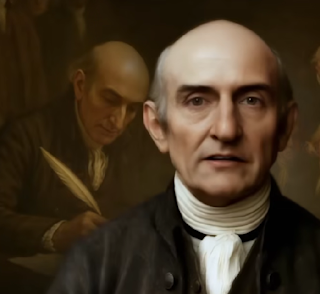
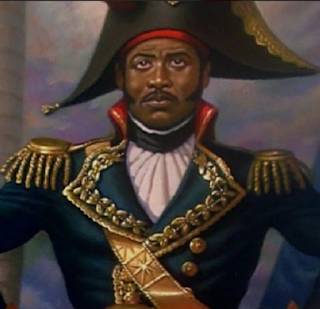
The deepest dive yet into the heart and soul, secret affairs, unexplored alliances, and bitter feuds of a generally worshipped, intermittently reviled American icon.
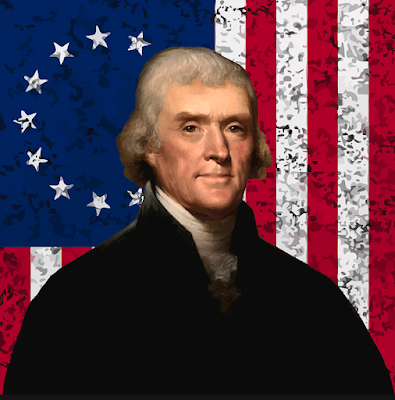
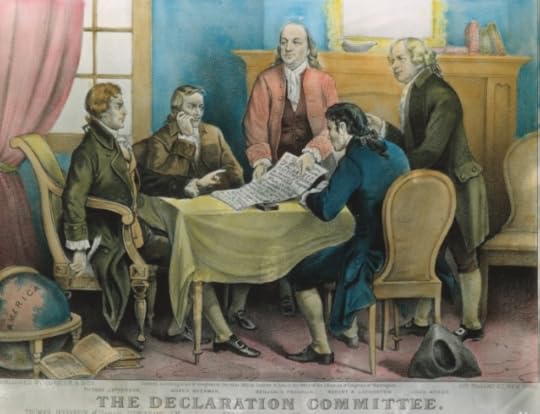
Perhaps no founding father is as mysterious as Thomas Jefferson. The author of the Declaration of Independence was both a gifted wordsmith and a bundle of nerves. His superior knowledge of the human heart is captured in the impassioned appeal he brought to the Declaration. But as a champion of the common man who lived a life of privilege on a mountaintop plantation of his own design, he has eluded biographers who have sought to make sense of his inner life. In Being Thomas Jefferson, acclaimed Jefferson scholar Andrew Burstein peels away layers of obfuscation, taking us past the veneer of the animated letter-writer to describe a confused lover and a misguided humanist, too timid to embrace antislavery.
Jefferson was a soft-spoken man who recoiled from direct conflict, yet a master puppeteer in politics. Whenever he left Monticello, where he could control his environment, he suffered debilitating headaches that plagued him for decades, until he finally retired from public life. So, what did it feel like to be Thomas Jefferson? Burstein explains the decision to take as his mistress Sally Hemings, the enslaved half-sister of his late wife, who bore him six children, none of whom he acknowledged. Presenting a society that encouraged separation between public and private, appearance and essence, Burstein paints a dramatic picture of early American culture and brings us closer to Jefferson’s life and thought than ever before.
Andrew Burstein is the Charles P. Manship Professor of History at Louisiana State University, and the author of The Passions of Andrew Jackson, Jefferson’s Secrets, and Madison and Jefferson, among others. Burstein’s writing has appeared in The New York Times, The Washington Post, The Nation, and Salon.com, and he advised Ken Burns’s production "Thomas Jefferson." He has been featured on C-SPAN's American Presidents Series and Booknotes, as well as numerous NPR programs, including Talk of the Nation and The Diane Rehm Show. He lives in Baton Rouge, Louisiana.
The promise of Being Thomas Jefferson: An Intimate History by Andrew Burstein is almost audacious from the start. The promotional line describes it as the deepest dive yet into the heart and soul, secret alliances, private contradictions, and bitter quarrels of a man who has alternately been worshipped as a democratic prophet and condemned as a monument to hypocrisy.
One approaches such a book with a certain wariness. The historical figure at its centre—Thomas Jefferson—has been dissected so many times that the possibility of discovering anything genuinely new appears remote.
Yet Burstein’s work manages to feel fresh because it does not merely recount Jefferson’s life. Instead, it attempts something far more difficult: to inhabit the emotional climate of the man himself.
Reading this book turned out to be an unexpectedly slow process. It took me a bit more than eight days to finish it, not because the prose is difficult but because the narrative continuously pushes the reader outward into wider historical inquiry.
I found myself pausing repetitively to check dates, verify anecdotes, browse archival images, and watch lectures and documentaries online.
Occasionally I would abandon the text temporarily for unrelated distractions—food vlogs, historical essays, stray YouTube videos—before returning to the book again with renewed curiosity.
This rhythm of reading and wandering oddly mirrors the structure of Burstein’s narrative itself, which moves fluidly between Jefferson’s inner life and the political and cultural landscapes that shaped him.
For me, personally, the book’s most compelling and persuasive achievement is its insistence that Jefferson cannot be understood through public events alone. American memory tends to reduce him to a handful of grand moments: the drafting of the United States Declaration of Independence, the presidency, the Louisiana Purchase. Burstein instead explores the private man—the fidgety intellectual, the melancholic widower, the collector of books and fossils, the amateur scientist, the epicure fascinated by European cuisine, and the concerned political strategist, invariably, almost always worried about his reputation.
In Burstein’s portrait, Jefferson emerges as a man of extraordinary curiosity. He was fascinated by science long before professional scientific institutions existed in America. His collection of mammoth bones and other fossils, occasionally displayed in the presidential residence itself, reflected his engagement with early debates about natural history.
The Enlightenment conviction that the natural world could be studied, classified, and understood shaped Jefferson’s intellectual identity. One sees the same impulse in his agricultural experiments at Monticello, where he attempted—typically unsuccessfully—to cultivate European grape varieties athwart a vast agricultural estate. His vineyard projects consumed time, money, and optimism, even as pests and climate frequently ruined the harvest.
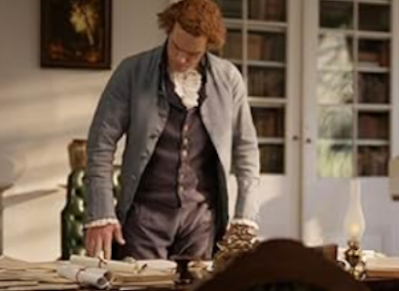
Jefferson’s intellectual life extended into the realm of invention and mechanical design. During the writing of the Declaration, he reportedly used a modified revolving chair—an early form of the swivel chair—allowing him to move easily between documents on his writing desk. Such details might appear trivial, but Burstein uses them to reveal Jefferson’s twitchy mind: always experimenting, always redesigning his surroundings in pursuit of efficiency and elegance.
Yet this tome also captures Jefferson’s profoundly personal eccentricities. Among the more charming episodes is his affection for birds, especially a pet mockingbird named Dick that wandered freely through the White House. The bird would perch on Jefferson’s shoulder while he played the violin, filling the room with song.
This domestic scene contrasts sharply with the conventional image of the solemn statesman and reminds the reader that historical icons were once ordinary human beings with idiosyncratic pleasures.
Jefferson’s culinary tastes offer another glimpse into his personality. During his diplomatic years in Europe he developed a love for continental cuisine, especially pasta dishes that were still unfamiliar to most Americans. He even brought a pasta machine back from Italy and helped popularize what later generations would recognize as macaroni and cheese. Food, for Jefferson, was not merely sustenance but a form of cultural diplomacy and intellectual curiosity.
Burstein’s narrative recurrently returns to the tension between Jefferson’s private sensitivities and his public role in politics. One of the most surprising aspects of Jefferson’s personality was his fear of public speaking.
Regardless of being one of the most eloquent writers of the revolutionary generation, Jefferson dreaded speaking before large audiences. When he delivered his inaugural address in 1801, he reportedly spoke so inaudibly that many listeners struggled to hear him.
The incongruity between the confident prose of the Declaration and the hesitant voice of the speaker illustrates Jefferson’s paradoxical temperament.
That inauguration itself took place during one of the most dramatic political transitions in early American history. The election of 1800 had plunged the young republic into a constitutional crisis.
Jefferson and Aaron Burr received an equal number of electoral votes, forcing the House of Representatives to decide the outcome after thirty-six ballots.
The struggle exposed deep ideological divisions between the Federalists and Jefferson’s Democratic-Republicans.
Yet the eventual victory of Jefferson marked something unprecedented: the peaceful transfer of power between rival political factions in a fragile new democracy.
Jefferson deliberately staged his inauguration as a symbolic rejection of aristocratic ceremony.
Rather than arriving in a carriage surrounded by elaborate pageantry, he rode to the ceremony on horseback and appeared in plain clothing that Washington elites considered embarrassingly informal.
This gesture reflected his commitment to what he called “republican simplicity,” an ideal that rejected the aristocratic manners associated with European monarchies.
Nevertheless, Burstein makes clear that Jefferson’s commitment to simplicity coexisted with a lifelong struggle with money. Despite owning vast landholdings and enjoying an international reputation as a philosopher-statesman, Jefferson was perpetually in debt.
His passion for books, architecture, wine, and experimental agriculture consumed enormous financial resources.
By the time of his death, he had accumulated debts equivalent to millions of dollars in modern currency. The image of the austere republican thinker thus dissolves into something more complex: a cultivated gentleman whose intellectual ambitions continually exceeded his financial discipline.
This book also revisits Jefferson’s multifaceted relationship with religion. Perhaps the most famous example of his unconventional theology is the so-called Jefferson Bible.
Dissatisfied with the supernatural elements of the New Testament, Jefferson literally cut passages from the Gospels with a razor blade and assembled a new version that preserved only the ethical teachings of Jesus.
Miracles, divine interventions, and the resurrection disappeared from the text. What remained was a moral philosophy rather than a sacred narrative. The act perfectly captures Jefferson’s Enlightenment sensibility: faith filtered through rational inquiry.
If Jefferson’s intellectual world reveals one set of contradictions, his political career reveals another. His presidency is most famous for the Louisiana Purchase of 1803, a transaction that doubled the size of the United States.
Yet the acquisition created a philosophical dilemma for Jefferson himself. He had long argued for a strict interpretation of the Constitution and limited federal authority. The Constitution offered no clear authorization for purchasing foreign territory.
Nevertheless, Jefferson approved the deal, quietly stretching his own constitutional principles in the process.
Such contradictions lie at the heart of Burstein’s portrait. Jefferson repeatedly found himself balancing ideals against practical realities. Nowhere is this tension more troubling than in the question of slavery.
Jefferson wrote eloquently about the moral dangers of slavery, once describing it as holding “a wolf by the ear”—dangerous both to maintain and impossible to release.
Yet throughout his lifetime he owned hundreds of enslaved people and freed only a small number of them. The gap between his philosophical condemnation of slavery and his personal dependence on the institution remains one of the central moral dilemmas of American history.
The controversy surrounding Jefferson’s relationship with Sally Hemings further complicates the story. For generations historians debated whether Jefferson fathered children with Hemings, an enslaved woman who was also the half-sister of his late wife.
Modern DNA evidence has strongly supported the claim that he did. Burstein does not sensationalize the relationship, but he situates it within the deeply hierarchical world of eighteenth-century Virginia, where power, race, and intimacy were inseparable.
Jefferson’s concern with legacy appears repeatedly throughout the book. Perhaps the most revealing example is his own epitaph. When planning the inscription for his tombstone, Jefferson carefully selected three achievements to be remembered for: author of the Declaration of Independence, author of the Virginia Statute for Religious Freedom, and founder of the University of Virginia.
Conspicuously absent from this list was his presidency. The omission reveals how Jefferson wished to be remembered—not principally as a political leader but as a philosopher of liberty and education.
The end of Jefferson’s life contains one of history’s most striking coincidences. He died on July 4, 1826, exactly fifty years after the adoption of the Declaration of Independence. Only hours later, his old rival and eventual friend John Adams died as well. The two men who had once defined the ideological divisions of the early republic departed the world on the same emblematic anniversary.
This tome gains additional depth when read alongside other biographies of Jefferson. Earlier scholars such as Joseph J. Ellis and Dumas Malone approached Jefferson principally as a political figure whose ideas shaped the American republic. Burstein’s approach is more intimate and psychological. He tries to reconstruct the emotional textures of Jefferson’s life—the pride wounded by criticism, the longing for intellectual companionship, the persistent anxiety about reputation.
This emphasis on personality, transforms the narrative into something almost novelistic. Jefferson appears less as a marble statue of the Enlightenment and more as a complicated and byzantine individual navigating the moral and political contradictions of his time. The reader finds a man who loved music and birds, experimented with agriculture, designed gadgets, wrote revolutionary prose, and yet remained entangled in the oppressive social structures of his world.
What emerges from the book is not a simple moral judgment but a meditation on the nature of historical memory. Jefferson’s life demonstrates how ideals can coexist with compromise, how philosophical brilliance can exist alongside ethical blindness. The very contradictions that trouble modern readers were also the forces that shaped Jefferson’s achievements.
Reading the book today inevitably invites reflection on the nature of national icons. Figures like Jefferson often exist in public memory as simplified symbols—either heroic founders or irredeemable hypocrites. Burstein resists both extremes. His Jefferson is vivid, flawed, imaginative, elusive, generous, and self-serving all at once. The man who articulated one of the most influential declarations of human equality in history also lived within a social system that denied equality to millions.
That tension may eventually explain why Jefferson continues to fascinate us, students of history, more than 200 years after his demise. His life embodies the unanswered questions at the heart of modern democracy: the association between ideals and reality, liberty and inequality, philosophy and power.
By the time I finished this book after those eight odd days of intermittent reading and reflection, I felt less as if I had read a biography than as if I had spent time wandering through Jefferson’s mind. The experience was immersive and sporadically disturbing. Burstein does not dismantle the Jeffersonian myth completely, but he certainly complicates it. What remains is a portrait of a man who helped invent the language of modern freedom while struggling to live up to it—a paradox that continues to define both Jefferson and the nation he helped create.
Author Andrew Burstein is an eminent historian who wrote many books about American history, including The Inner Jefferson: Portrait of a Grieving Optimist; Jefferson's Secrets: Death and Desire at Monticello; Democracy's Muse: How Thomas Jefferson Became an FDR Liberal, a Reagan Republican, and a Tea Party Fanatic, All the While Being Dead; and Madison and Jefferson (with Nancy Isenberg).
Thomas Jefferson
There are myriad books about Thomas Jefferson as well as extensive collections of Jefferson's correspondence and writings. Burstein’s latest addition to the oeuvre is an intimate history of Thomas Jefferson (1743 - 1846), whom author Andrew Burstein calls "one of the most polarizing figures in American history." The writer notes, "I have spent a sizable chunk of my career with [Jefferson] and have at length arrived at a place where I feel I can tackle the largest questions that have hamstrung a slew of professional historians." From the book, I'm left with the impression Burstein read everything written about Jefferson as well as everything Jefferson himself read - starting with the ancient philosophers.
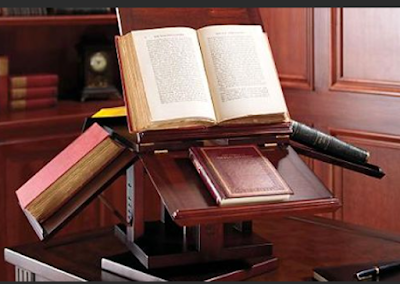
Thomas Jefferson had an extensive library and a rotating bookstand for his voluminous reading
Burstein's goal is to be scrupulously fair, and he elucidates Jefferson's vast erudition, good intentions, and positive qualities while exposing Jefferson's arrogance, hypocrisy, and sometimes questionable ideals. Burstein emphasizes that customs and sensibilities of Jefferson's time were different than modern times, and we can't judge Jefferson by current standards (except when we can).
One may laud Jefferson for writing the Declaration of Independence, and appreciate his vision of democracy, and his determination to keep the new nation from becoming an autocracy akin to a monarchy. Jefferson spent much of his political career - and fought long and hard against 'Hamiltonian monocrats' - to achieve this lofty goal.
Jefferson is also admirable for his devotion to his (White) children and grandchildren; love of nature; interest in agricultural science; design and construction of Monticello; support for education (more for men than women); and other positive qualities.
Monticello
Conversely, (in my view) Jefferson should be deplored for his ownership of slaves; callous treatment of Indians; male entitlement; and relegation of 'good southern wives' to the status of breeders.
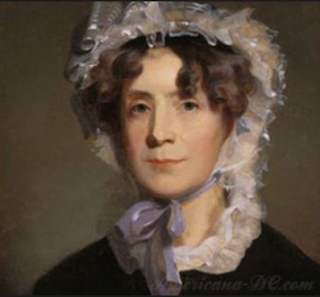
As an example of the latter, Burstein writes, "A planter's wife fully expected to spend the greater part of her marriage pregnant...[Jefferson's] daughter Patsy Jefferson would bear twelve children....from the age of nineteen to forty-five. She accepted her lot as a breeder of the next generation, even after having witnessed her own mother's decline." On that subject, Jefferson's wife Martha (whom he called Patty) was repeatedly 'brought to bed' after childbirth, and after several pregnancies "her recovery from childbirth became increasingly uncertain." Patty died four months after giving birth to her sixth child Lucy, who survived only 12 days. It would seem, though Jefferson loved Patty, he was willing to sacrifice her health and life to enlarging his 'legitimate' family.
Martha (Patty) Jefferson
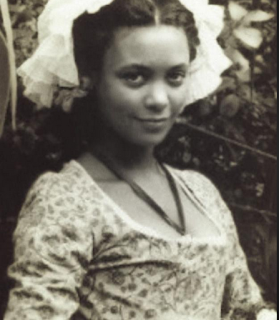
Jefferson never remarried, but went on to have six children with his slave Sally Hemmings - children who had little to show for their distinctive lineage. Burstein addresses Jefferson's liaison with Sally Hemmings, but the nature of their relationship - whether affectionate or just libidinous - remains a mystery. Since "the Jeffersons' intimate correspondence was deliberately destroyed" personal information is spotty.
Sally Hemmings
Burstein aims to unearth Thomas Jefferson's psyche by analyzing his interests, behavior, relationships, migraine headaches, debts, friends, enemies, children, grandchildren, pet mockingbird, diplomatic position as minister to France, taste for expensive French food and wine; contribution to the nation (as a governor, cabinet member, vice-president, and president); penchant for lavish entertaining in the President's House (now the White House); people Jefferson allowed to be buried in the Monticello cemetery; and so on.
Dining Room at Monticello
Cemetery at Monticello
I'll provide a feel for the narrative by citing a few of Burstein's topics, but keep in mind my observations cover a tiny fraction of the book.
Jefferson was a family man and gentleman scholar who couldn't resist politics. Jefferson had lofty ambitions, and he maneuvered, solicited support, and derided his opponents and enemies. Jefferson was thin-skinned, vengeful, and snobby, and his rhetoric provides a peek at his attitudes.
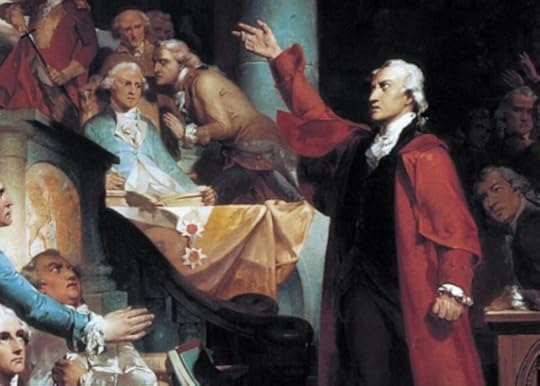
One of Jefferson's targets was Patrick Henry. Henry was less educated and less well-read than Jefferson, but he was a much better orator. Jealous, and fearing Henry would thwart his own ambitions, Jefferson called Henry "a rottenhearted, money-grubbing rube, a phony, too lazy to read a book from cover to cover" and a "blabberer who was not very bright."
Patrick Henry was a renowned orator
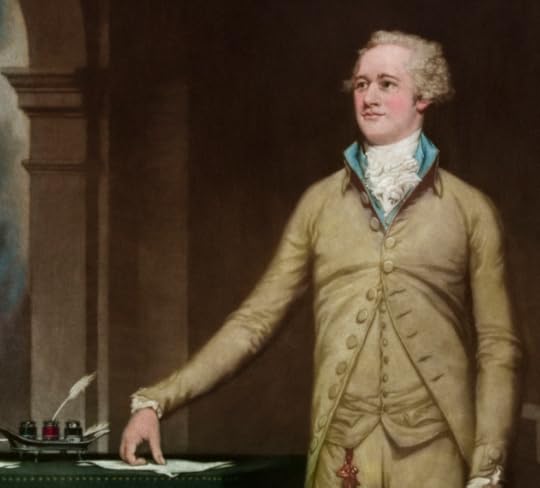
Jefferson also feuded with Caribbean-born Alexander Hamilton, whose ancestry Jefferson viewed as inferior to his own Virginia heritage. Both Jefferson and Hamilton were in President Washington's first cabinet, Jefferson as Secretary of State and Hamilton as Secretary of Treasury. 'Federalist' Hamilton favored strong central government while 'Republican' Jefferson favored states' rights, and the two men detested one another.
Alexander Hamilton
At the end of his cabinet term in 1793, Jefferson "produced on the page the nastiest possible attack on Hamilton's character." In a letter to Washington, Jefferson wrote: "I will not suffer my retirement to be clouded by the slanders of a man whose history, from the moment at which history can stoop to notice him, is a tissue of machinations against the liberty of the country which has not only received and given him bread, but heaped its honors on his head." Burstein notes: "The inference to be drawn from Jefferson's words is unmistakable: instead of appreciating the good fortune that plucked the humbly born youth from obscurity...Hamilton had taken upon himself to pass summary judgment on a Virginian of respectable lineage."
Another Jefferson bugaboo was Aaron Burr. Jefferson and Burr were rivals in the presidential election of 1800, and Burr later became infamous for his 1804 duel with Alexander Hamilton - which resulted in Hamilton's death. In an attempt to rehabilitate himself, Burr bought land in Louisiana, hoping to expand into Texas/Mexico.
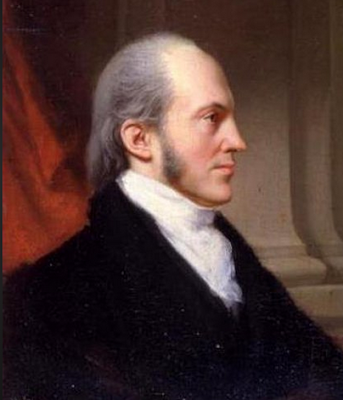
Aaron Burr
General James Wilkinson, a scandal-ridden officer with an EXTREMELY dubious reputation, spread the word that Burr planned to establish an independent country in the southwest, separate from the United States. Jefferson knew Wilkinson was a dishonest scoundrel, but decided to accept his word on this one subject. Thus Jefferson "leveled a devastating series of accusations against [Burr], doing him harm in the most public way imaginable." Burr was arrested and tried for treason, but acquitted.
Riffing on this period in American history, Burstein notes: "The irregularities and intrigues that punctuate this era in American politics are stunning. Rumormongering, physical threats, sensational duels, newspaper wars, sedition trials, slavery debates, and sexual slurs marked an erratic public discourse."
Jefferson was interested in the subject of sex, both intellectually and literally. Jefferson would read books about sex, and sometimes mentioned the subject in letters and musings. With respect to behavior, Jefferson was less than strictly honorable. When he was a 25-year-old bachelor, Jefferson made sexual advances on the wife of Jack Walker, who was one of his best friends. Burstein observes: "[Jefferson] did so on more than one occasion, and if the gossipy record is to be believed, he didn't stop after he was married." Moreover, hints in Jefferson's account books (diaries/spending ledgers) connect him with other women, both married and single.
Jefferson's friend Jack Walker learned of Jefferson's perfidy years later, and "only when the men were entering their sixties and Jefferson was the occupant of the President's House was the indiscretion publicized and Jefferson forced to endure public shaming."
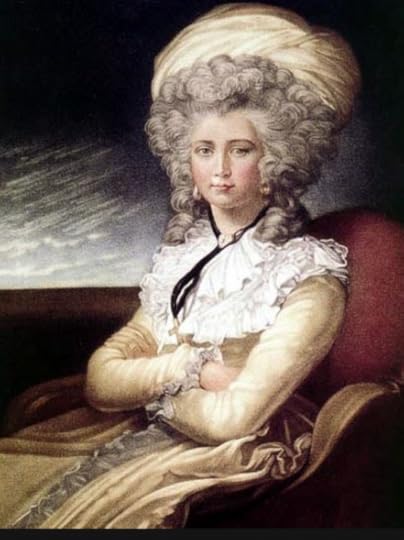
Burstein writes much more about Jefferson's infatuations, and expands on the 1786 'Head and Heart' love letter Jefferson (now a widower) wrote to Maria Hadfield Cosway, a married artist and musician Jefferson met in France.
Maria Hadfield Cosway
Jefferson's reputation probably suffers most from his attachment to the institution of slavery, which seems to belie "the powerful enduring statement about human dignity and equality he penned in 1776."
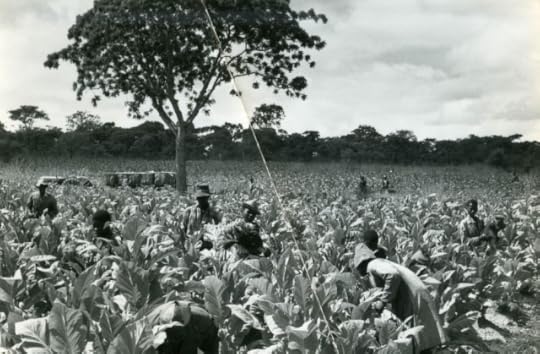
Jefferson inherited land and slaves from his father and then from his father-in-law. Jefferson's substantial Virginia property came with back-breaking debt, which Jefferson tried to repay by selling tobacco. Jefferson's situation was shared by many Virginia planters, who suffered from "a declining tobacco economy, imprudently negotiated loans, and reliance on a slave-based economy in which the perverse idea of breeding human property for sale increasingly became the resort of large landowners."
Slaves working in a tobacco field
When Jefferson was pressed on the relative cost-effectiveness in hiring versus purchasing a slave, and comparing both to the cost of a White laborer, Jefferson calculated that "hiring ultimately worked against the planter....and added gratuitously that the Negro does not perform quite as much work, nor with as much intelligence."
To be fair, Jefferson was (a little bit) ambivalent about slavery. Jefferson's law mentor George Wythe, a distinguished legal scholar and signer of the Declaration of Independence, believed Virginia should end slavery. After the Revolutionary War, Wythe urged Jefferson to take steps in that direction, and Jefferson briefly tested the waters among Virginia's plantation owners. However, Jefferson was "married to the strong, unbending prejudice of his class and loath to see Blacks as full citizens....His heart wasn't in it, and he evidently felt too little guilt about his slave owning."
George Wythe
On and off during his life, Jefferson considered the subject of abolition, but "it was never a cause Jefferson would stick his neck out for, and there is no evidence that he ever believed that free Blacks held a stake in American society." Nevertheless, Jefferson foresaw a time when slaves would be freed, and he believed Whites would refuse to live as equals with Blacks. In Jefferson's view, there would have to be a permanent separation of the races, and he speculated about Haiti as the "most practicable destination for the feared, the unwanted, in a society made by and for people with English surnames."
The Governor-General of Haiti, Jean-Jacques Dessalines (1804)
My review provides a small taste of the book, and I DON'T want to give the impression that Burstein focused on the racier aspects of Jefferson's persona. The book is a serious treatment of the third president, a man who's been both lavishly praised and relentlessly critiqued over the years. Burstein admires Jefferson, but isn't shy about exposing his shortcomings. I'd urge both Jefferson fans and detractors to read the book, and to peruse the book's illustrations and appendices, which add extra tidbits to the narrative.
Books about history aren't my go-to genre, but the controversy about Jefferson made me curious to read Burstein's book. The narrative is well-written and informative, and I'd recommend it to readers interested in the subject.
Thanks to Netgalley, Andrew Burstein, and Bloomsbury Publishing for a copy of the book.
Thomas Jefferson remains one of the most complex and contradictory figures in American history—a brilliant author of ideals of liberty who simultaneously participated in and benefited from the institution of slavery, even fathering children with an enslaved woman. This tension between principle and practice makes him endlessly fascinating, and also endlessly challenging for historians and readers alike.
In this biography, Andrew Burstein enters the crowded field of Jefferson scholarship with what he describes, as his title suggests, as a more intimate portrait of the man behind the public legacy. Rather than focusing solely on Jefferson’s political achievements or philosophical writings, Burstein seeks to get inside Jefferson’s mind—exploring his motivations, insecurities, ambitions, and personal relationships. The book traces Jefferson’s life from his upbringing in Virginia through his years as a revolutionary, diplomat, president, and elder statesman, weaving together close readings of his letters and writings with careful examinations of his actions and decisions.
Burstein is particularly effective at highlighting the ways in which Jefferson’s private thoughts often diverged from his public persona, revealing a figure both deeply principled and deeply conflicted. The book does not shy away from the darker aspects of Jefferson’s life, including his ownership of enslaved people and his relationship with Sally Hemings, but situates these within the broader context of his era and his own internal contradictions.
Readers who already have some familiarity with Jefferson’s life and legacy will likely get the most out of this biography, as Burstein builds upon existing scholarship rather than providing a simple introductory overview. That said, I found the book consistently engaging and thought-provoking throughout. It offers a nuanced, layered, and human portrait of a founder whose brilliance and failings remain central to understanding the American story.
Being Thomas Jefferson, by Andrew Burstein, is a challenging book to review. First, Burstein is an esteemed historian who has written several volumes on Jefferson. Yet, he did not seem to like or respect him very much in this book. This particular book focuses very much on Jefferson's weaknesses of character, his ego, his spitefulness, his financial failings, and of course, the disconnect between his written words and his own behavior. He returns again and again to Jefferson's attempts to seduce the wife of an acquaintance/friend. Was this honorable? Of course not. But, I was left wondering if there was more to the story than we knew. There is no question that Jefferson was wholly a man of his time, upbringing, and location. He was a slaveowner, who unlike other founding fathers, did not free his slaves, even in his will. His relationship with Sally Hemings, is one poisoned and shaped entirely by her enslavement. The attachment began, however, when she was in Paris and technically free. She seems to be the only woman, besides his wife, who bore Jefferson children. They grew old in the same house, although hardly together in the sense of a couple as we would understand it. There are many, many books that extoll Jefferson accomplishments. This did not. Jefferson's contradictions, of which there are many, are difficult to reconcile. I finished the book, glad I had read it, but wished it had felt more balanced. Thank you, Professor Burstein, NetGalley, and the publisher for the opportunity to read a digital ARC.
Being Thomas Jefferson: An Intimate History is a nuanced and penetrating exploration of one of America’s most studied yet still enigmatic founding figures. Andrew Burstein moves beyond the familiar public image of Jefferson as the eloquent author of the Declaration of Independence to reveal a far more complicated and deeply human individual. By examining Jefferson’s emotional world, private relationships, anxieties, and contradictions, Burstein provides readers with an intimate and psychologically rich portrait that challenges simplistic interpretations.
What makes this biography especially compelling is its willingness to confront the tensions between Jefferson’s ideals and his actions. The book thoughtfully explores his moral evasions, political maneuvering, personal insecurities, and relationship with Sally Hemings, presenting a figure shaped by both intellectual brilliance and profound limitation. Burstein’s scholarship is evident throughout, yet the narrative remains engaging and accessible, offering insight into the broader cultural and political landscape of early America. This is a deeply reflective work that invites readers to reconsider not just Jefferson’s legacy, but the complexities inherent in the founding era itself.
Burstein’s knowledge and deep research allows the reader to travel back in time and have a conversation with TJ. My opinion of TJ is more confused than ever and his view of the world reminds me of Steve Jobs reality distortion field. Worth the read and glad I came across it!
I really enjoyed this book. There were times I thought the author would fall into Jefferson idolatry but he didn’t. Well worth it to read if you have an interest in the founding fathers.