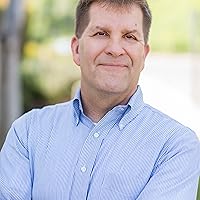
Winner of the George Polk Award for his investigation that brought down Stanford’s president, Theo Baker offers a revelatory and gripping account of Silicon Valley hubris.
Slush funds. Shell companies. Yacht parties. This is life for Silicon Valley’s favored teenagers.
Seventeen-year-old Theo Baker showed up for freshman year at Stanford University as a tech-obsessed coder. It seemed like paradise. There were Rodin sculptures next to nuclear laboratories and inventors lounging with Olympians. But Baker soon discovered a culture that embraced corner-cutting, that vested infinite excess and access in the hands of kids with few safeguards to catch bad behavior.
Stanford, he realized, was less a school than a business. Its annual budget was nearly twice that of Harvard or Yale and higher than those of 116 countries. The product? Students. Especially those special few identified as the next trillion-dollar startup founders. For them, there were secret societies, “pre-idea” funding offers, and social calls from billionaires, all with the expectation that these geniuses would soon join the ruling elite.
At the helm of this business was Marc Tessier-Lavigne, a superstar neuroscientist and wealthy biotech executive. But when Baker joined the student newspaper and started poking around the Stanford president’s record, he discovered never-reported allegations of research misconduct in studies published across two decades bearing Tessier-Lavigne's name.
Only one month into college and thousands of miles from home, Baker began receiving anonymous letters, going on stakeouts, and tracking down confidential sources. High-powered lawyers and public relations teams were hired to attack his reporting. Stanford opened an investigation into its own leader. And by the end of the year, Tessier-Lavigne was out as president.
This is the incredible journey of a reluctant teenage reporter who uncovered a story that shook the scientific world and became front-page news across the country. It is also an unprecedented inside view of the students learning to rule the world—and what they’re learning from those who already do.
The story of a chaotic, headstrong freshman reporter investigating his own university president, mixed in with some Silicon Valley misadventures. It was a real page turner, but sometimes the way Baker portrays himself rubbed me the wrong way, and it drags by the end.
It’s a little tough to review this book when so much of it overlaps with the stories and atmosphere of one of my years at Stanford. This includes the so-called administrative “War on Fun” and the way campus is overrun with Silicon Valley vultures, strivers, and cash. Baker also became a larger-than-life figure on campus, as he describes in the book, and he was divisive and sometimes abrasive. As a result, it’s hard not to scrutinize the way he tells his own story and how he portrays himself. After all, we are all the heroes of our own stories.
There is no question that Baker had the grit and obsession required to do the hefty reporting work on the University president’s falsified research. It’s fascinating to see the obstacles he had to push through, and it adds up to a great story of investigative journalism. It was also really interesting to me to see a completely different story of a year at Stanford than what I experienced—all the highs and lows in one person’s life on campus, and the parasitic VC subculture happening so close to my very different world.
But I don’t agree with his perspective on all the goings-on that year, and at times the way he portrayed himself was repetitive or self-serving.
It is negligent to discuss the Stanford bureaucracy waging “War on Fun” (by restricting Greek Life and parties) without talking about Chanel Miller and campus sexual assault. It is a huge part of the story of institutional failure at Stanford that he ignores because it undercuts his point about the purportedly pointless punishments against fraternities. It feels like he’s blaming the school for outlawing good old fashioned fun and preventing him from going to parties, when the story is more complicated than that. Other than that, the story of Stanford as a convoluted, profit-seeking, and self-serving institution is an apt case study of all the institutional rot occurring across all sectors of American life.
In addition, at times, Baker seems so audacious that he fits in with the tech bros he calls out as ridiculous, in alignment with the Silicon Valley motto he cites of “You can just do things” and a touch of solipsism. Perhaps he‘s positioning himself as the true heir to the spirit of Silicon Valley, the tech industry having wandered astray from its true origins by “lucre” and fakery. He certainly portrays himself as a plucky upstart boy genius, albeit one that overworks himself and crashes. This self-serving character, and the repetition of the same story beats of slowly finding more on similar investigations, gets a little old.
The writing is fine, but kind of monotonously astonished and cliched. The book ends up feeling too focused on himself, like a memoir rather than a nonfiction exposé, and without some of the reflection and craft I associate with the best memoirs. What he accomplished really was crazy, so I wish he’d let the story speak for itself rather than quote positive tweets about himself and write many variations on “But there wasn’t any time for fun—I had a damn job to do.”
Theo Baker is absolutely infuriating. Oh wait, sorry, that's probably pretty misleading as a first sentence. Let's try this. Theo Baker is infuriating because he is so young and talented that I am jealous because I am old and can't write a book this dang good. How to Rule the World is proof that sometimes talent can make up for a lack of experience. Most importantly, it is a fun and riveting read.
Let's take stock of what the book covers. Theo Baker starts as a freshman at Stanford University. He grew up with journalist parents as part of a privileged upbringing. He is smart and actively wants to become part of the Stanford technology pipeline which propels teenagers toward billion-dollar careers but sorely lacking in the morals department. Baker lulls the reader into thinking this book is going to be about Stanford and the strange, monied corners of the university. That is all here, but it is window dressing for the main event. In a twist everyone but Baker saw coming, he is eventually drawn into journalism and sets his sights on the president of Stanford. Hilarity and heartbreak ensue.
There is a very fine line to toe here. Baker needs to come off relatable while not trying to disingenuously act like he isn't gifted. You can't play "aw, shucks" when you get into Stanford before your 18th birthday. However, he also can't act like a spotless world-beater who is merely claiming his birthright, because I am pretty sure we all hate those people.
Instead, we get an author who knows he is smart, but is also in over his head. His eventual crowning achievement in journalism is not a fait accompli. He spends numerous pages talking about the people who made sure he didn't completely fumble his opportunity like the Stanford football team (hey-oh!). It is very subtle, but I noticed when Baker switches from "I" to "we". His actions are his, but his achievements are team based. He also nearly falls apart, admits he isn't always popular for valid reasons, and tries to hold on to a long-distance relationship way longer than he should (been there, brother!). He's intelligent, but human.
Throughout it all, the reader is left with a very uneasy feeling about Stanford as a whole. Is this place going in the right direction? They can point to numerous geniuses who walked its campus. They also have alumni skulking around ready to pay teenagers ungodly amounts of money for the possibility they may be the next big thing. Well, at least they can also claim Baker.
(This book was provided as a review copy by Penguin Press.)
Theo Baker is undoubtedly a damn good journalist — and a decent writer, too. I agree with most of his conclusions about how our alma mater operates. Good to know some things don't change in 15 years. And the minutiae of his reporting that ultimately took down Stanford's president is always compelling, even when it's deep in board meeting notes and the Photoshopping of scientific papers. This is a lively, easy-to-read book.
Unfortunately, he's also an extremely privileged 21-year-old who hasn't (at least in this text) engaged in much reckoning with that privilege. There's a whole lot of evasiveness or outright defensiveness to avoid talking about it. He drops so many mentions of "high school," but never an acknowledgment that he's actually referring to the most elite boarding school in America. He spits real, if brief, venom about any implication that he's a journalism nepo baby because of who is parents are, but never seems to consider that most Stanford Daily reporters don't have New York Times editors in their contact lists to consult with or the ability to ask Kara Swisher for her take on early drafts of their book manuscript. Even his tale of receiving a Polk award — a genuine, honest-to-God, unbelievable achievement — skips over the part that you have to apply for that, and it's not something that most college freshmen would ever think of doing unless, of course, you grew up in a family that holds it on a pedestal.
I guess I'd be remiss if I didn't say that a lot of this is colored by my own Stanford experience. My freshman year sounded much more fun than Theo's. I listened to Merriweather Post Pavilion and played a solid amount of Halo and didn't spend any time in cavernous tech bro mansions. I took CS106A instead of CS107 and still got the same B- because I had no real guidance and was just trying things that sounded fun. No one had told me that I needed to worry about my GPA if I wanted to go to grad school yet. Plus, I was destined to be a poli sci major anyway. (It's good to know Rob Reich is still a great dude with great ideas.) I actually liked the food at FloMo dining. I never had an opioid overdose, and I literally can't imagine having one at the CoHo. I was exposed to wealth and privilege that my public-schooled brain couldn't even begin to comprehend, but the people with it — hell, most people I met on campus, really — tended to be nice, generous, and normal.
All that to say, yeah, I'm sure that there's a "Stanford inside Stanford," but Theo does a pretty good job at obscuring the fact that he came in predisposed to know about it. And predisposed to tell people about it, too, since most twenty-somethings don't share a literary agent with their parents.
*** 6/8/26 *** Just finished Baker's freshman effort, recommended it to 3 people in my book reading circle, and am just so impressed with this book and the young person and his work behind it. If you've worked in tech/biotech/research or are close to anyone applying to or in college, I would def recommend this book. I can't imagine there is another university that operates in the same hand-in-glove closeness with the business and finance/investment communities as Stanford. I worked in this area/industry (years ago now) and I don't think it was like this back way before Theo was born. I was really shocked by many of the stories in this book to be honest. It may seem like nirvana for CS/engineering students, but go in with your eyes very open if you have the good fortune to be admitted. Best of luck to Theo and count me in as watching for his next big thing. 5 stars.
** 6/7/26 ** 50% into this new release, and even after 20-yrs in Silicon Valley tech, living very near Stanford, and a pretty high familiarity with college admissions/student life, am absolutely shocked at the goings-on for Stanford students, at least the Computer Science majors. Anyone who invests in tech or has any professional crossover into tech should read this book to understand the astonishing $$$ and power bestowed to these literal teenagers who are, of course, extremely smart and talented, but used as pawns to launch the next unicorn firm. And author Theo Baker comes across as an extraordinarily diligent and bright investigative reporter for someone who is 17(!!) years old at the point in the book I am at, which is where the facade on Stanford's prior President's research begins to crack. Baker seems to be a very compelling and talented young person, and it makes me feel good about the future of our country if we have more kids like him speaking their piece and doing their thing. Final review coming soon.
* 5/26/26 * Got this book after the NYT review 5/18 for this new release, based on 1) the author's incredible shooting star path to publish and be featured in the NYT at age 20? 21? Can't wait to see what he does with his life. And 2) being based on the Silicon Valley / Stanford vibes where I used to work for many years and always enjoy books centered there. Review coming soon.
When reading a non fiction book, there are three things I look for: a subject that I know little or nothing about, a narrative structure that keeps me immersed in a new world, and excellent writing that includes an erudite vocabulary. How to Rule the World hits the trifecta.
This book covers many topics from the absurdity of a university policing evey aspect of its students behavior to the teen suicide epidemic. It's the books primary focus on modern journalism and the rot and debauchery that exists in the tech community both in and around Stanford however, that had me reading cover to cover with just a five hour break for sleep.
While I'm sure much will be made of the bacchanal of the tech field which is very frightening for those of us that are concerned about the lack of safeguards in that industry, I found the story of Baker's turn to investigative journalism to be more compelling.
Theo Baker was 17 years old when he began the research for his Polk Award winning work at The Stanford Daily. Quick to point out that so many Stanford students are true geniuses, he writes of the brilliance of those around him while it is obvious he is every bit as intelligent. This book was published this week as Baker simultaneously turns 20 and graduates from Stanford.
Again and again, I was struck by the high standards of journalism when done right. As is true for all reputable news organizations, lawyers and editors reviewed every word of Baker's articles multilple times with rewriting required to meet the exacting standards of factual reporting. There is no "fake news" here. A solid case is made for subscribing to and thus investing in our national newspapers.
If I sound like I'm gushing, I am. Baker's parents gave him a T-shirt with a quote from one of their journalist friends (responding to his work in The Daily) that said , "Theo Baker is a fucking menance." He is, and we are the better for it.
Read this book. I'll be reading everything he writes from here on out.
As a 2025 alum, this book captures the “vibe” of Stanford over the last four years so accurately. Theo obviously is a prodigy both in his writing style and brilliant investigative work. Aside from minor factual inaccuracies that I noted due to personal knowledge, it for the most part is dead-on, albeit a cynical perspective of the ecosystem here. Overall I highly recommend this book to anyone seeking to understand what Stanford is like. There were many laugh out loud and oddly nostalgic moments for me, knowing the folks behind the pseudonyms in the book, the absurdity of the whole war on fun saga, living in the same freshman dorm that Will Curry was caught in, etc. Theo is very much right to call out Stanford for many of its shortcomings as he does in the book.
Funnily enough, I’m the person he mentions kicking out of the building during Treehacks for “breaking” in. To be fair, the door was literally open so we figured it’s available …
As a humanities PhD student at Stanford, I think Theo’s critiques of Stanford’s culture, specifically the career-focused culture at the expense of a rich intellectual life are spot on. I think he is right to point out how this breeds a culture of fraud that has vast implications not only for the university but for the world.
I found his writing about Stanford and Stanford life to be the strongest. I wish that the book had focused more on campus life and the university’s inner-workings than the MTL investigation. While I understand narratively why he chose to connect the MTL scandal to the larger fraudulent culture in Silicon Valley, I think they are separate stories. In my view, it’s really a function of a broken academic system that forces academics, regardless of location, to publish positive and original results.
Separately, I found the memoir portions of the book pretty weak. I don’t think they contributed much to the plot and analysis when they should have. Theo writes of himself as above and separate from the student body that he is very much a part of. I can see the “move fast and break things” culture of Silicon Valley present throughout Theo’s own writing. His relentless drive to take down scientific fraud is admirable, but it’s not all that different from the ambition that drives students to found start-ups. Like the work of any young striver, this book has many imperfections that stem from carelessness and the black/white thinking of youth.
I was struck by some of the editorial/continuity mistakes in the book. My hunch is that this came from a rush to publish the book before Theo’s graduation. It makes me wonder how many exaggerations and fudged truths there were in the book. It’s not all that different from how start-ups rush to increase revenue, however imperfectly, before a raise. As much as Theo wants to paint himself as above or separate from Stanford, he is very much a part of the Silicon Valley culture he condemns: one that prizes youth and inexperience.
Choosing not to work at a tech company does not make Theo separate from Stanford, and, yes, Silicon Valley. Maybe he needs to interrogate the privileges that made it possible for him to shun a high-paying job in Silicon Valley for a “noble” career in journalism. More self-reflection would have made for a much more powerful and original book. Theo is telling the world what they want to hear about Stanford, perhaps something more interesting would be to ask why so many young and lucky people, including him, want to “rule the world.”
This is quite the book. I read it in two days. To be fair, I love investigative journalism stories, and this one was particularly of interest to me because it is couched in higher education. However, the most interesting part of this story is that institutions have a vested interest in protecting their own power and the insane measures they will take to do so. To do so, they create an inner ring. As CS Lewis pointed out in one of his best essays, we have a desire to want to be part of the inner ring. When you take this fact combined with the fact that the story is set at Stanford University, you have an inner ring that is incredibly wealthy and powerful. This pipeline sucks in teenagers, starting their freshman year, changing their lives in ways they never thought were possible, granting exclusive access to money and power to kids who just left their homes maybe for the first time. The author operates both inside the establishment, showing why it is so alluring, while also outside the establishment, investigating the university president for research misconduct. These types of exclusive power structures exist everywhere, from small towns to major universities, and this is an excellent exposé.
The critiques of Stanford/tech culture are fine and probably correct. The problem here is that much of the book seems to exist to portray Baker as very smart and competent but sadly bogged down by his morals.
Also this is not so different from the myopia you would get if you let an East Campus senior write a book about the ways the MIT administration is Killing Culture.
I was really curious to read this book about Stanford, particularly given the Theo's unique experiences at the school. Some brief reflections on three topics the book touches on.
THE STANFORD EXPERIENCE: The first third of the book I thought gave a good presentation of some of the more unique aspects of the undergraduate experience at Stanford and sort of served as a trick mirror of my own experiences. I did not come into school aspiring for power or wealth, if anything, what I yearned for was the older version of college where knowledge is pursued for its own sake. Theo presents a much more ambitious mindset when it came to his time at The Farm, but I think any recent alumni should be familiar with most of the elements that he speaks on.
THE STANFORD DAILY/MTL: This ends up being the binding thread that keeps this whole book together, since the saga spans the entirety of the author's freshman year. As someone who read a couple of the articles when they came out, I found the full chronology absolutely fascinating.
"THE STANFORD INSIDE STANFORD": I feel like this section is meant to be shocking to most, but even 15 years ago when I matriculated, a lot of the characteristics of this VC-centric culture were already present, though perhaps not as dominant as they are today. This topic incorporates well into the book as an ethical framework and reference point for the MTL controversy, but beyond "wow there is so much money and no ethics," I don't think this topic is really fleshed out enough to be insightful to those already plugged into the silicon valley atmosphere.
When I was on campus, big tech was definitely much more of the benchmark for Software/Software adjacent engineers. If anything, the proliferation of startup unicorns (not a common term when I first graduated) and ballooning valuations of early stage AI startups makes recruiting young college students an obvious choice from a VC standpoint. As it has become more common for founders to hit the $1B valuation mark, it makes more sense to simply invest in the individual rather than the company as soon as they are identified.
OVERALL, this book provides a riveting account of student journalism, encapsulates some of the key points about Stanford that outsiders may not be familiar with, and does a decent job lightly discussing the way tech culture has shifted in recent years.
Stanford always held a rather mythical place in my mind, on the peak of a Californian Olympia where great scholars churned out cutting edge ideas and revealed to us mere mortals the boundless capacity of the human mind. Sadly, it appears that it has become the University of the Con. In his memoir of his freshman year, Theo Baker pulls back the curtain of this fabled Western institution to show that the prestige is just that, an elaborate magic trick.
What it says about American higher institutions is very depressing. Once I believed that professors and administrators put integrity and their students first. I had accepted that higher education was more a business these days, including the public schools, all vying for more students and higher salaries, but fewer professors and classes. And this meant looking the other way when things happened.
What saddened me the most was Baker’s personal experience of his freshman year. It should have been better but the War on Fun made it rather impossible.
Baker is an amazing investigator with talents in myriad areas. His book is worth the read.
Expose of the rot that is the start up scene at Stanford University in the era of big tech. Well written but way too long, repetitive, and self focussed more than necessary. However the author is only 21 and about to graduate from college (Stanford needless to say). Would have been better as a New Yorker piece. Information worth knowing about the state of tech but a slog to finish
what i like: baker's narrative about his journalism and the whole MTL case. this part is well written and the ONLY reason this book gets 3 stars from me. i applaud his tenacity for chasing this story, and it was interesting to read about people whom i knew from my time at Stanford.
what i don't like: everything else. this book feels like a disjoint group of stories about baker's freshman year at stanford. to me, there was not a clear through-line about the stories of 'the stanford within stanford', the car club, treehacks, and his journalism. i wish he had just focused on a main story of the mtl case, with supporting stories about events that co-aligned with it. his detailing the coupa circuit and all the dinners, vc meetings, etc, felt very disconnected from the meat of this book. and i absolutely did not need to know that he lost his virginity after a frat party. baker comes across as self-aggrandizing during the first half of the book and whiny about not being able to have the 'stanford experience' he had imagined.
he writes multiple times about not being able to go to frat parties because there was only one happening or that it had gotten cancelled. and I think it's in bad taste to chalk this all up to 'the administration hates fun and won't let the students have free rein to do whatever they please'. baker mentioned katie meyer in this book, but why didn't he mentioned chanel miller? it would have given more context for why admin is so hesitant about parties, and for someone who considers himself a journalist, it seems a deliberate omission to prove a point. also, (quoting my friend) if he wanted to go to frat parties and get wasted, he should have gone to a party school with a big greek life presence instead. stanford is not known for its greek life or parties. baker describes frat parties as "formative life experiences" and i'm trying and failing to not judge him for that. and all his comments about having to read the consent boards before entering a party were super frustrating to me. consent is important, and if reminding everyone who enters prevents assault from happening, why not do it? he complained a lot about reading those signs, and tries to tie it into the 'hates fun' aspect, but it came across as juvenile and whiny. also, as a student during this time, we must have had vastly different experiences because i remember so many parties going on that year and the years following, where i read the consent board maybe 3 or 4 times. and so what if a house wants to have a land rights board? who cares? it's their choice. i'm not defending stanford because i, too, have many complaints. but he brought this issue up multiple times and i just feel like it's a nonissue compared to other, bigger, problems in admin. at the same time, i don't see how this issue relates at all to the MTL case. stanford currently, or at one point, had more administrators than students. my last two years (2023-2025) were a rollercoaster full of highs and lows. res ed has tons of problems that could be worth looking into, that would be more credible complaints than the frat party issue. i'm trying to say it seems like he was upset he couldnt party and wanted to include it in his book, and i thought it was a little stupid. in addition, the 'stanford experience' is what you make of it, truly. if you want 'fun' you can find fun in all sorts of different ways. he just seemed to be looking in the wrong places, and i hope he found it in his following years.
i also think it's worth mentioning that he does come from influence and power himself, as his parents are big time journalists (politico, new york times, new yorker). and as much as i agree that baker did a majority of his journalism himself (i was very impressed!) it seems difficult to accept that he got no help from his parents with their connections, lawyers, who would protect him in the first place from his reporting. i'm not saying he shouldn't have done it, but i think it's important for him to acknowledge that incredible place of privilege he writes from.
something a friend mentioned, and that i agree with, is that i hope this book does not color how people come to view stanford. it is not just tech geniuses and vc bros who rave about effective altruism or making money as fast as you can. i have met some of my best friends at stanford, and none of them are like that. i have met incredible artists, engineers, athletes, dancers, etc who are all real people, who are grounded, and moral. but i have also met some people who are not. i hope stanford continues to be a hub of interdisciplinary discourse, and this book does not kickstart a self-fulfilling prophecy.
I read this to write a book review for SPECTRUM Magazine, and found it fascinating. Theo Baker does an exceptional job of interweaving raw and vulnerable moments throughout his accounts, which enrich the narrative. As a student journalist myself, the amount of time and effort Baker poured into his reporting, while a full-time student, is remarkable. Definitely a must-read.
What an incredible read. Theo Baker has the astute eyes of an experienced journalist for someone who is in his early 20s. He manages to capture the Stanford that I don’t recognize anymore. Since graduation, I often wonder how Stanford alumni people like Elizabeth Holmes and SBF became twisted charlatans. This book gives you an insider look at the smoke and mirrors of Silicon Vallley and Stanford’s role in this mirage.
4.5 stars. My friend who recommended this said he liked the first half better, comparing it to Liar’s Poker but in Silicon Valley. I’m the opposite. The story of Baker’s reporting that led to Marc Tessier-Lavigne’s resignation as Stanford president is what gripped me. It’s part Spotlight, part All the President’s Men, packaged as portrait of the artist as a young investigative journalist.
The critical reviews here note Baker’s privilege (his parents are basically journalistic royalty) and the lack of context around his commentary about Stanford’s “War on Fun” — specifically, what happened in 2015 to Chanel Miller, whose name appears nowhere in these pages. Fair. (If you haven’t read Miller’s Know My Name, it’s outstanding. Pairing it with Baker’s account of Stanford would make for a quality book club night.)
I’m inclined to give Baker some grace because, frankly, what he did was remarkable. His dogged reporting (as an 18-year-old!) as he chased the story that no one else saw is retold here alongside the ups and downs of a chaotic freshman year. As the institutional power of Stanford (not to mention Steve Neal, the lawyer who represented Charles Keating and Elizabeth Holmes) lined up against Baker and his editors, he refused to back down. Upon becoming the youngest ever recipient of the George Polk Award, Baker acknowledges the murmurs that somehow nepotism must’ve factored in. “The reality was so much more mundane,” Baker writes. “I’d just worked, constantly. I hustled and pushed and skipped classes and lost sleep because the story came first. Everything else about college came second.”
This is the third “whistleblower” book I’ve read this summer, following Careless People and Into the Wood Chipper. Tech companies and/or tech leaders are the villains in all three. Money and power, coupled with the flagrant corruption of American public life over the past decade, have clearly done great harm to institutions like Stanford, to say nothing of our country. I teach high school seniors, and in my experience they, like Holden Caulfield, are excellent at clocking the hypocrisy of adults. My hope is that they go off to college with a little Theo Baker in them. The kids, as they say, are alright.
I don't even know where (or how) to begin a review of this book. Let's start with this, EVERYONE SHOULD BE READING THIS BOOK!
Theo Baker always wanted to go to Stanford, going back to a single-digit age. He loved coding and the two seemed be a perfect fit. His parents drop him off at his dorm (a unofficial rite of passage of anyone who lives on campus), and he hits the ground running.
By chance, he joins the staff of the student newspaper, a choice he made as he was inspired by his maternal grandfather and his student journalism. His first two stories are a hit. Then events that would change his life begin. First, he starts getting anonymous tips that lead him to a stunning accusation that points to the center of the halls of power at Stanford. The second revelation is the discovery of the world of "Stanford inside of Stanford", mainly the coziness of Silicon Valley and what seems to be the new "best and the brightest" incoming freshman, on a yearly basis.
What occurs over the months of Theo's freshman year turn his world upside down. He must also deal with personal loss back at home. All this, as a seventeen going on eighteen year-old is just trying to fit in and be a "normal" freshman. That was never going to happen. Instead, Baker musters all of his street smarts to get to get through a year that would have had a 40 year-old reeling.
This book is an eye-opener, but it is also page turner. Baker is a master storyteller, and it comes from the heart. If you open up yours, you'll feel like an eighteen year-old all over again. Enjoy the ride!
This was a fascinating read. At times, it felt like a work of fiction, but it is simply great investigative journalism. Theo Baker takes readers deep into the world of Stanford University, exposing the intersections of wealth, power, and institutional influence while telling a complex story in a way that is both engaging and difficult to put down.
The storytelling deserves 5 stars. Baker has a remarkable ability to uncover details, connect the dots, and keep the narrative moving.
My biggest critique, however, is Baker himself. Throughout the book, he seeks to expose dishonesty, corruption, and moral failures in others, yet he seems largely uninterested in examining his own. He openly recounts abusing prescription drugs, excessive drinking, a casual sexual encounter, breaking commitments, and repeatedly failing to keep his own word. These episodes are presented almost matter-of-factly, with little self-reflection. I found that disconnect difficult to ignore, which is why the book only gets 4 stars.
The book left me thinking about our culture’s tendency to prize authenticity over virtue. Baker clearly values truth and exposing deception, yet he consistently downplays his own moral failures while exposing those of others. The contrast is disorienting.
Despite that criticism, How to Rule the World is a compelling, well-reported, and highly entertaining work of investigative journalism. I would recommend it to anyone interested in power, politics, and the institutions that shape our culture.
Jensen Huang went to my high school and many of my peers attended Stanford from our public high school in Silicon Forest (a/k/a Beaverton, Oregon home to Nike and intel). Of course back then the acceptance rate was 30% and middle class kids actually could get in. The author is a nepo baby but the book and this review are spot on in showing that elite schools are no longer a meritocracy (not that they ever really were but back then some middle class kids without parental money or connections could get in with just good grades and scores).
Stanford and other “elite” schools are transactional businesses with billion dollar endowments —a product that rich parents (myself included) buy to ensure their children have a strong network for jobs and opportunities and future marriage partners. Everything is transactional and the parents and students know this. There is no place in these schools for anyone who is not bringing something to the table as an Olympic level athlete, child of a billionaire, national debate champion, etc. or the handful of first gen students sprinkled in to make everyone feel better.
Fascinating and compelling account of Theo Baker’s freshman year at Stanford. I came for the depiction of “club culture” and stayed for the first hand perspective on a massive feat of student journalism that ultimately resulted in the President’s resignation. Baker’s gripping story makes clear the risks of losing meaningful barriers between academic research (and culture) and industry money.
Friends, I’m coming for you with this book! I’d love to have a “book club” conversation with any GU friends and/or SU-connected friends. Lmk if you’re interested …
I just finished Theo Baker’s book, “How To Rule The World, An education in Power at Stanford University.” I join the chorus recommending the book. It’s a page turner.
It operates on so many levels. As Baker said in his KQED Forum interview this morning, “It’s a love letter to journalism.” He is courageous, tenacious, in his exposure of Stanford’s President at the time.
As others have commented, his description of the commercialization of Stanford, and as he suggests, it’s resulting pressures on students and its underlying corruption both of individuals in their conduct and the educational mission of a great University is shocking, and depressing.
A lot of what he describes is not necessarily new in concept. The relationship between corporations and Stanford is something 60s students had to contend with, and the Stanford Research Institute was already in place at that time. Secret societies recruiting for elite capitalists, e.g. on Wall Street and government, goes back to Harvard and Yale. Indeed Baker on Forum used this phrase describing one such Stanford “secret” tech VC class: “Skull and bones for the aspiring tech elite,” referencing Yale’s secret society.
But what is new, which is suggested in the book and he emphasized on Forum, is the role of Silicon Valley in our society. He asserted Silicon Valley is the greatest wealth developer and concentrator ever, and at a time of great wealth disparity. And he contends it is now fully integrated into the Stanford undergraduate world. And if Tech is transforming the world, that makes what is happening at Stanford and the values, or lack of same, of the future generation it is training and recruiting for Tech a key problem for all of society.
I really enjoyed Baker’s plucky take on his time at Stamford: the importance of student journalism and good reporting underscores his memoir. The moral vacuity of the institution that he depicts here is both sad and alarming to me, and he traces the Silicon Valley influence and “people harvesting” (recruiting) that happens from day one on campus in an engaging way.
I don’t have too much to say about this one….it was a great read by Theo Baker who investigated the then Stanford University President, Marc Tessier-Lavigne (MTL).
Baker, a journalist and Stanford alumni, details the environment at the university, his uncovering of falsified research from MTL, and what he was dealing with personally at the time. If you’re interested in journalism and exposés on corrupt institutions, you might like this one! (3.5)
Thinking a lot about this one and somewhat condemning myself for not investing as much into a) reading the Stanford Daily enough while on campus b) following the evolution of the university post graduation and c) investing more in general into reading investigative journalism broadly … Two quotes that cut particularly deep that aligned with my inner conflict: 1) “I could see Stanfords crippling relationship to perfection more clearly each day” and 2) “One invited me to a private event a few months later, with an investor texting me, “Theo when you aren’t knocking university presidents off their perches into the hands of VCs willing to fund them for a $1B, you should join ;)””. I loved my time at Stanford learning about the promise of innovation in SV yet also recognize the negative impact it may have had on influencing what I value most in life… waiting for my goodreads girlies to complete this so we can discuss our views