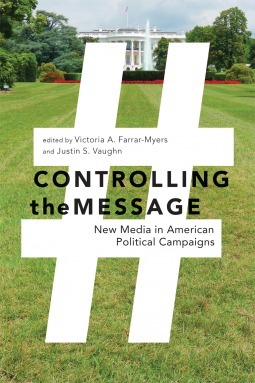
This anthology compiled and edited by Victoria A. Farrar-Myers and Justin Vaughn is a thorough dissection of the role which new media and social media played in the 2012 US elections. The four parts of the work outline a complete picture as to how this election was quite different than any seen before:
Part I - Elite Utilization
Part II - Message Control in the New Media Environment
Part III - Social Media's Impact on Campaign Politics
Part IV - Social Media and Civic Relations
Now of course this is the type of book that would need to be updated every four years or so especially given the volatile nature of the 2016 elections with special emphasis on the role of new/social media by foreign entities wishing to sway voter opinion and/or suppress turnout. However, it remains a fine supplement to many political science survey courses or mass communication courses.
Where the anthology is at its most adumbrative is Part IV which expresses what we have all come to know and expect, that the use of these platforms by campaigns, supporters, PACS, pundits, and foreign entities is generating not just polarization but a uniquely factually-hollow and emotionally-charged form of polarization where more people have opinions on issues, yet are even more ill-informed as to the facts surrounding those issues. Having an opinion on an issue in today's climate is frequently only expressed by trolling the other side with a trite and genuinely stupid image or article created by people/entities not much more informed than the unlettered masses to whom they are catering. Identification in opposition to another group's position on an issue is now taken to be an acceptable form of opinion development where previously this was seen as unlettered and frivolous.
I sincerely hope this continues to be studied and most importantly that those with the power to influence how we gather, disseminate, and discuss political information take note of such exhaustive studies.