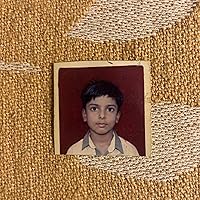
Brighu is getting older. Badminton has replaced judo, irritation has replaced anger, metabolism has slowed down. Yet some things the inability to take a cab, anxieties about the digital universe, and panic for the future. So Brighu walks. Unceasingly, through known and unknown terrains, with the pointlessness of a detective without a case.
An Indo-Pak romance withstands years of toxic nationalism between two hostile countries, only to unravel in a third, foreign land. Jafar, born of that romance, inherits a history he has no control over. As he grows up in Berlin, his father, Brighu, desperate to hold on to the fantasies of a fading home, tells him bedtime of sultans and jinns, of street food and eccentric cousins, of Delhi, Calcutta and Karachi.
Set in a world where bureaucracies and borders shape human relationships, Sarnath Banerjee's Absolute Jafar is a poignant meditation on belonging and becoming. Perhaps the author's most personal work yet, it is a bittersweet rhapsody, rich in humanity, wit and imagination.
Absolute Jafar by Sarnath Banerjee is a graphic novel that merges personal and political life through the characters. It shifts between memory, migration, politics and relationships, by throwing in satire and humour to the story. He captures moments where history and politics slip into private lives, altering certain decisions. The illustrations take it up a notch, making it easier for the readers to follow the lives of Brighu and his son, Jafar. This isn’t a graphic novel that aims for dramatic highs. Instead, it lingers in the in-between memory, displacement, and the quiet ways people carry history within them. Thoughtful, subtle and deeply observant, Absolute Jafar is a slow read in the best way, one that invites you to pause and look a little closer. I highly recommend it.
Thanks for the copy @harpercollinsin @sarnathbanerjee
I really loved this story about how absurd criss-crosses of history, politics, and diplomacy shape and break lives that did not need to be lived with such complications in the first place.
A man named Brighu (yes, not Bhrigu. Brighu, because some clerk messed up his birth certificate). Brighu, fond of walking; Brighu, who lives in Delhi and falls in love with Mahrukh, who’s visiting the city. Mahrukh loves Brighu back, but there’s a glitch: Mahrukh is Pakistani, and Brighu, of course, is Indian. And neither of them is really welcomed by the other’s government, at any rate, for any length of time; so what do they do? Where do they go?
Absolute Jafar is a whimsical graphic novel, meandering through a range of cities and countries: Delhi and Karachi, Chicago, Tokyo, Berlin, London… Brighu walks, seeing sights up close, experiencing places, meeting interesting characters, forming bonds that last, sometimes years. There are helpful taxi drivers here, and enterprising lawyers who will whip up an affidavit for any conceivable purpose; friends and relatives, people who couldn’t care less and people who care deeply. There is Jafar, too, Brighu and Mahraukh’s son, and his relationship with his father.
The story here is a simple one of a man’s emotional connections with not just people, but with places, especially highlighting what the German call heimat: a sense of home, both comprising homesickness as well as an understanding of where one’s home truly is. The small things that make up one’s sense of home and of familiarity come through in a subtle sort of way: through, mostly, what’s happening in the backdrop by Brighu walks. Salwar-clad women exercise in an outdoor gym; on a German beach, a plump couple disrobes; people rush by on a busy Tokyo street.
There is so much happening here. Insights into history (Aurangzeb, Mir Jafar). Into the tension between India and Pakistan. The corruption in the Indian bureaucracy: all of these, and more, form the backdrop to Brighu’s life. And yet, not very much happens, really. It is, as I said, a simple story, but richly told, with lots of delightful, often quirky vignettes and observations all along the way.
An enjoyable, thoughtful combination of words, images, and thought. If you like graphic novels, don’t miss this one.
ಆತನ ಹೆಸರು ಭೃಗು, ಭಾರತೀಯ. ಆತ ಮಾಹ್ರುಖ್ ಎಂಬ ಪಾಕಿಸ್ತಾನಿ ಯುವತಿಯನ್ನು ಪ್ರೀತಿಸುತ್ತಾನೆ, ಆಕೆಯು ಅವನನ್ನು ಪ್ರೀತಿಸುತ್ತಾಳೆ, ಇಬ್ಬರು ಮದುವೆಯೂ ಆಗುತ್ತಾರೆ, ಭಾರತ ಮತ್ತು ಪಾಕಿಸ್ತಾನ ದೇಶಗಳ ನಡುವಿನ ರಾಜಕೀಯ ಜಿದ್ದಾಟದಿಂದ ಅವರ ಪ್ರೇಮಕಥೆ ನಲಗುತ್ತದೆ, ಮಾಹ್ರುಖ್ ಭಾರತದ ಪೌರತ್ವ ಪಡೆಯುವ ಪ್ರಕ್ರಿಯೆಯನ್ನು ತುಂಬಾ ಮಜವಾಗಿ ತಿಳಿಹಾಸ್ಯದ ಮುಖೇನ ಹೇಳಿರುವುದನ್ನು ಓದುವುದು ಸಕತ್ ಅನುಭವ.
ಅವರು ಇತ್ತ ಪಾಕಿಸ್ತಾನದಲ್ಲೂ ಇರದೇ ಭಾರತದಲ್ಲೂ ಇರದೇ ಜರ್ಮನಿಗೆ ಹೋಗಿ ನೆಲೆಸುತ್ತಾರೆ, ಅಲ್ಲಿ ಅವರ ಮಗ ಜನಿಸುತ್ತಾನೆ, ಅವನ ಪೌರತ್ವದ ಜಾಲ ನೋಡಿ - ತಂದೆ ಭಾರತೀಯ, ತಾಯಿ ಪಾಕಿಸ್ತಾನಿ ಆದರೆ ಹುಟ್ಟಿರುವುದು ಜರ್ಮನಿಯಲ್ಲಿ.
ಇದು ಮೇಲ್ಪದರಕ್ಕೆ ಸರಳವಾದ ಕಥೆಯಾಗಿ ಕಂಡರೂ, ಈ ಪುಸ್ತಕದ ಕಾಣದ ಗೆರೆಗಳು ನಮ್ಮನ್ನು ಕಲಕುತ್ತದೆ. ಪ್ರೀತಿ, ದೇಶ, ಸ್ನೇಹ ಇವೆಲ್ಲದರ ಸಮಿಶ್ರ ಹೂರಣ ಕಥೆಯ ರೂಪವಾಗಿ ಇಷ್ಟು ಅರ್ಥಪೂರ್ಣವಾಗಿ ಓದಿ ಬಹಳ ಕಾಲವೇ ಆಗಿ ಹೋಗಿತ್ತು.
Art is political. And Sarnath's latest, also perhaps his best yet and one of the best graphic novels to ever come out of India, shows that the political is also often personal.
Absolute Jafar is Sarnath Banerjee's most personal graphic novel to date, and it seeps into you - the reader - quietly, with precision (unknown to it), an ache for things lost, for homes that you once inhabited, and for life that once was.
This graphic novel made me feel so many things - feelings that were wild, errant, messy, and sometimes in line with everything - my thoughts, dreams, and people too. The book itself is about too many things, too many lives, of the protagonist Brighu's time in Calcutta, Delhi, Karachi, and Berlin with his wife Marukh and son Jafar, of what happens when love cannot be contained, of separation, and then of the uncertainty of the future. I am rambling, yes, but this graphic novel is also quite that - a ramble that is perfectly tuned.
Absolute Jafar is a treat. It is a melancholic, sometimes funny, mostly introspective, and fantastical gift to readers at home, and those away from it. It is about love - solid love, the one that breaks apart, the one that rebuilds, and the one that needs nothing but a list in mind as countries are moved and longing is increased. I will reread it, when I miss home I left behind.
Absolute Jafar by Sarnath Banerjee, published by HarperCollins, is a graphic novel that demands you slow down and give it your time. At first glance, it might seem like a simple story, but there is so much happening between the lines that you cannot just read it and move on. You have to pause, interpret, and sometimes figure things out for yourself because not everything is explicitly explained. I found my way to this book through a friend's recommendation, and I am glad I picked it up. It took me a couple of days to finish, and I enjoyed taking my own sweet time with it rather than rushing through the pages.
What I particularly loved was the way the book brings together identity, belonging, migration, memories, and the politics that quietly shape our personal lives. The story makes you think about what home really means when borders, bureaucracy, and circumstances decide where you can or cannot belong. The illustrations are another highlight. Some are in black and white, while others bring colour to the pages, adding another layer to the reading experience. There is a lot to appreciate in the artwork, but just as much to think about in the words and the silences between them. This is not an easy read in the conventional sense. It asks you to engage with it, make connections, and arrive at your own interpretations.
I can see why Absolute Jafar is receiving recognition, including its nominations for the Crossword Book Awards 2026 in the Fiction category and the Atta Galatta Bangalore Literature Festival Book Prize in Fiction. I am particularly looking forward to following its journey at the Crossword Awards. This is the kind of book that stays with you because of the questions it leaves behind rather than the answers it gives you. If you enjoy graphic novels that go beyond the surface and invite you to think about history, identity, and the meaning of home, I would recommend giving this one a chance. Just remember to take your time with it.
I just finished Absolute Jafar and it is such a vibe. Sarnath Banerjee has this way of making you feel like you are just walking around Berlin or Delhi with him. It is a graphic novel but it honestly feels more like a long talk with an old friend over several cups of tea.
The story is about a dad named Brighu who is living in Germany but his heart is still back in India and Pakistan. He is trying to explain his complicated life to his young son Jafar. Because Jafar is growing up in a totally different world Brighu tells him these wild bedtime stories about ancient kings and weird relatives to help him understand where he comes from.
It covers everything from an Indo-Pak romance trying to survive in a new city to the simple struggle of getting older and feeling tired. It is a beautiful look at how we try to hold onto our roots when we are far from home.
If you have ever felt a bit out of place or wondered how to tell your own family story this book is for you. The art is messy and real and the humor is so sharp. It is easily a five star read for me.
Over the years, browsing through the pages of Sarnath Banerjee's works has continued to become more and more of a happy escape for me; almost as much as, dare I say, revisiting Porshuram( Rajsekhar Basu) or Lila Majumdar's works. Reading Banerjee's latest work, Absolute Jafar has been no different. Owing to my fast-dwindling concentration span, although I am increasingly becoming more and more of a fickle reader these days, struggling hard to even finish books, I am convinced I will like; I have tried to remain patient with this one, not to finish it too fast, perhaps just to linger on those happy feelings a little longer like a child munching on their favourite cookies ever so slowly.
Of course, this is not a review of his latest work, nor do I have an intention to write one, but one does get the vibe that this is perhaps one of his more personal works to date. To me, who, somewhere deep inside still perhaps has an ounce of pride left for their Bengali roots, it's definitely hard to outdo 'Barn owl's', an all-time favourite, but this one does have all the ingredients to become a close second. But then again, as I reached towards the end, much like Banerjee's protagonists, I was left with some soul-searching as to why do I keep finding his works increasingly relatable. While it's easy to acknowledge ( and maybe even feel a bit repulsed at!) the social and cultural privilege done of his characters tend to enjoy that much of us are bereft of, in the end, perhaps it's their countless self-contradictions and their own admission of it, is what makes you relate hard and slowly fall in love with them; not to mention the countless quirky and cerebral digressions, which are an absolute delight. After all, this is another work on memory, remembrance of times, people and places past that makes one simultaneously happy and sad ( yes the right word is melancholy), a theme that continues to haunt me increasingly more and more. Banerjee introduces the idea of 'heimat', and after hiraeth, this is perhaps another phrase that seems to be able to capture that essence of yearning ever so well. In the end, our protagonist, who has always loved taking long walks, over the years, slowly meanders off from the bustling crowded streets of Delhi to the serene, solitary sidewalks of Berlin and as the din continues to fade away, there's only silence filled with images, still and grey, of all that were left behind, just like one very particular poet wrote decades ago, শুধু পড়ে থাকে অন্ধকার, মুখোমুখি বসিবার...
Absolute Jafar is a liminal, introspective, and vignette-driven graphic novel that interrogates ideas of migration, identity, and history itself. As a pioneer of Indian graphic novels, Sarnath Banerjee brings together a style that blends documentary realism, dreamscape, and social commentary which makes the novel feel at once intimate and deeply political.
This novel follows Brighu, a flaneur whose name was altered by an accidental migration of an ‘h’ by an overworked clerk, as he navigates between the inky darkness of Delhi and the sedate compliance of Berlin, and finds his life entangled in geopolitics after his marriage to Mahrukh, a Pakistani artist. What should ideally be a space of domestic bliss instead becomes shaped by the geopolitics of the Indian subcontinent. Through Kafkaesque descriptions of the FRRO and the birth of their son Jafar, Banerjee connotes how deeply and often cruelly our personal future gets entangled with the larger picture.
What was interesting about this novel was how Banerjee manages to describe profound tragedies and daily irritations with the same level of dry humour and intellectual curiosity. Banerjee has kept the palette for the illustrations substantially black and white, with occasional washes of blues and oranges to signal shifts in memory, bureaucracy, and everyday life. The juxtaposition of mundane daily life with the haunting historical imagery makes the reader acutely aware of how our contemporary life is not merely influenced but actively haunted by earlier violences and institutional memories.
With Absolute Jafar, Sarnath Banerjee extends his legacy of redefining graphic novels in India by focusing on how histories are lived not only in grand narratives but also in small and everyday moments of common people. It is a tale of how precarious and often treacherous a journey it is for the people who choose to walk along the lines which divide us.
Most books tell a story, but Absolute Jaffar feels more like a conversation that refuses to stay in one place, moving across cities, films, memories and histories. At its centre is Brighu, an ageing wanderer looking back on his life as if speaking to his son Jaffar. The narrative travels through Kolkata, Delhi, Karachi and Berlin, tracing love, migration and ideological disillusionment through an Indo-Pak relationship that captures the uncertainty many of us feel about our own lives. Banerjee isn’t interested in a tight plot. Instead, he pieces together fragments, anecdotes, recollections and observations, until they begin to resemble the cultural memory of an entire generation, a generation I recognise myself in. One of the most enjoyable elements of the book is its love for cinema. Banerjee openly references films and filmmakers, letting them shape how the characters interpret the world. Classic films across languages appear as metaphors and comparisons, much like they do during long intellectual addas. The illustrations reinforce that cinematic mood. Many panels feel like paused frames from an old film, quiet moments lingering before a thought completes itself. As a Bengali reader, the rhythm felt instantly familiar. The narrative moves like a midnight adda, drifting between politics, art, nostalgia and personal memory with a deeply reflective bhadralok sensibility. Interestingly, I read this while travelling through Murshidabad. Surrounded by fading grandeur and layered history, the book’s meditation related to its iconic title, on memory and inheritance felt even more resonant. Absolute Jaffar ultimately reads like a scrapbook of films, friendships, cities and ideas, leaving you with the feeling of recognising pieces of your own memory within someone else’s story.
Absolute Jafar is not an easy book, but it is a meaningful one. It made me realise and to think many times while reading, not because it was confusing, but because it carries layers of people, places, memories, and unanswered questions. This book feels less like a story and more like a reflection on life, identity, and where we belong.
The book revolves around Brighu and his son Jafar. Through them, author talks about growing older, carrying the past, and raising a child in a world divided by borders and politics. Jafar’s life is shaped by an Indo-Pak history he did not choose, and that itself becomes the heart of the book. His existence quietly questions ideas of nationality, home, and inheritance.
What I loved is how the book moves between cities, memories, and thoughts. Delhi, Calcutta, Karachi, and Berlin appear like emotional spaces rather than locations. The illustrations add depth without explaining too much. They allow the reader to feel instead of being told what to feel.
This book also speaks about loneliness, masculinity, ageing, and the pressure of modern life. Brighu’s thoughts feel raw and real, especially his fear of becoming irrelevant in a fast-changing world. Jafar, on the other hand, represents a generation that lives between cultures, carrying mixed identities and silent questions.
This book is not meant to entertain , It is meant to stay with you. It asks you to think about family, history, and the stories we pass on knowingly or unknowingly. It is a thoughtful, artistic book that rewards emotional attention.
If you enjoy books that make you reflect , this one deserves a place on your shelf. It's absolutely gorgeous.
I recently read Absolute Jafar by Sarnath Banerjee and I finished reading it in a few sittings. The book is so interesting and the catchy illustrations kept me hooked to the book. It's a fictional story, but it doesn't seem like it. We get to meet Brighu, a common man. He falls in love with a Pakistani girl, Mahkukh. There starts an Indo-Pak romance. Caught between the complexities of life and nations, they keep moving forward only to find themselves caught in it more and more. So, they decide to move to Berlin. Jafar is their son, born in Berlin to an Indian dad and Pakistani mom. Brighu tries to hold on to the nostalgia by narrating stories of home, Calcutta, its culture to his son, Jafar.
The book is not easy. It helps you pause and reflect. The story keeps shifting between timelines and places effortlessly. The author also tells stories about historical facts that don't sound boring at all, as it blends perfectly with the story.
This is a story of belonging, identity, and politics. The story stays with you long after you finish reading the book. And the illustrations and top notch, perfectly captures the vibe of the story. It's my first book by the author, and I'm already a fan! So, this is your sign to pick this book, if you're looking for something deep, but not that heavy.
Absolute Jafar by Sarnath Banerjee is the first graphic novel I have read, and I absolutely loved it.
The narrative revolves around Brighu and his son, Jafar, as they navigate the complexities of life in a world often divided by borders and political ideologies. His portrayal of Brighu’s reflections on culture, nationality, and the concept of home invites readers to ponder questions about identity and belonging.The book’s journey through vibrant locales such as Delhi, Calcutta, Berlin, and Karachi feels seamless, akin to conversations to an old friend.
The author weaves a captivating tapestry that combines absurdity with heartfelt emotion, skillfully merging elements of political farce with the trivialities and challenges of everyday human life. This balance creates a narrative that is both hilariously entertaining and hauntingly poignant.
Brighu’s internal musings are raw and relatable, his anxiety about becoming irrelevant in an ever-accelerating world. In contrast, Jafar embodies a generation caught between cultures, grappling with mixed identities and unvoiced questions about belonging.
Overall, I found the book to be an enlightening and engaging read that resonated with readers on multiple levels.
His art form and narration has evolved tremendously since his earlier works - Doab Dil, Corridor...
Whats it about? A tapestry of memories. A person walking and remembering excerpts from his life. Walks in Delhi, Karachi and Berlin. It vividly dissects the idea of belonging and identity. An Indian man, married to a Pakistani girl, having their kid in Berlin. Crunched by Indian bureaucracy for their out of the box family status!! Difficult to define a single theme on whats it about. A rainbow of scattered memories.
What I loved: - The love story of Brighu and Mahrukh. (Brighu is the same character from corridor who roams in the streets of Delhi to hunt for old books, cassettes and gramophones.) Fun fact - In this book, while moving houses, you can observe a box of old magnetic audio cassettes :) - Tiny details like "Arvind Desai ki Ajeeb Dastaan"; "Life and times of Michael K" by Coetzee. - The walks in Delhi were the parts I loved most. - Episodes of struggling with bureaucracy. - Thoughts of migrants. Where do you really belong?
Basically each and every frame has a lot of heart poured in. Reads like a vivid personal diary.
Overall: Top notch. This is the best I've read from him.
Sarnath Banerjee's Absolute Jafar is an "absolute treat". I had no idea what I going to explore apart from melancholy that I could surmise from the blurb. This stunning picture book is about Brighu, who loves walking. He falls in love with Mahrukh who is a Pakistani citizen and the couple decide to get married and live together. Moving homes and countries. There's Jafar, their son who inherits their history and grows up in two homes in a country that's a home chosen by his parents. Heimat, the German term for home is explored, rather felt through these sketches and drawings.
Absolute Jafar feels like a book of memories. Some sequential some absurdly remembered and placed. Memories that evoke love, joy, sorrow and a thrill to start afresh, explore the unknown along with fears of uncertainty. Through mere words and pictures it portrays the struggles of a couple trying to cope with bureaucracies, while trying to make it all work.
Immensely enjoyable and brilliantly portrayed. This book is a collectible, that can be explored repeatedly and enjoyed everytime.
Absolute Jafar is a deeply introspective and quietly powerful exploration of identity, belonging, and the weight of inherited histories. It’s a story that moves gently, yet leaves behind a strong emotional impact.
At its core, the book reflects on what it means to exist between worlds—geographically, culturally, and emotionally. The themes of displacement and rootlessness are handled with nuance, showing how “home” can often feel fragmented rather than fixed. Alongside this, the narrative beautifully captures the idea of generational memory how stories, conflicts, and longings are passed down, shaping lives in ways we don’t always understand.
There’s also a subtle yet poignant commentary on borders both physical and invisible and how they influence relationships, identities, and choices. The blend of humour and melancholy adds depth, making the story feel intimate and real.
Thoughtful, layered, and reflective, this is a book that stays with you not for what happens, but for what it makes you feel and question.
The beauty of a graphic novel is that it can pack a punch through pictures, minimal words, is easy on the eyes, and it can be devoured in just one sitting.
Absolute Jafar by Sarnath Banerjee tells Brighu's story. We get a peek into life— why he walks, his inner monologues as he explores places in Delhi, and eventually falling in love with a Pakistani woman resulting in a tumultuous Indo-Pak love story that's filled with hectic documentations of their marriage, unusual friendship with a cabbie, hoarding old furniture and finally an uncomfortable realization that their marriage can take its course only outside the country.
Sarnath Banerjee has beautifully explored a story of identity and belongingness through the quaint existence of Brighu, his wife, and eventually his son who cannot remotely relate to his parents' life.
This is a graphic novel to be enjoyed with thoughtful rumination—about the order of the world, and it's people and the law.
I absolutely loved 'Absolute Jafar'! As a pop-culture "connoisseur" who has lived in Delhi and now lives in Berlin, there were many moments and elements in this graphic novel that strongly resonated with me.
What I loved most about this book is how it treats cities almost like characters. The narrative moves through vibrant Delhi, a cooler and slightly distant Berlin, stylish Karachi, and other places that shape the lives of the people in the story. It’s not just about love between people, but also about the strange, emotional relationship we form with the cities we’ve lived in.
I also enjoyed how whimsical and funny it was. I loved the artwork. Banerjee’s storytelling has a lightness that makes the themes of migration and belonging feel thoughtful without ever becoming heavy.
It’s the kind of book I’ll think about for days afterwards, return to from time to time, and recommend to everyone I meet.
Typically I don't read graphic novels, but every now and then one is published that is impossible to ignore. Absolute Jafar by Sarnath Banerjee is such a book.
It is an incredibly interesting read - an Indo-Pakistani love story at a base level, yet so much more. Side note - It's ironic that I read this just after I read The Book Of Everlasting Things, which couldn't have been more different despite having a similar core in its theme(s). As the story progresses there are many seeimingly unconnected, but yet terribly relevant, nuggets of history or socio-politico events peppered through the narrative.
The illustrstions are sharp, cutting and poignant. The humour through the tale there but with a light touch of macabre and darkness. It ends with an exploration of 'heimat', a German concept that focuses on the idea of longing for a home beyond than what is limited to a physical boundary - a food, a smell, a peoples, etc.
I decided to give this book a go, and I'm glad I did.
Absolute Jafar is one of those graphic novels that quietly stays with you. I loved the matter-of-fact storytelling. It was never preachy, never dramatic, just quietly observant and deeply effective.
The book beautifully captures how politics seeps into ordinary lives, often in ways we don’t immediately recognise. One of its greatest strengths is the way it draws connections between people, places and historical events
For anyone who grew up in Delhi in the ‘80s or ‘90s, the references are wonderfully nostalgic. The city isn’t just a backdrop; it’s a character in itself, evoking memories of a time and place that feel instantly familiar.
And then there are the illustrations—subtle, elegant and perfectly matched to the narrative. They don’t merely accompany the story; they enrich it.
Absolute Jafar is a reflective graphic novel that quietly exposes how politics enters personal lives.
At its center are Brighu and his son Jafar. This book explores how private existence is shaped by public politics through their lives.
The way this book shifts between cities feels effortless. It's like turning pages in someone's diary. The tone of the book is quietly satirical, respecting the reader's intelligence.
The illustrations do all the emotional lifting. The monochrome panel creates heavenliness, and the color appears almost like emotional relief. The art never overexplains and leaves room for interpretation.
In essence, this graphic novel feels like standing in a city where borders exist on paper but also inside the people. It offers quiet reflection.
Absolute Jafar is a deeply personal graphic novel. It follows Brighu, a walker and a wanderer, whose Indo-Pak romance survives years of nationalism only to unravel in Berlin. His son Jafar grows up there, inheriting a history he never chose. To hold onto home, Brighu tells Jafar bedtime stories. Of Delhi and Karachi, of street food and djinns and eccentric cousins. Sarnath Banerjee is not interested in big plot movements. He is interested in the small stuff, a conversation, a neighbourhood, a fleeting mood. And that is exactly what makes it work.The intimacy is the point. You finish it feeling like you have spent time with someone real. Not a character, a person.It adds up to something beautiful, even when you can't quite explain how.
I devoured this book in two days. Bannerjee’s art is beautifully rendered in alternating chapters of charcoal drawings and watercolors meant to depict the real vs flights of fancy. The book is a series of semi-autobiographical vignettes about a cross-border Indo-Pak marriage. It is mostly effective in conveying ennui and nostalgia. I wanted to understand the protagonist better though and that was slightly unsatisfying. I could not understand his motives and raison d’être. Maybe that was not the point and it felt like a French art film where you feel like it was incredible art but did not quite follow it all. I thoroughly enjoyed how some of the characters slipped into speaking Hindi. It made those characters so colorful and real and I had many good laughs.
Witty. Personal. Honest. On geopolitics, migration, family relations and Delhi.
I’ve been a graphic novel aficionado for quite some time now, and lately I’ve started reading Indian graphic novels. Absolute Jafar feels like one of those books people will keep returning to whenever the conversation turns to the Indian graphic novel scene.
Book was incredibly light yet layered.
PS. I recently had the chance to meet Sarnath Banerjee, and he even drew a little caricature while signing my copy.