

What do you think?

La tortuga y la liebre
Imogen Gresham tiene treinta y siete años y es una mujer guapa, diligente, sensible a la naturaleza y consagrada a velar por el bienestar de su exigente marido. Este, un abogado muy prestigioso, le lleva quince años, está acos-tumbrado a ser admirado, detesta todo lo que no sea útil y solo espera de su mujer un buen orden doméstico. Viven en una gran casa en un pueblo de Berkshire y tienen un hijo de once años, que llama a su madre «tonta de remate» y añ «No hace nada, solo sufre». Este sufrimiento tiene cada día más que ver con la presencia creciente en la vida de su marido de una vecina, Blanche Silcox, una mujer soltera de cincuenta años, rica, pi-lar de la comunidad, a la que le gusta cazar y montar y que se expresa con modales bruscos y toscos en un tono insólitamente autoritario. Imogen ve con horror y desesperación cómo Blanche ofrece descaradamente a su ma-rido todo lo que ella parece que no es capaz de ofrecer. Cada pequeño in-dicio de esta relación adúltera es como una tortura y va minando su amor propio y anulando una personalidad que ya no recuerda haber tenido. La tortuga y la liebre (1954), una de las novelas más reconocidas de Eliza-beth Jenkins, gira en torno a algunas de las más dudosas virtudes la mujer britá la contención, la abstención, el «aguante». La novela es un aná-lisis profundo, sutil e hiriente sobre las premisas sobre las que se constru-ye un matrimonio convencional y también sobre las circunstancias y el tejido emocional que lo deshacen.
291 pages, Kindle Edition
First published January 1, 1954
About the author
Elizabeth Jenkins
50 books63 followersFrom Elizabeth Jenkins' obituary in The New York Times:
As a novelist, Ms. Jenkins was best known for “The Tortoise and the Hare” (1954), the story of a disintegrating marriage between a barrister and his desperate wife that Hilary Mantel, writing in The Sunday Times of London in 1993, called “as smooth and seductive as a bowl of cream.” Its author, Ms. Mantel wrote, “seems to know a good deal about how women think and how their lives are arranged; what women collude in, what they fear.”
To a wider public Ms. Jenkins was known as the author of psychologically acute, stylishly written, accessible biographies. Most dealt with important literary or historical figures, but in “Joseph Lister” (1960) she told the life of the English surgeon who pioneered the concept of sterilization in medicine, and in “Dr. Gully’s Story” (1972) she reconstructed a Victorian murder and love triangle.
Margaret Elizabeth Jenkins was born on Oct. 31, 1905, in Hitchin, Hertfordshire, where a year earlier her father had founded Caldicott, a prep school.
She studied English and history at Newnham College, Cambridge, where at the time women could take exams but not receive degrees. The principal of the college was Pernel Strachey, sister of the biographer and Bloomsbury figure Lytton Strachey, and through her Ms. Jenkins met Edith Sitwell and Leonard and Virginia Woolf.
She found the company intellectually distinguished but rude and unpleasant. Woolf’s description of Ms. Jenkins’s first novel, “Virginia Water” (1929), as “a sweet white grape of a book” did not erase the impression.
Despite good reviews for her first novel and a three-book deal with the publisher Victor Gollancz, Ms. Jenkins began teaching English at King Alfred’s School in Hampstead, where she remained until the outbreak of World War II.
In this period she wrote two of her most admired biographies, “Lady Caroline Lamb” (1932) and “Jane Austen” (1938), as well as the chilling “Harriet” (1934), a novel about the sufferings of a mentally disabled woman whose husband, a scheming clerk, marries for her money.
During the war Ms. Jenkins worked for the Assistance Board, helping Jewish refugees and victims of the German air raids on London. She later worked for the Board of Trade and the Ministry of Information.
“Elizabeth the Great” (1958) showed her biographical talents at their most effective. Although she relied on the standard historical sources, Ms. Jenkins added a psychological dimension to her portrait that other historians had scanted.
The historian Garrett Mattingly, in a review, wrote that Ms. Jenkins “is really not much interested in war and diplomacy, politics and finance.” Her specialty, he argued, was the human heart. “We believe Elizabeth Jenkins,” he added, “because, by imaginative insight and instinctive sympathy, she can make the figures of a remote historical pageant as real, as living, as three-dimensional as characters in a novel.”
Ms. Jenkins returned to the Elizabethan period in “Elizabeth and Leicester” (1961) and roamed further afield in “The Mystery of King Arthur” (1975) and “The Princes in the Tower” (1978). In “Six Criminal Women” (1949), she presented short studies of two murderers, a pickpocket, a blackmailer and a con artist living between the 14th and 19th centuries. A more wholesome gallery of characters was put on view in “Ten Fascinating Women” (1955).
In 1940 she helped found the Jane Austen Society and took part in its campaign to buy Austen’s house at Chawton, where Austen spent the last eight years of her life. It is now a museum.
Her novels included “Doubtful Joy” (1935), “The Phoenix’ Nest” (1936), “Robert and Helen” (1944), “Brightness” (1963) and “Honey” (1968).
In 2004 Ms. Jenkins published a memoir, “The View From Downshire Hill.” Its title refers to the Hampstead neighborhood whe
As a novelist, Ms. Jenkins was best known for “The Tortoise and the Hare” (1954), the story of a disintegrating marriage between a barrister and his desperate wife that Hilary Mantel, writing in The Sunday Times of London in 1993, called “as smooth and seductive as a bowl of cream.” Its author, Ms. Mantel wrote, “seems to know a good deal about how women think and how their lives are arranged; what women collude in, what they fear.”
To a wider public Ms. Jenkins was known as the author of psychologically acute, stylishly written, accessible biographies. Most dealt with important literary or historical figures, but in “Joseph Lister” (1960) she told the life of the English surgeon who pioneered the concept of sterilization in medicine, and in “Dr. Gully’s Story” (1972) she reconstructed a Victorian murder and love triangle.
Margaret Elizabeth Jenkins was born on Oct. 31, 1905, in Hitchin, Hertfordshire, where a year earlier her father had founded Caldicott, a prep school.
She studied English and history at Newnham College, Cambridge, where at the time women could take exams but not receive degrees. The principal of the college was Pernel Strachey, sister of the biographer and Bloomsbury figure Lytton Strachey, and through her Ms. Jenkins met Edith Sitwell and Leonard and Virginia Woolf.
She found the company intellectually distinguished but rude and unpleasant. Woolf’s description of Ms. Jenkins’s first novel, “Virginia Water” (1929), as “a sweet white grape of a book” did not erase the impression.
Despite good reviews for her first novel and a three-book deal with the publisher Victor Gollancz, Ms. Jenkins began teaching English at King Alfred’s School in Hampstead, where she remained until the outbreak of World War II.
In this period she wrote two of her most admired biographies, “Lady Caroline Lamb” (1932) and “Jane Austen” (1938), as well as the chilling “Harriet” (1934), a novel about the sufferings of a mentally disabled woman whose husband, a scheming clerk, marries for her money.
During the war Ms. Jenkins worked for the Assistance Board, helping Jewish refugees and victims of the German air raids on London. She later worked for the Board of Trade and the Ministry of Information.
“Elizabeth the Great” (1958) showed her biographical talents at their most effective. Although she relied on the standard historical sources, Ms. Jenkins added a psychological dimension to her portrait that other historians had scanted.
The historian Garrett Mattingly, in a review, wrote that Ms. Jenkins “is really not much interested in war and diplomacy, politics and finance.” Her specialty, he argued, was the human heart. “We believe Elizabeth Jenkins,” he added, “because, by imaginative insight and instinctive sympathy, she can make the figures of a remote historical pageant as real, as living, as three-dimensional as characters in a novel.”
Ms. Jenkins returned to the Elizabethan period in “Elizabeth and Leicester” (1961) and roamed further afield in “The Mystery of King Arthur” (1975) and “The Princes in the Tower” (1978). In “Six Criminal Women” (1949), she presented short studies of two murderers, a pickpocket, a blackmailer and a con artist living between the 14th and 19th centuries. A more wholesome gallery of characters was put on view in “Ten Fascinating Women” (1955).
In 1940 she helped found the Jane Austen Society and took part in its campaign to buy Austen’s house at Chawton, where Austen spent the last eight years of her life. It is now a museum.
Her novels included “Doubtful Joy” (1935), “The Phoenix’ Nest” (1936), “Robert and Helen” (1944), “Brightness” (1963) and “Honey” (1968).
In 2004 Ms. Jenkins published a memoir, “The View From Downshire Hill.” Its title refers to the Hampstead neighborhood whe
Ratings & Reviews
Friends & Following
Create a free account to discover what your friends think of this book!
Community Reviews
Displaying 1 - 30 of 265 reviews

May 28, 2024
Well, this might be the slowest moving novel I've ever enjoyed.
The Tortoise and the Hare is set in the mid-20th Century in the English countryside, and sees the (very) slow crumbling of domestic paradise and, with it, convention.
Imogen Gresham is a good, traditional woman. Young, beautiful, submissive, passively accepting and serving the desires of her husband and son. She accepts their criticisms and holds her tongue.
Yet, the more she sacrifices herself for them, the less respect she earns, and the more they come to see her as something of a fool. Her weakness enables them to walk over her further, and fosters, not love, but disdain.
Enter neighbour Blanche Silcox. A sharp, smart, middle-aged woman who rides, fishes and drives a Rolls Royce. Despite being older, unfashionable and purportedly unattractive, Imogen's husband Evelyn seems increasingly enamoured by her ability to think for herself and hold a conversation about his masculine passions. Their son, Gavin, is also mesmerised by her.
While this might seem a heavy-handed message, I'd argue it's not. It moves languidly, lacking in all drama and conspicuous statement. Imogen is a highly sympathetic, well-drawn character who genuinely loves her role of pleasing her husband and cannot make sense of the situation she finds herself in.
It is not pleasurable to watch someone who asks for so little suddenly fearful of losing what they have. I'd say the book cautions against making others your entire world at the expense of yourself. They rarely thank you for it and if, as Imogen discovers, they decide to pull away from you... what do you have left?
The Tortoise and the Hare is set in the mid-20th Century in the English countryside, and sees the (very) slow crumbling of domestic paradise and, with it, convention.
Imogen Gresham is a good, traditional woman. Young, beautiful, submissive, passively accepting and serving the desires of her husband and son. She accepts their criticisms and holds her tongue.
Yet, the more she sacrifices herself for them, the less respect she earns, and the more they come to see her as something of a fool. Her weakness enables them to walk over her further, and fosters, not love, but disdain.
Enter neighbour Blanche Silcox. A sharp, smart, middle-aged woman who rides, fishes and drives a Rolls Royce. Despite being older, unfashionable and purportedly unattractive, Imogen's husband Evelyn seems increasingly enamoured by her ability to think for herself and hold a conversation about his masculine passions. Their son, Gavin, is also mesmerised by her.
While this might seem a heavy-handed message, I'd argue it's not. It moves languidly, lacking in all drama and conspicuous statement. Imogen is a highly sympathetic, well-drawn character who genuinely loves her role of pleasing her husband and cannot make sense of the situation she finds herself in.
It is not pleasurable to watch someone who asks for so little suddenly fearful of losing what they have. I'd say the book cautions against making others your entire world at the expense of yourself. They rarely thank you for it and if, as Imogen discovers, they decide to pull away from you... what do you have left?

May 14, 2022
Profoundly entertaining and often quite depressing - what seems at first to be a comedy of errors with a large cast of British eccentrics turns slowly into a chamber drama - we know more than the characters, and as the fun leeches out of the novel, it turns into, at moments, something horrifying.

June 14, 2011
My girl Hilary Mantel was the means of my discovery of Elizabeth Jenkins. Ah Hilary. She always does me good. Anyway, right there in the middle of Hilary’s shelf space between Wolf Hall (How nice would it be to read that again for the first time!) and Fludd (The scene where the spinster housekeeper is making herself a wedding band out of a sweets wrapper? Genius!) was a copy of The Tortoise and the Hare by Elizabeth Jenkins.
It was fate. My girl wrote the introduction to Tortoise. Her name was on the cover big as life along with the authors’ and a bookseller’s mistake became my delighted discovery. The understandable mis-shelving created a new author experience for me. So thank you confused bookseller.
The Tortoise and the Hare is a title with immediate meaning for any reader. We all know that story, slow but sure the tortoise wins the race. Elizabeth Jenkins does not rewrite this fable so much as she redefines it as a study of marriage. She also talented and smart enough to never let you feel comfortable in your choice of which character is the tortoise and which is the hare.
Your choices are Imogen and Blanche. Imogen is a young 37. She is an attractive, self-effacing, passive, show piece wife. A good hostess, always stylish and a lover of all the arts. Blanche is a moneyed country woman. She can hunt, solve problems, and build a dam with a piece of cheese and robin’s egg shell. She is short, stout with legs like a bull and is a settled 52 years old. The race to win, their competition, is Evelyn Gresham. Evelyn is a successful 50 year old barrister and Imogen’s husband . Imogen and Evelyn, though not unhappy, have a marriage based on her adoration and his condescending affection. Could Imogen possibly lose her husband to Margaret Rutherford’s twin?
Jenkins rounds out this unusual love triangle with a clear eyed look at neighbors, friends and the upper middle class country life of the period. With the exception of Blanche all of the other adults in the novel juxtapose the Gresham’s relationship in some way. For better and worse they are well drawn examples of the road not taken.
Thinking this might be a little chicklit-y? Think again, my friend. This is an intricate comedy of manners with ever more well defined characters encased in absolutely gorgeous writing. The kind of writing that makes you read sentences over and over again. I adored The Tortoise and the Hare and I cannot wait to read more Elizabeth Jenkins!
It was fate. My girl wrote the introduction to Tortoise. Her name was on the cover big as life along with the authors’ and a bookseller’s mistake became my delighted discovery. The understandable mis-shelving created a new author experience for me. So thank you confused bookseller.
The Tortoise and the Hare is a title with immediate meaning for any reader. We all know that story, slow but sure the tortoise wins the race. Elizabeth Jenkins does not rewrite this fable so much as she redefines it as a study of marriage. She also talented and smart enough to never let you feel comfortable in your choice of which character is the tortoise and which is the hare.
Your choices are Imogen and Blanche. Imogen is a young 37. She is an attractive, self-effacing, passive, show piece wife. A good hostess, always stylish and a lover of all the arts. Blanche is a moneyed country woman. She can hunt, solve problems, and build a dam with a piece of cheese and robin’s egg shell. She is short, stout with legs like a bull and is a settled 52 years old. The race to win, their competition, is Evelyn Gresham. Evelyn is a successful 50 year old barrister and Imogen’s husband . Imogen and Evelyn, though not unhappy, have a marriage based on her adoration and his condescending affection. Could Imogen possibly lose her husband to Margaret Rutherford’s twin?
Jenkins rounds out this unusual love triangle with a clear eyed look at neighbors, friends and the upper middle class country life of the period. With the exception of Blanche all of the other adults in the novel juxtapose the Gresham’s relationship in some way. For better and worse they are well drawn examples of the road not taken.
Thinking this might be a little chicklit-y? Think again, my friend. This is an intricate comedy of manners with ever more well defined characters encased in absolutely gorgeous writing. The kind of writing that makes you read sentences over and over again. I adored The Tortoise and the Hare and I cannot wait to read more Elizabeth Jenkins!

May 25, 2022
3.5 stars from me. Another good read that is from the Virago Modern Classics series.
There was one passage that I did not ‘get” early on in this novel...I knew it was important, so I wrote it down, and sure enough although I did not understand it when I was reading the novel, the person who wrote the Introduction, Helen McNeil, explained it, and it was important to understanding the eventual outcome of the novel.
• Another defect in her relationship with him had never weighed on her in the early years of their marriage. Her capacity for romantic affection was so great, the happiness of being the object of his passionate love was so enchanting, that for a long time she scarcely recognized her own deficiency in the sphere of physical passion. When she did realize it, she hoped always that her capacity would improve, that what was bright already would become brighter, and what was sweet, wildly and unimaginably so. She now had to face the truth that the happiness of this relationship would never improve and could now onwards only decay. Her own content would have been complete had she not known that he wished her to feel something more. Now that their relationship was no longer romantic, this knowledge, this sense of missing something herself and being subtly belittled and condemned because she did so, began to have a fatal effect upon her happiness.
“It’s an art, I suppose,” he had said carelessly. “Some people have it.’ The faint, unconscious note of contempt she thought she detected made her long wildly not only to be dead, but never to have been born. The tears flooded her eyes and welled down her cheeks...
😮 😑 😬 🙄 😯
If you need to read a cheery pick-me-up novel, refrain from this one. However, if in the mood for some good writing, then pick this one up...
Note:
• In a later Virago edition (2012), Hilary Mantel wrote the Introduction. Well. now I read another review and there must be another reissue because Carmen Callil (founder of the Virago Press in 1972) wrote an Afterword!
Reviews (all good but if you want to read this book, hold off on reading these reviews...they give too much away):
• https://girlwithherheadinabook.co.uk/...
• https://rohanmaitzen.com/2019/08/03/e...
• https://heavenali.wordpress.com/2014/...
• https://mygoodbookshelf.wordpress.com...
There was one passage that I did not ‘get” early on in this novel...I knew it was important, so I wrote it down, and sure enough although I did not understand it when I was reading the novel, the person who wrote the Introduction, Helen McNeil, explained it, and it was important to understanding the eventual outcome of the novel.
• Another defect in her relationship with him had never weighed on her in the early years of their marriage. Her capacity for romantic affection was so great, the happiness of being the object of his passionate love was so enchanting, that for a long time she scarcely recognized her own deficiency in the sphere of physical passion. When she did realize it, she hoped always that her capacity would improve, that what was bright already would become brighter, and what was sweet, wildly and unimaginably so. She now had to face the truth that the happiness of this relationship would never improve and could now onwards only decay. Her own content would have been complete had she not known that he wished her to feel something more. Now that their relationship was no longer romantic, this knowledge, this sense of missing something herself and being subtly belittled and condemned because she did so, began to have a fatal effect upon her happiness.
“It’s an art, I suppose,” he had said carelessly. “Some people have it.’ The faint, unconscious note of contempt she thought she detected made her long wildly not only to be dead, but never to have been born. The tears flooded her eyes and welled down her cheeks...
😮 😑 😬 🙄 😯
If you need to read a cheery pick-me-up novel, refrain from this one. However, if in the mood for some good writing, then pick this one up...
Note:
• In a later Virago edition (2012), Hilary Mantel wrote the Introduction. Well. now I read another review and there must be another reissue because Carmen Callil (founder of the Virago Press in 1972) wrote an Afterword!
Reviews (all good but if you want to read this book, hold off on reading these reviews...they give too much away):
• https://girlwithherheadinabook.co.uk/...
• https://rohanmaitzen.com/2019/08/03/e...
• https://heavenali.wordpress.com/2014/...
• https://mygoodbookshelf.wordpress.com...

July 19, 2023
Have you ever read a book that had you on edge to the point it gave you a stomach ache? Well, this book did that to me. It brought out so many emotions- anxiety, hatred, sorrow, pity, tears. Elizabeth Jenkins has written a very compelling, albeit bleak tale!
We meet Imogene and her husband Evelyn Gresham. He is 50 years old and a prominent barrister. He is a controlling, contemptuous man. Imogene, who is 12 years younger, is a submissive, obedient wife. She is pretty, gentle and well like by their friends. Into their sphere comes their next door neighbour, Blanche Silcox- a 52 year old unmarried, sturdy, rich country woman, who is very involved in the community, in hunting and fishing and is herself quite an aggressive individual. She sets her sights on Evelyn!
Who will win in this love triangle- the tortoise or the hare? Of course, the reader has to decide who is who in this story.
To say I could not stand Evelyn is an understatement.
“ Silence was becoming a shield, a cloak of invisibility. “ If I have not said anything, he can’t be angry.”
Can you imagine being married to such a man. He made my blood boil.!!
Besides marriage, the theme of motherhood and friendships are also explored. Imogene’s son, Gavin, is an exact replica of his father. His best friend, Tim, is the neglected son of a nearby family, who is simply priceless in this novel.
This novel was written in 1954. Women’s place in society was still secondary to men’s. The inequality in marriage, what role a wife was supposed to play are well displayed throughout this novel.
A novel that will stay with me because of all the emotions it made me feel. It was rather an exhausting read!!
Highly recommended!
Published: 1954.
We meet Imogene and her husband Evelyn Gresham. He is 50 years old and a prominent barrister. He is a controlling, contemptuous man. Imogene, who is 12 years younger, is a submissive, obedient wife. She is pretty, gentle and well like by their friends. Into their sphere comes their next door neighbour, Blanche Silcox- a 52 year old unmarried, sturdy, rich country woman, who is very involved in the community, in hunting and fishing and is herself quite an aggressive individual. She sets her sights on Evelyn!
Who will win in this love triangle- the tortoise or the hare? Of course, the reader has to decide who is who in this story.
To say I could not stand Evelyn is an understatement.
“ Silence was becoming a shield, a cloak of invisibility. “ If I have not said anything, he can’t be angry.”
Can you imagine being married to such a man. He made my blood boil.!!
Besides marriage, the theme of motherhood and friendships are also explored. Imogene’s son, Gavin, is an exact replica of his father. His best friend, Tim, is the neglected son of a nearby family, who is simply priceless in this novel.
This novel was written in 1954. Women’s place in society was still secondary to men’s. The inequality in marriage, what role a wife was supposed to play are well displayed throughout this novel.
A novel that will stay with me because of all the emotions it made me feel. It was rather an exhausting read!!
Highly recommended!
Published: 1954.

September 9, 2023
4.25 stars
““Imogen,” he said with forced patience, “you have plenty of occupations of your own, and you don’t care to do the things that give a great deal of pleasure to me – when I have time to do them. You don’t want to fish or shoot and you can’t drive my car, which would be a help to me sometimes. Am I to understand that you object to my having the companionship of another woman who can do these things?””
“Are you sure you know what men fall in love with?”
Another Virago! The title is obviously a reference to one of Aesop’s Fables. It was published in the early 1950s and is set around that time. Elizabeth Jenkins (who died in 2010 at 105) wrote a few novels, this being the best known. She is better known for writing biographies (a couple on Elizabeth I, Jane Austen, the Princes in the Tower and King Arthur amongst others) and for co-founding the Jane Austen society.
This is an emotionally complex novel, claustrophobic and it doesn’t go for the easy and obvious at the end. This is about betrayal: a love triangle if you will. Evelyn is a barrister aged 52. He is married to Imogen who is 37 and conventionally beautiful. They have a son. Gavin who is 12 and the image of his father. One of their neighbours is Blanche Silcox, who is the same age as Evelyn and not conventionally beautiful. When I say neighbour, this is the countryside with large houses, so we are thinking a couple of miles. As Hilary Mantel says in her introduction, marriage is akin to warfare and Evelyn is generally assertive and likes his own way whilst Imogen is generally pliant. There are some well-developed minor characters, who do contribute to the whole.
The premise is simple Evelyn begins to spend more time with Blanche, they begin an affair and eventually move in together. This is the 1950s in rural England and so everything is gradual and conventions have to be noted. It is interesting to work out who is the tortoise and who is the hare: by the end it isn’t entirely obvious. The plot is fairly flimsy in itself, it’s what Jenkins makes of it.
“Imogen went into the house. From the end window of her bedroom she looked out on the drive, a yellow gravelled circus surrounded by evergreens. The gate was pushed back against a box hedge, and standing with one hand on it, Evelyn was talking to Blanche Silcox, a neighbour who lived behind the hanger. She was on the way to the post in the village, it seemed, for she held several envelopes in her leather-gauntleted hand. The tweed suit, expensive but of singular cut, increased the breadth of her middle-aged figure. She appeared kind and unassuming, which made it the more strange that her hats should be so very intimidating.”
This is a tale of domestic disharmony which isn’t formulaic. The male lead in this really is not likeable, but there is nuance to his character as well. I did enjoy this and Jenkins reminded me of Elizabeth Taylor and her novels.
““Imogen,” he said with forced patience, “you have plenty of occupations of your own, and you don’t care to do the things that give a great deal of pleasure to me – when I have time to do them. You don’t want to fish or shoot and you can’t drive my car, which would be a help to me sometimes. Am I to understand that you object to my having the companionship of another woman who can do these things?””
“Are you sure you know what men fall in love with?”
Another Virago! The title is obviously a reference to one of Aesop’s Fables. It was published in the early 1950s and is set around that time. Elizabeth Jenkins (who died in 2010 at 105) wrote a few novels, this being the best known. She is better known for writing biographies (a couple on Elizabeth I, Jane Austen, the Princes in the Tower and King Arthur amongst others) and for co-founding the Jane Austen society.
This is an emotionally complex novel, claustrophobic and it doesn’t go for the easy and obvious at the end. This is about betrayal: a love triangle if you will. Evelyn is a barrister aged 52. He is married to Imogen who is 37 and conventionally beautiful. They have a son. Gavin who is 12 and the image of his father. One of their neighbours is Blanche Silcox, who is the same age as Evelyn and not conventionally beautiful. When I say neighbour, this is the countryside with large houses, so we are thinking a couple of miles. As Hilary Mantel says in her introduction, marriage is akin to warfare and Evelyn is generally assertive and likes his own way whilst Imogen is generally pliant. There are some well-developed minor characters, who do contribute to the whole.
The premise is simple Evelyn begins to spend more time with Blanche, they begin an affair and eventually move in together. This is the 1950s in rural England and so everything is gradual and conventions have to be noted. It is interesting to work out who is the tortoise and who is the hare: by the end it isn’t entirely obvious. The plot is fairly flimsy in itself, it’s what Jenkins makes of it.
“Imogen went into the house. From the end window of her bedroom she looked out on the drive, a yellow gravelled circus surrounded by evergreens. The gate was pushed back against a box hedge, and standing with one hand on it, Evelyn was talking to Blanche Silcox, a neighbour who lived behind the hanger. She was on the way to the post in the village, it seemed, for she held several envelopes in her leather-gauntleted hand. The tweed suit, expensive but of singular cut, increased the breadth of her middle-aged figure. She appeared kind and unassuming, which made it the more strange that her hats should be so very intimidating.”
This is a tale of domestic disharmony which isn’t formulaic. The male lead in this really is not likeable, but there is nuance to his character as well. I did enjoy this and Jenkins reminded me of Elizabeth Taylor and her novels.

April 17, 2019
First published in 1954, this was the sixth, of twelve, novels written by Elizabeth Jenkins. She is somewhat forgotten now, with her books hard to get hold of and, I must admit, that I had not heard of her before. This novel was recommended by my friend, and fellow reviewer, Nigeyb, and I am pleased that he did so. It is, without doubt, a gem of a book and, undoubtedly, one to which I will return.
Evelyn Gresham is a fifty two year old barrister. Competent, successful and self-assured, he lives with younger wife, Imogen and their son, Gavin, in the country. Imogen is beautiful, sensitive and kind. She tends to defer to Evelyn and is somewhat downtrodden by both her husband and son. Her needs are always secondary, she does all she can to create an easy, and harmonious, life for Evelyn and, of course, he doesn’t appreciate this one bit.
Gradually, Evelyn falls under the spell of country neighbour, Blanche Silcox. While Imogen is all dreamy introspection, Blanche likes to get out and do things. She strides around, shooting birds, catching fish, riding, hiking, running every local organisation and, as she is older, and definitely less attractive than Imogen, the danger is not, at first, scented. Before long, though, Blanche is everywhere. She will pick Evelyn up in her car (Imogen does not drive), capably discuss his cases with him (Imogen suffers while waiting for news), organises his – and Gavin’s – life and insinuates herself into more and more of their lives, and Imogen’s, marriage.
As well as the main characters, there are many other people who inhabit these pages; many of whom are in the unenviable position of having to pick sides. There are the local bohemian family, whose mother floats around, neglecting her children; including Gavin’s friend, Tim, who witnesses much of what happens in the Gresham household. There is also Blanches’s disagreeable stepsister, Marcia, Imogen’s friend, Paul Nugent, also unhappily married (and more than a little in love with her), and her close female friend, Cecil; as well as Hunter, who is a friend to both Evelyn and Imogen.
This scenario does happen and people are left thinking, for example, Charles preferred Camilla to Diana, or John abandoned Cynthia, for Yoko, with varying degrees of shock, and surprise. Of course, attraction is not just physical and Blanche is both astute and determined. You feel she is a woman who has been overlooked, who suddenly blossoms under this new, female power. Where Jenkins is so clever is in showing that nowhere is the shock greater than with the woman whose husband looks elsewhere, and how it affects her self esteem. Imogen’s wounded self-pride shocks, as Jenkins bares her soul, for us to see. However, the human heart is a resilient one and, as the title suggests, there may be a twist in who is, ultimately, the tortoise and who is the hare?
Evelyn Gresham is a fifty two year old barrister. Competent, successful and self-assured, he lives with younger wife, Imogen and their son, Gavin, in the country. Imogen is beautiful, sensitive and kind. She tends to defer to Evelyn and is somewhat downtrodden by both her husband and son. Her needs are always secondary, she does all she can to create an easy, and harmonious, life for Evelyn and, of course, he doesn’t appreciate this one bit.
Gradually, Evelyn falls under the spell of country neighbour, Blanche Silcox. While Imogen is all dreamy introspection, Blanche likes to get out and do things. She strides around, shooting birds, catching fish, riding, hiking, running every local organisation and, as she is older, and definitely less attractive than Imogen, the danger is not, at first, scented. Before long, though, Blanche is everywhere. She will pick Evelyn up in her car (Imogen does not drive), capably discuss his cases with him (Imogen suffers while waiting for news), organises his – and Gavin’s – life and insinuates herself into more and more of their lives, and Imogen’s, marriage.
As well as the main characters, there are many other people who inhabit these pages; many of whom are in the unenviable position of having to pick sides. There are the local bohemian family, whose mother floats around, neglecting her children; including Gavin’s friend, Tim, who witnesses much of what happens in the Gresham household. There is also Blanches’s disagreeable stepsister, Marcia, Imogen’s friend, Paul Nugent, also unhappily married (and more than a little in love with her), and her close female friend, Cecil; as well as Hunter, who is a friend to both Evelyn and Imogen.
This scenario does happen and people are left thinking, for example, Charles preferred Camilla to Diana, or John abandoned Cynthia, for Yoko, with varying degrees of shock, and surprise. Of course, attraction is not just physical and Blanche is both astute and determined. You feel she is a woman who has been overlooked, who suddenly blossoms under this new, female power. Where Jenkins is so clever is in showing that nowhere is the shock greater than with the woman whose husband looks elsewhere, and how it affects her self esteem. Imogen’s wounded self-pride shocks, as Jenkins bares her soul, for us to see. However, the human heart is a resilient one and, as the title suggests, there may be a twist in who is, ultimately, the tortoise and who is the hare?

June 16, 2017
Should I start this review by remarking on the condition of women and how far we have come since a mere 60 years ago? Or should I start this review by remarking on the terrible consequences of love? Or should I start by saying that you know the book is good when you want to enter the story and yell at the characters involved?
The idea of barging in on Evelyn Gresham's and telling him how much of a worthless, spineless man he is quite entertaining. God knows he deserves it.
But let me put try to put some order into this review and start from the beginning. The Tortoise and the Hare tells the story of a seemingly happy couple, Evelyn and Imogen Gresham. Evelyn is an important lawyer, part of that English middle-upper class the tabloids look up to as the example of perfect Britain. Imogen is 15 years younger than him. She has everything to be the kind of character one feels compelled to despise: she's judgemental and vain. However, because she's so aware of her failings and her insecurities, and because the readers are privy to her thoughts, we can't help but sympathize with her.
It is obvious from the beginning that something is wrong in the Gresham's household. Starting by the relationship between Imogen and her son, Gavin, who is as annoying as only someone called Gavin could be. Imogen stands in awe of the boy in the same way she stands in awe of the husband. Yes, Imogen idolizes her husband. Nothing can disturb dear, brilliant, handsome Evelyn. Everything has to be exactly the way Evelyn wants or else something unspeakable might happen. We don't exactly know what it would be but we know it would be terrible. Poor Imogen tries, she tries a lot but somehow she always falls short.
In the beginning the reader thinks this is only her perception of things. It is Imogen who thinks she's falling short. It is all in her head. Surely her husband can't be so thick and selfish to think so. Turns out he can. And this is where Blanche Silcox comes. Oh, Blanche Silcox. She is perfect for Evelyn and she is keenly aware of this fact. She drives, she fishes, she probably hunts as well. She is a practical woman we're told countless times. She knows all about the countryside, the stock market, silverware, cars, fishing, horses, guns. She is the kind of woman you d'want at your side in a crisis because she knows where everything is and I bet still makes a wonderful cup of tea. Blanche Silcox attracts Evelyn because she is everything that Imogen is not but that Evelyn needs her to be.
Blanche Silcox is not really beautiful and she's (even!) older than Evelyn. But to Imogen's suprise that doesn't matter in the least.
And so Evelyn begins an affair right under his wife's eyes. You need to be a really nasty piece of work to bring your mistress to your dinner table and include her in your domestic affairs. It is unbelievable that Evelyn gets away with this for such a long time.
See, the problem is that Evelyn isn't cruel. He's never mean. He's always pleasant. In fact, whenever he is present interacting with other characters, he comes off as rather nice and even kind. But when you get down to it, and you think about what he has done, you see that he really is a terrible person. Far more than Blanche who despite her manipulations is an insecure, inexperienced woman who could have been set straight by a more honest man.
The book asks intereesting questions about feminism. It can be argued that it tries to set the two women against each other. There is some degree of truth here; Blanche, despite everything, comes off as rather unsympathetic, a woman who knows precisely what she is doing, and what she wants. And what she wants is Evelyn.
But one can also argue that Imogen and Blanche devote their lives to try to please this man. But Imogen has the benefit of realising, at a certain point, that she has lived all her life in a society that prepared her only for this role; that of pleasing men. Of not being in their way. Of facilitating their lives. Making things easier for them so that the strain of their Very Serious Work is lessened. Perhaps it is because of this that I am a little annoyed that Blanche, such an independent and strong woman, is so prone to lay down her life for Evelyn whereas Imogen, far weaker and less independent, is more prone to question the way she was brought up.
(There's also a bit where Blanche goes on a rant against Free Health Service and how those terrible poor people are getting sick at the expense of the wealthy and quite frankly that did not endear her to me)
The genius of this book is that nothing really happens for the greater part of it. Tensions build up, slowly, very slowly, and the ending is unsurprising yet shocking if I can sustain the paradox. And yet, the second ending – for there is one – is sweet and so very fitting.
I believe it is also fitting to see the title as Hilary Mantel does in the Afterword: “For me then Imogen is the Tortoise because she struggles through a mire of misery but leaves it behind; Blanche is the Hare because though she has raced off with the trophy-husband, where love is betrayed once, so it may be again.”
Although I can pity Blanche for what is to come, it brings me some satisfaction to think that the modern reader, especially the modern female reader, is more prone to think that it is Imogen, and not Blanche, who got the better end of the deal.
The idea of barging in on Evelyn Gresham's and telling him how much of a worthless, spineless man he is quite entertaining. God knows he deserves it.
But let me put try to put some order into this review and start from the beginning. The Tortoise and the Hare tells the story of a seemingly happy couple, Evelyn and Imogen Gresham. Evelyn is an important lawyer, part of that English middle-upper class the tabloids look up to as the example of perfect Britain. Imogen is 15 years younger than him. She has everything to be the kind of character one feels compelled to despise: she's judgemental and vain. However, because she's so aware of her failings and her insecurities, and because the readers are privy to her thoughts, we can't help but sympathize with her.
It is obvious from the beginning that something is wrong in the Gresham's household. Starting by the relationship between Imogen and her son, Gavin, who is as annoying as only someone called Gavin could be. Imogen stands in awe of the boy in the same way she stands in awe of the husband. Yes, Imogen idolizes her husband. Nothing can disturb dear, brilliant, handsome Evelyn. Everything has to be exactly the way Evelyn wants or else something unspeakable might happen. We don't exactly know what it would be but we know it would be terrible. Poor Imogen tries, she tries a lot but somehow she always falls short.
In the beginning the reader thinks this is only her perception of things. It is Imogen who thinks she's falling short. It is all in her head. Surely her husband can't be so thick and selfish to think so. Turns out he can. And this is where Blanche Silcox comes. Oh, Blanche Silcox. She is perfect for Evelyn and she is keenly aware of this fact. She drives, she fishes, she probably hunts as well. She is a practical woman we're told countless times. She knows all about the countryside, the stock market, silverware, cars, fishing, horses, guns. She is the kind of woman you d'want at your side in a crisis because she knows where everything is and I bet still makes a wonderful cup of tea. Blanche Silcox attracts Evelyn because she is everything that Imogen is not but that Evelyn needs her to be.
Blanche Silcox is not really beautiful and she's (even!) older than Evelyn. But to Imogen's suprise that doesn't matter in the least.
And so Evelyn begins an affair right under his wife's eyes. You need to be a really nasty piece of work to bring your mistress to your dinner table and include her in your domestic affairs. It is unbelievable that Evelyn gets away with this for such a long time.
See, the problem is that Evelyn isn't cruel. He's never mean. He's always pleasant. In fact, whenever he is present interacting with other characters, he comes off as rather nice and even kind. But when you get down to it, and you think about what he has done, you see that he really is a terrible person. Far more than Blanche who despite her manipulations is an insecure, inexperienced woman who could have been set straight by a more honest man.
The book asks intereesting questions about feminism. It can be argued that it tries to set the two women against each other. There is some degree of truth here; Blanche, despite everything, comes off as rather unsympathetic, a woman who knows precisely what she is doing, and what she wants. And what she wants is Evelyn.
But one can also argue that Imogen and Blanche devote their lives to try to please this man. But Imogen has the benefit of realising, at a certain point, that she has lived all her life in a society that prepared her only for this role; that of pleasing men. Of not being in their way. Of facilitating their lives. Making things easier for them so that the strain of their Very Serious Work is lessened. Perhaps it is because of this that I am a little annoyed that Blanche, such an independent and strong woman, is so prone to lay down her life for Evelyn whereas Imogen, far weaker and less independent, is more prone to question the way she was brought up.
(There's also a bit where Blanche goes on a rant against Free Health Service and how those terrible poor people are getting sick at the expense of the wealthy and quite frankly that did not endear her to me)
The genius of this book is that nothing really happens for the greater part of it. Tensions build up, slowly, very slowly, and the ending is unsurprising yet shocking if I can sustain the paradox. And yet, the second ending – for there is one – is sweet and so very fitting.
I believe it is also fitting to see the title as Hilary Mantel does in the Afterword: “For me then Imogen is the Tortoise because she struggles through a mire of misery but leaves it behind; Blanche is the Hare because though she has raced off with the trophy-husband, where love is betrayed once, so it may be again.”
Although I can pity Blanche for what is to come, it brings me some satisfaction to think that the modern reader, especially the modern female reader, is more prone to think that it is Imogen, and not Blanche, who got the better end of the deal.

April 17, 2019
Evelyn is a distinguished barrister with a beautiful but unaccomplished wife, Imogen. He also has a plain, sturdy neighbour in Blanche. She is you typical tweedy country-woman. Member of the WI, and the Girl Guides, she hunts and fishes. To Imogen increasing astonishment, this woman starts to command more and more of her husbands time, she is clearly after him. By the end of the novels, as others have stated, we are left wondering who is the Tortoise and who is the Hare.

April 19, 2019
I heard about The Tortoise and the Hare (1954) by Elizabeth Jenkins via an episode of the always splendid Backlisted Podcast.
Carmen Callil, the legendary publisher and writer, who is best known for founding the Virago Press in 1972, was a guest on the podcast as The Tortoise and the Hare is one of her favourite novels. The Tortoise and the Hare was first published by Gollancz in 1954 and then triumphantly reissued by Virago Modern Classics in 1983.
If you enjoy perceptive and clever books that contain astute psychological insights into human behaviour then this is the book for you. If you also enjoy books set in the repressive milieu of 1950s midde England, then pick this up as soon as you can.
The Tortoise and the Hare charts the gradual breakdown of a relationship in which the husband is assailed from a more determined and ruthless suitor. Although the wife, Imogen, appears to be the victim, the denouement is more ambiguous and leaves many intriguing questions in the reader's mind. Imogen who lacks agency and has been socialised to place the needs of others before her own is suddenly on the cusp of freedom. It's a book that you will probably want to discuss once you've finished. It is very enjoyable, intriguing, subtle and well written.
The introduction by Hilary Mantel, and the afterword by Carmen Callil, add even more richness and context to this enjoyable book.
5/5
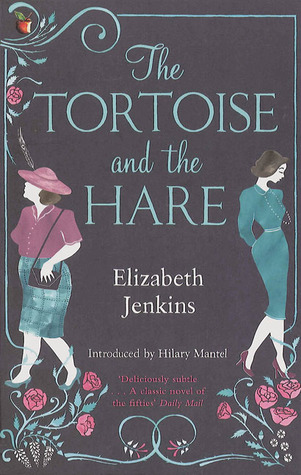
The Tortoise and the Hare by Elizabeth Jenkins
Carmen Callil, the legendary publisher and writer, who is best known for founding the Virago Press in 1972, was a guest on the podcast as The Tortoise and the Hare is one of her favourite novels. The Tortoise and the Hare was first published by Gollancz in 1954 and then triumphantly reissued by Virago Modern Classics in 1983.
If you enjoy perceptive and clever books that contain astute psychological insights into human behaviour then this is the book for you. If you also enjoy books set in the repressive milieu of 1950s midde England, then pick this up as soon as you can.
The Tortoise and the Hare charts the gradual breakdown of a relationship in which the husband is assailed from a more determined and ruthless suitor. Although the wife, Imogen, appears to be the victim, the denouement is more ambiguous and leaves many intriguing questions in the reader's mind. Imogen who lacks agency and has been socialised to place the needs of others before her own is suddenly on the cusp of freedom. It's a book that you will probably want to discuss once you've finished. It is very enjoyable, intriguing, subtle and well written.
The introduction by Hilary Mantel, and the afterword by Carmen Callil, add even more richness and context to this enjoyable book.
5/5
The Tortoise and the Hare by Elizabeth Jenkins

July 7, 2023
A marvelous novel. Smooth, slow (but not boring), and gently paced. I am in awe of how it was told. Without melodrama, yet with touching, life-changing events. I can't decide what I appreciated the most: a marriage study, a relationship between parents and a child, the different roles (and personalities) of women and how they changed, two meanings (consequences) of endurance, Tim? The numerous issues, that Elizabeth Jenkins put, weaved a wise, deep story.
And I am glad, that in spite of all the sadness in which the book is soaked, I got a bit of hope at the end.
And I am glad, that in spite of all the sadness in which the book is soaked, I got a bit of hope at the end.

February 3, 2026
La novela sigue a Imogen Gresham, una mujer sensible, bella y muy dedicada al bienestar de su marido, un abogado prestigioso y quince años mayor que ella. Viven con su hijo, un poco arrogante y mal educado con su madre, en un pueblo donde Imogen parece cumplir el papel perfecto de esposa.
Blache una vecina de cincuenta años, rica, y muy respetada por la comunidad representa todo lo que Imogen no es, y poco a poco empieza a ocupar un lugar central en la vida de su marido.
Asique esta novela retrata a la perfección la tortura emocional que produce una infidelidad, muestra el funcionamiento de un matrimonio tradicional británico. Las dos mujeres funcionan a la perfección como la fabula que da nombre a la novela.
No había leído a la autora y me ha gustado la elegancia, la sutileza y esa precisión psicológica acabando cada capitulo con una pequeña reflexión.
Una novela lenta en la que van ocurriendo cosas poquito a poco, con muchos matices emocionales y una gran critica a esos roles tradicionales de los matrimonios.
No esperes giros o un ritmo frenético, es una historia muy cotidiana , del día a día, donde las cosas las vas intuyendo según lees.
Blache una vecina de cincuenta años, rica, y muy respetada por la comunidad representa todo lo que Imogen no es, y poco a poco empieza a ocupar un lugar central en la vida de su marido.
Asique esta novela retrata a la perfección la tortura emocional que produce una infidelidad, muestra el funcionamiento de un matrimonio tradicional británico. Las dos mujeres funcionan a la perfección como la fabula que da nombre a la novela.
No había leído a la autora y me ha gustado la elegancia, la sutileza y esa precisión psicológica acabando cada capitulo con una pequeña reflexión.
Una novela lenta en la que van ocurriendo cosas poquito a poco, con muchos matices emocionales y una gran critica a esos roles tradicionales de los matrimonios.
No esperes giros o un ritmo frenético, es una historia muy cotidiana , del día a día, donde las cosas las vas intuyendo según lees.

March 27, 2019
With prose so impeccable and a situation so initially tranquil that it is not until much too late that it registers that Jenkins has actually enticed the reader into a kind of vice, and all the screws have been cheerfully locked into place and the lever is already being cranked. Anybody who has ever underestimated a romantic rival and lost all because of it will find trajectories here outlined with a unnerving precision. And yet there is a certain quiet generosity present too: even the more unlikable characters are never completely villainized, and no one ever emerges as a protagonist; instead all—and that includes us as readers too—are ultimately forced to confront the full weight of all decisions, both made and not made.
"The re-dipping of dishes was a small matter, but the emotional texture of married life is made up of small matters. This one had become invested with a fatal quality."
"The re-dipping of dishes was a small matter, but the emotional texture of married life is made up of small matters. This one had become invested with a fatal quality."

February 15, 2026
4,5
En La tortuga y la liebre, la violencia no es un estallido, sino un goteo constante que erosiona la identidad de Imogen. No es una novela de adulterio, eso es quedarse en nada, la autora nos habla de la autoanulación de una mujer que se ha convertido en una función doméstica, como una tostadora, una aspiradora..., para satisfacer las necesidades de un hombre, para compensarle los sinsabores de su vida profesional. Imogen cree que si todo está en su sitio y la merienda es perfecta en el jardín, el carácter de Everlyn será clemente con esas minusvalías que ella posee en comparación con otras mujeres. Nada, nada garantiza que su buen comportamiento la recompensará con el amor de Everlyn. ¿Qué me decís del lenguaje calculado de la autora? Es aterrador cómo el lenguaje legitima la opresión. Al llamar a su ira "justa", Imogen le otorga a él las riendas..., ¿justa ira? ¿Qué es lo contrario a justo? ¿Por qué si él es justo? Ella es… Una disección hiriente sobre el matrimonio convencional. Jenkins nos recuerda que nadie nos va a dar las riendas de nuestra vida; o las tomamos nosotros, o acabaremos como Imogen: perfectas, diligentes y absolutamente solas. ¿Este libro es una venganza literaria de la autora a su amante? Te dejo en el blog algunas ideas, saca tus propias conclusiones.
En La tortuga y la liebre, la violencia no es un estallido, sino un goteo constante que erosiona la identidad de Imogen. No es una novela de adulterio, eso es quedarse en nada, la autora nos habla de la autoanulación de una mujer que se ha convertido en una función doméstica, como una tostadora, una aspiradora..., para satisfacer las necesidades de un hombre, para compensarle los sinsabores de su vida profesional. Imogen cree que si todo está en su sitio y la merienda es perfecta en el jardín, el carácter de Everlyn será clemente con esas minusvalías que ella posee en comparación con otras mujeres. Nada, nada garantiza que su buen comportamiento la recompensará con el amor de Everlyn. ¿Qué me decís del lenguaje calculado de la autora? Es aterrador cómo el lenguaje legitima la opresión. Al llamar a su ira "justa", Imogen le otorga a él las riendas..., ¿justa ira? ¿Qué es lo contrario a justo? ¿Por qué si él es justo? Ella es… Una disección hiriente sobre el matrimonio convencional. Jenkins nos recuerda que nadie nos va a dar las riendas de nuestra vida; o las tomamos nosotros, o acabaremos como Imogen: perfectas, diligentes y absolutamente solas. ¿Este libro es una venganza literaria de la autora a su amante? Te dejo en el blog algunas ideas, saca tus propias conclusiones.

April 13, 2014
This book lived up to the title....the writing gripped me from the beginning, then slowly drip fed me more and more until the very end.
I had never heard of this book. I had never heard of the author - though she's also known as a founding member of the Jane Austen Society. I picked the book up from the library, for the sole reason that it had a pretty cover. It paid off. I'm not sure how I can describe it, as I would certainly make it sound dreary and mundane, though it's nothing but. There is not much of a plot, nor did I especially feel much affinity for any of the characters, but I cannot stop thinking about the story several days later and I think it's one that will stay with me for a while. The blurb gives just enough detail of what happens, but cannot convey how simply wonderful the story evolves.
Such a shame that it doesn't have more of an audience here on GR, but I would wholeheartedly recommend it.
I had never heard of this book. I had never heard of the author - though she's also known as a founding member of the Jane Austen Society. I picked the book up from the library, for the sole reason that it had a pretty cover. It paid off. I'm not sure how I can describe it, as I would certainly make it sound dreary and mundane, though it's nothing but. There is not much of a plot, nor did I especially feel much affinity for any of the characters, but I cannot stop thinking about the story several days later and I think it's one that will stay with me for a while. The blurb gives just enough detail of what happens, but cannot convey how simply wonderful the story evolves.
Such a shame that it doesn't have more of an audience here on GR, but I would wholeheartedly recommend it.

November 24, 2025
Well, I never thought I’d find myself reading a book like this, much less giving it a top rating. And I really, really wanted to stop reading as I went along, had to force myself to keep at it.
This is a book about infidelity, and I hate reading about infidelity. To me it is the erasure of a person one has, in the past, cared enough about to make a solemn promise to cherish—and then the cheater destroys that person’s sense of self in order to pursue an infatuation? I have zero understanding or tolerance for such inhumanity.
Nevertheless, this is an excellent novel. Written in the early 1950s—a time when many hastily contracted wartime marriages collapsed under the weight of ordinariness—it focuses on the Greshams: he, a top barrister; she, an aging beauty who keeps the house in the country from which he commutes. They have a sullen son of 11. There are various satellite characters, all sharply drawn individuals. Although the story is told from the wife’s point of view, the author has resisted the temptation to make any character so sympathetic as to be improbable. Each one has limitations of perspective, each is predisposed to blind spots and failures in thought and deed.
Those human frailties turn the storyline into an unavoidable slow-motion train wreck. Each scene is laid out with a relentless clarity abd keenness of observation, each event could not possibly be anything other than what it is. The author makes little attempt to engineer dramatic twists or rescue favorite characters (except possibly in the last chapter). She is also very clear-eyed about how being the person cheated on is destructive to one’s sense of self—so much so that the book ultimately feels more like documentary than story. I admire her rigor.
The book is too English for any lurid scenes or melodramatic confrontations, but it is devastating for all that is endured in relative silence. If you can stomach the subject matter, it is definitely worth reading.
This is a book about infidelity, and I hate reading about infidelity. To me it is the erasure of a person one has, in the past, cared enough about to make a solemn promise to cherish—and then the cheater destroys that person’s sense of self in order to pursue an infatuation? I have zero understanding or tolerance for such inhumanity.
Nevertheless, this is an excellent novel. Written in the early 1950s—a time when many hastily contracted wartime marriages collapsed under the weight of ordinariness—it focuses on the Greshams: he, a top barrister; she, an aging beauty who keeps the house in the country from which he commutes. They have a sullen son of 11. There are various satellite characters, all sharply drawn individuals. Although the story is told from the wife’s point of view, the author has resisted the temptation to make any character so sympathetic as to be improbable. Each one has limitations of perspective, each is predisposed to blind spots and failures in thought and deed.
Those human frailties turn the storyline into an unavoidable slow-motion train wreck. Each scene is laid out with a relentless clarity abd keenness of observation, each event could not possibly be anything other than what it is. The author makes little attempt to engineer dramatic twists or rescue favorite characters (except possibly in the last chapter). She is also very clear-eyed about how being the person cheated on is destructive to one’s sense of self—so much so that the book ultimately feels more like documentary than story. I admire her rigor.
The book is too English for any lurid scenes or melodramatic confrontations, but it is devastating for all that is endured in relative silence. If you can stomach the subject matter, it is definitely worth reading.

October 16, 2014
The Tortoise and the Hare was Elizabeth Jenkin’s sixth novel, one which was described to me recently as a forgotten masterpiece. I have had a copy for a while so I absolutely had to read it right away. My only other experience of Elizabeth Jenkins was in the novel Harriet – published by Persephone books. Of her writing Hilary Mantel – in her introduction to this edition says:
“…she is like Jane Austen: formal, nuanced, acid. She surveys a room as if she were perched on the mantelpiece: an unruffled owl of Minerva, a recording angel”
My full review here: http://heavenali.wordpress.com/2014/1...
“…she is like Jane Austen: formal, nuanced, acid. She surveys a room as if she were perched on the mantelpiece: an unruffled owl of Minerva, a recording angel”
My full review here: http://heavenali.wordpress.com/2014/1...

May 25, 2017
Absolutely brilliant. I was expecting a pleasant, quiet read, but Miss Jenkins surpassed all my expectations. She's such a keen observer of the human nature and her prose flows gorgeously. The Tortoise and the Hare, the story of a disintegrating marriage, is followed in minute details, and although you come to despise most characters one by one, Jenkins keeps you reading because you need to know the outcome and how long will Evelyn keep on being an asshole and how long will Imogen take it and Blanche, will you just stop being SO annoyingly perfect?!
Great discovery. My foray into British feminine lit of the first half of the 20th century continues.
4.5*
Great discovery. My foray into British feminine lit of the first half of the 20th century continues.
4.5*

May 10, 2026
Es el cuarto libro que leo de Elizabeth Jenkins y me encanta cómo escribe. Tiene una forma muy fina y muy cruel al mismo tiempo de retratar a sus personajes y sus emociones. En La tortuga y la liebre aparentemente no pasa nada, pero emocionalmente está ocurriendo un derrumbe completo, y eso resulta inquietante. Todo sucede de manera lenta, educada, casi silenciosa… hasta dejar un gran desasosiego. Para mí, una novela sobresaliente que he disfrutado muchísimo.

May 3, 2017
UGH.
Another abandoned book.
Read 70 pages from the start, found myself rolling my eyes so I skipped to the last 30 pages to see if it really is as predictable as I’m guessing and nope…this is not for me. The writing is stunning but the story and the characters are so cringe-worthy and stereotypical I wanted to gouge my eyes.
Another abandoned book.
Read 70 pages from the start, found myself rolling my eyes so I skipped to the last 30 pages to see if it really is as predictable as I’m guessing and nope…this is not for me. The writing is stunning but the story and the characters are so cringe-worthy and stereotypical I wanted to gouge my eyes.

June 1, 2025
Razor sharp, witty, entertaining, and quite moving. Loved it!
May 2, 2026
Just so very English. Subtle, gentle irony. Such delicate prose, nuanced. Delightful. And a little open ended as well, which I love.

August 6, 2025
The Tortoise and The Hare is the near perfect novel that is included on the 1,000 Novels Everyone Must Read list
https://www.theguardian.com/books/200...
10 out of 10
The tortoise and The Hare may very well be the Perfect Opus Magnum and indeed it has exhilarated the under signed, who only ponders the ways Artificial Intelligence might ‘perfect the already miraculous’ being influenced by the stupefying Yuval Harari and his wondrous Homo Deus http://realini.blogspot.com/2022/02/h... wherein we find that AI has already been at work with music that is indistinguishable from Bach and other creations, and once we reach Singularity and algorithms will know much more than we do about ourselves, it is conceivable that that age will bring about tremendous, fundamental changes in literature, the way novels are written, how we read and if we have a qualm with one of the 1,000 books that we all must read – which may become the 100k, since we will have reached a capacity to learn Spanish in one hour, to play the piano in two and read about twenty books in a day, that is portrayed in Limitless and so many other Science- Fiction works http://realini.blogspot.com/2017/04/l... - then we would have access to the Perfect Author aka Operating System and voila, our elation is near Nirvana…
I have been enthused by The Tortoise and The Hare, while contemplating at the end the changes that I may like to see in a ‘version’ of the exquisite, formidable narrative, such as killing off Blanche Silcox, probably Evelyn Gresham as well in the process – an accident in the impressive, opulent and finally hateful Rolls Royce would do the trick , but a double murder might be more satisfying…this is where the sensors, algorithms will know so much better what we would like to see happening …incidentally, I have read in The Economist that somebody has sent a tweet or an email, just by thinking about it, using the advance in technology an science that is already available, though in limited supply for the time being…another example is the heart of pig that has been transplanted to a human, some weeks ago
Evidently, there is much to analyze on this issue, for the secret would not be to have some intelligent Entity produce infinitely pleasing opera – the French are blasé on the subject and think being happy is not that cool, for instance – and the Perfect art could well be an oxymoron, the cracks of a painting, the flaws that make creations human are part of the appeal and besides, AI might be technically incapable to create characters like Raskolnikov, Anna Karenina, Ivan Ilytch, the hero of the greatest novel ever written, A La Recherche du Temps Perdu, because they are ‘imperfect’ have traits that are regrettable, shortcomings that are not familiar to entities that are made to be flawless, they are designed to avoid mistakes, which is the very essence, the reason for their existence, so that they can drive cars, do tasks without a single error…nonetheless, looking at poems, art created by machines, there is a future for them in that domain
If we consider the title of the magnificent chef d’oeuvre and the original story, we would be pressed to think about the symbols, the keys to the characters and what they represent – however, when the notion of a proverb, a saying is raised, this reader is automatically sent to Stories About Man by Constantin Noica, the most prominent thinker we have had here…he writes in there that proverbs are absurd (or something of the kind, my memory is not very accurate) and if we take the ‘you cannot have the cake and eat it’ and look at the significance, why, it is when you eat it that you have it completely, then there are so many, if not all, another example was the ‘do not chase after two rabbits for you will catch none’, to which it can be said try and chase one and observe what that will get you, and then the saying was used to justify sticking to one purpose, do not study English and French, because of the two rabbits, and that is silly…
Probably we could say that Imogen is the Hare and Blanche Silcox would be the Tortoise in this narrative, although yours truly would rather associate the latter with a more ignominious creature – notwithstanding the fact that there is no animal that could be labeled as such, sharks and predators have their essential role to play and they just kill because they have to – maybe a zombie, however understandable to a large extent her position is…Blanche falls in love with Evelyn, Imogen’s husband, a handsome, successful barrister of fifty two, and the unmarried fifty year old Blanche Silcox uses everything in her power to get the man that to begin with appears so impossible to get, especially by an ‘ungainly, frumpish, with a bloated waist, intense, insecure, anxious, unhappy neighbor, who is fourteen years older than Imogen.
Just like in the original fable, written by Aesop, we meet the personages and say that it is impossible for the Turtle aka Blanche to beat to the post the agile, much younger, beautiful, radiant, happy Hare aka Imogen – come to think of it, this is one of the few instances wherein the happy beats the negative, for the rule is that happier people are more successful in their private and professional lives, unless they work in a domain that relies heavily on details (negative minds get details better, while the positive are efficient with the big picture) such as detective, traffic controller, financial comptroller work – although we have quite a few elements at play here, from the Coolidge and Hedonic Adaptation Effects, combined with the Honeymoon Effect and then we have the peculiar figure of Evelyn…
The undersigned had been defiantly in the Imogen camp, wishing for her to prevail, win in the battle and increasingly loathed the association of Evelyn with Blanche…nonetheless, there is some observation that could make the of the husband stand more comprehensible, if I am to use only personal experience – while younger, there was a tendency to find the potential partners of the age of twenty five as much too old, even when I reached the age myself and passed it (yes, I know this is preposterous, unacceptable and I must be cancelled…only I do not have an arena to be cancelled from), but when reaching a more mature stage, middle aged women have started to have an enormous appeal and let us just stop here with the Confessions of a Dangerous Mimed, and say that Evelyn is clearly making a tremendous error, but part of the catastrophe can be explained and it is not totally impossible…
Some will look at the masculine traits of the mistress and say that there is a homosexual attraction there and Evelyn might be bisexual or a repressed gay man, hence the penchant towards and eventually the closeness to Blanche, and the coldness shown to a much more seductive, feminine, delicate, beautiful, tender, gentle, sensitive woman, the character that this reader has so much affection for and indeed, he contemplates the year 2035, when Singularity will have reached us and then AI might provide a version of this saga where Evelyn and Blanche are somehow punished, let us be kind and forget their annihilation, just let them live in Siberia, under the rule of the same, eternal Putin…knocking at the door right now, with his nearly two hundred thousand little green men, walking into the Ukraine and then passing by here…
https://www.theguardian.com/books/200...
10 out of 10
The tortoise and The Hare may very well be the Perfect Opus Magnum and indeed it has exhilarated the under signed, who only ponders the ways Artificial Intelligence might ‘perfect the already miraculous’ being influenced by the stupefying Yuval Harari and his wondrous Homo Deus http://realini.blogspot.com/2022/02/h... wherein we find that AI has already been at work with music that is indistinguishable from Bach and other creations, and once we reach Singularity and algorithms will know much more than we do about ourselves, it is conceivable that that age will bring about tremendous, fundamental changes in literature, the way novels are written, how we read and if we have a qualm with one of the 1,000 books that we all must read – which may become the 100k, since we will have reached a capacity to learn Spanish in one hour, to play the piano in two and read about twenty books in a day, that is portrayed in Limitless and so many other Science- Fiction works http://realini.blogspot.com/2017/04/l... - then we would have access to the Perfect Author aka Operating System and voila, our elation is near Nirvana…
I have been enthused by The Tortoise and The Hare, while contemplating at the end the changes that I may like to see in a ‘version’ of the exquisite, formidable narrative, such as killing off Blanche Silcox, probably Evelyn Gresham as well in the process – an accident in the impressive, opulent and finally hateful Rolls Royce would do the trick , but a double murder might be more satisfying…this is where the sensors, algorithms will know so much better what we would like to see happening …incidentally, I have read in The Economist that somebody has sent a tweet or an email, just by thinking about it, using the advance in technology an science that is already available, though in limited supply for the time being…another example is the heart of pig that has been transplanted to a human, some weeks ago
Evidently, there is much to analyze on this issue, for the secret would not be to have some intelligent Entity produce infinitely pleasing opera – the French are blasé on the subject and think being happy is not that cool, for instance – and the Perfect art could well be an oxymoron, the cracks of a painting, the flaws that make creations human are part of the appeal and besides, AI might be technically incapable to create characters like Raskolnikov, Anna Karenina, Ivan Ilytch, the hero of the greatest novel ever written, A La Recherche du Temps Perdu, because they are ‘imperfect’ have traits that are regrettable, shortcomings that are not familiar to entities that are made to be flawless, they are designed to avoid mistakes, which is the very essence, the reason for their existence, so that they can drive cars, do tasks without a single error…nonetheless, looking at poems, art created by machines, there is a future for them in that domain
If we consider the title of the magnificent chef d’oeuvre and the original story, we would be pressed to think about the symbols, the keys to the characters and what they represent – however, when the notion of a proverb, a saying is raised, this reader is automatically sent to Stories About Man by Constantin Noica, the most prominent thinker we have had here…he writes in there that proverbs are absurd (or something of the kind, my memory is not very accurate) and if we take the ‘you cannot have the cake and eat it’ and look at the significance, why, it is when you eat it that you have it completely, then there are so many, if not all, another example was the ‘do not chase after two rabbits for you will catch none’, to which it can be said try and chase one and observe what that will get you, and then the saying was used to justify sticking to one purpose, do not study English and French, because of the two rabbits, and that is silly…
Probably we could say that Imogen is the Hare and Blanche Silcox would be the Tortoise in this narrative, although yours truly would rather associate the latter with a more ignominious creature – notwithstanding the fact that there is no animal that could be labeled as such, sharks and predators have their essential role to play and they just kill because they have to – maybe a zombie, however understandable to a large extent her position is…Blanche falls in love with Evelyn, Imogen’s husband, a handsome, successful barrister of fifty two, and the unmarried fifty year old Blanche Silcox uses everything in her power to get the man that to begin with appears so impossible to get, especially by an ‘ungainly, frumpish, with a bloated waist, intense, insecure, anxious, unhappy neighbor, who is fourteen years older than Imogen.
Just like in the original fable, written by Aesop, we meet the personages and say that it is impossible for the Turtle aka Blanche to beat to the post the agile, much younger, beautiful, radiant, happy Hare aka Imogen – come to think of it, this is one of the few instances wherein the happy beats the negative, for the rule is that happier people are more successful in their private and professional lives, unless they work in a domain that relies heavily on details (negative minds get details better, while the positive are efficient with the big picture) such as detective, traffic controller, financial comptroller work – although we have quite a few elements at play here, from the Coolidge and Hedonic Adaptation Effects, combined with the Honeymoon Effect and then we have the peculiar figure of Evelyn…
The undersigned had been defiantly in the Imogen camp, wishing for her to prevail, win in the battle and increasingly loathed the association of Evelyn with Blanche…nonetheless, there is some observation that could make the of the husband stand more comprehensible, if I am to use only personal experience – while younger, there was a tendency to find the potential partners of the age of twenty five as much too old, even when I reached the age myself and passed it (yes, I know this is preposterous, unacceptable and I must be cancelled…only I do not have an arena to be cancelled from), but when reaching a more mature stage, middle aged women have started to have an enormous appeal and let us just stop here with the Confessions of a Dangerous Mimed, and say that Evelyn is clearly making a tremendous error, but part of the catastrophe can be explained and it is not totally impossible…
Some will look at the masculine traits of the mistress and say that there is a homosexual attraction there and Evelyn might be bisexual or a repressed gay man, hence the penchant towards and eventually the closeness to Blanche, and the coldness shown to a much more seductive, feminine, delicate, beautiful, tender, gentle, sensitive woman, the character that this reader has so much affection for and indeed, he contemplates the year 2035, when Singularity will have reached us and then AI might provide a version of this saga where Evelyn and Blanche are somehow punished, let us be kind and forget their annihilation, just let them live in Siberia, under the rule of the same, eternal Putin…knocking at the door right now, with his nearly two hundred thousand little green men, walking into the Ukraine and then passing by here…

March 5, 2026
¡Hola, lectores!
¿Y si el verdadero peligro en una historia de amor no fuera una tercera persona… sino empezar, poco a poco, a dejar de ser quien eres?
Hoy quiero hablaros de “La tortuga y la liebre”, publicada en 1954 por Elizabeth Jenkins, una novela que, bajo la apariencia tranquila de la vida doméstica inglesa, esconde uno de los retratos más lúcidos y perturbadores del matrimonio que he leído.
Nos situamos en la Inglaterra de posguerra. Imogen Gresham lleva más de diez años casada con Evelyn, un abogado brillante, admirado y profundamente exigente. Viven en una preciosa casa en el campo, tienen un hijo y, desde fuera, todo parece encajar. Es el tipo de matrimonio que proyecta estabilidad y orden. Imogen lo ama, lo admira y ha construido su identidad alrededor de esa admiración. Su manera de querer consiste en cuidar, anticiparse, sostener la armonía, estar siempre disponible.
Y, sin embargo, algo empieza a desplazarse.
Ese cambio no llega con grandes escenas ni con un giro brusco que lo altere todo. Llega de forma casi imperceptible. En sus vidas comienza a tener cada vez más presencia Blanche Silcox, una vecina independiente, segura y extraordinariamente competente, con la que Evelyn comparte intereses, conversaciones y una admiración creciente. Blanche no irrumpe. Se instala. Está en los planes, en las invitaciones, en los elogios comparativos que parecen inocentes. Y sin que nadie formule una acusación ni pronuncie una palabra definitiva, la comparación empieza a existir. En ese contraste silencioso, algo en Imogen comienza a desajustarse.
Lo brillante de esta novela es que no se queda en la superficie de una posible infidelidad. Va mucho más allá. La autora explora cómo una persona puede ir diluyéndose dentro del papel que ha asumido. Cómo el amor, cuando se convierte en entrega absoluta y sin límites, puede transformarse en una forma casi imperceptible de desaparición. Imogen no es ingenua ni frágil en el sentido simple del término. Es sensible, inteligente y profundamente humana. Y por eso duele tanto acompañarla en ese proceso lento de toma de conciencia.
La prosa es elegante y contenida, pero bajo esa contención late una tensión constante. Jenkins no dramatiza ni subraya. Todo sucede en los detalles pequeños, en una frase dicha con frialdad, en una mirada sostenida un segundo más de lo necesario, en un silencio que pesa más que cualquier discusión. El ritmo es pausado, sí, pero cada página aprieta un poco más.
El título, que remite a la fábula clásica, adquiere aquí un significado mucho más ambiguo y complejo. No se trata de quién corre más rápido o de quién resiste más tiempo. Se trata de qué significa realmente ganar cuando lo que está en juego es la propia identidad.
Resulta impresionante lo actual que suena una novela escrita hace más de setenta años. Porque habla de poder dentro de la pareja, de dependencia emocional, de expectativas sociales y de cómo a veces confundimos amor con anulación.
Es una lectura sutil, inteligente y profundamente inquietante. De esas que no hacen ruido, pero que permanecen.
¿Y si el verdadero peligro en una historia de amor no fuera una tercera persona… sino empezar, poco a poco, a dejar de ser quien eres?
Hoy quiero hablaros de “La tortuga y la liebre”, publicada en 1954 por Elizabeth Jenkins, una novela que, bajo la apariencia tranquila de la vida doméstica inglesa, esconde uno de los retratos más lúcidos y perturbadores del matrimonio que he leído.
Nos situamos en la Inglaterra de posguerra. Imogen Gresham lleva más de diez años casada con Evelyn, un abogado brillante, admirado y profundamente exigente. Viven en una preciosa casa en el campo, tienen un hijo y, desde fuera, todo parece encajar. Es el tipo de matrimonio que proyecta estabilidad y orden. Imogen lo ama, lo admira y ha construido su identidad alrededor de esa admiración. Su manera de querer consiste en cuidar, anticiparse, sostener la armonía, estar siempre disponible.
Y, sin embargo, algo empieza a desplazarse.
Ese cambio no llega con grandes escenas ni con un giro brusco que lo altere todo. Llega de forma casi imperceptible. En sus vidas comienza a tener cada vez más presencia Blanche Silcox, una vecina independiente, segura y extraordinariamente competente, con la que Evelyn comparte intereses, conversaciones y una admiración creciente. Blanche no irrumpe. Se instala. Está en los planes, en las invitaciones, en los elogios comparativos que parecen inocentes. Y sin que nadie formule una acusación ni pronuncie una palabra definitiva, la comparación empieza a existir. En ese contraste silencioso, algo en Imogen comienza a desajustarse.
Lo brillante de esta novela es que no se queda en la superficie de una posible infidelidad. Va mucho más allá. La autora explora cómo una persona puede ir diluyéndose dentro del papel que ha asumido. Cómo el amor, cuando se convierte en entrega absoluta y sin límites, puede transformarse en una forma casi imperceptible de desaparición. Imogen no es ingenua ni frágil en el sentido simple del término. Es sensible, inteligente y profundamente humana. Y por eso duele tanto acompañarla en ese proceso lento de toma de conciencia.
La prosa es elegante y contenida, pero bajo esa contención late una tensión constante. Jenkins no dramatiza ni subraya. Todo sucede en los detalles pequeños, en una frase dicha con frialdad, en una mirada sostenida un segundo más de lo necesario, en un silencio que pesa más que cualquier discusión. El ritmo es pausado, sí, pero cada página aprieta un poco más.
El título, que remite a la fábula clásica, adquiere aquí un significado mucho más ambiguo y complejo. No se trata de quién corre más rápido o de quién resiste más tiempo. Se trata de qué significa realmente ganar cuando lo que está en juego es la propia identidad.
Resulta impresionante lo actual que suena una novela escrita hace más de setenta años. Porque habla de poder dentro de la pareja, de dependencia emocional, de expectativas sociales y de cómo a veces confundimos amor con anulación.
Es una lectura sutil, inteligente y profundamente inquietante. De esas que no hacen ruido, pero que permanecen.

December 29, 2012
“Apart from a war, what could be more interesting than a marriage?” Hilary Mantel ponders in her introduction, and indeed, what could be? I cannot imagine any other piece of work striking such icy dread into my married veins. This is domestic fiction of the early 20th century at its best, but only for the most steely hearted.
Graceful, beautiful Imogen suddenly finds herself strickened with jealousy. The seemingly plain and unpreposessing neighbour, Blanche Silcox, is insiduously competing for her husband Evelyn’s attentions, and thus menacing her fragile peace. Beware the tweedy, dowdy piece of work! Like a hardy weed, Blanche inhabits her country life with immense vigour, with the calm mettle of the thick-skinned and able. Imogen, with her stuttering lack of confidence, is a shrinking violet. She accepts Evelyn’s faults and incontestable authority as a necessary compliment to his merits. Even as his actions strike a painful, discordant chord, she meekly accepts a surreal domestic intimacy with her rival.
There is a suggestion that for all her beauty, there is a lack of sexual chemistry – “It’s an art, I suppose, some people have it” Evelyn carelessly says. While Imogen craves for a deep romantic love, the balm of Paul Nugent’s chivalrous ardour is hardly a consolation. “Do you know what men fall in love with?” Paul asks, while she remains sweetly and knowingly ignorant of his undeclared affections.
Even Imogen and Evelyn’s final showdown (brilliantly rehearsed in my mind, at least) is ultimately a let down. Her accusation is feeble as a subservient cry - “I don’t want to spoil your happiness and be a drag on you”! Drizzling with tears, we feel her piteous yearning for a reprieve that does not come.
Who is the tortoise, and who the hare? It does not matter, for in the end, Imogen and Blanche are both prey. The tortoise - the clumsy defender, retreating beneath the fortress of a shell; the hare - elegant and swift, but vulnerable to traps. The real winner is the detestable Evelyn.
5 gold stars, and wholly independent of Florence Broadhurst's elegant Japanese floral print - I would go as far to say that this is the best book I have read this year.
(Not-Sure-When-2012, Fishpond.com, AUD$20)
Graceful, beautiful Imogen suddenly finds herself strickened with jealousy. The seemingly plain and unpreposessing neighbour, Blanche Silcox, is insiduously competing for her husband Evelyn’s attentions, and thus menacing her fragile peace. Beware the tweedy, dowdy piece of work! Like a hardy weed, Blanche inhabits her country life with immense vigour, with the calm mettle of the thick-skinned and able. Imogen, with her stuttering lack of confidence, is a shrinking violet. She accepts Evelyn’s faults and incontestable authority as a necessary compliment to his merits. Even as his actions strike a painful, discordant chord, she meekly accepts a surreal domestic intimacy with her rival.
There is a suggestion that for all her beauty, there is a lack of sexual chemistry – “It’s an art, I suppose, some people have it” Evelyn carelessly says. While Imogen craves for a deep romantic love, the balm of Paul Nugent’s chivalrous ardour is hardly a consolation. “Do you know what men fall in love with?” Paul asks, while she remains sweetly and knowingly ignorant of his undeclared affections.
Even Imogen and Evelyn’s final showdown (brilliantly rehearsed in my mind, at least) is ultimately a let down. Her accusation is feeble as a subservient cry - “I don’t want to spoil your happiness and be a drag on you”! Drizzling with tears, we feel her piteous yearning for a reprieve that does not come.
Who is the tortoise, and who the hare? It does not matter, for in the end, Imogen and Blanche are both prey. The tortoise - the clumsy defender, retreating beneath the fortress of a shell; the hare - elegant and swift, but vulnerable to traps. The real winner is the detestable Evelyn.
5 gold stars, and wholly independent of Florence Broadhurst's elegant Japanese floral print - I would go as far to say that this is the best book I have read this year.
(Not-Sure-When-2012, Fishpond.com, AUD$20)

February 7, 2018
Posh post-war period piece.
“Well, there were three of us in this marriage, so it was a bit crowded.” So said the late Princess Diana in her television interview with Martin Bashir in 1995. I was reminded of this famous quote while reading this recently re-issued novel by Elizabeth Jenkins. It is about an attractive young wife who loses her considerably older husband to a plain, matronly woman of his own age.
Set in the early ‘50s, the Greshams have moved from town to a beautiful riverside property in moneyed Berkshire. Husband Evelyn is a barrister, distinguished in both career and looks. He appreciates the finer things in life and requires everything to be ‘just so’. Imogen fulfils her role as ornamental accessory; she’s far from stupid but her intelligence is muted and, in any event, not the kind that appeals much to Evelyn. He’s much more interested in their new neighbour Blanche Silcox, a huntin’, shootin’ and fishin’ type who drives a Roller and ferries Evelyn up and down to his chambers and incrementally worms her way into his life and his affections. The Greshams’ only child – the horrid son Gavin - favours his father and, as time goes on, it is only Gavin’s young friend Tim who really seems to like Imogen. True, she has many admirers but it’s her husband’s affection that she craves.
I wasn’t too sure about this book at first; the language is so dated and everybody seems to talk in a cut-glass accent - indeed, very much like the royals. But the human dynamic is interesting and whilst some of the attitudes are appallingly old-fashioned, there are odd moments of curious sexual freedom. Most confusing! Ultimately, I find I can recommend this as a rather unusual read – but with these reservations.
“Well, there were three of us in this marriage, so it was a bit crowded.” So said the late Princess Diana in her television interview with Martin Bashir in 1995. I was reminded of this famous quote while reading this recently re-issued novel by Elizabeth Jenkins. It is about an attractive young wife who loses her considerably older husband to a plain, matronly woman of his own age.
Set in the early ‘50s, the Greshams have moved from town to a beautiful riverside property in moneyed Berkshire. Husband Evelyn is a barrister, distinguished in both career and looks. He appreciates the finer things in life and requires everything to be ‘just so’. Imogen fulfils her role as ornamental accessory; she’s far from stupid but her intelligence is muted and, in any event, not the kind that appeals much to Evelyn. He’s much more interested in their new neighbour Blanche Silcox, a huntin’, shootin’ and fishin’ type who drives a Roller and ferries Evelyn up and down to his chambers and incrementally worms her way into his life and his affections. The Greshams’ only child – the horrid son Gavin - favours his father and, as time goes on, it is only Gavin’s young friend Tim who really seems to like Imogen. True, she has many admirers but it’s her husband’s affection that she craves.
I wasn’t too sure about this book at first; the language is so dated and everybody seems to talk in a cut-glass accent - indeed, very much like the royals. But the human dynamic is interesting and whilst some of the attitudes are appallingly old-fashioned, there are odd moments of curious sexual freedom. Most confusing! Ultimately, I find I can recommend this as a rather unusual read – but with these reservations.
June 4, 2016
Repressed and wounded vanities render Imogen, a beautiful trophy wife, inadequate... (So frustrating.) You can only give enough benefit of the doubt to someone who for 241 pages out of 275 is continuously being psychologically beaten, showing weakness, and debilitating reticence over her marriage until you have to decide that this person is pretty much not at all a heroine and maybe she likes wallowing in her own misery. All she can do is bend her head low, stay quiet and drag herself around, endlessly brewing her grievances until it turns dark and strong. I was so frustrated with Imogen. I just can't abide by this defeatist attitude from a character. It's anathema to my reading ethos. But I kept reading. And then comes a silent strength that floored me and offered so much redemption in the end. I was ready to give up on this book so early on if it weren't for the excellent writing of Jenkins. I should've known to trust in her expertise that there's so much more to the story than what I was willing to concede to at first. This is a really deep-cutting look at being a woman in an unhappy marriage and one I'll keep thinking about for a very long time.

February 14, 2018
What a strange book. I am tempted to exchange the word strange for dull, but there was something about it that kept me reading about Imogen and her pretty rotten life, wife to the obnoxious lawyer Evelyn and coping with her objectionable son Gavin. Add the quietly intrusive neighbour Miss Silcox into the mix and what was a standard 1950s marriage soon begins to feel like a bit of a nightmare.
Admittedly the Afterword by Carmen Callil guided me towards pondering who is the Hare and who is the Tortoise, and suddenly I began to see a greater depth to the novel. Occasional moments of levity were welcome, and there were other sub-plots involving family friends which gave some respite to my frustrations. But having said that it still wouldn't figure high on my 'to read again' pile.
Admittedly the Afterword by Carmen Callil guided me towards pondering who is the Hare and who is the Tortoise, and suddenly I began to see a greater depth to the novel. Occasional moments of levity were welcome, and there were other sub-plots involving family friends which gave some respite to my frustrations. But having said that it still wouldn't figure high on my 'to read again' pile.

April 30, 2019
The Tortoise and the Hare is the sixth of Elizabeth Jenkin's twelve novels and was published in 1954.
Imogen aged 37 is the beautiful wife of the successful barrister Evelyn Gresham aged 52.
Imogen has a very comfortable life, big house in the Berkshire countryside, a son about to go to public school, maids to wait on her and plenty of money.
Blanche Silcox, their neighbour, who is the very opposite of Imogen, frumpish, middle-aged and tweedy seems to be vying for Evelyn's attention.To Imogen's horror she feels she may be succeeding...
Beautifully written with great descriptions of the countryside, Elizabeth Jenkins asks the reader who is the tortoise and who is the hare in the story.
A sad story with some great characters and definitely worth reading.
Imogen aged 37 is the beautiful wife of the successful barrister Evelyn Gresham aged 52.
Imogen has a very comfortable life, big house in the Berkshire countryside, a son about to go to public school, maids to wait on her and plenty of money.
Blanche Silcox, their neighbour, who is the very opposite of Imogen, frumpish, middle-aged and tweedy seems to be vying for Evelyn's attention.To Imogen's horror she feels she may be succeeding...
Beautifully written with great descriptions of the countryside, Elizabeth Jenkins asks the reader who is the tortoise and who is the hare in the story.
A sad story with some great characters and definitely worth reading.
June 29, 2020
I enjoyed this, and I really wish there was a sequel because Imogen's story is nowhere NEAR complete. Elizabeth Jenkins has an understanding of women that is surprising to read, because some moments she writes about I have never seen on paper before, but they define plenty of my actions or interactions with other women.
Displaying 1 - 30 of 265 reviews